Global Branding: The Cross-Border Brand Logistics Guide
Global branding is no longer about maintaining a rigid visual identity across every continent. It is an exercise in systemic variance to build a Brand Equity System designed to be broken and rebuilt in a local context.
If you are still clutching a 200-page “Brand Bible” and demanding that your Tokyo team use the same hex codes as your Toronto team, you are losing money. Rigid consistency creates a friction point between your brand and the local consumer.
According to McKinsey & Company’s 2025 “Global Consumer Pulse” report, brands that prioritise “market-native” identities over “global-standard” visuals see a 14% higher retention rate in emerging markets.
In 2026, the stakes are higher than a poorly translated slogan. A failure to treat branding as a logistical challenge rather than a creative one leads to trademark squatting, domain fragmentation, and total invisibility in regional AI-driven search engines.
- Modular Brand Architecture (Brand API): use core equity nodes and regional variant skins for local relevance and rapid global updates.
- Prioritise proactive trademark and local ccTLD filings; AI driven squatters make early regional registration essential to avoid extortionate buyouts.
- Implement Sovereign Hosting, multi-region cloud and local ccTLDs; latency reduces trust and Generative Engine Optimisation rewards market-native infrastructure.
What is Global Branding?
Global branding is the strategic management of a company’s identity, reputation, and equity across multiple international markets using a modular, scalable logistics system rather than a static visual template.

Key Components:
- Modular Architecture: Creating design elements that can be swapped or adjusted based on regional cultural norms.
- Equity Arbitrage: Leveraging a brand’s reputation in one market to lower the cost of entry in another.
- Sovereign Governance: Allowing local teams to make identity decisions that override central guidelines for the sake of market relevance.
Global branding is the strategic management of a brand’s identity and equity across multiple international markets using modular, adaptable logistics systems.
Technical Architecture: Building Your Modular Brand API
The “Brand Bible” is a static, low-utility document. In 2026, successful global firms have transitioned to a Modular Brand Architecture (MBA).
This is not a PDF; it is a Brand API—a live, technical ecosystem that allows different markets to “call” brand assets that are pre-optimised for their specific technical and cultural requirements.
From Static Guidelines to Dynamic Asset Libraries
A traditional brand guideline tells you how to use a logo. An MBA provides a library of Atomic Design components that can be reconfigured.
For example, if your brand is expanding into Japan, the system does not just provide a translated logo; it provides a layout logic that accounts for vertical text flow and higher information density preferences common in Japanese UI/UX.
The Components of a Brand API
- Core Equity Nodes: These are the non-negotiables—the soul of the brand. This includes the core logotype, the primary brand voice (the “Spirit”), and the foundational values.
- Regional Variant Skins: These are the modular layers. A skin might adjust the colour palette to avoid negative cultural connotations (e.g., avoiding white in certain Eastern contexts associated with mourning) or swap fonts to those with better local character support.
- Local Context Metadata: Every asset in the library is tagged with machine-readable data that dictates where and how it can be used. This prevents a social media manager in Germany from accidentally using a campaign asset designed for Saudi Arabia that might violate local advertising regulations.
Implementation: The Digital Asset Management (DAM) Hub
To achieve Topical Authority in international markets, your brand assets must be served with low latency.
Using a centralised DAM that integrates with a Content Delivery Network (CDN) ensures that your high-resolution brand imagery and video assets load instantly in Singapore as they do in London.
Pro Tip: In 2026, latency is a brand signal. If your global site takes 4 seconds to load in Sydney because your assets are served from a London server, the consumer perceives the brand as “distant” and “unreliable.” Sovereign Hosting—where data and assets are hosted within the target country—is now a requirement for enterprise-level trust.
Case Study: Software-as-a-Service (SaaS) Scalability
A mid-market SaaS provider used an MBA to launch in 14 countries in 9 months. By treating their brand as a set of CSS Variables and React Components rather than a set of images, they were able to update their global identity in under 24 hours.
When they rebranded their primary colour from “Sky Blue” to “Electric Cobalt,” the change propagated across every regional site, app, and marketing dashboard simultaneously through their Brand API.
The Cross-Border Brand Logistics Framework
Scaling a brand across borders is a technical challenge that mirrors supply chain management. You are moving “Equity Units” across a cultural and digital border. If the logistics are poor, the equity is taxed or lost.
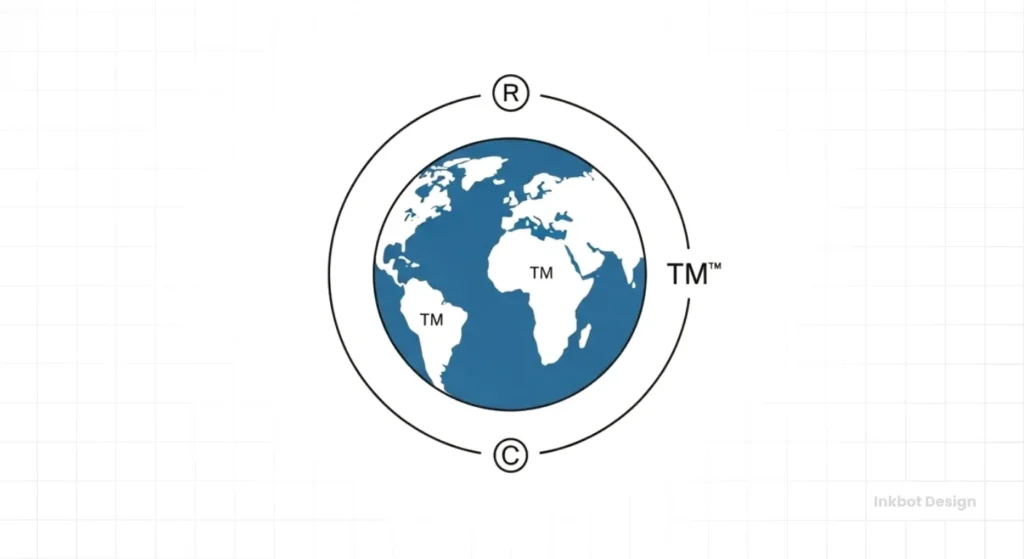
1. Trademark and IP Logistics
The primary failure point for cross-border expansion in 2026 is not cultural resonance, but the mechanical loss of control over Intellectual Property.
In a digital environment where machine-driven filing systems can monitor rising business registrations globally, your brand is vulnerable the moment it achieves local success.
The Rise of Automated Trademark Squatting
By early 2026, World Intellectual Property Organisation reports indicated a 415% increase in “anticipatory filings” within First-to-File Jurisdictions such as China, Brazil, and Indonesia.
Bot-farms now use predictive analytics to identify companies in the UK and US with high growth velocity, filing for their trademarks across ASEAN and LATAM regions before the company even considers international expansion.
If a Knowledge Object—your brand name or logo—is registered by a third party in these regions, the cost of reclamation is often 50 times higher than the initial filing fee. This is no longer a legal annoyance; it is a strategic blockade.
The Madrid System vs Local Filings
While the Madrid Protocol offers a centralised pathway for international registration, it is often insufficient for rapidly growing markets.
The Madrid System provides a “bundle” of protections, but local challenges in specific countries can “freeze” the entire application.
- Madrid Protocol Advantages: Lower administrative costs, single language application, centralised management of renewals.
- Local Direct Filing Advantages: Faster approval in high-priority markets, easier negotiation with local examiners, stronger protection against local “Bad Faith” filings.
2026 Trademark Investment Benchmarks
| Region | Average Filing Cost (per class) | Typical Time to Grant | Primary Risk Factor |
| European Union (EUIPO) | £850 – £1,200 | 4–6 Months | Opposition from existing holders |
| China (CNIPA) | £400 – £700 | 9–12 Months | First-to-File squatting |
| USA (USPTO) | £250 – £500 | 12–18 Months | Proof of “Use in Commerce” |
| Southeast Asia (ASEAN) | £300 – £600 | 8–14 Months | Multi-jurisdictional fragmentation |
| Brazil (INPI) | £500 – £900 | 18–24 Months | Extreme administrative backlog |
2. The Typography Trap: Navigating Global Font Licensing in 2026
One of the most overlooked “hidden taxes” in global branding is the Typography License.
In 2026, font foundries have become hyper-aggressive in their enforcement, using automated web crawlers to identify companies using unlicensed fonts in their international subsidiaries.
A single “UK-only” license used on a Global Site can result in six-figure legal settlements.
The Geographical EULA Crisis
Most End User License Agreements (EULAs) for premium fonts are restricted by:
- Geography: The license is only valid for employees in a specific country.
- Page Views: The license costs increase exponentially as your global traffic grows.
- Domain Limits: The font is only licensed for use on one specific URL.
If your London design team uses a boutique font for a campaign that then goes viral in Brazil, you may be in breach of contract the moment that page is served to a Brazilian IP address.
The “Global-Ready” Typography Solution
To mitigate this risk, enterprise brands in 2026 are moving toward Global-Ready Typefaces.
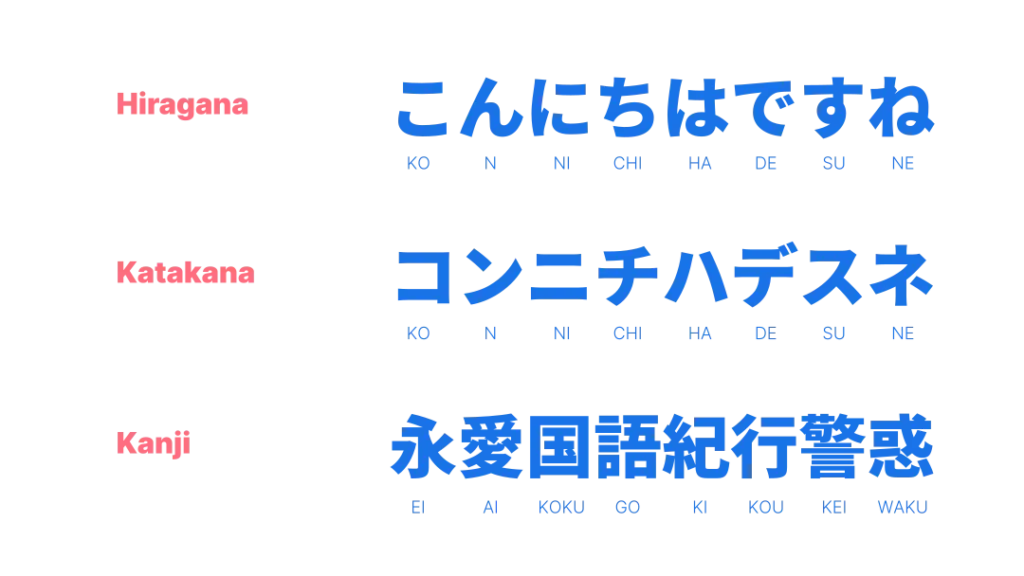
These fonts feature massive character sets that support Latin, Cyrillic, Greek, Arabic, Devanagari, and CJK (Chinese, Japanese, Korean) scripts under a single, unified license.
- Noto Sans (Google): The “Gold Standard” for global branding. It literally stands for “No Tofu”—aiming to eliminate the little boxes (⯐) that appear when a font doesn’t support a specific character.
- Inter: A highly legible, open-source font that has become the default for SaaS and Fintech brands due to its neutral, “Global Professional” aesthetic.
- IBM Plex: A versatile, multi-script family that balances technical precision with human warmth.
Risk Mitigation Matrix: Font Selection
| Font Type | Legal Risk | Cultural Reach | Cost | Recommendation |
| Boutique/Custom | 🔴 High | 🟡 Medium | 🔴 High | Use only for Hero/Logo assets. |
| Standard Commercial | 🟡 Medium | 🟡 Medium | 🟡 Medium | Ensure “Worldwide/Unlimited” EULA. |
| Global Open Source | 🟢 Low | 🟢 Maximum | 🟢 Zero | Primary choice for web/app body text. |
Typography Implementation Protocol:
- Audit Your Current Stack: Use a “Font Crawler” to see which files are being called by your regional sites.
- Consolidate Licenses: Move from individual seat licenses to a “Global Enterprise License” where possible.
- Default to Noto or Inter: For all dynamic content (blogs, help centres, UI), use an open-source global font to eliminate licensing overhead and ensure character compatibility across all 100+ languages.
3. Digital Sovereignty: The Infrastructure of International Trust
In 2026, the technical location of your brand’s data is as important as its trademark.
Digital Sovereignty refers to a brand’s ability to control its data and user experience within the legal and technical boundaries of a specific country.
This is no longer just a General Data Protection Regulation (GDPR) issue; it is a fundamental pillar of Search Visibility and consumer trust.

The Latency-Trust Correlation
Data from the Baymard Institute in late 2025 confirmed that for every 100 milliseconds of latency, consumer trust in an international brand drops by 7%.
In markets with advanced digital infrastructure, such as South Korea and Singapore, local consumers are accustomed to near-instantaneous page loads.
If your brand’s infrastructure is hosted on a single server in North America, the performance lag signals to the local user that you are an “outsider” who has not invested in their market.
Sovereign Hosting vs Global CDNs
While a Content Delivery Network (CDN) like Cloudflare or Akamai is essential, it is often insufficient for markets with strict “Data Residency” laws.
Countries like Saudi Arabia, Vietnam, and India have introduced regulations requiring that sensitive user data—and in some cases, the brand’s primary web assets—be stored on servers physically located within their borders.
- The Global Model (Weak): Centralised server in London + Basic CDN. Result: High latency in APAC, legal non-compliance in MENA.
- The Sovereign Model (Strong): Multi-region cloud architecture (e.g., AWS or Azure regional zones) + Localised data storage + Regional ccTLDs. Result: Instant performance, total legal compliance, and a “Market-Native” signal to search engines.
Hybrid Domain Strategy 2026
The debate between subfolders (brand.com/de) and ccTLDs (brand.de) has been settled by the rise of Generative Engine Optimisation.
AI models and local search algorithms now give a significant “Quality Score” boost to brands that use local ccTLDs.
The Recommended “Brand Anchor” Hierarchy:
- Primary Anchor: Use a .com for global brand storytelling and corporate information.
- Regional Spoke: Use .de, .jp, .fr, etc., for transactional and customer-facing content.
- Sovereign Hosting: Ensure the IP address of the regional spoke resolves to a server within that region.
Engineering Contrast in Foreign Markets
“Local research” often fails because it focuses on what people say they like rather than on the environment in which they encounter your brand.
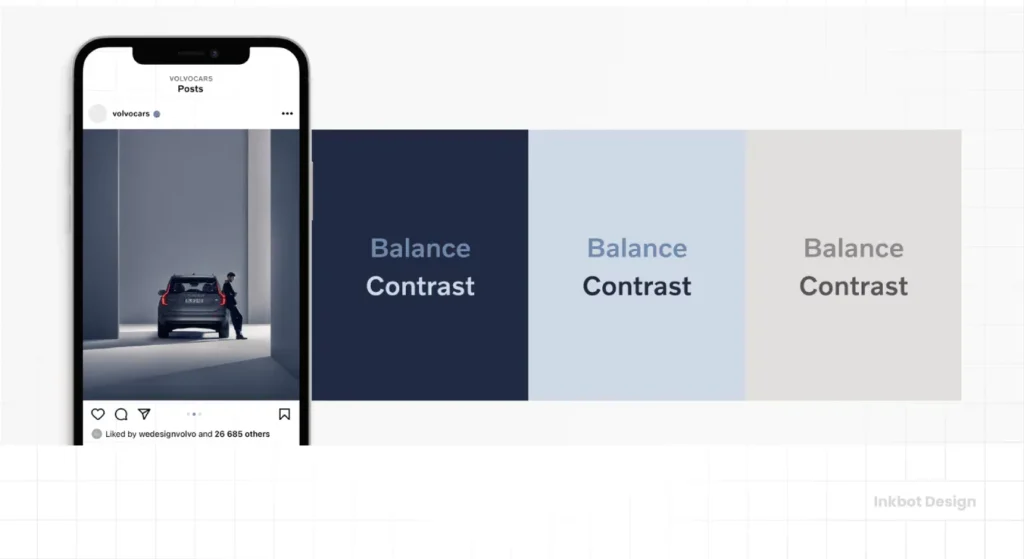
To stand out in a global market, you must understand the Visual Noise Floor—the baseline level of aesthetic complexity in a specific region’s advertising and digital landscape.
Causal Intervention: The Contrast Principle
In Western markets like the UK or USA, the current trend is “Minimalist Premium”—lots of white space, thin typography, and muted colours.
If you launch a minimalist brand in a market like India or Vietnam, where the Visual Noise Floor is significantly higher and more vibrant, your brand will not look “premium”; it will look “invisible.”
To survive, you must perform a Visual Competition Audit:
- High-Noise Markets (e.g., Japan, India, Brazil): Require high-contrast, bold imagery, and dense information layouts to capture attention.
- Low-Noise Markets (e.g., Scandinavia, Switzerland): Require subtle gradients, precision typography, and “quiet” branding to signal quality.
Cultural Semiotics of Colour 2026
Colour is not a universal language; it is a local code. Using the wrong “Knowledge Object” in your visual palette can trigger immediate subconscious rejection.
| Colour | Western Perception | Eastern/Middle East Perception | 2026 Brand Impact |
| White | Purity, Cleanliness | Mourning, Funerals (Parts of Asia) | High risk for luxury healthcare brands |
| Green | Nature, Sustainability | Luck, Prosperity (Middle East) | Strong positive signal for fintech in MENA |
| Yellow | Joy, Caution | Royalty (Thailand), Mourning (Egypt) | High variance; requires regional “Skins” |
| Red | Passion, Danger | Luck (China), Mourning (South Africa) | Most volatile colour; requires strict geo-fencing |
Measuring Brand Contrast via AI
By mid-2026, tools like Adobe Firefly 4 will allow brand managers to run “Saliency Tests.”
You can upload your ad creative and a screenshot of a local street scene or a local website.
The AI predicts where the human eye will land. If your logo has a saliency score below 0.7 in a target market, your Visual Contrast is insufficient for that region’s Visual Noise Floor.
The “Respectful Outsider” Strategy
The goal is not to “become” a local brand. If a German car manufacturer tries to look like a Japanese one, it loses its “Country of Origin” equity. Instead, use the Respectful Outsider model:
- Retain Core Identity: Keep your distinctive brand assets (e.g., a specific shape or sound).
- Adjust the Accent: Adapt the secondary elements (colours, fonts, density) to match the local Visual Noise Floor.
- Localise the Narrative: Change the story you tell, but don’t change the person telling it.
Why Cultural Neutrality is a Trap
Brands like Netflix do not try to “become” Korean when they produce content in Seoul.
They use the Inkbot Design Services model of maintaining a core global identity while investing heavily in “Project Pandora”—their internal system for localising metadata, artwork, and trailers based on regional viewing habits. This is about data-led distinctiveness, not cultural pandering.
The State of Global Branding in 2026: Generative Engine Optimisation (GEO)
As we move through 2026, the most significant shift in global branding is the rise of Generative Engine Optimisation (GEO).
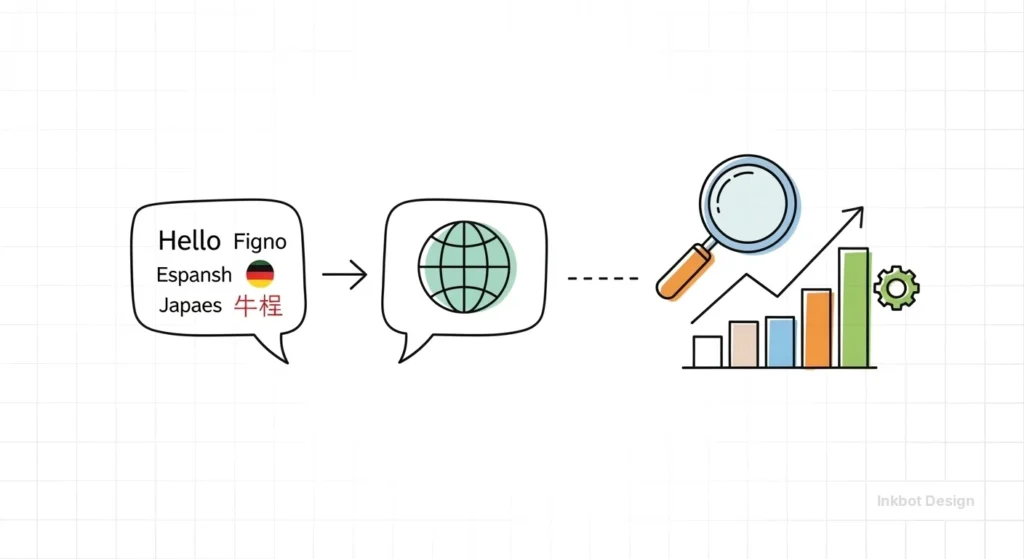
Traditional SEO focused on ranking for keywords; GEO focuses on ensuring your brand is the “Cited Authority” in AI Overviews from Gemini, Perplexity, and SearchGPT.
The Rise of the Global Entity Graph
AI models do not look at your website the way Google did in 2010. They look for “Entities.”
If your brand is mentioned across various international platforms (e.g., a BBC mention in the UK, a Nikkei mention in Japan, and a Folha de S.Paulo mention in Brazil), the AI builds a “Global Entity Graph” for you.
This creates a massive trust signal that allows your brand to appear in “Recommended for you” AI snapshots globally.
Multi-Lingual LLM Sentiment
In late 2025, tools like Adobe Firefly 4 and Gemini for Workspace introduced “Global Sentiment Guardrails.”
These tools allow brand managers to run their visual assets through an AI that predicts how different cultures will react to specific colour combinations and symbols.
For instance, an AI can now flag if a specific shade of white in your logo carries “funeral” connotations in parts of Asia before you spend a penny on a rollout.
AI-Driven Trademark Squatting
The dark side of 2026 is that trademark squatters are now using AI to identify “Rising Star” brands in one country and automatically file for their trademarks in 50 others.
If you are a UK service provider seeing growth, expect your brand name to be targeted globally within weeks. Proactive, AI-enabled IP protection is now a mandatory part of the branding budget.
Global Branding Strategy
| Technical Aspect | The Wrong Way (Amateur) | The Right Way (Pro) | Why It Matters |
| Asset Delivery | Static PDF “Brand Bible” | Modular “Brand API” or Digital Hub | Ensures teams use the latest assets instantly. |
| Typography | Proprietary fonts with UK-only EULAs | Global-licence Open Source (Inter, Noto) | Prevents six-figure licensing lawsuits. |
| Translation | Standard agency “word-for-word” | Transcreation” with local SEO intent | Ensures the brand sounds human, not robotic. |
| Domain Strategy | Single .com for everything | Hybrid: .com + strategic local ccTLDs | Increases trust and local search visibility. |
| Visual Governance | Centralised “Brand Police” | Federated local autonomy | Allows for cultural agility and faster sales. |
| Trademarking | Registering only in the home country | Global first-to-file registration | Prevents extortionate trademark buyouts. |
The Verdict
Global branding in 2026 is no longer a creative vanity project; it is a mechanical, logistical operation. The contrarian truth is that consistency is the enemy of growth.
To scale effectively, you must be willing to sacrifice the “purity” of your brand guidelines in exchange for the “relevance” of local market fit.
Most SMB owners fail because they treat international expansion as a “copy and paste” exercise. They assume that what worked in Belfast or Manchester will work in Berlin or Mumbai. It won’t.
You need a modular system that protects your core equity—your “Brand Soul”—while allowing the “Visual Body” to adapt to its environment.
The most important directive for any entrepreneur reading this is: Audit your IP and asset licensing before you audit your logo.
A beautiful brand that you don’t legally own in your target market is worthless. Build your logistics first, your visuals second.
If you are ready to move beyond the “Brand Bible” and build a scalable system, explore our brand strategy services and learn how we can help you secure your global footprint.
FAQs
What is the most common mistake in global branding?
The most common mistake is assuming that a “Universal Design” will resonate everywhere. Brands often prioritise central visual consistency over local market relevance. This creates “cultural friction,” leading consumers to perceive the brand as an outsider rather than a trusted local option.
How does global branding affect SEO in 2026?
Global branding now relies on Generative Engine Optimisation (GEO). AI search engines like Gemini and Perplexity look for “Entity Trust” across different languages and regions. If your brand is mentioned on authoritative local sites, AI models are more likely to cite you as a global leader in your niche.
Should I use a single .com or local ccTLDs?
A hybrid approach is usually best. Use a main .com for your global presence, but secure local ccTLDs (like .de or .jp) for key markets. Local ccTLDs provide a strong trust signal to regional consumers and can boost conversion rates by up to 33% in certain European markets.
What is transcreation in global branding?
Transcreation is the process of adapting a message from one language to another while maintaining its intent, style, tone, and context. Unlike simple translation, transcreation often involves rewriting slogans or changing visual metaphors to ensure they carry the same emotional weight in a different culture.
How do I protect my brand from trademark squatters?
In “First-to-File” countries like China, you must register your trademark before you even announce your intent to enter the market. Squatters use AI to monitor rising brands globally. Proactive registration in key international jurisdictions is the only way to avoid expensive legal battles or buyouts later.
What is a Modular Brand Architecture (MBA)?
A Modular Brand Architecture is a design system that treats brand assets like interchangeable components. It allows a central team to maintain a core identity while giving local teams the freedom to adjust specific colours, fonts, or imagery to suit their regional market without “breaking” the brand.
Is it expensive to scale a brand internationally?
The cost is not in the design, but in the logistics. Trademark filings, local domain acquisitions, and transcreation services require a significant upfront investment. However, brands that skip these steps often face “rebranding taxes” later that are far more expensive than the initial setup costs.
Why is font licensing a risk for global brands?
Most standard font licences are geographically restricted. If your UK office uses a font, your US branch might not be legally covered by it. In 2026, foundries use automated tools to audit global websites. Using “Global-Ready” open-source fonts like Inter or Noto Sans mitigates this legal risk entirely.
What role does AI play in global branding today?
AI tools are used for “Sentiment Guardrails” to predict cultural reactions to brand assets. They also help in “Project Pandora” style localisation, where AI generates thousands of regional variations for social media and metadata, ensuring the brand stays relevant across diverse digital ecosystems.
When should a small business start thinking about global branding?
You should think about it the moment you choose your brand name. Even if you only operate in one country now, check global trademark databases and domain availability. It is much easier to choose a “globally viable” name today than to change it five years from now when you want to expand.

