5 UK Employer Branding Examples Built on Proof, Not Perks
EY UK stopped asking graduate applicants for a 2:1 in 2015.
The following year, EY UK reported that 18% of its new UK graduate and school-leaver intake would previously have been ineligible to apply.
Nobody needed a careers video to believe the promise. The number was published, and anyone could hold EY to it.
That is what employer branding is for, and it is the part most lists of employer branding examples skip. The popular round-ups are tours of careers pages, employee Instagram grids and Big Tech taglines. Pleasant scrolling.
Of limited use if you run a 120-person firm about to compete with the Big Four for the same audit seniors (they will always have better canapés).
The five UK examples below were chosen on one criterion: each makes a promise about work that a candidate could disprove, then provides the evidence.
- Employer brand must make testable promises about work, not glossy perks.
- Promises should be specific, checkable and costly enough to deter some applicants.
- Publish measurable evidence: intake stats, fee splits, progression frameworks or bonus outcomes candidates can verify.
- Copy mechanisms not aesthetics: disclose how you hire, pay and promote, then live with the consequences.
- Start small: pick one verifiable claim your firm can afford to be checked and publish the result annually.
Which Employer Branding Examples Are Worth Copying?

Copy the employers whose promises about work are specific enough to check and honest enough to put some people off.
EY UK, Keystone Law, Monzo, John Lewis Partnership and Timpson each did this. Copy the mechanism, a public and testable commitment, rather than the careers-page design.
- EY UK removed its 2:1 and 300 UCAS-point entry thresholds in 2015, then published the share of its intake that the change let in.
- Keystone Law states the fee split its self-employed lawyers keep, so a senior solicitor can do the maths before applying.
- John Lewis Partnership announces its staff bonus every March, including the years it pays nothing.
Employer branding examples worth copying make a specific, checkable promise about work and publish evidence that candidates can verify, as EY did with graduate entry.
The Test: Could a Candidate Prove Your Promise Wrong?
The usual round-ups have a point.
A candidate cannot consider an employer they have never heard of, and AIHR’s list of 13 examples and Appcast’s tagline collection both show how Netflix and Spotify stay visible. Visibility gets you onto the shortlist.
It does nothing to help a candidate decide whether to join. That decision is where professional services firms lose people: a CIPD (Chartered Institute of Personnel and Development) survey of 2,018 UK senior HR professionals and decision-makers, conducted between 16/06/2025 and 13/07/2025, found that 31% of employers reported hard-to-fill vacancies.
A promise about work passes the test when it is:
- Specific: it names a trade-off, an opportunity or a way of working.
- Checkable: the evidence is visible for a candidate to review, such as a published framework, a financial result, or a hiring statistic.
- Costly: it deters someone. If nobody opted out, it would be a decoration.
What doesn’t count, however well produced: careers-page polish, the volume of employee posts, and the line “we offer flexibility”. According to Insight, 79% of employees already have some form of flexible working. When four in five have it, flexibility is the price of entry.
The trap is copying the output (the video, the hashtag) without the mechanism underneath.
Employer branding is one expression of your wider brand strategy, and what you promise candidates has to align with what you tell clients; the tension between the two is covered in the corporate brand vs employer brand discussion.
Five UK Employer Branding Examples That Pass the Test
1. EY UK: A Graduate Entry Promise With Its Own Scorecard

EY UK promises that a candidate’s degree classification will not decide their application.
In August 2015, EY UK announced it would drop the 2:1 and 300 UCAS-point thresholds from its student recruitment, citing internal research on more than 400 graduates that found no link between academic results and success in professional qualifications (Times Higher Education, 03/08/2015).
EY UK replaced the filter with online strengths and numerical assessments and a blind CV policy.
The proof came a year later. EY UK reported that 18% of its 2016 intake would previously have been ineligible, alongside a 75% rise in applications and a 10-percentage-point increase in entrants from state schools.
Who opts out: candidates who expected their grades to carry them. The assessment does not care.
The lesson for a smaller firm is to publish the criteria you actually use to hire, then publish what changed as a result.
2. Keystone Law: An Operating Model Senior Lawyers Can Price

Keystone Law’s promise is autonomy with a published price.
Founded in 2002, Keystone Law runs a dispersed model in which lawyers are self-employed, work remotely and keep a fixed share of the fees they generate.
In an interview with Global Legal Post, Keystone Law’s director of growth, Mark Machray, set out the split: Keystone Law retains 25%, the lawyer who brings the work in takes 15%, and the lawyer who does the work takes 60%. Win and run the matter yourself, and you keep 75%.
A senior solicitor can do that sum on a napkin before speaking to anyone at Keystone Law. Legal Futures reported in 2020 that Keystone Law’s principal lawyers had risen 18% to 328, with 239 applications in the year.
Who opts out: anyone who wants a salary, a team built around them and an office to go to.
The Lawyer notes that Keystone Law has no billable targets but can still manage performance firmly. That caveat is findable, which is the point.
3. Monzo: A Progression Framework Published to the Open Internet

Monzo’s promise is that progression and pay follow stated expectations rather than who you have lunch with.
In June 2018, Monzo published its engineering progression framework publicly, and in January 2019, launched progression.monzo.com, mapping skills and behaviours to pay across disciplines. Staff, candidates and competitors can all read it.
The stronger proof came later. When Monzo rebuilt the framework, its own blog reported that around 40% of its engineers found version one unhelpful for development conversations and set out what changed.
An employer that publishes the failure rate of its own people policy has made every other claim easier to believe.
Who opts out: people who prefer promotion by tenure and charm.
Monzo is a bank, so the scale is different. The mechanism transfers anyway: a 150-person firm can publish what an associate, a senior and a manager are expected to do, and what each band pays.
4. John Lewis Partnership: A Profit Share That Reports the Bad Years
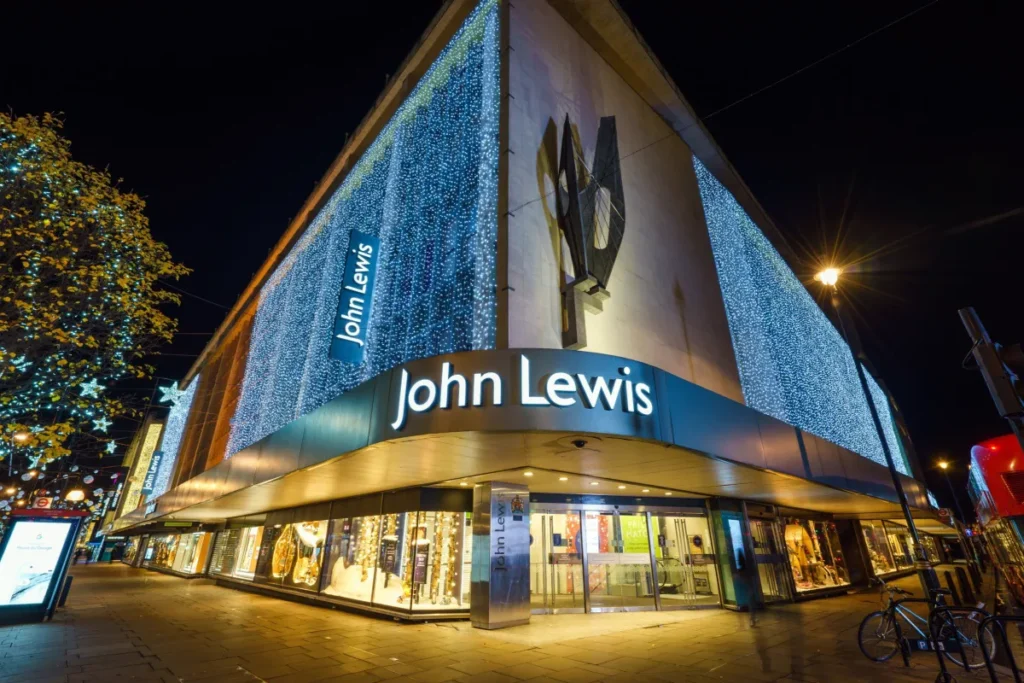
John Lewis Partnership’s promise is ownership. Its employees are Partners and share in profit through an annual Partnership bonus. The real test of that promise is what happens when profit is thin.
John Lewis Partnership paid no bonus for 2022/23, 2023/24 or 2024/25. Sky News reported on 13/03/2025 that the third of those was only the fourth bonus-free year since 1953, despite a sharp rise in profit.
On 12/03/2026, John Lewis Partnership reinstated a 2% bonus, worth about a week’s pay and its first since 2022.
Three blank years, each announced publicly, showed candidates the mechanism working in both directions. A bonus that is always paid is a salary component in disguise. One that can be withheld in public is a profit share.
“An employer brand is a promise someone can check. If no candidate could ever prove your claim false, and no candidate would ever decide against you because of it, you have written decoration. The firms worth copying publish the number, the framework or the fee split, then live with the consequences, including the years the number looks bad.”
Who opts out: anyone who wants a guaranteed bonus. For any practice weighing an employee ownership trust, the lesson is direct: say what staff share in, and publish the result every year.
5. Timpson: A Second-Chance Promise With a Percentage Attached

Timpson promises that a criminal record will not end an application. Timpson has recruited ex-offenders since 2002, and Personnel Today reported that roughly 10% of Timpson’s workforce has a criminal conviction.
The percentage is the brand. Any employer can call itself inclusive. A published share of the workforce with convictions is something a candidate, a customer or a journalist can test.
Who opts out: candidates who are uncomfortable working alongside colleagues with convictions. Timpson accepts that loss.
For a law or accountancy firm, the transferable part is attaching a number to any values claim you make, whether the claim concerns social mobility, career returners or apprentices, and reporting it every year.
Why UK Employers Are Being Pushed From Promises to Proof

UK employer branding is heading towards disclosure, whether employers volunteer it or not.
The UK Government is consulting on requiring employers to publish pay and conditions in job adverts, or to provide that information in writing before an interview, where there is no advert.
The final rules may differ. The direction is set: candidates will expect employment claims to include facts.
Flexibility shows the same shift.
According to Gallup, around 30% of employees worked in a hybrid environment in early 2025, underscoring the significance of hybrid work. Still, far from universal, and the career model for office-based professionals misdescribes much of the workforce.
The differentiator is detail: which roles get which arrangement, and whether managers make it work.
Gender pay gap reporting already works this way for employers with 250 or more employees. Every firm in the 50–200 bracket falls below that threshold, making voluntary publication a genuine signal.
One caution: a gender pay gap figure compares average pay across the whole organisation. It does not show whether a man and a woman doing the same job are paid the same, so never present it as if it does.
What Should a 50–200 Person Firm Borrow?
Borrow the mechanism that matches your hiring problem. None of the five is a universal model, because each solved a different problem.
| Your situation | Borrow from | The checkable proof to publish |
| Losing graduates to the Big Four | EY UK | Your real entry criteria, plus the share of hires from non-traditional routes |
| Hiring senior laterals who value autonomy | Keystone Law | How origination credit and pay are calculated |
| Mid-level staff leaving over unclear promotion | Monzo | A progression framework with expectations and pay bands by level |
| Moving to an employee ownership trust | John Lewis Partnership | What staff share in, and the annual result, good year or bad |
| Repositioning around a social-mobility or values claim | Timpson | A number attached to the claim, reported yearly |
| Rebranding after a merger | None of the five yet | Two reconciled employee experiences, before any external promise |
The merger row matters more than it looks. Two firms with two sets of unwritten rules cannot make a single checkable promise until the internal brand alignment work is complete.
A sceptical MD will raise two objections.
“We have 90 people. EY’s graduate budget is bigger than our turnover.”
Fair, and beside the point. Publishing a progression framework costs a document and an uncomfortable partners’ meeting. The expensive part is keeping the promise, which takes management discipline more than money.
“Publishing this hands competitors our playbook and invites scrutiny.”
The scrutiny is the point. John Lewis Partnership published three bonus-free years, and the promise held because the mechanism was honest. A competitor can copy your progression framework. Then it has to honour it.
The proof also has to be true inside the building first. If your staff would laugh at the claim, fix the employee value proposition and your internal branding before touching the careers page.
Pick the Promise You Can Afford to Have Checked
The five examples share no aesthetic. EY UK is an assessment process; Keystone Law is a fee split; Monzo is a document; John Lewis Partnership is an annual announcement; and Timpson is a percentage.
What they share is a promise specific enough to test and costly enough to deter someone, with evidence a candidate can find without asking HR.
Before you commission a careers page, write down the one claim about working at your firm that you would be happy for a sceptical candidate to verify.
If you cannot find one, the problem sits upstream of recruitment marketing, in the brand itself.
A free Brand Equity Audit™ shows exactly where your brand is losing commercial ground, including the gap between what you tell candidates and what your people experience, and what to do about it.
Frequently Asked Questions
What makes a good employer branding example?
A good employer branding example makes a specific promise about work that candidates can verify, and it deters some people while attracting others. EY UK’s removal of degree thresholds qualifies because EY UK later published the share of its intake that changed. Attractive careers pages alone do not qualify.
Is a careers page the same as an employer brand?
No, a careers page is one channel for an employer brand. The employer brand is the promise about working at the firm and the evidence behind it. A polished careers page making unprovable claims is recruitment marketing without a brand underneath, and candidates increasingly check claims against reviews, pay data and former staff.
Should a firm with fewer than 250 employees publish its gender pay gap?
Publication is voluntary for companies with fewer than 250 employees, which is exactly why it signals something. A firm of 50–200 staff that publishes its figures shows confidence in its pay practices. Present the figure accurately: a gender pay gap compares average pay across the organisation and does not prove equal pay for equal work.
What is the difference between employer branding and an employee value proposition?
An employee value proposition defines what a firm offers its people in exchange for their work. Employer branding communicates the offer to candidates and staff, with proof attached. A weak EVP cannot be rescued by employer branding, because the communication can only be as credible as the offer it describes.
Do employer branding examples from consumer brands apply to law and accountancy firms?
Yes — the mechanism applies even when the tone does not. Oatly’s playful careers voice would sit oddly at a tax practice, but Monzo’s published progression framework or John Lewis Partnership’s annual bonus disclosure translates directly. Borrow the type of evidence a brand publishes, never the personality it publishes it in.
Will UK employers have to publish salaries in job adverts?
The UK Government is consulting on requiring employers to publish pay and conditions in job adverts, or provide them in writing before an interview. The final rules are not settled. Firms that publish pay ranges voluntarily now will be ahead of whatever form the requirement eventually takes.
