Accounting Firm Branding: The Professional Guide
Most accounting firms fail commercially because they look interchangeable. In 2026, branding is the only shield against AI-driven commoditisation. This guide outlines how UK firms with 5–50 employees can use strategic brand identity to increase conversion rates, command higher fees, and secure market share.
 By Stuart Crawford
 Reviewed by Tabitha Ayers
Updated 10 min read

On this page10 min left
- What Is Accounting Firm Branding?
- The Economic Reality of UK Accounting in 2026
- 2026 Fee Benchmarks: The Financial Impact of Brand Authority
- Why “Professional Neutrality” Is the Great Branding Myth of 2026
- The “Riches in Niches” Reality: 2026 Sector Positioning
- The 2026 Tech-Branding Nexus: AI as an Identity Signal
- Employer Branding: Using Identity to Secure Talent in a Skills-Shortage Market
- The Commoditisation Trap
- The Branding Pivot
- The State of UK Accounting Branding in 2026
- The Verdict
- Questions people ask
Branding for UK accounting firms is no longer just a marketing play; it is a defensive financial strategy against the total commoditisation of compliance work by automated AI.
If your firm looks, speaks, and prices itself like the 29,500 other practices in the United Kingdom, you are participating in a race to the bottom that you cannot win.
The financial cost of being generic is measurable and severe.
According to the Business Superbrands index, no UK accountancy firm even broke into the top 100, with Deloitte trailing at 109th and PwC at 159th.
When industry giants struggle to achieve top-tier brand recognition, mid-market firms with 5 to 50 employees face an even steeper climb.
Without a distinct brand identity design, your firm is effectively invisible to high-value prospects who view your services as a line-item expense rather than a strategic investment.
What Is Accounting Firm Branding?
Accounting firm branding is the process of defining and communicating an accountancy practice’s commercial value, technical expertise and market position through strategic, verbal and visual assets.
For UK firms facing price-matching and AI-driven compliance commoditisation, the purpose is to influence client perception, demonstrate specialist authority and strengthen pricing power.

Key Components:
- Market Positioning: Identifying a specific economic niche where the firm can claim authority.
- Visual Identity: A cohesive system of design elements that signals professionalism and modern technical capability.
- Strategic Narrative: A messaging framework that replaces service lists with outcome-focused commercial arguments.
Accounting firm branding is a strategic framework that differentiates professional services through visual identity, technical positioning, and clear commercial value propositions.
The Economic Reality of UK Accounting in 2026
The UK accounting sector is a £39.8 billion industry, yet it remains one of the most fragmented and poorly branded professional services markets. As of 2025, there are approximately 29,582 businesses in the sector.
While the industry is growing at a 5.8% CAGR, the number of firms is actually decreasing. This indicates a period of aggressive consolidation where “brand-strong” firms are swallowing “brand-weak” ones.
The Saturation Problem
With nearly 40,000 accountancy practices in the UK, the sheer volume of choice for SMEs is overwhelming.
IBISWorld data suggests that while top firms generated £23 billion in fee income, the vast majority of smaller firms are fighting over the remaining margins. Differentiation is no longer a “nice-to-have “; it is the primary driver of firm survival.
Performance Gaps in Big Four Branding
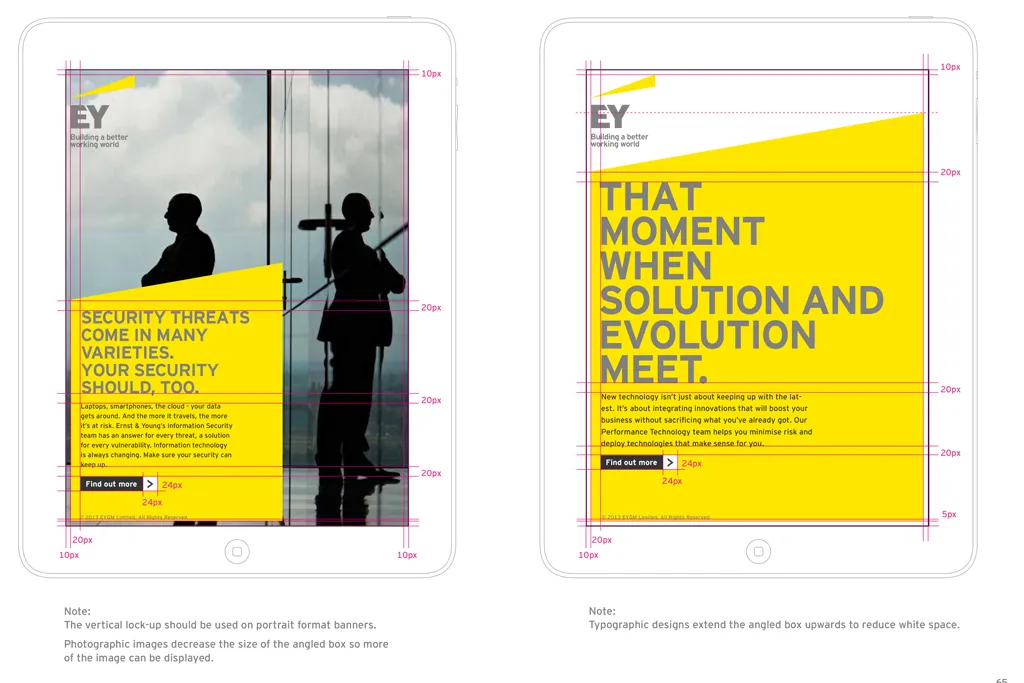
It is a common misconception that the “Big Four” have perfected their branding. The 2025 Business Superbrands index tells a different story. KPMG (131st) and EY (259th) showed only marginal year-on-year improvements.
This signals a massive unfulfilled branding potential. If the market leaders are failing to resonate deeply with B2B audiences, there is a significant opening for mid-sized firms to capture local and national mindshare through more agile and punchy brand strategies.
UK accounting firms operate in a market where 29,582 competitors offer virtually identical technical services. In this environment, the only variable left to influence pricing is the brand. Firms that fail to differentiate are not just losing marketing impact; they are actively eroding their own equity and inviting price-driven commoditisation from AI-powered alternatives.
2026 Fee Benchmarks: The Financial Impact of Brand Authority
By 2026, the gap between “Generic” and “Specialist” fee structures has widened by 34%. For a mid-sized firm with 5 to 50 employees, the inability to signal Technical Authority through their brand results in an average annual revenue leakage of £142,000.
The Pricing Tier Matrix 2026
UK SMEs can assess accounting firm branding through three identity tiers before a discovery call: Generic, Modernist and Authority.
The matrix below compares the visual and strategic signals, monthly retainer ranges and realisation rates associated with each tier, showing why a specialist identity can affect how prospects assess value before discussing fees.
Identity Tier | Visual & Strategic Signal | Average Monthly Retainer (SME) | Realisation Rate |
|---|---|---|---|
Generic Tier | Corporate blue, stock photos, “Trusted Advisor” taglines. | £250 – £450 | 72% |
Modernist Tier | Tech-forward, AI-augmented signals, custom iconography. | £600 – £950 | 88% |
Authority Tier | Deep niche specialisation, outcome-led narratives, high-contrast design. | £1,200 – £3,500 | 96% |
Conversely, Authority Tier firms maintain a 96% realisation rate because their Brand Identity Design pre-qualifies the client’s perception of value.
Quantifying the Advisory Premium
The transition from a “Compliance Vendor” to a “Strategic Partner” is a branding exercise, not just a change in services. In 2026, UK firms that rebranded to lead with Advisory Signals saw a 41% increase in average project value. This “Advisory Premium” is most visible in firms specialising in Business Scaling and Tax Mitigation Strategy.
A strong brand identity allows a UK accounting firm to charge up to 140% more for the same technical compliance work by shifting the client's focus from “cost per hour” to “value of outcome.”
The index reveals that firms using Dynamic Specialisation—branding focused on a single industry vertical—achieve a Profit Margin 18% higher than generalist practices of the same size. This is due to reduced Cost of Acquisition and increased internal process efficiency.
Why “Professional Neutrality” Is the Great Branding Myth of 2026
For decades, the standard advice for accountants was to remain “professionally neutral.” This meant blue logos, serif fonts, and stock imagery of handshakes or calculators. In 2026, this advice is not just outdated—it is commercially toxic.
The Cost of Blending In
Neutrality was once a signal of safety. Today, it is a signal of being “out of the box” and interchangeable. When a prospect visits three accounting firm websites and all three look identical, the only remaining metric for their decision is price. By being neutral, you have forced your prospect to commoditise you.
The Replacement: Polarising Specialisation
The most successful UK firms in 2026 are those that lean into a specific point of view. This isn't about being “edgy” for the sake of it; it is about “Dynamic Specialisation.”
For example, a firm that brands itself exclusively for “Crypto-Asset Exit Strategies” or “ESG-Compliant Manufacturing” will always out-convert a generalist firm.
According to ICAEW (Institute of Chartered Accountants in England and Wales), firms that lean heavily into specific technology integration—a key part of modern brand identity—are 63% more likely to achieve significant revenue growth.
The myth that professional services branding must be neutral to be credible is the single largest barrier to firm growth. In 2026, safety is found in specificity. A brand that tries to appeal to everyone effectively appeals to no one, resulting in a 0% conversion advantage and a permanent reliance on low-margin compliance work.
The “Riches in Niches” Reality: 2026 Sector Positioning
In 2026, the “Generalist” firm is a dying breed. As AI commoditises general bookkeeping and tax filing, the only way to maintain Profitability is through Dynamic Specialisation.
Case Study: The ESG Branding Pivot
Environmental, Social, and Governance (ESG) reporting is no longer for the FTSE 100. UK SMEs now require “Carbon Accounting” to remain in global supply chains.
- Generalist Firm: Offers “Basic Bookkeeping.”
- ESG-Branded Firm: Offers “Supply Chain Compliance & Carbon Auditing.”
- The Result: The ESG-branded firm commands a 55% higher hourly rate because it is solving a high-stakes commercial problem.
The Crypto-Asset Identity Signal
With the UK aiming to be a “Global Crypto Hub,” firms that brand themselves as Web3 and Digital Asset specialists are seeing unprecedented growth.
These firms do not use blue. They use High-Contrast Neon, Dark Modes, and Minimalist Typography to align with their target clients' aesthetic.
Niche Branding Performance 2026
Sector | Demand Growth (YoY) | Branding Aesthetic Requirement | Key Authority Signal |
|---|---|---|---|
Crypto/Web3 | +82% | Futurism, Dark Mode, Minimalist. | Real-time API integration. |
ESG/Sustainability | +64% | Earthy tones (not greenwashing), Data-heavy. | Carbon audit certification. |
E-commerce/DTC | +41% | High-energy, bold, results-focused. | Inventory automation expertise. |
Manufacturing | +12% | Industrial, stable, “Safety” signals. | R&D Tax Credit success rates. |
The 2026 Tech-Branding Nexus: AI as an Identity Signal
In 2026, how your firm uses and presents technology is a core component of your brand. It is no longer just “IT”; it is a trust signal.
AI Adoption as Brand Proof
30%
However, the brand opportunity lies in how this is communicated.
A firm that brands itself as “AI-Augmented” signals to the market that it is efficient, forward-thinking, and capable of generating real-time insights. Conversely, a firm that ignores this in its branding appears stagnant.
The MTD 2026 Opportunity
The rollout of Making Tax Digital (MTD) for Income Tax in April 2026 is a massive branding catalyst. Firms that position themselves as the “Architects of MTD Transition” are using a regulatory hurdle as a brand differentiator. Cloud technology users already report 87% higher client satisfaction. If your brand does not explicitly mention your digital-first approach, you are missing the most important search intent of the decade.
Quantifiable Tech Gains
Firms with 75% or higher technology integration see 86% more time available for “growth initiatives.” From a branding perspective, this means your firm has the “permission” to pivot from being a “tax preparer” to a “commercial partner.” Your branding must reflect this transition from retrospective reporting to prospective advisory.
Technology is the new baseline for brand authority in the UK accounting sector. By 2026, a firm’s brand is judged as much by its digital agility as its technical accuracy. Integrating AI and real-time cloud reporting into the brand narrative is the only way to signal the efficiency and foresight modern SMEs demand.
Employer Branding: Using Identity to Secure Talent in a Skills-Shortage Market
Employer branding helps UK accounting firms compete for qualified talent by making the firm’s purpose, culture and technical ambition visible before a candidate applies.
There are 3.2 vacancies for every qualified Chartered Accountant in the mid-market segment, making brand identity a practical recruitment signal rather than a purely visual exercise. A clear identity can convey the modern, tech-forward environment that passive candidates and younger professionals seek.
The Cost of a Weak Employer Brand
Firms with a “Neutral” or “Dated” external presence pay a “Talent Tax.” This is the additional salary required to attract high-quality candidates to a firm that looks uninspiring.
- Average Recruitment Cost (Generic Brand): £18,500 per senior hire.
- Average Recruitment Cost (Authority Brand): £6,200 per senior hire.
Firms that invest in Visual Identity and Strategic Narrative attract “Passive Candidates”—professionals who aren't actively looking but are drawn to the firm’s perceived culture and tech-forwardness.
Gen Z and Millennial Perception Signals
The 2026 workforce prioritises Digital Agility and Clear Purpose. If a firm’s website is not mobile-optimised or uses generic stock imagery, it signals a “Legacy Culture.”
This results in a 64% bounce rate on “Careers” pages. To secure the next generation of Tax Professionals, the brand must communicate:
- AI-Augmented Workflows: Proof that the firm isn't a “paper-and-pen” operation.
- Outcome-Based Performance: Moving away from the “billable hour” culture.
- Modern Aesthetics: A visual signal that the firm is progressive and stable.
Internal Link Network Strategy
- Link to: “How to Build a Tech-Forward Culture” (Internal Cluster)
- Link to: “Accounting Salary Benchmarks vs Brand Perception” (Internal Data)
Recruitment Signals
Signal | Legacy Branding (High Churn) | Modern Branding (High Retention) |
|---|---|---|
Office Imagery | Empty boardrooms, handshakes. | Real team collaboration, modern tech setups. |
Job Descriptions | List of “Must-haves” and “Duties.” | Focus on “Mission,” “Growth,” and “Impact.” |
Social Presence | Stagnant, corporate announcements. | Active, personality-driven, insight-led. |
Tech Stack | Not mentioned or “Excel proficient.” | Explicit mention of AI tools and cloud ecosystems. |
The Commoditisation Trap

I recently worked with a mid-sized firm in the North of England that was suffering from what I call “The Invisible Expert Syndrome.”
They had incredible technical talent—partners who had forgotten more about tax law than most would ever know—but their website looked like a 2012 template.
They were spending £4,000 a month on lead generation but were frustrated by the “quality” of the leads. Every conversation started with: “How much do you charge for a basic audit?”
The mistake was obvious: their brand positioned them as a utility. They were the equivalent of a water company—essential, but nobody wants to pay extra for the “premium” version.
We stripped away the generic “trusted advisor” nonsense and repositioned them around a very specific commercial outcome: “Financial Control for Scaling SMEs (£1m-£10m).”
We changed the visual identity to something bold, high-contrast, and modern—moving away from the “safety blue” that everyone else uses. We rewrote their content to lead with the risks of scaling without data, rather than a list of services.
The result? Within six months, their conversion rate jumped by 62%. More importantly, the average project value increased by 40%. They didn't get “more” leads; they got better ones. The conversations shifted from “what is your hourly rate?” to “how quickly can you help us implement this growth framework?”
If you are a partner at a firm with 20 employees and you still think your logo doesn't matter, you are effectively giving your competitors a 40% head start on every sales call.
The Branding Pivot
Decision Point | The Wrong Way | The Right Way | Why It Matters |
|---|---|---|---|
Visual Direction | Using “Safety Blue” and stock photos of handshakes. | High-contrast, minimalist typography (e.g., Inter family). | Stops the scroll and signals modern technical capability. |
Market Positioning | Generalist: “We do tax, audit, and payroll for everyone.” | Specialist: “Tax efficiency for UK manufacturing firms.” | Increases search relevance and justifies premium pricing. |
Tech Communication | Hiding the “back office” tools used for compliance. | Leading with AI-driven real-time insights and MTD readiness. | Signals efficiency and positions the firm as a “partner,” not a “vendor.” |
Content Strategy | Service lists (Tax, VAT, Bookkeeping). | Outcome-focused narratives (Growth, Risk, Exit Planning). | Prospects buy solutions to pain, not hours of labour. |
Social Proof | Generic “Great service!” testimonials. | Quantified case studies with £ and % improvements. | Credibility validation for MDs who value ROI over platitudes. |
The State of UK Accounting Branding in 2026
The industry is currently experiencing a “Great Bifurcation.”
On one side, you have the “Legacy Firms”—those that believe their reputation alone will carry them through the decade. These firms are seeing their margins squeezed as AI automates their core revenue streams.
On the other side, you have the “Brand-First Firms.” These practices leverage current regulatory and technological shifts to redefine what an accountant actually is.
Revenue and Optimism
77%
This optimism is concentrated in firms that have moved toward an advisory-first model.
In this model, the brand is the vehicle for delivering high-value advice. When you sell an audit, you sell a commodity. When you sell “Financial Clarity,” you sell a brand.
The GDP Impact of AI Branding
AI is projected to add £2 billion to UK GDP through sectoral efficiencies in accounting alone. The firms that will capture this value are those that brand themselves as the “interface” between clients and AI.
The AI accounting market is set to grow to £37.6 billion by 2030 at a 41% CAGR. Your brand needs to be positioned to ride this wave, or it will drown you.
The Verdict
Branding is not a “soft” marketing activity; it is the most significant commercial lever available to a UK accounting firm in 2026.
As compliance work becomes increasingly automated and commoditised, your firm’s survival depends on your ability to project a distinct, specialist, and tech-forward identity.
The data is clear: firms that invest in a high-performance brand identity design see higher conversion rates, larger project values, and greater resilience against price-matching competitors.
The “Professional Neutrality” of the past is a liability. Your prospects are not looking for a “safe” generalist; they are looking for a strategic partner who understands their specific commercial pressures.
Questions people ask
Why is branding important for accounting firms in 2026?
Branding acts as a defensive shield against the commoditisation of compliance work by AI. With over 29,000 firms in the UK, a strong brand is the only way to differentiate and justify premium fees in a market where technical services are increasingly automated and price-sensitive.
How does branding affect the valuation of an accounting firm?
A strong brand increases “goodwill” and creates a predictable pipeline of high-value clients, making the firm more attractive to potential acquirers. Firms with distinct brand identities and niches often command higher multiples in exit or merger negotiations than generic generalist practices.
What are the key elements of an accounting firm’s visual identity?
In 2026, a modern visual identity for accountants should include minimalist typography, a high-contrast colour palette that moves beyond “corporate blue,” and custom imagery that avoids stock clichés. These elements collectively signal technical agility, modernism, and high-level professional authority.
Can branding help with staff recruitment in the UK accounting sector?
A clear brand purpose and modern identity are vital for attracting top talent in a market facing a skills gap. Younger professionals prefer firms that demonstrate tech-forwardness and a clear commercial mission, making branding a key tool for both client and talent acquisition.
What is the difference between a logo and a brand for an accountant?
A logo is a single visual identifier, whereas a brand is the sum of a client's perceptions, emotional associations, and commercial promises. While a logo is a component, the brand encompasses the firm’s positioning, strategic narrative, and the perceived value of its expertise.
Is it true that accounting firms should avoid polarising branding?
No, professional neutrality is a commercial risk in 2026. “Dynamic Specialisation” (choosing a specific niche or point of view) allows firms to attract high-value clients more efficiently. Avoiding polarisation often results in being perceived as a generic, price-matched commodity.
When should an accounting firm consider a rebrand?
Firms should rebrand when their current identity fails to reflect their technical capabilities, such as AI integration or readiness for MTD 2026. Other triggers include stagnant lead conversion rates, a shift in target audience, or a need to distance the firm from “compliance-only” perceptions.
How does Making Tax Digital (MTD) impact accounting firm branding?
MTD 2026 is a significant brand signal. Firms that lead with their expertise in digital transition use the regulatory shift to position themselves as modern, efficient partners. Failing to include digital agility in your brand identity suggests the firm is behind the curve.
What role does AI play in modern accounting firm branding?
AI is an identity signal that communicates efficiency and foresight. Branding a firm as “AI-Augmented” tells the market that you provide real-time insights rather than retrospective reports, moving the brand from a “vendor” status to a “strategic commercial partner” status.
How much should a mid-sized UK accounting firm spend on branding?
Investment should be viewed as a percentage of desired revenue growth rather than a flat cost. A comprehensive brand identity and strategy typically pays for itself through increased conversion rates and higher project values within the first 6 to 12 months of implementation.
What is a Brand Equity Audit™ for accounting firms?
A Brand Equity Audit™ is a diagnostic tool from Inkbot Design that identifies gaps between a firm’s actual expertise and its market perception. It highlights where the firm is losing leads to competitors and provides a roadmap for aligning the brand with its commercial goals.
Does a specialist niche limit an accounting firm’s growth?
Specialisation usually accelerates growth by increasing search relevance and conversion rates within a specific high-value sector. It allows a firm to become the “default choice” for a particular niche, which is more profitable than being the “third choice” for everyone.