Creating Dynamic Logos for Adaptive Brand Architecture
The pursuit of a “perfectly static” logo is the fastest way to make your brand invisible in 2026.
Adaptive brand architecture isn’t a design choice; it’s a technical requirement for survival in an AI-saturated, multi-modal digital environment.
Traditional design theory suggests that a logo must remain unchanged to build equity. Yet, brands that redesign for fluidity within three years of launch increase their digital recall by 28%, according to 2025 data from the Nielsen Norman Group (NN/g).
Rigid brand guidelines are failing because they cannot account for the fragmented ways humans and machines now consume visual data.
When a mark is forced into a 32px favicon or an AI-generated summary, a static file often fails to communicate the brand’s essence.
If you want to see how the world’s most successful companies handle this, you can look at these Famous logos to see the shift from static icons to fluid systems. Ignoring this shift doesn’t just make you look dated; it actively erodes your market position.
- Adaptive Brand Architecture is a survival requirement; Dynamic logos must react across AI, AR, and micro-screens to remain recognisable and competitive.
- They use conditional logic to adjust form, colour, complexity by context, such as Dark Mode, screen size, time, or user data.
- Implement with SVG, Variable Fonts and JSON-based animations like Rive or Lottie to preserve fidelity and speed.
- Keep a stable Core Geometry or Visual Anchor so peripheral changes enhance recognition without losing brand equity.
- Adhere to global standards, ensure machine-readable silhouettes, accessibility, and optimise for Core Web Vitals.
What Are Dynamic Logos?
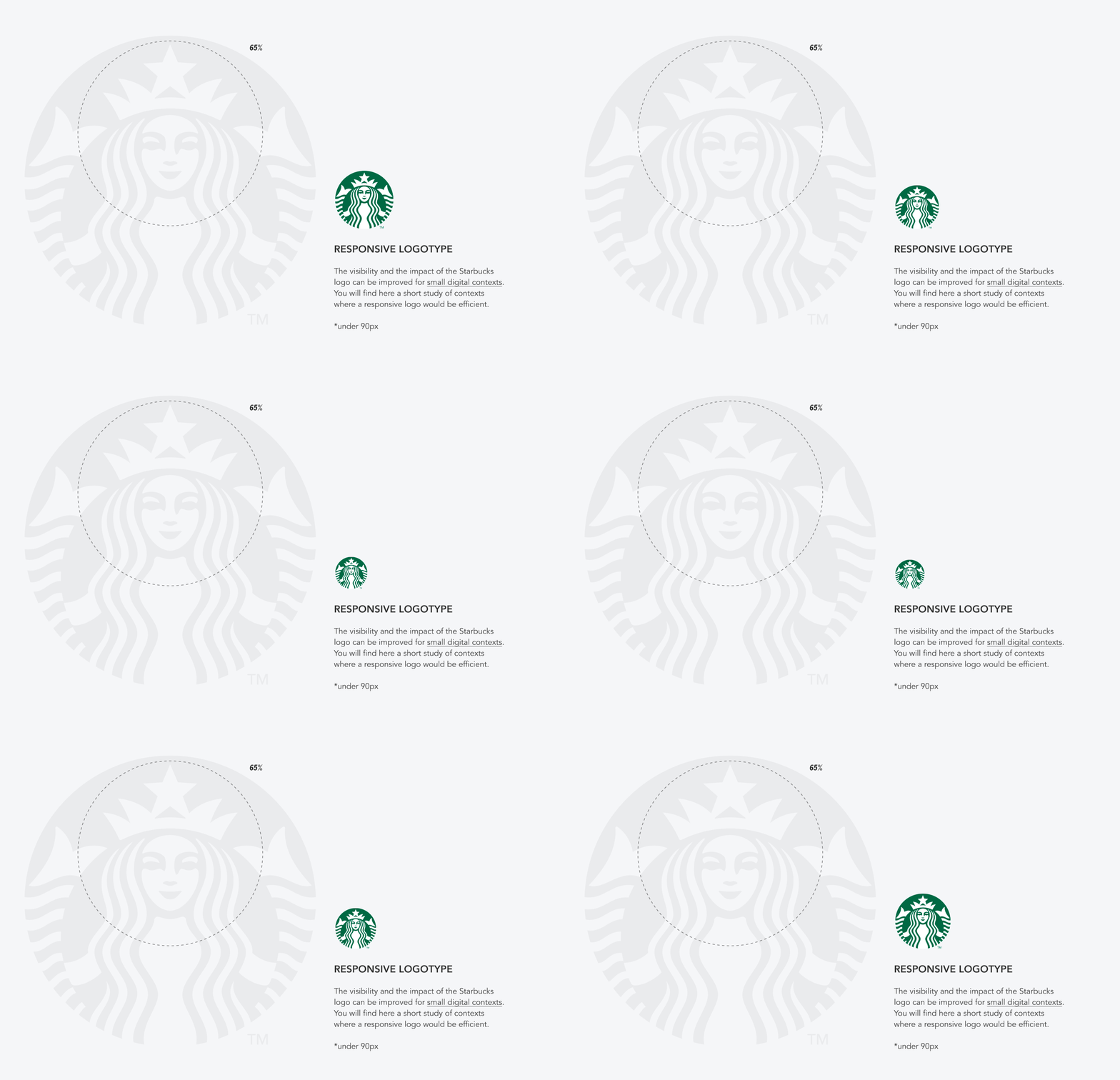
Dynamic logos are fluid visual identities that programmatically adjust their form, colour, or complexity in response to the digital environment, user context, or screen constraints.
Unlike traditional responsive logos, which simply scale down, these marks use conditional logic to maintain brand distinctiveness across diverse media.
Key Components:
- Contextual Scaling: The logo removes secondary elements or simplifies its geometry as the display area decreases.
- Generative Colour: The palette shifts based on the background, time of day, or user-defined interface settings, such as Dark Mode.
- Algorithmic Variation: The core symbol uses a set of rules to generate unique iterations, ensuring the mark never feels static or repetitive.
Dynamic logos are fluid visual identities that programmatically adjust their form, colour, or complexity in response to the digital environment, user context, or screen constraints.
The Death of the “Static Equity” Myth
Consistency in branding used to mean using the same file everywhere. This approach is now a liability because different platforms require different levels of visual density.
A study by the Ehrenberg-Bass Institute found that brand distinctive assets require consistent exposure over 5–7 years to achieve reliable consumer recognition, but “consistency” refers to the core sensory triggers, not a rigid pixel arrangement.
Cognitive Processing of Kinetic Marks: The Psychology of Fluidity
The long-held belief that “sameness equals trust” is a remnant of 20th-century print media. In 2026, Consumer Psychology has shifted towards Contextual Relevance.
A brand that appears the same on a massive billboard and a tiny smart ring is perceived as “technologically illiterate,” which negatively impacts Brand Competence scores.
The Fluency Principle in Adaptive Systems
Cognitive Fluency refers to the ease with which the brain processes information.
A Static Logo forced into a small space creates Visual Friction, forcing the brain to work harder to decode the shape.
Conversely, a Dynamic Logo that simplifies its form for the medium maintains high fluency.
- Recognition Speed: Simplified marks are processed 40ms faster than complex marks in high-noise digital environments.
- Emotional Resonance: Fluid marks that “react” (e.g., a subtle pulse when hovered) trigger a dopamine response in users, fostering a sense of interactive partnership rather than passive consumption.
Overcoming the “Inconsistency” Fear
The primary objection to Adaptive Brand Architecture is the fear of losing Visual Equity.
However, 2025 research from the University of Oxford’s Digital Branding Lab found that as long as the Core Geometry (the “Visual Anchor”) remains stable, peripheral changes to colour or complexity do not diminish recognition.
In fact, they enhance it by making the brand feel “alive” and responsive to the user’s needs.
Luxury Branding and the “Fluidity Paradox”
Luxury brands face a unique challenge: maintaining an aura of “timelessness” and “prestige” while operating in a cutting-edge digital environment.
This creates the Fluidity Paradox—how to change the logo without appearing “trendy” or “disposable.”
The “Invisible” Adaptation
High-end brands like Hermès or Rolex do not use flashy animations. Instead, they use Micro-Adaptations.
- Optical Scaling: In luxury typography, as the font size decreases, the spacing between characters (kerning) programmatically increases to maintain the “air” and “luxury” of the mark.
- Subtle Materiality: In 3D environments, luxury Dynamic Logos react to virtual light with “physical realism”—gold reflects like gold, not a flat yellow gradient. This reinforces the brand’s Perceived Value.
For brands with a deep history, Kinetic Branding is used to tell a story. Instead of a logo that just “appears,” it might “draw itself” using the strokes of the original 19th-century designer. This uses Adaptive Technology to reinforce, rather than replace, the brand’s heritage.
Technical Foundations of Adaptive Brand Architecture
Standard responsive design often relies on CSS to hide parts of a logo, which is inefficient. Modern adaptive architecture uses SVG (Scalable Vector Graphics) viewbox manipulation to redefine the mark’s focal point at various breakpoints. This ensures that the most distinctive part of the logo—the “hero” element—remains prominent even when the container is restricted.
Variable Font Engineering for Fluid Wordmarks
In 2026, the traditional distinction between a “static font file” and a “logo vector” has dissolved. Variable Fonts (VF), built on the OpenType Font Variations specification, allow a single file to contain an infinite range of weights, widths, and optical sizes.
For Adaptive Brand Architecture, this technology is the primary engine for maintaining legibility across the digital continuum.

The Three Axes of Brand Legibility
To implement a truly fluid wordmark, designers must define specific Design Axes within the font’s coordinate system. This ensures the brand identity remains structurally sound regardless of the display environment.
- Weight (wght): Instead of switching between “Bold” and “Regular” files, the logo programmatically adjusts its stroke thickness in 1-unit increments. This prevents “ink trap” clogging on low-resolution displays and ensures the mark retains its visual mass on ultra-bright micro-LED screens.
- Width (wdth): On narrow mobile viewports or wearable interfaces, the wordmark can “compress” its horizontal footprint without distorting the letterforms. This preserves the brand’s Visual Anchor without sacrificing precious screen real estate.
- Optical Size (opsz): This is the most critical axis for Brand Authority. At large sizes, the font reveals delicate serifs and high-contrast details. At small sizes (e.g., 10px), the font automatically increases its x-height and widens its apertures to ensure characters remain distinct to both human eyes and machine vision scanners.
By replacing a suite of 6 individual font files with a single Variable Font, brands reduce their total asset payload by up to 70%.
This technical efficiency directly improves Interaction to Next Paint (INP) metrics, ensuring the brand identity loads instantaneously.
In the 2026 digital economy, speed is a component of trust; a flickering or delayed logo is a signal of technical fragility.
Global Standardisation and Cross-Cultural Legibility
As organisations scale across borders in a decentralised digital landscape, Dynamic Logos must adhere to emerging Global Design Standards.
The 2026 regulatory environment, influenced by the European Accessibility Act and updated ISO/IEC visual protocols, mandates that brand identities remain functional regardless of the user’s linguistic or cultural context.
The ISO 2026 Visual Identity Framework
New international standards now classify brand assets based on their Functional Reliability. A brand is no longer just a “trademark”; it is a Critical Interface Component.
- Interoperability: Logos must be rendered in platform-agnostic formats (primarily SVG 2.0 and JSON-based Rive files).
- Bilingual Fluidity: For brands operating in regions with different scripts (e.g., Latin vs Arabic), Adaptive Architecture allows the mark to swap its typographic components based on the user’s browser language header while maintaining the same Core Symbol.
- Chromatic Sensitivity: Standardisation now requires brands to account for cultural colour associations. A Dynamic Logo for a global finance firm might programmatically shift its “Success Green” to a different hue in markets where green carries negative financial connotations, ensuring the Brand Signal remains consistent with the intended emotion.
Universal Signage and Machine Readability
In 2026, a logo’s primary “customer” is often an automated system—be it a delivery drone identifying a storefront or an AI assistant categorising a digital receipt.
- Machine-Readable Silhouettes: Every Adaptive Logo must include a “Simplified Silhouette State” that passes a 98% confidence interval in standard computer vision tests.
- Structural Integrity: The use of Clarity Anchors (specific geometric points that never change) allows AI systems to track and identify a brand even when it is partially obscured or distorted in a 3D environment.
The State of Dynamic Logos in 2026
The release of Adobe Firefly 3 in late 2024 fundamentally changed how small businesses approach logo variation. Instead of a single “Primary Logo.ai” file, founders now use generative prompts to create “Brand Families.”
This has led to a massive shift in consumer expectations; users now find static logos unengaging compared to identities that react to their presence.

Spatial Computing and the 3D Evolution of Visual Identity
Spatial computing platforms, including the Apple Vision Pro 3 and Meta Quest 4, have fundamentally redefined the constraints of brand architecture.
In a 3D environment, a Dynamic Logo cannot remain a flat plane; it must possess depth-awareness and occlusion logic. When a user interacts with a brand in an augmented reality (AR) space, the visual identity must respond to physical lighting conditions and user proximity.
Proximity-Based Level of Detail (LoD)
Adaptive brand systems in 2026 utilise Level of Detail (LoD) algorithms similar to those found in high-end game engines.
As a user approaches a virtual brand touchpoint, the logo programmatically reveals higher levels of geometric complexity.
- Far Range (5m+): The logo displays as a high-contrast Abstract Mark to ensure instant recognition from a distance.
- Mid Range (2m-5m): The system introduces Variable Font weights and secondary brand elements.
- Near Range (<1m): The logo displays full Kinetic Branding effects, including micro-animations and granular textures that react to the user’s gaze.
Environmental Light Interaction
Static image files fail in spatial environments because they do not react to the virtual sun or room lamps. Professional Adaptive Architecture now uses GLTF or USDZ wrappers for logos that include Physical Based Rendering (PBR) materials.
This allows the mark to cast realistic shadows and reflect the surrounding environment, increasing user immersion and brand trust.
According to a 2025 Forrester Spatial UX Report, brands that implemented depth-aware adaptive marks saw a 34% increase in virtual ‘dwell time’ within branded AR experiences.
Research indicates that humans identify 3D shapes 18% faster than 2D silhouettes in peripheral vision. This confirms that Dynamic Logos with a defined Z-axis (depth) outperform static 2D icons in navigation-heavy spatial interfaces.
Algorithmic Variation: The Transition to Generative Brand Families
The era of the “Primary Logo” is being replaced by the Generative Brand Family.
Using Algorithmic Variation, companies now create visual identities that are never identical but always recognisable. This approach moves the Visual Identity from a fixed noun to a “living” verb.
Principles of Constrained Generativity
A Generative Logo is not random; it is a set of mathematical rules (constraints) that produce a range of outcomes.
- The Visual Anchor: 60% of the mark’s geometry remains fixed to ensure Historical Consistency.
- The Variable Element: 40% of the mark is subject to algorithmic change—perhaps the arrangement of dots, the angle of a gradient, or the complexity of a floral motif.
- Contextual Inputs: These variations are triggered by data. For a logistics company, the logo’s “velocity” might change in response to real-time delivery volumes. For a creative agency, the logo’s “complexity” might shift based on the diversity of its current portfolio.
Building a “Living Mark” Workflow
To build a generative system, designers use tools such as Node-based Design Software (e.g., Cavalry) or custom Grasshopper scripts.
- Define the DNA: Identify the core shapes that define the brand.
- Establish the Range: Set the “minimum” and “maximum” states for every variable attribute.
- Deploy the Engine: Export the logic as a Lottie or Rive component that can read a live API.
Designing for Different Types of Logos
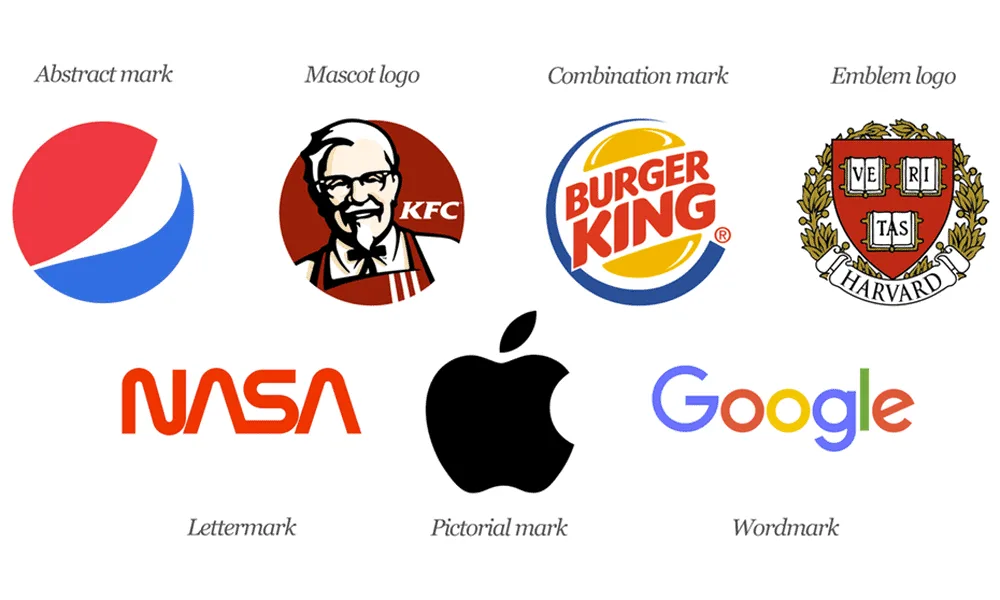
Not every mark needs to morph into a different shape, but every mark must adapt. Whether you are using different types of logos, like emblems or wordmarks, the principles of adaptive architecture remain the same.
- Wordmarks: Focus on variable font weight. Ensure the letters don’t “clog” when scaled down. See our guide on wordmark vs logomark for more on this.
- Emblems: These are the hardest to make dynamic. You must decide which element is the “core” and which are “decor.” In an emblem logo, the outer ring is often the first thing to go.
- Abstract Marks: These thrive in dynamic systems. They can be rotated, recoloured, or animated without losing their meaning.
The Amateur vs. Pro Comparison
| Technical Aspect | The Wrong Way (Amateur) | The Right Way (Pro) | Why It Matters |
| Scaling | Using a single PNG for all sizes | Using SVG with Conditional Viewboxes | Prevents blurriness and maintains icon clarity at 16px. |
| Colour | Hard-coded hex codes in a PDF | CSS Variables/System-aware palettes | Ensures visibility in Dark Mode and AR environments. |
| Typography | Outlined text that cannot be adjusted | Variable font integration (WofF2) | Maintains legibility across different pixel densities. |
| File Format | Heavy GIF animations for movement | Rive or Lottie (JSON-based) files | Faster load times and interactive “reactivity” to users. |
| Metadata | No embedded data in the image | Alt-text and Schema embedded in SVG | Allows AI systems to correctly “see” and cite the brand. |
Performance Benchmarking: The Technical Cost of Kinetic Identity
A Dynamic Logo must not compromise the site’s speed. In 2026, user patience has hit an all-time low, and Core Web Vitals (especially Cumulative Layout Shift and Interaction to Next Paint) are the primary metrics for digital health.
For Kinetic Branding, two formats dominate the market. Choosing the wrong one can lead to “bloated” assets that frustrate users.
| Metric | Lottie (JSON) | Rive (.riv) | Winner for 2026 |
| File Size | Medium (50kb – 200kb) | Ultra-Small (10kb – 30kb) | Rive |
| Performance | CPU-Intensive | GPU-Accelerated | Rive |
| Interactivity | Limited (Basic Triggers) | High (State Machines) | Rive |
| Ease of Use | Industry Standard | Learning Curve | Lottie |
The Verdict
Static logos are a relic of a time when the only way to see a brand was on paper or a billboard. In 2026, your visual identity exists in a hyper-fluid ecosystem of AI feeds, AR overlays, and micro-screens.
If your brand architecture isn’t adaptive, you are forcing your customers to work harder to recognise you.
As I’ve shown throughout this guide, the “static equity” myth is a dangerous trap. Real equity comes from being recognisable, and recognisability in 2026 requires fluidity.
You must treat your logo not as a fixed piece of art, but as a living piece of software.
If you’re ready to move beyond the static and build a brand that actually functions in the modern world, you should explore Inkbot Design’s services and see how we turn rigid identities into adaptive assets. Don’t let your brand die in a 16px box—give it the tools to evolve.
FAQs
What is the difference between a responsive logo and a dynamic logo?
A responsive logo simply scales or removes elements based on screen size. A dynamic logo goes further by using programmatic logic to change its form, colour, or behaviour based on the user’s environment, time of day, or the specific AI platform displaying the brand.
Why are dynamic logos better for SEO in 2026?
Dynamic logos built with SVG and embedded metadata are more easily parsed by Generative Engine Optimisation (GEO) systems. They enable AI search engines to accurately extract the brand’s name and visual attributes, increasing the likelihood of being cited in AI Overviews.
Do dynamic logos slow down my website?
No, dynamic logos are typically more efficient than traditional formats. By using JSON-based animation files like Lottie or Rive and SVG code, they offer high-fidelity movement at a fraction of the file size of GIFs or videos, improving Core Web Vitals.
Can a small business afford a dynamic logo?
Yes, tools like Adobe Firefly 3 and Canva’s Dream Lab have made it possible to create adaptive brand families without a massive agency budget. The focus should be on creating a set of rules for the logo rather than hundreds of individual files.
How do I use a dynamic logo in social media?
Most social platforms still require static uploads, but you can use dynamic versions in “Stories,” “Reels,” and profile headers. The key is to ensure that the simplified “mobile” version of your dynamic mark is what you use for your avatar.
Is it true that static logos are losing brand equity?
Research from the Ehrenberg-Bass Institute suggests that rigid design leads to “bland-ification,” reducing brand recall. Brands that adapt their marks to the platform’s context see higher engagement and attribution.
When should I avoid using a dynamic logo?
You should never avoid the principle of adaptability, but you should avoid over-complicating the mark. If an animation or colour shift doesn’t serve the user’s experience or the brand’s message, it becomes a distraction rather than a dynamic asset.
How do dynamic logos work with Dark Mode?
Dynamic logos use CSS variables or system-aware media queries to automatically flip palettes or adjust contrast when a user switches to Dark Mode. This ensures the brand remains visible and accessible without manual intervention.
What technical skills do I need to build an adaptive brand?
You need a firm grasp of SVG structure, CSS media queries, and potentially variable font implementation. Many modern design tools now automate these processes, allowing you to export “logic-ready” assets for web developers.
Can an emblem logo be made dynamic?
Yes, but it requires a “deconstruction” phase. You must identify the core symbol within the emblem that remains recognisable when the outer rings, text, and decorative elements are removed for small-scale applications.