A Premium Domain Name Is Not a Marketing Asset: The Risk Infrastructure Guide
Acquiring a premium domain name is an exercise in enterprise risk management, not cosmetic branding. This guide outlines how mid-market professional services firms execute stealth acquisitions, avoid inflated broker pricing, and lock down digital assets to protect multi-year brand equity and operational security.
 By Stuart Crawford
 Reviewed by Tabitha Ayers
11 min read
On this page11 min left
- What Is the Premium Domain Name Acquisition Process?
- Entry Conditions for Corporate Domain Buyers
- The 4-Stage Corporate Acquisition Process
- The Judgement Layer: Expert Decision Frameworks
- Worked Example: B2B Advisory Firm Rebrand
- Why a Premium Domain Name Is Risk Infrastructure
- The Verdict
- Frequently asked questions
Mid-market B2B firms routinely spend £100,000 on strategic repositioning, agency fees, and visual identity updates, only to run their operations on a compromised, hyphenated, or localised web address.
This oversight treats web infrastructure as a minor IT task rather than an enterprise asset. When a 100-person commercial advisory firm attempts to scale under a secondary web address, it leaks client trust, exposes internal emails to interception, and hands competitors a permanent advantage.
Attempting to purchase a domain after announcing a company name change guarantees an inflated price tag.
Domain sellers track corporate filings, trademark registrations, and PR updates. The moment a seller identifies a well-funded corporate buyer, the acquisition price multiplies by five.
Securing a digital address requires a controlled, anonymous acquisition process before any public announcement is made.
Working with an experienced brand naming agency ensures your enterprise positioning, trademark protections, and digital address strategy are aligned long before a single proposal is presented to the board.
What Is the Premium Domain Name Acquisition Process?
A premium domain name acquisition process is a structured sequence used by corporate buyers to identify, value, negotiate, and securely transfer high-value web addresses held by third parties.
The Corporate Domain Acquisition Pipeline:
1. Risk & Technical Audit ➔ 2. Stealth Broker Negotiation ➔ 3. Technical Escrow Transfer ➔ 4. DNS Security Integration
Executing this process effectively requires four strict operational controls:
- Anonymous Representation: Conducting outreach via specialised domain brokers using strict non-disclosure agreements to obscure buyer capital.
- Clearance & Historical Audits: Verifying that the address possesses a clean registry chain, zero historical spam blocklists, and no pending trademark conflicts.
- Escrow Settlement: Executing funds transfer through regulated third-party escrow accounts to prevent transaction fraud or transfer failure.
- Perimeter Hardening: Implementing DNSSEC, registry locks, and defensive variant registrations immediately upon account transfer.
A premium domain name is an exact-match, high-value web address secured to establish brand authority, prevent cybersquatting, and eliminate operational risk.
Entry Conditions for Corporate Domain Buyers
Before initiating outreach or allocating corporate funds for a domain transfer, enterprise leadership must verify three structural conditions:
Condition | Strategic Requirement | Status |
|---|---|---|
Trademark Priority | Registered mark confirmed across primary operating jurisdictions | Mandatory |
Budget Authority | Board-approved acquisition cap allocated based on enterprise value | Mandatory |
Operational Silence | Zero public PR, company register filings, or DNS changes before acquisition | Mandatory |
- Trademark Clearance: Ensure your legal counsel has cleared the target term in your primary operating jurisdictions. Owning a domain name does not override a pre-existing registered trademark in the same commercial class.
- Capital Allocation: Mid-market B2B domain transactions typically range between £15,000 and £250,000. Establish an absolute ceiling based on the lifetime brand-protection value rather than on annual ad-spend savings.
- Complete Operational Silence: No public trademark applications, no social handle registrations, and no updates to corporate filings under the prospective name. Any public footprint compromises negotiations instantly.
The 4-Stage Corporate Acquisition Process
Stage 1: Perimeter Audit | Stage 2: Stealth Acquisition | Stage 3: Technical Hardening | Stage 4: Infrastructure Migration |
|---|---|---|---|
Security & threat audit | Anonymous broker outreach | DNSSEC & registry lock | 301 redirects & DMARC setup |
Execution order is load-bearing: Do not skip stages.
Stage 1: Risk & Technical Perimeter Audit
The initial stage evaluates the asset's technical history and security health rather than its visual appeal.
Before submitting an offer, audit the domain using historical WHOIS records and threat intelligence engines to ensure the address was not previously used for malware distribution or bulk phishing.
Acquiring a domain with a compromised reputation forces your IT team to spend months submitting blacklist removal requests before a single corporate email can be reliably delivered.
“A premium domain name is not a cosmetic marketing upgrade. It is a fundamental risk infrastructure that protects corporate communications, brand equity, and client trust over a multi-year enterprise horizon.”
To execute this stage, audit the history of the target web address using historical WHOIS archives and threat intelligence databases. Verify that the address has not been cited for distributed phishing campaigns, malware hosting, or email spam abuses.
According to an ICANN-linked threat research report, 10% of all gTLD domain registrations in 2025 were blocklisted for malicious activity by May 2026.
Acquiring a domain with an unverified history risks inheriting hidden search penalties and mail deliverability blocks that can take months to resolve.
Stage 1 Verification Checklist:
- Check historical DNS records for abuse flags and citations on spam blocklists.
- Confirm the current registrant identity via the accredited registry WHOIS archives.
- Measure existing incoming backlink profile for toxic referral networks or penalty risks.
Stage Failure Mode: Acquiring a domain name with an active spam-blocklist status. Your corporate email system will suffer immediate deliverability failures upon migration, dropping client proposals directly into junk folders.
Stage 2: Stealth Acquisition & Broker Engagement
Never contact a domain owner directly from a corporate email address or corporate network.
Professional domain investors monitor incoming traffic logs and WHOIS search queries to identify corporate IP addresses.
When a seller detects traffic originating from a well-funded B2B firm, automated pricing models adjust, routinely increasing asking prices by 300% to 500% above base market value.
Acquisition Party | Role in Acquisition | Key Protocol |
|---|---|---|
Corporate Buyer | Capital Source | Identity fully concealed via strict NDA |
Domain Broker | Negotiation Representation | Executes blind outreach & market-value price anchoring |
Current Registrant | Asset Seller | Responds to the market-value opening offer without buyer insight |
Engage a certified domain broker under a strict Non-Disclosure Agreement (NDA). The broker acts as an intermediary, using blind outreach strategies to contact the current registrant.
This prevents the owner from researching your company size, funding rounds, or revenue scale.
Negotiations must begin with an opening offer based on historical sales data for comparable-length and industry keywords, rather than on the prospective buyer's budget capacity.
Transaction terms must require the use of a licensed escrow service (such as Escrow.com or bank-managed escrow) in which funds are held until the registrar verifies the domain transfer.
Stage 2 Verification Checklist:
- Signed broker representation agreement with strict buyer-anonymity clauses.
- Opening bid anchored to aftermarket sales comps, not company revenue.
- Escrow account funded and transfer conditions documented in writing.
Stage Failure Mode: Revealing buyer identity during early inquiries. Once the seller knows a 100-person firm needs the domain for a board-approved rebrand, the asking price rises instantly.
Stage 3: Technical Transfer, DNS Hardening, and Security Locks
Once the escrow agreement is funded, the asset must be transferred into a secure corporate account structure.
The DNS Hardening Protocol Sequence:
- Transfer to Enterprise Registrar: Move the asset to an enterprise account that supports hardware multi-factor authentication.
- Access Control: Restrict administrative account access to authorised corporate IP ranges.
- Cryptographic Signing: Generate and publish Domain Name System Security Extensions (DNSSEC) keys to the root zone.
- Defensive Registry Locking: Apply TLD-level Registry Locks to block unauthorised transfer attempts.
Domain hijacking remains a persistent operational threat.
The ICANN Security and Stability Advisory Committee (SSAC) defines domain hijacking as the unauthorised takeover of domain control due to flaws in registration or transfer protocols.
Furthermore, WIPO handled a record 6,282 domain dispute cases in 2025 alone across 142 countries, proving that digital address conflicts continue to rise globally.
Execute domain transfers using authorisation codes generated within the seller's secure portal. Transfer the asset to an enterprise-grade registrar that supports hardware-key multi-factor authentication (MFA), IP-restricted account access, and registry locking.
Apply DNSSEC immediately to validate DNS responses and prevent cache poisoning attacks.
Stage 3 Verification Checklist:
- Asset moved to an enterprise account with mandatory hardware security keys.
- DNSSEC keys generated, signed, and published to the root zone.
- Registry Lock is activated at the TLD registry level to prevent unauthorised transfers.
Stage Failure Mode: Leaving the domain in a standard consumer-grade registrar account with simple password protection leaving your digital infrastructure exposed to account takeover attacks.
Stage 4: Brand Integration & Infrastructure Migration
Acquiring the asset is only half the process; integrating it into your IT and marketing environment requires deliberate execution to protect legacy search visibility and corporate email communications.
Integration Execution Sequence:
- URL Mapping: Map all legacy URLs to exact matches on the new domain using server-level 301 redirects.
- Security Protocols: Update SPF, DKIM, and DMARC email authentication records simultaneously.
- Stakeholder Communication: Notify clients and key vendors via secure channels regarding email address updates.
When Newtek lost control of its primary web domains, KrebsOnSecurity reported that client emails failed and customer websites were taken offline instantly.
Unauthorised control of web infrastructure halts daily business operations. Create a dual-routing email configuration during the transition phase.
Implement Sender Policy Framework (SPF), DomainKeys Identified Mail (DKIM), and Domain-based Message Authentication, Reporting, and Conformance (DMARC) policies, with an enforcement rule of p=reject, across all defensive domain variants to prevent impersonation fraud.
Stage 4 Verification Checklist:
- 1-to-1 URL redirect map executed via server-level 301 rules.
- DMARC enforcement policy (p=reject) is active across primary and secondary domain assets.
- Webmaster console accounts updated with change-of-address notifications.
Stage Failure Mode: Executing a blanket domain redirect without configuring email security protocols, exposing your firm to domain spoofing and phishing attacks.
The Judgement Layer: Expert Decision Frameworks
Decision Point | Standard Approach | Expert Execution | Impact on Enterprise |
|---|---|---|---|
Outreach Strategy | The in-house team sends an email inquiry from the company address. | Third-party broker executes an anonymous blind inquiry. | Prevents 300%–500% price markup based on perceived corporate budget. |
Asset Extension Choice | Settles for secondary .co or .uk domain extensions. | Acquires exact-match global .com address. | Eliminates client navigation confusion and permanent ad-spend leakage. |
Defensive Portfolio | Purchases only the single primary domain. | Acquires primary domain plus common typos and regional variants. | Prevents competitor cybersquatting and email interception. |
Domain Security | Relies on basic registrar passwords and standard WHOIS. | Implements Registry Locks, hardware MFA, and DMARC p=reject. | Prevents domain hijacking and corporate impersonation attacks. |
Worked Example: B2B Advisory Firm Rebrand

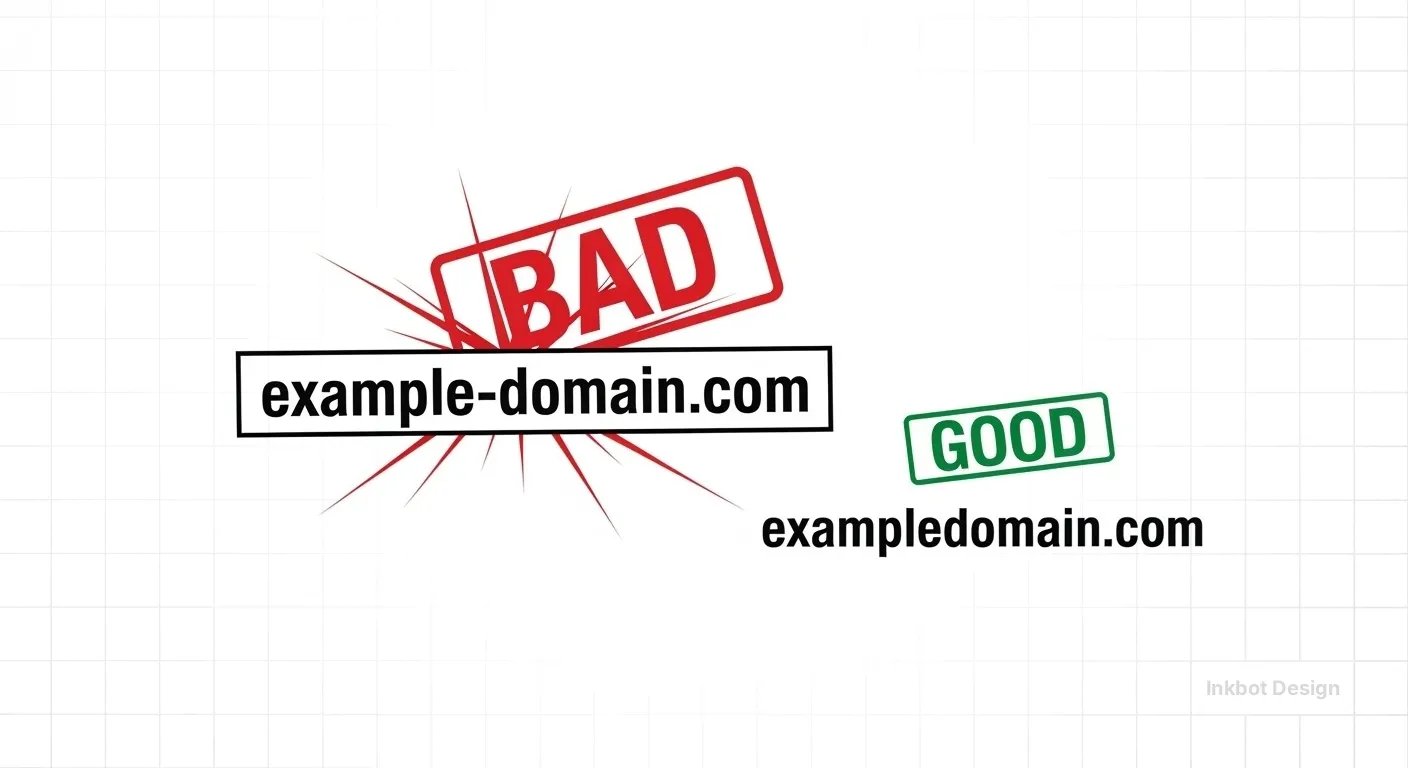
A 75-person B2B consultancy operating on a regional, hyphenated address (www.apex-advisory.co.uk) lost three consecutive multi-million-pound bids partly because prospective clients sent contracts to apex.com—a domain held by a third-party agency.
- Original Domain State: apex-advisory.co.uk (Hyphenated, regional, high email misdirection)
- Target Asset: apex.com (Exact match, global authority, pre-owned aftermarket asset)
- Strategy Executed: Anonymous broker acquisition + full DMARC security enforcement
The Challenge
Direct outreach to the owner of apex.com had previously yielded an initial asking price of £450,000 because the owner assumed a public corporate buyer was involved.
The Execution
- Silence Protocol: The firm paused all updates to the local company register and suspended trademark filings for the isolated term.
- Stealth Engagement: A domain broker initiated contact on behalf of a private investment holding vehicle, establishing a historical market-value baseline.
- Negotiation Outcome: The domain was secured via escrow for £110,000—a 75% reduction from the initial unrepresented estimate.
- Technical Hardening: The asset was transferred directly to an enterprise registrar, locked with DNSSEC enabled, and mapped to a new infrastructure stack, with not a single minute of email downtime.
Measurable ROI Delivered:
- Zero misdirected client communications or lost contract proposals.
- Direct increase in inbound proposal conversion rates.
- Elimination of ongoing search ad expenditure previously used to target their own name.
Why a Premium Domain Name Is Risk Infrastructure
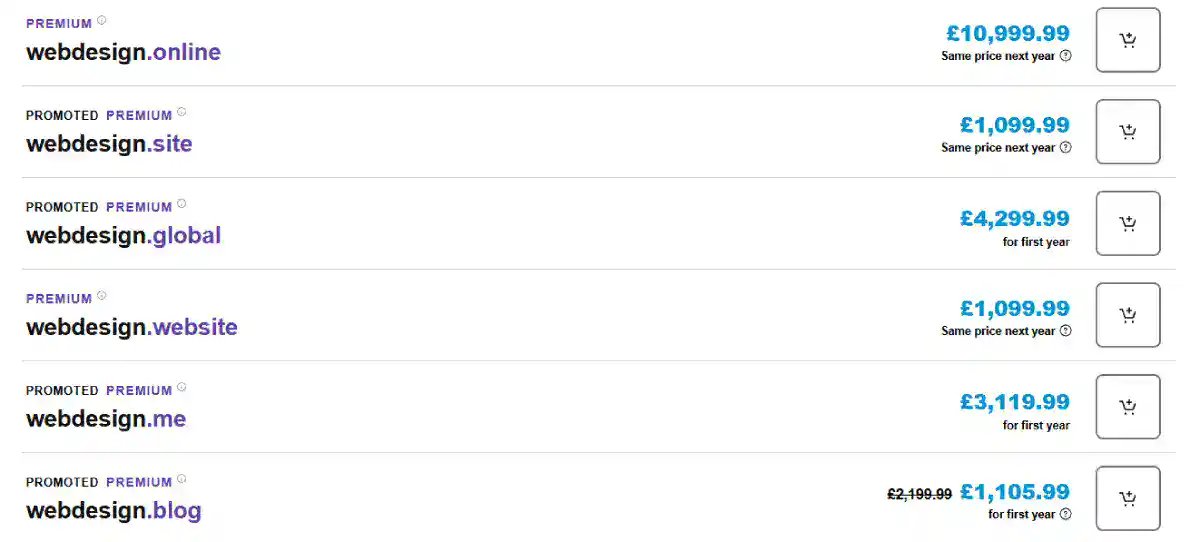
Most corporate branding discussions view domain names through the lens of marketing uplift, memorable typography, or organic search advantages.
That approach misses the primary threat. The American Bar Association states that cybersquatting creates artificial domain shortages that can directly impede business viability.
Risk Category | Vulnerability Mechanism | Strategic Impact |
|---|---|---|
Email Interception | Misdirected client emails sent to typo variants or alternative TLDs | Leaks sensitive client data, contracts, and financial documents |
Cybersquatting | Third parties purchasing brand variants for redirection or hosting | Causes severe brand confusion and forces costly dispute proceedings |
M&A Due Diligence Drag | Operating on unsecured, secondary digital addresses | Signals weak IP management, reducing brand valuation during audits |
When a growing business fails to secure its exact-match primary domain, it leaves a permanent vulnerability in its digital perimeter:
- Email Interception & Phishing Risks: Common typing errors by corporate clients can send sensitive financial documents, contracts, and proposals to whoever controls the alternative domain extension. Help Net Security reported that domain hijacking and unauthorised redirects intercept confidential corporate emails, enabling credential harvesting and network breaches.
- Competitor Cybersquatting: Competitors or opportunists can purchase the exact-match name to redirect organic search traffic, host derogatory material, or force costly dispute proceedings. According to WIPO data, over 80,000 domain disputes have been formally adjudicated, confirming that web address conflict is a constant operational reality in the global economy.
- M&A Due Diligence Drag: During acquisition negotiations, institutional buyers audit digital assets. Operating on a secondary domain with unsecured defensive variants signals weak IP management and creates friction during legal due diligence.
Domain namespace growth continues to accelerate.
Verisign reported that total domain registrations reached 392.5 million globally by the end of Q1 2026, an increase of 6.5% year-over-year.
As the digital space grows more crowded, category-defining web addresses become scarcer, making unsecured brand names an increasing liability.
The Verdict
Treating a domain acquisition as an afterthought during a corporate rebrand guarantees higher acquisition costs, exposed digital security, and ongoing brand equity leakage. Securing your category-defining address must be the first step in your corporate expansion plan.
Immediate Leadership Action Items:
- Audit Existing Perimeter: Audit your current primary domain against exact-match variants (.com, .co.uk, common typos).
- Maintain Operational Silence: Establish strict operational silence regarding all pending brand-name choices across PR and legal channels.
- Engage Representation: Retain specialised broker representation before contacting the owner.
If your firm is planning a repositioning, growth phase, or corporate rebrand ahead of an acquisition, evaluate your digital assets before taking any public action.
Request a free Brand Equity Audit™ to identify where your brand infrastructure is exposed, protect your IP assets, and execute a defensible growth strategy.
Frequently asked questions
What is a premium domain name?
A premium domain name is an exact-match, highly memorable web address already registered by an owner that commands high market value due to its brevity, authority, and category relevance.
Why are exact-match .com domain names so expensive?
Exact-match .com domains are expensive due to absolute digital scarcity. Only one entity can own a category-defining address, creating high demand among corporate buyers seeking brand authority and risk protection.
How do I buy a domain name that is already owned by someone else?
Engage an enterprise domain broker to perform stealth outreach under an NDA. This maintains buyer anonymity, prevents price gouging, and ensures safe financial settlement via a secure escrow service.
Should a company use a .co or regional domain extension instead of a premium .com?
No — using alternative extensions creates ongoing brand confusion and email leakage. Clients routinely type the exact match .com address by default, directing valuable traffic and secure communications to third parties.
Can a company lose its domain name to cybersquatters?
Yes — if a business fails to register defensive domain variants or secure its primary assets with multi-factor authentication and registry locks, malicious actors can register missing variants or execute domain hijacking.
What is a domain escrow service, and why is it required?
A domain escrow service is a licensed third-party financial mechanism that holds purchase funds securely until the corporate buyer confirms complete technical control and transfer of the domain asset.
How does a weak domain strategy impact enterprise valuation during an M&A process?
Operating on a weak domain with unsecured variants alerts buyers to legal and cybersecurity risks during due diligence, lowering brand equity value and complicating intellectual property transfers.
What is domain hijacking?
Domain hijacking is the wrongful takeover of a domain name through unauthorised access to registrar accounts or transfer vulnerabilities, as defined by ICANN’s Security and Stability Advisory Committee (SSAC).
How do I protect corporate emails when changing domain names?
Configure SPF, DKIM, and strict DMARC policies (p=reject) on both legacy and newly acquired domains. Maintain dual-routing configurations during migration to ensure continuous, authenticated delivery.
Is hiring a domain broker worth the additional fee?
Yes — professional brokers prevent buyer identification, anchored price inflation, and transfer fraud. Their negotiation savings regularly outweigh their commission costs.