Branding Basics: 11 Keys to Building Brand Identity
Branding isn’t just a buzzword—it’s the soul of your business.
At its simplest, your brand is the gut feeling someone has about your company. It’s the sum of every touchpoint: from the snap judgment made at the sight of your logo to the lasting impression left by your customer service.
Think of iconic names like Apple or Nike. They don’t just sell products; they own a specific “real estate” in your mind. That’s the power of a strategic brand identity. It cuts through the digital noise, builds instant trust, and turns casual browsers into lifelong advocates.
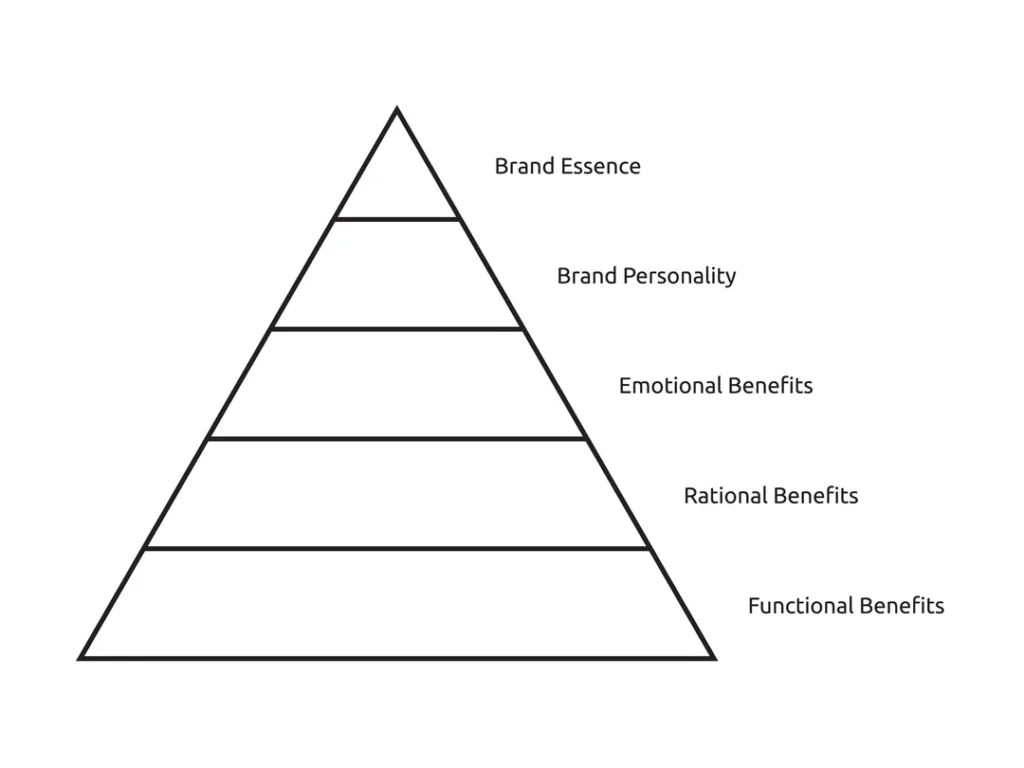
But branding goes deeper than visuals. It’s your personality—are you the bold disruptor or the reliable expert? By aligning how you look with how you act, you create an emotional connection that logic alone can’t touch.
Ready to stop being a commodity and start being a brand? Let’s dive into the basics.
- Branding is vital for creating a powerful identity that attracts the right audience and builds lasting connections.
- A consistent brand conveys trust and loyalty, making customers more likely to return and recommend your business.
- Effective branding combines visuals, messaging, and emotional appeal to foster strong relationships with customers.
- Investing in branding can enhance perceived value, allowing businesses to charge premium prices over competitors.
Why Bother Branding At All?
Still not convinced you need to invest time and energy into branding? Below are some reasons why a consistent and compelling brand is essential for your business, big or small.
It Makes You Stand Out
In a world where billions of brands and businesses compete for attention, having a unique identity is like using a sledgehammer to cut through the noise. It makes people notice and remember you in our pathetically oversaturated world.
It Attracts Your Dream Audience
When you get your brand messaging and personality right, you naturally draw in perfect-fit customers or fans who “get” you and already want to love everything about you. You don’t have to hard sell it to people who aren’t the right fit.
It Inspires Trust + Loyalty.
When every touchpoint of your branding is consistently excellent, people start to trust your brand. They know what they’ll get, so they keep coming back – & telling all their friends!
You Can Charge More
Powerful brands come with an inherent sense of higher value, quality & prestige – which means they can charge premium prices over no-name competitors. Need I say more?
It Helps You Stand For Something
A great brand takes a stand. It champions a clear set of values, ideas, or principles that help rally true believers around your cause. Purposeful brands tend to create superfans.
Businesses With Amazing Brands Just Crush It.
Companies that have built incredible brands dominate their markets. The name recognition alone, coupled with massive brand equity, creates such an enormous competitive advantage that these companies enjoy continued success by capitalising on opportunities that come their way while simultaneously growing significant profits.
Building Your Blueprint: The Three Pillars of Brand Strategy
Before you pick a colour or design a logo, you need a strategy. In 2026, a brand is not a static document; it is a living ecosystem. A robust Brand Strategy acts as your North Star, ensuring every decision—from a social media reply to a product launch—feels like it comes from the same source.
- The Brand Discovery Phase: This is where you unearth the “why” behind your business. Utilise the Golden Circle framework, popularised by Simon Sinek, to move beyond what you do and focus on your core purpose. Ask yourself: if your business disappeared tomorrow, what would the world actually miss?
- Competitive Landscape Mapping: You cannot stand out if you don’t know where the crowd is standing. Conduct a Brand Audit of your top three competitors. Don’t just look at their logos; look at their customer reviews, response times, and value proposition. Identify the “White Space”—the emotional or functional gap in the market that only you can fill.
- The Positioning Statement: This is an internal-only sentence that defines your territory. A classic template is: “For [Target Audience], [Brand Name] is the [Category] that provides [Key Benefit] because [Reason to Believe].” —
Before You Begin: Know Your Audience
Right, before you even sketch a logo or think of a clever name, let’s get one thing straight. Who are you actually talking to? If you don’t know, you’re just shouting into the void, mate. Building a brand without knowing your audience is like trying to sell steaks at a vegan festival – a total waste of time.
You need to go deeper than just ‘women aged 25-40’. That’s useless. Get specific. What keeps them up at night? What are their real hopes, their fears, the daft inside jokes they have?
Create a proper customer avatar. Give them a name. Know what they do on a Sunday morning. The more you know, the more your branding will feel like it’s speaking directly to them, and only them.
Every decision, from colours to copy, becomes ten times easier because you’re just talking to a person you know inside out.
The 11 Branding Basics for a Wildly Effective Brand
Like any incredible creation, building an eye-catching brand identity requires time, care, and a lot of love. But don’t worry – you’ve got this! By getting these 11 branding basics right, you’ll be well on your way to success.
1. Clear Brand Purpose and Values
Why does your brand exist beyond making money? Spend some time thinking about what principles or beliefs you stand for. Then, infuse them into everything that represents your business.
Nowadays, people like buying from brands that have a higher purpose and contribute to improving the world. A clear sense of direction creates deeper connections with your customers and influences every aspect of your work.
2. Defined Brand Personality
Every brand has its personality – just like people – whether funky and fun, sophisticated and polished, quirky and irreverent, reliable and trustworthy, etc. Choose which persona and tone you want to convey, and ensure all branding consistently reflects this voice.
For instance, website aesthetics should match the logo design, while social media captions should reflect the email tone, etc.; if not, the wrong audience vibes will be attracted to the brand.
Look, the thing is, you don’t have to invent a personality from scratch. There are proven frameworks for this, and one of the best is brand archetypes. These are basically 12 universal character types that we all instinctively recognise, based on some clever psychology.
Think of it as a shortcut. Is your brand a Hero, like Nike, all about smashing goals and overcoming challenges? Or maybe it’s a Magician, like Disney, making dreams a reality? You could even be an Outlaw, like Harley-Davidson, selling a feeling of rebellion and freedom.
Picking one of these gives you a clear playbook for your tone of voice and actions, ensuring you stay consistent without even thinking about it.
3. Killer Tagline or Positioning Statement
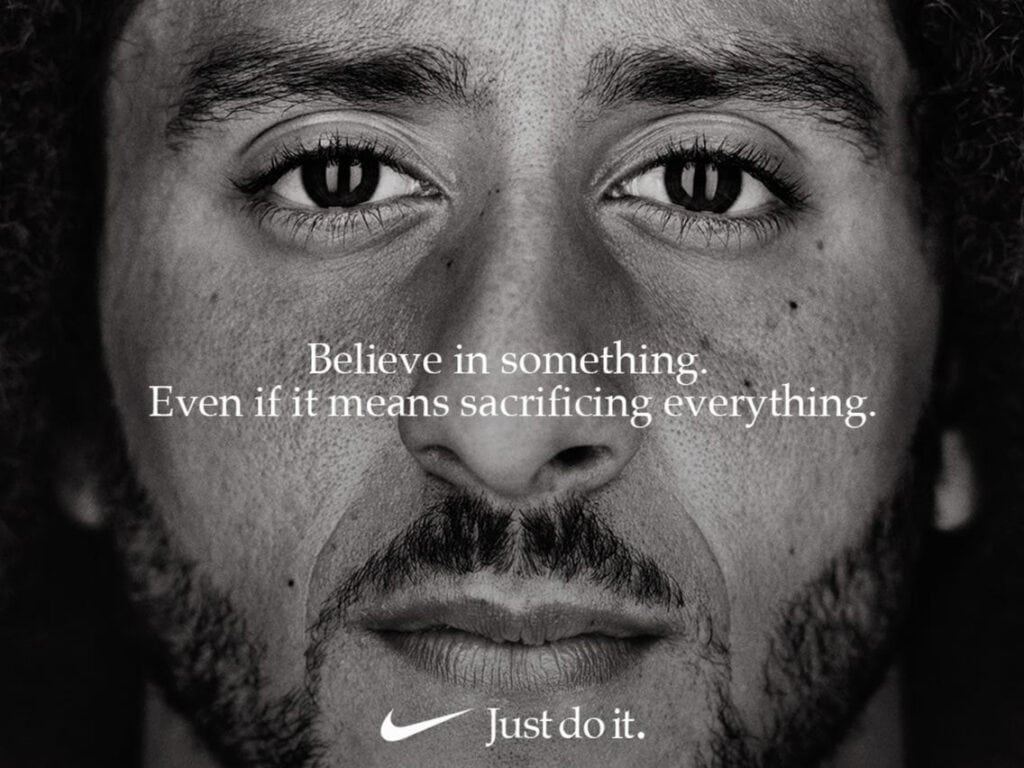
“Just Do It.” “Think Different.” “The Happiest Place on Earth.” These taglines pack a punch because they distil each company’s mission into a few words.
Concerning purpose and personality, come up with a catchy slogan (between three to seven words) that embodies both aspects so that people can easily understand what the organisation stands for at first glance, too! Doing this successfully means hitting branding gold with excellent positioning supported by fantastic taglines.
4. Memorable Logo and Visuals
Your logo may not represent the whole brand identity, but it is one crucial part – the face itself! So make sure it’s unique yet easily recognisable, simple yet eye-catching, and relevant but not dull because, as they say, first impressions count most.
Be sure to consider colours, fonts, graphic icons/illustrations, and photography styles, all of which should reflect brand purpose and vibe. The best logos evoke emotion or association while remaining uncomplicated; just think of speed, power (Nike’s “Swoosh”), communication, movement, and Twitter’s old bird icon.
5. Beyond the Eye: The Power of Sensory and Sonic Branding
Visuals are only 20% of the human experience. To create a “sticky” brand in 2026, you must appeal to multiple senses.
- Sonic Branding (Audio Identity): With the explosion of podcasts, smart speakers, and short-form video, your brand needs a “sound.” This isn’t just a jingle; it’s a Sonic Logo. Think of the Netflix “ta-dum” or the HBO static sound. These sounds trigger an immediate emotional response before a single word is spoken.
- Haptic Branding: In physical retail or packaging, the “feel” of your material communicates your value. A heavy, matte-finish business card or the specific weight of an Apple iPhone box communicates “Premium” more effectively than any slogan.
- Olfactory Branding (Scent): As mentioned with Singapore Airlines, scent is the only sense directly linked to the brain’s memory centre. High-end retail brands like Abercrombie & Fitch or Westin Hotels use bespoke scents to create a permanent memory anchor.
6. Compelling Written Voice and Messaging
This is where your brand’s ‘personality’ part comes out! Beyond how it looks, a consistent written tone and style must also be established, staying on-brand.
7. Your Special Value
What does your brand offer that other brands can’t? This can be quality, price, service or anything else you think of. Do you have any products different from what is already on the market?
Whatever it is, make sure this unique value proposition shines through all aspects of your marketing – it should be one of the main things people remember about you. A strong USP gives people a clear reason to choose your brand over others.
8. Stories and Emotion
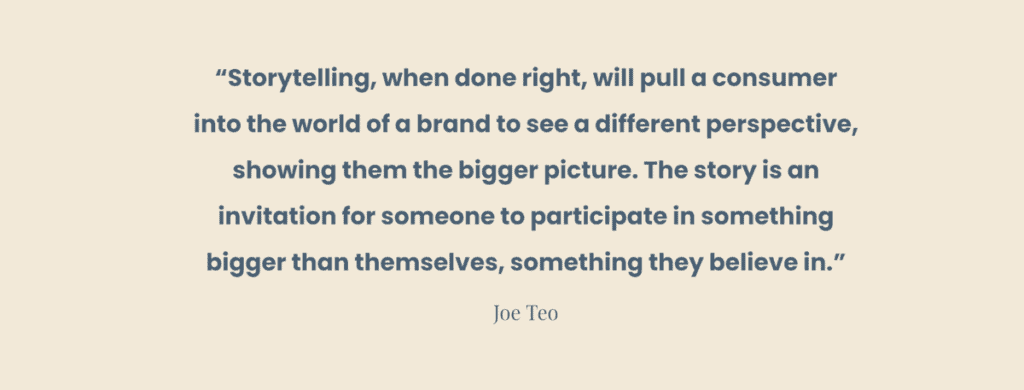
While facts and features are essential, emotions ultimately sell a product or idea – not rational arguments alone. Use narrative-driven content throughout your branding to foster authentic emotional connections with customers.
Tap into feelings by showing, not telling, how much better off someone will be after buying into what you’re selling; good storytelling creates communities around shared beliefs, which are then reflected in purchased goods and services.
Appeal directly towards hopes, dreams, aspirations, fears, etc., making sure to paint vivid mental images about how this could change life for the better (or worse), depending on which way they go here tonight.
9. Staff Loyalty
The success or failure of a brand ultimately depends on those who work for it. You must, therefore, ensure that all staff members fully buy into what the company stands for and feel proud to represent its values beyond office hours, too!
This means creating an atmosphere where enthusiasm is encouraged and knowledge is shared freely amongst employees at every level of the business hierarchy; otherwise, if people don’t wholeheartedly believe in what they’re doing, even when nobody’s watching, then no amount of external advertising spend will ever make the customer believe either… Obviously!!
10. Continuous Improvement Without Losing Sight Of Who You Are As A Business
In today’s fast-paced world, brands must stay current while remaining true to themselves. However difficult this may seem, given our increasingly interconnected society, every brand has access to the same information sources as all others!
Established iconic brands understand the importance of change and remain relevant. However, after careful consideration, they should decide how to modernise their look or feel while always keeping in mind the core values that made these resonate so profoundly in people’s hearts.
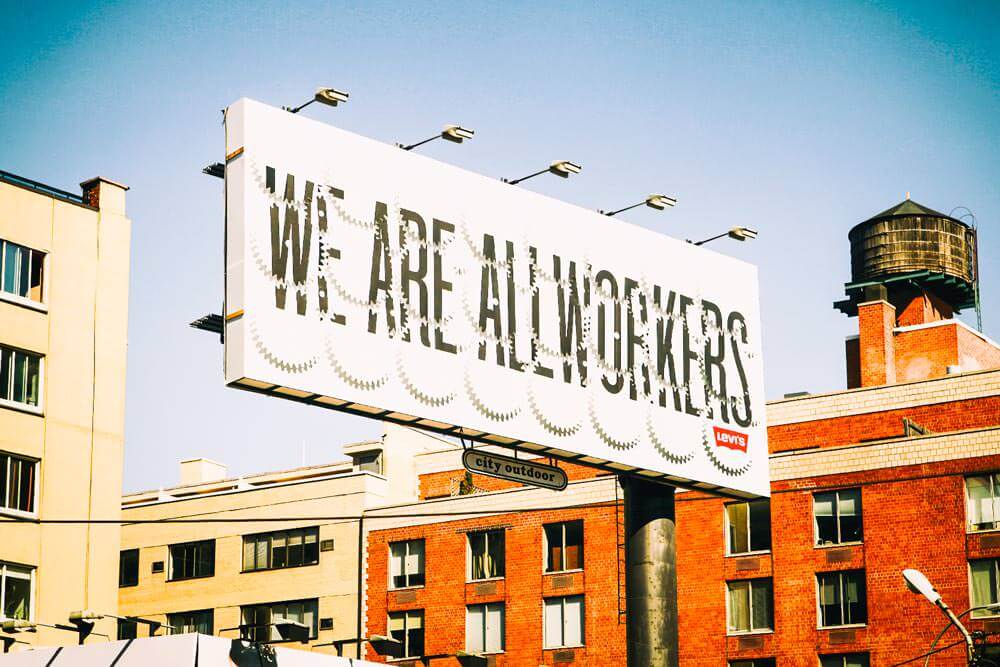
Take Levi Strauss & Co., established over 170 years ago; it must constantly evolve its product ranges, etc., in line with new popular lifestyles while being mindful of environmental sustainability – thus keeping its rugged American roots alive even through various rebrands. It’s about staying flexible without losing touch completely.
11. Keep A Close Eye On What Is Being Said About You
You’ve taken time to create a strong brand identity and voice – don’t let others dilute this perception over time! Brand consistency is critical.
Make sure there are clear rules around any outward-facing content, whether it be online or offline so that people representing your company know what is expected from them at all times in terms of how things should look, sound, feel, etc., across different platforms (social media, print materials brick-and-mortar stores e-commerce sites) everything – and empower those who care most about maintaining brand integrity with necessary tools knowledge authority justify actions taken when confronted by less informed colleagues.
It might seem strict, but these measures are necessary if we want customers to recognise us five years later; otherwise, we risk becoming another faceless, incoherent conglomerate nobody can relate to anything they bought last month, never mind five days ago!
12. The Complete Customer Experience
At the end of the day, your brand isn’t your logo or your tagline. Your brand is the sum of every single interaction someone has with you. It’s the entire customer experience, from start to finish.
How easy is your website to use? What’s the ‘unboxing’ like when the product arrives? And, most importantly, what happens when things go wrong?
A company like Zappos built an empire not on shoes, but on legendary customer service. Their brand is their service. People will eventually forget your clever advert, but they will never, ever forget how you treated them when they had a problem.
Nailing the customer experience is the most authentic, hard-to-copy branding you can possibly build. It turns customers into fanatics who do your marketing for you.
Personal Branding vs Corporate Branding: Which Path is Yours?
While the fundamentals remain the same, the execution of a Personal Brand differs significantly from a corporate entity.
- Personal Branding: Here, the entity is a human being. The brand is built on Authority, E-E-A-T (Experience, Expertise, Authoritativeness, and Trustworthiness), and individual personality. In 2026, personal brands like Gary Vaynerchuk or Steven Bartlett rely on “radically transparent” storytelling. The risk? The brand is tied to the person’s reputation.
- Corporate Branding: This is an organisation’s identity. It is designed to outlive its founders. It relies on systems, Corporate Social Responsibility (CSR), and scalable visual languages.
The Rise of Algorithmic Branding: Navigating the AI Era
In 2026, your brand is not just being judged by humans; it is being indexed and interpreted by Large Language Models (LLMs) and AI-driven recommendation engines. This is what we call Algorithmic Branding.
To remain visible in an AI-saturated world, your brand must focus on Entity Clarity. This means using consistent naming across all platforms and clearly stating your brand’s unique attributes in plain language.
If an AI cannot “understand” what your brand stands for, you will not appear in voice searches or AI-generated summaries.
Furthermore, Generative AI tools like Midjourney or DALL-E 3 have democratised design, but they have also created a “sea of sameness.” To stand out, modern brands are doubling down on “Human-Generated” markers—hand-drawn illustrations, raw behind-the-scenes video, and distinct, non-robotic Tone of Voice.
In Conclusion: The Power of a Stellar Brand
As you’ve probably gathered, deliberate and strategic branding is a non-negotiable for any organisation or individual who wants to make a significant impact while standing out in a crowded marketplace. An authentic, ownable brand identity signals to your audience exactly who you are and why they should pick you over the countless other options vying for their attention.
But a great brand goes far beyond a slick logo or clever tagline – it’s the beating heart fueling every interaction someone has with your business. It shapes their entire experience and perception, forging a deeper emotional connection. It can inspire cult-like loyalty and turn casual buyers into raving ambassadors for life when nailed strategically.
The most unforgettable brands spark an immediate sense of identity, values, quality, and personality the second their name or visual assets appear. And isn’t that the dream scenario – for YOUR name alone to command that kind of instant brand recognition and positive reinforcement?
So, if you take nothing else away, remember this: branding is one of the most important investments you can make into the long-term success and impact of whatever you create or put into the world. Get it right, and you’ll have fans for life.
FAQs on Building a Winning Brand
How do I choose brand colours that actually drive sales?
Don’t just pick your favourite colour. Use Colour Psychology. Blue conveys trust (used by Chase and LinkedIn), while Red triggers urgency and appetite (used by Coca-Cola and Netflix). In 2026, ensure your palette meets WCAG 2.2 Accessibility standards so your brand is legible to everyone.
What is the “ROI” of branding?
While harder to track than direct-response ads, branding ROI is measured through Brand Equity, lower customer acquisition costs (CAC), and the ability to charge a “Brand Premium.” Strong brands typically see 2-3x higher conversion rates because the “trust” work is already done.
Is a “Brand” the same as a “Trademark”?
No. A brand is the emotional and visual identity; a Trademark is the legal protection of those assets (name, logo, sound) granted by bodies like the UK Intellectual Property Office (IPO) or the USPTO. Always conduct a “Clearance Search” before committing to a name.
How often should a brand be “refreshed”?
A full Rebrand is risky and should only happen every 7–10 years or during a major pivot. However, a “Brand Refresh”—updating fonts, modernising the logo slightly, or tweaking the colour palette—can happen every 3–5 years to stay relevant.
How can I protect my brand from AI deepfakes?
In 2026, brand protection includes securing your “Digital Twin.” Register your brand on verified platforms and use blockchain-based Content Credentials (C2PA) to prove that your brand’s videos and images are authentic.