Brand Resilience: The Professional Services B2B Guide
Brand resilience is not about surviving crises. It is the commercial infrastructure that determines whether a professional services firm commands fee premiums, retains clients through downturns, and wins mandates before competitors are invited. Firms that treat this as a proactive discipline consistently outperform those that treat it as a recovery strategy.
 By Stuart Crawford
 Reviewed by Tabitha Ayers
Updated 19 min read
On this page19 min left
- What Is Brand Resilience?
- Why Brand Resilience Matters More in Professional Services
- The Five Foundations of a Resilient Professional Services Brand
- The Myth: “Brand Resilience Means Staying Consistent”
- Brand Resilience in 2026 – What's Actually Happening
- The Real-World Cost of Brand Fragility
- How to Build Brand Resilience – The Practical Architecture
- A Reality Check
- Brand Resilience vs Brand Flexibility – The Distinction That Matters
- Brand Resilience Decision Framework
- The Verdict
- Frequently asked questions
Brand resilience isn't a crisis management tool. It's the commercial infrastructure that determines whether your professional services firm wins mandates before a prospect ever picks up the phone.
Most managing partners only start thinking about it when the pipeline dries up – which is precisely the wrong moment.
By then, the damage is structural. A fragile brand doesn't fail dramatically; it bleeds slowly. A competitor enters your territory. A key partner leaves and takes their relationships with them. A prospect spends 30 minutes on digital due diligence and crosses you off the list without explanation.
These aren't random events – they're the predictable consequences of neglecting brand resilience as a commercial discipline.
The stakes are not abstract. Recent consumer research shows that 81% of global buyers require trust before they will consider a purchase. Separately, 2025 research found that affluent consumers are 6× more likely to remain loyal to trusted brands under economic pressure, tolerating up to a 7% price premium before switching.
In a sector where fee pressure is constant and differentiation is genuinely difficult, that loyalty premium isn't a soft outcome. It's a revenue line.
Everything here centres on how a brand is built, structured, and maintained as a commercial asset – precisely what The Brand Equity System™ was designed to address. Not a cosmetic exercise. A commercial one.
What Is Brand Resilience?
Brand resilience is the capacity of a business to maintain client trust, commercial performance, and market position through economic shocks, competitive pressure, and internal change.
Key components:
- Trust infrastructure: accumulated reputation that continues to attract and retain clients even when circumstances deteriorate
- Adaptive positioning: the ability to evolve messaging and emphasis without abandoning the firm's core identity
- Institutional equity: brand value embedded in the organisation rather than in specific individuals
Brand resilience is the capacity of a business to maintain client trust, commercial performance, and market position through economic shocks, competitive pressure, and internal change.
Why Brand Resilience Matters More in Professional Services
In consumer markets, a fragile brand shows up in sales data. In professional services, it shows up in a pitch you weren't invited to.
The distinction matters because FMCG brands can buy attention through distribution and advertising spend. Professional services firms have reputation – and nothing else. The brand either generates trust before the first conversation, or that conversation starts at a deficit.
Fee Premiums Are Not Held by Quality – They're Held by Perception
The prevailing assumption at most law firms, accountancies, and financial advisory firms is that the quality of work determines fees. It doesn't. Perceived quality of the firm maintains fees.
Those two things are usually aligned. But they can diverge – and when they do, it is always perception that leads.
The 2025 consumer research cited above found that trusted brands command price premiums of up to 7% before switching behaviour activates. In professional services, a 7% fee premium on a seven-figure client relationship is a material number. The brand is doing that work before any technical capability has been demonstrated in a single meeting.
Firms that treat brand investment as optional overhead rather than as fee-level maintenance are making a more expensive error than their P&L currently reflects.
Key-Person Dependency – The Resilience Risk Nobody Discusses
Here is the structural vulnerability that most brand conversations in professional services consistently ignore: the firm's brand and an individual partner's personal reputation are often the same in practice, if not in theory.
When that partner retires, moves to a competitor, or simply becomes less visible, the commercial relationships built in their name do not automatically transfer to the firm.
If the brand infrastructure – the institutional identity, the consistent positioning, the documented methodology – was never built, the firm is exposed. Not catastrophically. Quietly.
The Ehrenberg-Bass Institute (the marketing science research body at the University of South Australia) has spent decades demonstrating that mental availability – the probability of a brand being considered in a buying situation – is the primary driver of market share in mature categories.
Mental availability built around an individual is not brand equity. It is relationship equity, which is considerably more fragile.
The firms that survive partner transitions without commercial disruption are those that built brand equity at the institutional level before the transition. The firms that struggle are the ones that never did.
Brand resilience in professional services is not primarily about weathering crises – it is about owning the buyer's mental space before they begin searching. Most firms leave that real estate vacant, then wonder why competitors appear to have an unfair advantage in pitches they should have won.
The Five Foundations of a Resilient Professional Services Brand
A rebrand does not achieve brand resilience. It is built through deliberate, layered investment in five distinct areas – each contributing something different to the overall commercial outcome.
1. Values Architecture Over Visual Consistency
The most commonly misunderstood element of brand resilience is what, exactly, should remain constant. The answer is values – not visuals.
A law firm's visual identity from 2015 will look dated by 2026. Updating it is not a threat to resilience; failing to update it is. What should never change arbitrarily is what the firm stands for: its approach to client relationships, its standards, its commitments. Those are the non-negotiable foundations.
Visual consistency matters, but it serves values architecture – not the reverse. Firms that mistake an outdated logo for brand equity have misunderstood what they're protecting.
2. Institutional Memory Over Personal Reputation
Key-person dependency is a genuine structural risk, as covered above.
The resilience measure here is whether a firm has invested in brand equity at the organisational level – documented processes, consistent experience delivery, and positioning that exists independently of who delivers it.
Deloitte Insights, in their 2026 Marketing Trends report, found that 80% of consumers show higher purchase intent from brands delivering personalised, consistent experiences – and that leaders in this area are 3× more likely to exceed revenue targets.
Personalisation at scale requires institutional infrastructure. It cannot be delivered purely through individual partner relationships.
3. Adaptive Positioning Without Identity Drift
A resilient brand shifts emphasis without losing identity. This is the hardest thing to execute well. The risk is identity drift – where incremental adaptations accumulate into something the firm no longer recognises as itself, with no clear position in the market.
The governing principle: positioning should track buyer needs and competitive context; identity should not follow market fashion.
A financial advisory that pivots to sustainability messaging because it is trending, without genuine organisational commitment, creates the worst possible resilience outcome: a positioning that will be exposed and an audience that will not forgive the inconsistency.
4. Trust as Commercial Infrastructure
In professional services, trust is not a soft outcome – it is the mechanism by which fees are set and maintained.
The research cited earlier – 81% of global buyers requiring trust before purchase – becomes materially significant when set against the finding that 73% of those same consumers expressed economic concern and 41% were cutting non-essential spending.
Trusted brands were retained. Spending on non-trusted suppliers was reduced first. In professional services, this plays out as: the accountancy the finance director genuinely trusts keeps the mandate through a cost-reduction programme; the one she is less confident in gets put out to tender.
Trust is not built solely through service delivery. It is built through brand – through the consistency of experience, the clarity of positioning, the signals given before the work begins.
5. Digital Presence as a Resilience Signal
A firm's digital presence is, in 2026, a primary due diligence surface for decision-makers. Prospective clients research firms extensively before making contact.
A digital presence that is visually inconsistent, lacks clear positioning, or features case material from 2019 does not merely fail to impress – it actively creates doubt.
Brand resilience requires that the digital expression of a firm's identity is maintained to the same standard as its work product.
A firm that would never submit a poorly formatted legal document may maintain a website that fails basic quality standards. That contradiction is visible to prospects before they have asked a single question.
The five foundations of brand resilience are not sequential – they are simultaneous. A firm that builds institutional equity without maintaining digital standards has a structural gap. Resilience comes from the system holding, not from any single element within it.
The Myth: “Brand Resilience Means Staying Consistent”
This was sound advice in 1995. Taken literally in 2026, it is a route to irrelevance.
The historical logic was straightforward: clients lacked digital due diligence tools, market information moved slowly, and a stable visual identity functioned as a reliability signal.
Staying consistent helped because it showed the firm was still there, still operating, still the same. That was a genuine commercial function.
The market no longer works that way. Due diligence is digital, rapid, and comparative. A prospect evaluating three firms simultaneously forms impressions based on the relative sophistication and relevance of each firm's brand expression – not merely its stability.
Prophet's end-of-2025 brand analysis makes the point clearly. The brands that demonstrated growth through 2025 – including Dr Pepper and Gap – did so through cultural agility and deliberate positioning evolution.
Fast-fashion brands that maintained rigid identities misaligned with emerging values did not survive the misalignment through any crisis event. They lost position quietly, through accumulated irrelevance.
In professional services, the pattern is identical but lower-visibility. A firm whose language, website, and positioning haven't evolved since 2018 signals stagnation to incoming decision-makers – particularly those at organisations undergoing their own modernisation.
Not consciously. In the way, confidence drops slightly when the website feels like it belongs to a different decade.
The replacement is clear. Separate what must never change – values, client promise, voice principles – from what must be maintained and evolved – visual expression, messaging emphasis, market positioning. Foundations are immovable without a formal strategic review. Surfaces require annual attention. Treating consistency as synonymous with resilience is how firms arrive at 2026 with a brand built for 2014.
Consistency is not the goal. Coherence is. Coherence means every brand signal reinforces the same institutional identity – and that identity is expressed in language, visuals, and positioning that remains relevant to the market being served today, not the one entered twenty years ago.
Brand Resilience in 2026 – What's Actually Happening
The commercial environment in which professional services brands now operate rewards resilience and punishes fragility more sharply than ever before.
Deloitte Insights' 2026 Marketing Trends report places brand resilience at the centre of growth strategy, identifying the intersection of AI-driven personalisation and economic uncertainty as the defining tension.
Their data shows that 80% of consumers demonstrate higher purchase intent when brands deliver personalised content – and that brands leading in personalisation are 3× more likely to exceed their revenue targets.
For professional services firms, this translates to a direct operational requirement: institutional brand infrastructure that enables consistent, personalised client communications at scale.
The firms relying solely on individual partner relationships to carry this weight are already behind the firms that have built systems.
Bain & Company's November 2025 analysis examined the global luxury market, which stabilised at €1.44 trillion despite economic headwinds. The firms that held their positions focused on experience over product and deployed AI to improve efficiency and maintain service standards.
The parallel for professional services is direct: resilient brands invest in the quality and consistency of the client experience, not just the deliverable itself. Those two things are not the same.
Havas Group's Meaningful Brands 2025 research adds another dimension that deserves attention. Brand apathy among consumers rose 5% year-on-year.
Undifferentiated brands – firms whose positioning gives buyers no clear reason to care – face accelerating erosion of attention. In a market where legal and financial providers are proliferating, being competent is not sufficient to hold mental space.
A resilient brand means something distinct. A merely competent firm does not.
The AI dimension is also actively in play. Deloitte Insights notes that 64% of brands are now using AI for content production and client communication as part of their resilience strategy.
For professional services firms, this is not merely an efficiency question – it is about maintaining the frequency and quality of brand signals that build trust over time. Firms that treat AI as a cost tool rather than a brand infrastructure tool are leaving a meaningful competitive position unclaimed.
Two further dynamics define the 2026 resilience environment specifically for the professional services sector.
The first is talent. In a market where experienced fee-earners have options, employer brand is a resilience variable.
A firm with weak institutional equity struggles to attract senior talent, which in turn weakens the service offer, which in turn weakens client retention, which in turn further weakens brand equity. The loop compounds in both directions. It is rarely discussed as a brand problem because it appears to be an HR issue.
The second is the regulatory context. Accountancy and legal services firms face genuine regulatory change – from evolving sustainability reporting requirements to digital asset advisory complexity.
Firms whose brand positions them as trusted advisors through change, rather than transactional service providers in stable conditions, hold client relationships through complexity. That is not a marketing position.
It is a strategic one – and it is only available to firms whose brand resilience infrastructure can support it.
In 2026, brand resilience is not a defensive measure for firms facing difficulties. It is the growth infrastructure for firms that want to win mandates, retain talent, and hold fee levels in a market that will not stand still.
The Real-World Cost of Brand Fragility
Brand fragility has a price. It is not always visible on a P&L. It is always present.
Tropicana's 2009 packaging redesign is the canonical example of brand equity damage from a single decision. The company redesigned its packaging without accounting for the visual cues its customers relied on to identify the product on a shelf.
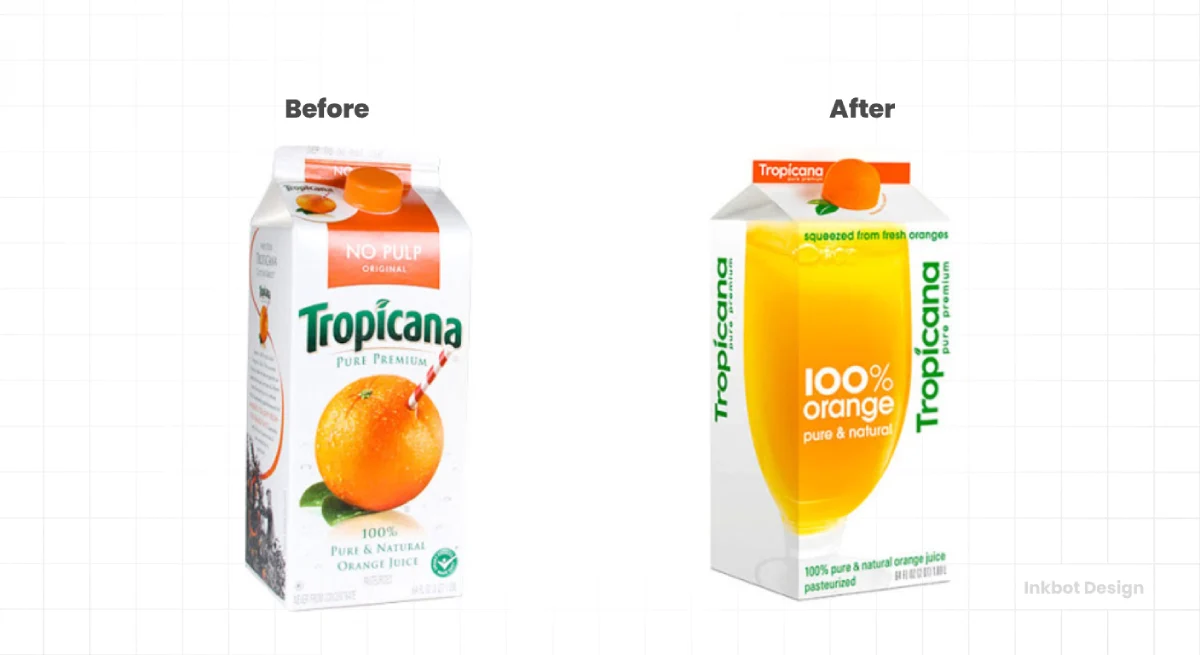
According to AdAge (the advertising and media industry publication), the brand lost an estimated $30 million in sales within two months. The redesign was reversed. The brand recovered – but the cost of fragility was measured in eight figures.
For professional services firms, the cost arrives more slowly and less visibly. A pipeline that weakens over 18 months. A pitch acceptance rate that drops incrementally. Fee negotiations feel harder than they used to. None of these is attributed to the brand in quarterly reviews. All of them can be.
The trust data reinforces the scale of exposure. When 81% of buyers require trust before purchase, a brand that has allowed trust signals to degrade is not operating at full commercial capacity. It operates under a constraint that affects every new business conversation, every fee discussion, and every retention decision – simultaneously and invisibly.
The case from our own client work is documented directly in the section below.
Brand fragility is not a communications problem. It is a revenue problem that manifests in communications. The distinction matters because firms that treat it as a communications problem address the symptoms. Firms that treat it as a commercial problem address the cause.
How to Build Brand Resilience – The Practical Architecture
Building brand resilience is not a project with a completion date. It is a management discipline with an annual cycle and a set of structural prerequisites.
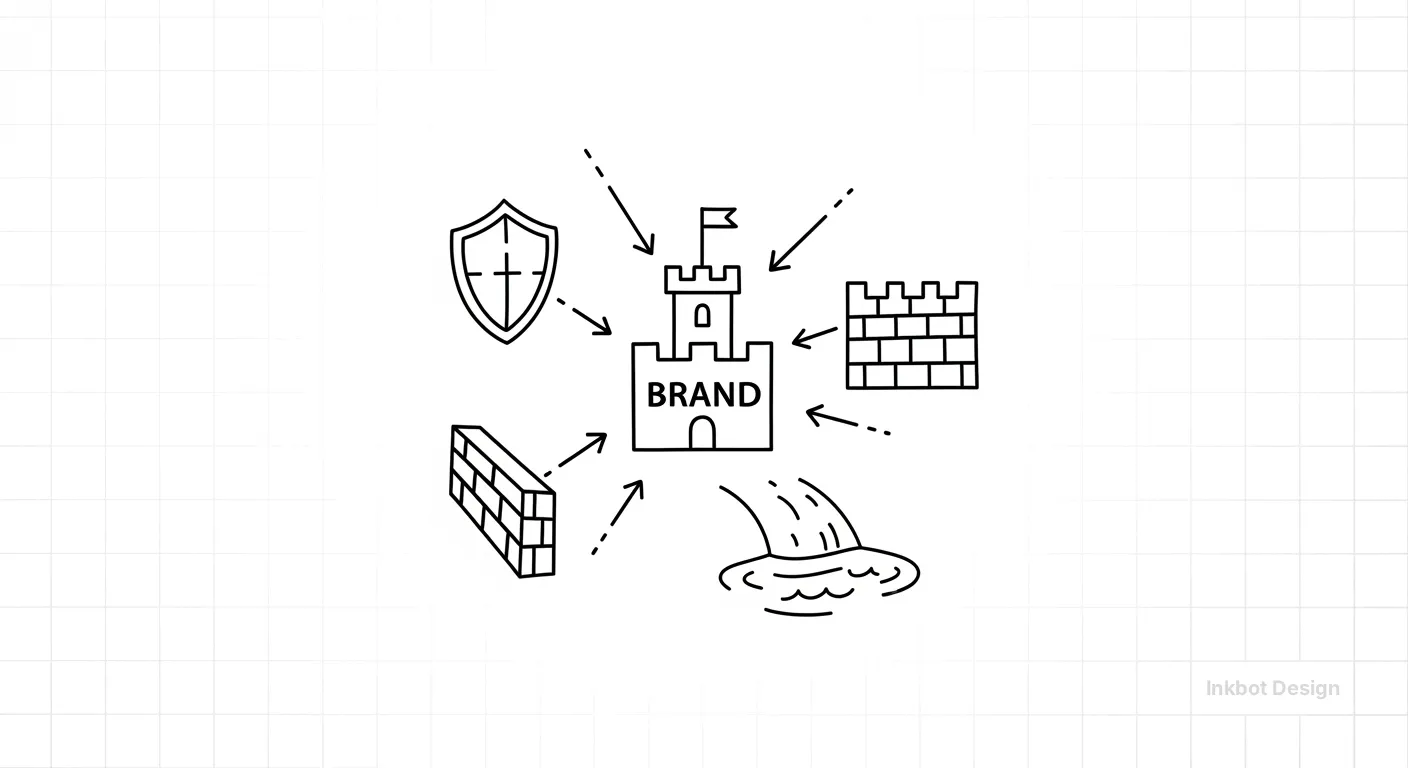
Start With an Honest Brand Audit
A defensive brand strategy starts with an accurate picture of where the firm currently stands – not where leadership believes it stands. Those two assessments rarely match.
A proper brand audit examines four areas: consistency of brand expression across all client touchpoints; clarity of positioning relative to competitors; the strength of trust signals in digital and physical environments; and the degree to which the brand is institutionally embedded rather than personally dependent.
Most professional services firms have brand guidelines. They do not have a brand audit. The distinction is significant: guidelines describe what the brand should do; an audit describes what it is actually doing. The gap between the two is where fragility lives.
Separate Foundations From Surfaces
The practical architecture of a resilient brand requires clarity about what is fixed and what is adaptive.
Brand foundations – the firm's values, client promise, voice principles, and market positioning – do not change in response to market fashion. They change only in response to a deliberate, structured review. This is the stability component of resilience.
Brand surfaces – visual expression, messaging emphasis, channel strategy, tone calibration – are reviewed annually and evolved where the evidence supports it.
An agile brand strategy does not mean rebuilding the brand every three years; it means maintaining the surfaces with the same discipline applied to maintaining client relationships.
The failure mode to avoid is the inverse: firms that treat foundations as disposable and surfaces as permanent. A firm that chases market trends while maintaining a 2010 logo has both problems at once.
Build an Annual Brand Review Cycle
Resilience is maintained, not achieved once. The practical mechanism is an annual review cycle that covers three questions.
- Are the brand surfaces consistent with the firm's current market position and client base? If the firm's largest clients have changed over the past three years, the brand should reflect that shift.
- Are trust signals being maintained and built? This means examining the digital presence, client testimonials, case material, and thought leadership, and assessing whether they reflect current capability.
- Is the brand institutionally embedded? Is it dependent on specific individuals, or visible in how everyone at the firm represents it? The latter is harder to achieve. It is far more commercially valuable.
Brand resilience is not a creative exercise – it is a commercial management discipline. Firms that treat it as the former find themselves conducting emergency rebrands. Firms that treat it as the latter find themselves winning pitches their competitors didn't know they were entering.
A Reality Check
A mid-sized UK technology firm approached us following a significant shift in its market towards remote working solutions.
Their brand had been built around reliability in fixed office environments – a genuinely strong position that had served them well for eight years.
When the market moved, they held firm. The founders were uncomfortable with change, and the brand reflected that discomfort. Messaging stayed office-centric. Visuals didn't adapt. Positioning remained where it had been when it was winning business.
Meanwhile, engagement metrics were falling, the pipeline was thinning, and competitors were taking work they would previously have won without contest.
By the time they engaged us, quarterly leads had dropped 27%. The diagnosis wasn't complicated: the brand had remained static while the market it served had changed entirely.
We ran a rapid brand audit, identified their genuine immovable asset – seamless connectivity, regardless of environment – and rebuilt the positioning, visuals, and messaging around that single truth. The core identity stayed. Everything that had become irrelevant was replaced.
Within six months of relaunch: a 42% increase in website traffic, a 35% improvement in conversion rates, and 15% market share recovery.
Resilience isn't stubbornness. It is knowing precisely what to hold and what to let go of. Most firms confuse the two, and they pay for the confusion in the pipeline.
Brand Resilience vs Brand Flexibility – The Distinction That Matters
These terms are often used interchangeably. They describe opposite capabilities.
Brand flexibility is the ability to change in response to external pressure. Brand resilience is the ability to maintain commercial performance despite external pressure.
A highly flexible brand may survive by constantly adapting – but it never builds the accumulated trust that allows a resilient brand to hold fee premiums and retain clients without constant activity.
The goal in professional services is not flexibility. It is resilience – built on a foundation stable enough to absorb the shocks that flexibility merely responds to. Flexibility without foundations is not a strategy. It is reactive improvisation.
Brand Resilience Decision Framework
Decision Point | The Wrong Way | The Right Way | Why It Matters |
|---|---|---|---|
Brand audit frequency | Only when something visibly breaks | Annual, as standard commercial management | Fragility is detectable before it becomes costly – but only if you're looking |
Response to a market trend | Pivot the entire brand position | Adjust surface messaging; maintain foundations | Chasing trends creates positioning debt that compounds over time |
Partner departure | Rely on the departing partner's network | Institutional equity built ahead of transition | Personal relationship equity evaporates; brand equity doesn't |
Fee negotiation | Justify fees through work quality alone | Fee position held by the trust accumulated in advance | Trust-built pricing power survives cost pressure; quality arguments alone don't |
Digital presence maintenance | Update only when it “looks dated” | Annual review aligned to the brand cycle | Prospects research digitally before contact; dated signals create doubt before the first conversation |
Brand investment under pressure | Treat as overhead; cut it | Treat it as commercial infrastructure; maintain it | Cutting brand investment under pressure removes the mechanism that maintains pricing power |
Resilience testing | React to the crisis when it arrives | Stress-test brand architecture before it matters | Resilient brands fail gracefully; fragile brands fail without warning |
The Verdict
Brand resilience isn't something professional services firms build after a crisis – it's what determines whether a crisis becomes a commercial event or an inconvenience.
The argument from the opening paragraph holds. Every section of this article has pointed to the same underlying commercial reality. Firms with resilient brands hold fee premiums under economic pressure.
They retain clients even as 41% of buyers cut non-essential spend. They win pitches that never officially began because the prospect's digital due diligence had already ranked them above the competition.
They survive partner transitions, market shifts, and competitive incursions without the panic that follows years of brand neglect.
The firms that struggle with all of the above share a common characteristic: they treated brand investment as optional overhead rather than as the fee-maintenance and mandate-acquisition infrastructure it actually is. The investment was deferred. The fragility was not.
The directive is specific. Don't start a rebrand. Start an audit.
A brand audit identifies exactly where the equity is strong, where it is fragile, and what needs to change before fragility becomes a revenue problem. That is a manageable exercise with a defined output. The alternative – discovering brand fragility mid-pitch or following a key partner exit – is not.
The Brand Equity Audit™ at Inkbot Design is a structured diagnostic built specifically for professional services firms. It identifies where the brand is losing commercial ground and what to do about it.
For a managing director whose firm is performing well today, this is the time to build resilience. Not when performance starts to slip.
Frequently asked questions
What is brand resilience in the context of a professional services firm?
Brand resilience in professional services is the institutional capacity to maintain client trust, fee levels, and mandate acquisition through market disruption, competitive pressure, key personnel changes, and economic downturns. It is built through consistent positioning, institutional brand equity, and regular investment in brand infrastructure – not through crisis response plans assembled after the fact.
How is brand resilience different from brand consistency?
Brand consistency is the discipline of applying brand standards uniformly across touchpoints. Brand resilience is the commercial outcome – the ability to maintain performance through adversity. Consistency in surfaces supports resilience, but over-consistency in positioning undermines it when the market has moved. The two are not synonymous.
How does brand resilience affect fee levels in professional services?
Trusted brands command price premiums before a single commercial conversation takes place. Research from 2025 found that consumers remain loyal to trusted brands through economic pressure, tolerating premiums of up to 7% before switching. In professional services, fee resilience is directly tied to the trust the brand has built before any fee discussion.
What is the biggest brand resilience risk for partnership-model firms?
Key-person dependency is the most underaddressed resilience risk in professional services. When brand equity is primarily associated with individual partners rather than the institution, partner transitions create genuine commercial exposure. Institutional brand equity – embedded in methodology, experience design, and consistent positioning – is what survives individual departures.
When should a professional services firm conduct a brand audit?
An annual brand audit should be standard commercial management, not a response to visible problems. The value of an audit is in identifying fragility before it becomes a revenue event. Most firms audit reactively – which means arriving at the process already in decline and already behind competitors who have been maintaining their foundations throughout.
What does brand resilience look like practically in a law firm or accountancy firm?
A resilient law or accountancy firm has: a clear institutional positioning that does not depend on specific partners; a digital presence that reflects current capability; a consistent client experience at every touchpoint; and a regular review cycle that ensures brand surfaces remain relevant. None of this requires a rebrand – it requires management discipline applied to the brand as a commercial asset.
How does brand resilience relate to attracting talent in professional services?
Employer brand is a resilience variable that is rarely named as such. Firms with weak institutional brand equity struggle to attract senior fee-earners, which in turn weakens the service offer, which in turn weakens client retention, which in turn further weakens brand equity—the loop compounds in both directions. Building a resilient client-facing brand simultaneously strengthens the employer brand.
What role does digital presence play in brand resilience?
Digital presence is the primary due diligence surface for decision-makers evaluating professional services firms before making contact. A dated, inconsistent, or unclear digital presence creates doubt before a conversation begins. Maintaining digital expression that accurately reflects current capability and positioning is not a marketing task – it is a risk management task.
Can a professional services firm be resilient without a formal brand strategy?
A firm can be commercially successful without a formal brand strategy – for a time. The risk is that equity is being built on a foundation that hasn't been intentionally designed. It is more vulnerable than it appears, more dependent on individuals than is sustainable, and less transferable when the firm evolves. Formalising the strategy converts implicit brand equity into an explicit institutional asset.
How long does it take to build brand resilience?
Brand resilience is not a project with a completion date – it is a management discipline that compounds over time. The foundations – values clarity, positioning definition, institutional equity – can be established within a six-to-twelve-month focused programme. The compounding effect – trust premium, mental availability, retention buffer – builds over the years. The cost of starting late is measured in foregone premiums and avoidable losses.
What is the difference between brand resilience and brand recovery?
Brand recovery is what firms do after brand fragility has caused commercial damage – typically a rebrand, repositioning, or communications campaign. Brand resilience is what firms build to avoid needing recovery in the first place. Recovery is expensive and disruptive; resilience is systematic and incremental. The commercial case for the latter over the former needs no further argument.
How does AI affect brand resilience strategy in 2026?
According to Deloitte Insights' 2026 Marketing Trends research, 64% of brands are using AI for content production and client communication as part of their resilience strategy. For professional services firms, AI enables consistent, personalised brand signals at a frequency that builds trust over time – the institutional consistency that resilient brands require, but that previously demanded significant human resource investment to maintain.