AI in Graphic Design: A Guide for Business Owners
AI in graphic design refers to the integration of artificial intelligence technologies—such as generative models, machine learning, and automation—into the creative workflow to enhance efficiency, ideation, and brand consistency.
For business owners, understanding AI’s role in design is no longer optional; it has become a competitive necessity.
Yet the current conversation is clouded by hype and misinformation. AI won’t replace skilled designers—it replaces inefficiency and uninformed decision-making.
Tools like Midjourney, Adobe Firefly, and Canva’s AI suite accelerate creative execution but cannot replace strategic brand thinking or legal originality.
The true value of AI lies in augmenting design strategy—streamlining concept generation, personalising visuals at scale, and freeing human designers to focus on storytelling and brand differentiation.
This guide demonstrates how business leaders can responsibly harness AI in graphic design to build distinctive, defensible brands that outperform those chasing trends.
- AI accelerates repetitive tasks, freeing designers to focus on strategy and storytelling.
- Use AI for mood boards and idea generation, not as a substitute for human-led creative strategy.
- AI-generated images pose serious copyright and trademark risks without proven human authorship.
- Maintain brand differentiation; AI trends produce a harmful "sameness" epidemic across designs.
- Hire professionals for high-stakes assets like logos and websites; use AI for low-stakes, internal work.
The Great Hype vs. The Ground Truth
Your inbox, your social feed, your news—it’s all selling you a fantasy. For a business owner, confusing the fantasy with reality is an expensive mistake.
Here’s a practical breakdown of the hype versus the reality I see every day.
AI Design Hype vs. Business Reality
| The Hype (What You’re Sold) | The Ground Truth (What I See) |
| “Instant Branding” | “Instant Mediocrity.” AI tools are horrible at strategy. They may not understand your market position, your audience’s psychology, or your five-year plan. It gives you a picture, not a brand. |
| “It Replaces Designers” | “It Replaces Mundane Tasks.” AI is a tool for designers. It replaces the 30 minutes spent removing a background or the hour spent mocking up 10 variations. It frees the designer to focus on what you actually pay them for: strategy and ideas. |
| “Free, Unlimited Art” | “A Legal & Copyright Minefield.” This is the big one. Who owns the output? What unvetted, copyrighted images was the AI trained on? Using a “free” AI image for your logo is like building your house on land you don’t own. |
| “Unique & Creative Ideas” | “Derivative & Predictable.” AI models are trained on the past. They are masters of the average, the remix, the “most likely” pixel. They cannot create a truly novel concept. They remix what already exists, leading to the “sameness” I mentioned. |
Part 1: The Good. Where AI Actually Shines for Business
I’m not an AI-hater. I’m a hype-hater. In my own agency, we use AI every single day.
But we don’t use it for “creativity.” We use it for leverage.
For a small business owner, AI is at its best when it’s doing the boring, repetitive, “grunt work” that eats up time and money.
1. The Productivity Revolution (The Grunt Work)
This is the real, unsexy win. AI is a tireless intern that’s brilliant at mundane tasks.
- Image Editing: Removing backgrounds from 100 product shots. Upscaling a low-resolution photo for a banner. Colour-correcting a batch of images. This used to take hours; now it takes minutes.
- Content-Aware Fill: Removing a stray object from a photo (like a power line or a photobomber) is now a one-click job with tools like Adobe Firefly.
- Simple Variations: You have a great ad design. Now you need it resized for a Facebook banner, an Instagram story, a LinkedIn header, and a web ad. AI-powered tools in Canva or Adobe Express can do this fast.
2. The Idea Spark (Mood Boards & Concepting)
This is the most common creative use by professionals. AI is a fantastic brainstorming partner.
I might feed Midjourney a prompt like: “A brand mood board for an artisanal bakery, art deco style, warm tones, copper accents, minimalist typography.”
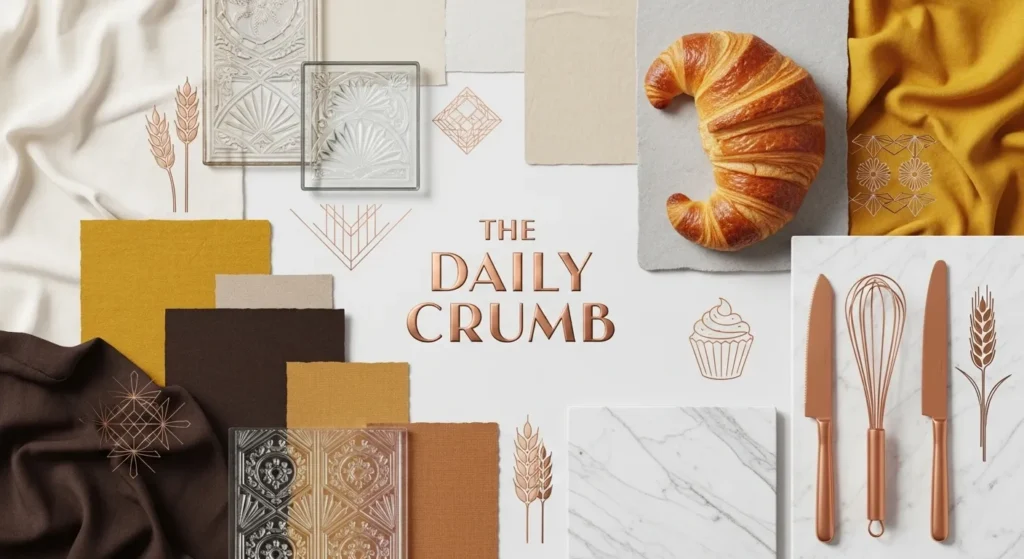
Will I use any of the images it generates? Absolutely not.
But in 30 seconds, I have four different visual directions to discuss with the client. It helps us get on the same page faster. It’s a “visual abstract” that kicks off the real strategic and creative work.
3. Personalisation at Scale
This is a more advanced use, but it’s a powerful tool. Imagine you want to send an email campaign to 5,000 customers.
Using AI, you could dynamically insert a customer’s name onto a custom image, or generate a unique coupon code visually embedded in a banner, or even slightly alter the product image to match their known preferences (e.g., “show me the red version”).
This is a data-driven design, and AI makes it accessible to more than just a handful of massive corporations.
Scaling 1:1 Brands with Dynamic Creative Optimisation (DCO)
The most significant shift in 2026 is the move from static branding to Dynamic Creative Optimisation (DCO). Instead of a single logo for everyone, AI enables your brand to adapt its visual language in real-time.
For example, your website’s Visual Hierarchy and Colour Palette can automatically adjust based on a visitor’s Accessibility Needs or cultural preferences (as identified by their User Agent).
This is not about changing your core identity, but about Responsive Brand Systems.
A professional designer sets the “Brand DNA”—the constraints, typography, and core symbols—and the AI executes thousands of variations to match the user’s specific Micro-moment.
Businesses implementing the “AI-Co-Design” model have seen a 25% increase in trial-to-paid conversions (according to the State of AI in Design Report 2026).
Part 2: The Bad. The Traps Waiting for Entrepreneurs
This is the most important section of this article. Using AI badly is worse than not using it at all. Using it for the wrong things can, and will, cost you thousands.
1. The Copyright & Trademark Nightmare (A True Story)
This is my biggest red flag. The legal framework for AI is a complex, evolving landscape.
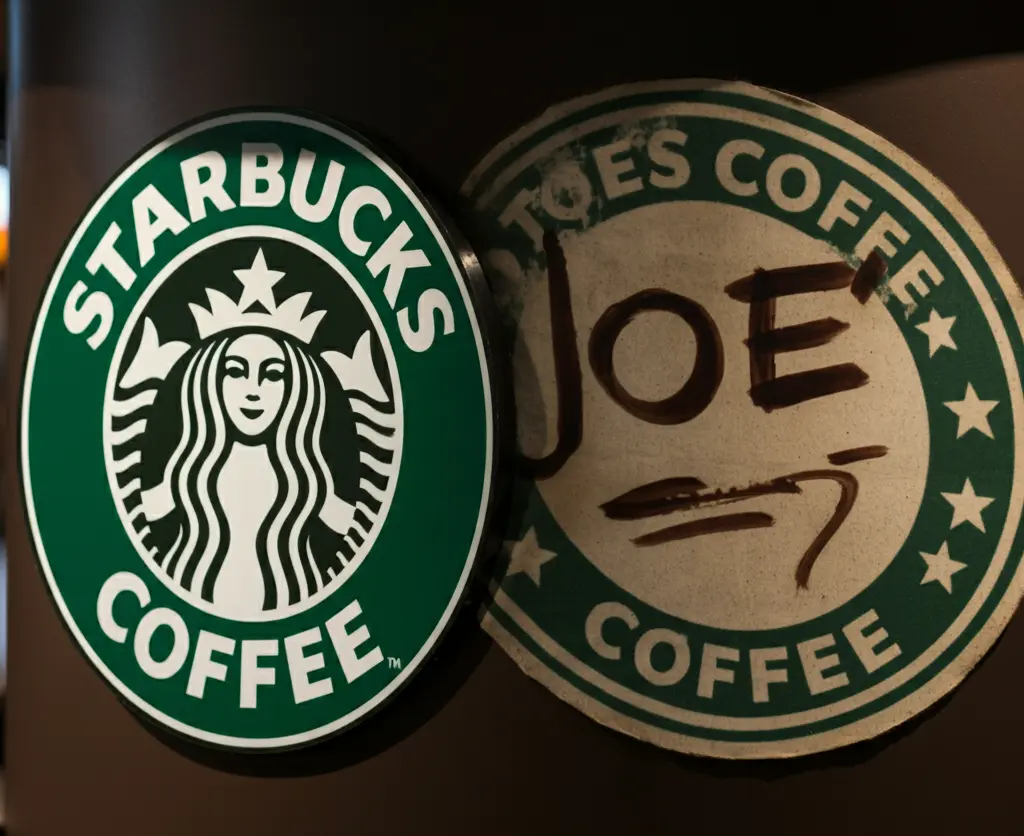
Here’s a real-world story: We had a startup founder come to us in a panic. He had “designed” his logo himself using a popular AI image generator. He built his website, printed his business cards, and even put in a trademark application.
His application was rejected. Worse, he received a cease-and-desist letter.
Why? The AI tool had generated an image that was “substantially similar” to an existing company’s trademarked logo. The AI, trained on billions of images (many of them copyrighted), had essentially “data laundered” someone else’s intellectual property and served it up to him as “unique.
He had to scrap everything. The website, the cards, the packaging. It cost him three times as much in legal fees and emergency rebranding as it would have to hire a professional in the first place.
The Hard Truth: You cannot trademark most AI-generated output because it’s not considered a work of human authorship. If you can’t trademark your logo, you don’t own your brand. Full stop.
The 2026 Legal Standard: C2PA and Content Credentials
In 2026, “I didn’t know it was AI” is no longer a valid legal defence for business owners. With the enforcement of New York’s SB S8420A and the California AI Transparency Act, brands are now required to disclose Synthetic Media in commercial advertising.
To protect your brand, we now utilise Content Credentials (C2PA). This is a digital “nutrition label” embedded in your design files that proves Human Authorship and tracks the provenance of the image.
When we deliver your brand kit, it includes these metadata signatures, ensuring your business remains compliant with the Texas Responsible AI Governance Act (TRAIGA) and other 2026 state mandates.
Without this “provenance data,” your ads may be flagged or suppressed by Gemini and Meta’s automated compliance crawlers.
2. The “Sameness” Epidemic
Take a scroll through LinkedIn or Instagram. You’ll start to see it. The same glossy, 3D character illustrations. The same abstract, swirling gradients. The same “Utopian futuristic” stock photos.
This is the “sameness” epidemic.
When everyone uses the same tools and follows the same “trending” prompts, you get the same results. Your brand is your single greatest tool for differentiation. If your visual identity looks like everyone else’s, you’ve already lost.
A human designer’s job is to avoid the trend and find a unique visual language that belongs only to you. An AI’s job is to identify the trend’s average.
3. The “Logo” Myth: An Image is Not a Brand
This is my final pet peeve, and it’s a big one.
An entrepreneur types “logo for a high-end tech company, minimalist, blue” into a generator. It spits out a clean, abstract “B” shape. “Perfect!” they think.
What they don’t know is:
- Does it work in black and white?
- Is it legible when shrunk down to a 16px favicon?
- Is the “B” shape already in use by 500 other “minimalist tech” companies?
- Does “blue” evoke the right emotion for their specific target audience, or is it just what they asked for?
- How does it pair with typography?
- How does it extend to a website, a business card, a tradeshow booth?
AI gives you a picture. A graphic design agency gives you a system. A logo is the end product of a strategic process, not the start of one.
Part 3: The Reality. How a Pro’s Workflow Actually Uses AI
So if AI doesn’t just “make the logo,” what are professionals doing with it?
They’re using it as a co-pilot. As an assistant. As a “competency accelerator.”
A good designer with AI tools is now a great designer. They can explore more ideas more quickly. They can execute mundane tasks in seconds. They can spend 90% of their time on strategy and 10% on production, instead of 50/50.
A bad designer with AI is simply a faster version of a bad designer. They’ll still deliver generic, non-strategic work, just in half the time.
Here’s a table that breaks down the real difference.
Pro vs. Amateur AI Workflow
| Stage of Design | The Amateur (“AI Designer”) | The Professional (Designer + AI Tool) |
| 1. The Brief | Skips this. Thinks “I need a logo.” | (Human Skill) Conducts a 2-hour strategy workshop with the client. Defines audience, competitors, market position, and brand voice. |
| 2. Research | Types prompt into the AI generator. | (Human Skill) Spends days analysing competitors, building target audience personas, and researching historical art/design references. |
| 3. Concepting | “This AI image looks cool.” | (AI Assist) Uses AI to generate private mood boards. What if we tried a Bauhaus approach?” Skips hours of manual image searching. |
| 4. Creation | Downloads the AI JPEG and calls it a day. | (Human Skill) Starts from a blank canvas in Adobe Illustrator. Sketches 50+ ideas by hand. Refines the top 3 into unique, vector-based concepts inspired by the strategy, not a prompt. |
| 5. Refinement | “I guess I can’t change it.” | (AI Assist) “This icon is great. Now, let’s use an AI plugin to create 20 variations of it with different line weights.” Culls 19, keeps the perfect 1. |
| 6. Legal Check | “It’s from AI, must be fine!” | (Human Skill) Runs the final design through a reverse image search and a preliminary trademark database check. Guarantees it’s 100% original. |
| 7. Delivery | Sends a single JPEG file. | (Human Skill) Delivers a 20-page brand guidelines document, logo files in every conceivable format (vector, print, web), and a strategy for rollout. |
See the difference? The pro uses AI to accelerate human-led tasks. The amateur tries to replace a human-led strategy.
Part 4: A Practical Guide for Entrepreneurs (When to AI vs. When to Hire)
So, what’s the takeaway for you? You’re a busy entrepreneur. You need to know where to spend your money and where to save it.
AI vs. Pro: Strategic Decision Matrix
Stop guessing. Select your current design task below to see if you should automate it with AI or invest in a human strategist.
High Risk. Do Not Automate.
Why? Your logo is the foundation of your legal IP. AI-generated logos generally cannot be trademarked and often infringe on existing copyrights. You need a legally defensible asset, not just a picture.
Request a Custom Branding QuoteToo Complex for AI.
Why? A website is a conversion funnel, not just a graphic. AI cannot plan user journeys, accessibility structures, or SEO architecture. You need a human architect to ensure your site actually sells.
Discuss Your Website ProjectGreen Light. Go for Speed.
Why? The stakes are zero. For internal visuals, mockups, or team meetings, speed is the priority. Use tools like Midjourney or Canva to get the point across quickly without wasting budget.
Perfect Use Case.
Why? This is the “grunt work” AI excels at. Removing backgrounds, colour-correcting, or upscaling product shots is a waste of human creativity. Let the machine handle the pixels; save your budget for the strategy.
Requires Human Strategy.
Why? A major launch needs to cut through the noise. AI models are trained on the “average” of the internet, meaning they produce generic work. To stand out, you need unique, human-led creative direction.
Get a Quote for Your CampaignHere is my honest-to-God cheat sheet for when to use AI and when to call a professional.
The AI vs. Pro Checklist
| The Task | Use AI? (The “DIY” Route) | Hire a Professional? (The “Investment” Route) |
| Your Main Logo & Brand Identity | YES. ALWAYS. This is the foundation of your business. It requires a strategic approach, legal defensibility, and uniqueness. This is a non-negotiable investment. | FOR CAMPAIGNS. For a major product launch or ad campaign? Yes. You need a strategy and custom creative. For daily filler? No. |
| Internal Presentation Mockups | YES. This is a perfect use case. Need a quick, “pretty-looking” chart or an image for a team meeting? Go for it. The stakes are zero. | NO. Don’t waste your agency’s time (or your money) on this. |
| Social Media Graphics (Daily Posts) | FOR CAMPAIGNS. For a major product launch or ad campaign? Yes. You need a strategy and custom creative. For a daily filler? No. | YES, WITH CAVEATS. Great for “Happy Friday” posts or quick-hit content. Use AI-assisted tools like Canva. But stick to your brand guidelines (fonts, colours) set by your human designer. |
| Product Photos (eCommerce) | YES (AI-ASSIST). Use AI tools to remove backgrounds, clean up dust, or create “virtual stages” for your products. It’s a massive time-saver. | FOR THE SHOOT. Hire a pro photographer for the initial shoot. Then use AI to edit the 200 photos they deliver. |
| Your Website Design | NO. A website is not just a pretty picture. It’s user experience (UX), information architecture, and a conversion funnel. AI tools cannot build a strategic website. | YES. Your website is your 24/7 salesperson. It needs to be built by a professional who understands both design and business goals. |
When the stakes are high, when it’s customer-facing, and when it needs to be legally yours, you hire a human. When the stakes are low, it’s internal, and it’s repetitive, you use a tool.
If your core brand identity—your logo, website, and brand guidelines—is in the “high stakes” category, it’s time to request a quote and speak with a human strategist.
AI is a Hammer, Not an Architect
AI is a fantastic tool. It’s a hammer. It can bang a nail in faster and harder than any human.
But a hammer can’t build a house.
It doesn’t know where to put the nail. It doesn’t have a blueprint. It doesn’t understand the load-bearing walls, the plumbing, the electrical systems, or the family that will live inside.
You still need an architect.
In this analogy, the entrepreneur is the homeowner. The designer is the architect. And AI is the new, fancy nail gun that makes the architect’s job more efficient.
Your business deserves an architect—someone who starts with a blueprint, not just a hammer. Stop focusing on the tool and start focusing on the strategy. The tools may change, but the principles of good design and sound business strategy remain unchanged.
Where to go from here?
The AI hype is noisy. If you’re tired of the noise and ready to build a real, defensible, and unique brand, we should talk.
At Inkbot Design, we use the best tools available—including AI—but we lead with decades of human experience in strategy and design.
- Explore our graphic design services to see how we build brands, not just pictures.
- Check out the Inkbot Blog for more no-nonsense advice for entrepreneurs.
- Ready to build a real brand? Request your free quote today.
AI in Graphic Design: Frequently Asked Questions
What is ‘Machine Experience’ (MX) in design?
MX refers to optimising your visual assets so they are easily interpreted by AI agents and search engines. This includes using LLM-friendly Structured Data and AI-tagged Alt-Text.
Does Adobe Firefly offer commercial indemnification?
Yes, as of 2026, Adobe Firefly remains one of the few platforms offering intellectual property (IP) indemnification, making it the standard for enterprise-level AI design.
How do I comply with NY’s ‘Synthetic Performer’ law?
If your ad features an AI-generated human-like figure, you must include a conspicuous disclosure. Our 2026 workflow handles this via automated watermarking and disclosure layers.
What are the best AI graphic design tools for a business owner?
For “AI-Assist,” tools like Canva’s Magic Studio and Adobe Express are fantastic. They help you work within a brand. For “AI Generation,” Adobe Firefly is generally considered safer for commercial use as it’s (supposedly) trained on a “clean” dataset.
What is the “sameness epidemic” in AI design?
It’s an observable trend that AI-generated images and designs often resemble each other closely. Because all the popular models are trained on similar data and people use similar prompts, the output begins to converge on a “generic AI” look, which is detrimental to brand differentiation.
Can AI create a full brand identity?
No. AI can generate a picture. A brand identity is a strategic system that encompasses a logo, colour palettes, typography, brand voice, and guidelines, all informed by market research and business goals. AI cannot do this.
How do professional designers use AI?
Professionals use AI as a co-pilot. They use it for:
Brainstorming: Generating fast mood boards.
Productivity: Automating mundane tasks (e.g., resizing, background removal).
Variation: Creating 20 versions of a single icon to find the perfect one.
They never use it for the final, strategic creative work.
What’s the biggest risk of using AI for my design?
The legal risk. You could be building your entire brand on a logo that you can’t own, can’t trademark, and might be infringing on someone else’s copyright.
When should I definitely not use AI for design?
Never use it for your core, permanent, high-stakes brand assets. This includes your logo, your website’s core design, and any major advertising campaign.
Is it cheaper to use AI than a designer?
It’s cheaper in the short term, just like it’s “cheaper” to build your own house without an architect. It often becomes infinitely more expensive in the long term when you have to resolve legal issues, rebrand with a generic logo, or rebuild a website that fails to convert.