AI Brand Governance: How to Scale AI Output Without Diluting Brand Equity
Most professional services firms have an AI policy and a brand guidelines PDF. Neither one controls what your staff actually publish. AI brand governance builds rules, routing and approvals into daily workflows, so a firm can use generative AI at scale without diluting the brand equity clients pay for today.
 By Stuart Crawford
 Reviewed by Tabitha Ayers
11 min read

On this page11 min left
- What Is AI Brand Governance?
- How Is AI Brand Governance Different from AI Governance?
- Why Does Your AI Policy Not Govern Anything?
- What Are the Six Stages of AI Brand Governance?
- Where Does Senior Judgement Still Win?
- What Does AI Brand Governance Look Like in a 90-Person Firm?
- How Do You Choose a Brand Governance Agency?
- AI Brand Governance Is a Decision About Ownership
- Questions people ask
AI brand governance is the system of owners, rules and approvals that stops generative AI from diluting a firm's brand as more people use it.
Most UK professional services firms have an AI policy and a PDF of guidelines.
Neither governs anything.
A brand governance agency builds the control into the workflows your fee-earners already use.
This guide sets out a six-stage process for doing that without flattening the voice clients pay for.
What Is AI Brand Governance?
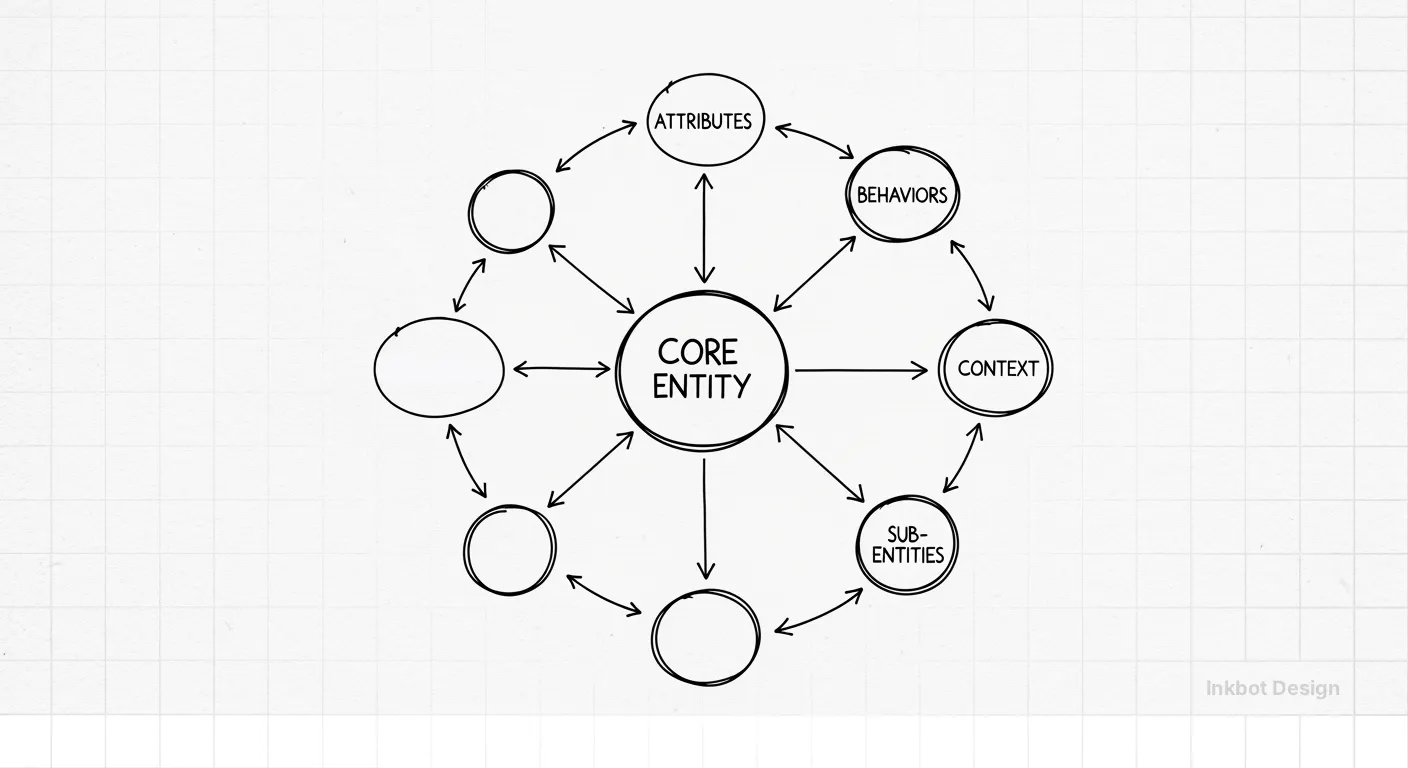
AI brand governance is the set of rules, owners and approvals that keep generative AI output consistent with a firm's positioning, voice and visual identity.
It works before generation, through approved context, and after it, through checks and escalation. A professional services firm needs it more than a few people use AI tools for client-facing work.
- AI brand governance assigns a single owner for approved brand truth, so generated suggestions never pass as the firm's position.
- AI brand governance converts "be authoritative" into rules a reviewer can check in under a minute.
- AI brand governance routes output by risk, so a partner reviews the work that carries the firm's reputation and nobody reviews the rest.
AI brand governance is the system of context, rules, workflows and approvals that keeps AI-generated output consistent with a firm's brand.
How Is AI Brand Governance Different from AI Governance?
AI brand governance protects how a firm sounds, looks and positions itself when AI helps produce its work.
Broader AI governance covers security, privacy, data handling and legal compliance. The two overlap at the edges. They are owned by different people and answer different questions.
An IT director asks whether client data can be entered into a public model. A managing partner asks whether the proposal that came out sounds like the firm or like every other firm.
Both questions matter. Only the second one is a brand question.
This article covers the second. Anything that touches on client confidentiality, professional body rules, or data protection needs its own review.

Why Does Your AI Policy Not Govern Anything?
Your AI policy probably describes intent, not behaviour.
Adobe's 2026 research found 55% of organisations report strong AI governance policies, but only 43% say those policies are consistently followed.
That 12-point gap is the distance between a document and a working habit.
The policy-versus-practice gap
A policy fails at the moment of use. An associate at a consultancy opens a consumer AI tool at 6 pm, pastes in a client brief and asks for a proposal draft. The policy sits in a shared drive. The tool has never seen it.
Brand guidelines have the same weakness. They describe the brand. They do not stand between a tired person and a blank prompt. A PDF cannot refuse an off-brand sentence.
Decision boundary: in a five-partner firm where the founders read everything before it goes out, informal control can still work.
It stops working when output leaves without a partner seeing it, usually somewhere between 30 and 50 people.
Why brand safeguards rank last
Brand safeguards are rarely a priority when firms adopt AI. Adobe's 2026 report found 47% of organisations use generative or agentic AI for journey design and omnichannel activation.
16%
These are two separate measures from two separate questions. Read together, they show adoption outpacing brand control. Speed gets budget. Consistency gets a line in a policy.
For a services firm, the cost is specific. Clients buy judgement from named people. Generic output in a tender response or thought-leadership article suggests the judgement may be generic too.
Why consistency fails across departments
Inconsistent governance is common even inside organisations that have it. Capgemini Research Institute found 47% of organisations reported inconsistent AI governance across different business functions.
Picture a firm where marketing uses an approved tone and the tax team uses whatever the tool produces. A prospect reading both sees two firms.
This is the problem a Brand Operating System solves at the structural level, and our guide to what a Brand Operating System is covers the architecture.
What Do You Need Before Stage One?
You need three things before any process helps: approved brand truth, a named owner and a stated risk appetite. Skip them and the six stages become paperwork around a vacuum.
Approved brand truth means the positioning, audience, voice and proof points a partner would sign off on today. If two partners describe the firm differently, AI will average them.
Resolve that first. That is a positioning job, and a repositioning project is the natural moment to do it.
A named owner means one person, not a committee. In firms of 50–200 people, this is often the marketing director, or a partner with delegated authority. It should not be IT.
A stated risk appetite means deciding which output you would be embarrassed by. An internal newsletter and a tender response do not carry the same risk. Write down the difference.
Decision boundary: if the firm is mid-merger or mid-rebrand, hold the process until the new positioning is settled. Governing a brand that is about to change locks in the wrong thing.
What Are the Six Stages of AI Brand Governance?
The six stages are: name an owner and fix the source of truth, turn guidelines into checkable rules, brief the tools and people, tier output by risk, route high-risk work to a senior person, and record decisions.
Each stage has a done-right signal and a failure mode.

Stage 1: Name an owner and fix the source of truth
AI brand governance starts with one accountable owner and one location for approved brand material.
List the artefacts: positioning statement, audience definitions, voice rules, approved claims, logo and colour usage. Put them in one place with a named person who alone can change them.
Done right: any fee-earner can find the current positioning in under two minutes, and nobody disputes which version is current.
Failure mode: ownership split between marketing, HR and a partner, so approved truth quietly diverges. This is the same pattern Capgemini measured across business functions.
Stage 2: Turn guidelines into checkable rules
Guidelines say "be confident but not arrogant". A rule says "no superlatives about ourselves; every claim carries a named client outcome or is cut". The second can be checked by a reviewer who has never met the author.
Write 10–15 rules, split between verbal and visual. For verbal: banned phrases, sentence length limits, how the firm refers to itself, which claims need evidence.
For visual: logo clearance, permitted palettes, image style.
Done right: two reviewers given the same piece reach the same verdict.
Failure mode: rules so vague they restate the guidelines, or so many that nobody applies them.
Stage 3: Brief the tools and the people
Give the AI tool and the person using it the same approved context.
That means a short brief per job: audience, channel, objective, approved messages, voice rules. Keep temporary prompts separate from the approved source of truth.
This is where a prompt library earns its place.
The library holds calibrated starting prompts for the five or six outputs your firm produces most often: proposals, articles, client updates, bios, and LinkedIn posts.
Our artificial intelligence in design guide covers the visual side of the same problem.
Done right: a new associate produces an on-voice first draft without asking anyone.
Failure mode: staff copy prompts from the internet because the firm's version is hard to find.
Stage 4: What should be shipped, sampled or escalated?
AI brand governance works by sorting output by risk rather than checking everything.
Three tiers cover most firms: ship, sample and escalate. The tier depends on audience, permanence and claim risk.
Output type | Typical tier | Reason |
|---|---|---|
Internal meeting notes | Ship | Low reputational exposure |
Social posts from approved themes | Sample | Check a proportion weekly for drift |
Client email drafts | Sample | Tone matters, individual risk is low |
Proposals and tender responses | Escalate | Revenue-bearing, claims scrutinised |
Thought-leadership articles | Escalate | Public, permanent, position-defining |
New service descriptions or claims | Escalate | Creates positioning commitments |
Anything for a new or sensitive audience | Escalate | No precedent to check against |
Decision boundary: a 10-person firm can escalate nearly everything because a partner sees it anyway. A 150-person firm cannot. The sampling tier is what makes governance affordable.
Done right: fee-earners know the tier before they start.
Failure mode: everything escalates, creating a bottleneck. People then route around the process, and you have governance in name only.
Stage 5: Route high-risk work to a senior person
Escalation needs a named reviewer with authority, a turnaround time and a reason code. Without all three, escalation becomes a queue.
Escalate new claims, new audiences, headline campaign ideas, case-study assertions and anything quoting a client. The reviewer asks one question first: would a partner put their name to this? If not, the work returns with a specific reason.
Done right: reviewers return work within a day, with reasons the author can act on.
Failure mode: a senior reviewer personally rewrites everything. That fixes one document and teaches nobody anything.
Stage 6: Record decisions and trace drift
Log each correction, exception and its rationale. Review the log monthly.
Patterns point to a cause: gaps in the source of truth, unclear rules, briefs that aren't reaching people, or a new situation with no precedent.
Done right: after three months you can say which rule is broken most often and why.
Failure mode: corrections made quietly in each document, so the same mistake recurs. A log that nobody reads is the same as no log.
Where Does Senior Judgement Still Win?
Senior judgement wins wherever the brand's premium lives: in positioning calls, in the choice of what to claim, and in the decision to say something a competitor would not.
Governance should protect those decisions, not automate them.
What should you not automate?
AI brand governance should keep human decision-making for anything that defines the firm's point of view. That includes the argument in a thought-leadership piece, the framing of a fee conversation and the story told in a case study.
A tool can draft the structure. It cannot know that your firm declined a client last year because of a conflict of values, or that a partner's view on a regulatory change differs from the consensus.
That specificity is what makes content citable and the firm memorable.
My view is that a wave of brands using AI will turn it into a cliché, and the brands that humanise will stand out. Treat that as a design judgement.
“A firm's governance should decide what AI is not allowed to touch. Anything that carries the firm's point of view, a named client outcome or a claim a competitor could not make should stay in senior hands. Automation protects consistency. It cannot create distinctiveness, and distinctiveness is what pricing power rests on.”
How much control dilutes brand equity?
Over-control dilutes brand equity as surely as under-control. Lock every sentence into a template and every partner sounds identical. The firm becomes consistent and forgettable.
The test is simple. Ask whether a rule protects recognition or merely enforces uniformity. A rule against unevidenced superlatives protects recognition. A rule requiring every article to open with the same structure enforces uniformity.
Decision boundary: highly regulated outputs, such as disclaimers and compliance language, should be tightly templated. Opinion and insight should have looser rules and stronger review.
Two objections, answered honestly.
"We are a people business. AI is a small part of what we publish."
That may be true today. It applies if a handful of partners write everything. It fails once associates, marketing staff and external contractors use AI for first drafts, which tends to happen without announcement. If you cannot say how much AI-assisted work leaves the firm, you cannot say it is small. Run a one-week audit before deciding.
"Controls will slow fee-earners, and they will work around them."
They will if the process asks them to wait for approval on everything. The tiered model exists for exactly this reason. Most output ships or is sampled. Only high-risk work waits. If your process is slower than the tool, the tool wins.
What Does AI Brand Governance Look Like in a 90-Person Firm?
An illustrative example shows how the stages fit together.
A 90-person UK consultancy has three practice groups. Each partner has quietly adopted a different AI tool. The proposals read differently, and one practice's thought leadership has drifted towards generic advice.
The managing partner names the head of marketing as owner (Stage 1). Together they agree on 12 rules, including a ban on unevidenced superlatives and a requirement that each article state a position (Stage 2). They build six briefs for the firm's common outputs (Stage 3).
They then tier output: tender responses and articles escalate to a partner; client emails are sampled weekly (Stage 4). A partner reviews escalations within one working day (Stage 5). A shared log records each correction (Stage 6).
After a quarter, the log shows that most corrections come from one unclear rule. They rewrite it. That is the governance loop working: not perfect output, but visible and shrinking drift.
How Do You Choose a Brand Governance Agency?

Choose an agency that can show how the system will run after the project ends. A deliverable that depends on the agency policing it is not governance.
Ask five questions:
- Who owns approved brand truth after handover, and where does it live?
- How do you turn guidelines into rules a reviewer can check?
- How does your approach handle AI-assisted work in proposals and articles?
- Which decisions do you recommend keeping with senior people?
- What happens in month four, when partners start bypassing the process?
Be wary of any answer that centres on a platform purchase. Tooling helps, but it comes after ownership and rules.
Decision boundary: if your firm has an in-house brand lead with authority and capacity, you may only need the audit and a rules workshop.
A fractional or agency-led model is appropriate when no one within the organisation has that mandate. Related reading on brand management roles and tools shows what to expect from each.
For firms with reporting obligations, ESG, accessibility and reporting standards cover where visual governance meets compliance.
AI Brand Governance Is a Decision About Ownership
AI brand governance protects brand equity by deciding who owns the brand's truth, which output gets reviewed and which decisions stay human. Tools change every quarter. Ownership does not.
Your policy and your guidelines already exist. The question is whether anyone applies them at the moment of use. Adobe's 12-point gap between having policies and following them suggests many firms will find the answer uncomfortable.
First action today: ask five fee-earners which AI tools they used for client-facing work last week. Write down the answers. That list is your starting position.
A free Brand Equity Audit™ gives you a structured diagnostic of where your brand is losing commercial ground and what to do about it. If you already have an empowered brand lead, run the five-question test above yourself first.
Questions people ask
What is AI brand governance?
AI brand governance is the set of rules, owners and approvals that keep AI-generated output consistent with a firm's brand. It covers voice, positioning and visual identity. It differs from AI governance, which deals with security, privacy and legal compliance.
Do professional services firms need AI brand governance?
Yes — once several people use AI tools for client-facing work. A five-partner firm where founders read everything may manage informally. Beyond roughly 30–50 people, output leaves without senior review, and the risk shifts from occasional errors to steady drift.
Who should own AI brand governance in a 100-person firm?
One named person with authority over brand decisions should own it. That is often the marketing director or a partner with delegated authority. IT can support the tools, but a brand question needs a brand owner. A committee dilutes accountability.
Why do AI policies fail to keep content on brand?
AI policies fail because they sit apart from the moment of use. Adobe's 2026 research found 55% of organisations report strong AI governance policies, but only 43% say they are consistently followed (Adobe, 2026). Controls must be built into workflows and briefs.
What should a firm never automate with AI?
Firms should keep human control over positioning, claims, case-study framing and any opinion that defines the firm's point of view. These carry the brand's premium. Routine, low-risk output such as meeting notes can ship with little or no review.
What should I ask a branding agency about AI brand governance?
Ask who owns brand truth after handover, how guidelines become checkable rules, how AI-assisted proposals are handled, which decisions stay with senior people, and what happens when partners bypass the process. Answers centred on software alone are a warning sign.