
ESG Visual Governance: Storytelling for Consultants
Decorative sustainability messaging actively devalues corporate credibility.
Professional service firms in 2026 must treat visual communication as an extension of legal compliance rather than window dressing in a marketing campaign. When advisory firms treat design as an aesthetic layer, they introduce structural liabilities into their core operations.
The financial penalties for graphic misrepresentation are rising sharply across global markets. According to the Norton Rose Fulbright 2025 Litigation Trends Survey, 27% of organisations saw their ESG dispute exposure increase over the previous year, underscoring the legal risks posed by inconsistent or poorly substantiated ESG communications.
A firm’s visual choices now draw direct scrutiny from regulatory bodies and institutional procurement panels. When an advisory business presents unverified graphics or decorative icons, it jeopardises its entire corporate status.
To defend your market position, you must embed a structured brand equity system that aligns your visual output with auditable performance metrics.
This guide defines how professional service partnerships can govern their design choices to win procurement bids and insulate their operations from regulatory penalties.
- Treat ESG Visual Governance as compliance: every graphic must link to audited data books, preventing legal liability and procurement exclusion.
- Enforce standardised templates, chart rules, colour systems and accessibility; maintain an auditable asset lifecycle to eliminate credibility drift across divisions.
- Regulatory enforcement and anti-greenwashing rules now invalidate decorative imagery; institutional buyers and automated parsers demand literal, verifiable visuals.
- Establish joint design and compliance approval workflows, perform annual audits, retire speculative assets; request a Brand Equity Audit™ from Inkbot Design.
What Is ESG Visual Governance?
ESG Visual Governance is a compliance framework that standardises corporate sustainability data communications to prevent legal liability and misinterpretations of greenwashing.
It serves as an operational control mechanism that ensures all public-facing graphics, performance charts, and design layouts align with audited data books.
- Data Verifiability: Every icon, graph axis, and chart representation must possess a traceable link back to a verified spreadsheet repository.
- Graphic Standardisation: Structural design systems enforce uniform typography, explicit colour parameters, and functional templates across all corporate divisions.
- Regulatory Alignment: Layout architectures adapt dynamically to mirror the disclosure structures mandated by international reporting bodies.
ESG Visual Governance is a compliance framework that standardises corporate sustainability data communications to prevent legal liability and misinterpretations of greenwashing.
The Regulatory Reality of 2026 Corporate Communications
Voluntary environmental marketing has transformed into a regulated operational discipline.
The era of loose corporate social responsibility brochures ended when formal frameworks became mandatory for large procurement supply chains.
With 99% of S&P 500 companies now publishing sustainability reports according to the Governance & Accountability Institute (2025), ESG communication has shifted from a niche compliance exercise to a mainstream brand governance challenge.
Partnerships can no longer treat sustainability assets as isolated marketing collateral. If your graphic output deviates from your audited data books, your firm faces immediate exclusion from enterprise framework agreements.
Institutional purchasers demand that visual summaries mirror exact regulatory filings rather than creative interpretations.
Navigating the Expansion of Mandatory Frameworks
Global regulatory standardisation has altered the necessary layout architecture of corporate documentation.
The European Financial Reporting Advisory Group (EFRAG), in its 2025 ESRS review, analysed 656 sustainability statements issued within just the first few months of implementation, highlighting the growing operational burden of ESG disclosure governance.
This massive volume of corporate data forces institutional review teams to rely on automated extraction tools. If your design templates bury essential metrics within non-standardised narrative layouts, software parsers fail to categorise your data.
UK consultancies serving international clients must structure their document geometry to comply directly with these automated processing workflows.
The Impact of Commercial Anti-Greenwashing Enforcement

Regulatory bodies have intensified their scrutiny of vague or misleading environmental language and supportive visual assets.
A major example occurred when more than 1,450 ESG-labelled investment funds were renamed to comply with European anti-greenwashing guidance, signalling a zero-tolerance policy for decorative positioning.
Concurrently, the activation of UK anti-greenwashing rules has forced corporate legal teams to intervene directly in the approval workflows for standard marketing assets.
If your creative team uses stock imagery representing idealised ecosystems without local context, the presentation introduces immediate legal risk. Visual compliance requires a transition to precise, literal depictions of operational initiatives.
The corporate world has crossed a definitive boundary where visual ambiguity constitutes an actionable legal risk. True graphic governance forces an organisation to discard speculative aesthetic choices, ensuring that every chart, icon, and structural layout maps directly to a verified compliance record. Firms that refuse this technical discipline will find themselves excluded from modern enterprise procurement.
The Deconstruction of Institutional Trust Gaps
Large professional service partnerships frequently suffer from decentralised document creation. Separate advisory units, regional operations, and business development divisions routinely build client-facing decks using individualised asset libraries.
This operational fragmentation results in conflicting data formats, variable metrics, and unvetted iconography across parallel bids.
When a prospective corporate client reviews multiple proposals from the same firm and identifies visual inconsistencies, the firm’s operational credibility dissolves. Visual governance systems eliminate this vulnerability by locking standard data presentation layouts across the entire corporate network.
The Financial Value of Disclosure Architecture
Implementing a clear disclosure architecture yields measurable commercial advantages. PwC’s 2025 Global Sustainability Reporting Survey found that roughly 70% of organisations reporting under CSRD and ISSB frameworks are already extracting measurable business value from sustainability data.
This commercial return depends entirely on the clear communication of metrics to external stakeholders.
When your firm presents data through clear, unembellished, and standardised graphic components, institutional purchasers can immediately validate your capabilities. Clear communication accelerates procurement reviews, directly reducing business development friction.
Protecting Brand Equity via Asset Auditing
Corporate reputation requires continuous technical protection from graphic drift. A firm’s sustainability branding strategy must employ the same structural rigour applied to financial accounting.
Every chart component, line item, and icon asset requires a transparent audit trail detailing its source data and approval history.
By enforcing an auditable asset lifecycle, a professional firm ensures that its public positioning remains accurate. This protective protocol prevents reputational damage and preserves your firm’s market premium during high-stakes corporate transitions.
Implementing Visual Governance Controls
Firms must establish explicit rules governing chart generation and quantitative layouts. Graphic designers must never distort chart scales to exaggerate performance metrics, as this manipulation invites regulatory censure.
Axes must begin at absolute zero, intervals must remain geometrically uniform, and data labels must correspond exactly to verified source ledgers.
Colour treatments should serve an analytical purpose rather than a decorative one, using neutral tones to represent standard baselines and reserving distinct hues for specific data highlights.
Architectural Frameworks for Document Hierarchies
Document geometry must support the rapid extraction of regulatory data points. Layout templates must deploy rigid grid structures that align content zones with recognised disclosure frameworks.
Typography hierarchies must remain completely uniform, utilising distinct weight variations to segregate verified metrics from explanatory prose.
Furthermore, all digital documents must meet international web content accessibility guidelines, ensuring that automated screen readers and enterprise data parsers can read structural charts without interpretation errors.

Iconography and Imagery Protocols
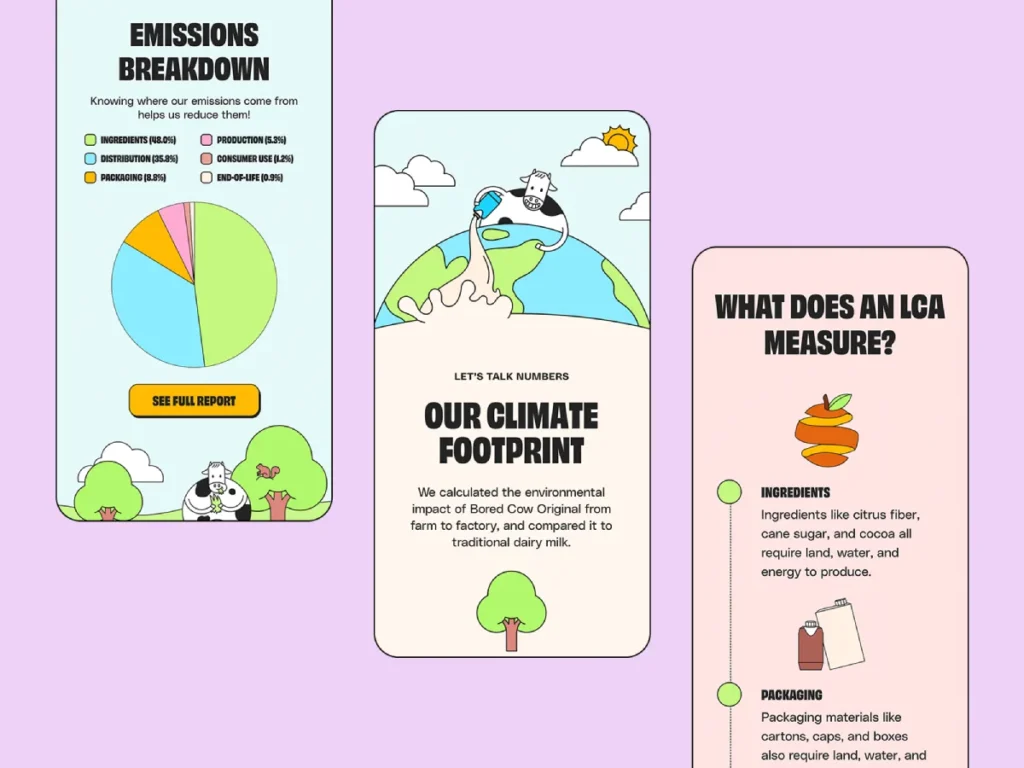
The selection of illustrative assets requires strict oversight from compliance teams. Generic environmental symbols—such as abstract green leaf icons or uncredited planetary graphics—must be removed from corporate asset libraries.
If a document references a specific carbon-reduction initiative, the accompanying imagery must depict the actual corporate facility or physical infrastructure involved.
When literal photography is unavailable, firms must rely exclusively on neutral, technical layout elements that present facts without emotional elaboration.
Enterprise procurement panels navigate a deluge of corporate reports, making visual clarity the primary determinant of executive trust. When a professional services firm abandons emotional layout strategies in favour of precise data architecture, it signals operational maturity. Visual governance is not a stylistic option; it is the definitive method for protecting commercial contracts in a regulated market.
The Blueprint for Data Comparison
The following table contrasts outdated creative design practices with modern, compliant visual governance protocols required across the UK professional services sector:
| Decision Point | The Wrong Way | The Right Way | Why It Matters |
| Chart Scale Settings | Adjusting axes to amplify positive sustainability changes artificially. | Enforcing absolute zero baselines and uniform geometric intervals. | Prevents regulatory charges of data manipulation. |
| Environmental Iconography | Deploying abstract leaf, tree, or globe graphics for decoration. | Utilising specific, literal icons tied to explicit data categories. | Eliminates greenwashing risk under UK compliance rules. |
| Photography Guidelines | Inserting generic stock images of natural environments or wind farms. | Presenting actual, documented photos of internal corporate initiatives. | Verifies operational authenticity during external procurement audits. |
| Layout Consistency | Allowing individual departments to generate custom presentation decks. | Enforcing uniform, locked corporate templates via controller servers. | Removes credibility drift across parallel corporate proposals. |
| Data Extraction Design | Embedding critical metrics inside complex, narrative-heavy text blocks. | Using isolated callout components compatible with software parsers. | Enables corporate AI tools to index your performance easily. |
| Colour Palette Usage | Applying unmanaged green gradients to mimic ecological themes. | Deploying an approved, neutral corporate palette for data clarity. | Distinguishes objective technical reporting from marketing campaigns. |
| Document Access Compliance | Overlooking tag structures and alt-text definitions within PDFs. | Implementing strict accessibility compliance for automated readers. | Guarantees compliance with international digital information laws. |
Real-World Bid Failures

We worked with a mid-sized professional services company preparing for a large procurement bid where ESG positioning had suddenly become commercially important.
The leadership team had invested heavily in sustainability initiatives—carbon reporting, supplier policies, diversity hiring targets, and community programmes—but none of it was reflected consistently across the brand.
The problem wasn’t the ESG strategy itself. It was the visual governance around it.
Different departments were creating their own sustainability graphics, icons, reports, slide decks, and social posts. Some used generic “green” imagery. Others used stock photos of forests and wind turbines that had nothing to do with the company’s actual operations.
Statistics appeared in different formats depending on who produced the document. Even the tone shifted from highly corporate in investor materials to overly promotional on social media.
Internally, everyone assumed they were supporting the message. Externally, it created distrust.
During stakeholder interviews, several prospects described the brand as over-designed, performative, difficult to verify, and visually inconsistent with their actual business operations. The biggest issue was credibility drift. The more content they produced without governance, the less believable the message became.
We introduced a structured system covering reporting templates, data visualisation standards, typography hierarchy, photography direction, claims substantiation rules, iconography systems, colour usage controls, accessibility standards, and formal approval workflows. We also removed approximately 40% of the visual elements being used because they added emotional theatre rather than clarity.
Within six months, proposal engagement rates increased by 28%, average time spent on sustainability web pages increased by 41%, and investor drop-off rates reduced significantly. Most importantly, procurement feedback shifted from questioning authenticity to discussing operational capability. Strong branding is rarely louder. It’s usually clearer, more disciplined, and easier to trust.
The Verdict
Corporate visual strategy directly dictates market survival in the modern regulatory environment. Professional service firms can no longer operate with fragmented, decorative communication practices that prioritise marketing aesthetics over verifiable metrics.
When an organisation tolerates unmanaged design assets, it actively invites regulatory scrutiny and compromises its position in high-value corporate procurement networks.
The data demonstrates that enterprise purchasers systematically reject visual ambiguity in favour of clear, compliance-grade data architecture.
This investigation proves that visual governance functions as a critical protective shield for your corporate reputation and financial interests.
By linking public-facing design assets to audited data repositories, your firm eliminates greenwashing risks and creates a reliable foundation for sustainable commercial growth.
Clear, disciplined data presentation separates elite market operators from firms relying on outdated marketing theatre.
Partners and managing directors must immediately audit their corporate communication pipelines. Eliminate speculative design assets, retire abstract environmental imagery, and enforce standardised document templates across every division.
If your brand lacks an integrated operational control framework, request a free Brand Equity Audit™ at Inkbot Design to identify where your visual assets are exposing your business to commercial loss.
FAQs
What is the primary objective of ESG Visual Governance?
The primary objective is to align all public-facing corporate graphics with verified sustainability data books. This systematic synchronisation prevents greenwashing accusations, ensures absolute regulatory compliance, and protects professional firms from legal litigation during procurement bids.
How does poor data visualisation impact corporate procurement?
Inconsistent or exaggerated data charts create immediate trust gaps with enterprise procurement panels. If a firm presents distorted scales or unverified metrics, review boards routinely exclude the provider from consideration due to compliance risks.
Why is generic stock imagery hazardous in sustainability reporting?
Generic environmental imagery lacks specific context and can be interpreted as deceptive marketing by regulatory enforcement units. Under current guidelines, abstract visuals that cannot be linked to actual corporate actions constitute actionable greenwashing.
What framework components are required in a design system?
A structured framework requires standardised reporting templates, data visualisation rules, typography hierarchies, and strict controls on icon usage. It must also incorporate mandatory compliance review steps before any document is published.
Can automated software tools read custom-designed PDF reports?
Automated enterprise parsers often fail to extract data from non-standardised narrative layouts. Visual governance fixes this problem by enforcing rigid grid architectures and compliant digital tagging across all corporate documents.
How does visual consistency alter stakeholder engagement metrics?
Standardised visual systems increase stakeholder engagement by removing decorative clutter and improving data clarity. Case records show that clean, evidence-based data layouts significantly increase the time institutional investors spend reviewing corporate reports.
What is the relationship between brand equity and compliance design?
Compliance design protects long-term brand equity by preventing regulatory penalties and public greenwashing scandals. Shifting from marketing theatre to data precision preserves a professional firm’s premium market positioning.
How often should a firm audit its corporate design assets?
Firms must audit their corporate asset libraries at least once a year to ensure alignment with changing international standards. Any asset lacking a direct link to a verified data ledger must be removed immediately.
Is visual governance necessary for mid-sized advisory firms?
Mid-sized firms require visual governance because they compete for the same corporate procurement contracts as large enterprise networks. Enterprise buyers enforce identical data compliance standards across all potential suppliers.
Who should manage the visual governance approval workflow?
The workflow requires joint oversight from senior design directors and corporate compliance officers. This dual-layer review ensures that all public communication matches both brand standards and audited performance records.
