Accounting Firm Branding Cost: Scope Before Spending
Accountancy branding budgets should follow the required business change. Separate presentation improvements, market repositioning and identity migration before comparing quotes. A published core fee gives a starting point, but websites, naming and rollout need explicit treatment. Buy the smallest complete scope that solves the problem while preserving useful client recognition.



On this page6 min left
Your accountancy firm’s branding budget should align with the changes you need to make. Choosing a package because the logo looks tired puts the buying decision in the wrong order.
That is a provider-specific reference point, not the total cost of every accountancy rebrand: naming, website work, rollout and multi-brand architecture are separately scoped.
The distinction matters. MHA’s planned adoption of the Baker Tilly name from February 2027 concerns an established practice moving to a network identity, rather than simply commissioning a different logo.
Before buying accountancy firm branding, establish which business problem the work must solve.
What does accounting firm branding cost?
Inkbot Design’s published Brand Equity Blueprint™ costs £7,500 for one brand and includes positioning, messaging, visual identity, guidelines and master pitch deck architecture.
Website design and development, naming, rollout and multi-brand architecture are scoped separately. This is our offer, not a UK market average.
- Presentation improvements need a different brief from a change in market position.
- Identity migration needs explicit decisions about retained names and client recognition.
- A complete budget must identify who implements the approved work.
Accountancy firm branding costs depend on strategy, identity and implementation scope; a published core fee does not establish the complete project budget.
Define the change before choosing the budget.
Price bands are appealing. Partners need a number for the next meeting, and “freelancer, studio or agency” looks like a convenient way to organise the choice.
The problem is the unit being compared.
A quotation for a logo and colour palette cannot tell you whether another quotation covering partner interviews, positioning and client communications is expensive.
The second proposal contains different work. First, decide which work belongs in your brief.
Improving presentation while retaining the position
A presentation refresh is the appropriate starting point when the practice knows which clients to serve, can explain the proposition and has an identity worth keeping.
The brief might cover an inconsistent proposal template, difficult-to-read typography or a website that no longer reflects the approved identity. Write those defects down. “Make us look more modern” leaves too much room for interpretation.
Retaining the name or logo should remain an option. Our service information allows us to keep an existing logo when messaging or application needs more attention.
A limited design engagement may suit this situation. Paying for a wider strategy programme requires a reason beyond the existence of an agency package.
Changing what prospective clients understand
Repositioning addresses a different question: what should prospective clients consider the practice for?
A hypothetical practice might want more outsourced finance director work while presenting almost everything as year-end compliance. That example illustrates a scoping problem; it is not a documented client result.
The brief would need to establish the intended audience, explain the service and identify evidence supporting the proposition. A new typeface cannot make those decisions.
The Institute of Chartered Accountants in England and Wales 2026 mid-tier research reports that nearly three-quarters of responding firms had acquired another practice. That finding concerns the respondents, not three-quarters of all UK accountancy firms.
For an acquisitive practice, the positioning question may include how different teams and specialisms fit together. An independent practice may instead need to explain why remaining independent matters to its clients.
Neither brief automatically requires a new name. The wider accounting firm branding strategy should settle the intended position before the design work expands.
Moving an established practice into another identity
Identity migration requires decisions about continuity.
MHA records that practices acquired in Cork and Dublin in 2024 were rebranded to Baker Tilly in August 2025. Acquisition and brand implementation were separate events.
Adopting a network identity changes the buying question. The practice may need migration planning and client communications rather than a newly invented logo.
Ask which names remain visible, which documents change and how existing clients will understand the relationship between the old identity and the new one.
That work belongs in the budget even when the destination identity already exists.
Build the implementation budget before approving design
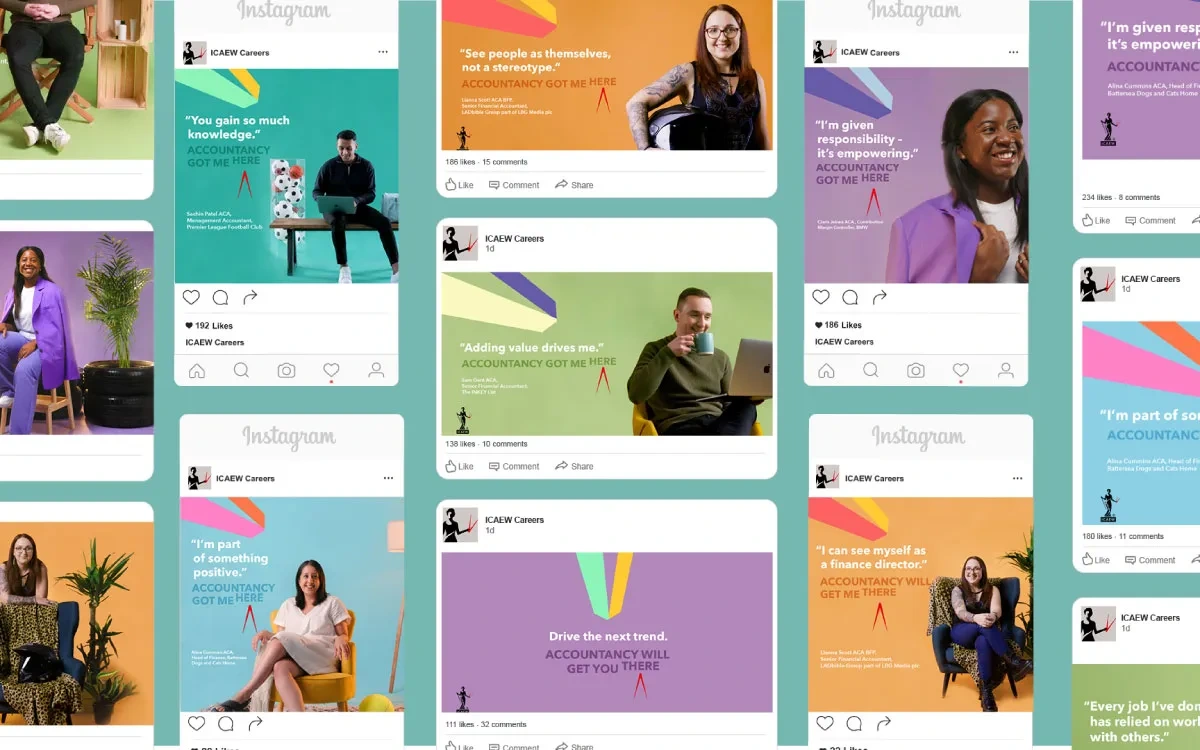
A design fee buys the agreed design scope. Applying the result is another set of tasks unless the proposal explicitly includes those tasks.
Inkbot Design’s published offer makes this boundary visible: the core engagement includes strategy, messaging and identity, while website work and wider rollout have separately agreed scopes and schedules.
Start with an application inventory. For an accountancy practice, check:
- Website pages, downloadable documents and enquiry forms.
- Proposal decks, report covers and engagement templates.
- Partner biographies, email signatures and LinkedIn graphics.
- Office signage, stationery and event materials.
- Acquired-practice websites and legacy documents, where relevant.
Do not assume every item needs replacing. Record what exists, what must change and what can remain in use.
A list saying “templates included” is insufficient. Which templates? How many? In what software? Does the engagement include building editable files, transferring existing content and testing whether staff can use the result?
Those answers define a usable deliverable.
Internal time belongs in the plan too. Name the partner approving positioning, the person collecting content and the owner of implementation. If the agency supplies approved files but no one is responsible for replacing the old materials, the project remains unfinished.
“We can roll it out ourselves” is a reasonable objection.
Then make internal delivery explicit. Assign an owner and a deadline to each task, and ensure the team has the necessary access and skills. Internal implementation is a delivery choice, not evidence that implementation requires no resources.
A phased rollout may also be sensible. Prioritise materials involved in new-client decisions and keep serviceable low-priority items until replacement is justified. Where names or identities could confuse clients, agree the transition communication before delaying updates.
The practical budget has four headings:
- Core strategic and creative work.
- Separately purchased implementation.
- Internal delivery time.
- Specifically identified uncertainties.
An uncertainty should have a description: an uncounted document library, an undecided name or an unknown website requirement. Avoid a miscellaneous allowance that conceals an incomplete brief.
Compare the same job, then choose the provider.
Give each shortlisted provider the same application inventory and ask for an explicit included, excluded, or optional response for each item.
Use these six lines to compare proposals:
Comparison line | What the proposal should state |
|---|---|
Business decision | The audience, positioning or identity problem being addressed. |
Research | Interviews, document review and other agreed inputs. |
Creative deliverables | The identity, messaging and files being produced. |
Applications | Named templates, pages or materials, with quantities. |
Governance | Decision-makers, review rounds and treatment of scope changes. |
Implementation | Who applies the work, what remains excluded and the handover required. |
Then examine the fee and payment terms.
Inkbot Design’s core engagement is advertised as paid upfront, with a typical four-to-six-week schedule from the time of cleared payment. Additional services have separate schedules.
Those terms are relevant to cash flow and planning, but do not establish how another provider should charge.
“Our practice is too small for a strategy project” deserves a straight answer.
A small practice with an agreed proposition and limited applications may need a narrow engagement. A larger practice can also have a narrow problem. Headcount is context; the unresolved decisions determine the work.
An independent designer may suit a defined presentation brief. A wider strategic engagement becomes more relevant when partners cannot agree on the audience or proposition. Neither supplier category removes the need for a written scope.
Ask each provider what would make the recommendation smaller.
A credible answer might retain the name, limit initial applications or separate a future website project. Also ask what evidence would justify expanding the work. That exposes the decision behind the proposal.
The recommendation here is deliberately bounded: buy external help for the decisions and delivery the practice cannot adequately handle internally.
A branding project does not guarantee higher fees or better-fit instructions.
Commission the smallest complete scope
A £7,500 core engagement and a complete rebrand budget describe different things. The first is an advertised offer. The second depends on the work required to put an appropriate identity into use.
Decide whether the practice needs presentation repair, repositioning or identity migration. Preserve what still works. Make exclusions visible before approving the fee.
If the underlying problem remains unclear, request Inkbot Design’s free Brand Equity Audit™. The written diagnostic reviews positioning, messaging, visual consistency and digital presence, with prioritised recommendations. Commissioning further work is optional.
Before requesting another quotation, write a one-page brief defining what must change, what must remain recognisable and who will implement the result.
Questions people ask
Is a new website included in the £7,500 fee?
No — Inkbot Design scopes website design and development separately from the Brand Equity Blueprint™. The core fee should therefore not be treated as a complete website-and-branding budget. Confirm the required pages, content responsibilities and implementation work before approving a separate website quotation.
Can the practice retain its existing logo?
Yes — retaining the existing logo is a valid option when the identified problem concerns messaging or inconsistent application. Inkbot Design’s published information allows for that possibility. The decision should follow a review of the existing identity against the brief, rather than an assumption that every engagement needs a replacement.
Is ongoing support compulsory?
No — Inkbot Design lists ongoing support as a separate Brand Equity Partnership™, rather than part of the core Blueprint fee. The published terms specify £3,000 per month equivalent, a three-month minimum and £9,000 invoiced upfront for each three-month cycle. Confirm current terms before commissioning.