
How to Run a Brand Rollout That Sticks: A 7-Stage Process
The new logo went live on a Monday. By Friday, the tax team was still sending proposals on the old template, two partners had reverted their email signatures because they preferred the previous font, and the receptionist was answering the phone with the strapline nobody had briefed her on.
The identity was launched. The brand was not adopted.
That gap — between a rollout that happened and a rollout that took — is where most of the money goes.
A brand rollout is not the launch event. It is the organisational adoption programme that surrounds it, and the launch is only the loudest few days of it.
Get the choreography right and the adoption wrong, and you have paid for a new brand identity that lives on a server nobody opens.
McKinsey’s global transformation research makes the stakes concrete: while 56% of respondents said their organisation achieved most or all of its transformation goals, only 12% said those gains lasted more than three years.
The reveal is easy. The sticking is the whole job.
- Treat rollout as an adoption programme, not a launch; success is confident unaided use; secure a named owner and real leadership adoption.
- Prioritise daily-use assets: templates, signatures and pitch decks; ensure a fee-earner can produce a correct client document without opening guidelines.
- Measure brand and business signals together; audit the adoption rate and update third-party listings so AI and search represent the new brand.
How a Brand Rollout That Sticks Is Achieved

A brand rollout that sticks is achieved in seven stages: audit the equity you already hold, secure genuine leadership adoption, prepare the assets people actually touch daily, sequence the announcement, run the adoption programme, measure both brand and business signals, and make the new brand legible to AI and search systems. The launch is one moment inside stage four. The other six decide whether it lasts.
- Rollout is an adoption programme, not a communications campaign — its success metric is confident unaided use, not launch-day reach.
- Most value is lost after launch, not during it: McKinsey respondents estimated 42% of potential transformation benefit was lost in the execution and sustaining phases.
- A 2026 rollout must land with machines as well as people, because AI systems now summarise and recommend firms based on how consistently they are described across the web.
A brand rollout is the structured process of introducing a new brand identity and embedding it so that people can use it consistently without needing to refer to guidelines.
What You Need in Place Before You Start
Three things must be in place before a rollout begins, and their absence is the single most common reason rollouts stall.
- First, a finished, decided brand — not a direction still being argued over by the board. A rollout cannot embed a moving target.
- Second, a named owner with authority, not a committee. Rollouts governed by consensus die in the approvals queue.
- Third, an honest inventory of every place the old brand currently lives: the proposal template, the email footer, the LinkedIn banners, the reception signage, the pitch deck, the invoice, the tender boilerplate.
Focus Lab, the branding agency, frames this inventory stage as preparation and prioritises daily-use materials over promotional items — the proposal template matters more than the branded water bottles. That prioritisation is correct, and most firms invert it, spending launch week on the tote bags. At the same time, the document a fee-earner sends fifteen times a day still carries the old mark.
“A rollout you cannot inventory is a rollout you cannot finish. Every place the old brand lives that you fail to list is a place it will survive, quietly, long after you have declared the launch complete and moved the budget elsewhere.”
Stage 1: Audit the Equity You Already Hold
Before removing anything, establish what the existing brand assets are actually doing. Some elements are outdated.
Others are load-bearing — they carry recognition, memory and meaning that took years to build, and removing them destroys value the internal team never priced. The failure mode here is assuming that because leadership is bored with the current identity, the market is too.
Cracker Barrel demonstrated the cost of skipping this in August 2025, when it introduced a simplified logo that stripped out the barrel, the character and the “Old Country Store” wording. Public backlash was immediate, and within days the company announced it would keep the previous logo.
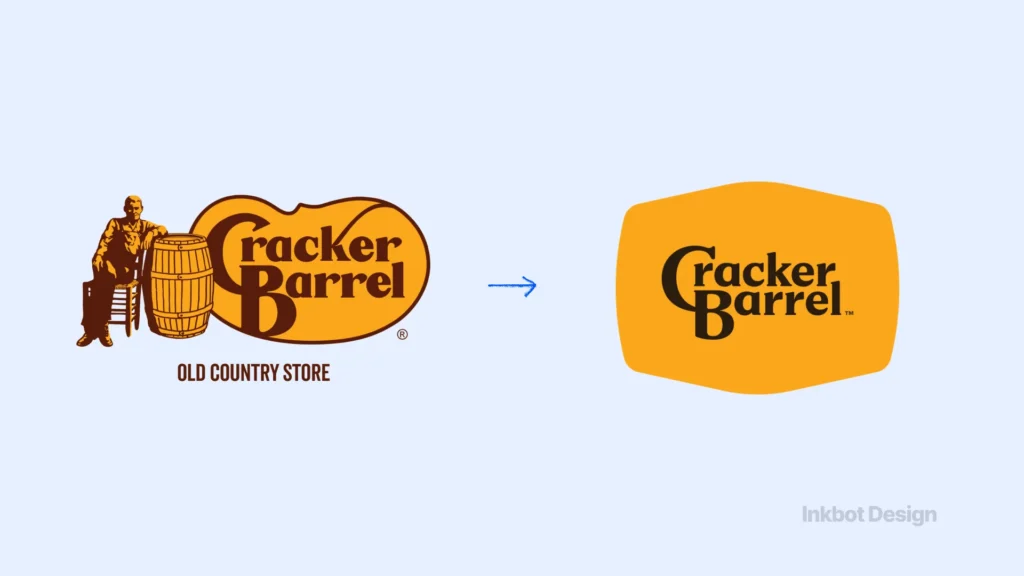
The reaction does not prove the new design was bad. It proves that a recognisable asset can hold more equity than the people redesigning it realise.
For a professional services firm, the equivalent asset is rarely a logo — it is a founder’s name, a category descriptor clients use, or a colour the market has learned to scan for in a crowded tender list.
You know this stage is done right when you can name, for each existing element, whether it carries recognition or merely age. You have it wrong when the audit reads “everything is dated, replace it all” — that is not an audit, it is a preference.
Stage 2: Secure Real Leadership Adoption
Leadership adoption means partners using the new brand correctly in front of clients, not partners approving it in a boardroom. These are different things, and the second is worthless without the first.
In a professional services firm, every partner is a brand touchpoint, so a rollout where three of twelve partners quietly keep their old signature has already failed at the point of highest visibility.
Prosci’s change-management benchmarking, based on responses from more than 2,600 practitioners, found that 88% of projects with excellent change management met or exceeded their objectives, compared with 13% of projects with poor change management.
The research covers change projects generally rather than brand launches specifically, and the relationship is correlational, not proof of causation. But the direction is unambiguous: how you manage the human adoption decides the outcome far more than how good the design is.
The failure mode is treating the leadership sign-off meeting as adoption. Sign-off is permission. Adoption is behaviour. A rollout that mistakes one for the other collapses the moment a senior partner models the old habit in a pitch.
Stage 3: Prepare the Assets People Touch Daily
Prioritise the materials in daily use before anything promotional.
The proposal template, the email signature, the pitch deck, the tender boilerplate and the invoice are the assets a fee-earner uses without thinking. If those still carry the old brand, the rollout is invisible where it matters most.
Billboards and merchandise can wait.
The test of this stage is whether a fee-earner can produce a correctly branded client document at 4:55 pm on a Friday without opening the guidelines PDF.
If they can, the assets are prepared properly. If they have to hunt for the right template, or worse, rebuild one from a document they had lying around, the old brand will propagate faster than the new one.
Stage 4: Sequence the Announcement
Sequence internal before external, and daily-use audiences before ceremonial ones.
Staff must be able to represent the new brand correctly before a single client sees it, because the alternative is a client noticing the change before the fee-earner serving them can explain it.
Whether the external launch is phased or simultaneous matters far less than the industry claims — both work if adoption precedes them, and both fail if it does not.
Most rollout guidance treats this stage as the whole game: who hears first, in what order, through which channel.
Acquia’s brand-relaunch guide and Atlassian’s brand-launch guide both centre the phased-versus-simultaneous decision. It is a real decision, but a secondary one.
The launch is a moment; adoption is the programme that the moment sits inside.
| Audience | Sequence | Why |
| Leadership / partners | First | They model usage for everyone else |
| Client-facing staff | Before any client | They field the first questions |
| Support / operations | Before external | They produce the daily documents |
| Existing clients | Early external | Relationship warrants the courtesy |
| Prospects / market | Public launch | Recognition follows internal fluency |
| Directories / third-party listings | Alongside public launch | AI and search legibility depends on it |
Stage 5: Run the Adoption Programme
The adoption programme is the training, reinforcement and governance that turns a launched brand into a used one.
This is the stage the industry underweights, and it is where McKinsey’s research locates the loss: respondents estimated that 42% of potential financial benefit was lost during the execution and sustaining phases of a transformation.
The figure is a survey estimate rather than an audited measure, and it concerns transformations broadly rather than rebrands alone — but it points precisely where the money leaks. Not at the reveal. After it.
Edelman’s 2025 Brand Trust report, which surveyed 15,000 respondents across 15 countries, found that 80% of people trust the brands they use.
That places the burden on lived experience: a rollout communicates a promise, and clients then judge that promise through every subsequent interaction.
If the new brand says “senior-led, responsive, commercially sharp” and the next email takes four days, the rollout has actively damaged trust. Consistency between the announced identity and the operational experience is the requirement, not consistency of messaging alone.
A sceptical reader will object here: we are a 90-person firm, not a global transformation — surely this is overkill. It is not, and the reason is scale-independent. The mechanism by which a rebrand fails is behavioural, not organisational.
One partner reverting one signature is proportionally more visible in a 90-person firm than in a multinational, because the market meets your partners directly. Small firms have less room for adoption failure, not more.
“The launch is the cheapest part of a rollout and the part everyone remembers. The adoption programme is the expensive part and the part everyone forgets to fund. Reverse that priority, and you have reversed the odds of the whole exercise.”
Stage 6: Measure Both Brand and Business Signals
Measure the rollout on brand signals and business signals together, because a rollout judged only on leads will always lose the internal argument.
Gartner’s 2025 CMO Spend Survey found that 54% of CMOs prioritised performance marketing, compared with only 22% prioritising brand-building.
Those are reported priorities, not proof that the brand is being abandoned — but they show the gravity a new brand is fighting. If you measure your rollout purely by next month’s conversions, you have entered it into a contest it was never built to win on its own.
A workable measurement frame covers brand awareness and consideration, branded search demand, direct and returning traffic, message comprehension, employee adoption, sales confidence in using the brand, and qualified pipeline over time.
The second objection a sharp reader raises: most of that is unmeasurable soft stuff. Employee adoption is not soft — it is countable.
Audit twenty client documents at random and count how many carry the correct current brand. That number is your adoption rate, and it is the single most honest rollout metric there is.
Stage 7: Make the New Brand Legible to AI and Search Systems
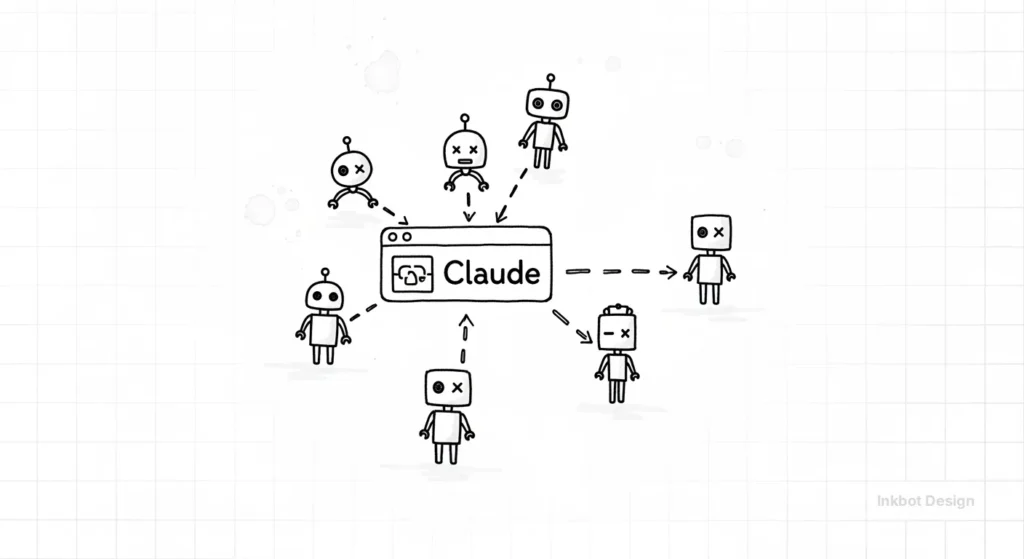
A 2026 rollout must land with both machines and people. AI systems increasingly summarise, compare and recommend firms. They build those answers from how consistently a brand is described across the wider web.
Ahrefs’ analysis of 75,000 brands found that web mentions had the strongest correlation with visibility in Google AI Overviews (0.664), and that 26% of brands had no AI Overview mentions at all.
A rebrand that changes your category language without updating third-party listings, directories and profiles leaves AI systems describing the firm you used to be.
Gartner reported in January 2026 that only about a third of consumers see generative AI tools as rivalling traditional search, which means a rollout must serve both conventional search and AI-generated answers rather than betting on either.
The practical task is an audit: how are the organisation, its services, its leadership and its expertise described across third-party sites, directories, reviews and industry publications — and does that description now match the new positioning?
If the new brand uses vague language or inconsistent category descriptions, AI systems will struggle to represent it, and unclear positioning becomes machine-legible confusion.
The Stage Everyone Runs Too Late
Here is the correction that separates a rollout that sticks from one that photographs well: adoption is not the final stage; it is the organising principle of every stage.
The industry sequences it last — design, launch, then “embed” as an afterthought once the celebration is over. That sequence is why the McKinsey money leaks after the reveal.
Intelligent practitioners weigh launch choreography heavily for a good reason: it is visible, finite, and the part that clients and the press react to. Acquia, Atlassian and Focus Lab all give it the most detailed treatment because it is the most demonstrable.
The steelman is sound — you can project-manage a launch, and you cannot easily project-manage a culture. But the evidence does not follow the visibility. Prosci’s 88%-versus-13% split and McKinsey’s 42% value loss both locate the outcome in adoption, not announcement.
The replacement directive is concrete: design the adoption programme first, then work backwards to the launch. Decide how you will get a fee-earner to produce an accurate client document unaided before you decide on the launch-day guest list.
Build the reinforcement, the governance, and the “can they use it without the guidelines?” test into the plan from the start — not as a phase-five clean-up. A rollout designed around adoption produces a launch as a by-product.
A rollout designed around the launch produces adoption only by luck, and the McKinsey numbers show how rarely luck holds for three years.
The Verdict
Treat the launch as the middle of the process, not the end, and the whole economics of a rebrand change.
The seven stages are not a checklist to complete in order and forget — they are held together by a single test that runs through all of them: can the people who represent your firm use the new brand confidently in front of clients, without checking the guidelines?
Everything before that test exists to make it pass—everything after it exists to keep it passing.
The evidence carries the position without strain.
McKinsey found that only 12% of transformations sustain their gains past three years, and that 42% of value is estimated to be lost in the phases after the reveal. Prosci found that excellent change management was associated with 88% of projects meeting their objectives, compared with 13% for poor change management.
Edelman found trust rests on lived experience, not announced promise. Ahrefs found the wider web now decides how machines describe you. None of that is about the launch. All of it is about what happens next.
So do the one thing today that reorders the whole project: before you approve a launch date, write down exactly how a fee-earner in your firm will produce a correctly branded client document without opening the guidelines — and who owns making that true.
If you cannot answer that, you do not yet have a rollout plan. You have a launch plan, and the difference is roughly 88% of the outcome.
If you want to know exactly where your current brand is losing commercial ground before you spend on a rollout, request a free Brand Equity Audit™. This structured written diagnostic identifies where the brand is costing you enquiries and what to do about it. It is delivered within 48 hours with no sales call.
Frequently Asked Questions
What is a brand rollout?
A brand rollout is the structured process of introducing a new brand identity across an organisation and embedding it so people use it consistently. It covers internal adoption, asset updates, sequencing, measurement and search legibility — not only the public launch that most people picture when they hear the term.
How is a brand rollout different from a brand launch?
A brand launch is the announcement moment; a brand rollout is the full programme that surrounds it. The launch introduces the new identity to audiences. The rollout gets leadership, staff, partners and clients to actually understand, apply and reinforce it — which is the harder and more valuable half.
Why do so many rebrands fail after launch?
Because organisations treat launch day as the finish line, McKinsey found only 12% of transformations sustain their gains beyond three years, with an estimated 42% of value lost in the phases after the reveal. Rebrands fail in adoption and reinforcement, not in the design or the announcement.
Should a brand rollout be phased or simultaneous?
No single answer wins universally — both work when internal adoption precedes the external launch, and both fail when it does not. The phased-versus-simultaneous choice matters far less than sequencing staff before clients. Decide the external cadence second; secure internal fluency first.
How do I get staff actually to use the new brand?
Prepare the assets they touch daily so a correct client document can be produced without opening the guidelines, then run a reinforcement programme with a named owner. Prosci’s research found that excellent change management was associated with 88% of projects meeting objectives, compared with 13% for poor management.
How long does a brand rollout take?
Larger rollouts often need a year or more of lead time, but the sustaining phase never fully ends. Governance and reinforcement continue indefinitely, because adoption decays without maintenance. Treat the visible rollout as months and the embedding as ongoing operational discipline rather than a project with a fixed end date.
How do I measure whether a brand rollout worked?
Measure brand and business signals together: awareness, branded search demand, direct traffic, message comprehension, employee adoption and qualified pipeline over time. Audit twenty random client documents and count how many carry the correct current brand — that adoption rate is the most honest single metric available.
When should I start planning a brand rollout?
Start planning the adoption programme before the design is even finished, and certainly before you set a launch date. The rollout plan should shape the identity work, not follow it. Deciding how people will use the brand unaided is a design input, not a post-launch afterthought.
Is it true that changing a recognisable logo is risky?
Yes — recognisable assets often carry more equity than internal teams realise. Cracker Barrel removed its long-standing logo elements in August 2025, faced immediate backlash, and reversed within days. Audit what an existing asset helps audiences recognise and feel before removing it, and test changes with customers, not only internal stakeholders.
Does a brand rollout affect how AI systems describe my firm?
Yes — AI systems build answers from how consistently a brand is described across the web. Ahrefs found that web mentions had the strongest correlation with Google AI Overview visibility (0.664). In contrast, 26% of brands had no mentions at all. Update third-party listings during rollout, or AI describes your former brand.
Why does brand rollout matter more for professional services firms?
Because every partner and fee-earner is a live brand touchpoint, in a firm of 50–200 staff, one partner reverting to old habits is proportionally more visible than in a large corporation, since clients meet your people directly. Adoption failure shows up immediately in the room where fees are won.
What is the single most common brand rollout mistake?
Funding the launch and forgetting the adoption programme. Teams spend on the reveal — the event, the merchandise, the announcement — while under-resourcing the training, governance and reinforcement that decide whether the brand is used. McKinsey’s evidence locates most lost value precisely in that neglected sustaining phase.
