The Future of Graphic Design: Trends and Predictions
Forget the crystal ball gazing into the graphic design industry. Forget the articles breathlessly promising holographic logos and brain-implanted advertisements.
Most predictions about the future of graphic design are hot air.
They’re written to sound futuristic, not to be useful.
The truth is, as a business owner, you’re probably asking the wrong questions. You’re worried about tools, graphic design trends, and whether a robot will design your next flyer. These are distractions.
The future of graphic design isn’t about how things are made. It’s about why they’re made.
It’s a fundamental shift in value. And if you don’t understand it, you’ll be left behind, paying for pretty pictures that do nothing for your bottom line.
This is your no-nonsense guide to what’s happening.
- The future of graphic design focuses on understanding the 'why' behind designs, not just the 'how' of creating them.
- AI tools enhance efficiency but cannot replace strategic thinking and empathy essential for impactful design.
- Businesses must shift hiring criteria to seek designers who provide strategic insights rather than just aesthetic skills.
The AI Elephant in the Room
You can’t talk about the future without mentioning Generative AI. It’s the topic everyone is either panicking or pontificating about. Let’s cut through the noise with some straight talk.
Is AI Replacing Graphic Designers?
No.
Full stop.
Well, not the good ones, anyway. AI is, however, rapidly replacing mediocrity. It’s automating blandness. It’s making it incredibly easy to produce generic, soulless, and strategically empty visual content.
If a graphic designer’s only skill was pushing pixels around in Adobe, then yes, they should be worried. Graphic design jobs are being automated.
But that was never the real job.
Think of AI tools like Midjourney or DALL-E 3 as a very fast, very capable intern. It can follow instructions with lightning speed. It can generate a hundred variations of an image in minutes. It can remove backgrounds, resize assets, and perform countless other tasks.
What it can’t do is have the big idea. It can’t understand your business goals. It can’t empathise with your customer. It can’t build a coherent brand strategy. It has no taste. It has no ‘why’.
AI is an incredible tool for execution. It is a terrible strategist.
The New Role of AI: Your Super-Powered Assistant
Innovative graphic designers aren’t fighting AI. They’re harnessing it. The future of graphic design involves using these tools to become more efficient and creative.
Here’s how it’s practically being used right now in the graphic design industry:
- Radical Automation: All the grunt work—creating 50 different banner ad sizes, generating stock-like imagery for a blog post, mocking up a concept in a dozen settings—can be done in a fraction of the time.
- Rapid Ideation: Need to brainstorm a mood board for a new product launch? An AI can produce a hundred visual concepts in minutes. It’s a powerful way to explore directions without spending days on manual work.
- Data-Driven Personalisation: This is a big one. AI can create dynamic visual content that adapts to user data. Imagine an email campaign where the hero image changes based on the customer’s past purchases. That’s AI in action.
The designer’s role shifts from ‘maker’ to ‘director’. They value setting the right prompts, curating the output, and integrating the results into a broader strategic framework.
AI Content Provenance, Licensing and Copyright
Direct answer: Content provenance records how a file was made, by whom, and with which tools. It uses cryptographically signed metadata so clients can verify edits and AI use. This protects trust, clarifies rights, and reduces legal risk for brands using AI‑assisted design.
- Standard: C2PA defines open, tamper‑evident provenance metadata adopted by major vendors.
- Tooling: Adobe’s Content Credentials implements C2PA across Creative Cloud and Firefly outputs.
- Copyright: The U.S. Copyright Office requires disclosure of AI elements; only human authorship is protected.
The State of Content Provenance in 2026. C2PA participation has broadened, with Adobe, Microsoft and the BBC among founding members. Adobe’s Content Credentials now ship across Photoshop and Illustrator, and Firefly tags AI‑assisted outputs. Leica’s M11‑P embeds Content Credentials in‑camera to record capture and edits.
The U.S. Copyright Office’s March 2023 policy confirmed that only human‑authored elements are copyrightable, and applicants must disclose AI‑generated portions. The Zarya of the Dawn decision applied this, protecting selection and arrangement by the human author, but not the image content produced by a model.
Old advice makes brands vulnerable.
Debunked “best practice”. “Add a copyright notice to your AI image, and you are covered.” False. The U.S. Copyright Office’s policy and subsequent guidance mean protection attaches to human creativity, not to the autonomous output of a system. Claiming blanket rights can backfire during enforcement.
I once audited a content team and found their social scheduler stripped provenance metadata at upload. The client lost traceability for hundreds of assets overnight.
| Wrong Way | Right Way |
|---|---|
| Publish AI‑assisted graphics with no disclosure | Attach Content Credentials so edits and AI use are visible |
| Claim full copyright over AI‑generated imagery | Claim rights only in human‑authored elements, document scope in contracts |
| Train on client assets without permission | Verify licences, consent and data processing terms before model use |
| Export pipelines that remove metadata | Preserve C2PA metadata through export, CDN and CMS workflows |
Historical examples. The BBC helped found C2PA to standardise provenance in news. Adobe’s Content Authenticity Initiative established Content Credentials and pushed vendor adoption. Leica’s M11‑P became the first camera to embed these credentials at the time of capture. The U.S. Copyright Office applied its policy in Zarya of the Dawn, splitting human and AI contributions.
What This Means for You (The Business Owner)
Your hiring criteria need to change.
Stop looking for a ‘Photoshop wizard’. Start looking for a strategic thinker who also uses design tools. The most valuable graphic designer for your business is the one who asks you hard questions about your goals before they even open a piece of software.
A designer who understands your business strategy and knows how to direct AI tools is now ten times more valuable than a simple technician. They can produce better work, faster, and tie it directly to results.
Pay for their brain, not just their hands.
The Big Shift: From “Making Pretty Pictures” to “Solving Business Problems”
For too long, many businesses have treated design as a decorative afterthought—a commodity to be bought as cheaply as possible.
“I just need a logo.”
This sentence is the hallmark of a failing strategy. That entire mentality is dying, and the future is being built on its grave.
The Death of the “Just a Logo” Mentality
I once had a potential client, a small e-commerce start-up, who baulked at the price for a complete brand identity system. They went to a cheap logo contest site instead and got exactly what they paid for: a generic icon with their name slapped next to it.
Three months later, they were struggling. Their social media looked inconsistent. Their website felt cheap. Their packaging didn’t stand out. The “cheap” logo had no guidelines, flexibility, or story. It couldn’t adapt.
They ended up coming back, and we started from scratch. The cheap option cost them six months of poor brand perception and lost revenue.
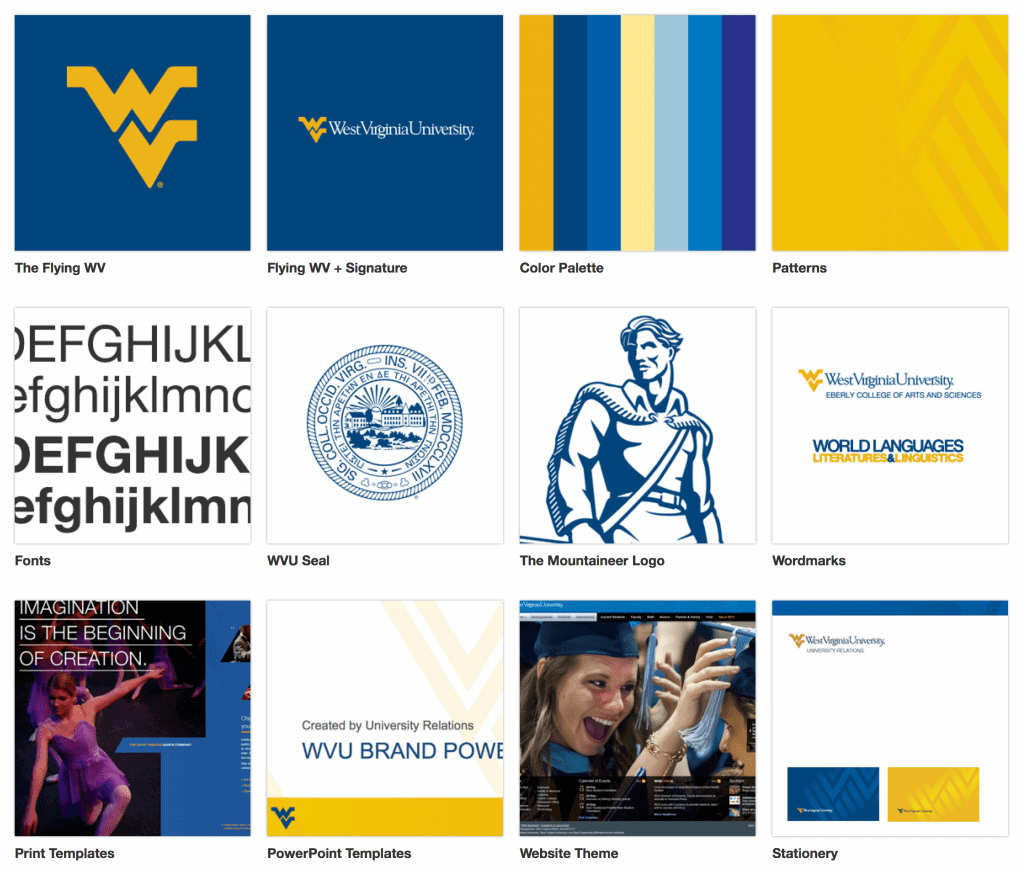
A logo is not a brand. It’s an identifier. The future of branding is not in static marks but in flexible, living, dynamic visual identity systems. Systems that can adapt to a website, a TikTok video, an app icon, and a physical product without losing their essence.
Design as a Strategic Investment, Not an Expense
Strong, strategic design is a multiplier. A 2018 study by McKinsey found that companies with top-quartile design performance increased their revenues and total returns to shareholders substantially faster than their industry counterparts over five years.
Design isn’t an expense line on a spreadsheet. It’s an investment in communication, perception, and customer experience.
This means the role of the graphic designer you hire is changing. They are becoming consultants. They must understand your market position, growth targets, and customers’ pain points. Their job is to translate your business goals into a visual language that gets results.
If you’re just briefing a designer on colours and fonts, you’re missing the entire point. You should be briefing them on your business challenges.
Our most successful projects at Inkbot Design begin not with a discussion about aesthetics, but with a deep dive into the business itself. Explore our graphic design services to see how strategy underpins everything we do.
Key Questions to Ask a Graphic Designer (That Aren’t “How Much?”)
When you’re looking to hire, your questions reveal your level of strategic thinking. Ditch the price haggling and start asking things like:
- “Based on my business goals, how can design help solve my problem of [e.g., low customer retention, poor conversion rates, attracting a younger audience]?”
- “How will this visual identity you propose work as a flexible system across all my marketing channels?”
- “Walk me through the thinking. Why did you choose this direction over others?”
A good designer will have compelling answers. A great designer will be thrilled you asked.
Core Trends You Need to Care About
Forget Pantone’s colour of the year. Most “trend reports” are just recycled aesthetics. Here are the foundational shifts in how people consume visual information that will impact your business.
Trend 1: Motion is Non-Negotiable
The static world is over.
Your customer’s feed is a firehose of information. Their brains are wired to filter out the noise and notice one thing: movement.
A static logo is becoming wallpaper. A subtly animated one grabs attention. A static infographic is informative. A motion graphic that visualises the data is compelling.
This isn’t about turning your website into a chaotic mess of spinning objects. It’s about creating a ‘motion language’ for your brand.
- Accessibility: Respect the CSS media feature
prefers-reduced-motionand provide obvious ways to pause or stop looping animations. - Performance: Use SVG or Lottie JSON for UI motion where possible, test the impact on Core Web Vitals before shipping.
The takeaway: If your brand identity guide doesn’t include rules for motion, it’s already outdated.
Trend 1.5: Variable Fonts and Responsive Typography
Static font families add weight and slow pages.
OpenType variable fonts package multiple styles in one file, with axes for weight, width and slant. All major browsers support them. The result is smoother typography, fewer requests, and tighter control of brand voice at every breakpoint.
- Performance: One variable file can replace several static fonts if the subsets are well planned.
- Design range: Fine‑tune weight for small text, punch headlines without pixelation.
- System fit: Map type ramps to tokens so scale shifts are consistent across apps.
Trend 2: Hyper-Personalisation & Dynamic Identities
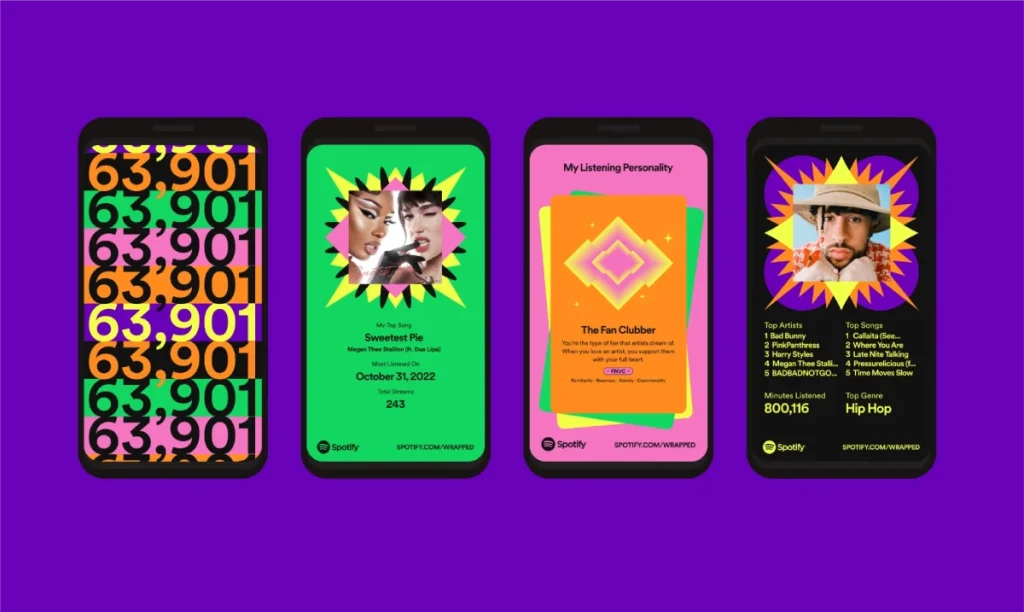
We’ve moved beyond mail-merging a first name into an email. True personalisation is about creating adaptive visual experiences.
Spotify Wrapped is the perfect example. It uses personal listening data to create a unique, shareable, and highly branded visual story for millions of individual users. Netflix also tests different movie thumbnails to see which one you are most likely to click.
This is a data-driven design. It uses information to make communication more relevant.
How can a small business apply this? It can be simple. A landing page that changes its hero image based on the ad the user clicked. An e-commerce site that shows product photos featuring models that reflect the user’s demographic.
The technology is becoming more accessible. The expectation of a personalised experience is growing. Brands that treat everyone the same will feel impersonal and dated.
Personalised creative needs consent and transparency. Under the GDPR and the UK GDPR, you must state your lawful basis and honour users’ choices. For ads in the EEA and the UK, Google requires a Google‑certified CMP that uses IAB TCF v2.2, enforced in 2024, before serving personalised ads.
Trend 3: Immersive Experiences (AR & VR)
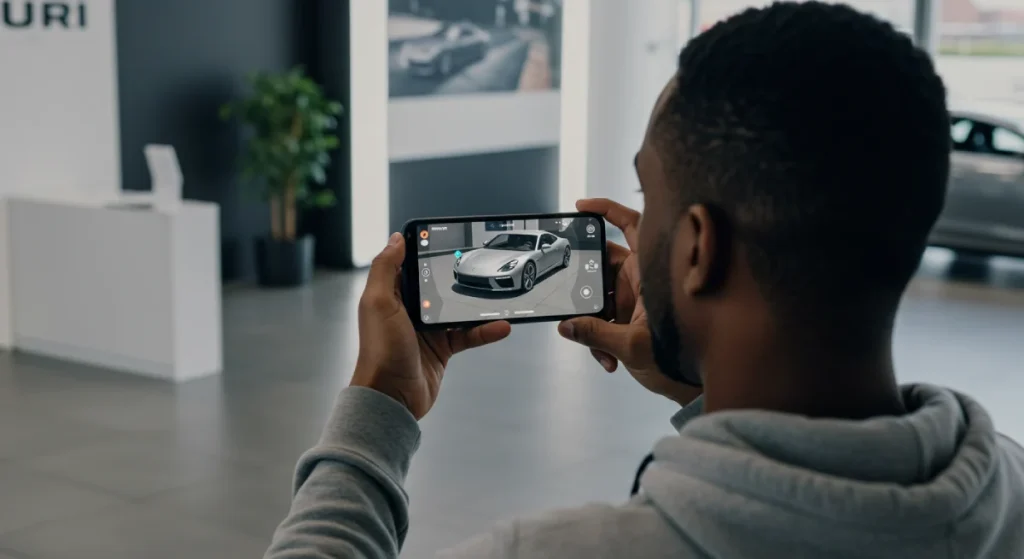
Stay with me here. This isn’t just about awkward metaverse meetings and sci-fi video games. Augmented Reality (AR) and Virtual Reality (VR) are becoming practical marketing tools.
The global AR/VR market is projected to grow significantly in the coming years, indicating a significant shift in how we interact with digital design content.
- No‑app AR previews: iOS Safari supports AR Quick Look with USDZ files at true scale, Android supports Google Scene Viewer with glTF or GLB, both are proven paths for product previews.
Is this for every small business right now? Absolutely not. But ignoring this trend is a massive mistake if you’re in an industry that relies on visualising products in a physical space. The future of your catalogue is likely on your customer’s phone camera.
Trend 4: The Pendulum Swings Back to Authenticity

What happens when anyone can type “a photorealistic image of an astronaut riding a horse on the moon” and get it in 30 seconds?
Perfection becomes cheap. Sameness becomes rampant.
The inevitable reaction is a renewed hunger for human designers and authenticity in the graphic design industry. We are already seeing it.
- Unique Typography: Custom fonts and expressive, bold type that AI struggles to replicate with genuine artistry.
- Hand-drawn Elements: Gritty, tactile illustrations and textures that feel like a person, not a prompt, made them.
- ‘Imperfect’ Aesthetics: A move away from slick, corporate perfection towards visuals that feel more raw, honest, and characterful.
Here’s the key insight: As AI generates an ocean of sterile perfection, a brand that showcases genuine human designers’ work and a unique point of view will stand out like a lighthouse. Your brand’s “flaws” might just become its greatest visual asset.
The Evolving Skillset: What Makes a Great Designer in 2026 and Beyond?
The profile of a top-tier graphic designer is changing fast. The technical skills, once a badge of honour, are now just table stakes. If you want to hire well, you must know what to look for.
Core Skill 1: Strategic Thinking
This is the most critical skill, by a mile. A future-proofed designer is a problem-solver who uses visuals as their tool. They think like a business consultant first and an artist second. They should be as comfortable reading a marketing brief as in Figma.
Core Skill 2: Tech-Savviness (Not Just Software)
Knowing how to use Photoshop is a basic graphic design skill. Knowing which AI tool is right for a specific task, how to write an effective prompt, and how to integrate a 3D asset into a web user experience (UX)—that’s the new tech-savviness. It’s about understanding the entire technological ecosystem, not just a single application.
Core Skill 3: Specialisation
The day of the ‘generalist graphic designer’ who can “do a bit of everything” ends. The field is becoming too complex. The future belongs to specialists.
- Brand Identity System Designers
- Motion Graphics Specialists
- UX/UI Designers for SaaS
- AR Experience Creators
- Data Visualisation Experts
For a business owner, this is good news. Instead of hiring a jack-of-all-trades, you can find an expert deeply immersed in solving your problem.
Core Skill 4: Communication & Collaboration
The lone wolf designer is a relic. Modern design is collaborative. A great designer needs to be able to articulate the ‘why’ behind their decisions to a CEO, collaborate with a marketing team on a campaign, and give clear instructions to a web developer. If they can’t communicate their ideas, the ideas are worthless.
Core Skill 5: Accessibility & Compliance Literacy
Design that excludes breaks trust and invites liability.
WCAG 2.2, published in October 2023, adds focus appearance, dragging movements and accessible authentication. The European Accessibility Act applies from 28 June 2025 for many digital products and services in the EU. Designers must plan contrast, focus states, motion reduction and text alternatives from day one.
Your Action Plan: How to Future-Proof Your Brand’s Design
Theory is nice. Action is better. Here’s what you can do right now to prepare your business for the future of graphic design.
Stop Thinking in Projects, Start Thinking in Systems
Don’t just buy a logo. Invest in a brand identity system. This toolkit—with rules for your logo, colours, typography, photography, and motion—allows your brand to be consistent yet flexible across any platform you might use in the future.
Include dark mode variants and contrast‑checked palettes. Modern browsers support wide‑gamut Display P3 colour on capable screens, so specify colour tokens in sRGB and P3. Document fallbacks so colours look consistent on older devices.
Audit Your Current Visuals
Be brutally honest. Pull up your web design, social media, and last sales deck.
- Does it meet WCAG 2.2 AA basics, including focus visibility and motion reduction?
- Do your colours and imagery hold up in dark mode and on Display P3 screens?
Your customers probably are too if you wince when you look at it.
Optimise Assets for Modern Formats
Heavy assets waste budget and kill engagement.
Use SVG for logos and icons so edges stay sharp at any size. Prefer WebP for broad support and strong compression, and adopt AVIF where quality at low file sizes matters. Use Lottie for UI motion and micro‑interactions without resorting to video sprites.
- Checklist: Generate multiple responsive sizes, supply modern formats first with fallbacks.
- Governance: Lock quality and compression targets into your design system tokens.
In our fieldwork, switching hero images to AVIF cut payloads by a third without visible quality loss. That improves Largest Contentful Paint and reduces bounce on slower phones.
Find a Strategic Partner, Not a Pair of Hands
Your next design hire shouldn’t be the person who gives you the cheapest quote. The person or agency should ask the most thoughtful questions about your business. Look for a partner interested in your success, not just your project fee.
If you’re ready to have that kind of strategic conversation, we do that. Request a quote and let’s talk about your business challenges.
Experiment on a Small Scale
You don’t need to jump headfirst into a multi-million-pound VR brand experience. Start small.
- Convert a small interface animation to Lottie, and compare load and playback times against a GIF.
- Pilot one product in AR using USDZ for iOS and glTF or GLB for Android, measure dwell and clicks before scaling.
Learn. Adapt. See what works for your audience.
The Future is Clarifying
The future of graphic design isn’t scary. It’s not about being replaced by robots or needing to learn a dozen new technologies overnight.
It’s clarifying.
It’s stripping away all the fluff, the jargon, and the focus on mere decoration. It’s forcing everyone—designers and business owners alike—to focus on what has always been at the heart of great design:
A powerful idea, communicated with brilliant clarity, to solve a real business problem.
The design tools will change. They always do. But that central purpose is permanent.
So, the final question isn’t about the future of design. It’s about you. Are you ready to stop buying ‘pretty pictures’ and start investing in strategic communication?
Let’s Talk Design
The landscape is shifting, but the need for powerful, intelligent design is greater than ever. If you’re looking for a partner to help you navigate these changes and build a lasting brand, we should talk.
Explore our graphic design services to see how we build brands with strategy at their core. For more articles and insights, feel free to browse our blog.
