How To Write A Project Proposal As A Freelancer
So, you want to start getting more clients as a freelancer.
One of the best ways to do that is by writing solid project proposals. A good proposal demonstrates to clients that you understand their needs and can provide value.
However, writing proposals can be daunting, especially when you're starting out.
This comprehensive guide will walk you through the entire proposal writing process from start to finish. By the end, you'll know how to craft compelling proposals to win projects and build your freelance business.
- Effective Proposals: Solid project proposals showcase understanding of client needs and emphasise your value as a freelancer.
- Proposal Structure: Follow a clear format: Cover Letter, About Me, Project Summary, Proposed Solution, Pricing Breakdown, and Signature Agreement.
- Set Expectations: Outline project details, deliverables, timelines, and payment terms clearly to align both parties on expectations.
- Showcase Value: Customise proposals to reflect your expertise and the unique needs of each client to increase your chances of winning the project.
- Maintain Transparency: Provide a fixed cost and breakdown by milestones, ensuring clarity on financials throughout the project.
Understanding The Purpose Of A Proposal
Before we dive in, let's quickly cover why proposals matter in the first place. A project proposal serves three essential purposes:
- Sells Your Services: The main goal is to convince the client to hire you over other freelancers. Your proposal should effectively showcase your skills.
- Manages Expectations: A proposal allows you to outline project details, timelines, deliverables, and policies upfront. This sets clear expectations between both parties.
- Serves as a Reference: After being hired, you and the client can refer to the proposal if any confusion arises regarding the project scope or other agreed-upon items.
Considering these purposes will help ensure your proposal checks all the necessary boxes.
Gathering Key Information Before You Write
Right, before you even think about writing a word of this proposal, you need to do your homework.
Sending a generic proposal is like trying to unlock a door with the wrong key.
It just won't work.
The best proposals typically emerge following a thorough “discovery call” with the client.
It’s not just a chat, it's an investigation.
Your job is to get inside their head.
You need to know what's keeping them up at night.
Here’s what you need to dig for:
- Their Actual Goal: What does success look like for them? Is it more sales, more leads, or just not being embarrassed by their website anymore? Get a real, measurable outcome.
- The Big Problem: Why are they doing this now? What's the pain point? People buy solutions to pain. Find the pain, and you've found your angle.
- Who It’s For: Who is their target audience? If they say “everyone,” press them for details. You can't build something for “everyone.”
- Budget and Timeline: Don't be shy. Asking about the budget isn't rude; it's a professional approach. It stops you from proposing a Ferrari when they can only afford a Ford.
With this information, you stop being just another freelancer.
You become a partner.
Your proposal won’t be a list of services; it’ll be a direct solution to their specific problem.
That's how you win.
Structuring Your Proposal
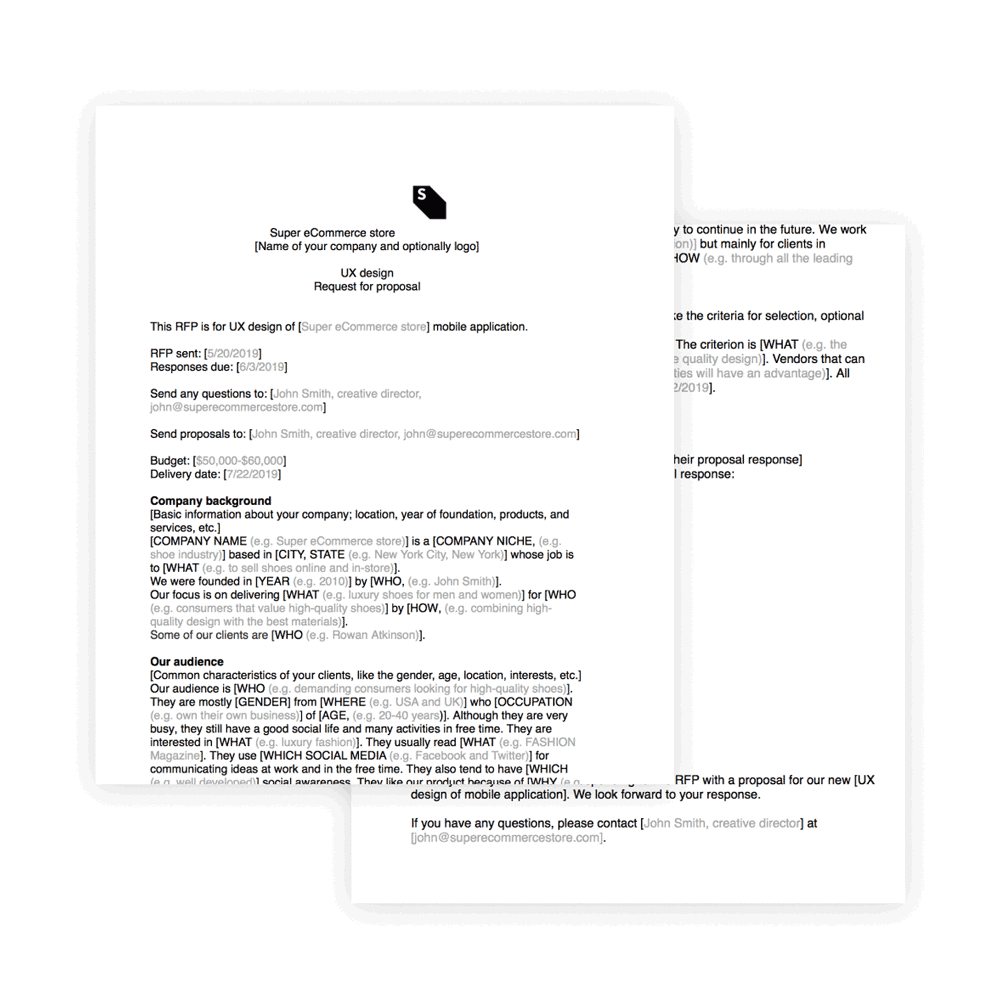
The structure of your proposal is critical for effectively communicating with clients. A poorly organised proposal will only confuse them. Here is the standard format to follow:
1 – Cover Letter
A brief letter addressed directly to the client. Use their name, explain your qualifications, and express enthusiasm about working together.
2 – About Me
Provide background on who you are, your skills/experience, past clients/projects, and why the prospect should hire you. Include testimonials if possible.
3 – Project Summary
Summarise the project background, goals, critical details discussed with the client, and expected deliverables at a high level.
4 – Proposed Solution
Explain your approach to fulfilling the client's goals and detail specific project deliverables/timelines.
The thing is, a solution is one thing, but defining the edges of that solution is where you protect yourself.
This is your Scope of Work.
It needs to be crystal clear.
You're not just listing what you'll do, you're building a fence around the project.
The most important part of this? A section called “Exclusions” or “Out of Scope.”
This is your best mate for preventing scope creep.
It's where you state plainly what the fee does not include.
Things like “This quote does not include logo design,” or “The project covers two rounds of revisions; any further changes will be billed hourly.”
It may seem direct, but trust me, clients appreciate clarity.
It stops any awkward conversations down the line when they ask for “just one more thing.”
5 – Pricing Breakdown
Clearly define your rates, estimated hours required, and total fixed-price cost. Explain payment terms.
6 – Agreement Signature
Finishes the proposal by requesting a signature to approve the proposed solution and initiate the next steps.
Let's explore each section further.
Crafting An Engaging Cover Letter

Your cover letter introduces the proposal with a personal touch. Keep it to one brief paragraph focused on:
Personalisation – Address the client directly and reference previous conversations. Using their name builds rapport quickly.
Enthusiasm + Qualifications – Express genuine interest in the project and highlight 1-2 reasons you're qualified, like specialised skills or experience.
Value Proposition – End by summarising the tangible value/results you can provide if hired. This creates anticipation for the rest of your proposal.
Here is a sample cover letter:
Dear [client name],
It was a pleasure discussing your mobile app project earlier today. As a freelance developer with over five years of experience building successful iOS apps, I'm confident I have the skills to deliver an exceptional product that meets all your specifications.
I've outlined my proposed solution, deliverables timeline, and pricing breakdown throughout this proposal. I'm genuinely excited by your vision and would love to partner with you to make it a reality. If hired for this project, I guarantee to maintain clear communication every step until you launch a 5-star application you're 100% satisfied with.
Please review the details below, and I look forward to hearing back from you soon!
Best Regards,
[Your name]
Keep your cover letter concise and persuasive, as shown in this example. Now, let's examine how to present your qualifications and credentials.
Showcasing Your Relevant Experience
You sell your abilities and credentials in the “About Me” section. Your goal is to quickly prove you're a qualified candidate ready for the job.
Make sure to cover:
Background – Briefly explain who you are professionally and how long you've been freelancing. Mention any pertinent education/training.
Skills/Expertise – List specific skills, software knowledge, techniques, and other expertise directly relevant to the client's project needs. Any specialisations are significant to feature here.
Past Clients/Projects – Quickly showcase 2-3 major past projects for reputable companies, highlighting similarities to their projects. Include testimonials from clients who speak directly to your work quality and professionalism.
Why You? Wrap up this section by calling out 1-2 standout reasons why you're the best person for their project, and how you'll bring unique value compared to other freelance options they may be considering.
Here are some examples of adequate “About Me” sections:
I'm John Smith, a freelance web developer with over eight years of experience building sites for startups and small businesses. My speciality is front-end development – crafting modern designs with HTML/CSS/JavaScript plus open-source frameworks like React and Vue.
Past clients include two funded startups: Casper Mattresses and Bloomscape. Both companies needed custom-designed, high-performance sites to support rapid growth. I worked closely with leadership on iterative prototypes, eventually building fully responsive sites optimised for lead generation and conversion.
As a digital marketing freelancer specialising in SEO content writing for 5+ years, I understand the strategy behind compelling online copy and have helped countless companies improve organic traffic, leads, and sales. Suppose you need blog posts, guides, emails, social posts, or other website content written specifically to rank higher in Google and draw in targeted visitors. In that case, I have the proven process and writing expertise to make that happen.
Keep this section short yet compelling. The key details to highlight are your credentials, relevant skills/experience, and a proven track record of success.
Defining The Project Summary
Before detailing your proposed solution, provide a high-level project summary first. The goal here is to get on the same page regarding the following:
- Project Background – Quick context behind the client's business, goals, target customers, and why they're pursuing this project.
- Primary Goals – List the 2-3 high-level outcomes they want to achieve from this engagement.
- Project Details – Summarise any specifications or other project details referenced in previous discussions. Links to key documents are helpful.
- Expected Deliverables – At a 10,000-foot view, list the core assets, products, or services expected to be delivered if you're awarded the project.
Think of this section as a quick alignment check before you break down your approach. It demonstrates attentiveness by reflecting on the client's needs and provides them with a final opportunity to clarify assumptions before detailing your proposal.
Here's an example summary section:
As discussed, you're seeking a Shopify developer to build an online store selling new and used textbooks. This will provide a centralised hub to reach college students nationwide – a customer segment your brick-and-mortar locations currently struggle to serve.
The core goal is to launch an easy-to-use, mobile-optimised storefront to complement your existing in-person sales channels. Based on the provided specs, key deliverables will be:
– Informational website pages (About, Services, Contact, etc)
– Functional textbook product listings and search
– Intuitive shopping cart system tied to Shopify payments
– Integration with Shopify POS for unified inventory management
– Basic email marketing functionality via Mailchimp
– Analytics tracking for sales reports
Keep this high-level to respect the client's time, rather than requiring them to parse through pages of background details.
Once aligned at a summary level, you can explain your approach.
Outlining Your Proposed Solution
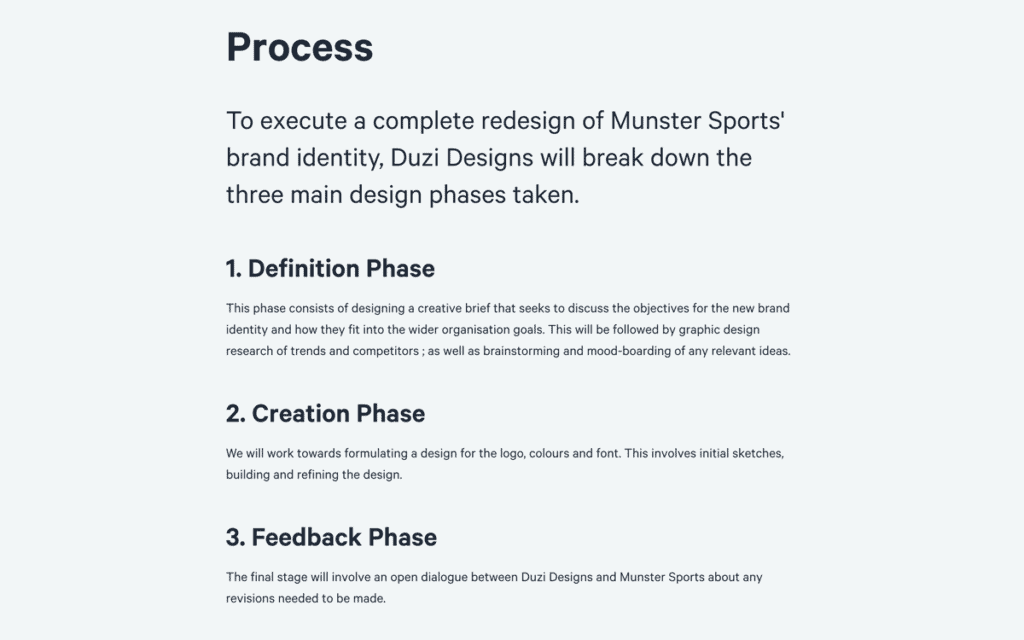
This next section is the heart of your freelance project proposal. With the needed context and goals now framed, it's time to elaborate on your step-by-step plan for achieving your vision.
Make sure to cover:
Project Approach
Explain the strategies, frameworks, or processes you will use to complete the project from start to finish. Tailor this specifically to the client's goals for optimal appeal.
Detailed Project Timelines + Milestones
Break down all project phases in chronological order. Define specific milestones that mark critical points along the journey, along with time estimates for each step.
Comprehensive Deliverables List
Catalogue every deliverable asset, product, or service the client will receive if you complete the project. Organise by milestone if helpful. Be as detailed as possible here.
Ongoing Communication/Availability
Describe what regular progress reports and preferred communication channels (email, video chat, etc) will look like during the engagement to ensure optimal collaboration.
Project Approach
When outlining your proposed solution, explain the strategic approach you will take to ensure the client's project is completed successfully. Tailor this to the goals, specifications, and other details summarised earlier.
Describe your proven process for delivering projects within this field and showcase any proprietary frameworks you use that make your work stand out. The more customised you make your proposal specifically for the client (as opposed vs a generic copy/paste approach), the better chance it has to impress them.
Some examples:
For building your Shopify store, I follow a custom 5-phase development roadmap tailored for ecommerce sites selling physical products. My process emphasises launching with the core customer-facing functionalities built first before circling back to polish advanced dashboard features only staff will leverage ongoing…
When writing SEO-focused website content, I adhere to a unique methodology optimised for ranking above competitors by targeting low-competition long-tail keywords. I research your niche extensively first, identifying 200+ underutilised search queries we can realistically rank in the top 5 for, shaping article topics around matching people's natural search intent...
Detailed Project Timelines + Milestones
The next critical step is to define clear project timelines and milestones. This gives the prospect confidence that you'll deliver on time and allows them to plan cross-functional initiatives that sync with the website launch.
Break each project phase down into week-by-week or hourly increments to complete. Mark major milestones where critical components will be ready for review/feedback or approval before moving to the next steps.
Here is a sample ecommerce store timeline:
Week 1-2: Design Phase
- Conduct customer research
- Finalise sitemap + information architecture
- Design draft homepage visual concepts
- CLIENT MILESTONE REVIEW: Submit two homepage design options
Weeks 3-5: Development Phase 1
- CODE: Develop site pages/templates
- CODE: Create draft product display functionality
- CODE: Finalise homepage hero display
- TEST: Conduct a quality assurance audit…
- And so on…
Be as detailed as possible when defining deliverables to avoid mismatched expectations about what the client will receive precisely. At the same time, build in a buffer room for estimates and account for unexpected delays.
Comprehensive Deliverables List
The following section clients will look for is an itemised list of every deliverable asset, product, or service you will provide if awarded their project. This captures the tangible results they can expect from the engagement.
Format this as a checklist organised by milestone phase, project component, or custom categories that match the project scope. Please include as many details, functionalities, and specifics as possible so the prospect understands precisely what their money will buy from you.
For example:
Milestone 1 Deliverables
- Homepage Final Design Mockup (1)
- Secondary Pages Template (7)
- Sitemap Document
- Style Guide Document
- Product Taxonomy Recommendations
- Launch Quarter Content Topics & SEO Plan
Milestone 2 Deliverables
- Develop and code the Website in the Shopify platform
- All Pages Design + Functionality (15)
- Integrate Live Search Bar
- Build Collection Display Pages
- Set Up API Integration with the Inventory System
- and more…
Milestone 3 Deliverables
- 90-Day Post-Launch Support Plan
- Google Analytics Setup & Integration
- Weekly Traffic & KPI Reporting
- Ad hoc Bug Fixes
- Monthly Site Maintenance…
Structure your deliverables list so it's easy to visualise the immense value offered. This builds excitement and makes your services seem more tangible.
Now that we've covered the core components of your proposed approach, let's examine pricing next.
Structuring Your Pricing Breakdown

How you price and present costs in your proposal also significantly impacts the client's decision to proceed. Follow these best practices when structuring your pricing:
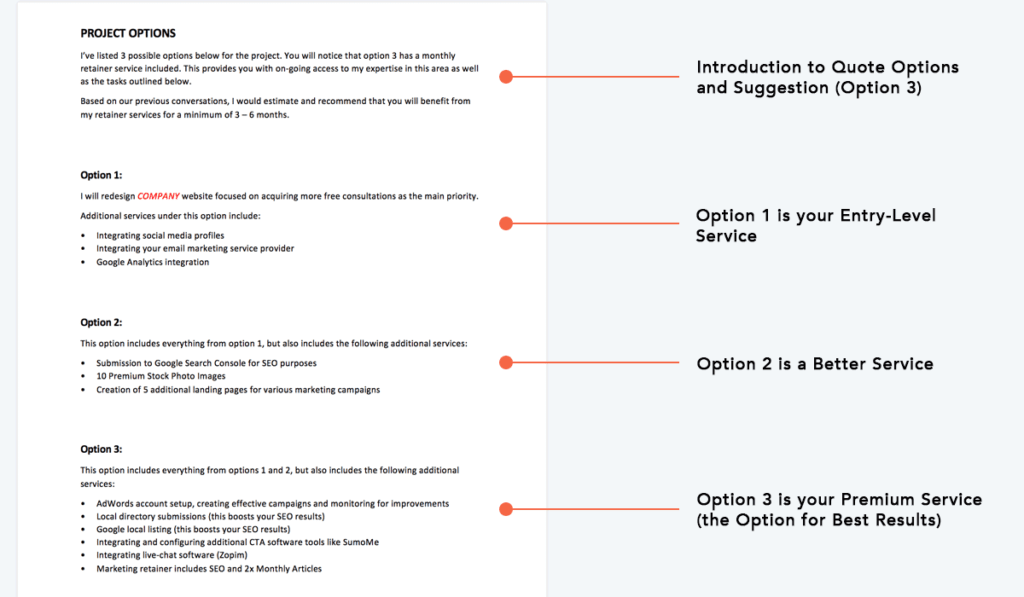
Fixed Cost – Provide a single, flat-rate cost for the project scope, covering your committed deliverables from start to finish. Hourly billing leads to uncertainty and endless budget creep.
Justify Value – Your quality of work, specialised expertise, experience delivering similar projects, and other factors justify why your premium rate earns the ROI compared to entry-level freelancers charging half as much.
Breakdown by Milestones – While one total fixed cost is provided, consider breaking payments into milestones and marking key project stages. This allows both parties to re-evaluate progress before continuing.
Upsells – Additional services, such as maintenance plans, extending support post-launch at a monthly retainer, or options like expanded features, can make great upsells. List these separately.
Describe Payment Methods + Terms – Explain how and when they'll be invoiced along the way, your payment methods, and cancellation/refund policies around milestones or other common scenarios.
Here's an example pricing section:
My total fixed price for completing the full scope of deliverables in my proposed solution will be $14,000, paid according to the following payment schedule:
Milestone 1: Research & Design – $4,000
(Due when the sitemap and two homepage design options are approved)
Milestone 2: Development – $6,000
(Due when MVP homepage + five core pages live on staging site with mock product data)
Milestone 3: Launch + Post-Launch Support – $4,000
(Due when the site goes live on Shopify with accurate products/inventory tracking activated)
These costs are competitive for the expertise and quality of work delivered, especially given my specialisation in blazing-fast Shopify store builds optimised for conversions vs just setup.
I offer three months of ongoing optimisation services post-launch for $650/month. This includes weekly analytics reports, monthly site enhancements, and unlimited ad hoc fixes/support questions.
I offer fixed pricing because it leads to greater partnership without petty budget concerns. I'm flexible with structuring instalments, as per the examples above, but prefer 50% of the total project cost upfront before starting and the remainder upon completion.
And so on about payments. The goal is maximum transparency on costs and payment expectations so that no financial confusion later derails.
Wrap Up By Requesting Signature
Finally, conclude your proposal by requesting an official sign-off from the client to proceed with the following steps.
Reiterate excitement to partner together, then provide:
- Official approval checklist marking critical items in your proposal requiring sign-off
- The following steps should be taken to accept the bid, like onboarding calls, scheduling a kickoff, and so on
- Deadline for proposal approval decision to keep momentum flowing
Here's an example:
I'm thrilled by the prospect of collaborating to turn your textbook vision into reality by building a stellar Shopify store. This proposal outlines a practical approach to check all your ecommerce goals off the list!
Please review all key details below and confirm your approval to move forward:
- Website Deliverables Detailed
- Project Timetables
- Pricing Breakdown
If you approve, the next immediate steps are…
Then, wrap by noting the approval deadline and expressing eagerness to hear their decision either way. This final call to action can prompt more prompt decisions after presenting a compelling case throughout.
Using Tools To Streamline Proposal Creation
Look, you don't have to craft every proposal from scratch in a dusty old word processor.
That's a massive waste of your time.
There are tools available that make this entire process smoother, faster, and more professional.
Dedicated Proposal Software
If you regularly send proposals, investing in proper software is a no-brainer.
Platforms like PandaDoc, Better Proposals, or Proposify are specifically designed for this purpose.
They provide templates and content libraries, allowing you to reuse sections and electronic signatures to expedite the ‘yes' process.
The best feature? Analytics.
You can see when a client opens your proposal, what sections they spend time on, and when they forward it.
That's gold.
Design-Focused Tools
If you want your proposal to look absolutely stunning, consider using tools like Canva or Adobe InDesign.
This is ideal for creative freelancers who want the document itself to serve as a portfolio piece.
It takes more effort, but the visual impact can be huge.
The Classics
Let's be honest, you can absolutely get the job done with Google Docs or Microsoft Word.
They're simple and cost nothing.
The trick is to create your own professional template that you can tweak for each client.
It's not as fancy, but it works.
How To Follow Up On Your Proposal
So, you've hit send.
Now what?
Don't just sit there and hope.
The follow-up is part of the job.
But you can't be a pest.
There's a fine line between keen and desperate.
Give them some breathing room.
A good rule of thumb is to wait 3 to 5 business days.
People are busy; let them digest it.
Your first follow-up email should be concise and to the point.
Something like:
Hi [client name],
Just wanted to quickly check that you received the proposal I sent over on [day].
Let me know if you have any questions at all. I'm really excited about the possibility of working together.
Best,
[Your name]
See? No pressure.
You're being helpful, not pushy.
You're just bringing it back to the top of their inbox.
If you still hear nothing, you can send another gentle nudge a week later.
After that, it's probably best to move on.
If they say no, be professional.
Thank them for their time.
You never know, they might come back to you for another project down the road.
Expand With Optional FAQs
One final option you might consider adding is an FAQ section. This allows for addressing common questions prospects may have on proposal specifics before they arise.
Some examples to cover key questions:
Why should we pay 50% upfront vs. other freelancers who accept payment upon delivery?
Requiring a portion of payment upfront allows me to focus entirely on excelling on your project without juggling multiple accounts simultaneously to stay cash flow positive. It minimises delays plus incentives, bringing my “A game” knowing part payment is already secured. Rest assured, I don't begin billable work until our contract is signed, as a gesture of good faith.
What if scope creep comes up, requiring more hours than planned?
I build generous buffers into original time estimates and am highly experienced in planning web projects to avoid surprises. However, if substantial new features arise that we mutually agree require extending the original scope, I'm happy to provide written quotes for adding hours at my hourly rate (currently $125/hr).
And so on…
Consider what other common questions arise regarding your pricing, deliverables, timelines, or policies that can be easily addressed upfront in this manner.
Wrapping Up Your Proposal
That concludes this comprehensive guide to crafting a winning freelance project proposal! Let's recap critical takeaways:
Concise Proposal Structure
Follow this consistent structure:
- Cover Letter
- About Me
- Project Summary
- Proposed Solution
- Pricing Breakdown
- Signature Agreement
Convincing Client On Value
Throughout each section, your #1 goal is to convince the client to become a partners because you offer more value towards achieving their goals vs competitors. Customise directly to their needs.
Clear Expectations = success
Clarify all expected deliverables and project plans, including milestones, pricing, and policies, upfront to avoid further clarification during the engagement.
Now, you're ready to prepare polished proposals that impress clients and win more projects!
Proposals are structured sales documents. Their purpose is to persuade leads to buy your services over other options. Treat them as such.
While the structure and best practices provided will steer you in the right direction, remember to incorporate the creative element as well. View your proposals as a reflection of your talents and abilities. The time invested in mastering this crucial skill will serve your freelance business well for years.
Recap Of Key Benefits
Let's recap five significant benefits strong proposals provide:
1. Position Yourself As An Expert
Well-written proposals demonstrate confidence and experience and make you appear as an authority clients can trust.
2. Showcase Your Value
Proposals allow crafting a customised case, proving you offer the perfect fit and value for the client's needs.
3. Set Clear Expectations
Define project details, deliverables, timelines, policies and everything needed to align expectations.
4. Seal The Deal
With a compelling proposal, you're much more likely to win the client's business and secure an agreement that locks down the engagement.
5. Reference For Success
Your approved proposal serves as a vital reference for all stakeholders, clarifying the original project scope and plans to address any questions that may arise later.
Following the advice in this guide, you now have a proven formula for maximising all of these benefits.
FAQs on how to write a project proposal
Here are answers to a few common questions for extra clarity:
How long should my proposal be?
Ideally, keep proposals under five pages max. Moreover, it risks losing people's interest. Remember, the goal is to sell your ability to add value, not methodically document every project plan or policy facet.
What if a client wants changes to my original proposal?
It's fair for clients to request tweaks, especially around the scope of deliverables or timelines. If changes seem excessive or veer outside your area of expertise, please stand firm on the original proposal around which you priced your services. Contact other freelancers if substantial changes are demanded that no longer work for your business model.
Should I customise proposals for every lead?
Absolutely! Generic, one-size-fits-all proposals are far less effective. The details demonstrating you grasp a prospect's unique needs, have researched their niche, and tailored deliverables to match their specifications are what win projects.
Remember these suggestions, and you're on your way to proposal mastery as a freelancer! Best of luck as you build your clientele and your business.