Snapchat vs TikTok (Forget the Hype, Focus on What Works)
Most small business owners and entrepreneurs I talk to feel this immense pressure. A pressure to be everywhere, all at once. TikTok’s exploding. Snapchat’s still got a user base. “If I’m not on there, I’m missing out!”
The biggest missing piece for most isn’t another platform. It’s a coherent strategy for the platforms they’re already on. Or, even more fundamentally, a clear understanding of who they’re trying to reach and what they want them to do.
- A coherent strategy is crucial; being on every platform leads to burnout and diluted efforts.
- Understand your target audience before choosing between Snapchat or TikTok for impactful engagement.
- Focus on genuine connections and strategic objectives rather than succumbing to hype and pressure.
“Be everywhere” is terrible advice. Be strategic.
The “be everywhere” mantra is a fast track to burnout and diluted effort. It’s advice peddled by those who don’t understand the value of focus. Or your sanity.
Your time, your money, your creative energy – these are finite. Pouring them thinly across a dozen platforms means you’re unlikely to make a real impact on any of them.
It’s not about presence; it’s about impact.
Defining your audience first (not the platform’s)
Before you even glance at the download button for Snapchat or TikTok, answer this: Who is your ideal customer?
- How old are they?
- What are their genuine interests (not the ones you think they have)?
- Where do they actually spend their time online seeking information or entertainment?
- What kind of content genuinely resonates with them, makes them stop scrolling?
If your ideal customer is a 55-year-old CEO looking for B2B software solutions, then frankly, agonising over TikTok dances is probably a monumental waste of your time. Sounds obvious, but you’d be surprised how many miss this.
If your target market includes India, TikTok is off the table. It has been banned there since 2020, per the Government of India. Snapchat is available, so weigh that in your channel plan.
The US and the UK allow consumer use of TikTok. Some public bodies restrict the app on government devices per official policy, but this does not affect regular users. Targeting plans for Europe and North America remain valid, subject to your data and compliance checks.
Snapchat: What’s the Real Deal for Business?
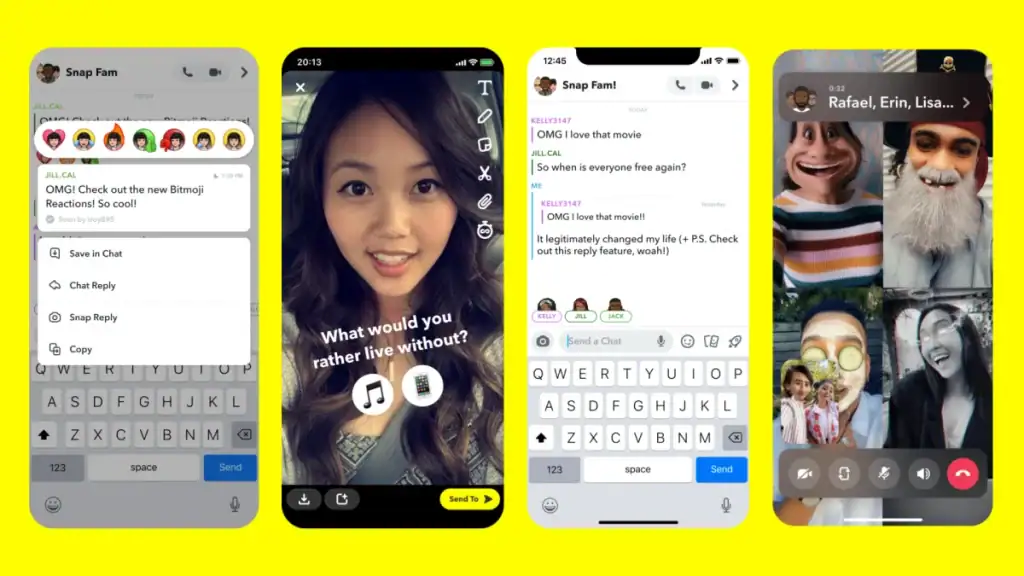
Snapchat. It’s still around. It’s not the behemoth it once was in terms of cultural dominance, but it retains a dedicated, if specific, user base.
- Ephemeral nature: Strength or weakness? Content that disappears. This was Snapchat’s original hook. For users, it encourages less performative, more “in-the-moment” sharing. For businesses? It means a constant content treadmill. Your brilliant Snap is gone in 24 hours. Poof. This can create urgency, sure. But it can also be a relentless demand.
- Key demographics: Who’s actually still snapping? While it started very young, its core demographic has aged up slightly. Think primarily late teens to mid-twenties, with a decent showing in the 25-34 bracket. Globally, Statista data from early 2024 showed a strong concentration of users under 35. If your audience is firmly older than that, tread very carefully. It’s not a ghost town, but it’s a specific neighbourhood.
- Core features for business – a quick, no-fluff rundown.
- Snaps & Stories: Your basic disappearing photos and videos.
- Lenses (AR Filters): Augmented reality overlays. It can be fun, brand-relevant, and expensive to develop custom ones.
- Filters: Geographic or event-based static overlays.
- Ads: Various formats, from video ads to promoted Lenses.
- Discover: Content from publishers and select creators. Getting featured here is a long shot for most small businesses.
- Public Profiles for Businesses: A persistent hub to save Stories and Highlights, host Lenses, add business info, and gather subscribers.
- Spotlight: Short-form recommendation feed that can reach beyond your followers if content resonates.
- Snap Map and Place listings: Link your Place to show location, hours, and Stories on the map for local reach.
Where Snapchat Might Shine for Entrepreneurs
Let’s not dismiss it entirely. There are niches.
- Hyper-local engagement: Geofilters can be surprisingly effective (and cheap) for businesses with physical locations targeting local events or areas. A coffee shop offering a cool filter for a local festival? Smart.
- Behind-the-scenes rawness: If your brand thrives on unpolished, immediate, “day-in-the-life” content, Snapchat’s fleeting nature can feel authentic. Think of a solo artisan, a personal trainer. It has to feel real, though. “Forced rawness is just awkward.”
- AR Lenses for niche product interaction: This is more advanced. If you sell something where an AR “try-on” makes sense (cosmetics, accessories), a custom Lens could be innovative. But budget accordingly – this isn’t a DIY job for most.
- Turn Stories into Highlights on your Public Profile. Pin menus, product demos, or FAQs as Highlights. This keeps key content browsable beyond the 24-hour window.
The Downsides: Why Snapchat Could Be a Time Sink
Now for the cold water.
- “It feels like a closed garden.” Discovery challenges. Snapchat isn’t built for casual discovery the way TikTok is. It’s more about connecting with people you already know, or brands you actively seek out. Gaining new followers organically is a slog. A real slog.
- Content creation demands constant churn. That ephemeral content needs constant replacement. If you’re a one-person marketing department (i.e., you, the business owner), is this really the best use of your precious hours?
- Measuring actual ROI: Can you genuinely track sales from Snaps? Attribution can be murky. Sure, you can track swipe-ups if you have that feature (which often requires a certain ad spend or follower count). But linking a Snap Story view to a sale three weeks later? Good luck. “Vanity metrics like views are nice, but they don’t pay the mortgage.”
Snapchat Ads: Worth the Punt?
The ad platform is there. You can target by demographics, interests, and location.
Snapchat ad formats and measurement stack, plus Direct Answer Block
Direct answer: Snapchat ads work best when you target under-35s, tie creative to the camera, and push simple actions. Keep creatives native, quick, and vertical. Track outcomes with the Snap Pixel or Conversions API, not just views or swipe-ups.
- Formats: Single Video or Photo, Story Ads, Collection Ads, catalogue-driven ads fed by a product catalogue, Commercials up to 6 seconds non-skippable, and AR Lenses or Filters from Lens Studio.
- Measurement: Snap Pixel for web events and in-app browsers, plus Conversions API for server-side events and better attribution.
- Ad formats and targeting: Video ads, filter ads, AR lens ads. The targeting options are reasonably granular.
- Cost considerations for small budgets: You can start with a small budget. But like any ad platform, effectiveness often scales with spend and skilled optimisation. Is your £50 better spent here or on a platform with clearer conversion paths for your specific business?
- “Is anyone really clicking and buying from Snapchat ads?” A hard look. Some do, for specific types of products – impulse buys, youth-focused brands, and entertainment. For a local accountant? Probably not your prime lead source. The intent on Snapchat is often more social browsing than active shopping.
One business owner I know with a custom t-shirt side-hustle tried Snapchat ads. He got views. He got a few clicks. He got precisely zero attributable sales after spending £200. His take? “Felt like shouting into a very specific, very young void.”
TikTok: The Juggernaut – But is it Your Juggernaut?
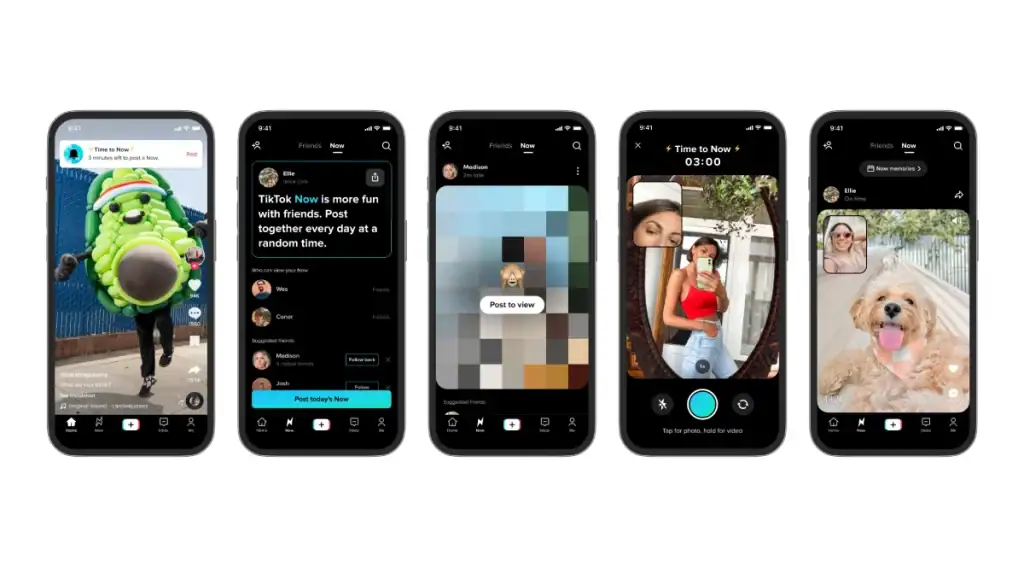
Ah, TikTok. The algorithmically-driven, dopamine-dispensing, trend-generating monster. You can’t ignore its scale. But you can question if it’s right for you.
- The algorithm: “The For You Page” (FYP) addiction machine. TikTok’s FYP is legendary for its ability to learn what you like and feed you an endless stream. This means that, if your content hits the right notes, it could be seen by a vast number of people who don’t follow you. That’s the carrot. The stick? You’re at the mercy of an ever-changing, secret algorithm.
- Demographics: Broader than you think, but still strong youth lean. Yes, it started with Gen Z, but older demographics are on TikTok too. You’ll find gardeners, chefs, lawyers, accountants (yes, really). However, the dominant user base and the overall vibe still skew younger and trendier. According to a late 2023 Ofcom report, it’s the go-to news source for many UK teens. Think about that. News. On TikTok.
- Content style: Authenticity (or the appearance of it), trends, education-as-entertainment. Overly polished, corporate content usually dies a swift death. Users crave perceived authenticity, humour, value delivered quickly, and, of course, content that taps into current trends (sounds, formats, challenges). “Edu-tainment” is a big one – teaching something useful in an engaging, fast-paced way.
TikTok’s Seductive Pull for Businesses
The allure is undeniable.
- Potential for massive organic reach (the viral lottery). This is the big one. One video can get millions of views without you spending a penny on ads. It’s rare, like winning a scratch card, but it happens. And that potential keeps people hooked.
- User-generated content (UGC) goldmine (if you can spark it). Encouraging users to create content featuring your product or brand can be incredibly powerful. Think of challenges or using a specific sound linked to your brand. It’s authentic social proof.
- Showcasing personality and brand voice effectively. TikTok allows for, and almost demands, more personality than many other platforms. If your brand has a quirky, human side, this is where it can shine.
- TikTok Shop / E-commerce integrations: The new frontier? This is evolving rapidly. The ability to tag products and allow users to buy directly within the app is a potential game-changer for e-commerce businesses. Early days for many, but the direction of travel is clear: social commerce.
- Available in the UK, the US, and multiple Southeast Asian markets, per TikTok.
- Features include in-app checkout, product tagging in videos and LIVE streams, catalogue sync, and creator affiliate programmes that credit sales to partners.
- The State of Social Commerce in 2026: TikTok scaled Shop in the US during 2024 and 2025, then refined fulfilment and policy in 2026, per TikTok public updates. Expect stricter product compliance and clearer refund flows.
The Pitfalls: Why TikTok Might Derail Your Focus
But here’s the other side of the coin.
- Trend chasing: A full-time job that distracts from core business. New trends emerge daily. Hourly, even. Trying to keep up can be exhausting and pull you away from, you know, actually running your business. And jumping on a trend late, or badly, is just cringeworthy. “There’s nothing sadder than a corporate dad trying to floss.”
- “Viral fame doesn’t equal fortune.” The conversion challenge. Great, your video got a million views. How many of those translated into leads or sales? Often, far fewer than you’d hope. Virality without a clear path to conversion is just an ego boost.
- Content quality vs quantity: The algorithm demands a steady feed. TikTok tends to reward consistent posting. This can lead to pressure to churn out content, sometimes at the expense of quality or strategic alignment.
- Brand reputation risks: One wrong move… The informal, fast-paced nature of TikTok also makes it easier to misstep. A poorly judged attempt at humour or a trend can backfire spectacularly. The internet mob is swift and unforgiving.
- Music restrictions for Business Accounts. You are limited to TikTok’s Commercial Music Library, per TikTok’s policy. This can block mainstream trend sounds, so plan voiceovers, original audio, or CML tracks early.
TikTok Ads: Gambling or Smart Investment?
The ad platform is robust and offers sophisticated targeting.
TikTok ads work when the video feels native, hooks fast, and drives one clear action. Use creator-style clips, test multiple cuts, and track with the pixel or Events API. Keep it vertical, captioned, and paced.
- Creative: Open strong in two seconds, add captions, keep shots tight.
- Distribution: Use Spark Ads to add paid reach to proven posts.
- Measurement: Fire conversion events and review cost-per-result, not just CPMs.
Looks like a creator, not a brand. Test edits, scale winners with Spark Ads, and measure against conversions, not vanity views.
- Ad formats (In-Feed, TopView, Branded Effects). Plenty of options, from standard in-feed video ads to a premium TopView ad (the first thing users see when they open the app), and branded hashtag challenges or effects.
- Costs and bidding – can small players compete? You can get started with smaller budgets for in-feed ads. But for the big, impactful stuff like Branded Hashtag Challenges, you’re talking serious money. Competition is also increasing, which inevitably drives up costs.
- Attribution: “Did that dance challenge really sell my accounting software?” Like Snapchat, directly attributing sales from organic TikTok content can be tricky. Ads offer better tracking, but the journey from seeing a funny video to signing up for a serious B2B service can be long and winding. It’s often more about top-of-funnel awareness.
A small bakery owner I know tried TikTok. She spent hours making cute videos of her cakes. Some got decent views. She even got one with 50,000 views – “went mini-viral,” she said. Sales impact? Negligible. Her local Facebook group and email list still drove 90% of her orders. Her lesson: “The TikTok crowd liked looking. My locals liked buying.” - Spark Ads: Boost your own or a creator’s organic post, preserving comments, likes, and watch history while adding paid scale.
- Search Ads: Serve ads against queries in TikTok Search, useful for intent layers tied to “how to” and product terms, per TikTok’s 2024 launch.
- Shopping Ads suite: Product-forward formats linked to catalogues or Shop, optimised for conversions where Shop is enabled.
Both platforms support client-side pixels and server-side APIs. Install TikTok Pixel or Events API, and Snap Pixel or Conversions API, before you test ads. This tightens attribution and reduces gaps from browser restrictions.
Install standard events, not custom guesses. For TikTok, use ViewContent, AddToCart, InitiateCheckout, and CompletePayment. For Snapchat, use VIEW_CONTENT, ADD_CART, START_CHECKOUT, and PURCHASE.
Offline still counts. TikTok Events API and Snap Conversions API support server and offline uploads with hashed identifiers. Map orders or leads back to clicks and views, then compare to analytics.
In our fieldwork, accounts with server-side events saw steadier attribution through browser changes. Less drop-off. Cleaner cost per purchase. That makes testing faster and cheaper.
Head-to-Head: Snapchat vs TikTok – The Brutal Breakdown
Let’s put them side by side, no punches pulled.
Audience & Demographics: Where Does Your Customer Live?
This is the absolute crux.
| Feature | Snapchat | TikTok |
| Primary Age | Late Teens – Mid 20s (some 25-34) | Gen Z & Younger Millennials (but broadening) |
| User Intent | Connecting with friends, quick entertainment | Entertainment, discovery, trend participation, learning |
| Global Reach | Significant, but more concentrated in the West | Massive, truly global |
| Niche Strength | Strong in very specific youth subcultures | Growing across diverse interest-based communities |
“If your audience isn’t actively and meaningfully on one of these platforms, you’re just shouting into the wind.”
Content Creation: Effort, Style, and Lifespan
- Snapchat:
- Effort: Can be low (quick snap), but consistency is key. AR Lenses are high effort.
- Style: Raw, unpolished, “in-the-moment.”
- Lifespan: 24 hours for Stories (mostly). Fleeting.
- TikTok:
- Effort: Can vary. A simple “talking head” can work, but trend-based/edited videos take more time. High consistency is often rewarded.
- Style: “Authentic” (even if staged), engaging, often trend-driven, sound-on crucial.
- Lifespan: Can be short if tied to a fast trend. It can have a longer tail if it hits the FYP sweet spot or offers evergreen value.
Organic Reach Potential: Myth vs. Reality
- Snapchat: Low for broad, new discovery. Good for deepening existing connections if they already follow you. “It’s a conversation, not a broadcast to strangers.”
- TikTok: Potentially massive, algorithmically driven. The “viral lottery” is real, but don’t bank on it for your business. Highly unpredictable.
- Recommendation engines, side by side. TikTok’s For You Page is the primary recommendation feed. Snapchat has Spotlight and Discover, smaller in scale and less expensive, but still real routes beyond your followers.
The State of Discovery in 2026: TikTok Search usage has grown, and Search Ads are live, per TikTok. Snapchat Spotlight editorial standards tightened for quality, per Snap Inc. Your hook, watch time, and comments remain the core signals on both.
Advertising Platforms: Bang for Your Buck?
- Snapchat Ads: Can be effective for highly targeted youth demographics or location-based campaigns. Potentially lower competition in some niches means potentially lower costs. But measure carefully.
- TikTok Ads: Wider reach, high engagement potential. Costs are rising. Great for brand awareness. Direct response can work for e-commerce, but requires smart, creative and funnels. “Test, test, test. And then test again.”
Business Objectives Match-Up:
Let’s be blunt about what they’re realistically good for:
- Brand Awareness:
- TikTok: High potential if content resonates.
- Snapchat: More niche, less broad awareness.
- Lead Generation:
- TikTok: Possible with clever CTAs and funnels (e.g., to a lead magnet). Harder work.
- Snapchat: Very challenging for most B2B/service businesses. Better for immediate local offers.
- Direct Sales/E-commerce:
- TikTok: Increasingly strong with TikTok Shop and product linking. The future here looks promising for product-based businesses.
- Snapchat: More limited, though some direct response can work for impulse-buy items.
- Community Building:
- TikTok: Yes, through comments, duets, and stitches. Can build a loyal following.
- Snapchat: More about private, smaller group interactions. Less of a broad “community” feel for brands.
Neither platform is a silver bullet for sales. They are primarily attention platforms. What you do with that attention is what matters.
“So, Which One Do I Pick?” – The Annoying but Honest Answer
You’re probably hoping I’ll just say “pick TikTok” or “Snapchat’s your secret weapon.” Sorry. That’s not how this works.
It’s Not About the Platform, It’s About You.
The right choice depends entirely on:
- Your business type:
- Selling quirky t-shirts to 20-somethings? TikTok might be your playground.
- Offering high-value B2B consultancy? Probably neither, frankly. Or at least, they’d be very low on your priority list.
- Local cafe wanting to drive footfall? Snapchat geofilters could be a cheap experiment. TikTok showing your atmosphere could work.
- Your resources:
- Time: Do you genuinely have the hours to dedicate to creating native content consistently for these platforms? Be honest.
- Budget: Can you afford to experiment with ads? Can you afford to hire someone if you can’t do it yourself?
- Creative capacity: Are you, or is someone on your team, naturally inclined to create the type of short, snappy, engaging video content these platforms devour? “If you hate being on camera and can’t string two words together, video platforms are going to be painful.”
- Your brand personality:
- Is your brand serious, formal, or traditional? Trying to force it into TikTok trends might look deeply inauthentic.
- Is your brand playful, human, a bit irreverent? You might feel right at home.
The “Neither” Option: Is It Okay to Sit These Out?
Absolutely. Yes. 100%.
It’s not just okay; sometimes it’s the smartest move.
- Focusing on what already works: If you have marketing channels that are already delivering results (email, SEO, LinkedIn, whatever), doubling down on those might be a far better use of your resources than chasing the shiny new thing.
- Alternative platforms: Are there other, perhaps less “sexy” but more effective, platforms for your niche? Pinterest for visual products? LinkedIn for B2B? Good old-fashioned Google Ads?
- “The fear of missing out (FOMO) is a terrible business strategist.” Making decisions based on FOMO is a recipe for wasted effort. Make decisions based on data, on a clear understanding of your audience, and on your strategic objectives.
Testing the Waters Without Drowning
If you do decide one (or both) might be worth exploring:
- Small, measurable experiments: Don’t go all-in. Dedicate a small, fixed amount of time and/or budget.
- Ship native creative, not repurposed leftovers. 9:16 vertical, captions on screen, a clear hook in two seconds. Keep text inside safe zones so the app UI does not cover it.
- Define success before you start: What does a “win” look like for this experiment? X number of website clicks? Y number of genuine enquiries (not just views)? Z level of engagement from your target demographic?
- Don’t be afraid to cut your losses: If, after a fair trial period, it’s not delivering, walk away. Seriously. There’s no shame in saying, “This isn’t for us.” It’s smart.
Measurement foundation before you spend, plus Debunk and Wrong Way vs Right Way
- Set measurement first. Install TikTok Pixel or Events API and Snap Pixel or Conversions API. Tag links with UTM parameters and define conversion events that align with your goals.
Debunk: “Post at the perfect time, and you’ll win.” TikTok’s own “How recommendations work” explainer highlights user interactions and video data as primary signals, not the clock, per TikTok. Focus on hooks, retention, and relevance.
Wrong Way vs Right Way
| Wrong Way | Right Way |
|---|---|
| Boost weak videos “to save them”. | Run Spark Ads on top 10% performers. |
| No pixel, no UTMs, hope for sales. | Pixel plus Events API, UTMs, clear events. |
| Chase every sound daily. | Weekly system, trend fits brand or skip. |
| One generic ad for all users. | Creative variants matched to audience slices. |
Practical Advice (If You’re Still Determined to Dive In)
Alright, so you’re still keen. You believe there’s potential. Fair enough. Here’s how to approach it without looking like a total amateur.
For Snapchat:
- Focus on intimacy and exclusivity. Think “insider access.”
- Leverage local if it applies. Geofilters for events, specific locations.
- Experiment with AR if you have a genuine use case and budget. Don’t just do it because it looks cool. Does it add value or solve a problem for your customer (e.g., virtual try-on)?
- “Don’t expect miracles. Expect niche engagement, maybe.” Manage your expectations.
- Stand up a Public Profile and link your Place. Save evergreen Stories as Highlights and house your AR Lenses there. Example: Taco Bell’s AR Lens became a cultural hit, showing the power of camera-first creative, per Snap Inc.
For TikTok:
- Understand trends, but don’t be a slave to them. How can you adapt a trend to fit your brand and message, rather than just copying it blindly? Originality within a trend often performs well.
- Authenticity and relatability are key. Lose the corporate speak. Be human. Show your face. Share your actual personality (or your brand’s).
- Educate, entertain, or inspire. Preferably all three. This is a good mantra for TikTok content. Provide value in a digestible, engaging way.
- Engage with comments and build community. Reply to comments. Ask questions. Foster interaction. The algorithm notices this.
- Scale what already works with Spark Ads. Promote your best organic posts to new audiences while keeping comments. This compounds social proof.
- Mine TikTok Creative Centre before you press record. Check trending hooks, sounds in the Commercial Music Library, and keywords for your niche. Examples: Ryanair’s persona-led skits and Duolingo’s mascot-led bits show consistent, native humour can carry format, per Ryanair and Duolingo.
Cross-Platform Wisdom (That Actually Works)
This applies whether you use these platforms or others.
- Repurposing content smartly. This doesn’t mean blasting the exact same video everywhere. Adapt it for the nuances of each platform. A TikTok video might need different text overlays or a different call to action if used as an Instagram Reel or YouTube Short.
- Driving traffic to your own assets. This is critical. Use these platforms to drive traffic to your website, email list, and product pages. Don’t build your entire house on rented land. Algorithms change, and platforms can ban you. Owning your audience connection is paramount. (If you need a hand figuring out how to make your digital marketing actually drive to your assets, that’s something we at Inkbot Design drill down on: Inkbot Design Digital Marketing Services)
- Consistent branding, even in short-form chaos. Your brand voice and your visual cues (where possible) should still be recognisable.
- Tag every click. Use UTMs for platform, campaign, and creative to see what actually drives leads and sales in analytics.
- Use unique codes and pages. Give TikTok or Snapchat their own codes or landing pages. Match redemptions and assisted conversions against pixel data for a cleaner ROI picture.
Final Kick Up the Arse: Stop Agonising, Start Strategising
Look, the debate of Snapchat vs TikTok can go on forever in marketing circles. For you, the entrepreneur, the small business owner, it’s simpler.
Analysis paralysis is your enemy.
Spending weeks mulling this over is time you could be spending on action.
Pick one (or none), test, learn, adapt.
If there’s a genuine hypothesis that one of these platforms could work for your specific business and audience, then devise a small, controlled experiment. If not, focus elsewhere.
Focus on genuine connection and value, not just noise.
Whichever platform you use, aim to be a signal, not just more noise. Provide real value. Engage authentically.
“The ‘best’ platform is the one that brings you actual business, not just digital back-pats.”
Forget vanity metrics. Focus on what moves the needle for your business. Leads. Sales. Loyal customers.
Conclusion: The Real Winner is Strategy, Not a Platform
So, Snapchat or TikTok? The blunt truth is, the platform itself is a secondary concern. Your strategy, your deep understanding of your specific audience, and your commitment to creating genuinely relevant and engaging content – those are the primary factors.
Don’t get suckered into the hype cycle or feel pressured to be on a platform just because “everyone else is.” They aren’t, and even if they were, your business isn’t “everyone else’s.”
Make a cold, hard, analytical decision based on your unique business needs, your resources, and crucially, where your ideal customers actually spend their time and attention.
If a platform doesn’t scream “hell yes, this is a perfect fit for us, and we can commit to doing it well,” then a “hell no,” or even a “not right now,” is an incredibly smart, and often profitable, answer. Focus wins.
FAQs (Frequently Asked Questions):
Is Snapchat completely dead for businesses?
Not completely dead, but very niche. It works best for businesses targeting younger demographics (late teens/early 20s) with highly visual, ephemeral content or hyper-local promotions. For most, it’s not a primary channel.
Can B2B businesses succeed on TikTok?
It’s challenging, but not impossible if approached creatively. Think edu-tainment – offering valuable industry insights in an engaging, accessible way. It’s more for brand awareness and humanising your business than direct lead generation for complex B2B sales.
Do I need to dance on TikTok to get noticed?
No. While dance trends are popular, a large share of TikTok content is not dance. Educational content, tutorials, comedy, storytelling, and behind-the-scenes – all can perform well if engaging and authentic.
What’s more important: followers or engagement?
Engagement, by a country mile. Particularly meaningful engagement (saves, shares, thoughtful comments, clicks to your website). A million followers who don’t care about your message are useless. A thousand engaged fans can build a business.
How long should my TikTok videos be?
There’s no magic number, but generally shorter is better for grabbing initial attention (e.g., 15-60 seconds). However, if your content is compelling, users will watch longer videos. TikTok is experimenting with longer formats. Test and see what your audience responds to.
Can I just repost my TikTok videos to Snapchat, or vice versa?
You can, but it’s often not optimal. Each platform has its own style and user expectations. A video edited for TikTok (with specific text overlays, sounds) might look out of place on Snapchat. Adapt content where possible.
What are the biggest mistakes businesses make on Snapchat or TikTok?
Being overly salesy, creating boring or inauthentic content, not understanding the platform’s culture, chasing vanity metrics, and giving up too soon (or sticking with something that’s clearly not working). Also, not having a clear goal for being there.
If I have very limited time, should I even bother with Snapchat or TikTok?
Honestly, probably not. If your time is severely limited, focus on mastering one or two channels that are proven to reach your core audience and drive results for your type of business. Often, this means foundational things like your website, email marketing, or Google Business Profile.
What’s the best way to measure ROI from these platforms?
For ads, use the platform’s analytics to track conversions, clicks, and cost per acquisition. For organic, it’s harder. Track website referral traffic, use unique discount codes, or simply ask customers how they found you. Focus on metrics that tie back to business goals, not just views or likes.
Feeling clearer, or perhaps more confused than ever, about where to point your marketing cannon? That’s common. The digital world is noisy
If you’re tired of the fluff and want straight-talking advice on how your business can actually make sense of digital marketing – whether that involves TikTok, Snapchat, or more likely, the stuff that really builds a foundation – then perhaps we should talk.
Explore what a more strategic approach looks like at Inkbot Design’s Digital Marketing Services.
Or, if you’ve got a specific project in mind and want to cut to the chase, request a quote and let’s see if we’re a fit.
Want more no-nonsense observations? Keep an eye on our blog. We’re not afraid to say what others only think.
