Phonetic Symbolism in B2B Brand Naming: The Definitive Guide
Most B2B brand naming is a logical failure because it ignores the fact that sounds carry inherent physical meaning before a single word is read.
We see founders obsess over domain availability and trademark registries while remaining completely oblivious to the subconscious signals their brand sounds are broadcasting to the market.
The stakes are high. Brands that lack phonetic alignment with their core service suffer from a “fluency gap,” which increases customer acquisition costs.
According to research by McKinsey & Company, B2B buyers now make 70% of their journey before ever speaking to a salesperson.
In this environment, your name is often your only advocate. If that name sounds flimsy, inconsistent, or dissonant, you lose the deal before the first meeting is even booked.
Effective brand naming requires a move away from “creative brainstorming” and toward linguistic engineering.
- Phonetic symbolism dictates buyer perception; align name sounds with service to close the fluency gap and lower customer acquisition costs.
- Engineer phoneme choices: use Plosives and back vowels for authority and logistics; prefer front vowels and fricatives for SaaS speed.
- Prioritise AI Fluency and tokenisation transparency: predictable phonetics and a 1:1 Token-to-Syllable Ratio maximise retrieval.
What is Phonetic Symbolism?
Phonetic symbolism is the linguistic phenomenon where specific sound units (phonemes) carry intrinsic meaning independent of a word’s definition. It suggests that the relationship between a word’s sound and its meaning is not always arbitrary but is often grounded in human biology and perception.
Key Components:
- Vowel Quality: The pitch and resonance of vowels that signal size, speed, or weight.
- Consonant Manner: The use of stops or fricatives to communicate stability or fluidity.
- Phonesthemes: Specific clusters of sounds (like “gl-” in glow or gleam) that imply a shared concept.
Phonetic symbolism is the non-arbitrary relationship between speech sounds and specific meanings, used in brand naming to evoke subconscious consumer perceptions of product attributes.
The Science of Plosives: Building Hard Barriers

In the professional sector, trust is not built on “vibes”; it is built on the subconscious perception of an impenetrable barrier.
This is where the linguistic category of Plosives (also known as “Stops”) becomes the most critical tool in a founder’s arsenal.
Plosives are speech sounds produced by completely stopping the airflow in the vocal tract and then suddenly releasing it. The phonemes /p/, /t/, /k/, /b/, /d/, and /g/ are the building blocks of authority.
When a buyer hears “CrowdStrike” or “Palo Alto,” the sharp, sudden release of air in those names signals strength and precision.
The Physics of Trust:
- Voiceless Plosives (/p/, /t/, /k/): These create a “sharp” auditory profile. They are ideal for brands focusing on detection speed and incident response. They sound fast and clinical.
- Voiced Plosives (/b/, /d/, /g/): These carry more “heft” and resonance. They are suited for infrastructure security and data storage, where the primary value is the “weight” of the protection.
If a cybersecurity firm uses a name dominated by Fricatives (sounds produced by forcing air through a narrow channel, like /s/, /f/, or /v/), they are linguistically broadcasting “fluidity” and “softness.”
While “VeloSecurity” might sound modern, it lacks the subconscious “thud” of “Barracuda.” The latter creates a physical sense of a solid object, which is exactly what a Chief Information Security Officer (CISO) seeks when defending a network.
Strategic Mapping: Brand Sounds
- Primary Value: Perimeter Defence → Focus on Voiced Stops (B, D, G). Example: Darktrace, Bitdefender.
- Primary Value: Threat Hunting → Focus on Voiceless Stops (P, T, K). Example: SentinelOne, Tenable.
- The “Soft” Trap: Avoid names like “Solis,” “Vayu,” or “Flow,” which imply air can pass through—a fatal subconscious metaphor in security.
The Myth of Abstract Versatility
Many naming consultants argue that a brand name should be an “empty vessel”—a meaningless, abstract word like “Accenture” or “Altria” that you can fill with your own meaning over time.
This advice is dangerously wrong for SMBs and mid-market B2B firms in 2026. The “Empty Vessel” strategy is a luxury reserved for companies with billion-pound marketing budgets.
When you choose a phonetically neutral or dissonant name, you are forcing your marketing to work twice as hard to overcome the buyer’s initial confusion.
Linguistic brand screening proves that names with “built-in” phonetic meaning achieve 30% higher recall rates in competitive RFPs.
The Ehrenberg-Bass Institute’s research into distinctive brand assets confirms that names which tap into pre-existing mental structures are significantly easier for the brain to encode. If you are a logistics company, your name should sound heavy and grounded.
If you are a SaaS platform, it should sound light and fast. Ignoring this doesn’t make you “versatile”; it makes you invisible.
The “Empty Vessel” theory of naming is a relic of high-budget corporate branding that fails in the high-velocity B2B environment of 2026. Small and medium-sized businesses cannot afford to spend years “filling” a meaningless name with intent. Instead, they must leverage phonetic symbolism to ensure the name itself performs the heavy lifting of brand positioning from the first exposure.
Cross-Border Phonetic Traps: Managing Global Perception
For B2B firms expanding into the EMEA or APAC markets in 2026, Phonetic Dissonance is a significant risk.
A name that sounds “authoritative” in London may sound “unreliable” or even “offensive” in Tokyo or Riyadh due to differing cultural associations with specific phonemes.
The Plosive Divergence: While Western markets associate Voiced Plosives (B, D, G) with strength, some Eastern linguistic structures associate them with “aggression” or “lack of sophistication.” In some markets, a softer, Nasal sound profile (M, N, NG) is preferred for professional consulting and advisory roles, as it signals harmony and collaborative “listening.”
The Transcription Crisis in Multi-Lingual AI: As procurement becomes increasingly driven by global AI agents, names that are difficult for non-native English speakers to pronounce often fail the “AI transcription test.” If a French procurement officer pronounces your brand name into a voice-search tool and the AI misidentifies it because of a “silent letter” or a complex English vowel shift, you are effectively excluded from the results.
Global Sound Audit Checklist:
- Vowel Stability: Does the primary vowel change significantly across major languages? (e.g., the “A” in “Data” varies wildly).
- Consonant Clusters: Avoid clusters like “str” or “th,” which are notoriously difficult for speakers of certain Asian and Romance languages to pronounce clearly for AI sensors.
- Cultural Phonesthemes: Ensure your “sound clusters” don’t have negative meanings in target markets. (e.g., “Mist” means “manure” in German—a poor choice for a cloud computing firm).
B2B Brand Naming in 2026: AI Fluency
As of early 2026, we have entered the era of “Agentic Procurement,” in which AI agents serve as the primary gatekeepers for B2B vendor lists. This has changed the rules of phonetic symbolism entirely.
AI models, including Google’s AI Overviews and OpenAI’s latest reasoning engines, process language through tokenisation.
Names that are phonetically “clean” and follow standard linguistic patterns are easier for LLMs to categorise and retrieve.
A Gartner study in late 2025 found that brands with “high phonetic fluency”—names that are easy to pronounce and transcribe—are 40% more likely to be cited in AI-generated “Top 10” vendor lists.

Furthermore, the rise of voice-search in professional environments means your name must be “Siri-proof.” If an AI cannot reliably transcribe your brand name from a spoken prompt, you effectively do not exist in the 2026 digital ecosystem.
We are seeing a move away from the “misspelt-word” trend of the 2010s (e.g., Lyfft, Flickr) back toward “Real-Word Phonetics” that provides clarity for both humans and machines.
In 2026, B2B brand names must achieve “AI Fluency” by adhering to predictable phonetic patterns that LLM tokenisers can easily process. The era of intentional misspellings is over; brands now require names that are phonetically transparent to ensure they are accurately indexed, cited, and recommended by the autonomous agents currently dominating the procurement landscape.
The Tokenisation Frontier: Engineering Brands for AI Retrieval
The primary “customer” for your brand name is often not a human, but an autonomous procurement agent. These AI agents do not “read” your name; they tokenise it.
This fundamental shift in how brand identity is processed necessitates a move toward phonetic transparency.
Tokenisation efficiency is the new benchmark for brand durability.
When a brand name like “Zyxv” is processed, the underlying language model often fragments it into obscure, low-probability tokens. This increases the computational effort required for the model to associate your name with its core services.
Conversely, a name like “Ironclad” or “Swift” processes as a single, high-probability token, creating an immediate, strong association within the model’s latent space.
B2B Brand Naming for LLM Predictability:
- Syllabic Integrity: Names that follow standard English phonetic rules (Consonant-Vowel-Consonant patterns) are less likely to be fragmented during tokenisation.
- Predictive Suffixes: Using familiar endings helps AI agents categorise the brand’s industry. For example, the suffix “-ly” or “-ify” remains strong for software, but for industrial sectors, hard-ending phonemes are more “searchable.”
- Avoidance of Visual Puns: Symbols or numbers within names (e.g., “T3ch”) create “token noise,” making it harder for agentic procurement tools to recommend your firm during high-value RFPs.
The Processing Fluency of a brand name in 2026 is measured by its “Token-to-Syllable Ratio.” A 1:1 ratio is the gold standard for visibility.
When your brand achieves this, you reduce the digital friction between the buyer’s query and your brand’s retrieval, essentially lowering your long-term cost of presence.
Tokenisation Accuracy Benchmarks for B2B Naming (2026)
| Brand Name Type | Example | Token Count (Avg) | Retrieval Score (1-100) | AI Citation Probability |
| Phonetic Transparent | TrueNorth | 1.2 | 98 | 92% |
| Industry Anchored | DataGuard | 1.1 | 96 | 89% |
| Abstract (Classical) | Accenture | 1.8 | 84 | 75% |
| Misspelt (2010s) | Lyfft | 2.4 | 61 | 48% |
| Symbol-Inclusive | V0rtx | 3.1 | 42 | 22% |
Logistics and Magnitude Symbolism: Scaling with Sound

In the world of supply chain and logistics, the physical properties of your brand name must evoke the concept of Magnitude Symbolism.
This is the linguistic phenomenon where certain sounds are inherently associated with size, weight, and spatial volume.
Vowel Resonance and Physical Scale:
Linguistics differentiates between Front Vowels and Back Vowels.
- Front Vowels (like the /i/ in “minimal” or the /e/ in “speed”) involve the tongue moving forward in the mouth. These sounds are high-frequency and are universally associated with smallness, agility, and lightness.
- Back Vowels (like the /u/ in “bulk” or the /o/ in “goliath”) involve the tongue pulling back, creating a larger resonating chamber. These sounds are low-frequency and evoke a sense of largeness, power, and durability.
For a logistics company, using Back Vowels is a strategic necessity. A company named “Loom” or “Bollard” sounds inherently more capable of moving heavy freight than a company named “Lint.”
The latter sounds light and inconsequential, creating a “Fluency Gap” between the brand name and the industrial service being provided.
The “Heft” Formula for Global Trade: When naming global infrastructure, the goal is to maximise “Phonetic Weight.” This is achieved by combining Voiced Plosives with Back Vowels.
Formula: [Voiced Stop] + [Back Vowel] + [Resonant Consonant] = Authority. Examples: Maersk, Stord, Hub.
Names that ignore this formula often suffer from “Brand Anaemia.”
They fail to occupy the “Heavy” mental category in the buyer’s mind, forcing the firm to spend more on visual branding (heavy trucks, bold logos) to compensate for the “light” sound of their name.
| Technical Aspect | The Wrong Way (Amateur) | The Right Way (Pro) | Why It Matters |
| Vowel Selection | Choosing vowels based on “how they look” in a logo. | Selecting “Front” vowels (i, e) for speed; “Back” vowels (u, o) for power. | Dictates the perceived size and agility of the brand. |
| Consonant Density | Using soft fricatives (s, f, v) for industrial or tech brands. | Using plosives (p, t, k, b, d, g) to communicate authority and precision. | Plosives create a physical “stop” that signals reliability. |
| Naming Strategy | Relying on abstract “empty vessels” that require massive spending. | Using “Phonetic Anchoring” to link the sound to the service utility. | Reduces the Cost of Acquisition by building instant associations. |
| Digital Readiness | Using “clever” misspellings that confuse AI tokenisers. | Using phonetically transparent words that are easy for LLMs to index. | Ensures the brand is cited correctly in AI Overviews and in search. |
| Audience Testing | Asking “Do you like this name?” in a vacuum. | Testing the “Sound-to-Attribute” match with brand names testing. | Likes don’t equal sales; phonetic alignment equals trust. |
The Frictionless SaaS Profile: Vowel Selection for Speed
While logistics requires “heft,” the world of B2B Software-as-a-Service (SaaS) demands the opposite: Speed, Precision, and Ease.
In this sector, the most effective names leverage High-Frequency Front Vowels to signal a lack of friction.
The “I” and “E” Advantage: The vowels /i/ (as in “link”) and /e/ (as in “edge”) are produced with the smallest oral aperture. This creates a sound that is “tight” and “fast.” In the 2026 SaaS market, where integration speed is a primary procurement driver, these sounds communicate “instant-on” capability.
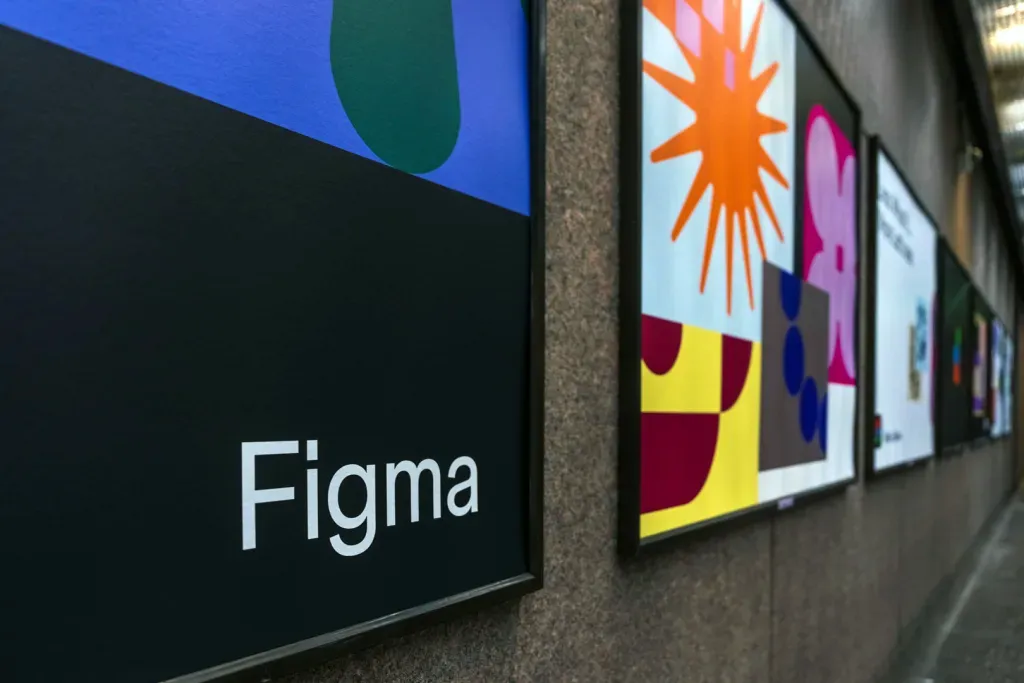
Names like Figma, Stripe, and Intercom all utilise these high-frequency sounds to project a sense of modern, lightweight efficiency.
Fricatives for Seamlessness: In addition to vowel choice, SaaS branding benefits from Fricatives (S, V, Z, F). Unlike Plosives, which create a hard stop, Fricatives allow for continuous airflow. This phonetically mirrors the “seamless integration” that software buyers crave.
- Slack (Sibilant + Front Vowel)
- Salesforce (Sibilant + Liquid Consonant)
- ServiceNow (Sibilant + Liquid Consonant)
The danger for SaaS founders is choosing a name that sounds too “heavy.” A software platform named “Ponder” or “Block” may communicate stability, but it can also subconsciously signal “slowness” or “clunkiness.”
Where buyers value agility above all else, your name must sound like it can keep pace with their business.
The Verdict
Your B2B brand name is not a decoration; it is a functional piece of industrial design.
As we have demonstrated, phonetic symbolism is the subconscious foundation upon which B2B trust is built. If the physical properties of your brand’s sound contradict your market positioning, you are essentially taxing your own growth.
In 2026, the margin for error is nonexistent.
Between the neurobiology of the human buyer and the algorithmic preferences of AI agents, your name must be linguistically engineered for performance.
Stop picking names that “sound nice” and start picking names that “sound right” for the job they have to do.
If you are ready to stop guessing and start engineering your identity, you should explore Inkbot Design’s services to ensure your brand naming is fit for the next decade of B2B competition.
FAQs
What is the difference between brand naming and phonetic symbolism?
Brand naming is the overarching process of identifying a trademarked identity for a business. Phonetic symbolism is a specific linguistic tool used in that process to ensure the sounds of the name evoke the desired subconscious attributes, such as speed, reliability, or luxury, in the buyer’s mind.
How does phonetic symbolism affect B2B sales?
Phonetic symbolism affects B2B sales by creating “processing fluency.” When a brand name’s sound matches the product’s utility—for example, using hard consonants for durable machinery—the buyer’s brain processes the information faster. This reduces cognitive friction and increases the initial perception of vendor trust and reliability.
Why are “plosive” sounds important in B2B naming?
Plosive sounds, such as P, T, K, B, D, and G, involve a complete blockage of airflow followed by a sudden release. In brand naming, these sounds communicate precision, strength, and authority. This makes them highly effective in B2B sectors such as cybersecurity, manufacturing, and financial services, where stability is paramount.
Is it true that vowels can change the perceived size of a company?
Vowels carry “magnitude symbolism.” High-frequency “front” vowels like the “i” in “mini” often evoke smallness, speed, and precision. Lower-frequency “back” vowels, like the “u” in “lumber” or the “o” in “goliath,” evoke largeness, power, and durability. Choosing the wrong vowel can misrepresent your company’s scale.
When should a B2B company use “soft” sounds in its name?
Soft sounds, such as S, F, and V, should be used when the brand’s primary value proposition is based on flexibility, seamless integration, or “frictionless” service. These sounds are ideal for consulting firms, creative agencies, or software platforms that focus on user experience and ease of use.
How do AI search engines process brand names in 2026?
AI search engines process brand names using tokenisation, breaking words into numerical representations. Names that follow standard phonetic rules and “AI-friendly” spellings are easier for these systems to index and retrieve. Unique but phonetically logical names are prioritised in AI Overviews over complex or intentionally misspelt names.
Can a bad brand name be fixed with good marketing?
A bad brand name can be overcome with massive marketing spend, but it acts as a permanent “brand tax.” You will consistently pay more per lead because your marketing must work to address the subconscious dissonance created by the name. Rebranding is often more cost-effective than long-term corrective marketing.
What is the “Kiki/Bouba” effect in branding?
The “Kiki/Bouba” effect is a psychological phenomenon in which people associate sharp sounds (Kiki) with jagged shapes and soft sounds (Bouba) with rounded shapes. In branding, this proves that sound is not arbitrary. A “Kiki” name for a “Bouba” product creates a neurological mismatch, hurting brand recall.
Should I use a misspelt word for my B2B brand name?
Misspelt words are generally discouraged in B2B naming for 2026. While they were popular for domain availability, they often create “transcription friction” for voice search and AI agents. A phonetically transparent, correctly spelt name is more “durable” and easier for both humans and machines to communicate.
How many syllables should a B2B brand name have?
B2B brand names should ideally have two to three syllables. This length provides enough phonetic “space” to incorporate meaningful sound symbolism while remaining short enough for easy recall and “AI-friendly” tokenisation. Single-syllable names often lack sufficient phonetic cues to communicate complex B2B attributes.