In-House or Agency Rebrand? A Professional Firm’s Decision
An internal team can deliver a rebrand, but available designers do not prove strategic capacity. Professional firms should test protected time, permission to challenge partners and ownership of rollout before choosing delivery. Compare total project costs, then commission only the external expertise needed to close a specific capability gap.



On this page6 min left
Choose an internal rebrand when your firm has the strategic skills, protected time and authority to challenge its own assumptions.
Choose an agency when those capabilities are missing.
Use a hybrid when the gap is specific enough to separate.
The wrong choice puts partner time, client-facing materials and launch commitments at risk.
First establish when to rebrand. Then decide who should deliver it.
For a professional firm weighing an in-house or agency rebrand, the useful tests are capacity, objectivity and risk. Not whether somebody already knows the logo.
Should your firm rebrand in-house or hire an agency?

An in-house or agency rebrand should be chosen based on the work required, not a preference for internal control or outside expertise. Keep delivery internal when your team can research, challenge and execute the brief.
Commission an agency when those capabilities are missing; use hybrid delivery for clearly bounded gaps.
- Choose internal delivery when the necessary skills, protected time and decision authority are demonstrable.
- Choose agency-led delivery when strategic or execution gaps exceed the internal team’s capacity.
- Choose hybrid delivery when specialist work can be separated with clear approvals and handovers.
An in-house or agency rebrand decision should follow demonstrated strategic capability, protected capacity, independent challenge and accountable rollout ownership.
Can your internal team handle the rebrand?
An internal brand team should be assessed against the proposed change.
Updating agreed proposal templates is a different assignment from deciding how an acquired consultancy fits beneath the parent brand.
Write the brief before judging the team. “New identity” is too vague to expose a capability gap.
Does your internal team have the skills and protected time?
Capacity for an in-house rebrand requires relevant skills and time to be explicitly removed from other commitments.
A designer who can produce campaign assets is not automatically equipped to lead buyer research or resolve competing service propositions.
Name the people responsible for:
- Research and positioning.
- Messaging and visual identity.
- Project management and implementation.
Then ask what each person will stop doing. If the marketing manager retains every campaign, event and tender deadline, the rebrand has no protected capacity.
For a limited visual refresh, an experienced internal designer may be sufficient. For strategic repositioning, inspect research and strategy capability separately. Judge the assignment, not the job title.

Can your internal team challenge the partners’ preferred answer?
An internal rebrand can provide an independent challenge when leadership permits disagreement, and the team can gather evidence beyond partners' opinions.
For example, an advisory firm might want to describe itself as a national strategic consultancy. The team needs permission to test whether target clients understand that offer and whether delivery supports it.
Ask: “What finding would make us reject the preferred positioning?”
If the answer is “nothing”, the exercise is confirmation. An external agency does not automatically fix that; it needs the same access and permission.
Objectivity is a working condition, not an office address.
What must your firm still own when hiring a rebranding agency?
An agency-led rebrand still needs an internal sponsor who owns commercial choices and resolves disagreement. Appointing a supplier does not transfer authority over which clients the firm will pursue.
The claim that “We need an agency because the partners cannot agree” is only partly convincing. An agency can structure the evidence; it cannot exercise authority the partnership has withheld.
Before appointment, name the final approver, agree decision criteria and set feedback deadlines. Consult practice heads without granting every participant an unlimited veto.
Is an in-house rebrand actually cheaper?
An in-house rebrand may require less new cash when the necessary people are already employed and genuinely available. That does not make their time free.
“We already pay the marketing team” is a valid budget observation. It is not a complete project estimate.
Hypothetical planning illustration, not a market benchmark: allocate 160 internal hours at a loaded planning cost of £50 per hour. That assigns £8,000 of staff cost.
An agency quote of £12,000 requiring 40 internal hours at the same rate produces £14,000 before exclusions. Internal delivery appears cheaper under those assumptions—until additional expertise or displaced work changes the comparison.
Keep allocated staff cost separate from incremental cash expenditure. Do not add a second charge for the same hours or value all partner time at the charge-out rate without evidence of displaced billable work.
Compare identical scope when building the business case for rebranding. Research, website work and rollout must appear on both sides.
For budget detail, examine what drives UK rebranding costs rather than treating an identity fee as the whole project.
How should a hybrid rebrand divide the work?
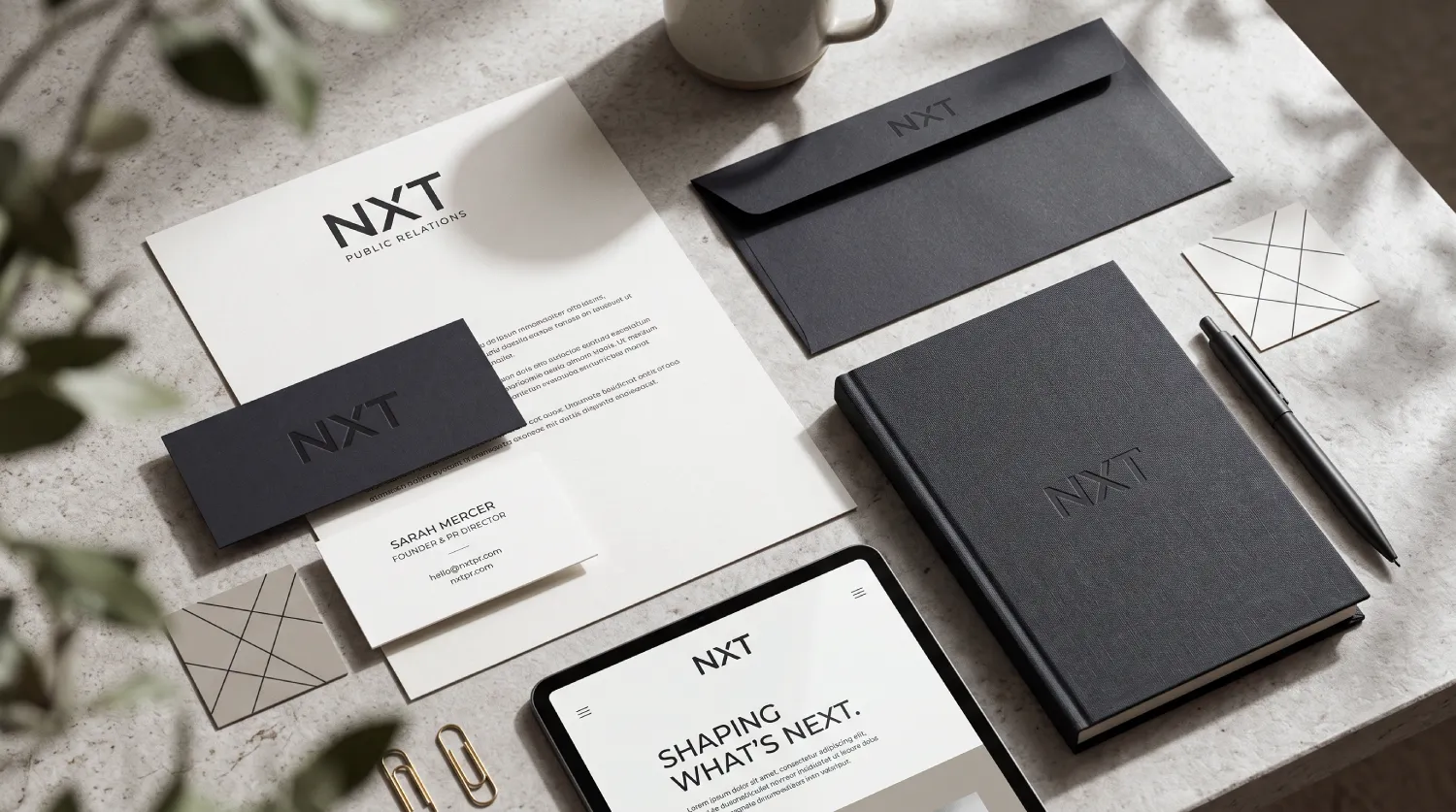
A hybrid rebrand works when the internal team and external specialists own different, explicit parts of the assignment.
For example, an agency might develop positioning and the identity system while an internal designer adapts approved templates.
“Agency does strategy; marketing does everything else” leaves too much open to interpretation.
Who owns each stage of a hybrid rebrand?
A hybrid rebrand should assign a delivery owner and an approver to each stage.
The agency may conduct interviews, but the firm still needs someone responsible for access to suitable clients and prospects.
A practical split is:
- Research: agency leads; internal sponsor arranges access and reviews the evidence.
- Positioning: agency develops recommendations; the authorised leadership group decides.
- Identity: agency builds the system; the internal team tests priority applications.
- Production: internal designers adapt approved assets within agreed rules.
- Launch: internal project owner coordinates suppliers, staff and client communications.
Change that split when capability warrants it. An internal strategist may own positioning; a specialist contractor may handle production. Hybrid describes the arrangement, not a compulsory share of agency.
Check the contract, too.
Inkbot Design’s rebranding services for professional firms distinguish core strategy and identity from separately scoped naming, website and rollout work.
Apply that scope discipline to every proposal.
What should an agency hand over to your internal team?
An agency handover should provide the internal team with sufficient instructions and working materials to produce the agreed applications without guesswork.
For a consultancy producing tenders in Word and presentations in PowerPoint, a PDF identity manual alone should not count as acceptance.
Specify:
- Editable files in agreed software.
- Typography and colour specifications, with font licensing requirements identified.
- Worked examples using realistic content.
- Rules for partner biographies and service descriptions.
- A named contact and agreed process for resolving handover questions.
Test the system before signing off. Ask an internal user to build a proposal page containing a long heading, a table and a case study. Missing rules become visible quickly.
Limit the test to agreed applications; do not turn acceptance into unpaid expansion of scope. Separately assign website updates, old-document replacement and launch communications.
Those ownership gaps belong on the rebranding risks register, not in somebody’s inbox after launch.
Which rebrand delivery model fits your firm?
The rebranding agency vs internal team decision becomes clearer when applied to a defined situation. The scenarios below are illustrative recommendations, not reported client outcomes.
Firm situation | Provisional route | Decision boundary |
|---|---|---|
Positioning agreed; experienced internal brand lead has protected time | Internal | Buy help only for identified capability gaps |
Equity partners disagree about target clients and market position | External strategic support | Establish who can approve the recommendation first |
Acquisitions have created overlapping brands and services | Agency-led or hybrid | Internal delivery remains viable with architecture experience and capacity |
Strategy is settled, but the internal designer is overloaded | External execution support | Do not commission another strategy exercise without cause |
Internal production is strong; research and positioning are weak | Hybrid | Approve strategy before production begins |
No sponsor, unresolved approvals and an immovable launch date | Pause and reset | Neither internal nor agency delivery removes absent authority |
Use the table to select a working model, then test its assumptions. “Experienced internal brand lead” should mean relevant completed work, not confidence in a meeting.
If the gap warrants external support, move next to how to choose a rebranding agency. Selecting the delivery model and selecting the supplier are separate decisions.
Choose the delivery model that closes a demonstrated gap
A professional services rebrand should stay internal when capability, capacity and permission to challenge are present. Buy external help where one of those conditions is missing. Retain internal accountability either way.
Today, put every stage on one page. Name its owner, approver, required input and displaced work. An empty box is a procurement question.
If the problem itself remains unclear, request a free Brand Equity Audit™. Inkbot Design’s written diagnostic reviews positioning, messaging, visual consistency and visibility, then prioritises corrective action. Use that diagnosis to clarify the work before choosing its delivery model.
If your team can implement the required changes, keep them internal. The objective is a better-resolved brand, not an agency appointment.
Questions people ask
Can our marketing team handle strategic repositioning internally?
Yes — an internal marketing team can lead strategic repositioning when it has research and positioning expertise, protected time and authority to challenge leadership. Producing campaigns is not sufficient evidence. Review relevant completed work and identify who will test the proposed position with buyers before allocating the assignment internally.
Do we need one unified brand after an acquisition?
No — an acquisition does not automatically require one unified brand. Decide which names and service relationships help buyers understand the combined offer, and what recognition each existing brand carries. Where those choices remain unresolved, commission brand architecture work before asking either an internal designer or an agency to standardise the visuals.
Should we hire a full-service agency if we need a new name and base assets?
No — a new name and base assets do not automatically require a full-service agency. Define whether positioning is settled and identify the naming, identity and implementation expertise required. A specialist team may cover the brief; a broader agency is appropriate when the assignment genuinely requires coordinated disciplines beyond those foundations.
How should we test whether new messaging clearly communicates our value?
A professional firm should test proposed messaging with people resembling its intended buyers, using a consistent task rather than asking whether they like it. Ask what the firm does, who it serves and why they would consider it. Compare those answers with the intended meaning, then investigate misunderstandings before approving rollout.