The Customer as Hero Framework for Brand Storytelling
If your brand positioning feels like a lecture from a wise mentor, you are likely alienating the very people you want to serve.
In 2026, the most effective brand storytelling does not involve being a guide; it consists of being the infrastructure that allows the customer to achieve their own greatness.
Ignoring this shift costs more than just attention; it costs market share.
Brands that insist on playing the “Guide” role are seeing a measurable decline in engagement as consumers move toward platforms that offer utility over instruction.
When you position your brand as the hero, you create a narrative wall that your customer cannot climb.
- Position the customer as the protagonist: craft narratives where you (the customer) achieve outcomes, not the brand boasting credentials.
- Be an Enabler, not a Mentor: provide utility and tools that increase customer capability, triggering psychological ownership and identity fusion.
- Make stories citable and specific: use POV visuals, entity-attribute-action claims, and measurable outcomes so AI and audiences validate the hero narrative.
What Is the Customer as Hero Framework?
The Customer as Hero framework is a strategic marketing model that positions the target consumer as the central protagonist of the brand narrative.
In this system, the brand serves solely as an enabler, providing tools, products, or services that help the protagonist overcome obstacles.
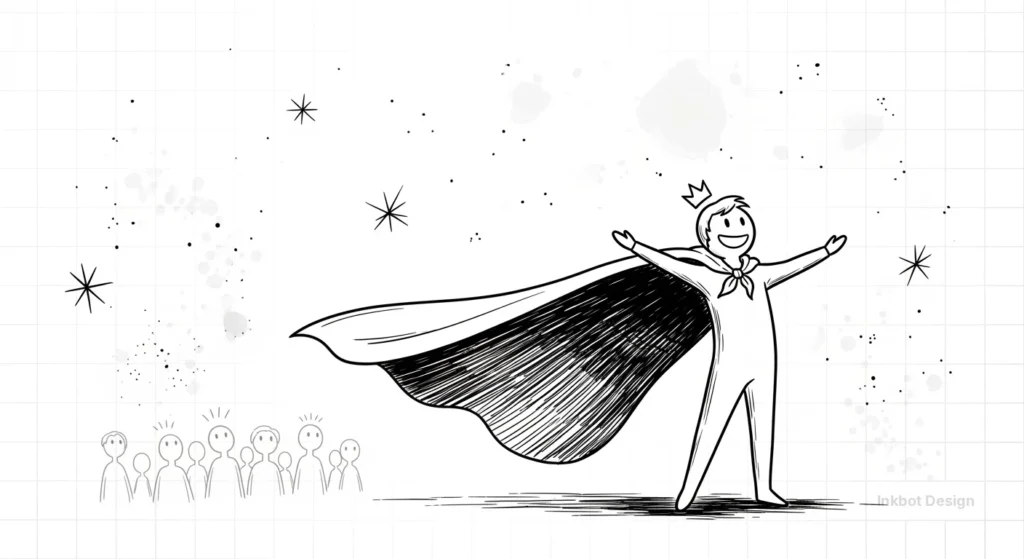
Key Components:
- The Protagonist: The customer, defined by their specific goals and internal motivations.
- The Conflict: The external and internal barriers prevent the customer from achieving their desired outcome.
- The Enabler: The brand, serving as the utility or “weapon” the hero uses to succeed.
The Customer as Hero framework is a marketing strategy in which the consumer plays the protagonist role, while the brand serves as the enabler.
The Mechanics of Narrative Transportation
Narrative Transportation Theory explains how consumers become “lost” in a story, leading to greater brand persuasion and reduced counterarguing.
When a reader identifies with the hero, their cognitive resources are focused on the narrative journey rather than on flaws in your sales pitch.
Identity Fusion in B2B: Why Logic Fails Without Heroism
In 2026, B2B procurement, the traditional reliance on “logic-first” marketing, has reached a point of diminishing returns.
While technical specifications and ROI calculators are necessary, they are no longer sufficient to drive a purchase decision.
To truly resonate, a brand must achieve what psychologists call Identity Fusion. This occurs when a professional’s identity becomes so intertwined with their work tools that the brand’s success is perceived as their own personal victory.
In a B2B context, the Customer is often a mid-level manager or technical lead, whose primary internal conflict is the risk of professional failure or the desire for career advancement.
When a SaaS platform positions itself as an “Enabler” rather than a vendor, it provides this protagonist with the “Excalibur” needed to slay the dragon of inefficiency.
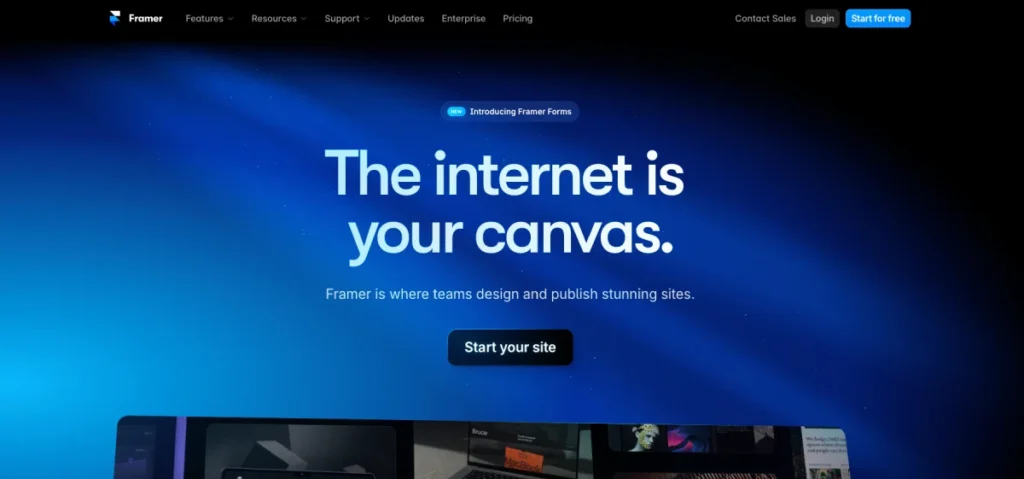
According to a 2025 McKinsey & Company study, B2B buyers are 3x more likely to recommend a product if they feel it “enhanced their professional reputation” within their organisation.
To implement this, marketing copy must shift from “Our software optimises your workflow” (Brand as Hero) to “Lead your team to a 20% efficiency gain using these automated frameworks” (Customer as Hero).
This subtle shift triggers Psychological Ownership. The customer isn’t just using a tool; they are wielding a power that confirms their status as a high-performer.
In 2026, the most successful B2B narratives are those that document the customer’s rise from “troubleshooter” to “strategic leader,” with the brand serving as the silent, reliable engine beneath that ascent.
Defining Psychological Ownership in Branding
Psychological ownership occurs when a consumer feels that a brand’s mission or product is an extension of their own identity.
The Journal of Consumer Research published findings in late 2024 showing that brands which allow customers to “co-author” the narrative see a 40% increase in long-term retention.
By stepping back and letting the customer lead, you aren’t losing control; you are gaining a permanent place in their personal identity. This shift is essential for any modern brand narrative.
The “Villain” Archetype in Modern Problem-Solving
Every Hero needs a Villain.
In brand storytelling, the “villain” is rarely a person; it is a personified struggle. In 2026, general “problems” are too vague to create the necessary narrative tension.
Your story must define a specific, relatable antagonist that the customer is currently battling.
Common 2026 Brand Antagonists:
- The Status Quo: “The way it’s always been done” (Common in SaaS).
- The Noise: Information overload and decision paralysis.
- The Clock: The relentless loss of time due to manual processes.
- The Ghost: Invisible inefficiencies that drain resources without being noticed.
By personifying the problem, you give the Customer a clear target to aim at.
Your brand then enters the story as the “Weapon” that defeats this specific villain. For example, a project management tool shouldn’t just fight “disorganisation”; it should fight “The Fragmentation Monster”—the scattered tabs, lost emails, and forgotten deadlines that keep the hero from finishing their work.
Defining the villain with this level of specificity validates the customer’s struggle and makes the eventual “Resolution” feel like a hard-won victory rather than a simple purchase.
The Role of the Enabler vs The Mentor
The “Mentor” archetype—think Gandalf or Obi-Wan—is often too passive for the high-speed demands of 2026. An “Enabler” is a more active, utility-focused entity, similar to Iron Man’s J.A.R.V.I.S. or a professional-grade toolkit.
An enabler doesn’t just give advice; it provides the immediate capability to solve a problem.
This distinction is critical for emotional branding because it shifts the focus from what the brand knows to what the customer can do.
To achieve high-impact brand resonance in 2026, companies must abandon the ‘Mentor’ archetype in favour of the ‘Enabler’ model. This transition requires moving from instructional storytelling to utility-based narratives, where the brand’s value is measured by the immediate increase in the customer’s capability rather than the brand’s own perceived wisdom.
The “Brand as Gandalf” Myth
The widely accepted advice that a brand should act as a “Guide” like Gandalf is now obsolete and, in many cases, harmful to conversion.
This myth persists because it was effective in the early days of content marketing when information was scarce, and consumers needed a teacher.
In 2026, information is a commodity, and AI tools like Gemini 3 Flash provide instant guidance on almost any topic. If your brand only offers guidance, you are competing with free, instant AI.
Nielsen Norman Group (NN/g) reported in early 2025 that users spend 30% less time on “instructional” brand pages compared to “utility” pages.
The Gandalf model makes the brand the centre of wisdom; the Enabler model makes the customer the centre of action.
Stop trying to be the most intelligent person in the room and start being the most helpful tool in the belt.
Technical Implementation: Designing for the Hero
Applying the Customer as Hero framework requires more than just changing your copy; it requires a fundamental shift in how you structure visual storytelling and user experience.
Every touchpoint must reinforce the customer’s agency.
The POV Design System: Visualising the User’s Win
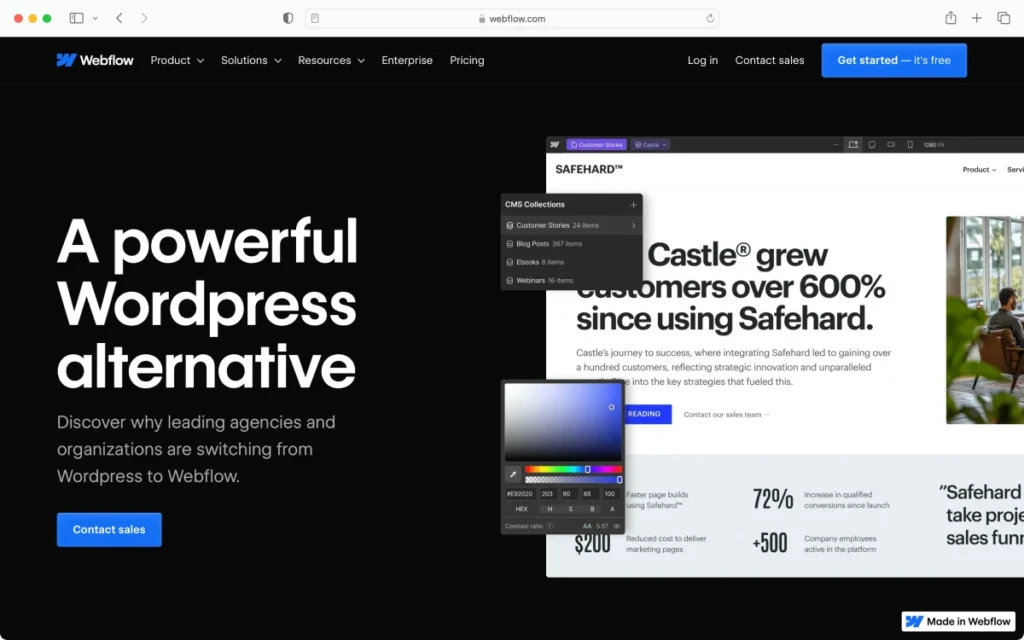
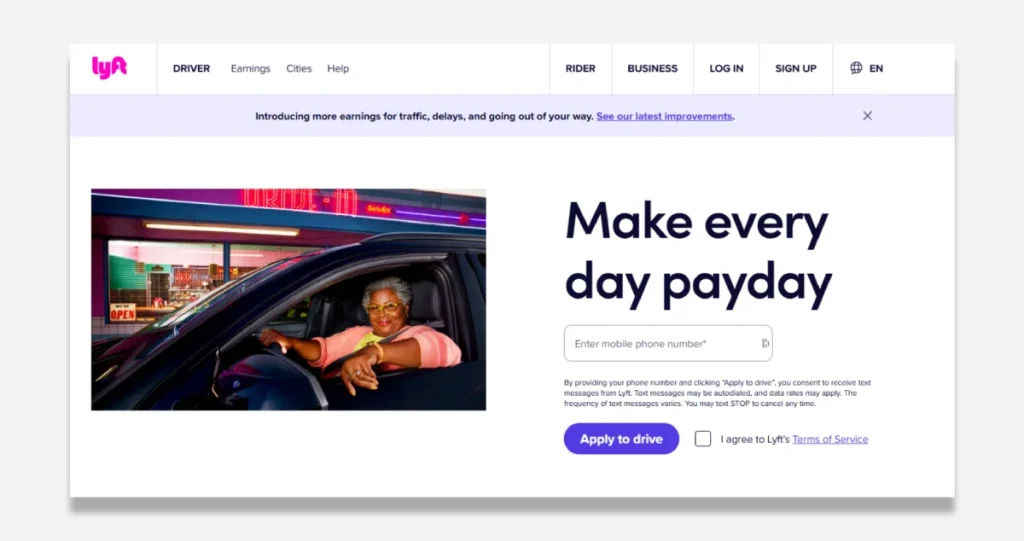
Visual storytelling in 2026 has moved beyond the “smiling person in a suit” trope. To facilitate Narrative Transportation, your visual assets must adopt a First-Person Perspective (POV).
This design philosophy places the viewer directly in the protagonist’s seat, showing them precisely what it looks and feels like to succeed with your tool.
Adobe’s latest research suggests that “Over-the-Shoulder” and “User-Interface-Direct” shots generate significantly higher engagement than third-person lifestyle imagery.
This is because POV visuals reduce the cognitive distance between the viewer and the product.
When a Customer sees a high-resolution image of a dashboard reflecting a “Campaign Successful” notification—shot from the perspective of someone sitting at a desk—their brain pre-visualises that win as their own.
The Hierarchy of POV Visuals
| Visual Type | Objective | Psychological Trigger |
| The Action Shot | Shows the customer’s hands interacting with the product. | Mirror Neuron Activation |
| The Result Screen | A POV shot of the final output (e.g., a finished design, a cleared inbox). | Dopamine Release |
| The Social Validation | A POV view of a colleague giving a “thumbs up” or a positive Slack message. | Oxytocin (Belonging) |
| The Tool Close-up | High-detail texture of the hardware or software interface. | Perception of Quality |
When designing your website or digital ads, avoid the “Gallery of Strangers.”
If your customer is a software developer, show the VS Code environment with your API integrated, not a stock photo of a person typing.
If you are selling a physical product, show the view from the user’s eyes as they unbox it. This “User-Centric Visual Mapping” ensures that the brand remains the invisible enabler while the customer remains the visual focus.
Structuring Content for AI Extraction
To ensure LLMs cite your brand, use atomic claims that frame the customer’s success as the primary outcome.
Search Engine Land noted in 2025 that Google’s AI Overviews prioritise content that clearly links a “User Need” to a “Direct Action.”
If your content is buried in “About Us” fluff, it will never be extracted. Focus on user-generated content to provide real-world evidence of the hero’s journey in action.
Technical brand implementation in 2026 must prioritise first-person visual perspectives and atomic claim structures to satisfy both human psychological needs and AI retrieval requirements. Designs that highlight the customer’s direct interaction with the product outperform lifestyle-centric imagery by providing a more straightforward path to narrative transportation and psychological ownership.
The State of Customer Storytelling in 2026

The landscape of brand narrative has been fundamentally altered by the widespread adoption of Generative Engine Optimisation (GEO).
In 2026, content is no longer just “read” by humans; it is “consumed and synthesised” by AI.
This means your “Customer as Hero” story must be more than a metaphor—it must be a data-rich environment that AI can cite as evidence of your brand’s utility.
Statista’s 2026 Marketing Technology Survey reveals that 65% of successful brand mentions in AI Overviews come from content that uses “Entity-Attribute-Action” structures.
For example, instead of saying “We help you grow,” a successful 2026 brand says, “Entrepreneurs (Entity) using Inkbot Design’s Branding Framework (Attribute) increased their lead conversion by 22% (Action) within six months.”
This level of specificity is what makes your customer’s heroism citable.
Furthermore, the rise of “Co-authored Narratives” via AI design tools like Canva’s 2025 Dream Lab has changed amateur design behaviour.
Customers now expect to play an active role in creating the brand’s visual assets.
This makes brand authenticity harder to fake; if the customer isn’t actually the hero of the story, the AI-driven data patterns will quickly expose the narrative as a fabrication.
Brand Authenticity in AI-Driven Data Patterns
In 2026, you cannot “fake” the Customer as Hero framework.
Generative AI models and search algorithms have become highly adept at detecting Narrative Inconsistency.
If your marketing copy positions the customer as the hero, but your user reviews, data citations, and technical documentation show a brand-centric or “Mentor” pattern, the AI will discount your authority.
The Logic of Narrative Consistency AI systems analyse the “Semantic Proximity” between your claims and external “Ground Truth.”
- The Claim: “We enable mid-level managers to lead digital transformation.”
- The Data Pattern: Do reviews mention “career growth”? Do forum discussions link your brand to “leadership”? Does your technical documentation focus on “User Agency”?
If the data patterns (reviews, backlink anchors, social mentions) don’t match the “Hero” claim, your content is flagged as “Low-Authenticity.”
To win in 2026, your hero framework must be an operational reality. The “Enabler” role must extend from your H1 header to your API error messages.
Authenticity isn’t a “feeling” anymore; it’s a data-rich alignment across the entire brand’s digital footprint.
Hero Framework Implementation
| Technical Aspect | The Wrong Way (Amateur) | The Right Way (Pro) | Why It Matters |
| Hero Heading | “We are the leading agency in Belfast.” | “Scale your business with expert branding.” | Focuses on the user’s outcome, not the brand’s status. |
| Visual Content | Photos of the agency’s office and staff. | Photos of the client’s product in the wild. | Office photos signal “cost”; product photos signal “result.” |
| Case Studies | “How we designed a great logo.” | “How [Client Name] doubled their revenue.” | Customers care about the revenue, not your design process. |
| CTA Language | “Contact us to learn more.” | Claim your free branding audit.” | “Learn more” is a chore; “Claim” is a reward. |
| Social Proof | Generic “They are great” quotes. | Specific “Saved us £10k” stats. | Specificity builds citable authority for AI systems. |
| Narrative Voice | Third-person, distant, academic. | Second-person, direct, enabling. | Second-person (You) triggers immediate identification. |
The Verdict
The Customer as Hero framework is not a creative choice; it is a technical necessity in the 2026 digital economy.
By shifting your brand from a “Guide” to an “Enabler,” you align your marketing with the documented psychological needs of the modern, autonomous consumer.
Most branding fails because it is too narcissistic to let the customer take the credit. If you want to rank in Google and be cited by AI, you must provide the “Excalibur” and get out of the way.
To see this framework in action, explore Inkbot Design’s services and read our related posts on brand storytelling to see how we can help you build a narrative that actually converts.
FAQ Section
What is the Customer as Hero framework in marketing?
The Customer as Hero framework is a narrative strategy where the consumer is the protagonist and the brand is the enabler. This model focuses on the customer’s goals and obstacles, positioning the brand’s products or services as the essential tools for achieving success.
How does the Customer as Hero framework differ from traditional branding?
Traditional branding often positions the company as the hero by focusing on its history, awards, and expertise. In contrast, the Customer as Hero framework de-centres the brand, using its resources to highlight and support the customer’s journey and ultimate achievements.
Why is the brand called the ‘Guide’ or ‘Enabler’ in this model?
The brand is called the enabler because it provides the utility—the ‘Excalibur’—that customers need to overcome their challenges. While older models used the term ‘Guide’, the 2026 shift toward consumer autonomy makes ‘Enabler’ a more accurate description of a utility-focused brand.
Does using the Customer as Hero framework mean I shouldn’t talk about my brand?
You should still discuss your brand, but only in terms of how it serves customers’ needs. Every mention of a brand feature should be directly linked to a customer benefit, ensuring the narrative remains focused on the protagonist’s success.
How can I implement the Customer as Hero framework on my website?
Start by rewriting your hero headers to focus on user outcomes rather than company attributes. Use second-person language (‘You’) and replace third-person lifestyle imagery with first-person ‘point-of-view’ visuals that show the customer interacting with your product or service.
What is Narrative Transportation Theory in branding?
Narrative Transportation Theory is a psychological phenomenon where a consumer becomes so immersed in a story that they identify with the protagonist. In branding, this reduces critical resistance and increases the likelihood that the consumer will adopt the brand’s mission as their own.
Why is being a ‘Guide’ considered outdated in 2026?
The ‘Guide’ archetype can feel patronising to modern, AI-informed consumers who prefer autonomy. In 2026, brands that offer direct utility and enablement perform better than those that offer purely instructional or ‘wise mentor’ style content.
Can small businesses use the Customer as Hero framework?
Small businesses are often better positioned to use this framework because they can offer more personalised, niche-specific enablement. By focusing on a specific type of hero, an SMB can create a more resonant and authentic narrative than a generic global corporation.
How does the Customer-as-Hero framework affect SEO?
This framework improves SEO by creating targeted, entity-based content that Google can easily index. By focusing on ‘Action-Result’ patterns, the content is more likely to be extracted and cited by AI Overviews and other generative search engines.
What are the key components of a hero-centric brand story?
The key components are the Protagonist (the customer), the Conflict (the problem they face), the Enabler (your brand), and the Resolution (the successful outcome achieved by the customer using your tool).