Brand Naming Trademark Strategy: Defensibility Beats Memorability
Most naming advice optimises for memorability first and legal clearance last – the wrong order for any business preparing to scale, raise, or sell. Brand naming trademark strategy inverts this: trademark defensibility should gate every other naming decision, because a name that can’t be owned can’t be protected, licensed, or defended.
 By Stuart Crawford
 Reviewed by Tabitha Ayers
Updated 14 min read
On this page14 min left
- What Is Brand Naming Trademark Strategy?
- Why This Matters for CEOs and MDs Preparing a Strategic Rebrand
- The Anatomy of a Defensible Name
- How Trademark Clearance Actually Works
- Why Descriptive Names Fail the Defensibility Test
- Where Professional Services Firms Get Naming Wrong
- Applying This to a Rebrand Ahead of Acquisition
- Trademark Strength Should Lead the Naming Process, Not Follow It
- Where This Stands Now
- The Verdict
- Frequently asked questions
A trademark examiner does not care how much your board loves the name.
The United States Patent and Trademark Office processed 103,730 first action trademark classes in March 2026 alone – the first month it has ever exceeded 100,000 in a single month – and every one of those decisions turned on legal distinctiveness, not creative appeal. That is the reality most naming advice ignores.
Brand naming trademark strategy, done properly, treats a name as a legal asset first and a creative asset second.
Most agencies run this backwards: they generate a shortlist on memorability and domain availability, fall in love with a favourite, then discover during clearance that the name is unregistrable, already contested, or too descriptive to enforce.
For a brand naming agency advising CEOs and MDs preparing a rebrand ahead of growth, acquisition, or repositioning, that sequencing error is the single most expensive mistake in the entire process – because by the time it surfaces, the name is already on the website, the signage, and the pitch deck.
What Is Brand Naming Trademark Strategy?
Brand naming trademark strategy is the practice of screening candidate brand names for legal registrability and enforceability before testing them on memorability, meaning, or market appeal.

It reverses the conventional creative-first naming process by making trademark clearance the first filter a name must pass, not the last.
- A name only becomes a business asset once it can be registered, defended, and owned outright.
- Descriptive or generic names are the hardest to protect, regardless of how well they test with focus groups.
- Clearance searches should happen at the shortlist stage, not after a name has already been selected and briefed to designers.
Brand naming trademark strategy exists because a name that cannot survive trademark clearance is not a branding decision at all – it is an unresolved legal risk wearing a logo.
Why This Matters for CEOs and MDs Preparing a Strategic Rebrand
A rebrand ahead of an acquisition, funding round, or market expansion puts the brand name directly under legal scrutiny in a way ordinary brand refreshes never face. Due diligence teams check trademark registration status as a matter of course.
An unclear or unregistered name does not just look unprofessional in a data room – it becomes a warranty issue, a valuation discount, or a condition precedent that delays completion.
David Placek, founder of Lexicon Branding – the naming agency behind BlackBerry, Swiffer, and the 2021 rename of TripActions to Navan – has built a naming practice around exactly this discipline.
Lexicon checks candidate names across 10 to 25 languages, and tests sound symbolism before a name is finalised, according to reporting in Forbes (2023).
The firm's renaming of TripActions to Navan was not a creative exercise for its own sake; the company was, by that point, valued at over $9 billion and needed a name it could own cleanly across markets as it scaled.

Nothing will be used more often or for a longer period of time than your brand name. – David Placek, Founder, Lexicon Branding
That single line captures the commercial stakes precisely.
A logo can be redrawn in an afternoon.
A name that has to be abandoned mid-scale-up costs months of legal work, a full re-registration cycle, and all collateral, signage, and search equity built under the old mark.
The Anatomy of a Defensible Name
Naming decisions collapse when a single filter – usually “does it sound good?” – is asked to do the work of four separate, independent tests.
A name must meet all four criteria to function as a business asset. For the fuller version of this framework, see Inkbot Design's guide to brand naming strategy.
Strategic Fit: Does the Name Support the Positioning?
A name earns its place in a brand system only if it reinforces the position the business is trying to hold in the market.
A management consultancy repositioning around specialist sector expertise gains nothing from a broad, generic name that could apply to any advisory firm.
Strategic fit asks a narrow question: Does this name make the intended positioning easier to state, or harder? If a prospect has to be told what the name means before they understand what the firm does, strategic fit has already failed.
Linguistic Fit: Does It Sound Right and Travel Well?
Linguistic fit covers pronunciation, spelling recall, and cross-market clarity – the mechanics Lexicon Branding tests across 10 to 25 languages before finalising a name, per Forbes' 2023 reporting on the agency's process.
A UK professional services firm expanding into the US or EU markets needs a name that does not require correction on a first phone call.
This is a real cost, not a stylistic preference: every mispronunciation or misspelling is a small tax on referral and recall.
Commercial Fit: Can It Work Across Channels and Future Products?
A name selected for one service line becomes a constraint the moment the business adds a second service line.
Commercial fit asks whether the name can stretch to cover future offerings without becoming misleading or diluted.
This matters more, not less, at the 50–200-employee stage, where the next five years typically involve either a new service line, a geographic expansion, or an acquisition that must be absorbed under a single brand.
Legal Fit: Can It Be Cleared, Registered, and Defended?
Legal fit is the filter every other one depends on, and the one most naming processes address last.
A name that fails legal fit invalidates strategic, linguistic, and commercial fit simultaneously – none of that work survives an inability to register and enforce the mark.
This is why brand naming trademark strategy insists on running legal fit first, not fourth.
Firms building out a full naming shortlist can review the structured version of this sequencing in Inkbot Design's brand naming frameworks guide.
How Trademark Clearance Actually Works
Clearance is a two-stage process, and most naming shortlists never get past the first stage before a name is already in circulation internally.
The Knockout Search
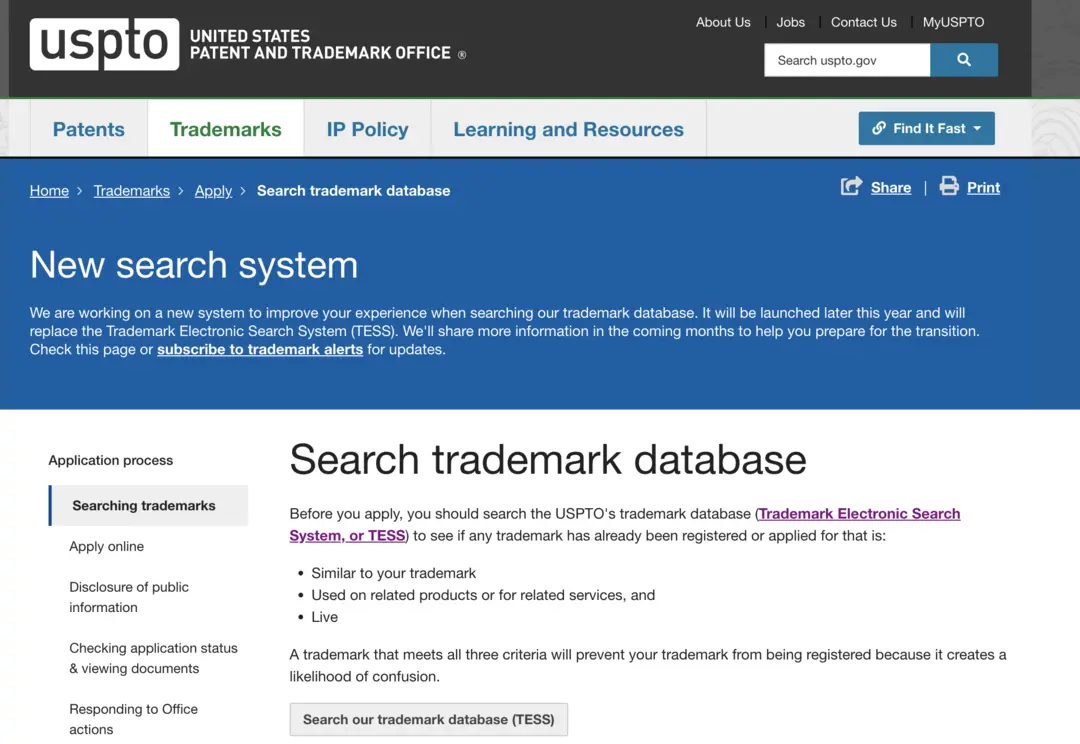
A knockout search is a fast, low-cost check against existing registered trademarks in the relevant classes and jurisdictions. It exists to eliminate names with obvious conflicts before any legal spend goes into a full search.
Skipping this step is how businesses end up presenting a shortlist to the board that contains a name already registered by a competitor two classes over.
The Full Clearance Search
A full search goes further: common-law use, domain history, similar marks that could cause confusion even without identical wording, and international filings if the business operates or plans to operate across borders.
This is where genuinely defensible names separate from merely available ones.
A name can pass a knockout search and still fail a full search once a trademark attorney assesses the likelihood of confusion with an existing mark that never showed up in the basic database check.
A name that survives a knockout search but not a full search has not been cleared – it has simply not yet been challenged.
Why Descriptive Names Fail the Defensibility Test
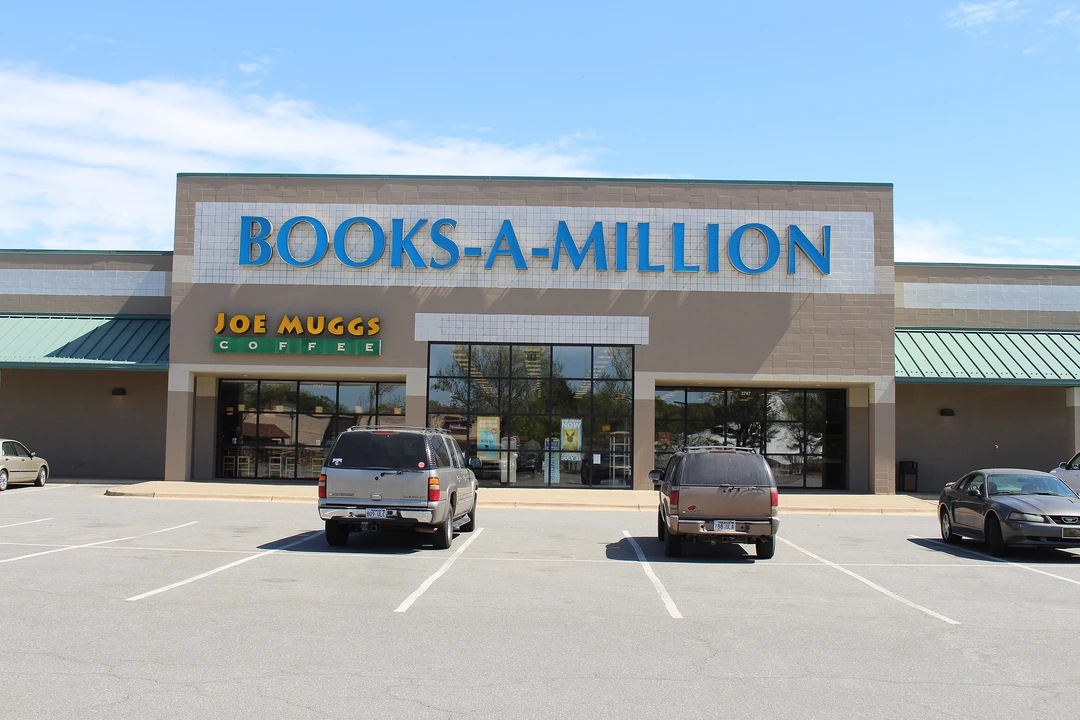
The naming instinct that feels safest – choosing a name that plainly describes what the business does – is frequently the least defensible choice available.
Descriptive marks receive the weakest trademark protection because trademark law exists to prevent one business from monopolising language that other businesses need to describe their own services.
“Northern Tax Advisory” tells a prospect exactly what the firm does. It also gives the firm almost no legal ground to stop a competitor called “Northern Tax Advisers” from operating two streets away.
The clearest illustration of what happens when a name becomes too useful as ordinary language is genericide – a trademark's collapse into generic vocabulary through overuse.
“Dumpster,” originally the Dempster Brothers' branded trademark for their wheeled trash hauliers, is a widely cited case of a company losing exclusive control of its own name once the public adopted it as the generic term for the product category.
Aspirin and the yo-yo followed a similar path. A name too close to the product category is not just weak – it is structurally vulnerable to losing legal protection entirely as the business succeeds.
Where Professional Services Firms Get Naming Wrong
The recurring failure is not creative laziness. It is sequencing.
Firms run a full creative process – workshops, shortlists, stakeholder votes – and only commission a trademark search once a name has already gathered internal momentum.
By that point, the search is not a filter; it is a formality nobody wants to fail. Partners have seen the name on a mock-up.
Marketing has been briefed on the domain purchase. The legal check arrives too late to change the outcome without an uncomfortable conversation.
The second common error is treating “no exact match on Companies House” as equivalent to trademark clearance.
Company name registration and trademark registration are governed by entirely different tests, and a name can be perfectly available to incorporate while being unregistrable, or already infringing, as a trademark.
This confusion is common enough among first-time rebranders that it deserves stating plainly: passing company registration proves nothing about trademark defensibility.
Applying This to a Rebrand Ahead of Acquisition
Consider a 90-employee accountancy and advisory firm preparing a rebrand twelve months ahead of a planned sale process.
The commercial logic for rebranding is sound – the existing name reads as generalist, and the firm wants to position around a specific advisory niche before entering due diligence.
Run through the four-filter sequence in the correct order, legal fit first, the process looks like this: a knockout search eliminates roughly half the creative shortlist immediately, most on the grounds of close conflicts in the relevant trademark classes.
A full search on the surviving names identifies one candidate with a minor but real confusion risk against an existing regional competitor's unregistered common-law mark – invisible to a knockout search, caught only because the full search checked common-law use, not just registered marks.
That leaves a smaller shortlist, but every remaining name can be registered cleanly and stated as owned IP in the eventual data room, with no last-minute legal caveat to disclose to a buyer's due diligence team.
Run the same process backwards – creative shortlist first, legal search after a name is chosen – and the firm risks discovering the confusion conflict after the name is already live on letterheads, engagement terms, and the website eighteen months before completion.
Renaming mid-sales process, under time pressure, with a buyer watching, is a materially worse position than losing half of a shortlist in month one.
Trademark Strength Should Lead the Naming Process, Not Follow It

The prevailing view in most branding content treats naming as a blend of creativity, memorability, and domain availability, with legal clearance positioned as a final due diligence step before launch.
That view is not unreasonable – creative distinctiveness genuinely does drive recall, and most naming projects have a limited budget for early-stage legal work.
Intelligent practitioners hold this view because, most of the time, it works: most names never face a serious opposition, and the cost of running full legal clearance on every candidate in a large shortlist is real.
The sharper argument, though, is that trademark strength should lead the process, specifically because the businesses running rebrands ahead of a growth phase, an acquisition, or a repositioning are precisely the businesses for whom “most of the time” is not good enough.
USPTO data for the first half of FY2026 shows 431,734 trademark application classes received, up 7% on the same period in FY2025, alongside 83,577 new application classes filed in March 2026 – the fifth-highest filing month on record and the highest since April 2021.
A more crowded filing environment means a higher baseline probability of conflict on any given descriptive or common name, which shifts the expected cost of skipping early clearance upward for every business, not just the unlucky ones.
The replacement directive is straightforward: run a knockout search on every name before it reaches a creative shortlist review, not after.
It costs a fraction of a full legal search, eliminates the names most likely to fail later, and prevents the business from becoming emotionally attached to a name it ultimately cannot own.
Where This Stands Now
Trademark systems are processing more filings, faster, at the front end – which raises rather than lowers the clearance stakes for any name entering the pipeline in 2026.
The USPTO confirmed that trademark filings held strong through the first half of FY2026, with 431,734 classes received, up from 403,353 in the equivalent period of FY2025, a 7% increase.
In March 2026, examiners processed 103,730 first action classes, marking the first time monthly production has exceeded 100,000 classes. The same month brought 83,577 new application classes, the fifth-highest filing month on record.
Higher filing volume does not simply mean more competition for names – it means more precedent, more registered marks occupying adjacent linguistic territory, and a shrinking pool of genuinely uncontested descriptive terms in any given sector.
For a business selecting a name in 2026, this makes the case for defensibility-first naming stronger than it was even two years ago, not weaker.
A weak or generic name is a worse strategic bet today than the same name would have been in a less crowded filing environment.
In seventeen years of brand identity work across professional services firms in the UK and internationally, the pattern that recurs most often is a business that fell in love with a name during the creative phase and only discovered its legal exposure once launch was already scheduled.
The Verdict
A name is not a creative deliverable.
It is the single asset a business will use more consistently, for longer, and across more contexts than any other piece of its brand system – which is exactly why legal ownership has to be established before creative or commercial testing begins, not after.
The two objections that surface most quickly among experienced operators are worth addressing directly.
- First: “legal clearance costs money we don't need to spend on every candidate.” True for a knockout search, which is cheap and fast – the objection only holds against running full legal clearance on an entire long-list, which nobody is proposing.
- Second: “We've never had a problem with our current name.” That is a description of past luck in a less-crowded filing environment, not evidence that the same approach carries the same risk in 2026, with filing volumes up 7% year-on-year and examiners processing a record monthly volume.
The single most useful reframe in this article is this: treat trademark defensibility as the first filter a candidate name has to pass, not the last box to tick before launch.
A name too descriptive to defend is not a safe choice – it is a liability sitting quietly inside a brand system, waiting for the moment a competitor, an acquirer's due diligence team, or a trademark examiner notices it first.
For a CEO or MD approaching a rebrand ahead of growth, acquisition, or repositioning, the next step is not another naming workshop.
It is a structured Brand Equity Audit – a diagnostic that identifies exactly where the current brand, including its name, is losing commercial ground, and what a defensible replacement needs to achieve before a single creative concept is briefed.
Frequently asked questions
What is a brand naming trademark strategy?
Brand naming trademark strategy is the practice of screening candidate brand names for legal registrability before testing them on memorability or market appeal, making trademark clearance the first filter rather than the last step before launch.
Why does trademark defensibility matter more than memorability?
A memorable name that cannot be legally owned offers no protection against competitors adopting similar names. Defensibility determines whether a business can actually stop confusion in the market – memorability alone provides no legal recourse.
What's the difference between a knockout search and a full clearance search?
A knockout search is a fast, low-cost check against registered trademarks to eliminate obvious conflicts. A full clearance search adds common-law use, domain history, and confusion risk assessment, and is the step that genuinely determines defensibility.
Is it true that a descriptive business name is always a bad choice?
No – descriptive names can work for smaller, locally focused businesses with limited expansion plans. For firms preparing to scale, raise funding, or pursue an acquisition, descriptive names carry a higher risk of confusion and genericide and are generally weaker legal assets.
When should trademark clearance happen in the naming process?
Trademark clearance, at a minimum, a knockout search, should happen before a shortlist reaches stakeholder review, not after a name has been selected. Running clearance last means the business has already built emotional and financial commitment to a name that may be unregistrable.
How is company name registration different from trademark registration?
Company name registration (e.g., with Companies House in the UK) confirms that a name is available for incorporation. Trademark registration is a separate legal process governing brand protection. Passing one does not confirm eligibility for the other.
What is genericide, and why does it matter for naming?
Genericide occurs when a trademark becomes the generic term for its product category, losing legal protection as a result – “dumpster,” originally a branded trademark, is a widely cited example. Names too close to their product category carry an elevated risk of genericide.
Should a business rebrand before or after an acquisition process begins?
Rebranding before due diligence begins allows legal issues to surface and be resolved while there is time to act. Rebranding during an active acquisition process risks discovering clearance problems under time pressure, with a buyer's due diligence team watching.
Why did USPTO trademark filing data increase in 2026?
The USPTO reported 431,734 trademark application classes received through the first half of FY2026, up 7% year-on-year, alongside record monthly examination volumes – reflecting sustained demand for new brand registrations across sectors.
Can a name pass a knockout search and still fail clearance later?
Yes – a knockout search only checks registered trademark databases. Common-law use, unregistered marks, and confusion risk from similar names are only identified in a full clearance search, which is why passing a knockout search alone does not confirm a name is safe.
What are the four filters a defensible brand name needs to pass?
Strategic fit (supports positioning), linguistic fit (sounds right, travels well), commercial fit (works across channels and future products), and legal fit (can be cleared, registered, and defended) – with legal fit determining whether the other three matter at all.
Is a longer or more invented name more defensible than a short, common one?
Generally yes. Longer, more distinctive, or coined names are harder for competitors to argue confusion around and easier to register cleanly, even though short, common names often look more “premium” at the creative stage.