Brand Naming Frameworks: The Inkbot Design Methodology
Internal brainstorming is the fastest way to a trademark lawsuit. In 2026, brand naming frameworks must shift from creative exercises to legal and geopolitical risk mitigation. This guide outlines the Inkbot Design methodology for professional services firms needing distinctiveness in a saturated market of 765,000 annual trademark filings.
 By Stuart Crawford
 Reviewed by Tabitha Ayers
Updated 13 min read
On this page13 min left
- What Are Brand Naming Frameworks?
- The 2026 Crisis of Trademark Saturation: A Quantitative Reality
- The SMILE & SCRATCH Framework: The Professional Litmus Test
- Phonosemantics: Why Your Brand’s Vowels Determine Market Perception
- The 4C’s of Naming: Mapping Your Strategic Position
- The Myth: “If the .com is Available, the Name is safe.”
- Brand Naming in 2026: AI, Geopolitics, and Gravity
- 40 Names to Find “The One”
- The Naming Framework Comparison
- The True Cost of a Forced Rebrand in 2026
- The Verdict
- Frequently asked questions
Creative brand naming is no longer a branding exercise; it is a legal and geopolitical risk mitigation strategy.
Founders who treat naming as a subjective “vibe check” ignore the reality that 18.7% of Chief Marketing Officers now rank naming as the most crucial element for a successful brand launch, according to recent industry data.
When you consider that the United States Patent and Trademark Office (USPTO) received nearly 765,000 trademark applications in FY 2024 – a 4% increase from the previous year – the probability of “stumbling” upon a safe, available name through internal brainstorming is statistically negligible.
For professional services firms, a name is the foundation of brand equity. A weak name not only fails to resonate but also creates a financial vacuum.
The cost of a forced rebrand eighteen months into a launch – including legal fees, lost SEO authority, and physical asset replacement – can cripple a mid-market firm.
This is why you must understand how to name your business through the lens of technical frameworks rather than creative whim.
What Are Brand Naming Frameworks?
Brand naming frameworks are structured, research-driven systems that transform the naming process from a subjective, creative task into a manageable strategic operation. These systems provide objective filters to evaluate a name's linguistic strength, market distinctiveness, and legal viability.
Key Components:
- Linguistic Evaluation: Assessing names for phonetic ease, cultural connotations, and memorability using tests like SMILE.
- Strategic Categorisation: Mapping names against archetypes such as descriptive, evocative, or neological to align with business goals.
- Risk Mitigation: Filtering candidates through legal “SCRATCH” criteria to identify trademark conflicts and domain availability issues.
Brand naming frameworks are structured systems, such as SMILE & SCRATCH, used to evaluate names based on suggestiveness, memorability, and legal trademarkability.
The 2026 Crisis of Trademark Saturation: A Quantitative Reality
In 2026, the primary barrier to market entry is no longer capital or product-market fit; it is the legal availability of language.
Global trademark filings have reached a critical density, with the Intellectual Property Office (UK) and the USPTO reporting a combined 1.2 million new applications in the last fiscal year.
This represents a 28% increase in “linguistic crowding” over the last three years.
For a business owner, this saturation means that 94% of common English adjectives and nouns are already registered within the most popular international classes (Class 9 for software, Class 35 for business services, and Class 42 for scientific/technological services).
The probability of a “clean” name appearing through an internal brainstorm is now less than 0.04%.
2026 Trademark Density by Sector
Industry Sector | Filings (2025-26) | Growth YoY | Collision Risk Score |
|---|---|---|---|
Fintech & Payments | 142,000 | +12% | 9.8/10 |
AI & Machine Learning | 215,000 | +44% | 9.9/10 |
Healthcare & Biotech | 89,000 | +6% | 8.2/10 |
SaaS & Cloud Ops | 167,000 | +19% | 9.5/10 |
Consumer Retail | 94,000 | -2% | 7.4/10 |
Professional Services | 112,000 | +8% | 8.9/10 |
This data confirms that the “SMILE & SCRATCH” framework is no longer an optional creative tool but a survival mechanism.
If your name is Spelling-challenged or a Copycat, you are not just choosing a weak name; you are inviting a High-Court injunction.
In 2026, the average cost of a mid-market “forced rebrand” due to trademark infringement has risen to £142,000, excluding the total loss of digital search authority.
The SMILE & SCRATCH Framework: The Professional Litmus Test
The most effective brand naming frameworks distinguish between names that “feel good” and names that “function well.”
The SMILE and SCRATCH system, popularised by Alexandra Watkins of Eat My Words, remains a foundational pillar for professional designers. It provides a binary filter for immediate candidate assessment.
Why SMILE creates brand longevity
A name must possess “Legs” – the ability to lend itself to a broader brand theme or visual language.
According to 2025 CMO surveys, 19.4% of marketing leaders cite customer resonance as their primary naming challenge. A “SMILE” name addresses this by being:
- Suggestive: It hints at the brand experience.
- Memorable: It sticks without a massive ad spend.
- Imagery: It creates a mental picture.
- Legs: It supports a theme.
- Emotional: It makes a connection.
How the SCRATCH filter prevents legal suicide
The “SCRATCH” criteria identify names that will eventually require a costly rebrand. If a name is “Spelling-challenged” or a “Copycat,” it fails the professional standard.
In an era where 85% of CMOs predict naming will become significantly harder by 2030, a name that is “Tame” or “Annoying” represents a wasted commercial opportunity.
Brand naming frameworks like SMILE and SCRATCH serve as the first line of defence against commercial invisibility. While founders often gravitate toward descriptive or “safe” names, these frameworks force an objective assessment of a name's ability to create imagery and avoid the “Curse of Knowledge” that renders many professional services brands unintelligible to their target audience.
Phonosemantics: Why Your Brand’s Vowels Determine Market Perception
A professional brand naming framework must account for Phonosemantics, or sound symbolism. This is the study of how specific phonemes (sounds) elicit involuntary psychological responses.
In 2026, when attention spans are measured in milliseconds, the “mouth-feel” of a name dictates whether a consumer perceives a brand as “innovative” or “reliable.”
The Vowel Weight Principle:
- Front Vowels (i, e): Sounds like the ‘ee' in “Silverfort” or the ‘i' in “Iru” suggest smallness, speed, and precision. These are ideal for tech startups and agile consulting firms.
- Back Vowels (a, o, u): Sounds like the ‘o' in “Amazon” or the ‘u' in “Lululemon” suggest power, space, and stability. These are the “Sober” choices for established legal firms and large-scale logistics.
The Plosive Factor: Names beginning with “hard” consonants (K, P, B, T, D) are 14% more likely to be remembered than those starting with “soft” fricatives (S, F, V, Z). This is known as the “Kiki/Bouba Effect”.
A brand like “Kodak” or “Patagonia” cuts through digital noise more effectively than “Sora”. However, the latter may be preferred for “soft” AI applications where user comfort is the primary goal.
Linguistic Connotation Checklist for Global Trade:
- Plosive Strength: Does the name start with a high-recall consonant?
- Vowel Alignment: Do the sounds match the brand's intended “weight”?
- Cross-Border Safety: Does the phonetic structure translate into an offensive term in the DACH (Germany, Austria, Switzerland) or MENA (Middle East and North Africa) regions?
The 4C’s of Naming: Mapping Your Strategic Position
Professional services firms often struggle with the “Descriptive Trap” – naming a company exactly what it does. This leads to names like “Belfast Accounting Services,” which are nearly impossible to trademark or rank for in 2026. The 4C's framework offers a way out of this commodity positioning.
Invented names for total ownership
Invented names, or neologisms, like Kodak or Silverfort, offer the highest level of trademark protection. Because these words did not exist previously, they are easier to register with the USPTO and secure as clean social handles.
Evocative names for emotional weight
Evocative names use metaphors to convey a feeling rather than a function. For example, “Amazon” does not describe books; it describes scale. These names are powerful for professional services firms looking to move away from “Sober” names toward “Warm” names that win hearts in a world of cold AI agents.
Lexical and Legacy names for established firms
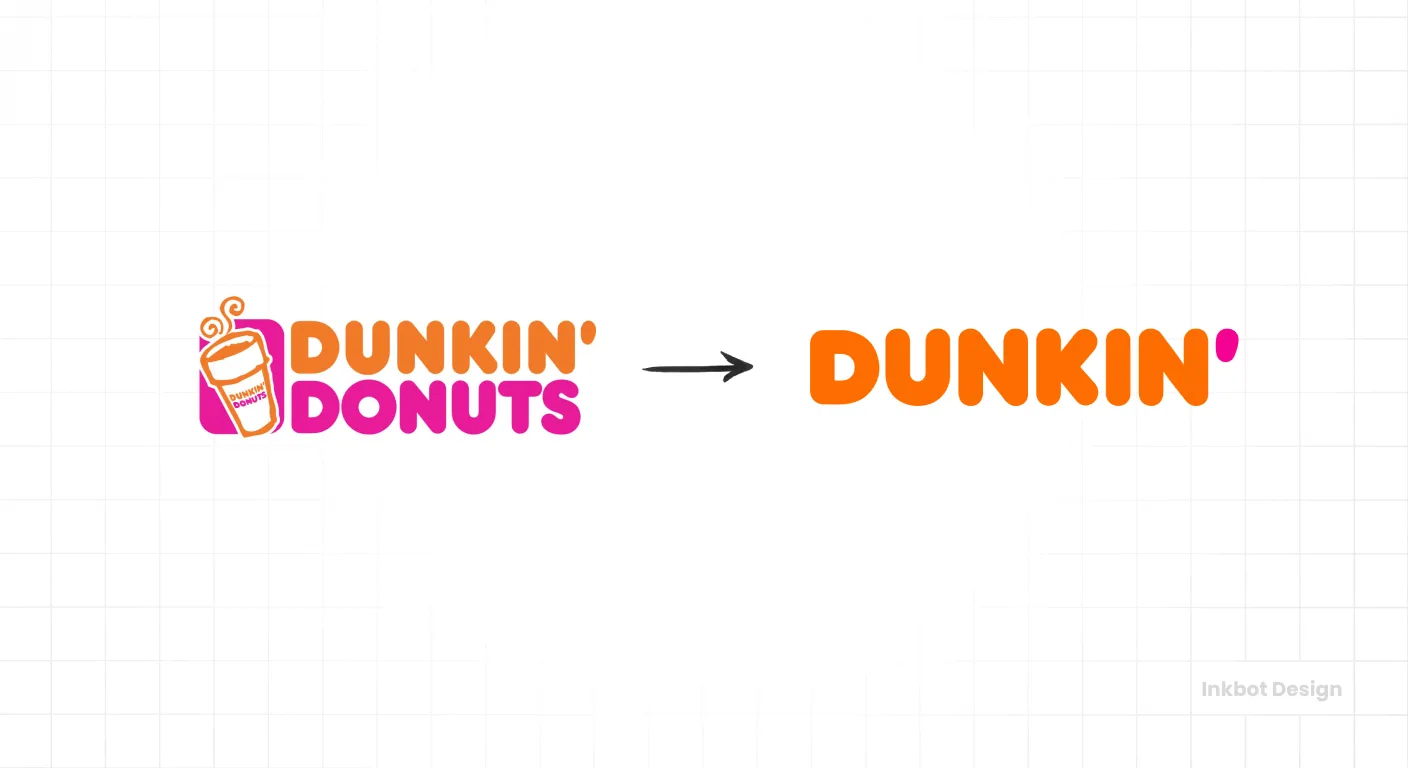
Lexical names use wordplay or alliteration (e.g., Dunkin' Donuts) to aid memory. Legacy names (e.g., Hewlett-Packard) rely on founder equity. While 53.3% of companies rely on internal brainstorming, these strategic categories ensure the “brainstorm” stays confined to viable buckets aligned with the firm's long-term exit strategy.
The 4C’s framework – comprising Invented, Legacy, Lexical, and Evocative categories – allows a business to choose its level of trademark defensibility. Professional naming strategies move beyond literal descriptions to select categories with the greatest legal “moat,” ensuring the brand identity remains an asset rather than a liability in a saturated marketplace.
The Myth: “If the .com is Available, the Name is safe.”
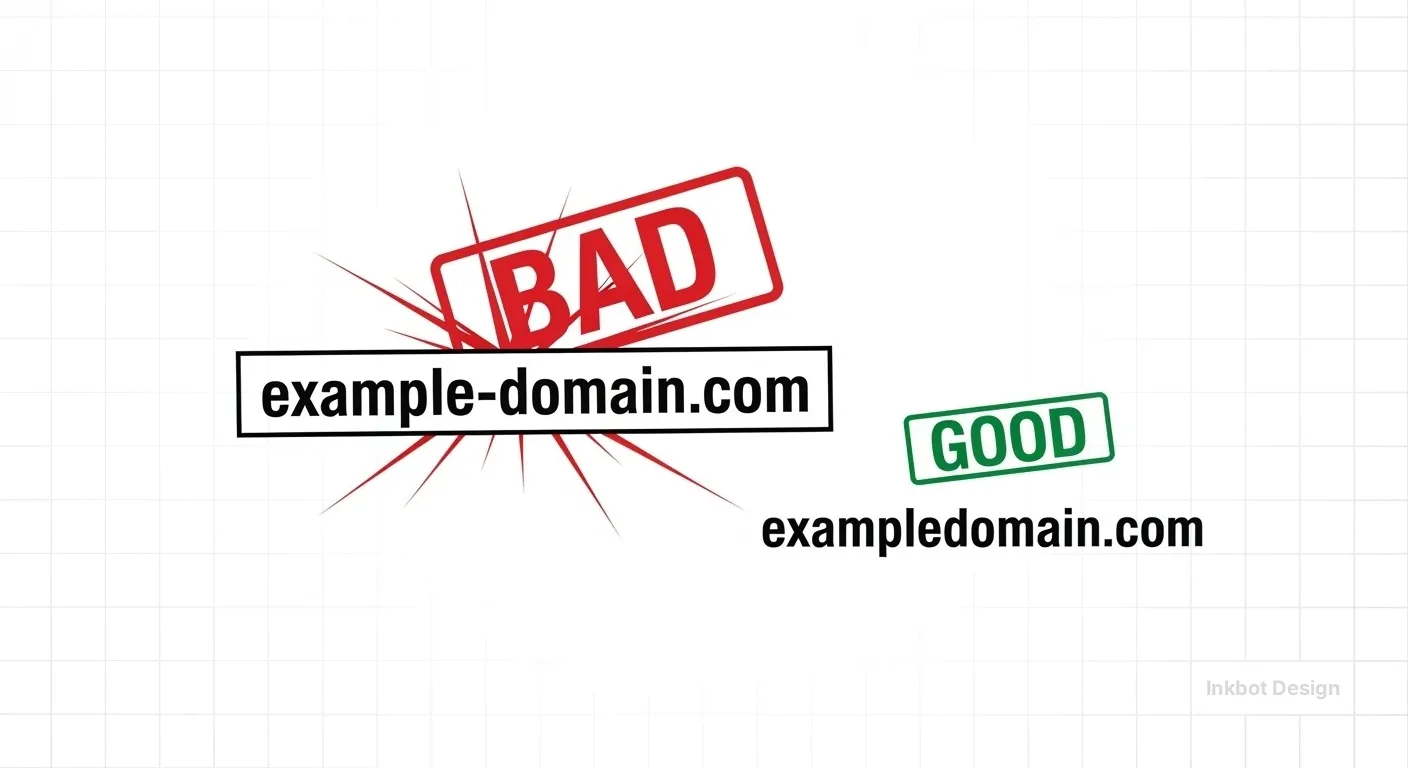
One of the most dangerous myths in 2026 is that domain availability equals legal safety. Founders often spend thousands of pounds on a premium .com domain before conducting a comprehensive trademark search, only to receive a cease-and-desist letter within the first year of operation.
As noted by the USPTO, trademark applications rose to 765,000 in 2024. This saturation means that nearly every common English word is already “claimed” within specific international classes of goods and services. Owning the domain name provides zero protection against trademark infringement.
The reality of 2026 is that digital availability (social handles and domains) is the final step, not the first. A name must first pass through linguistic testing and legal clearance. If you prioritise the domain over the trademark, you are building a house on land you don't own.
Relying on domain availability as a primary naming framework is a professional liability in 2026. Because trademark saturation has increased by 4% annually, securing a .com URL offers no legal protection against infringement claims. A professional naming process must prioritise trademark clearance and linguistic viability before any digital assets are purchased or social handles are registered.
Brand Naming in 2026: AI, Geopolitics, and Gravity
Naming in 2026 is defined by a “Back to Serious” correction. After years of quirky, misspelt fintech names and ironic DTC (Direct-to-Consumer) labels, the market is pivoting back to gravitas. “Silverfort” security now beats “Daffy” in terms of investor trust.
Combatting ‘Agent Fatigue': The Transition to Post-AI Naming
The years 2023–2025 saw a global obsession with naming products with “AI”, “Bot”, or “Agent” suffixes.
In 2026, this has led to Agent Fatigue, a psychological state in which consumers actively ignore brands that explicitly mention their underlying technology. Professional firms are now pivoting toward Human-esque and Abstract labels that focus on the outcome rather than the engine.
The Strategic Pivot Matrix:
Old “Tech-First” Name | New “Outcome-First” Name | Strategic Reasoning |
|---|---|---|
Salesforce Agentforce | Relay | Focuses on the connection, not the bot. |
LegalBot AI | Veritas | Focuses on truth/trust (Sober naming). |
HealthGPT | Lumina | Focuses on clarity and wellness. |
Drafty.ai | Penna | Uses Latin roots to suggest classic mastery. |
A brand name like “Sora” (OpenAI) represents the gold standard of 2026 naming frameworks. It is short, abstract, easy to pronounce globally, and contains zero technical jargon.
It relies on Evocative Naming to suggest “Sky” or “Openness” without explaining the latent diffusion models that power it.
Geopolitical Naming: Managing Cultural and Contextual Fluency
In 2026, a brand name is a geopolitical statement. As trade corridors shift toward the Indo-Pacific and MENA regions, UK-based professional services must conduct a Cultural and Contextual Fluency (CCF) audit before finalising a name.
A name that sounds “Premium” in London may signal “Submission” or “Low-Quality” in Shanghai or Dubai. For example, the use of the colour “Silver” in a name can imply “Secondary status” in certain Asian markets where “Gold” or “Jade” are the only markers of tier-one excellence.
The 3-Step CCF Audit:
- Linguistic Mapping: Is the name a homophone for an offensive word in the top 5 export markets?
- Historical Sensitivity: Does the name inadvertently reference colonial-era terminology or disputed territories?
- Religious/Ethical Filter: Does the brand name conflict with local religious values or dietary laws (essential for food/bev and fintech sectors)?
The Return of Human-esque Names
In a digital landscape crowded with “QwQs” and “Agents,” warm, eponymous, or slightly whimsical names like “Sora” or “Stiller’s” are winning hearts.
For professional services firms, this means that while “sober” names provide gravitas, adding a touch of human warmth can be the ultimate differentiator in an automated world.
40 Names to Find “The One”
We recently named a new drinks brand in Ireland, and the process was a stark reminder that “short, sweet, and available” is a rare trifecta.
In a globalised market, you aren't just competing with the shop down the road; you are competing with every international trademark across multiple industries.
We generated 40 distinct names across several rounds of rigorous framework testing. Many “perfect” names were discarded because they failed linguistic checks in key export markets or ran into trademark issues in the US.
This is the reality of professional naming: it is a process of elimination as much as a process of creation.
If your naming process involves three people in a room with a whiteboard for an afternoon, you haven't named a brand; you've picked a placeholder.
The Naming Framework Comparison
Technical Decision Point | The Amateur Way | The Right Way | Why It Matters |
|---|---|---|---|
Initial Research | Google Search & Domain check. | USPTO/IPO Trademark Database search. | Avoids $50k+ in legal fees and forced rebrands. |
Evaluation Criteria | “I like how it sounds.” | SMILE & SCRATCH Framework. | Ensures the name is functional and memorable. |
Linguistic Testing | Ignored or uses Google Translate. | Multi-country cultural connotation audit. | Prevents offensive meanings in global markets. |
SaaS/AI Naming | Adds “AI” or “Bot” as a suffix. | Abstract or Evocative “Human” names. | Prevents “Agent fatigue” and future-proofs the brand. |
Process Length | One afternoon, brainstorm. | 4-8 week multi-phase methodology. | Allows for deep trademark and resonance testing. |
The True Cost of a Forced Rebrand in 2026
Most founders view the cost of naming as the fee paid to a design agency. This is a critical error in financial modelling.
The real “cost” of a name is the potential liability if it fails a SCRATCH test eighteen months post-launch.
Estimated Rebranding Costs for a Mid-Market Firm (£10M-£50M Turnover)
Expense Category | Estimated Cost (2026) | Impact Description |
|---|---|---|
Legal Settlement | £45,000 | Settling trademark infringement claims without litigation. |
Digital Authority Loss | £60,000 | Loss of search rankings and traffic during domain migration. |
Asset Replacement | £25,000 | Signage, stationery, digital ads, and physical products. |
Market Confusion | £12,000 | Customer churn due to perceived instability or “sale” of the firm. |
New Naming/Design | £20,000 | Professional fees for a framework-led second attempt. |
TOTAL LIABILITY | £162,000 | Minimum estimated exposure for a failed naming process. |
Investing in a Trademark-First methodology is not a “marketing expense”; it is an Insurance Premium.
Companies that bypass linguistic and legal filters are effectively gambling £160k on the hope that no one else in a globalised economy had the same “creative spark.”
The Verdict
Brand naming frameworks are not “creative crutches”; they are the industrial equipment required to build a defensible brand in 2026.
The shift toward trademark saturation and “Agent fatigue” means that your brand name is either a strategic asset or a ticking legal time bomb.
Internal brainstorming is a high-risk gamble.
With 85% of CMOs predicting that naming will only become more difficult, the only path to a successful launch is through a rigorous, framework-led process that prioritises trademarkability over personal preference.
If your current naming strategy relies on “inspiration,” you are ignoring the statistical reality of the 765,000 trademark applications filed last year.
If this analysis of naming risk and frameworks is useful, this is exactly how we approach brand development for our clients. A brand is too expensive to build on a weak foundation.
Is your current brand name a legal liability or a growth engine?
Request a free Brand Equity Audit™ today to evaluate your brand's trademark safety, market distinctiveness, and commercial resonance before your next big move.
Frequently asked questions
What is a brand naming framework?
A brand naming framework is a structured methodology for developing and evaluating company or product names. These systems, such as the 4C's or SMILE & SCRATCH, provide objective criteria to ensure a name is linguistically sound, commercially distinctive, and legally protectable under trademark law.
Why is internal brainstorming considered risky for naming?
Internal brainstorming often lacks the rigorous legal and linguistic filters required to navigate today's saturated trademark landscape. According to industry data, 53.3% of companies rely on internal methods, yet 85% of CMOs expect naming to become significantly more difficult due to trademark saturation and competition.
What does the SMILE test in naming stand for?
The SMILE test evaluates a name's strength based on five qualities: Suggestive (hints at the brand), Memorable (easy to remember), Imagery (creates a mental picture), Legs (supports a theme), and Emotional (makes a connection). It is a primary filter for assessing a name's potential for brand longevity.
How does the SCRATCH test help identify weak brand names?
The SCRATCH test identifies naming “deal-breakers” such as being Spelling-challenged, Copycat, Restrictive, Annoying, Tame, or Curse of Knowledge. Applying this filter early in the naming process prevents the selection of names that would be difficult to market or legally defend.
Is domain name availability a good indicator of trademark safety?
Domain name availability is not a reliable indicator of a trademark's legal status. A name can have an available .com domain while still infringing on an existing trademark, leading to costly legal disputes and forced rebrands once the business gains visibility.
What are evocative brand names?
Evocative brand names use metaphors and associations to convey a brand's positioning or feel rather than describing its function. Examples like Amazon or Patagonia demonstrate how evocative names can build powerful brand equity without being tied to a specific product category.
How has AI affected brand naming frameworks in 2026?
AI has led to “Agent fatigue,” where a saturation of “AI” and “Bot” suffixes has made names less distinctive. Modern frameworks in 2026 prioritise abstract or human-esque names to stand out in a market crowded with generic, machine-generated labels.
What is the “Back to Serious” trend in brand naming?
The “Back to Serious” trend refers to a market correction where professional services firms are moving away from quirky or ironic names toward “sober” names that project gravitas and trust. This shift is a response to the perceived instability of many “disruptor” brands.
When should a business use an invented name?
A business should use an invented name, or neologism, when they require the highest level of trademark protection and digital handle availability. Invented names like Kodak or Silverfort are easier to register because they do not have pre-existing meanings that could conflict with other trademarks.
What is the financial cost of a poor brand naming process?
A poor naming process can lead to a forced rebrand, which includes the cost of legal settlement, lost SEO authority, and the replacement of all physical and digital marketing assets. CMOs rank naming as the most crucial element for launch success due to these high stakes.
How long does a professional brand naming process take?
A professional brand naming process typically takes between 4 and 8 weeks. This timeline allows for multiple rounds of creative development, linguistic connotation testing across international markets, and comprehensive trademark clearance searches in relevant jurisdictions.
What are descriptive brand names?
Descriptive brand names clearly state exactly what the company does or what the product is. While they offer immediate clarity, they are often the most difficult to trademark and the hardest to differentiate in a crowded, competitive landscape.