Why B2B Logos Are More Expensive Than B2C in 2026
B2B logo costs are driven by risk mitigation, not creative hours. Professional agencies charge higher fees because they manage complex stakeholder hierarchies and ensure legal scalability across international markets. Understanding these structural drivers is essential for any SMB founder looking to build a brand that survives institutional scrutiny.
 By Stuart Crawford
 Reviewed by Tabitha Ayers
Updated 15 min read
On this page15 min left
B2B logo design isn’t a creative service; it is a risk-transfer insurance policy.
If you think you’re paying for a vector file and a colour palette, you have fundamentally misunderstood the mechanics of corporate branding.
High-tier B2B identity work carries a premium because it offers a consultant-led approach to navigating internal political minefields and legal indemnity.
Every Logo design cost is a reflection of potential failure. In the B2B sector, where a single contract might be worth £500,000 or more, a brand that looks amateur or fails a trademark check is a direct threat to the balance sheet.
Brands that redesign within 3 years of launch lose an average of 15% of their brand recognition equity, according to Kantar.
In B2B, that 15% drop can equate to millions in lost “considered” revenue during the RFP (Request for Proposal) process.
Founders often baulk at a £20,000 quote when they see B2C startups getting “clean” marks for £5,000.
This comparison is a category error.
One is an aesthetic choice for a consumer product; the other is a structural asset that must withstand board-level scrutiny, global trademark filings, and the technical requirements of industrial application.
What Are B2B Logos?
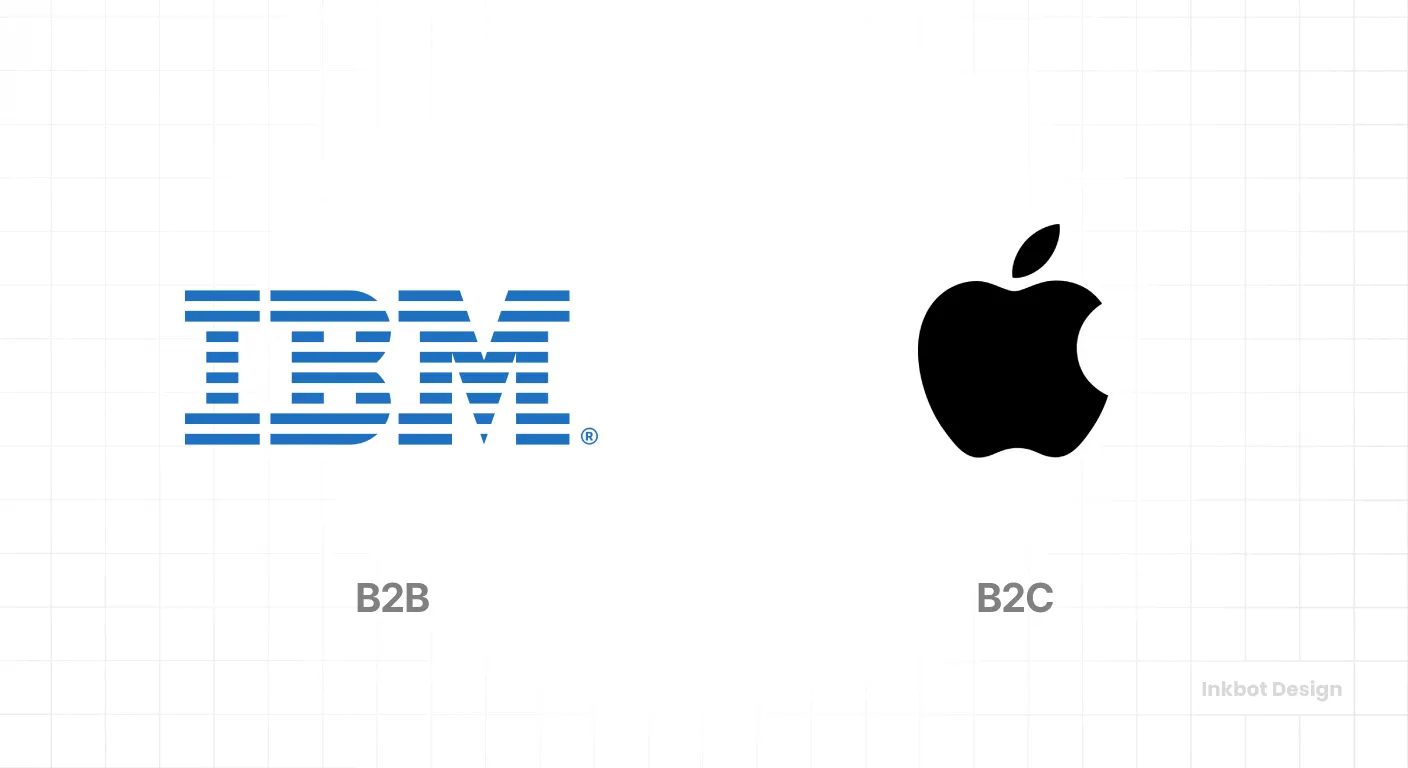
B2B logos are visual identifiers designed for businesses whose primary customers are other corporate entities, requiring high levels of stakeholder alignment and technical scalability.
Key Components:
- Stakeholder Consensus: The design must pass through a multi-layered Decision-Making Unit (DMU).
- Legal Scalability: The mark must be protectable across multiple international SIC codes.
- Brand Architecture: The logo must function within a complex hierarchy of sub-brands or parent companies.
B2B logo costs are higher than B2C due to multi-stakeholder approval processes, brand architecture complexity, and the higher financial risk of brand failure.
The Stakeholder Complexity Penalty
B2B branding costs more because it involves more people, not more pixels.
According to Gartner, the average B2B buying group now involves 6 to 10 stakeholders, each with different priorities. In a branding project, this “Decision-Making Unit” (DMU) includes the CEO, the Marketing Director, the Legal Counsel, and often the Board of Directors.
Each additional stakeholder increases the statistical likelihood of project “drift” or “veto”.
An agency charging £30,000 for a B2B logo is allocating a significant portion of that budget to consensus management.
They are not just designing; they are facilitating workshops, managing conflicting egos, and providing the data-backed rationale needed to get 10 powerful people to agree on a single symbol.
In contrast, a B2C founder often makes the final call based on “gut feeling”.
This lack of friction allows for lower fees. When you pay for a professional B2B agency, you are paying for the expertise to navigate these internal politics without the project collapsing into a “design-by-committee” disaster.
“The true cost of B2B logo design is found in the hours spent achieving stakeholder alignment rather than the hours spent on the drawing board. Professional agencies price their services based on the complexity of the client's internal Decision-Making Unit, where a single veto from a legal department can reset weeks of creative development.”
The DMU Paradox: Why Consensus Costs More Than Creativity
In B2B, the greatest obstacle to a successful rebrand is not a lack of ideas, but a lack of Consensus.
According to Gartner, the typical Decision-Making Unit (DMU) in a mid-to-large corporation consists of 6 to 10 stakeholders.
Each person—from the CFO to the Head of Human Resources—views the brand through a different lens.
- The CFO seeks cost efficiency and ROI.
- The Head of Sales looks for “Aggressive” market presence.
- The Legal Counsel looks for “Defensibility.”
- The CEO looks for “Legacy.”
The Cost of Facilitation
When you hire a top-tier B2B agency, you are paying for Project Governance.
The agency acts as a mediator, using data-driven workshops to align these conflicting priorities before the first sketch is made.
Without this facilitation, projects frequently fall into “Design-by-Committee,” where the final logo is a watered-down version that satisfies everyone but inspires no one.
The “Blandification” of corporate logos in the early 2020s was a direct result of firms failing to manage DMU friction.
In 2026, the most successful B2B firms invest in agencies with “Boardroom Gravitas” to push back against subjective internal opinions and keep the project focused on strategic objectives.
Technical Stress-Testing: Designing for Industrial Scalability
A common misconception is that a logo only needs to look good on a high-resolution screen or a glossy brochure. In the B2B sector, visual identifiers must survive extreme technical environments.
Whether it is Laser Etching on a titanium component or Silk-Screen Printing on high-visibility safety equipment, the mark must maintain its integrity.
Application Scalability and Physical Legibility
Professional design fees cover the “Stress-Testing” phase. This involves rendering the mark in “Worst-Case Scenario” environments.
For example, a logo for a sub-sea engineering firm must remain recognisable when cast in steel and encrusted with saltwater minerals. A logo for a microchip manufacturer must remain distinct when reduced to 2mm.
Agencies perform Line-Weight Audits and Negative Space Analysis to ensure that when the logo is reproduced in a single colour (e.g., stamped onto a cardboard shipping crate), it does not “fill in” and become a blurred blob.
The 2026 Digital Rendering Standard
Beyond the physical, the 2026 B2B logo must be optimised for Low-Bandwidth Digital Environments.
Many B2B clients operate in remote locations—oil rigs, mines, or rural construction sites—where satellite internet is the only connection.
A logo file that is not “Weight-Optimised” for these conditions can slow down critical procurement portals.
Professional agencies provide a Variable Vector Suite that automatically adjusts the logo’s complexity based on the user's screen resolution and connection speed.
Case Study: The “Blur Test” for Safety
A logistics firm that came to us found that its previous logo, designed by a budget freelancer, was unreadable at 50 metres in low light. During a warehouse safety audit, this was flagged as a risk factor.
Their 2025 rebrand cost £60,000, with £15,000 dedicated solely to Optometric Testing to ensure maximum contrast and legibility for heavy machinery operators.
B2B Technical Application Requirements
Medium | Challenge | Requirement |
|---|---|---|
Industrial Etching | Heat and surface texture | High-contrast, simplified vector paths. |
Embroidery | Thread thickness limitations | Removal of gradients and fine lines. |
Favicons (16px) | Pixel grid restrictions | Creation of a dedicated “Micro-Mark”. |
3D Printing | Structural integrity | Manifold geometry in the logo mark. |
E-Ink Displays | Limited refresh rates | Bipolar colour contrast (Black/White). |
Legal Liability and Intellectual Property Risk
A B2B logo must be legally “bulletproof” to be worth the investment.
While a local coffee shop might get away with a logo that slightly resembles a competitor’s mark, a B2B firm operating in a global market cannot afford that risk.
The Accenture rebrand in 2000 cost an estimated $100 million, largely because the name and mark had to be cleared and registered in 140 countries simultaneously.
Professional B2B agencies include comprehensive Intellectual Property (IP) audits and trade mark searches as part of their workflow. This ensures that the mark is not only “unique” in an aesthetic sense but also “defensible” in a legal sense.
The cost of a B2B logo includes this rigorous vetting process, which protects the company from future litigation or the catastrophic expense of a forced rebrand post-IPO.
Furthermore, B2B logos often require broader usage rights. A B2C logo might only appear on packaging and social media. A B2B mark must be rendered on industrial machinery, etched into components, or printed on high-visibility safety gear.
Each of these applications requires technical testing to ensure the mark remains identifiable, adding layers of technical “proof-of-concept” work to the bill.
“B2B brands face a higher ‘Liability of Genericness' where failure to secure unique, trademarkable assets leads to multi-million-pound litigation risks during mergers and acquisitions. Professional design fees account for the rigorous legal vetting and international IP clearance required to turn a visual mark into a defensible corporate asset.”
Why Legal Vetting Dominates B2B Costs
In the corporate world, a logo is not merely an illustration; it is a registered trademark.
For a B2B firm, the price of a logo includes the transition from a “sketch” to a “globally defensible asset”. When an agency provides a quote for a professional identity, a significant portion of that investment is allocated to International Trademark Clearance and SIC Code Audit.
The Cost of Intellectual Property (IP) Certainty
Unlike a local retail shop, a B2B organisation typically operates across multiple borders. If a UK-based manufacturing firm expands into the German or American markets, its visual mark must be legally clear in those jurisdictions.
A professional agency coordinates with IP lawyers to perform deep searches across the UK Intellectual Property Office (UKIPO), the European Union Intellectual Property Office (EUIPO), and the United States Patent and Trademark Office (USPTO).
This process involves more than checking for identical matches. It requires an analysis of “confusingly similar” marks within specific Standard Industrial Classification (SIC) Codes.
If your logo occupies the same visual territory as a competitor in a related field, you face the risk of an injunction. The Accenture rebrand is the gold standard for this complexity, where the mark had to be cleared in nearly 150 countries.
Risk Mitigation vs Design Fees
The financial justification for these fees is found in the Cost of Forced Rebranding. If a B2B firm is 24 months into a global rollout and receives a “Cease and Desist” letter, the losses are catastrophic.
You are not just paying for a new logo; you are paying for the removal of the old mark from every piece of heavy machinery, every digital portal, every legal contract, and every piece of signage across 20 global offices.
In 2026, professional B2B agencies use Synthetic Legal Screening to identify potential conflicts before the creative presentation even begins. This ensures that every concept presented to the board has already been vetted for high-probability registration.
Trademark Risk Levels by Market Type
Market Scope | Legal Search Depth | Probability of Conflict | Estimated Vetting Cost |
|---|---|---|---|
Local/Regional | Surface (Google/Social) | Low | £500 – £1,000 |
National (UK Only) | UKIPO Deep Search | Medium | £2,000 – £5,000 |
Continental (EU) | EUIPO + Regional Offices | High | £7,000 – £15,000 |
Global (US/Asia/EU) | Full WIPO + Local Counsel | Very High | £20,000 – £50,000+ |
B2B logos cost more because they require rigorous legal vetting across multiple international jurisdictions to prevent multi-million-pound litigation and forced rebranding.
The Myth-Bust: Time-Based Billing is a Scam

The most persistent lie in the design industry is that B2B logos cost more because they “take longer to design.” This is a fundamental misunderstanding of value.
In 2026, the hours a designer spends in Adobe Illustrator are irrelevant. With AI-assisted tools, the design production phase has effectively reached a “zero-marginal-cost” state.
If an agency charges you based on hours, they are incentivised to be slow, not good.
You aren't paying for the 40 hours it took to draw a circle; you are paying for the 15 years of experience that taught the designer where to put the circle so it doesn't look like a competitor's logo and doesn't offend your biggest client in Singapore.
The price of a B2B logo reflects Value-Based Pricing. If a new identity helps a firm secure an extra £2 million in government contracts by appearing more “institutional” and “stable”, a £50,000 design fee is a bargain.
Charging by the hour is for freelancers; charging by the impact and risk reduction is for strategic partners.
- Historical Context: In the 1990s, “billable hours” were the industry standard because production was manual and slow.
- Modern Reality: Strategy and risk mitigation are the only remaining high-value activities in design.
- Source: The Blair Enns “Win Without Pitching” manifesto on value-based pricing for creative agencies.
“Hourly billing in B2B branding is a legacy metric that fails to account for the risk-mitigation value provided by strategic consultants. Professional agencies in 2026 price their work according to the ‘Cost of Failure,' ensuring that the client is paying for the security of a defensible, board-approved identity rather than the designer's time.”
The State of B2B Branding in 2026: Synthetic Identity Audits
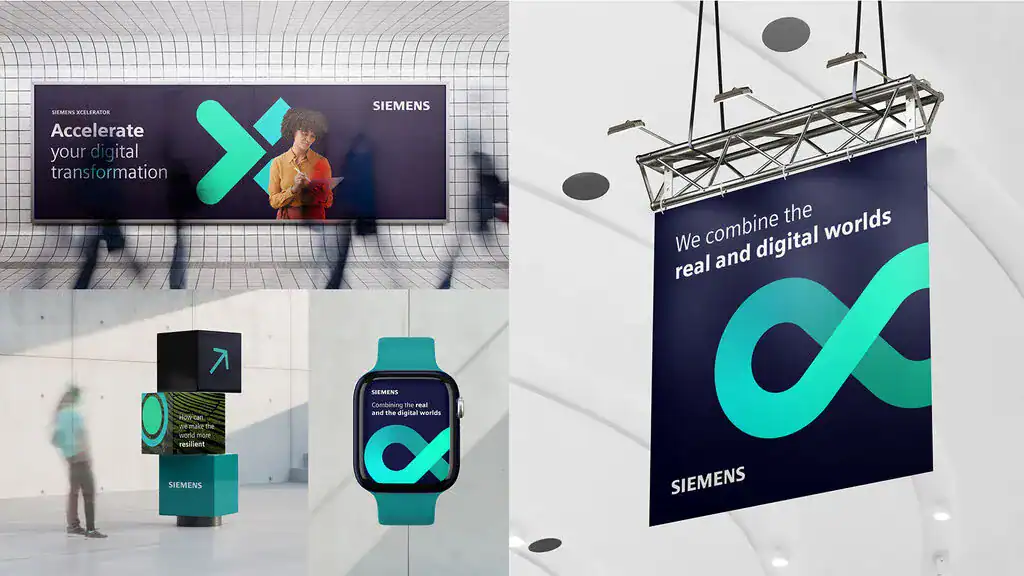
The landscape of B2B design has shifted dramatically in the last 18 months due to the rise of Synthetic Identity Audits.
Platforms like Adobe Firefly 4.0 and specialised B2B brand evaluators now allow agencies to “stress-test” a logo against millions of existing trademarks and consumer perception datasets in seconds.
In 2026, a B2B logo is no longer just “judged” by a creative director; it is “vetted” by a Generative Engine. This technology enables us to predict how a logo will be interpreted by AI search systems such as Google's AI Overviews and Perplexity.
If a logo is too generic, these engines struggle to associate it with a specific entity, damaging the firm's “Topical Authority” in digital searches.
We are also seeing a move away from the “Blandification” trend of the early 2020s. B2B firms are realising that being “safe” is now the most dangerous strategy.
As AI makes it easier to spawn thousands of generic-looking competitors, the value of a high-contrast, distinctive brand asset (DBA) has skyrocketed.
The Ehrenberg-Bass Institute for Marketing Science has shown that “distinctiveness” is more important than “differentiation” for long-term growth.
The emergence of synthetic identity audits in 2025 has transformed B2B branding from a subjective art into a predictive science. Modern agencies now use AI-driven perception models to ensure a brand's visual assets are not only distinctive to humans but are also easily classified as unique entities by generative search engines.”
The £40k Ego Trap
In my experience at Inkbot Design, the most expensive mistake a founder can make is underestimating the “Boardroom Friction” of a rebrand. I once audited a B2B fintech firm that had hired a “cheap” B2C-focused agency for £5,000. The designs were beautiful—trendy, minimalist, and very “Instagrammable”.
The problem? The agency had never worked with a 12-person board of directors.
During the presentation, the Chief Legal Officer pointed out that the logo looked too much like a competitor in the Swiss market, and the Head of Sales argued it felt “too soft” for their institutional banking clients.
The project stalled. They spent six months in “design purgatory,” losing momentum and wasting internal salaries.
When they eventually came to us, we didn't just “draw a better logo.” We started with stakeholder interviews and a risk-mapping session. We charged £45,000.
Why? Because we spent the first month ensuring that every person with “veto power” was aligned on the strategic goals before a single sketch was made.
The result was a unanimous “yes” in the first presentation and a successful global rollout. The £5,000 logo was actually the most expensive thing they ever bought, costing them six months of growth.
- Check our Brand Equity System™ to see how we handle these complexities.
- Review our logo design pricing to see investment levels.
The Financial Multiplier: Branding’s Role in M&A Valuation
In the world of private equity and Mergers and Acquisitions (M&A), a brand is a balance sheet asset. When a company is valued for sale, “Goodwill” often accounts for a large share of the total price.
A fragmented, amateur, or legally shaky brand architecture is a “Red Flag” during Financial Due Diligence.
Reducing “Brand Friction” in Acquisitions
Professional B2B logos are designed with Brand Architecture in mind. They are built as a “System” rather than a “Sticker”. If a parent company acquires three smaller firms, a well-designed identity system allows those acquisitions to be seamlessly integrated into the visual hierarchy.
A “Cheap” logo usually lacks this foresight. When an acquisition occurs, the cost of forcing a poorly designed mark into a complex brand hierarchy often results in a “Visual Debt” that can cost hundreds of thousands to rectify.
Investors prefer “Clean” brand equity. A professional rebrand before an IPO or sale can increase the valuation multiplier by making the company appear more “institutional” and “stable.
The Institutional Trust Premium
Institutional investors and large-scale procurement departments are risk-averse. They use visual consistency as a proxy for operational excellence.
A firm that looks like a “startup” due to a budget logo will struggle to win a £100m government contract against a firm that looks like a “legacy institution”. The price difference in the logo is essentially a Trust Insurance Premium.
A professional B2B logo increases a company's valuation in an M&A transaction by providing a scalable brand architecture and signalling institutional stability to investors, thereby reducing the perceived risk of the acquisition.
Technical Aspect | The Wrong Way (Amateur) | The Right Way (Pro) | Why It Matters |
|---|---|---|---|
Stakeholder Management | Asking the CEO, “What colours do you like?” | Conducting “Decision-Making Unit” workshops and risk-mapping. | Prevents last-minute board-level vetoes that kill projects. |
Legal Vetting | A quick search on Google Images. | Full International Trade Mark clearance and SIC code audit. | Avoids multi-million-pound litigation or forced rebrands. |
Technical Testing | Designing for a website header only. | Stress-testing for 16px favicons and industrial etching. | Ensures the brand survives all physical and digital touchpoints. |
Pricing Model | Billing by the hour or “per concept.” | Value-based pricing focused on risk transfer and impact. | Aligns agency incentives with the client's business outcomes. |
Brand Architecture | Treating the logo as a standalone “sticker.” | Designing a scalable system for sub-brands and M&A. | Saves money during future mergers or product launches. |
The Verdict
B2B logos are more expensive because they are built to withstand a higher “Cost of Failure.” In the B2C world, a bad logo might mean fewer t-shirt sales.
In the B2B world, a bad logo can derail a merger, trigger a legal battle, or alienate institutional investors who view visual instability as a proxy for operational incompetence.
The premium you pay for a professional B2B agency is not an “art tax.” It is an investment in certainty.
By the time you see a final design from a top-tier agency, thousands of pounds have already been spent on competitive mapping, stakeholder alignment, and legal de-risking.
This process ensures that when the logo is finally unveiled to the world, it is a defensible, scalable, and permanent corporate asset.
Stop looking at your logo as a graphic design project. Start looking at it as a foundational piece of your corporate infrastructure.
If you are building a business that you intend to scale, sell, or take public, you cannot afford the “savings” of a cheap logo.
FAQs
Why is B2B logo design so much more expensive than B2C?
B2B logo design costs are higher because they involve complex stakeholder hierarchies, extensive legal trademark vetting across multiple jurisdictions, and the management of “brand architecture” for parent and subsidiary companies. These factors require strategic consultancy and risk mitigation that go far beyond simple graphic design.
Does a B2B logo really need to be legally cleared?
International trademark clearance is mandatory for B2B firms operating in global markets to avoid the catastrophic costs of a forced rebrand or litigation. Professional agencies include IP (Intellectual Property) audits in their fees to ensure the mark is defensible during mergers, acquisitions, or IPOs.
What is the “Cost of Failure” in B2B branding?
The “Cost of Failure” refers to the financial loss incurred if a brand identity fails to gain internal consensus or legal approval after launch. In B2B, this includes wasted internal salaries, lost RFP opportunities due to poor brand perception, and the legal fees associated with trademark disputes.
Is value-based pricing better than hourly billing for logos?
Value-based pricing aligns the agency's goals with the client's business outcomes by focusing on risk reduction and brand equity. Hourly billing incentivises inefficiency and fails to account for the consultant’s expertise in navigating complex corporate environments and preventing project drift.
How many stakeholders are usually involved in a B2B rebrand?
Modern B2B branding projects typically involve a Decision-Making Unit (DMU) of 6 to 10 stakeholders, including the CEO, Marketing Director, Legal Counsel, and Board members. Each stakeholder adds complexity to the approval process, which is reflected in the agency's professional service fee.
Can AI reduce the cost of B2B logo design in 2026?
AI reduces the time spent on design production, but it increases the importance of strategic vetting and “Synthetic Identity Audits.” While the drawing phase is faster, the need for human consultants to manage stakeholder politics and legal defensibility remains the primary driver of B2B pricing.
What is brand architecture in B2B design?
Brand architecture is the structural relationship between a parent company and its subsidiaries or sub-brands. B2B logos must be designed as part of a scalable system that can accommodate future acquisitions or product expansions without requiring a total redesign.
Why do “cheap” logos often fail in a B2B context?
Cheap logos usually lack the technical stress testing and strategic rationale needed to withstand board-level scrutiny. Without a data-backed explanation for design choices, these marks are frequently vetoed by internal stakeholders, leading to “design-by-committee” and project failure.
Does logo colour matter more in B2B?
Colour in B2B is less about “emotion” and more about “Distinctive Brand Assets” (DBAs). B2B firms use colour to claim visual territory in crowded technical niches, making the brand easily identifiable in high-stakes environments like trade shows and procurement documents.
How often should a B2B company update its logo?
B2B identities should be built for 10–15-year cycles rather than following short-term trends. Because the “Cost of Change” is so high in B2B—involving everything from signage to industrial equipment—the focus is on creating a timeless, institutional mark that survives market shifts.