SaaS Product Naming Architecture: Decide What You Sell Before You Name It
Your seed-stage product had one name and one price. Now there are three products, an analytics add-on, an AI assistant, four plans and a usage meter.
The enterprise buyer on Thursday’s call has asked twice which of them she actually needs. That question is the sound of a naming architecture failing in real time.
The cost is quiet but real. Gartner, the research and advisory firm, reported in 2025 that 69% of surveyed B2B buyers had encountered inconsistencies between a supplier’s website and what its sellers told them.
A portfolio where the same capability is a “product” on the pricing page and an “add-on” in the proposal is one of the easiest ways to create that gap.
Naming architecture is the part of your SaaS Brand Identity that does the most commercial work and receives the least design attention.
It is also where brand strategy and identity stop being cosmetic and start affecting deals.
- Classify every sellable element as product, module, tier, bundle or billing unit before naming.
- Reserve distinctive names for standalone products; use descriptive, parent-led names for modules and a single tier vocabulary across products.
- Keep naming consistent across website, in-product UI, proposals and invoices; name billing units literally so finance can trace charges.
How SaaS Product Naming Architecture Works
SaaS product naming architecture works by assigning each sellable element a single job. Product names are distinct solutions that a customer could buy on their own. Modules name capabilities that extend a product. Tiers name levels of access or service. Bundles and billing units, where they exist, sit on their own levels.
The process runs in three stages: classify each element, decide how much distinctiveness it earns, and then apply one naming rule per level.
- Price Intelligently, in its 2025 State of SaaS Pricing Report, found that nearly 60% of surveyed SaaS operators and executives identified excessive complexity in pricing structures and packaging.
- Distinctive, memorable names belong to the company brand and to products that solve a genuinely different problem.
- Modules and tiers earn descriptive names because buyers compare them line by line.
SaaS product naming architecture assigns each sellable element (product, module, tier, bundle or billing unit) one consistent naming role that buyers can recognise.
Classify What You Sell Before You Name It
Most SaaS naming projects start with a shortlist. The instinct is understandable.
Memorable names feel like owned assets, and nobody gets praised in a board meeting for calling something “Reporting”.
For the company brand, and for a product that really does stand alone, that instinct is right.
At the module and tier level, it is wrong. Here, the buyer is not trying to remember you. They are trying to work out what is in the box.
The fix is a classification step before anyone opens a naming brief. Every sellable element goes through one test question:
| Level | What it names | Test question | Naming default | Illustration |
| Product | A distinct solution with its own buyer or job | Could a customer buy this on its own and still get value? | Distinctive or endorsed by the parent | Jira, Confluence and Loom within Atlassian’s portfolio |
| Module/add-on | A capability that extends a product | Does it only make sense attached to a product? | Descriptive, parent-led | “[Product] Analytics” |
| Tier | A level of access or service | Does the same product get bigger, rather than change? | One vocabulary across all products, describing fit | Free, Standard, Premium, Enterprise |
| Bundle | A commercial grouping of products | Is it a way of buying rather than a thing that works? | Named as a collection | Atlassian Teamwork Collection |
| Billing unit | What usage is measured and charged in | Will finance see it on an invoice? | Literal, one name across the portfolio | HubSpot Credits |
Take a hypothetical Series B finance-automation platform. It has an invoicing product, an expense tool, an “AI reconciliation” feature, and plans called Grow, Scale and Command. Run the test:
- The expense tool can be bought alone, so it is a product.
- AI reconciliation only works inside invoicing, so it is a module. That means “Invoicing Reconciliation”, not a new brand.
- Grow, Scale, and Command tell a 40-person finance team nothing about which plan fits, so the tiers are the real naming problem.
Three decisions, all answered by the classification. None of them needed a brainstorm.
“A name is a promise about where something sits in your business. Call an add-on a product, and buyers expect to purchase it on its own. Give a tier a brand name, and buyers expect a different tool. Every misclassified name becomes a correction your sales team has to make on the call, and buyers remember the correction long after they have forgotten the name.”
When Does a SaaS Product Deserve Its Own Name?
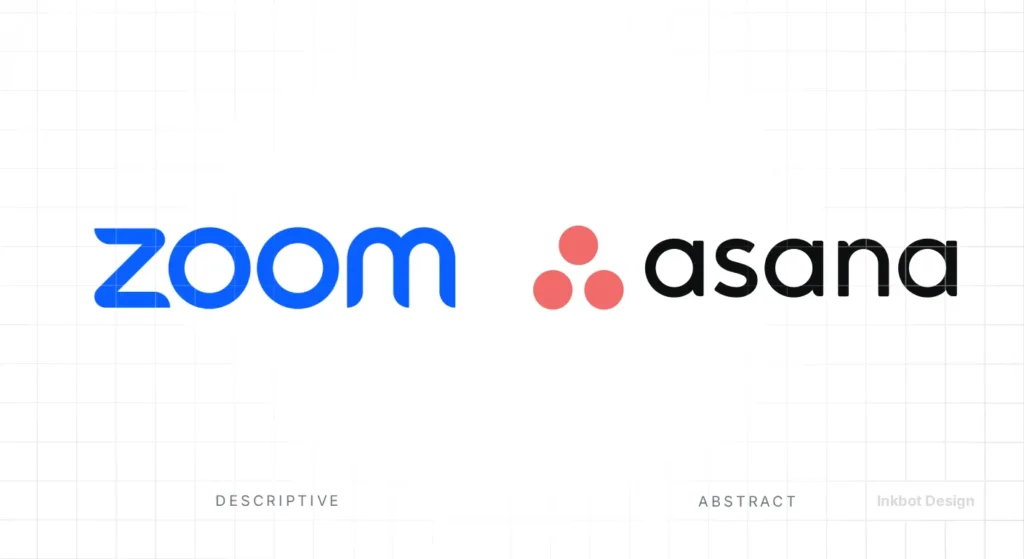
A SaaS product deserves its own name when it solves a different problem for a different buyer, or when it could plausibly be sold, spun out or acquired separately.
Revenue thresholds are a common rule of thumb for this decision, and a weak one.
A £5m business with two genuinely separate buyers has a stronger case for distinct names than a £40m business selling one integrated suite to one team.
The case for separate brands is real, and so is its cost. In a public r/SaaS discussion in February 2022, one operator with four productivity products described what separate branding had meant in practice:
- Each launch needed its own social channels, logos and creative;
- Nobody knew where blog content should live;
- Product campaigns diluted the parent brand’s visibility.
The operator then tried unified naming and hit the opposite problem: “The combined name is lengthy and hard to promote.”
Both complaints are fair, and the endorsement resolves them. The company name does not need to sit inside every product title. It needs to be visibly attached.
Atlassian shows the pattern: Jira, Confluence and Loom keep their own product identities while the Atlassian relationship stays obvious.
The full trade-offs between branded house, endorsed, and house-of-brands models are covered in our guide to SaaS brand architecture for software ecosystems.
Give a product its own name when:
- It serves a different buyer;
- It is purchased independently;
- A spin-out or sale is realistic;
- The parent brand would limit it.
Keep it parent-led when:
- The buyer is the same;
- The products integrate tightly;
- Growth depends on cross-selling into existing accounts.
AI is where this decision is currently made worse. Salesforce launched Agentforce 360 in October 2025 as a platform-level AI identity.
For Salesforce, that is a platform decision. For a scale-up, the question is whether the AI offering can be bought and used without the core product. If it cannot, it is a capability and should be named like a module, however much the board wants an AI brand.
How to Name Modules and Add-Ons
Price Intelligently by SBI’s 2025 State of SaaS Pricing Report found that 80% of respondents cited product changes as a reason for changing their packaging, and 56% cited competitor moves. Modules are what move when packaging changes.
This quarter’s add-on is next year’s Premium inclusion.
That is the argument for descriptive module names built as product name plus function. A branded module implies a standalone product.
Each time it moves between tiers or bundles, someone has to explain what it is again. A descriptive name, such as “Invoicing Approvals”, survives repackaging because it describes the capability rather than its commercial position.
Name the capability, not the feature behind it. “Slack integration” refers to a single connector. “Integrations” survives the second, third and tenth.
Whatever the module is called on the pricing page, it must be called the same thing inside the product, in the onboarding emails and in the sales proposal.
Naming drift between marketing and the interface is a brand consistency problem across your marketing site and in-product UI, and it is exactly the inconsistency that Gartner’s buyers reported.
Tier Names: Rank, Fit or Capability?
The strongest objection comes from the founders themselves.
In a 2019 r/startups thread on plan names, one commenter put it bluntly: “I don’t think the name of the plan matters much when compared to the price.”
Price does carry more weight, and that is fair.
But Price Intelligently by SBI found that 64% of enterprise respondents rated overly complex packaging a moderate or significant problem. Tier names are the labels on that packaging.
Tier names do one of three jobs:
- Rank names (Tier 1/2/3; Pro and Pro Plus) communicate order, not suitability. In the same 2019 thread, another commenter asked of “Professional Plus”: “Why would I pay more for some extra features I may or may not need?” Pro Plus is a shrug with a price tag.
- Fit names (Team, Business, Enterprise) tell a buyer where they belong, which is the decision the pricing page exists to support.
- Capability names rarely last, because the capabilities move between tiers.
Whichever job you choose, use a one-tier vocabulary across all products.
Atlassian’s Teamwork Collection carries the familiar Free, Standard, Premium and Enterprise ladder, so a buyer moving from product to bundle does not have to learn a new language.
Testing does not need a budget.
Show five target buyers the tier names with prices hidden, and ask each to pick a plan and explain why. If their reasons do not match your packaging logic, the names have failed.
Before launch, keep this proportionate: another commenter in that 2019 thread argued that pre-launch hours spent tinkering with plan names optimise the wrong metric.
Two numbered placeholders and a fit test after your first fifty sales calls is a reasonable middle course.
Bundles, AI and Credits: The Levels Most Architectures Forget

Products, modules and tiers are rarely the whole portfolio any more. Two further levels now need naming rules.
Bundles are a way of buying, not a thing that works. Atlassian’s Teamwork Collection groups Jira, Confluence and Loom under a separately named bundle with its own Free, Standard, Premium and Enterprise plans. The products keep their identities inside them. The bundle name describes the collection, not a new tool.
Billing units need names, too. In June 2025, HubSpot moved from Breeze Intelligence Credits to HubSpot Credits. The credit now sits at the company level, separate from the AI capabilities it pays for. A billing unit named after one feature becomes misleading as soon as it pays for a second one.
This level matters because finance teams meet it directly. Zylo, the SaaS management platform, reported in its 2026 SaaS Management Index that 78% of 218 surveyed IT leaders had experienced unexpected charges tied to consumption-based or AI pricing in the preceding 12 months, and 61% had cut projects due to unplanned increases in SaaS costs.
Naming cannot fix a pricing model. A literal billing unit, named consistently across every product, is still the one place a finance team can trace what it is paying for.
Classify First. The Names Get Easier.
Every naming problem in this article came from the same mistake: naming something before deciding what it was.
Once each element is classified as a product, module, tier, bundle or billing unit, most naming decisions resolve themselves.
Distinctiveness goes to the brand and to the few products that genuinely stand alone. Everything else gets clear, consistent and commercially accurate names.
The action for today is to list every sellable element on your pricing page, run each through the five test questions, and mark every name that sits on the wrong level. Many teams can do this internally in an afternoon.
If the list shows the brand underselling the business, or you would like an outside view, Inkbot Design’s free Brand Equity Audit™ is a structured diagnostic that shows where the brand is losing commercial ground and what to fix first.
FAQ
Should SaaS products have separate brands or share the company name?
Most multi-product SaaS businesses should use endorsed names, in which products carry their own names with a visible parent connection. Fully separate brands make sense only when a product serves a different buyer, is bought independently, or could be sold or spun out. Separate brands multiply marketing overhead with each launch.
Does every product name need to include the company name?
No — a product needs a visible connection to the company, not the full company name in its title. Repeating a long company name across every product creates unwieldy names. Endorsement through shared design, URLs and plan vocabulary keeps the relationship clear without the length.
Are numbered tiers clearer than names like Starter, Pro and Enterprise?
Numbered tiers show order clearly but say nothing about which plan suits which buyer. Fit-based names such as Team, Business and Enterprise help a buyer self-select. Whichever you use, apply a single-tier vocabulary across all products so buyers do not have to relearn your pricing language.
Is an add-on a module or a separate product?
An add-on is a module that only delivers value when attached to an existing product, and a product is something a customer can buy on its own and get value from. Modules should take descriptive, parent-led names such as “[Product] Analytics”, so they can move between tiers and bundles without confusing buyers.
How much time should a pre-launch SaaS company spend naming plans?
Very little. Before launch, simple placeholder tier names are enough, because packaging will change once real buyers arrive. Revisit tier names after early sales conversations and test whether buyers can choose the right plan based on the names alone.
Should an AI feature get its own brand name?
Only if the AI offering can be bought and used without the core product, an AI capability that works inside an existing product is a module and should be named descriptively. Platform-level AI names, such as Salesforce’s Agentforce 360, suit companies whose AI genuinely operates as a platform across products.
