
Your SaaS Brand Architecture Problem Isn’t a Naming Problem
Most SaaS brand architecture advice is borrowed wholesale from consumer packaged goods, and it shows.
It treats architecture as a naming decision – pick branded house, house of brands, or hybrid, choose your logo lockups, done.
That framing is wrong for software, and the cost of accepting it is a portfolio that your own customers can’t navigate.
In software, brand architecture is a decision-architecture problem.
It governs who buys what, how they discover the next product, and whether your pricing table, product UI, and navigation make that journey obvious or bury it.
The brand architecture that matters is the one your buyer experiences at the point of purchase – not the one in your brand guidelines PDF.
- Brand architecture in SaaS is a decision architecture problem, not a naming exercise.
- Buyers discover and expand via the pricing table, product UI, and navigation, not logos or names.
- Unclear architecture reduces expansion revenue; customers re-evaluate modules as new vendors, raising price sensitivity.
- Audit three surfaces first: read the pricing table, test in-product upgrade flows, and check top navigation legibility.
- Naming matters but is downstream; design the buyer journey first, then name; AI accelerates re-architecture choices.
SaaS Brand Architecture Is a Decision Problem, Not a Naming One
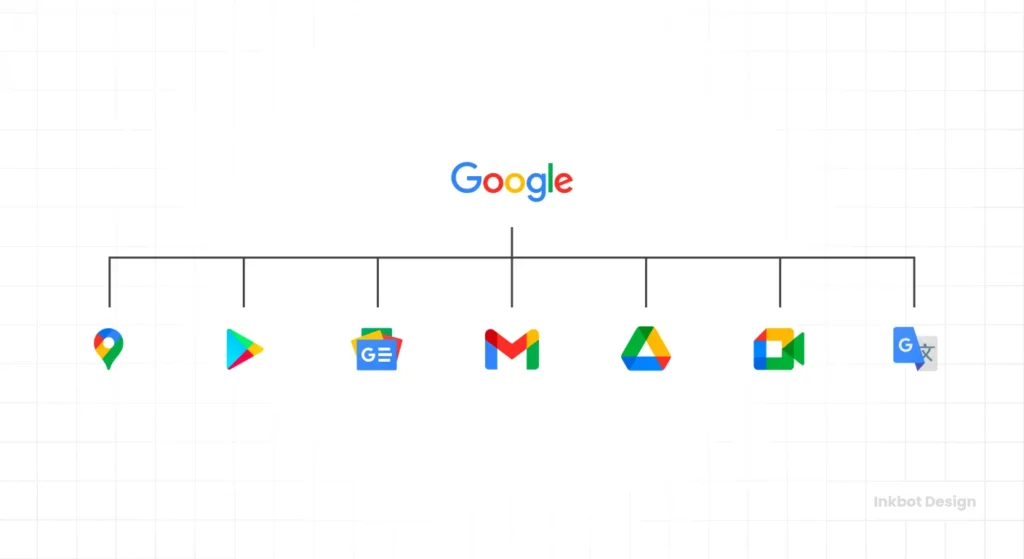
SaaS brand architecture is the structure that governs how buyers discover, choose, and expand across a product portfolio. It is expressed less through logos and names than through pricing, product UI, and navigation – the surfaces where purchase decisions actually happen. Naming is the visible surface of that structure, not the structure itself.
- The pricing table is where a buyer decides which product is “for them” – architecture made commercial.
- The in-product upgrade prompt is where the next purchase is discovered – architecture made behavioural.
- The top navigation is where portfolio relationships are read at a glance – architecture made legible.
SaaS brand architecture is the structure governing how buyers discover, choose, and expand across a product portfolio – expressed primarily through pricing, product UI, and navigation.
Why Intelligent People Treat It as a Naming Exercise
The naming-first view is not stupid – it is inherited from where brand architecture was invented. In consumer packaged goods, a shopper meets the brand on a shelf, in three seconds, with no login and no upgrade path.
The name and the pack are the architecture, because there is no product UI and no pricing table to carry the message. Procter & Gamble genuinely does live or die on whether Fairy, Ariel, and Head & Shoulders read as distinct brands on a shelf.
Klutch Studio’s Brand Architecture 101 guide reflects this inheritance directly, organising its advice around the three classic models and naming conventions.
The Rubicon Agency’s SaaS brand strategy guide frames architecture similarly as deciding “who owns what, where names belong, and how entities relate.” Both are competent. Both are describing the shelf.
The reason smart founders adopt this is that it is the only vocabulary the branding industry offers. When your agency’s reference model is P&G, you get P&G’s problem framing – even though your buyer never meets you on a shelf.
They meet you on a pricing page, inside a product, or at a renewal.
“Consumer goods architecture is solved at the shelf because that is the only surface a shopper touches. SaaS has no shelf. Its architecture is solved – or broken – across the pricing table, the product UI, and the renewal screen, which is why a naming-first framework borrowed from CPG describes the wrong surface entirely.”
The Turn: Architecture Shows Up in Expansion Revenue
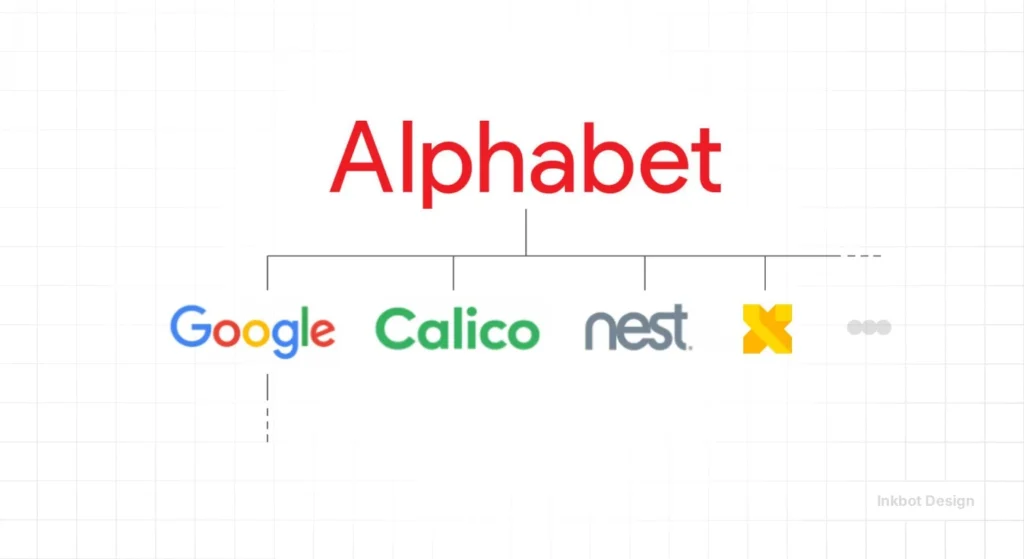
The evidence that architecture is a decision problem, not a naming one, lies in its failure: expansion revenue.
Zigpoll’s 2026 analysis of SaaS brand-architecture tactics found that when the architecture is unclear, customers treat each module as a separate purchase decision, which depresses expansion revenue and raises price sensitivity.
That is not a naming symptom. A logo cannot cause a customer to re-evaluate a module from scratch. An unclear decision structure can.
The mechanism is specific. A SaaS customer who has already bought Product A carries trust, a payment relationship, and a proven use case into any adjacent purchase.
When the portfolio is architected so the next product appears as a natural extension – surfaced in-product, priced as a tier or add-on, positioned adjacent in the nav – the buyer’s decision is “expand what already works.”
When it is architected as a separate brand with its own site, its own pricing logic, and no in-product bridge, the buyer’s decision resets to “evaluate a new vendor.” Same company. Same customer. Completely different conversion economics.
This matters more as portfolios sprawl. Industry SaaS-market data for 2025–2026 puts the average company at 305 SaaS applications spending roughly $55.7M annually. Gartner forecasts that global software spending will reach $1.43T in 2026, making it the fastest-growing IT category.
Buyers are drowning. The vendor whose architecture makes “what to buy next from you” obvious wins the expansion; the vendor who makes it a research project loses it to a clearer competitor.
“The clearest signal that SaaS brand architecture is a decision problem is that its failure mode is financial, not visual. Customers do not churn because a sub-brand’s logo was inconsistent. They fail to expand because the structure never made the next purchase feel like a continuation of the last one – so every module gets re-evaluated as a cold, standalone vendor decision.”
What This Means for a Founder: Formalising Brand Structure
If architecture is a decision problem, then the audit that matters is not “do our sub-brands look consistent” – it is “can a buyer, from any entry point, work out what to buy next.”
Run the test on your own three surfaces before you touch a logo.
Audit the pricing table as an architecture document
Your pricing page is the most-read architecture statement you own, and most founders never read it as one. The question is not whether it looks tidy. It is whether a buyer can see, without help, which product is for them, what the next tier or product does, and why they’d move up.
If your pricing page lists modules as a flat menu with no relationship between them, you have a house-of-brands architecture, whether you intended one or not – and you’re paying for it in expansion friction.
A single well-structured pricing page does more architectural work than a naming convention ever will.
Read the in-product upgrade path as the real cross-sell engine
The place a buyer discovers your next product is inside the one they already use – not on your marketing site.
If Product B is only discoverable to a customer who happens to visit your homepage, your architecture lacks an expansion mechanism.
Zigpoll’s 2026 findings tie unclear in-product architecture directly to lower feature adoption and slower time-to-value.
The fix is structural: the next product must be surfaced at the moment of relevant need, inside the workflow, positioned as a continuation. That is architecture doing commercial work.
Treat navigation as the portfolio’s information architecture
The top navigation is where a buyer reads your portfolio relationships in 2 seconds. If your nav lists eight products as equals, you are telling every buyer they must evaluate eight separate decisions.
If it groups them under a legible parent structure, you are telling them there is one relationship to enter and a path within it.
Navigation information architecture is brand architecture – it just isn’t in the brand guidelines, which is exactly why it gets neglected.
The Objection: “Naming Still Matters – You’re Overcorrecting”
The sharpest reader will push back here, and correctly: naming and visual coherence are not irrelevant, and a decision-first framing risks throwing them out.
That objection is right, and the answer is sequence, not dismissal. Naming matters – but as the output of a decision structure, not the input.
Once you have decided how buyers should move through the portfolio, naming becomes the tool that signals those relationships (a shared prefix says “same family, easy to add”; a distinct name says “separate decision, evaluate fresh”).
Get the decision architecture right first, and naming has a job to do. Start with naming, and you are decorating a structure you never designed.
A second objection: “We’re pre-scale – this is premature.” For a genuinely single-product company, largely true.
The moment you ship a second thing customers can buy – a module, a tier, an AI add-on – the decision architecture exists whether you designed it or not. The only question is whether it’s working for you or against you.
The Reframe, Paid Off: Design the Journey, Then Name It
Here is the position to leave with. Brand architecture in SaaS is the structure of a buying and discovery journey, made concrete in pricing, product, and navigation. The three classic models – branded house, house of brands, hybrid – are not the decision.
They are labels for the decision you make about the journey. You do not choose “hybrid” and then design a portfolio; you design how buyers should discover and expand, and “hybrid” is simply what that design is called.
| The Default Approach | What It Costs | The Better Approach | Why It Works |
| Pick a model first (branded house / house of brands) | Structure serves the label, not the buyer | Design the buying journey first, let the model follow | Architecture matches how buyers actually decide |
| Architecture = naming + logo lockups | Naming can’t fix a broken discovery path | Architecture = pricing, UI, and nav structure | The surfaces buyers actually use carry the decision |
| Audit for visual consistency | Consistent-looking portfolio that still confuses | Audit for “what do I buy next” legibility | Expansion revenue depends on legibility, not polish |
| Cross-sell on the marketing site | Next product invisible to active users | Surface next product in-product at point of need | Existing customers convert on continuation, not cold |
| Sub-brands with independent sites/pricing | Every module re-evaluated as a new vendor | Adjacent positioning in nav and pricing tiers | Trust and payment relationship carry into expansion |
| Name products for internal team structure | Buyers can’t map names to their needs | Name products to signal portfolio relationships | Names become discovery cues, not internal labels |
Where This Stands Now: AI Is Forcing the Re-Architecture

The decision-architecture view is not a timeless abstraction – it is being stress-tested right now by AI-native product design.
Klutch Studio’s State of SaaS Branding 2026 report explicitly names brand-architecture shifts as a key trend, noting SaaS companies are rethinking how product portfolios sit under the master brand as they scale and launch AI-native features.
The report frames this as a growth lever: a clearer architecture improves onboarding, reduces renewal confusion, and enables cross-selling within a single platform.
The pressure comes from a specific direction. AI is moving from “a feature bolted onto a product” to a connective layer that cuts across products that used to be separate.
H-Studio Berlin’s 2026 trends analysis describes the shift from AI-as-feature to AI-native architectures, where agents and workflows span former product boundaries.
GTIA’s 8 SaaS Predictions for 2026 forecasts that tool sprawl will contract as platforms ship embedded co-pilots, with differentiation moving to data quality, provenance, and auditability rather than the sheer count of point solutions.
This lands directly on architecture as a decision problem, because it forces a genuine fork.
When an AI agent works across what were three separate products, the vendor must decide: present the AI as a unifying platform layer – reinforcing an endorsed or monolithic structure and telling buyers “this is one connected system” – or spin the AI capability out as a separately branded module, gaining sharp clarity for a specific use case at the cost of fragmenting the portfolio.
That is not a naming choice. It is a decision about how buyers should understand and move through the portfolio, made under new conditions. The vendors who treat it as a logo question in 2026 will architect confusion into their fastest-growing surface.
The Verdict
Brand architecture in SaaS was never a naming problem. It only looked like one because the discipline borrowed its whole vocabulary from consumer goods, where the shelf is the only surface a buyer touches.
Software has no shelf. Your buyer meets your portfolio in the pricing table, inside the product, and in the navigation – and those three surfaces decide whether the next purchase feels like a natural continuation or a cold new-vendor evaluation.
That difference shows up in expansion revenue, which is why the failure mode of bad architecture is financial rather than cosmetic.
The three models still exist, and naming still matters. But they are downstream. You design how buyers should discover and expand across your portfolio, and the model is simply the name for the resulting shape.
Start there, and every subsequent decision – what to call things, how to lock up the logos, where the AI capability sits – has a clear job. Start with the logo, and you are decorating a structure no one designed.
The single action to take today: open your own pricing page and read it as a buyer who already owns one of your products.
Ask one question – can I tell what I should buy next, and why? If the answer isn’t obvious in five seconds, your architecture is costing you expansion revenue right now, and no rename will fix it.
If you want that read done rigorously across pricing, product, and navigation, request a free Brand Equity Audit™ – a structured, written diagnostic that identifies exactly where your brand is losing commercial ground and what to do about it.
For the wider strategic context on turning that structure into growth, see how architecture connects to brand growth strategy.
FAQs
What is SaaS brand architecture?
SaaS brand architecture is the structure governing how buyers discover, choose, and expand across a software portfolio. It is expressed primarily through the pricing table, product UI, and navigation, rather than through logos and names. Naming is the visible surface of that structure, not the structure itself.
Why isn’t SaaS brand architecture just a naming exercise?
Because its failure mode is financial, not visual. Zigpoll’s 2026 analysis found that unclear architecture makes customers treat each module as a separate purchase, depressing expansion revenue. A logo cannot cause that; an unclear decision structure can. Naming signals the architecture but never creates it.
How is SaaS brand architecture different from CPG brand architecture?
Consumer packaged goods architecture is solved at the shelf, the only surface a shopper touches. SaaS has no shelf. Its architecture is experienced across pricing, product UI, and renewal screens, so a naming-first CPG framework describes the wrong surface for software entirely.
What’s the difference between branded house, house of brands, and hybrid?
A branded house puts everything under one master brand; a house of brands runs independent product brands with minimal visible connection between them; a hybrid mixes both. In SaaS, these are labels for a decision about the buying journey, not the decision itself. Design the journey first, then name the shape.
How does brand architecture affect expansion revenue?
When the portfolio is structured so the next product appears as a natural extension – surfaced in-product, priced as an adjacent tier – existing customers expand on continuation. When each module is a separate brand with its own site and pricing, buyers reset to cold vendor evaluation, which lowers conversion.
When should a SaaS company formalise its brand architecture?
The moment you ship a second thing, customers can buy – a module, a tier, or an AI add-on. At that point, the decision architecture exists whether or not you designed it. For a genuinely single-product company, formal architecture work is premature.
Is it true that navigation is part of brand architecture?
Yes – navigation is where buyers read portfolio relationships in seconds. A flat nav listing eight equal products tells buyers to evaluate eight separate decisions. A grouped, legible structure tells them there is one relationship to enter. Navigation information architecture is brand architecture in practice.
How is AI changing SaaS brand architecture in 2026?
AI is shifting from a bolted-on feature to a connective layer spanning previously separate products. This forces a decision: present AI as a unifying platform layer that reinforces a single structure, or spin it out as a separate brand for clarity, at the cost of fragmentation. Klutch Studio’s 2026 report names this a key trend.
Why does my pricing page matter for brand architecture?
Your pricing page is the most-read architecture statement you own. It shows buyers which product is for them and what the next step is. A flat menu of unrelated modules is a house-of-brands architecture by default, paid for in expansion friction, regardless of your stated model.
How do I audit my SaaS brand architecture?
Test three surfaces, not the logo. Read the pricing table as a buyer choosing what’s next; check whether the next product is discoverable in-product; check whether navigation groups products legibly. If a buyer can’t tell what to buy next in five seconds, the architecture is failing commercially.
Does brand naming still matter in SaaS?
Yes – but as the output of a decision structure, not the input. Once you’ve designed how buyers move through the portfolio, names signal those relationships: a shared prefix says “easy to add,” a distinct name says “evaluate separately.” Naming has a real job only after the architecture exists.
What happens if SaaS brand architecture is unclear?
Customers evaluate each product as a standalone, cold vendor decision rather than a continuation of an existing relationship. Zigpoll’s 2026 analysis links this to lower feature adoption, slower time-to-value, higher price sensitivity, and depressed expansion revenue – a financial cost, not a cosmetic one.
