Why Advertising Design is Key to Success
Advertising design is the strategic discipline of creating visuals for promotional campaigns, combining graphic design, copywriting, and marketing principles to influence consumer behaviour.
Effective ads utilise a strong visual hierarchy, colour psychology, and compelling typography to communicate a brand’s identity and value proposition clearly.
From digital banner ads to social media creative, the primary goal is to capture attention and guide the audience toward a specific call-to-action (CTA), turning visual appeal into measurable results.
- Strong visual hierarchy, colour psychology and typography quickly communicate brand identity and value.
- First impressions matter; you have about seven seconds to grab attention and prompt action.
- Consistent visual branding builds recognition, trust and long-term customer loyalty.
- Design blends art and science: psychology, attention metrics and responsive layouts boost effectiveness.
- AI and immersive tech enable scale and personalisation, but human oversight remains essential.
The Power of First Impressions

You know that old saying about first impressions? Well, it’s doubly true in advertising. Your advertisement is often the first impression your brand makes and potential customers.
And just like that slightly sweaty, limp handshake at a networking event, a poorly designed ad can leave people with a less-than-stellar impression of your business.
The 7-Second Rule
Did you know you have about seven seconds to make a first impression? That’s not just true for blind dates – it applies to your adverts, too. In those precious few moments, your ad design needs to:
- Grab attention
- Convey your message
- Spark interest
- Prompt action
That’s a tall order for just seven seconds. But with clever advertising design, it’s not just possible – it’s powerful.
Standing Out in a Sea of Sameness
Let’s face it: we’re bombarded with ads every day. They’re on our phones, our computers, plastered on billboards, and sneaking into our social media feeds. In this ad-saturated world, how do you make yours stand out?
The answer lies in innovative, eye-catching design. It’s not just about being pretty – it’s about being memorable. Think about it: Which ads stick in your mind? I bet they’re the ones with unique visuals, clever concepts, or designs that made you look twice.
The Psychology of Advertising Design

Now, let’s understand why advertising design works magic on our brains. It’s not just about making things look pretty – psychology plays a role here.
Colour Me Impressed
Colours aren’t just for making your ad look nice – they’re powerful tools for evoking emotions and associations. Did you know that:
- Red can create a sense of urgency (perfect for sales ads)
- Blue instils trust (great for financial services)
- Green often represents growth or eco-friendliness
- Yellow grabs attention and creates a feeling of optimism
Choosing the right colours for your ad design isn’t just about aesthetics – it’s about tapping into your audience’s subconscious associations with different hues.
The Shape of Success
Have you ever wondered why some logos are circular, while others feature angles and straight lines? It’s because shapes, like colours, carry their psychological weight. Rounded shapes often feel friendlier and more approachable, while sharp angles can convey precision or dynamism.
In advertising design, the shapes you use can subtly influence how your brand is perceived. Are you going for a soft, nurturing image? Circles and curves might be your best bet. Are you aiming for a cutting-edge tech vibe? Angular designs could be the way to go.
Font Matters (More Than You Think)
Typography isn’t just about ensuring your text is readable (though that’s crucial too). The fonts you choose in your advertising design can speak volumes about your brand’s personality.
- Serif fonts (like Times New Roman) often convey tradition and respectability.
- Sans-serif fonts (like Arial) can feel more modern and clean
- Script fonts might give a sense of elegance or creativity
- Bold, chunky fonts can grab attention and convey strength
Choosing the right font is like picking the right outfit for a job interview – it sets the tone before you’ve even said a word.
The Art of Visual Storytelling
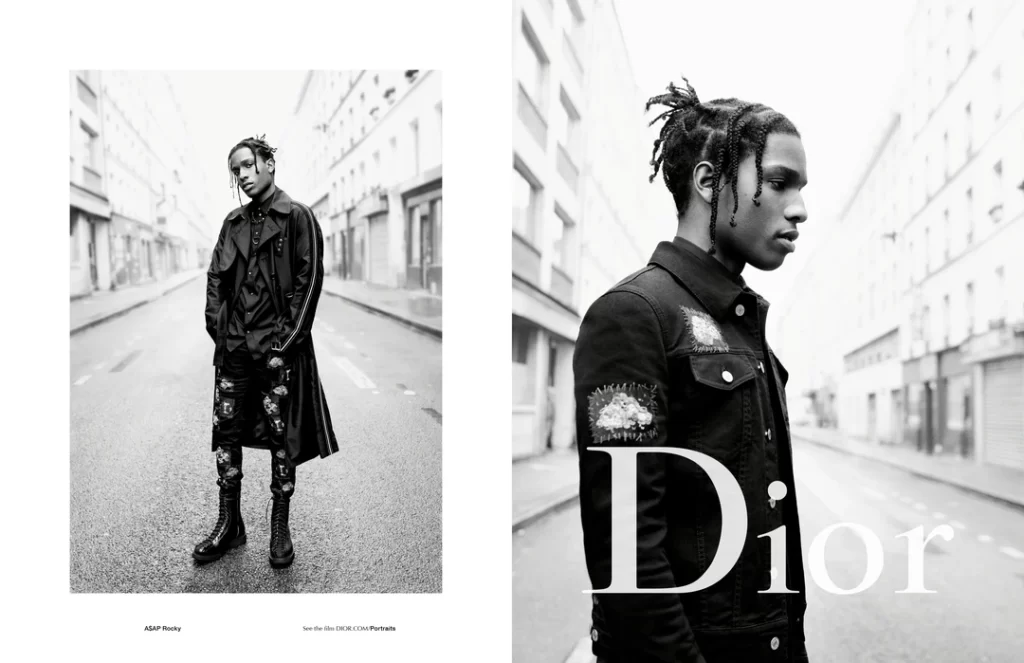
Great advertising design isn’t just about making things look good – it’s about telling a story. You often need to tell that story in a single image or a few seconds of video.
Show, Don’t Tell
You’ve probably heard this advice from writers, but it applies just as much to advertising design. Instead of telling people about your product’s benefits, show them. A well-designed ad can instantly convey complex messages without relying on lengthy explanations.
For example, instead of saying, “Our vacuum cleaner is powerful”, an ad might show a spotless living room with a satisfied customer and a full vacuum bag. The message is clear, immediate, and much more impactful than a list of features.
Creating an Emotional Connection
The best advertising design doesn’t just inform – it evokes a powerful emotional response. Whether it’s humour, nostalgia, excitement, or even a touch of fear (think public health campaigns), evoking emotion is critical to creating memorable ads.
Consider some of the most iconic ad campaigns of recent years. For instance, the John Lewis Christmas ads have become an annual event, tugging at heartstrings and creating a warm, fuzzy feeling that people associate with the brand. That’s the power of emotional storytelling through design.
The Role of Brand Consistency
Imagine if every time you met your friend, they looked completely different. Different hair, different styles, different personalities. It would be pretty confusing, right? The same is true for brands and their advertising.
Building Brand Recognition
Consistent advertising design helps build brand recognition. When people see your ads, they should immediately know it’s you, even before they see your logo. This consistency builds trust and familiarity over time.
Think about some of the world’s most recognisable brands. The golden arches of McDonald’s, Nike’s swoosh, and Apple’s bitten apple. These visual elements are so ingrained in our consciousness that we instantly recognise them.
The Power of Visual Branding
Your visual branding isn’t just your logo – it’s the entire look and feel of your advertising design. This includes:
- Colour palette
- Typography
- Imagery style
- Layout preferences
- Tone of voice
When all these elements consistently work across all your advertising, it creates a powerful, cohesive brand identity that sticks in people’s minds.
Advertising Design in the Digital Age
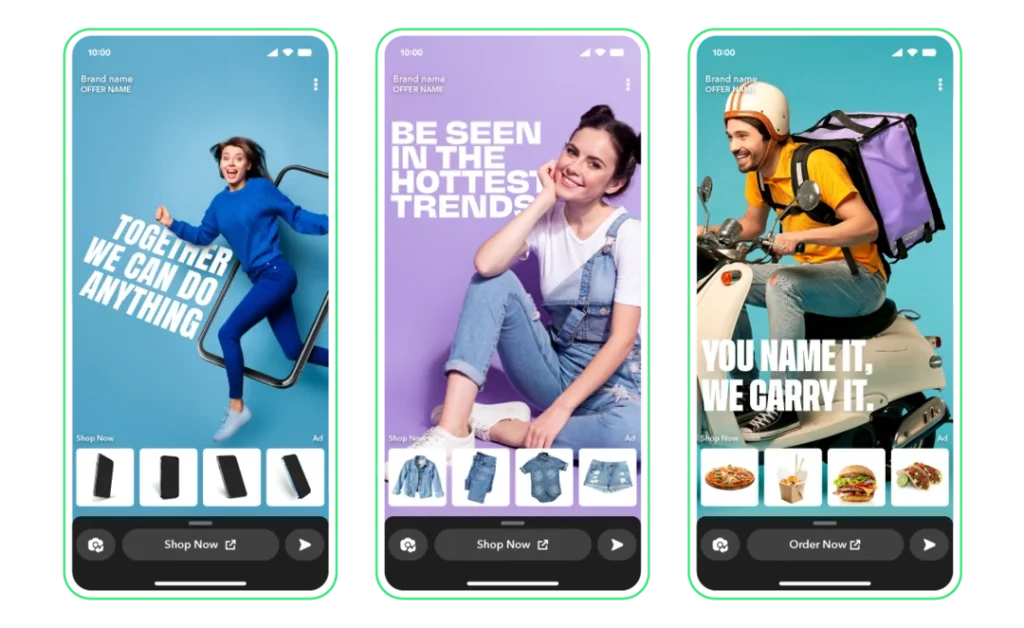
The digital revolution has transformed the landscape of advertising design. With so many platforms and formats to consider, how do you create designs that work across the board?
Responsive Design: One Size Doesn’t Fit All
In the age of smartphones, tablets, laptops, and smartwatches, your advertising design needs to be flexible. Responsive design ensures that your ad appears visually appealing, whether displayed on a billboard or a mobile screen.
This isn’t just about resizing – it’s about rethinking how your design elements work at different scales and orientations. A great advertising designer will consider how their work will appear across all platforms.
The Rise of Interactive Advertising
Digital platforms have opened up new possibilities for interactive advertising design. From simple hover effects to full-blown gamified ads, interactivity can make your advertising more engaging and memorable.
For example, IKEA’s augmented reality app allows users to visualise how furniture would look in their homes. This isn’t just an ad – it’s a valuable tool that enhances the customer’s shopping experience while showcasing IKEA’s products.
The Science Behind Effective Ad Design
While creativity is at the heart of excellent advertising design, a significant amount of science is also involved. Understanding how people perceive and process visual information can help create more effective ads.
The Rule of Thirds
Have you ever noticed how some images seem to “work” better than others? Often, it’s because they follow the rule of thirds. This principle suggests dividing an image into a 3×3 grid and placing key elements along these lines or at their intersections.
This simple rule can make your ad designs more visually appealing and help guide the viewer’s eye to the most critical parts of your message.
The F-Pattern and Z-Pattern
Studies have shown that people scan web pages and ads in specific patterns. The F-pattern is typical for text-heavy content, where people read across the top, then down the left side, with occasional scans to the right.
For more visual designs, the Z-pattern often comes into play. People start at the top left, move across to the right, then diagonally down to the bottom left and across to the bottom right.
Understanding these patterns can help you place your most important elements where they’re most likely to be seen.
Beyond the Click: Designing for Attention Metrics
In the 2026 attention economy, standard CTR (Click-Through Rate) is no longer the gold standard. Designers now optimise for Attention Metrics using Biometric Eye-Tracking and Heatmap AI.
Neuro-design principles suggest that the brain processes high-contrast visuals in under 13 milliseconds.
To dominate the Generative Engine results, your ads must utilise Salience Mapping—ensuring the most critical information (the Unique Selling Proposition) is located where the eye naturally rests during the first 1.5 seconds of exposure.
Comparison Table: 2026 Design Toolstack
| Tool Category | 2026 Industry Standard | Primary Use Case | AI Capability |
| Professional Suite | Adobe Creative Cloud (2026) | High-fidelity brand assets | Integrated Firefly GenAI |
| Agile Design | Canva Enterprise | Social media & rapid scaling | Magic Media text-to-video |
| Prototyping | Figma | Interactive & UX/UI Ads | AI FigJam for brainstorming |
| Spatial/AR | Unity / Reality Composer | AR Billboards & 3D Ads | Spatial Mapping |
The Impact of Good Advertising Design on ROI
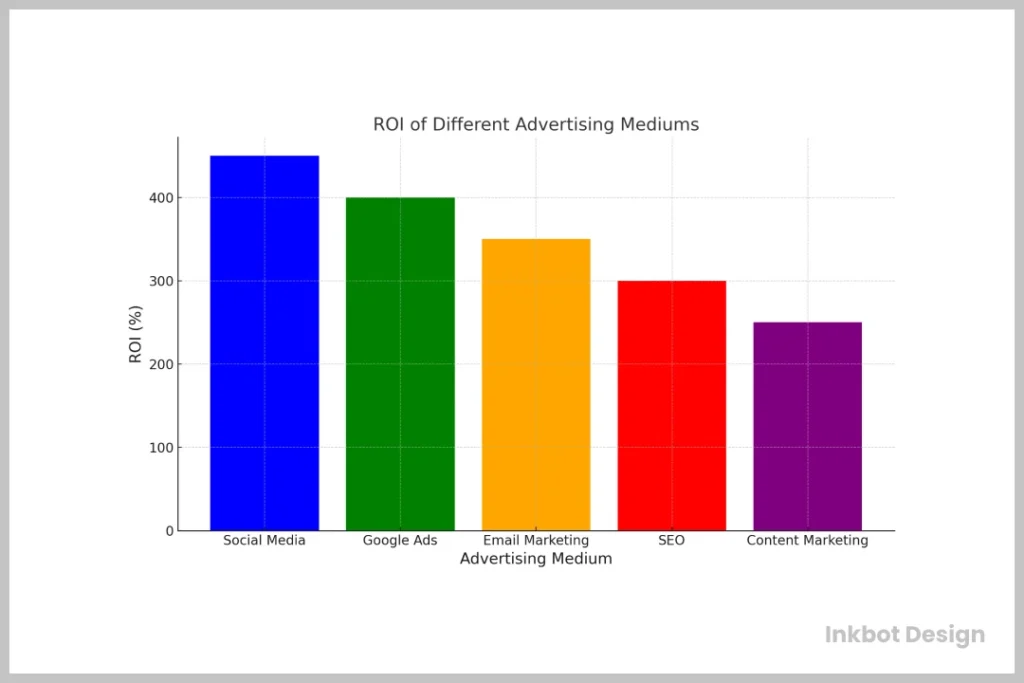
Now, let’s talk business. After all, advertising isn’t just about looking good – it’s about driving results. So, how does good advertising design impact your bottom line?
Increased Brand Awareness
Well-designed ads stick in people’s minds. They’re more likely to be shared, talked about, and remembered. This increased brand awareness can lead to the following:
- Higher brand recall
- Improved brand perception
- Greater brand loyalty
All of these factors contribute to long-term business success.
Higher Conversion Rates
Good advertising design doesn’t just catch the eye – it prompts action. Whether clicking a link, making a purchase, or signing up for a newsletter, well-designed ads are more likely to convert viewers into customers.
For example, a study by Adobe found that companies with solid design outperform companies with weak design by 219% on the S&P Index over ten years. That’s a significant difference!
Cost-Effectiveness
While investing in quality advertising design may seem expensive upfront, it can save you money in the long run. How? Well, effective ads:
- Require fewer frequent changes or updates
- Perform better, reducing the need for additional ad spend
- Build brand equity, making future marketing efforts more effective
In other words, good design pays for itself many times over.
Advertising Design Optimiser 2026
Select a mode to generate a strategy or audit your current creative.
What is the primary psychological goal of this campaign?
Recommended Strategy: High Velocity
Based on the 7-Second Rule, urgency requires high-contrast visuals processed in <13ms.
Recommended Strategy: Authority & Stability
To reduce friction, your design must lower cognitive load and signal reliability immediately.
Recommended Strategy: Organic Connection
Leverage “Biophilic Design” principles to create a sense of calm and possibility.
Recommended Strategy: Future-Forward
Utilise negative space and high-contrast elements to stand out in the Generative Engine results.
Verify your ad creative against 2026 industry standards. Click to check off items:
Need professional creative direction?
Don’t leave your brand’s first impression to chance. Get a bespoke advertising strategy.
Request a QuoteThe Ethical Considerations of Advertising Design
With great power comes great responsibility, and advertising design is no exception. As designers and marketers, we are ethically obligated to use our skills responsibly.
Truth in Advertising
Good advertising design isn’t about tricking people – it’s about presenting your product or service in the best possible light while still being truthful. Misleading design can lead to disappointed customers and damage to your brand reputation.
Inclusive Design
In our diverse world, advertising design must consider and represent a wide range of people. This isn’t just about being politically correct – connecting with a broader audience and creating a more inclusive brand image.
Sustainability in Design
As awareness of environmental issues grows, many consumers seek brands that share their values. Sustainable design practices – from choosing eco-friendly materials for print ads to optimising digital ads for energy efficiency – can help position your brand as environmentally conscious.
The Future of Advertising Design

As technology evolves, so does the world of advertising design. What trends should we be watching out for?
AI and Machine Learning
Artificial intelligence is already being used to optimise ad placements and personalise content. In the future, AI will play a more significant role in the creative process, generating design ideas or even creating entire ads.
Virtual and Augmented Reality
As VR and AR technologies become more mainstream, they open up exciting new possibilities for immersive advertising experiences. Imagine virtual product demonstrations or augmented reality billboards that change based on who’s looking at them.
Hyper-Personalisation
With the amount of data available to advertisers, we’re moving towards a world of hyper-personalised ads. Future advertising design might adapt in real-time based on the viewer’s preferences, location, or mood.
The Generative AI Revolution in Ad Design
In 2026, Generative AI has shifted from a novelty to a core utility.
Modern Advertising Design workflows now leverage Diffusion Models and large multimodal models (LMMs) to create Dynamic Creative Optimisation (DCO).
This allows brands to generate thousands of ad variations in real-time, tailored to specific User Personas and Micro-moments. However, the “Human-in-the-loop” remains critical.
While AI handles Iterative Design, human designers focus on Creative Brand Strategy, Brand Governance, and Ethical AI Usage.
Per Google’s 2026 Search Guidance, AI-generated content must still demonstrate E-E-A-T—specifically “Experience”—by grounding visuals in real-world brand utility.
Bringing It All Together: The Art and Science of Advertising Design
So, why is advertising design essential for standing out in the market? It seamlessly integrates the artistic, scientific, creative, strategic, emotional, and rational aspects of the project.
It simplifies the complicated message into a rich narrative and transforms casual onlookers into loyal customers.
Excellent advertising design:
- Stands out in the clutter of competing brands
- Put across the message eloquently & in a short time frame
- Appeals to the audience on a level other than rational points
- Enhances both the perception and recognition of your organisation
- Encourages actions and works for the profitability of the enterprise
Nowadays, where everything is visual, advertising design is not merely an aspect of marketing strategy; it is the marketing strategy itself. It is the image presented on the market that prospective customers see when making a purchase. Often, it is the reason why they select your product over that of another company.
For the last time, advert design is not simply putting them in a bag and calling it a day. It is about developing a visual system that engages the audience, conveys the message, and, most importantly, helps the business grow.
After all, in advertising, a picture is neither something that unfolds countless accounts nor sales – it exceeds sales by a thousandfold.
Frequently Asked Questions
What makes advertising design different from other types of design?
Advertising design specifically focuses on promoting a product, service, or idea. Unlike other design forms, it must not only look good but also persuade the viewer and prompt them to take action.
How does AI impact Advertising Design in 2026?
AI automates repetitive tasks (resizing, background removal) and provides data-driven layout suggestions, but human oversight is required for brand consistency and emotional resonance.
What are Attention Metrics?
These are data points (dwell time, eye-fixation) that measure how long and where a user looks at an ad, providing deeper insight than simple clicks.
Is 3D design necessary for ads?
With the rise of Spatial Computing, 3D assets are becoming vital for interactive and immersive ad formats on mobile and wearable devices.
How do I ensure my ad is “GEO-friendly”?
Use Structured Data (Schema), high-quality alt-text, and ensure your visual message is reinforced by clear, semantically rich text that AI engines can parse.
How do I measure the success of my advertising design?
Key metrics include brand recall, engagement rates, conversion rates, and ROI. A/B testing different designs can help you determine which elements are most effective.
Is it better to hire an in-house designer or an agency for advertising design?
Both have their pros and cons. In-house designers offer consistency and in-depth brand knowledge, while agencies can provide fresh perspectives and a broader range of skills. The best choice depends on your specific needs and resources.
How important is colour psychology in advertising design?
Colour psychology plays a significant role in how your ad is perceived. Different colours evoke different emotions and associations, so choosing a suitable colour scheme is crucial for effective advertising design.
Can good advertising design overcome a weak product or service?
While great design can certainly help promote a product or service, it’s not a magic solution. The best results come when a quality offering is paired with effective advertising design.
How does advertising design differ across different cultures?
Cultural context is crucial in the design of advertising. Colours, symbols, and imagery can have different meanings in other cultures, so it’s essential to research and adapt your design for various markets.
What role does typography play in advertising design?
Typography is a crucial element of design that can significantly impact the tone and readability of your ad. The right font can reinforce your brand personality and help convey your message effectively.
How is digital advertising design different from print design?
Digital design must consider screen sizes, interactivity, and load times. It also offers more opportunities for animation and real-time updates. On the other hand, print design must consider factors such as paper quality and printing techniques.