Niche Branding: The Power of Being Specific
If you are selling to everyone, you are selling to no one.
It is a harsh reality that many entrepreneurs refuse to accept.
They cling to the belief that casting a wider net catches more fish. In reality, a wide net effectively catches debris, tyre kickers, and low-value leads, while the prize catch swims straight through the massive holes in your messaging.
In the current economy, being “full-service” is often a code for “desperate.”
We see this constantly at Inkbot Design. A business approaches us wanting to refresh their branding and positioning. When asked who their target audience is, they reply, “Small to medium-sized businesses.”
That is not a target; that is a demographic statistic encompassing millions of vastly different entities.
A local bakery and a SaaS logistics firm are both SMBs. They have nothing in common. Trying to speak to both simultaneously results in a bland, beige brand voice that resonates with neither.
This article investigates the mechanics of niche branding. We will strip away the fluff about “authenticity” and look at the cold, hard economics of why specialisation is the only viable path for growth in a saturated digital marketplace.
- Choose a tightly defined audience; specificity turns your brand from generic to indispensable for that group.
- Specialisation lowers acquisition costs and boosts pricing power by reducing competition and increasing perceived value.
- Validate niches with data: profitability audits, TAM/SAM/SOM and small tests before full rebrand.
- Use niche messaging that repels wrong clients and attracts micro-communities where you become the invited expert.
What is Niche Branding?
Niche branding is the strategic decision to focus your brand’s messaging, product development, and marketing efforts on a specific subset of the market. It is an act of intentional exclusion. By defining exactly who you are not for, you become irresistible to the people you are for.

The Core Components
To execute this correctly, you need three elements working in unison:
- Segmentation: Identifying a micro-market with specific, underserved needs (e.g., not just “lawyers,” but “intellectual property lawyers for tech startups”).
- Differentiation: Offering a value proposition that a generalist competitor cannot match (e.g., “We don’t just know law; we know Python code”).
- Positioning: Occupying a distinct mental space in the prospect’s mind where you are the only logical choice.
The Economics of Exclusion: Why Less is More
The primary resistance to niche branding is fear. The Fear of Missing Out (FOMO) drives business owners to keep their options open. However, the data suggest that this fear is misplaced.
1. The Cost of Acquisition (CAC) Advantage
When you target a broad keyword or demographic, you compete with multinational corporations. If you are a “Digital Marketing Agency,” you are bidding against WPP and Publicis. The cost per click is astronomical.
If you are a “Digital Marketing Agency for HVAC Contractors,” the competition evaporates.
- Broad Strategy: High competition + Low relevance = High CAC.
- Niche Strategy: Low competition + High relevance = Low CAC.
2. Pricing Power and Elasticity
Generalists compete on price. Specialists compete on value.
Consider the medical analogy. If you have a general headache, you see a General Practitioner (GP). If you have a specific neurological condition, you see a Neurosurgeon. The GP might charge £100. The Neurosurgeon charges £1,000. No one negotiates with the neurosurgeon because their specific expertise is perceived as non-negotiable.
According to research by Hinge Marketing, high-growth professional services firms are 75% more likely to be highly specialised. They command higher fees because their clients perceive them as being less risky. Hiring a generalist is risky—they might “figure it out.” Hiring a specialist is safe—they have solved this exact problem fifty times before.
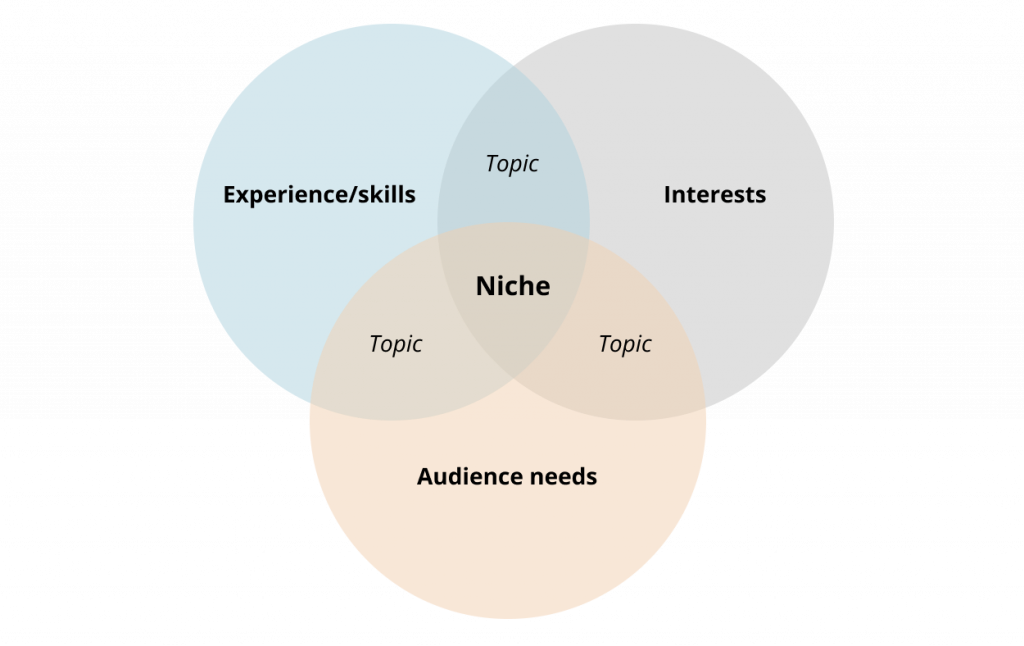
Types of Niches: It’s Not Just About Industry
Many assume niche branding solely means picking a vertical (industry). While that is the most common route, it is not the only one.
The Vertical Niche (Industry)
This is restricting your services to a specific sector.
- Example: An accounting firm that only works with dental practices.
- Benefit: You speak their language. You are familiar with their regulations, their software (e.g., Dentrix), and their seasonal cash flow issues.
The Horizontal Niche (Role/Function)
This involves solving a specific problem across multiple industries.
- Example: A design agency that only does investor pitch decks.
- Benefit: You become the world’s best at a specific output. Whether the client is in fintech or biotech, the deliverable—a high-stakes presentation—remains the focus.
The Psychographic Niche (Mindset)
This is the most powerful and difficult niche to secure. It targets a shared belief system or attitude rather than a job title.
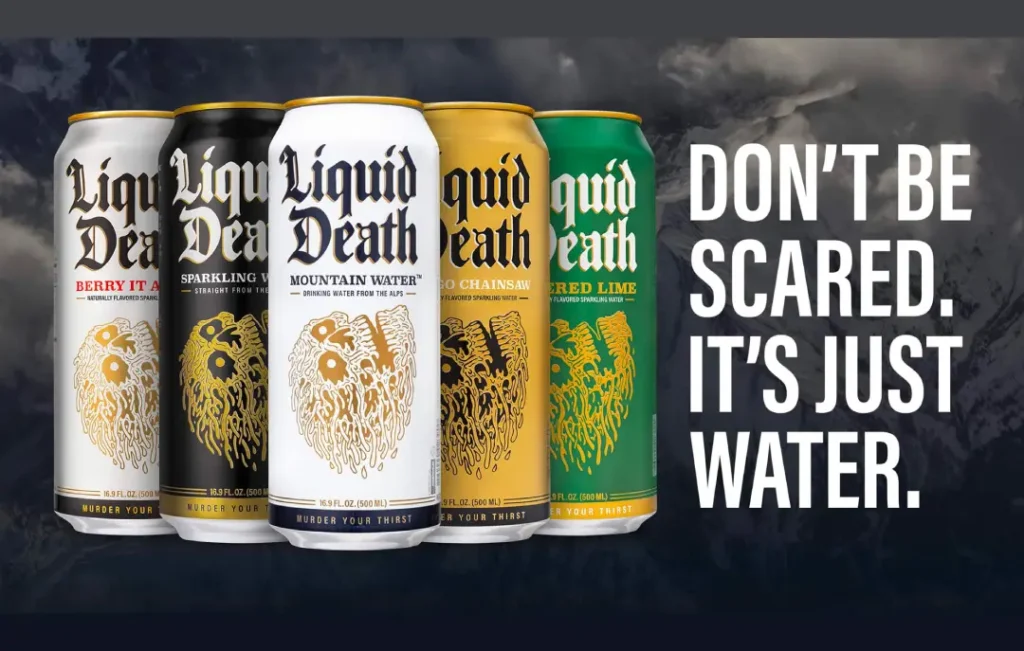
- Example: Liquid Death.
They sell water. Technically, a commodity. But they don’t market to “thirsty people.” They market to straight-edge punks, metalheads, and people tired of corporate “wellness” marketing. By branding water with skulls and “murdering your thirst,” they created a niche in a market that ostensibly had zero room for innovation.
Consultant’s Note: We often advise clients to combine these. A horizontal niche within a vertical sector (e.g., “SEO for Shopify Plus Stores”) is often where the “Blue Ocean” lies. Read more about Blue Ocean Strategy to understand how to create an uncontested market space.
The Strategy: How to Niche Down Without Dying
Moving from a generalist to a specialist brand requires surgery, not just a bandage. Here is the process we deploy with clients at Inkbot Design.
Step 1: The Profitability Audit
Do not pick a niche based on “passion.” Pick it based on data.
Review your invoices from the last two years.
- Which projects had the highest margin?
- Which clients were the easiest to manage?
- Which projects generated the best referrals?
You will likely find the Pareto Principle at play: 80% of your profit comes from 20% of your client types. That 20% is your niche.
Step 2: Market Viability Testing (The TAM/SAM/SOM Calculation)
Before you rebrand, you must ensure the pool is deep enough.
- TAM (Total Addressable Market): Every possible customer.
- SAM (Serviceable Available Market): The segment you can reach.
- SOM (Serviceable Obtainable Market): The portion you can realistically capture.
If your niche is “Left-handed underwater basket weavers in Leeds,” your SOM is likely zero. You need a “Minimum Viable Audience”—small enough to dominate, large enough to feed the business.
Step 3: The “Fear of Inclusion” Messaging
Your brand identity must actively repel the wrong people.
If your website says, “We help businesses grow,” you have failed.
It should say, “We help Series B Fintech startups reduce churn.”
If a local restaurant owner lands on that page, they should immediately think, “This is not for me.” That is a success, not a failure. You have saved your sales team from a wasted phone call.
Real-World Examples: The Proof is in the Profit
1. Kit (Formerly ConvertKit)

The Niche: Email marketing for Creators.
The Context: When ConvertKit launched, MailChimp dominated the market. MailChimp was for everyone—small shops, massive corps, non-profits. ConvertKit didn’t try to be better than MailChimp at everything. They focused solely on professional bloggers and creators.
The Result: By ignoring e-commerce and enterprise features, they built tools specifically for content creators (tagging, sequences). They are now a powerhouse generating over $40M in annual recurring revenue, largely because they refused to serve generic businesses.
2. GoPro

The Niche: Action sports documentation.
The Context: Camcorders existed for decades. Sony and Canon owned the market. GoPro didn’t try to make a better wedding camera. They made a camera for surfers and skydivers.
The Result: They created a category. Even as they expanded, their brand visibility remains tied to extreme durability and action.
3. Comparison: The Generalist vs. The Specialist
Let us look at a direct comparison of how two theoretical agencies present themselves.
| Feature | The Generalist (Amateur) | The Specialist (Pro) |
| Headline | “We do digital marketing for everyone.” | “PPC Management for SaaS Companies.” |
| Value Prop | “Full-service solutions.” | “We lower your CAC by improving Quality Score.” |
| Pricing | Hourly rate, negotiable. | Value-based retainer, fixed. |
| Trust Factor | Low (Jack of all trades). | High (Deep domain expertise). |
| Sales Cycle | Long (Need to prove capability). | Short (Referral/Reputation driven). |
The State of Niche Branding in 2026: The AI Factor
We must address the elephant in the room: Artificial Intelligence.
Since the explosion of Generative AI (LLMs) in 2023-2024, the cost of producing generic content has dropped to zero. The internet is flooded with average, “good enough” copy and design.
In 2026, being average is a death sentence.
If you are a generalist copywriter, ChatGPT has already replaced you. If you are a “legal copywriter for crypto firms,” AI cannot replicate your insight because it requires a real-time, nuanced understanding of a volatile regulatory environment.
Niche branding is your defence against commoditisation by AI. Machines are great at the general; they struggle with the specific, the novel, and the highly contextual. Your niche expertise is the “Human Premium” clients will still pay for.
The “Micro-Community” Shift
Broad social media algorithms are decaying. People are retreating into private communities (Slack groups, Discord servers, gated newsletters). These communities are organised by interest—i.e., by niche.
To penetrate these spaces, you cannot be a generalist. You must be an invited expert. Niche branding gives you the key to these gated communities.

The Consultant’s Reality Check
I once audited a client, a logistics software company, that was terrified of removing “retail” from their target list, even though 95% of their revenue came from “pharmaceuticals.”
They argued, “But what if a massive retail chain calls us?”
My response was direct: “They won’t call you. They will call the logistics firm that specialises in retail. And meanwhile, the pharmaceutical giant won’t call you either, because you look like a generalist who doesn’t understand cold-chain compliance.”
We rebranded them strictly for pharma logistics. Their leads dropped by 40% in volume. Their revenue increased by 200% over the course of twelve months.
Quality beats quantity. Always.
If you are struggling to define your position, you may need to conduct a more thorough competitive analysis to identify the true gaps in your industry.
Common Myths Debunked
Myth 1: “Niche branding limits my growth.”
Reality: Amazon started as a niche bookseller. Facebook started as a niche network for Harvard students. You scale from a niche; you do not scale into one. Dominate a small pond, then move to the lake.
Myth 2: “It’s boring to do the same thing every day.”
Reality: Mastery is not boring; it is profitable. Furthermore, delving deeply into a specific industry reveals complexities that are not immediately apparent. The nuances of brand repositioning for a fintech startup differ significantly from those of a fashion label.
Myth 3: “I’ll lose my existing clients.”
Reality: You don’t have to fire them immediately. You simply stop marketing to them. Let the legacy clients fade out naturally as you replace them with higher-paying niche clients. This is a transition, not a cliff edge.
The Verdict
Niche branding is not about making your world smaller; it is about making your impact bigger.
In a noisy, cluttered, AI-saturated marketplace, specificity is the ultimate currency. By trying to please everyone, you are choosing to be a commodity. By choosing a niche, you are essentially declaring yourself an expert.
It requires courage to say “no” to revenue that doesn’t fit your model. But that “no” makes your “yes” worth significantly more.
Is your brand message diluted by trying to serve too many masters?
It might be time to narrow your focus to widen your margins.
Request a Quote today, and let us help you carve out the position you deserve.
Frequently Asked Questions (FAQ)
What is the difference between niche branding and a target audience?
A target audience is the group you speak to (in terms of demographics). Niche branding is a holistic strategy that aligns your entire business model, product, and identity to serve that audience exclusively. One is a marketing tactic; the other is a business strategy.
Can a business have more than one niche?
Yes, but proceed with caution. You can operate multiple “brand verticals,” but they should likely have distinct landing pages or even separate sub-brands to avoid confusing the customer. Trying to merge two distinct niches (e.g., “Plumbing and Web Design”) destroys credibility.
How do I know if my niche is too small?
Calculate the Total Addressable Market (TAM). If the number of potential clients multiplied by your average Customer Lifetime Value (LTV) cannot support your operational costs and profit goals, the niche is too small. You may need to broaden the scope slightly (e.g., from “Yoga for men over 70” to “Yoga for seniors”).
Is niche branding expensive to implement?
Actually, it is often cheaper. General branding requires a significant advertising budget to reach a broad audience. Niche branding enables hyper-targeted advertising and SEO, which significantly reduces your Cost per Lead (CPL) and Customer Acquisition Cost (CAC).
What happens if the market shifts and my niche disappears?
This is a valid risk (e.g., a niche agency for BlackBerry apps). This is why you must focus on the problem you solve, not just the platform. If you solve “secure mobile communication,” you can pivot from Blackberry to iOS/Android.
Does niche branding work for B2C companies?
Absolutely. Consider Lush (ethical, fresh cosmetics) or Tesla (originally a high-end electric sports car company). In B2C, niches are often defined by lifestyle, values, or aesthetics (psychographics) rather than just utility.
How does niche branding improve SEO?
It allows you to target “long-tail keywords” with high intent. Ranking for “shoes” is impossible. Ranking for “vegan running shoes for flat feet” is achievable and converts at a much higher rate because the user knows exactly what they want.
Should I rebrand if I want to niche down?
Often, yes. Your visual identity and voice need to reflect the new specialist positioning. A generic logo and vague tagline won’t resonate with a highly specific audience. Check our brand differentiation strategy for more.
Can I start as a generalist and niche down later?
Most businesses do. They start by taking on any work to survive (cash flow). Once they have data on what is profitable and enjoyable, they refine their positioning. However, do not wait too long, or you risk becoming known as the “cheap generalist.”
How do I validate a niche before committing?
Create a landing page and run a small PPC (Pay-Per-Click) campaign targeting that specific niche. If people click and convert, you have proof of concept. If no one clicks, the niche might not be viable, or your value proposition is weak.