Brand Naming: How to Name a Company in 7 Steps
Most entrepreneurs treat brand naming like a game of Scrabble played while drunk.
They throw vowels at a wall, hope for a “dot-com” availability, and wonder why their business feels like a cheap imitation of a better idea eighteen months later.
If you think a name is just a label, you’re already behind. A name is the primary hook of your brand identity. It is the first piece of intellectual property you will defend and the most frequent touchpoint your customer will encounter.
Getting it wrong isn’t just an aesthetic error; it’s a financial drain.
According to McKinsey & Company, companies that excel in design—starting with a cohesive brand strategy—achieve 32% higher revenue growth than their peers.
A name that fails to scale or clear legal hurdles will cost you tens of thousands in rebranding fees and lost “brand equity.”
- Define brand DNA first: align values, target audience, and long-term vision before brainstorming names.
- Pursue distinctiveness, phonetic clarity, and legal clearability to ensure recall and protectability.
- Run linguistic, cultural, and real-world tests to avoid embarrassing meanings and pronunciation issues.
- Secure domains, trademarks, and social handles fast; prioritise protection over trend-driven brevity.
What is Brand Naming?
Brand naming is the strategic process of creating a distinctive, linguistically sound, and legally protectable verbal identifier for an organisation, product, or service. It functions as the foundational “Entity” in both human memory and digital search algorithms, requiring a balance of semiotics, phonetics, and trademark law.
The three core elements of an effective brand name are:
- Distinctiveness: The ability to stand out within a specific “Trademark Class” to avoid consumer confusion.
- Phonetic Resilience: Ensuring the name is easy to pronounce, spell, and recall across different languages and accents.
- Legal Clearability: The verification that the name does not infringe upon existing “Prior Art” or registered trademarks in relevant jurisdictions.
Step 1: Establish Your Identity Infrastructure
Before you open a dictionary, you must define the “Brand DNA.” Most naming projects fail because they start with “What sounds cool?” instead of “What does this name need to achieve?”
At Inkbot Design, we start with an audit of the competitive landscape. If every competitor in the Fintech space uses blue logos and names ending in “-ly” or “-ify,” choosing a similar name makes you invisible. You are paying a “Commodity Tax” for your lack of imagination.
The Strategic Brief
Your brief should outline your brand’s core values, target demographic, and long-term vision. Are you an “Evocative” brand (like Nike) or a “Descriptive” brand (like British Airways)?
- Evocative names focus on a feeling or a metaphor. They are easier to trademark but require more marketing spend to explain.
- Descriptive names tell the customer exactly what you do. They are harder to trademark because “Common Usage” terms are generally not protectable.
Real-World Example:
Look at the evolution of business names in the tech sector. “Research In Motion” was a descriptive name for a company that eventually had to adopt its product name, “BlackBerry,” because the evocative name had captured the market’s imagination far more effectively than the corporate description.
Step 2: The Ideation Phase (Beyond the Thesaurus)
Amateurs use a thesaurus. Professionals use linguistics. You need to explore different “Naming Buckets” to ensure a wide variety of options.
The 5 Primary Naming Buckets
- Founder Names: (e.g., Dyson, Ford). High prestige, but difficult to scale if the founder leaves.
- Descriptive: (e.g., The Body Shop). Clear, but often boring and legally “Weak.”
- Metaphorical: (e.g., Amazon, Safari). Captures the “Spirit” of the brand.
- Acronyms: (e.g., IBM, BMW). Generally, a bad idea for new startups as they lack personality and are hard to remember.
- Fabricated: (e.g., Kodak, Exxon). Meaningless words that are highly protectable and have no “Cultural Baggage.”
Workshop: 3 Questions to Unblock Your Brain
Staring at a blank page? Answer these three questions to fill your “Naming Buckets.”
- The “Metaphor” Question: If your business were an animal, a vehicle, or a historical figure, what would it be? (e.g., Fast + Strong = Jaguar).
- The “Outcome” Question: How does your customer feel AFTER using your product? (e.g., Relief -> “Soothe”).
- The “Ingredient” Question: What is the raw material or core mechanism of your service? (e.g., Light -> “Lux”).
Phonetic Symbolism: The Science of Sound
Data from the Nielsen Norman Group suggests that visual and auditory consistency have a significant impact on user trust. In naming, this involves “Sound Symbolism.”
- Plosives, which include sounds like P, T, K, B, D, and G, create a sense of power and reliability (e.g., Kodak).
- Fricatives, such as sounds like S, F, and V, create a sense of speed and elegance (e.g., Swarovski).
Consultant’s Reality Check: I once audited a client who wanted to name their security firm “Vela.” It sounds soft, like a candle. We changed it to a name with hard “K” sounds to project strength. Soft sounds don’t sell security.
The Name Viability Tester
A “clever” name can cost you millions in lost traffic. Before you print business cards, put your name idea through these 3 critical tests.
Step 3: The Trademark Minefield (The Uncomfortable Truth)
This is where 90% of naming projects die. You found a name you love. The “.com” is available. You think you’re safe. You aren’t.
A domain name is not a trademark. Just because you bought the URL doesn’t mean you have the right to trade under that name. Trademark law is governed by “Classes.” If you are in Class 9 (Software) and someone else is using that name in Class 25 (Clothing), you might be okay. But if there is any “Likelihood of Confusion,” you are headed for a Cease and Desist.
The DIY “Safety Check” Protocol
Before you pay a lawyer, do these 5 free checks to kill the obvious non-starters.
- Google (Exact Match): Search “BrandName” in quotes. Any competitors?
- The “App Store” Check: Search Apple/Google Play. Is there an app with this name?
- The Social Handle Check: Use Namechk or Knowem to see if the @handle is taken on Instagram/TikTok.
- The Government Database: Search the UK IPO (or USPTO) database for “Live” marks in your specific class.
- The Urban Dictionary: Check slang meanings to avoid accidental embarrassment.
Debunking the “Brevity Bias”
There is a common myth that shorter is always better. While short names are easy to type, they are a nightmare for trademarking.
In 2026, the density of registered trademarks for 4 and 5-letter words is nearly 100% in major economies.
Choosing a slightly longer, more distinctive name—what we call a “Unique Entity”—actually lowers your legal risk and makes it easier for search engines to identify your brand without competing with common dictionary terms.
| Feature | Amateur Approach | Professional Approach |
| Search Basis | “Is the .com available?” | “Is the Trademark clearable?” |
| Vetting | Asking friends and family. | Linguistic screening & Legal search. |
| Structure | Following current trends (-ify, -ly). | Future-proofing for global scale. |
| Goal | To “sound cool” today. | To build an asset that lasts 20 years. |
The 2026 Naming Tech Stack (What Pros Actually Use)
Stop using “Business Name Generator 3000”. Use the tools that attorneys and linguists use to validate Intellectual Property.
| Tool Category | Recommended Tool | Purpose |
| Global Trademark | WIPO Global Brand Database | Checks international treaties and “Madras Protocol” filings. Essential for scaling. |
| Linguistic Check | WordSafety | Checks for offensive meanings in 15+ major languages to prevent a “Pee Cola” disaster. |
| Social Availability | Namechk | Scans 100+ social platforms instantly. Don’t fall in love with a name until you run this. |
| Semantics | OneLook Reverse Dictionary | Finds words based on definitions/concepts rather than just synonyms. |
| Sound Symbolism | Phonolook (or similar) | Analyzes the “Phonotactics” (sound combinations) to ensure rhythmic flow. |
Step 4: Linguistic and Cultural Screening
If you plan to sell outside the UK, your name must survive the “Translation Test.” A name that sounds premium in London might be an insult in Lisbon.
Real-World Failure:
When Pee Cola launched in Ghana, the name was intended to be a fun, phonetic play. When it attempted to expand into Western markets, the “Linguistic Gap” was insurmountable. Similarly, the “Chevy Nova” famously struggled in Spanish-speaking markets because “No va” translates to “It doesn’t go.”
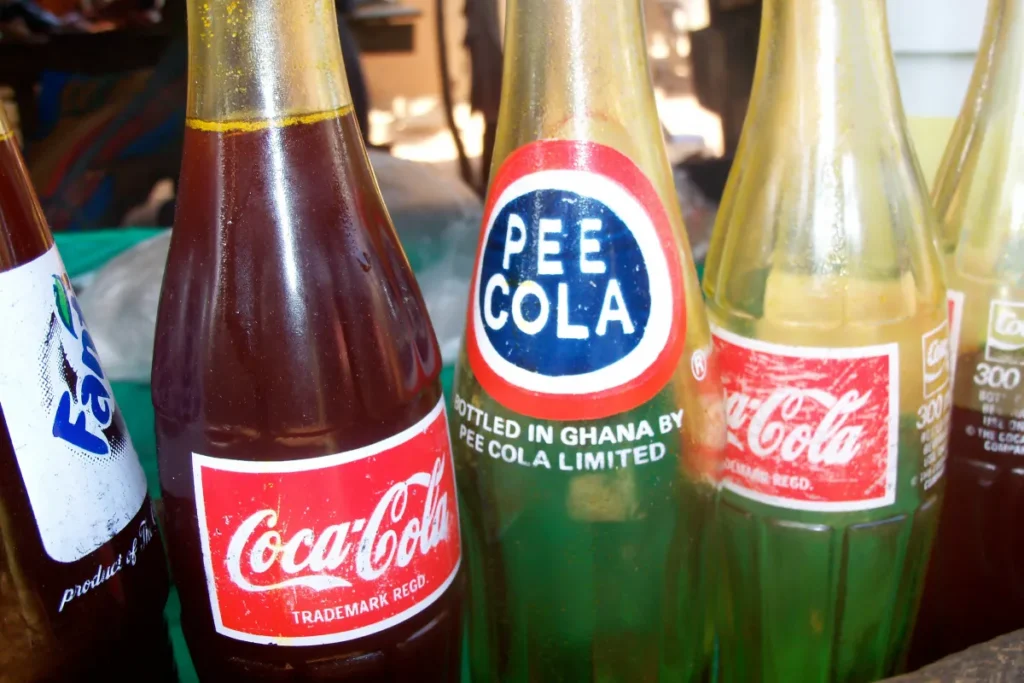
You must perform a “Negative Connotation Audit.” This involves checking the name against:
- Urban Dictionary: To ensure it hasn’t been co-opted by subcultures.
- Foreign Language Dictionaries: Focus on your top 5 expansion markets.
- Phonetic Slang: Does it sound like something else when spoken quickly in a noisy environment?
Step 5: Visual Scalability and Digital Infrastructure
A name doesn’t live in a vacuum. It lives on business cards, mobile app icons, and social media headers. If your name is “The International Consolidated Engineering Group of Greater Manchester,” your logo will be a mess.
The “Favicon” Test
Can your brand name be represented by a single letter or a compact mark? If not, your digital presence will suffer. Brands like Inkbot Design focus on how the brand naming process integrates with the visual identity.
The SERP Dominance Factor
In 2026, naming for “Generative Engine Optimisation” (GEO) is vital. If you name your company “Apple Pie,” you will likely never rank #1 on Google, as you are competing against a generic entity. You need a name that creates its own “Knowledge Graph” entry. This is why “Synthetic Names” (like Zillow or Hulu) are so powerful; they are unique entities that the algorithm can easily categorise.
Optimising for AI Perception
In the era of Generative Engine Optimisation (GEO), your brand name must be readable by machines as well as humans. Large Language Models (LLMs) like Gemini and GPT-5 process text via “Tokenization”—breaking words into numerical chunks.
If you choose a name with excessive intentional misspellings (e.g., “KwikEats”), AI models may treat it as two separate, unrelated tokens, diluting your Entity Salience.
The Tokenization Audit:
- Zero-Shot Pronunciation: Ask an AI voice agent (like Gemini Live): “Read this word: [BrandName].” If it struggles, your customers will too.
- Contextual Hallucination: Ask an LLM: “What is a [BrandName]?” If it confidently tells you it’s a type of tropical fish when you are selling software, you are fighting a losing battle against the model’s training data.
- The “Stemming” Risk: Ensure your made-up word doesn’t stem from a negative root in major languages. AI is hyper-sensitive to linguistic patterns.
Pro Tip: Unique, “Empty Vessel” names (like Kodak) are better for GEO than dictionary words because they face zero semantic competition in the Knowledge Graph.
Step 6: Validation and “The Real World” Test
Stop asking your spouse for their opinion. They love you, so they will lie to you. Or they will hate it because they don’t understand your business strategy.
The “Starbucks” Test
Go to a coffee shop. When they ask for your name, give them your proposed brand name.
- Did they ask you to repeat it? (Spelling issue).
- Did they mispronounce it? (Phonetic issue).
- Did they look at you like you were crazy? (Cringe factor).
Evidence-Based Testing
A study by the Institute of Practitioners in Advertising (IPA) found that brands with “Distinctive Assets”—of which the name is the most important—are much more likely to achieve long-term profitability. You should test your top 3 candidates using a “Recall Test.” Show the names to a group of people for 10 seconds, then ask them to write down the names 24 hours later. The name with the highest recall wins.
The Decision Matrix: Score Your Candidates
Don’t pick based on “vibe.” Score each name out of 5.
| Criteria | Name A | Name B | Name C |
| Distinctiveness (Does it stand out?) | /5 | /5 | /5 |
| Brevity (Is it easy to spell/say?) | /5 | /5 | /5 |
| Availability (URL/Socials open?) | /5 | /5 | /5 |
| Relevance (Does it fit the sector?) | /5 | /5 | /5 |
| Protectability (Can we trademark it?) | /5 | /5 | /5 |
| TOTAL | /25 | /25 | /25 |
Rule: Any name scoring below 15 is a liability. Discard it.
Step 7: Implementation and Protection
Once you’ve selected the winner, you must move fast. The “Cost of Retrieval” for a name that gets sniped by a competitor is astronomical.
- Register the Domain: Don’t just get the .com. Get the .co.uk, .net, and the relevant “Country Code Top-Level Domains” (ccTLDs).
- File for Trademark: Use a qualified IP solicitor. This is not the time to “DIY.”
- Secure Social Handles: Use tools like Knowem to check availability across 500+ platforms.
- Create a Launch Story: A name is just a vessel. You need to fill it with meaning.
Digital Entrenchment: The Schema Strategy
Once your name is chosen, you must “feed” it to Google. Don’t wait for them to find you. Launch your site with Organization Schema explicitly defining your alternateName, logo, and sameAs (social) properties. This disambiguates your brand from generic words immediately.
Consultant’s Reality Check: I’ve seen entrepreneurs spend £50,000 on a website but refuse to spend £1,500 on a proper trademark search. They ultimately lost the domain, the website, and the brand three months later. Don’t be that person. Request a quote for professional guidance before making a commitment.
The State of Brand Naming in 2026
The last 18 months have seen a massive shift in how to name your business. We are seeing the death of the “Keyword-Stuffed” name. Five years ago, naming your company “Best London Plumbers” was a viable SEO strategy. Today, Google’s “Helpful Content” updates and AI-driven search results prioritise “Brand Entities” over keyword matches.
Furthermore, business name generators have flooded the market with “AI-slop” names. These tools often suggest names that are linguistically bland and legally “Dirty.” The value of human-led, strategic naming has actually increased because the “Signal-to-Noise” ratio in the digital marketplace is at an all-time low.
The Verdict
Naming is the most difficult part of the branding process because it is where “Logic” meets “Linguistics.” You are looking for a needle in a haystack, and the haystack is on fire. A great name won’t save a bad product, but a bad name will definitely kill a great one.
Stop looking for “pretty” words. Start looking for “strategic” assets. If you want a brand that survives the next decade, follow the 7 steps, ignore the fluff, and protect your intellectual property like your business depends on it—because it does.
If you’re struggling to find a name that isn’t already taken or sounds like a 1990s pharmaceutical, contact us at Inkbot Design. We help correct the mistakes that others make before they become expensive regrets.
Frequently Asked Questions (FAQ)
Why is a brand name so important for a small business?
A brand name is your primary “Entity Identifier.” It builds trust, aids memory, and serves as the foundation for all your marketing efforts. A poor name increases your marketing costs because you have to work harder to explain who you are and what you do.
Can I copyright a business name generated by AI?
Generally, no. In the US and UK, copyright requires human authorship. However, you can Trademark an AI-generated name if you use it in commerce to identify goods/services. The source of the idea matters less than the “Use in Commerce.”
What are the best industries for “Descriptive” names in 2026?
Descriptive names (e.g., “WeBuyAnyCar”) work best for high-trust, utilitarian sectors like insurance, plumbing, and legal services where clarity trumps “vibe.” For Tech and Fashion, Evocative names remain superior.
How does voice search affect brand naming?
Massively. If Alexa or Siri cannot understand your name without spelling it out, you lose “Voice Share.” Avoid homophones (words that sound the same but are spelled differently) like “Rite” vs “Write.”
What is the difference between a Trade Name and a Trademark?
A trade name (or “Doing Business As”) is the official name of your business for tax purposes. A trademark is a legally protected “Mark” that prevents others in your industry from using the same or a similar name.
Do I really need a .com domain?
While .com remains the “Gold Standard,” the rise of industry-specific extensions (.tech, .design, .store) and local extensions (.co.uk) has made it less essential. However, the .com still carries the highest “Trust Signal” for consumers.
How do I know if my name is offensive in another language?
You must perform “Linguistic Screening.” This involves consulting native speakers or using professional naming agencies that have access to global linguistic databases. Never rely on automated translation tools for this.
Is it better to have a descriptive name or an evocative one?
Descriptive names are better for short-term SEO, but they are harder to protect. Evocative names are better for long-term brand building and global scaling. Your choice depends on your long-term exit strategy and marketing budget.
What happens if I accidentally use someone else’s trademark?
You will likely receive a “Cease and Desist” letter. You may be forced to stop using the name immediately, destroy existing stock, and pay damages. This is why a professional trademark search is non-negotiable.
How can AI help with brand naming?
AI is a useful tool for “Volume Generation”—producing hundreds of ideas quickly. However, it lacks the “Contextual Intelligence” to handle legal clearance, cultural nuance, and the strategic positioning required for a successful brand.
Why do so many tech companies have names that end in “-ly”?
This was a trend driven by domain availability and a desire to sound “Friendly” and “Action-oriented.” However, it has become a “Visual Cliché” that makes new brands look dated and unoriginal.
What is the “Bouba/Kiki” effect in naming?
It is a linguistic phenomenon where people associate certain sounds with specific shapes. “Bouba” (round sounds) feels soft and friendly, while “Kiki” (sharp sounds) feels precise and energetic. Use this to align your name’s sound with your brand’s personality.


