The 7 Stages of the Branding Process for Professional Services
Most corporate branding exercises reduce firm profitability because they treat corporate identity as an internal consensus-building exercise rather than an aggressive, market-facing differentiation strategy.
Partners frequently mistake internal alignment workshops for market strategy, wasting capital on superficial aesthetic updates that fail to alter market perception. This error carries severe financial consequences.
Data from McKinsey & Company indicates that B2B service firms with distinct market positioning achieve operating margins up to 20% higher than generic competitors.
When a firm looks, speaks, and positions itself identically to its rivals, procurement teams default to the only metric left: price.
To protect your margins and command a premium, your firm must treat identity deployment as a strict, sequential engineering discipline.
Deploying a high-performing brand identity design requires removing emotion from the boardroom and executing a clear commercial program.
- Conduct a cold, empirical market and asset audit to expose positioning gaps and remove partner assumptions.
- Choose narrow, defensible market positioning that sacrifices broad appeal to protect fee premiums and avoid commodity pricing.
- Engineer strict verbal and visual identity systems, enforce disciplined rollout across every touchpoint to guarantee distinctiveness and prevent brand erosion.
- Track hard commercial metrics quarterly, align employees with training, and iterate messaging to verify fee retention and measurable ROI.
What Is the Branding Process?
The branding process is a structured, seven-stage commercial framework designed to establish market distinctiveness, secure fee premiums, and verify corporate entities. It translates abstract corporate values into measurable market assets that influence buyer selection.

- Market Auditing: Auditing external competitor positioning and internal financial realities to identify clear market gaps.
- System Design: Designing distinctive visual and verbal assets that prevent client confusion during procurement selection.
- Deployment Tracking: Deploying brand architecture systematically and monitoring equity retention across all digital channels.
The branding process is a structured, seven-stage commercial framework designed to establish market distinctiveness, secure fee premiums, and verify corporate entities.
Stage 1: Internal and Market Auditing
You must isolate your true market perception from your internal partner assumptions. Most professional services firms rely on anecdotal feedback from senior partners, which obscures structural positioning issues.
A proper brand audit demands a cold review of competitor assets, client selection data, and current digital visibility metrics.
Research from the HubSpot Research Corporation shows that over 40% of B2B buyers review multiple pieces of vendor content before shortlisting partners. If your current messaging mirrors your top three competitors, you have a structural positioning failure.
You must examine client touchpoints to find out exactly where your expertise description blurs into industry platitudes.
Analyse every piece of sales collateral, website copy, and pitch deck used over the last 24 months. Match these assets against your competitors to find identical phrases, such as “client-centric approach” or “trusted advisors.”
This audit forms the commercial baseline for all subsequent design investments.
An objective brand audit is not a collection of internal opinions; it is a cold, empirical dissection of how your firm operates in the competitive arena compared to actual market alternatives. Firms that rely on partner intuition rather than structured buyer data consistently misallocate their marketing capital.
Stage 2: Strategic Differentiation and Positioning
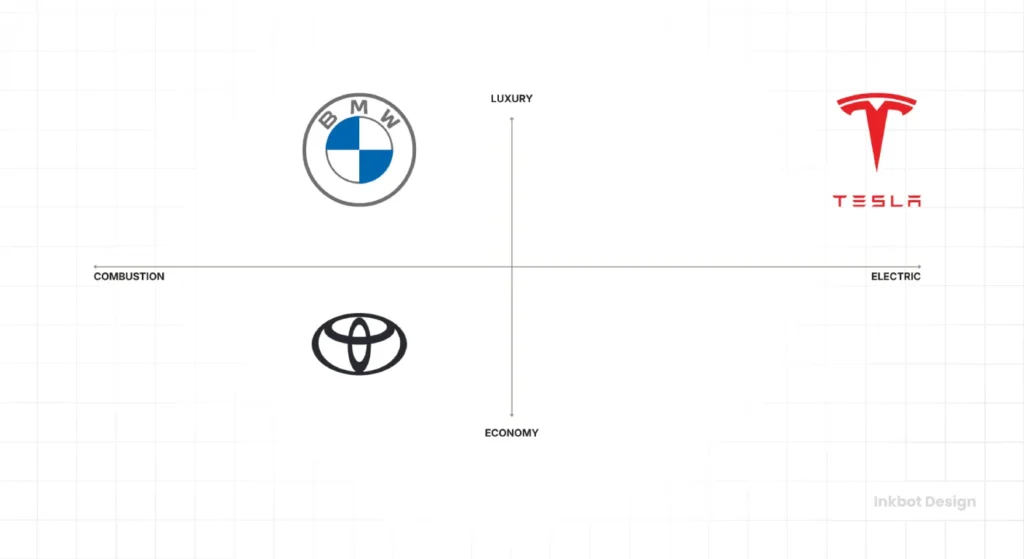
Positioning defines the explicit commercial space your firm owns in the prospect’s mind, making comparison difficult.
Without clear differentiation, your service becomes a commodity subject to aggressive discounting in procurement.
The Institute of Practitioners in Advertising (IPA) has repeatedly demonstrated that distinctiveness is the primary driver of long-term brand profitability and pricing power.
Your positioning strategy must identify a specific, defensible market claim based on your audited strengths. This choice requires sacrificing broad market appeal to dominate a lucrative, focused sector. If you attempt to serve every industry with equal competence, you retain no distinct identity for any of them.
Define your core target audience with granular clarity, focusing on their specific regulatory and financial pressures.
Your positioning statement must explicitly declare who you serve, how your methodology differs, and why alternatives introduce delivery risks. This strategic anchor protects your fee structures during economic contractions.
True strategic positioning requires an active refusal to be everything to everyone. The professional services firms that command the highest fees are those that narrow their market focus until their specific competence becomes completely irreplaceable.
Stage 3: Verbal Identity and Brand Messaging Frameworks
Your corporate voice establishes your professional authority before a prospect ever speaks to a senior partner.
Most advisory firms use dense, passive language that dilutes their core insights and alienates modern decision-makers.
According to the Nielsen Norman Group (NN/g), online readers scan text in an F-shaped pattern, looking for instant clarity rather than corporate prose.
Your verbal identity framework must establish precise rules for tone, vocabulary, and sentence structure across all corporate channels.
Eliminate generic industry vocabulary and replace it with direct, declarative statements that demonstrate domain authority. Define a messaging hierarchy that speaks directly to the specific pressures CEOs and Managing Directors face.
Every white paper, pitch document, and web page must read as if it were authored by the same authoritative specialist. This consistency builds deep cognitive trust, which directly accelerates the business development cycle.
Verbal identity is the direct translation of your firm’s intellectual authority into commercial currency. If your written insights read exactly like a generic generative AI output, your firm will be treated as an easily replaceable commodity.
Stage 4: Visual Identity Systems
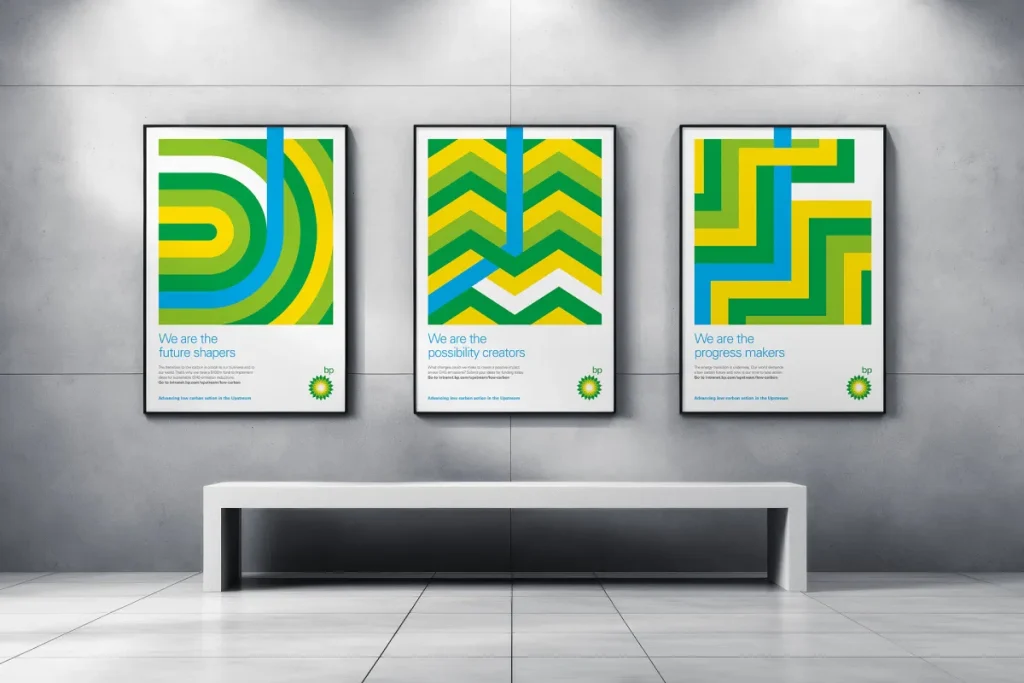
Visual identity design is an empirical system designed to build immediate recognition, not an artistic experiment.
The human brain processes visual cues significantly faster than written text, meaning your design choices establish your initial market credibility.
The famous Tropicana packaging redesign of 2009 serves as a classic warning for any corporate entity; changing core visual identifiers cost the brand an estimated $30 million in revenue within two months, as documented by AdAge.
This catastrophic failure proves that visual distinctiveness must be guarded fiercely during a brand update.
Your visual identity system must establish precise rules for logo marks, typographic hierarchies, and functional corporate colour palettes.
Select typography that balances contemporary authority with long-term readability across digital screens. Your colour choices must intentionally differentiate your firm from direct competitors while respecting the psychological expectations of your sector.
Document these rules in a rigid style guide to ensure flawless execution across every asset.
Visual identity design is not about personal aesthetic preferences; it is a serious system of distinct visual assets engineered to guarantee immediate market recognition and protect corporate brand equity.
Stage 5: Brand Collateral and Touchpoint Deployment
A visual identity system remains useless until it is accurately deployed across every client touchpoint. Many firms lose momentum here, leaving legacy assets active alongside new designs, which fractures market perception.
Research by Gartner indicates that inconsistent brand presentation across digital channels directly reduces buyer trust during final procurement reviews.
Create a comprehensive inventory of every asset your firm uses, from digital slide decks to physical office signage.
Systematically update every item to match your new visual and verbal identity standards. Prioritise high-visibility channels such as your corporate website, partner LinkedIn profiles, and primary proposal templates.
Provide your teams with locked, unalterable digital assets to prevent unauthorised design variations. This disciplined deployment guarantees that every client interaction reinforces your firm’s premium positioning.
Inconsistent asset deployment signals internal operational fragmentation to the market. A precise, systematic rollout across all corporate touchpoints ensures your firm presents a unified front that commands immediate commercial respect.
Stage 6: Internal Launch and Employee Alignment

Your partners and consultants are the direct face of your brand, meaning their alignment dictates your market success. If your team cannot clearly articulate your new positioning, your external marketing investment will fail.
The Edelman Trust Barometer has consistently shown that company technical experts are often viewed as more credible than official corporate marketing channels.
Conduct structured internal training sessions to educate your entire staff on the new verbal identity and strategic positioning.
Explain the commercial reasoning behind the changes, demonstrating how the new framework helps win premium mandates.
Equip every team member with simple elevator pitches and clear messaging guidelines for client interactions. When your internal culture fully aligns with your external identity, your brand promise becomes a reliable reality.
Your brand is only as strong as your team’s ability to communicate it under pressure during a competitive pitch. Internal alignment sessions are not optional HR exercises; they are vital commercial preparation.
Stage 7: Market Implementation and Equity Tracking
You must track clear, objective metrics over time to verify that your new brand assets are generating a commercial return.
Relying purely on superficial metrics like website page views provides no insight into your true positioning health.
Data from the Ehrenberg-Bass Institute confirms that tracking brand equity requires consistent monitoring of distinct visual recognition and mental availability.
Establish a formal brand equity tracking system to measure changes in market awareness, premium fee acceptance, and inbound lead quality.
Review these metrics every quarter to identify potential attribution leakage or competitive erosion.
Monitor how your target audience responds to your thought leadership and digital content assets. Use these empirical insights to continuously refine your messaging, keeping your corporate identity sharp and commercially effective.
Measuring corporate brand equity requires tracking hard commercial realities, including pitch conversion rates, fee-margin retention, and premium-client acquisition costs over time. Anything less is merely a vanity exercise.
Why Democratic Branding Eradicates Market Distinctiveness
Building a corporate brand architecture around internal employee sentiment surveys or partner consensus workshops was once considered standard practice to ensure company-wide buy-in.
It fails now because committee-driven design forces corporate positioning to gravitate toward the safest, most generic industry mean, completely eliminating distinctiveness.
According to research by the Ehrenberg-Bass Institute, brand growth requires clear, continuous distinctiveness that captures market attention rather than internal consensus that dilutes competitive advantages.
Partners must replace democratic workshops with a directive, research-backed strategy focused strictly on market differentiation and buyer mechanics.
Brand Strategy Execution Framework
| Decision Point | The Wrong Way | The Right Way | Why It Matters |
| Positioning Development | Allowing internal partner votes to decide corporate messaging direction. | Anchoring the core strategy strictly on verified market gaps and buyer profiles. | Prevents generic positioning that forces price competition during procurement reviews. |
| Visual Asset Selection | Choosing typography and colours based on board members’ personal preferences. | Engineering distinctive visual assets verified for rapid market recognition. | Ensures immediate recognition and protects long-term brand equity. |
| Verbal Frameworks | Populating corporate materials with passive, generic industry buzzwords. | Deploying direct, active language that asserts undisputed domain expertise. | Captures modern buyer attention and builds instant professional credibility. |
| Collateral Rollout | Allowing legacy templates to remain active across peripheral corporate channels. | Executing strict, mandatory updates across every client touchpoint. | Eliminates market confusion and signals institutional operational discipline. |
| Success Evaluation | Relying on superficial digital vanity metrics like social media impressions. | Tracking premium fee acceptance, pitch win rates, and incoming lead quality. | Verifies the actual financial return on your brand identity investment. |
The Verdict
Most corporate branding exercises reduce firm profitability because they treat corporate identity as an internal consensus-building exercise rather than an aggressive, market-facing differentiation strategy.
This comprehensive guide has demonstrated that sustainable growth, premium fee protection, and buyer shortlisting require a disciplined, data-driven approach to corporate asset engineering.
When you replace democratic boardroom compromise with strict market mechanics, your visual and verbal identity becomes an appreciating corporate asset rather than an ongoing marketing expense.
Your single most important directive today is to audit your existing client touchpoints against your three closest competitors.
Identify every shared, generic phrase and visual cliché that dilutes your true expertise. If your firm remains indistinguishable on paper, your pricing power will continue to erode in the live market.
Protect your competitive advantage by implementing a structured framework that commands immediate commercial authority. Request a free Brand Equity Audit™ at https://inkbotdesign.com/services/brand-audits/ to discover exactly where your current identity is losing commercial ground and access a clear path to fix it.
FAQs
Why do most professional services brand updates fail to generate an ROI?
Most brand updates fail because firms prioritise internal partner consensus over distinct market positioning, leading to generic visual and verbal identities. Without clear differentiation, the new assets fail to influence procurement teams, forcing the firm to continue competing strictly on price.
How long does a corporate branding process typically take to execute?
A comprehensive corporate branding process for a mid-market professional services firm typically takes 12 to 24 weeks to execute properly. This duration covers exhaustive market auditing, positioning strategy, visual and verbal asset design, and systemic touchpoint deployment.
What is the difference between brand positioning and brand identity?
Brand positioning defines the specific commercial space your firm owns in the prospect’s mind relative to your market competitors. Brand identity comprises the visual and verbal assets engineered to clearly and distinctly communicate that positioning.
Is it true that corporate typography affects professional service credibility?
Corporate typography directly affects credibility because it dictates the visual authority of your thought leadership across digital screens. Inappropriate typeface choices can make expert analysis look unprofessional, reducing buyer engagement during critical procurement checks.
How often should a UK law or consulting firm review its brand positioning?
A professional services firm must conduct a structured brand positioning review every twenty-four months to protect its market relevance. This regular evaluation identifies competitive erosion, updates messaging for new regulatory environments, and mitigates premium fee leakage.
When should a firm choose a complete rebrand over a visual refresh?
A complete rebrand is required when your firm shifts its core target audience, changes its business model, or experiences systemic alignment failures in its positioning. A visual refresh is appropriate when your existing strategy remains highly profitable but your visual presentation looks dated.
How do you prevent internal partners from altering corporate design templates?
Firms must deploy locked digital asset management systems and clear, unalterable proposal templates to maintain complete visual consistency. Establishing strict governance protocols prevents individual partners from modifying engineered brand assets during localised business development campaigns.
What role does verbal identity play in modern B2B procurement processes?
Verbal identity dictates how clearly your firm communicates its specialised expertise during automated and human shortlisting stages. Clear, direct language passes evaluation filters much faster than passive, buzzword-heavy corporate prose that obscures actual delivery capabilities.
Why is distinctiveness more important than internal consensus in brand strategy?
Distinctiveness ensures your firm is remembered by prospective buyers when a need for your specific advisory service arises. Internal consensus frequently dilutes unique attributes, producing a safe but entirely unmemorable identity that fails to win market share.
How do you track the mental availability of a corporate brand?
Mental availability is measured by tracking unprompted brand recall and premium inquiry volume within your target audience sectors. Regular buyer surveys and analysis of inbound lead sources provide clear indicators of your firm’s mental market share.
