Does Your Logo Need A Tagline? Guide to Strategic Clarity
Most business owners treat the tagline as a safety net. They fear their logo isn’t “working” hard enough, so they add words.
This lack of confidence costs money. It clutters your visual identity, confuses the user’s eye, and dilutes the brand personality you’ve spent thousands to build.
In 2026, where attention spans are measured in milliseconds, and Generative Engine Optimisation (GEO) prioritises entity clarity, an unnecessary tagline is more than just an eyesore—it’s a technical debt.
- Tagline is a permanent brand phrase; distinct from a campaign slogan, it communicates core value and personality.
- Unnecessary taglines create visual noise, dilute brand personality, and add technical debt for SEO and UX.
- Effective taglines prioritise processing fluency: rhythm, alliteration, or rhyme for memorability, suited to brand tone.
- Use a Modular Lockup: separate logo-only mark and responsive lockups; don’t bake taglines into static images.
- Test for accessibility and voice: meet WCAG contrast, screen reader alt text, and ensure taglines are phonetically speakable.
What is a tagline?
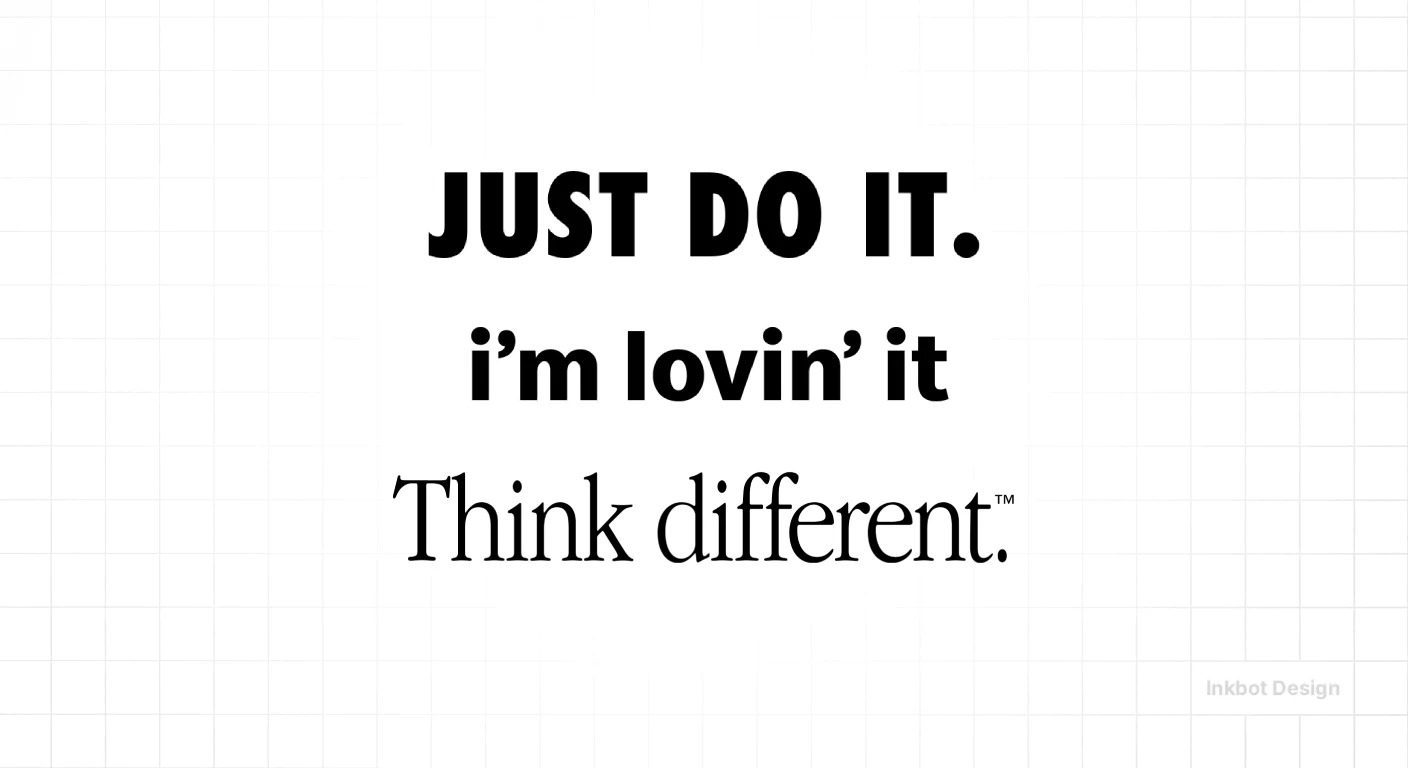
A tagline is a short, persistent phrase associated with a brand’s visual identity that communicates its core value proposition, personality, or mission.
Unlike slogans, which are tied to specific marketing campaigns, a tagline is a permanent architectural component of the brand’s verbal identity.
The three core elements of a professional tagline include:
- Distinctiveness: It must separate the entity from its immediate competitors.
- Rhythmic Cadence: It uses linguistic structures (like alliteration or meter) to aid cognitive retention.
- Strategic Intent: It either explains a complex service or reinforces an emotional position.
The Cognitive Science of Stickiness: Why Some Phrases Never Leave Us
In 2026, the battle for consumer attention is won in the subconscious. When we talk about a tagline’s effectiveness, we are really talking about Processing Fluency—the ease with which the brain encodes and retrieves information.
Brands that ignore the neuro-branding of their verbal identity are essentially asking their customers to work too hard.
The Rhyme-as-Reason Effect is a cognitive bias where a person is more likely to believe or remember a statement if it rhymes. This isn’t just for nursery rhymes; it’s a powerful tool for brands like Haribo (“Kids and grown-ups love it so…”) or Pringles.
However, if your brand position is one of high-level professional trust, such as an architectural firm or a legal practice, rhyming can backfire by appearing “glib” or “low-cost”. In these instances, you should pivot to Alliteration or Assonance.
The Rule of Three and Parallelism
The human brain is hardwired for patterns. The “Rule of Three” (e.g., FedEx: “Relax, it’s FedEx”) creates a sense of completeness.
When a tagline uses parallel structure—repeating a grammatical form—it reduces the “Cognitive Load” required to process the message.
- Example: A 2025 study on brand recall found that taglines with high Phonological Symmetry were remembered 40% more accurately after a single exposure compared to descriptive, non-rhythmic alternatives.
The Hierarchy of Visual Attention
When a user lands on your site or sees your packaging, their brain follows a predictable path.
According to research from the Nielsen Norman Group, users scan in patterns that prioritise the top-left and centre. If your logo is fighting for dominance with a clunky tagline, you lose.
Responsive Design and Modern Accessibility
A tagline in 2026 is no longer a static piece of text; it is a dynamic asset that must survive across smartwatches, foldable screens, and Dark Mode environments.
If your tagline is baked into your logo image file as a flat JPEG, you are failing your users and your search visibility.
1. The Modular Lockup System
Professional designers now employ a Modular Design System. Instead of one logo file, you need a suite of assets:
- The Hero Lockup: Used for desktop headers with ample space.
- The Responsive Stack: The tagline moves beneath the brand name on mobile portrait views.
- The Symbol-Only Mark: Used for favicons and app icons, where the tagline is removed entirely to prevent “Visual Noise”.
2. Accessibility and WCAG 2026 Standards
Your tagline must be accessible to users with visual impairments. If a screen reader like JAWS or VoiceOver encounters your logo, it shouldn’t just say “Logo image.” Your alt-text strategy should be:
- alt=”[Brand Name] Logo – [Tagline Text]”
- Crucial: Ensure the tagline font meets a contrast ratio of at least 4.5:1 against the background to comply with WCAG 2.2 (Web Content Accessibility Guidelines).
3. Optimising for Dark Mode
In 2026, many users default to “Dark Mode” on their devices. A tagline that looks crisp in black on a white background might fade into the background in a dark UI.
When designing your tagline typography, test the “inverted” version.
Often, you will need to slightly increase the Tracking (letter-spacing) in the dark version, as light text on a dark background tends to “bleed” or look thinner to the human eye.
Case Study: FedEx
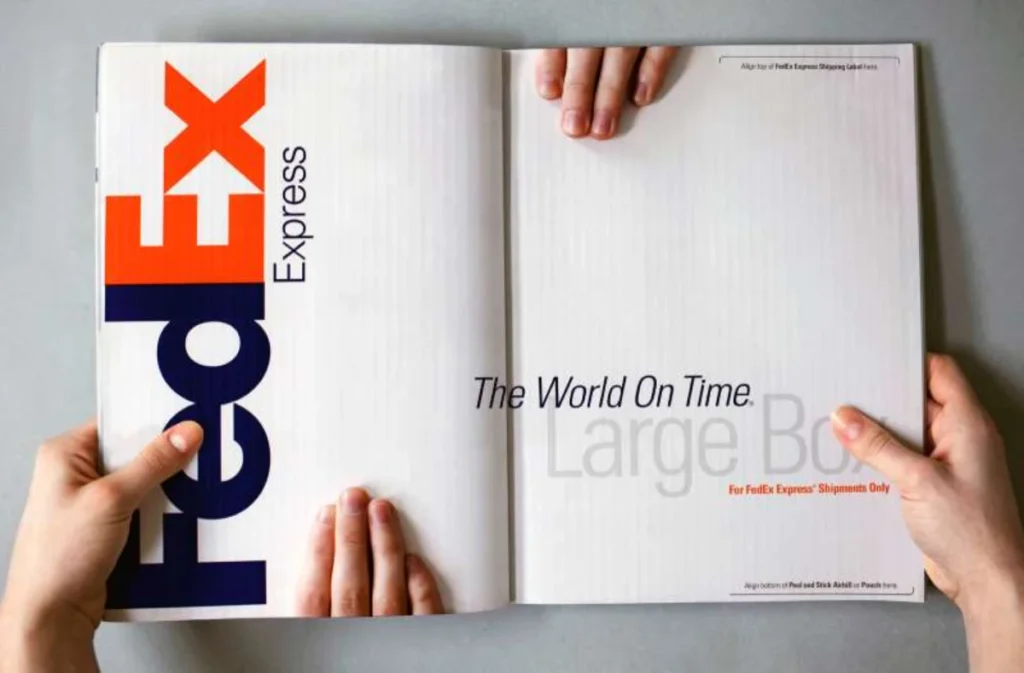
FedEx uses “The World On Time” as a functional promise. Notice, however, that the logo on the side of a delivery truck stands alone.
The tagline is deployed only when the context allows for the extra cognitive load. This is marketing communication handled with precision.
Technical Debt: When Taglines Kill Your SEO
We are no longer just designing for humans; we are designing for LLMs and semantic search engines. In 2026, Google’s “Entity Graph” looks for clear signals.
If your site’s H1, metadata, and logo alt text are cluttered with different “catchy” variations, you weaken the connection to the entity.
A tagline vs slogan distinction is vital here. A slogan is transient. A tagline is data. If your tagline contains your primary keyword, it might help.
If it’s “Innovating the Future,” it’s noise.
LLMs like Gemini and GPT-5 (and their 2026 successors) categorise your business based on the relationship between your verbal identity and your visual output.
| Feature | Amateur Approach | Professional Approach |
| Word Count | 7-10 words (explaining everything) | 2-4 words (evoking a feeling) |
| Font Choice | Same as the logo (no contrast) | Complementary sans-serif for legibility |
| Placement | Always attached to the logo | Context-dependent (Modular) |
| Linguistic Style | Passive (“We help you…”) | Active (“Just Do It” / “Think Different”) |
| Scalability | Becomes a line of “ants” on mobile | Removed or enlarged for small screens |
“The Shorter, The Better”
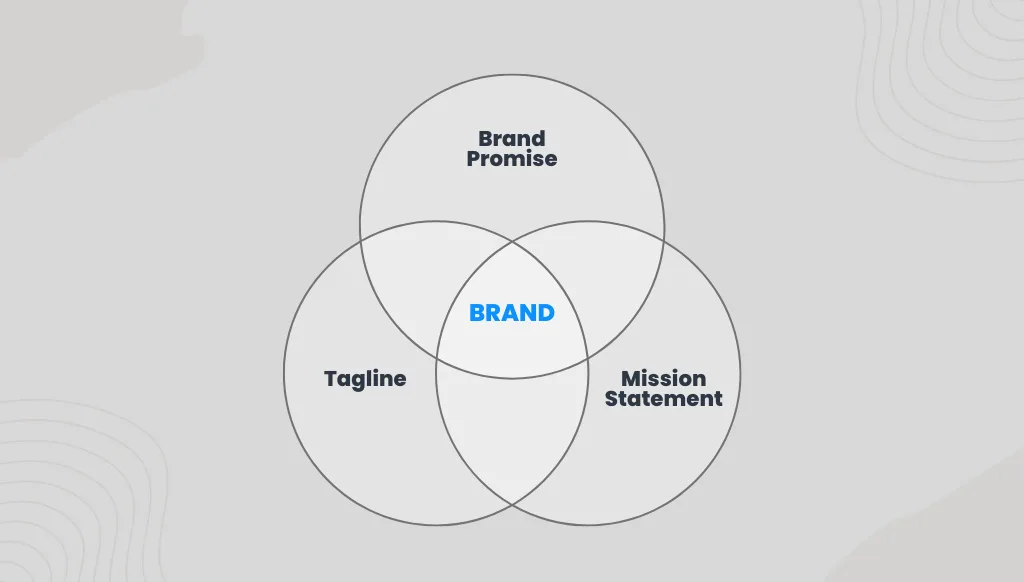
There is a common piece of advice in branding circles: “Your tagline must be under three words.” This is nonsense.
The Institute of Practitioners in Advertising (IPA) has found that “fluent devices”—recurring characters or phrases—are most effective when they have a rhythmic hook.
Sometimes, that hook needs five words. “Everything you need, nothing you don’t” is six words long, but it has a balanced meter that “Minimalist Gear” lacks.
The goal isn’t brevity; it’s processing fluency. Processing fluency is the ease with which the brain understands a piece of information.
A five-word tagline with high phonological symmetry (rhyme or alliteration) is easier to remember than a two-word tagline that is phonetically clunky.
The 2026 Shift: Sonic and Social Taglines
In the last 18 months, the rise of short-form video (TikTok, Reels, YouTube Shorts) has forced taglines to evolve. They aren’t just written; they are spoken.
If your tagline is hard to say—if it contains “sibilance” (too many ‘s’ sounds) or “plosives” that pop on a microphone—it’s failing in the modern UX microcopy design landscape.
Identifying and Killing “Zombie Taglines”
A “Zombie Tagline” is a phrase that is technically alive (it’s on your website) but has no soul or impact. These are generic, interchangeable phrases that actually damage your Brand Equity.
Common Zombie Phrases to Avoid in 2026:
- “Innovating for the Future”
- “Quality You Can Trust”
- “Putting Customers First”
- “Solutions for Your Success”
The “Competitor Swap” Test: If you can take your tagline and put it under your biggest competitor’s logo and it still “works,” it is a Zombie Tagline. A professional tagline should be Ownable. It should speak to your specific Unique Selling Proposition (USP) or your unique brand voice.
How to Resuscitate a Weak Tagline
If you find your tagline is too generic, try the “So What?” Framework:
- Start with your current tagline: “We build great websites.”
- Ask: “So what?” -> “So your business grows.”
- Ask: “So what?” -> “So you can spend more time away from the desk.”
- New Tagline: “Websites that work while you don’t.” (Specific, benefit-driven, and emotional).
Why Your Business Probably Doesn’t Need One
If you are a local plumber, you don’t need a tagline like “Flowing into the Future.” You need a clear brand name and a list of services.
Most SMBs use taglines to compensate for a weak brand name. If your company is named “Apex Solutions,” you need a tagline because your name tells me nothing.
If your name is “The London Boiler Fixer,” a tagline is a redundant hat on a hat.
When to Keep It:
- The Brand Name is Abstract: Like Nike or Apple.
- The Category is New: If you’re selling a product that didn’t exist two years ago.
- The Market is Oversaturated: You need a “Unique Selling Proposition” (USP) baked into the logo.
When to Kill It:
- Your Logo is Complex: If your logo is illustrative, adding text creates visual chaos.
- You Want to Look “High-End”: Luxury brands (Chanel, Rolex, Hermes) almost never use taglines with their logos. Silence equals premium.
- You’re Designing for Mobile First: If 90% of your traffic is on a smartphone, that tagline is just taking up valuable vertical real estate.
If you’re unsure where your brand stands, you should request a quote for a professional audit. Often, the best thing we can do for a client is delete 50% of their “messaging.”
The Industry Decision Matrix: To Tagline or Not?
The need for a tagline varies widely by sector. A “one-size-fits-all” approach leads to generic, “Zombie Taglines” that add no value.
| Industry Sector | Tagline Necessity | Primary Goal | Best Approach |
| B2B SaaS | High | Categorisation | Functional (e.g., “The CRM for Solar Teams”) |
| Luxury Fashion | Low | Prestige | Silence / Minimalist Typography |
| Local Services | Medium | Trust/Location | Geographic (e.g., “London’s Fastest Plumbers”) |
| Consumer Tech | High | Aspiration | Emotional (e.g., Apple: “Think Different”) |
| Non-Profit | Critical | Mission | Impact-driven (e.g., “Ending Hunger Together”) |
The B2B SaaS “Explainer” Tagline
In the crowded SaaS (Software as a Service) landscape, users often spend less than 3 seconds on a landing page before deciding to stay or bounce.
If your brand name is something abstract like “Volo,” your tagline must perform the heavy lifting of categorisation.
Without it, you are forcing the user to scroll to understand what you do—a major friction point in User Experience (UX).
Beyond Visuals: Taglines for Siri, Alexa, and Gemini
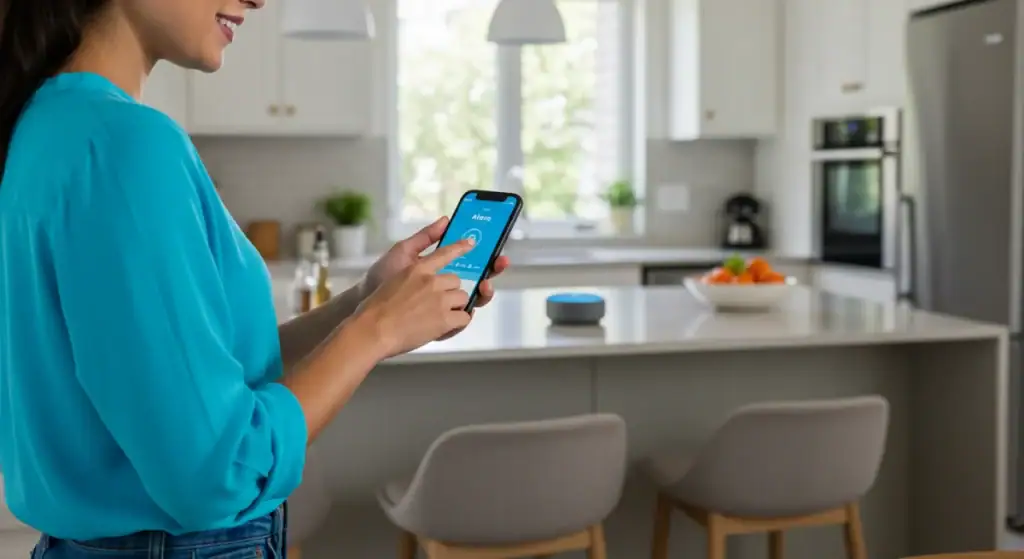
As we move deeper into 2026, the “visual-only” tagline is becoming obsolete. With over 60% of searches now conducted via voice or AI assistants like Siri, Alexa, and Google Gemini, your tagline needs to be “phonetically optimised.”
If your tagline is a tongue-twister or uses “Sibilance” (heavy ‘s’ sounds), an AI assistant may struggle to pronounce it clearly during a “Brand Briefing” or search result. This has given rise to Sonic Branding.
Is Your Tagline “Speakable”?
Before committing to a tagline, run the Smart Speaker Test:
- Ask an AI assistant to read your proposed tagline.
- Listen for “clashing consonants” or words that the AI misinterprets.
- If the AI sounds robotic or clumsy when saying it, your human customers will have the same “friction” in their internal monologue.
Many forward-thinking brands are now pairing their written tagline with a Sonic Logo—a short, 1–3 second audio mnemonic (think the Intel chimes or the Netflix “ta-dum”).
In this context, the tagline often serves as the “script” for the audio, reinforcing the brand identity through two senses at once.
Protecting Your Verbal Assets: The Legal Perspective
In 2026, the global nature of digital commerce means you aren’t just competing with the shop down the street; you’re competing with every brand on Instagram and TikTok. This makes Intellectual Property (IP) protection vital.
1. Trademarking the “Lockup”
When you apply for a trademark through the UK Intellectual Property Office (IPO) or the WIPO (World Intellectual Property Organisation), you can trademark the “Graphic Representation” of your logo.
However, if your tagline is part of that graphic, you are trademarking them as a single unit.
It is often wiser to trademark the brand name and the tagline as separate “Word Marks” to give you the flexibility to use them independently.
2. The Global Translation Hazard
Before finalising a tagline, you must conduct a Linguistic Audit. A phrase that sounds powerful in English can be offensive or ridiculous when translated.
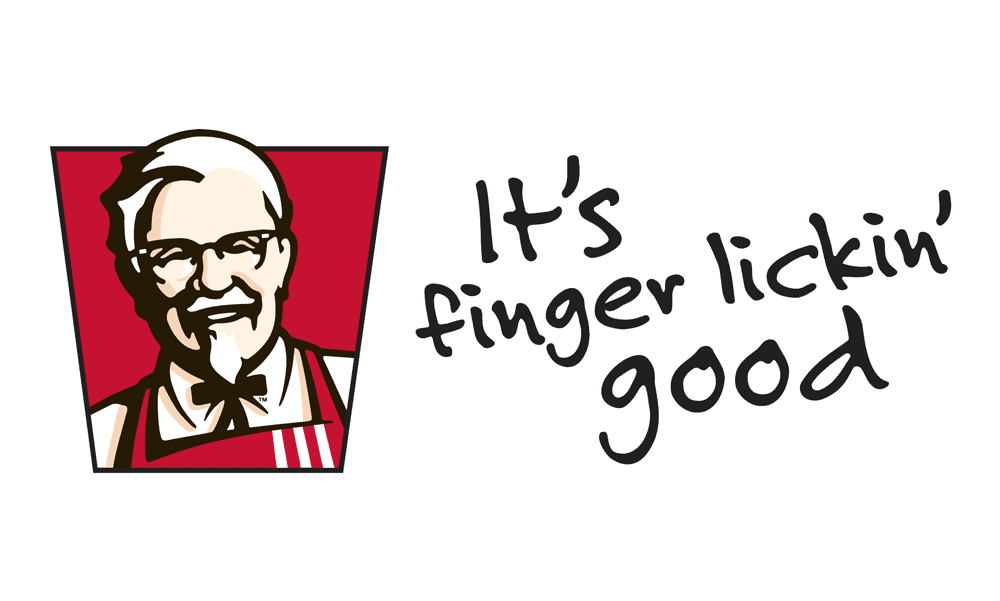
- Case Example: When KFC first entered the Chinese market, its tagline “Finger-lickin’ good” was famously translated as “Eat your fingers off.” In 2026, use AI-powered translation tools to check for slang, cultural taboos, and phonetic double-meanings in every market you intend to enter.
The Verdict
Does your logo need a tagline? Probably not. If your logo and brand name are doing their jobs, a tagline is often just an expensive distraction.
However, if you are in a complex industry or launching an abstract brand, a carefully crafted, phonetically balanced tagline can be the “verbal anchor” your audience needs.
In 2026, the “less is more” mantra isn’t just an aesthetic choice; it’s a technical requirement for a fast, legible, and AI-friendly brand. If you want to see how the world’s best brands handle this, check out these best tagline examples.
Stop asking “What should my tagline be?” and start asking “Does this phrase add £1,000 of value to my brand, or is it just filling white space?”
If you’re ready to build a brand that doesn’t need to explain itself, contact Inkbot Design today.
FAQ: Taglines and Logo Design in 2026
What is the difference between a tagline and a slogan?
A tagline is a permanent fixture of your brand identity that represents your core values. A slogan is temporary and used for specific marketing campaigns. For example, Nike’s tagline is “Just Do It,” while they might use various slogans for seasonal product launches.
How long should a tagline be in 2026?
While the “three-word rule” is common, the ideal length is whatever creates the most “processing fluency.” Usually, this is 3-6 words. It must be short enough to be legible on a mobile device but long enough to convey a distinct rhythmic hook.
Should my tagline be in my logo file?
Ideally, no. You should have a “Primary Lockup” (logo only) and a “Secondary Lockup” (logo + tagline). This allows you to remove the tagline for small-scale applications like favicons, social media avatars, or app icons where text would be unreadable.
Does my tagline affect my search rankings in 2026?
Directly, it can. If your tagline is implemented as high-quality text (H1 or H2) rather than an image, it helps search systems understand your business entity. However, its biggest impact is indirect: a clear tagline reduces “Bounce Rates” and increases “Dwell Time,” which are significant signals for ranking.
Can I have two taglines for different audiences?
No. This dilutes your Brand Recall. You can have different “Slogans” for different campaigns, but your “Tagline” is your brand’s focus. It must remain consistent to build long-term trust.
How often should a brand refresh its tagline?
A tagline should ideally last 5–10 years. If you are changing it more frequently, you are likely failing to establish a core brand identity. A refresh should occur only during a major strategic pivot or a merger.
Do luxury brands use taglines?
Rarely. Luxury branding relies on “the power of silence” and visual prestige. Adding a tagline can often make a high-end brand feel “desperate” to explain itself, thereby lowering its perceived value. Minimalism is the language of the elite.
What font should I use for my tagline?
Use a highly legible, clean font that complements your main logo font without competing with it. Sans-serif typefaces are generally preferred for taglines because they remain readable at smaller scales. Ensure there is enough “tracking” (space between letters).
Should my tagline rhyme?
Rhyming can significantly increase “mnemonic recall,” but it can also make your brand sound “cheap” or “gimmicky” if not handled with care. Alliteration (e.g., “PayPal: Personal, Powerful, Portable”) is often a more professional way to achieve a similar effect.
How do I know if my tagline is bad?
If you can swap your brand name for a competitor’s and the tagline still “works,” it’s too generic. A good tagline should be “ownable.” If it’s “Quality Service Since 1990,” kill it. It tells the customer nothing unique about your value.
What is the “Minimum Legibility” for a tagline on mobile?
Generally, a tagline font should be no smaller than 10px on a mobile screen to remain readable. If your design requires it to be smaller, it is a sign that your tagline is too long or your logo is too complex.
Does my tagline need to be trademarked?
Yes, if it is a core part of your brand identity. You should register it as part of your trademark application to prevent competitors from using similar phrasing. This is especially important in B2B sectors where “functional” phrases are common.
How does voice search affect taglines?
With more people using voice assistants in 2026, your tagline needs to be “pronounceable.” Avoid tongue-twisters or words that voice AI might misinterpret. Test your tagline by asking a smart speaker to repeat it.