7 Steps to Choosing the Perfect Business Name
In this comprehensive guide, I’ll walk you through a proven process for brainstorming, evaluating, and selecting the ideal name for your business – whether you’re launching a local service, an eCommerce store, or a global enterprise.
I’ll share real-world examples, personal insights, and practical tips to help you avoid common pitfalls and create a name that reflects your brand.
As the founder of Inkbot Design, a branding and design agency, I’ve often gone through this process with my clients.
I know firsthand how daunting it can feel and how impactful the right business name can be.
So, let’s dive in and ensure you end up with a name you’re proud of!
- Clarify your brand identity: define core values, target audience and a concise positioning statement before brainstorming names.
- Brainstorm widely: generate diverse options—descriptive, invented, metaphorical or blended names; use AI as a creative assistant.
- Check legal and digital availability: search Companies House, trademark classes, domains and social handles to avoid conflicts.
- Test and validate: run audience surveys, sentiment and handle audits, plus linguistic checks before securing trademark and domains.
Why Your Business Name Matters
Before we get into the nitty-gritty of name generation and evaluation, it’s essential to understand why your business name is so crucial in the first place. After all, what’s in a name, right?
Well, quite a lot. Your brand name is often the first thing potential customers will learn about your business. It’s the starting point of your entire brand identity – the foundation upon which you’ll build your logo, website, marketing materials, and overall visual presence.
A robust and memorable business name can help you stand out in a crowded market, communicate your unique value proposition, and forge an emotional connection with your target audience. Conversely, a forgettable or confusing name can make attracting and retaining customers harder.
Here are just a few of the key reasons why your business name matters so much:
- First Impressions: As the old saying goes, “You only get one chance to make a first impression.” Your name is often the first thing a new customer or client will learn about your business. Make sure it’s a good one!
- Memorability: A catchy, distinctive name is much more likely to stick in people’s minds than something generic or uninspired. The more memorable your brand name, the easier it will be for customers to find and remember you.
- Identity & Branding: Your business name is the foundation of your brand identity. It shapes how customers perceive your company and sets the tone for your visual and messaging ecosystem.
- Differentiation: A unique and compelling name can help you stand out in crowded, competitive markets. The right name can make all the difference in grabbing someone’s attention.
- Online Presence: In the digital age, your business name is intimately tied to your online presence – from your website domain to your social media handles. A great name makes it easier for customers to find and connect with you online.
So, choosing the perfect business name is a critical early step in building a successful, sustainable brand. It’s not something to be taken lightly! Let’s explore some strategies to ensure you land a winner.
7 Steps to Choosing the Best Business Name
Now that we’ve covered why your business name matters, let’s dive into the step-by-step process of selecting the ideal name. This framework has worked wonders for me and my Inkbot Design clients, and I’m confident it can do the same for you.
1. Clarify Your Brand Identity
Before you even start brainstorming name ideas, it’s essential to have a clear understanding of your brand identity. What are your core values? What makes your business unique? Who is your target audience, and what matters most to them?
Answering these foundational questions will provide crucial guidance as you craft a name that authentically reflects your brand. After all, your name should feel like a natural extension of your company’s personality, not something tacked on as an afterthought.
One helpful exercise is to create a brand positioning statement – a concise 1-2 sentence summary that encapsulates what your business does, who it serves, and how it’s uniquely positioned to deliver value. This can serve as a valuable touchstone as you evaluate potential name ideas.
For example, the brand positioning statement for Inkbot Design is a branding and design agency that helps small businesses and solopreneurs craft distinctive visual identities that engage their ideal customers.
The Science of Sound: Why Some Names ‘Stick’
While most founders choose names based on “gut feeling”, there is a deep psychological science behind why certain names feel successful. This is known as Phonetic Symbolism—the idea that individual sounds carry inherent meaning.
In linguistics, the Bouba/Kiki Effect demonstrates that humans consistently associate jagged sounds (like ‘K’ or ‘T’) with sharp shapes and soft sounds (like ‘M’ or ‘L’) with rounded shapes.
If you are launching a high-tech, precision-driven software company, using plosive consonants like Kodak or TikTok creates a sense of speed and sharpness.
Conversely, if you are launching a wellness brand, softer consonants (liquids and nasals) like Lululemon or Melton feel more approachable and soothing.
The Power of Plosives
Words containing “Plosives”—letters like B, D, G, K, P, and T—are statistically more likely to be remembered. These sounds require the speaker to briefly stop the airflow and then release it, creating a “pop” that draws cognitive attention. Think of brands like Google, Blackberry, or Starbucks. They have a rhythmic “snap” that makes them easier to recall in a crowded marketplace.
Key Action: When reviewing your brainstormed list, say the names out loud. Do they “pop”, or do they slide off the tongue unnoticed? Use a “Radio Test”: if you say the name once over a crackling radio, would the listener know exactly how to spell it?
2. Brainstorm Name Ideas
Now that you have a solid handle on your brand identity, it’s time to start the fun part: brainstorming potential business names! This is where you can let your creativity shine.
There are all sorts of techniques you can use to generate name ideas. Some common approaches include:
- Descriptive names directly communicate what your business does, like “Acme Plumbing” or “Sunshine Bakery.”
- Invented/made-up names: Completely original names with no inherent meaning, like “Xerox” or “Kodak.”
- Metaphorical names: Names that evoke an idea, image, or feeling associated with your brand, like “Firehose Digital” or “Evergreen Web Design.
- Personal/founder names: Use the founder’s name, like “McDonald’s” or “Disney.”
- Geographical names: Names that reference a location, like “Brooklyn Bagel” or “Silicon Valley Startups.”
- Lexical blends: Combining two words to create a new name, like “Groupon” (from “group” and “coupon”) or “Spotify” (from “spot” and “identify”).
Be bold and think outside the box during this initial brainstorming phase. The more ideas you can generate, the better your chances of landing on something extraordinary.
AI-Augmented Brainstorming: The 2026 Workflow
In 2026, brainstorming is no longer a solo activity with a whiteboard. High-growth startups now use a “Human-in-the-Loop” AI workflow to generate thousands of variations before filtering for brandability.
1. Prompting for Persona
Instead of asking an AI for “business names for a coffee shop,” provide context. Use tools like Claude or ChatGPT to act as a branding consultant.
Example Prompt: “Act as a specialist brand strategist. Generate 20 business names for a sustainable B2B logistics firm. The tone should be ‘Stoic’ and ‘Reliable’. Avoid common clichés like ‘Eco’ or ‘Green’. Use Latin roots related to ‘path’ or ‘foundation’.”
2. Recursive Filtering
Once you have a list, don’t just pick one. Feed the best options back into the AI and ask it to find “Linguistic Cousins”—words with similar phonetic structures but different meanings. This often leads to “Empty Vessel” names—invented words like Accenture or Vivint that you can fill with your own brand meaning over time.
3. Visual Prompting
Use AI image generators like Midjourney to see how the name “feels” when placed on a storefront or a mobile app. A name might look great in a spreadsheet but fail visually when set in a modern typeface like Inter or Montserrat.
3. Legal Fortification: Checking Availability in the UK & Beyond
Checking if a name is “free” involves more than a quick Google search. You must navigate three distinct layers of availability: digital, corporate, and legal.
Layer 1: Companies House (UK Specific)
If you are based in Britain, your first stop is the Companies House register. A name might be available as a domain, but if a “Limited” company already exists with that exact name, you may be legally barred from registering it.
Use the Companies House Service (CHS) to check for “Same As” rules—even slight variations like “Inkbot” vs “Inkbot Ltd” can be rejected if they are deemed too similar.
Layer 2: The Trademark ‘Class’ System
You don’t own a name for everything; you own it for specific “classes” of goods and services. The Nice Classification system divides industries into 45 classes. For example, you could theoretically have a “Delta” for airlines and a “Delta” for faucets because they operate in different classes.
- Check the UK Intellectual Property Office (UKIPO) for domestic protection.
- Check the USPTO for American market entry.
- Consult the WIPO Global Brand Database for international expansion.
Layer 3: The Danger of ‘Passing Off’
Even if you have a registered company name, you can still be sued for “Passing Off” if your name is so similar to a competitor’s that it confuses the public. This is a common pitfall for local businesses. If there is a “Peak Design” in London and you start “Peak Graphics” in the same borough, you are entering a legal grey area.
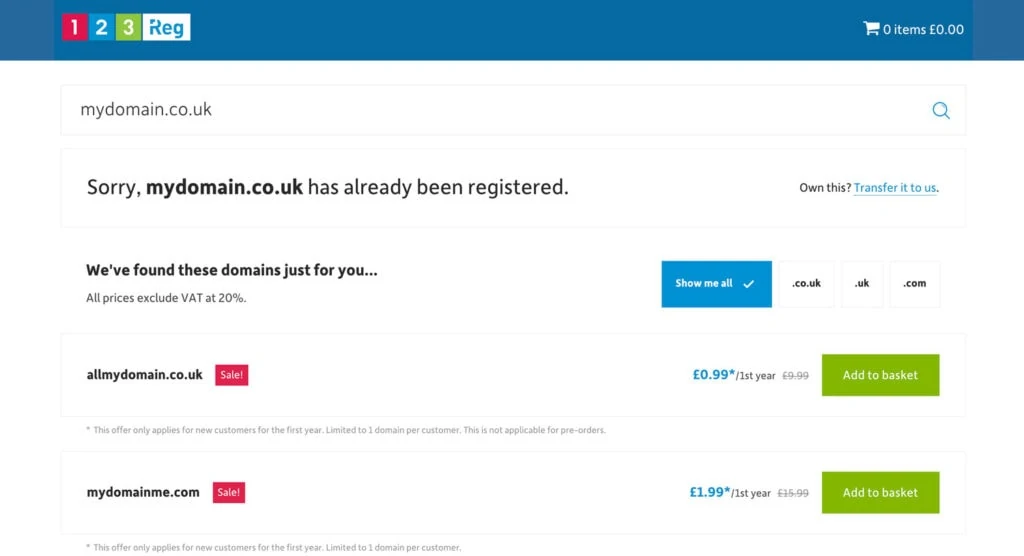
The 2026 Domain Landscape: Is .com Still King?
For decades, the .com extension was the only “serious” option. In 2026, the landscape has shifted. While .com remains the gold standard for global trust, the rise of Generative Search and AI assistants means users rarely type URLs anymore—they ask for brands by name.
When to use alternative TLDs:
- .ai / .io: Now standard for technology and SaaS startups.
- .co: A sleek alternative when the .com is held by a squatter.
- .app: Essential for mobile-first products.
- .london / .nyc: Excellent for local service businesses looking to build immediate geographic trust.
The ‘Domain Hack’ Strategy
Creative founders are increasingly using the extension as part of the brand name. Think of bit.ly or instagr.am (in its early days). Using a TLD like .shop, .design, or .me can create a memorable, short URL that stands out in social media bios.
| Extension | Best For | Trust Rating (2026) |
| .com | Global Enterprises | High |
| .ai | Machine Learning / Tech | High (Tech Niche) |
| .ltd | UK Professional Services | Medium |
| .eco | Sustainability Brands | High (Niche) |
| .me | Personal Brands / Solopreneurs | Medium |
4. Evaluate Name Options
Now that you’ve done your due diligence on availability, it’s time to evaluate your list of potential business names. This is where things can get tricky, as there’s no single “right” answer – a lot comes down to subjective preference and gut instinct.
That said, there are some fundamental criteria you can use to assess the quality and effectiveness of each name:
- Memorability: Is the name easy to remember and recall? Does it stick in your mind after just a brief encounter?
- Meaning: Does the name convey something meaningful about your brand, products, or services? Does it evoke the right emotions and associations?
- Relevance: Is the name relevant and applicable to your industry and target audience? Does it align with their needs and interests?
- Uniqueness: How distinct and differentiated is the name compared to your competitors? Does it help you stand out?
- Ease of Use: Is the name easy to spell, pronounce, and remember, both verbally and in written form?
- Longevity: Will the name still feel fresh and relevant as your business grows and evolves?
As you evaluate each option, I recommend getting input from family, friends, and potential customers. Their perspectives can be incredibly valuable, as they’ll likely have a different take than yours.
Aim to land on a name that checks as many boxes as possible. It may take some trial and error, but with careful consideration, you’ll find the perfect fit.
5. Test & Validate
Once you’ve whittled down your list to your top 2-3 name contenders, it’s time to put them to the test. Market research can go a long way.
Start by running some online surveys or focus groups to get feedback from your target audience. How do they respond to each potential name? Which ones do they find most appealing, memorable, and representative of your brand? Pay close attention to any common themes or patterns in their responses.
You can also try out the names in real-world situations to see how they perform. For example, you could:
- Use the names in social media bios, website copy, or email signatures to gauge reactions
- Ask people you meet to recall the names later and see which ones stick in their memory
- Monitor web traffic and search activity for each name to see which ones generate the most interest
Feel free to get creative with your validation process. The more data you can collect, the better informed your final decision will be.
The ‘Vibe’ Check: Validating with Real Humans
Before you file your legal paperwork, you need to move beyond your “inner circle.” Friends and family will often tell you what you want to hear. Professional validation requires objective data.
1. Sentiment Testing
Use a platform like PickFu to run a “Split Test” between your top two names. You can target specific demographics (e.g., “SaaS founders in the UK” or “Mothers aged 30-45”) and ask them which name feels more trustworthy. This provides a quantitative score for a qualitative decision.
2. The Social Media ‘Handle’ Audit
In 2026, a brand exists primarily on social platforms. A name is only “perfect” if you can secure a consistent handle across TikTok, Instagram, X (Twitter), and LinkedIn. Use a tool like Namechk to scan 100+ platforms simultaneously. If you have to be @GetInkbot_Official_Real, the name is too cluttered. Aim for brevity.
3. Localisation and Slang Check
If you plan to sell internationally, perform a “Linguistic Audit.” A name that sounds professional in English might be an unintended joke in another language.
- Example: The brand Pee Cola (a popular soda in Ghana) would struggle in the UK market for obvious reasons.
- Action: Search your name on Urban Dictionary and check its meaning in the languages of your top three target export markets.
6. Secure the Name
Once you’ve settled on the perfect business name, it’s time to lock it down and make it officially yours. This involves a few key steps:
- Register the Business Entity: First and foremost, register your business with your state or local government and obtain the necessary licenses and permits. This will ensure your name is legally recognised.
- Trademark the Name: To protect your brand and prevent others from using it, you should file for a trademark with the U.S. Patent and Trademark Office. This gives you exclusive rights to the name.
- Secure the Domain: Before anyone else snatches it, purchase the .com, .net, and .org versions of your domain names. This will give you complete control over your online presence.
- Claim Social Media Handles: Grab your business name on all the major social media platforms, even if you don’t plan to use them immediately. This helps maintain a cohesive brand identity.
- Set Up Email Addresses: Create professional email addresses (e.g. info@yourbusiness.com) to reinforce your brand name and make it easy for customers to reach you.
Completing these steps may take some time and effort, but it’s essential for safeguarding your new business name and ensuring it serves you well for years to come.
7. Bring Your Name to Life
Congratulations! You’ve done the hard work of selecting the perfect business name. It’s time to bring that name to life through your branding, marketing, and overall customer experience.
Start by designing a killer logo that visually represents your name and brand identity. Work with a professional graphic designer to ensure it’s polished, memorable, and aligned with your positioning.
Next, build a comprehensive brand identity system that extends your name across all customer touchpoints – from your website and social media to your business cards, packaging, and beyond. Consistency is vital for reinforcing your brand.
As you roll out your new name, promote it far and wide. Leverage email marketing, social media, and other channels to spread the word and excite customers about your rebrand. Lean into the story behind your name and how it reflects your unique value proposition.
Most importantly, make sure an exceptional customer experience backs up your name. After all, a great name is only as good as the products, services, and overall brand reputation behind it. Focus on delivering consistent quality and value, and your name will become a true asset for your business.
Common Naming Pitfalls to Sidestep
Look, choosing a name is exciting, but it’s dead easy to trip up. I’ve seen it happen countless times.
Here are a few classic blunders you’ll want to avoid making.
- The Geographic Trap: Tying your name to a town or city feels solid at first. “Manchester Web Design” sounds legit, right? But it becomes a liability the moment you want to expand. Don’t fence yourself in before you’ve even started.
- Making it a Spelling Bee Test: If people can’t spell your name after hearing it once, you’ve got a problem. They can’t Google you, and they can’t tell their mates about you. The photo site Flickr famously had issues because everyone wanted to spell it with an ‘er’. Keep it simple and phonetic.
- The Meaningless Acronym: I get it, IBM and KFC sound cool. But they started as International Business Machines and Kentucky Fried Chicken. They earned the right to be acronyms. Starting your business as “S.B.C. Consulting” means nothing to anyone and lacks any personality.
- Ignoring a Quick Language Check: This one’s a biggie. A name that sounds great in English could mean something awful in another language. The classic story is the Chevrolet Nova; in Spanish-speaking countries, “no va” literally means “doesn’t go.” Not the message you want for a car, is it?
FAQs About Choosing a Business Name
Do you have any other questions about selecting a business name? I’ve got you covered!
Can I use a name that is already taken if I operate in a different country?
Technically, yes, but it is risky. Trademark law is territorial. However, in a digital-first world, your “territory” is often global from day one. If the other business has a strong online presence, they could argue that you are causing global brand confusion. It is always safer to choose a unique path.
Should I use my own name (Founder Brand) or an abstract name?
Personal brands (e.g., Neil Patel) are excellent for building immediate trust and “Human-in-the-loop” authority. However, they are harder to sell later. If your exit strategy is to sell the business to a competitor, an abstract or descriptive name (e.g., Inkbot Design) is much more attractive to buyers.
How do I name a business so it shows up in AI search answers?
AI systems in 2026 prioritise “Entity Clarity.” Choose a name that is easy for a machine to categorise. If you name your bakery “Flour,” it will be lost in the sea of generic search results. If you name it “Aether Artisan Bakes,” it is a distinct entity that is easy for AI to index and recommend.
Is it okay to use a misspelt word (e.g., ‘Lyft’ or ‘Reddit’)?
This was a major trend in the 2010s. In 2026, it is seen as slightly dated. While it makes securing a domain easier, it creates a “Spelling Bee Test” for your customers. If you have to constantly say, “It’s Inkbot with a K, not a C,” you are creating unnecessary friction in every conversation.
What is the average cost to trademark a name in the UK?
As of 2026, a basic online application for one class via the UKIPO costs approximately £170. Each additional class costs £50. These fees are non-refundable, even if your application is rejected, which is why the availability check phase is so critical.
Rebranding vs. Launching: When is a Name Change Necessary?
Sometimes, you aren’t choosing a name for a new business; you’re realising your current one is holding you back. This is common when a business “outgrows” its initial name.
Signs you need to rebrand:
- The Geographic Trap: You are “London Web Design” but now serve clients in Dubai and New York.
- The Service Ceiling: You are “The Logo Guy”, but now offer full-scale business consulting.
- The Legal Threat: You’ve received a “Cease and Desist” from a larger entity with a similar trademark.
The Cost of Change Rebranding in 2026 is expensive. It involves updating your Schema Markup, redirecting all your old URLs, and—most importantly—re-educating your customers. If your current name has “Neutral” sentiment, it’s often better to stay the course. Only pivot if the name is “Negative” or legally dangerous.
Conclusion: Celebrate Your New Business Name!
Well, there you have it – a comprehensive, step-by-step guide to choosing the perfect name for your business. Remember, this process takes time, effort, and creative thinking. But trust me, it’s well worth it.
A robust and memorable business name can be a game-changer for your brand. It’s the foundation for your visual identity, marketing strategy, and customer experience. So take your time with it. Take the time to get it right.
It’s time to celebrate once you’ve landed on the perfect name! This is a significant milestone in your entrepreneurial journey. Share the news with your network, update your branding across all channels, and get ready to watch your business take off.
And if you ever need expert branding and design support, you know where to find me. The team at Inkbot Design would be thrilled to help bring your new business name to life in a genuinely distinctive, memorable way.
Here’s to your success – may your new name be the start of an incredible journey!