Brand Vision: What It Is & How It Drives Business Success
It’s when you talk about your business and the light dances in your eyes. The reason you leap out of bed on Monday mornings is the force that guides every decision you make.
But here’s the truth: most companies don’t have one.
Sure, they might have a mission statement gathering dust in an employee handbook somewhere. They might even have a slogan the marketing team cooked up last year. But a true brand vision? Those are few and far between.
And it’s killing them.
Because without a vision, you’re just another commodity. Another cog in the machine is quickly replaced by someone faster or cheaper than you. And in today’s crowded marketplaces, that’s a death sentence.
With no brand vision to light their way, they wander through business after business, trying to find “the one” – only to discover too late that there is no “one.” It was never about finding the perfect place for them; it was always about building one for them. A place where they belonged as much as it belonged to them.
But with a powerful brand vision? You’re unstoppable. You attract the right people (and repel the wrong ones). You know exactly what needs to be done next – and why – and how to explain it so clearly that anyone could pick up where you left off if they had to.
Whenever we create one with our clients, we always tell them this:
“You know this is working when everyone says some version of ‘I feel like this was made just for me.’”
That’s how clear your brand vision has to be if you want other people to help bring it into reality with you: it has to speak straight through their hearts as if those were its vocal cords, speaking words that originated within itself alone, but now need others’ ears to listen.
- Clear, ambitious brand vision acts as a company's North Star, guiding decisions and inspiring employees and customers.
- Values must align with vision to make it real; live the vision through hiring, policies and daily actions.
- Embed, measure and iterate the vision using frameworks, KPIs and frequent communication to drive growth and ROI.
What’s All This Brand Vision Fuss About?
Have you ever wondered how some companies always seem to get it right?
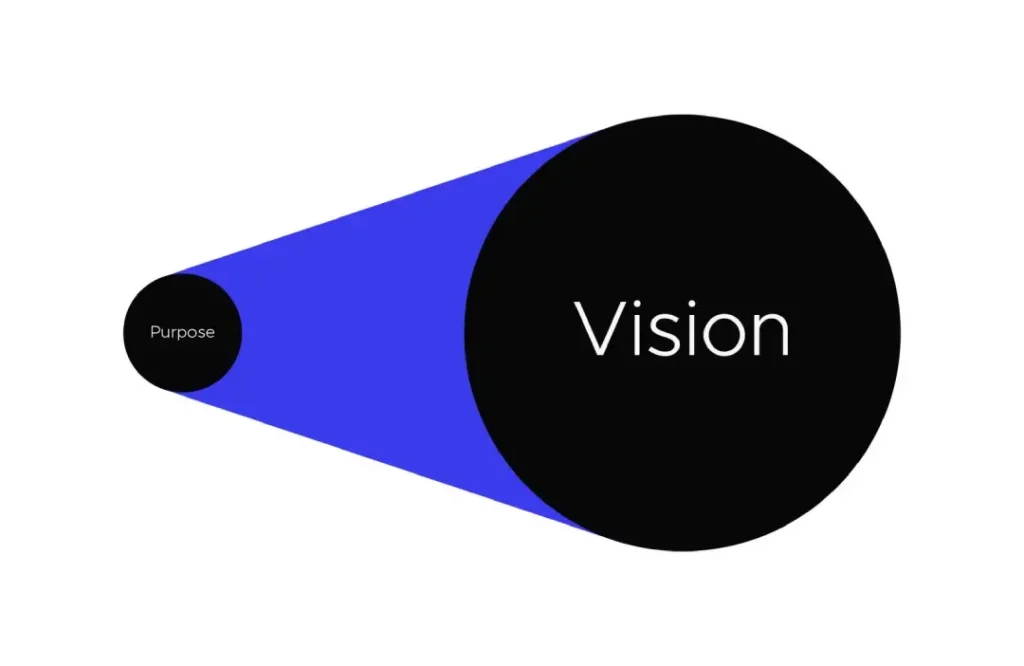
They are not just fortunate. These organisations have a powerful brand vision. It is like having a compass in the chaotic business world where everything seems wrong. Your brand vision is the big picture, the dream that gets you out of bed every morning.
The Power of Having a Clear Brand Vision
Your company’s focus should be its brand vision. This is not only what you do but why you do it, too. And a strong brand vision:
- Directs decision-making
- Motivates employees and customers
- Sets you apart from competitors
- Provides an outline for expansion
Why Care About Brand Vision?
You might be asking yourself: “Is this necessary?” Let me tell you – without a brand vision, you’re like a ship without any sails or rudder. Maybe you’re moving, but are you headed in the right direction? A solid brand vision keeps you centred as you navigate the stormy seas of business life!
Cracking the Brand Vision Code

So, what is the process of developing a magical brand vision? You don’t lock yourself in a room until an idea appears fully formed. It comes from asking questions.
Start with why
Simon Sinek said it best, “People don’t buy what you do; they buy why you do it.” Think of your brand vision as the answer to “why” for your business. Why does your company exist, and what impact are you trying to have on the world?
Look into the future.
Your brand vision should not represent where you are now but where you want to be. You need to think big, so ask yourself, where do I see my company in 5 years? Ten years? Or even 20 years from today. Don’t be shy when dreaming – let this statement be ambitious and thrilling.
Keep it simple, stupid (KISS)
Ensure that everyone understands and can remember exactly what your brand’s mission statement means. Do not use fancy language or complex thoughts here; keep it plain-spoken yet robust, so it resonates with all who read it.
Elements of a Stellar Brand Vision
Now that we have the basics, let’s talk about a brand vision that catches people’s attention. You don’t want just any old vision – you need one that resonates and motivates.
Clarity is Key
Your brand vision has to be completely clear. Everybody should know what it means as soon as they read it. Avoid using vague language or corporate jargon!
Make It Stick
A good brand vision sticks with people. Your team should be able to remember it easily and use it as a rallying cry. Think of your company’s catchphrase, but deeper.
Values Alignment
Ensure your brand vision represents your organisation’s values. You state what you want to achieve and how you want it accomplished. Ensure that the ethical standards and company culture align well with the idea.
Look, let’s be straight. Your vision is the mountain you want to climb. Your values? They’re the ropes, the boots, the gear you need to get there.
Trying to reach your vision without solid values is like trying to scale Everest in flip-flops. It’s a recipe for disaster.
Because a vision on its own is just a nice-sounding sentence. It’s hot air.
It’s what you say in meetings to sound impressive. But your values are what you do when no one’s looking.
They’re the non-negotiables.
Take a company like Zappos. Their vision was to be the best for customer service, not just selling shoes, but providing brilliant service.
How did they do it? Through ten core values.
One of them is “Deliver WOW Through Service.”
They don’t just say it. They hire for it, and they train on it.
They give their team the freedom to spend hours on the phone with a customer to get it right. The values make the vision real.
Without them, your vision is just a poster on the wall that everyone ignores.
Big And Bold
Don’t be afraid to set lofty goals when creating your brand’s vision statement. The aim is to inspire employees to reach for even higher than they thought possible. Any aspiration worth having does not come quickly, so nobody will be motivated by an easily attainable one.
Bringing Your Brand Vision to Life
Having a brand vision is fantastic, but it’s useless if you just leave it alone in a drawer. Let’s talk about making your vision part of the company that lives and breathes.
Communicate, Communicate, Communicate
Don’t keep your brand vision to yourself – announce it! Make sure everyone in the company knows what the vision is and understands it. From the CEO to the newest intern, everyone should be aligned.
Lead by Example
As a leader, you have to live out your brand vision. Your actions and decisions must reflect the vision you have created. If you don’t believe in it, why should anyone else?
Integrate It into Everything
Product development should be based on this idea; customer service needs to be informed by these principles – use your brand vision as a decision-making tool throughout your business at all levels!
Common Pitfalls in Brand Vision Creation
Creating your brand vision can be tricky, even when you have the best intentions. Here are some common mistakes to avoid:
Being Too General
A brand vision that could belong to any company does not fulfil its purpose. Explain what sets your business apart and what it aims to achieve.
Concentrating on Products instead of Impact
Your brand’s vision should discuss the change you want to create, not just the things or services you offer. Consider broader than your current provisions.
Neglecting Your Audience
Your customers and employees should connect with your brand’s vision. Therefore, do not come up with it in isolation – reflect on what is relevant to those who are essential to your enterprise.
Unrealistic Goal Setting
While being challenging, a realistic target should also be attainable. If people cannot relate to a vision statement because it fails to account for their actual situation, then nobody will be inspired by such an unrealistic goal.
The Strategic Architecture: Purpose, Mission, Vision, and Values
To lead a market in 2026, you must distinguish between the four pillars of brand strategy. Many executives use these terms interchangeably, leading to “strategic drift”—a state in which the team is busy but the brand is stagnant.
- Brand Purpose: The “Why.” This is your philosophical heartbeat. It is the reason you exist beyond making a profit. For Patagonia, the purpose is to save the planet.
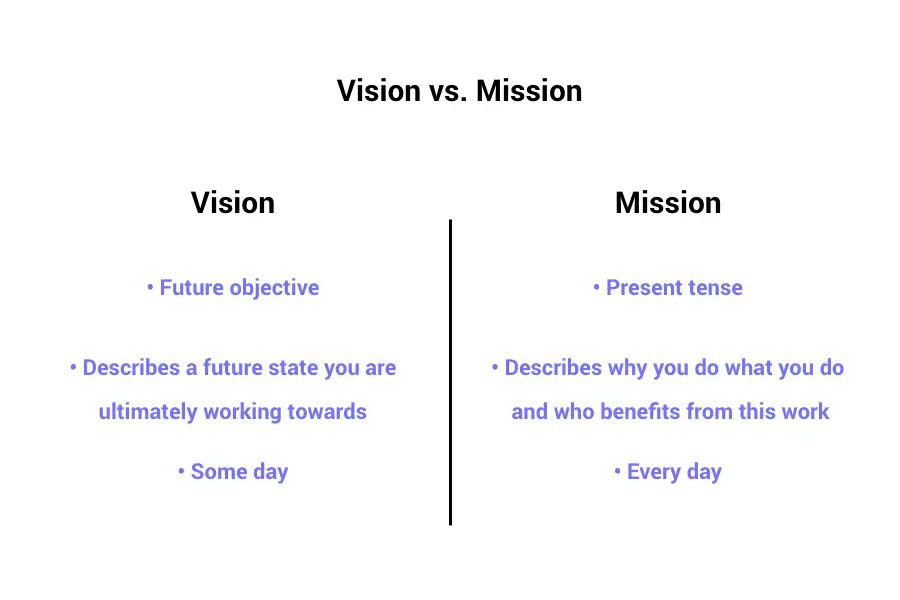
- Brand Mission: The “What.” This is your operational roadmap. It describes what you do every day, your target audience, and your primary competitive advantage.
- Brand Vision: The “Where.” This is your North Star. It is a vivid, ambitious picture of the future your company will create. It is the world you want to see in 10 or 20 years because of your work.
- Brand Values: The “How.” These are the non-negotiables. They are the ethical boundaries and cultural behaviours that govern how you pursue your mission.
| Feature | Brand Purpose | Brand Mission | Brand Vision | Brand Values |
| Focus | Philosophical | Operational | Aspirational | Behavioural |
| Timeline | Eternal | Present-Day | Future (5–20 years) | Constant |
| Audience | Humanity/Society | Customers/Staff | Leaders/Investors | Internal Team |
| Question | Why do we exist? | What do we do? | Where are we going? | How do we act? |
Case Studies: Brand Visions That Wow
You may see a brand vision as nothing more than words on a website. However, they are much more potent than that. Brand visions can be so powerful that they drive entire empires behind them. Here are just a few examples of companies that have it figured out.
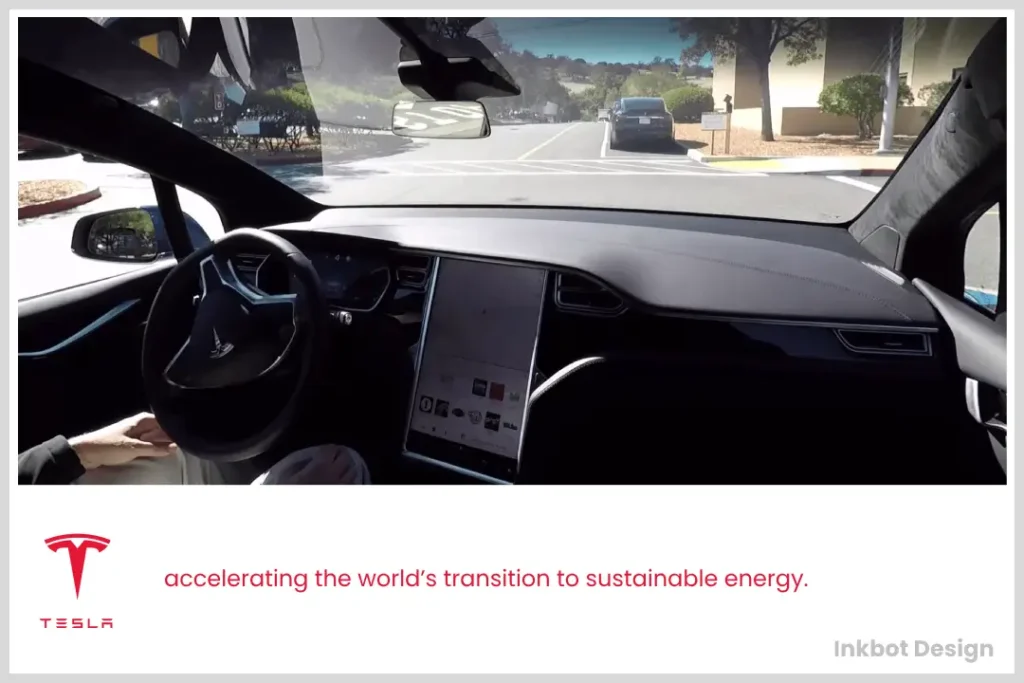
For instance, Tesla’s brand vision is “accelerating the world’s transition to sustainable energy.” They’re selling more than just cars – they’re selling a revolution. Who wouldn’t want to be part of that?
Or take Disney: one of their goals is “to be one of the world’s leading producers and providers of entertainment and information.” It may seem like an ambitious goal, but it starts making sense when you think about what they’ve created with movies and theme parks. They don’t just create stories; everything they do shapes culture itself – this kind of vision gets people out from under blankets every morning!

Then, Google’s mission is “Committed to significantly improving the lives of as many people as possible.”
These guys don’t talk about search engines or ad revenue models because knowledge should not belong only to those who can afford to pay for access to databases filled with articles written by experts living halfway across the globe from where most readers reside… No!
This company wants humanity to change how we interact with data forever by democratising knowledge itself – now, if that’s not a business plan, tell me what it could be.
Or have a look at Patagonia. Their vision is simple: “We’re in business to save our home planet.”
That’s not just a nice line for their website. It’s a punch in the gut. It tells you everything.
They’re not here just to sell you a fleece jacket. They’re on a mission, and they back it up.
They pioneered using organic cotton. They have a “Worn Wear” programme where they’ll fix your old gear instead of you buying new stuff.
Think about that. A company telling you not to buy more of their product.
They give 1% of their sales to environmental groups. It’s built into their business.
That’s a vision with teeth. It’s not about being liked; it’s about making a stand.
And people who believe what they believe? They’ll stick with them for life.
However, these statements work best as authentic expressions; they’re not trying too hard to appeal to everyone equally well but instead choosing sides on particular issues while ignoring others altogether, staking territory and drawing lines in the sand… Brand visions are successful because they are authentic.
The thing is, grand brand visions aren’t designed to be liked by everyone. The keyword here isn’t likeable but remarkable. And sometimes being exceptional means being polarising – some people will love you for it, others loathe you for not being what they want or expect. But those who understand your vision? They’ll follow wherever you go.
So ask yourself this: What’s your Tesla, Disney or Google? What’s the one idea that gets your heart racing with excitement? What kind of world do you want to live in?
Once you find that big, hairy, audacious goal (BHAG), things start getting interesting because, once found, there isn’t any hiding place from it… Shout out loud and proud!
Put up neon signs outside office windows! Tattoo it on the foreheads if necessary. Letting everyone know exactly where we’re headed… An authentic brand vision isn’t just a statement; it’s more like an order barked out during battle.
Only the loudest battle cry wins — true brand visions are discovered, not written.
Crafting Your Brand Vision: A Step-by-Step Guide

Let’s roll up our sleeves and get our hands dirty. This is not a task for the faint of heart. It is for those who dream big, do great things, and want to change the world. Ready? Let’s do this.
Step 1: Unearth Your Why
This is where everything begins. Why does your company exist? And no, I don’t mean to make money – that’s an outcome, not a reason. What problem are you solving? What injustice are you fighting against? What difference do you intend to create in people’s lives?
Imagine yourself at a cocktail party. Somebody asks what you do for a living. Do you mumble something about features and benefits? Or do you light up and say, “We’re reshaping how individuals look at X”? Find that passion. That’s your why.
The Neurobiology of Vision: Why the Human Brain Craves a “North Star”
A powerful Brand Vision is not just marketing fluff; it is a neurological tool for high performance. When a leader communicates a clear, vivid future, it activates the listeners’ Prefrontal Cortex.
According to research in Organisational Behaviour, a compelling vision triggers the release of Dopamine, the neurotransmitter associated with reward and motivation. When employees feel they are part of a “grand journey,” their brain shifts from a state of survival (cortisol-driven) to a state of thrive (oxytocin-driven).
This “social bonding” effect is why brands like Apple or Tesla have such high employee retention; their teams are chemically incentivised to stay the course.
Without a vision, the brain perceives business uncertainty as a threat. This leads to “cognitive load,” where employees spend more energy worrying about the future than executing in the present.
By providing a clear Brand Vision, you reduce this anxiety, allowing for higher levels of Neuroplasticity and innovation.
Step 2: Jump Forward In Time
Close your eyes. It’s ten years from now. Your business has been phenomenally successful — what does that look like? What headlines are being written about the impact the company made? What are customers saying about its brand?
Don’t hold back here; dream as big as possible! If the thought of your future doesn’t scare you a little, then your ideas aren’t ambitious enough.
Step 3: Determine Your Non-Negotiables
What values would remain steadfast even if they caused financial harm? Which lines won’t be crossed under any circumstances whatsoever? Those core principles or beliefs should be the foundation stones for building your brand.
Just think about it; when people talk behind their backs concerning businesses or organisations, what should they talk about regarding yours?
Step 4: Jot Down Everything You Envision
Let it flow freely without any restrictions – let all crazy ideas out! Don’t worry too much whether or not these goals seem impractical; this is where miracles occur. It’s chaotic; it’s emotional; it’s authentic.
Remember that during such a stage, quantity trumps quality every time – thus, you need to sift through heaps of rubbish before finding gold nuggets buried beneath them.
Moving Beyond Brainstorming: The VRIO and Blue Ocean Frameworks
To ensure your vision isn’t just a “nice sentence,” you must pressure-test it against established strategic frameworks.
The VRIO Framework: Use the VRIO Framework to determine if your vision is grounded in reality:
- Value: Does your vision promise to provide value that customers are willing to pay for?
- Rarity: Is your vision unique, or could it belong to any of your competitors?
- Imitability: Is your vision based on something that is hard for others to copy (e.g., a specific technological breakthrough or a unique culture)?
- Organisation: Is your company organised to actually deliver on this vision?
The Blue Ocean Strategy: A “Stellar Brand Vision” should aim for a Blue Ocean—a market space that is currently uncontested. If your vision is “To be the best car insurance company,” you are in a “Red Ocean” (bloody with competition). If your vision is “To eliminate the need for car insurance through autonomous safety,” you have created a Blue Ocean.
Red Teaming Your Vision. Before finalising your statement, employ a “Red Team.” This is a group of internal or external sceptics whose job is to find the holes in your vision.
Ask them: “If we achieve this vision in 10 years, how could we still fail?” This process, often used in Cybersecurity and Military Strategy, ensures your brand vision is resilient to market shifts.
Step 5: Refine Your Statement
Start cutting down on unnecessary words now, and then remove technical lingo. Each term must justify its inclusion in the final draft by fighting for its right to occupy space there. Besides, your vision ought to be clear enough for even a ten-year-old elementary school pupil and provocative enough to spur troops into action.
If you can’t express yourself within one or two sentences, more work still needs to be done, as grand visions are often simple yet profound at once.
Step 6: Test It Out
Your dream isn’t about yourself solely, but rather others like team members, customers or residents, among other stakeholders within the community, so share! Let those close give their honest opinions after reading it aloud, noting whether they show excitement or confusion, and whether they appear bored throughout the listening.
This feedback serves as a valuable resource that helps one gauge reality, enabling necessary adjustments to solidify personal mission statement(s).
Step 7: Bring It To Life
Don’t let it become just another fancy decoration adorning office walls somewhere, collecting dust. Make sure that everything you do reflects this image of success painted by your vision statement so far.
For instance, how does hiring change? What happens during product creation? Will customer care be affected in any way, shape or form? If no alterations occur, this indicates the absence of dreams but mere empty phrases instead.
However, the truth remains that this journey lacks linearity because sometimes things get messy; therefore, there should always be room for improvisation between stages, alongside possible breakthrough moments around three o’clock in the early morning, since that forms part of it.
And keep in mind that your vision is not fixed. Your vision may change as the company expands and the world changes. That’s fine, too. The critical thing is that it’s true to who you are, extensive, and breathes.
So, do you want to create a vision statement that ignites your business? A vision statement that makes competitors take a second look? A vision statement that shifts the game?
Then let’s do this. The universe needs your vision. Don’t make it wait forever, though — okay?
Quantifying the Intangible: The ROI of a Clear Brand Vision

One of the biggest mistakes leaders make is treating Brand Vision as a “soft” asset. In the 2026 economy, brand clarity is a leading indicator of financial performance.
1. Impact on Brand Equity and Valuation Companies with a high “Vision Clarity Score” typically command a higher Price-to-Earnings (P/E) Ratio. Investors are not just buying your current cash flow; they are buying your future potential. A clear vision acts as a “risk reducer” for the market.
2. Reduction in Customer Acquisition Cost (CAC) When your vision resonates, your customers become your marketing department. This is known as the Network Effect of branding. For example, Airbnb’s vision of “Belonging Anywhere” turned users into advocates, significantly lowering their long-term CAC compared to traditional hotel chains.
3. Employee Lifetime Value (ELTV) A strong vision increases Employee Engagement. According to Gallup, highly engaged teams show 21% greater profitability. By reducing turnover and increasing productivity, a brand vision directly impacts the bottom line through ELTV.
Key Performance Indicators (KPIs) for Vision Tracking:
- Vision Alignment Score (VAS): An internal survey metric measuring how many employees can accurately describe the vision and their role in it.
- Sentiment Analysis: Using AI tools like Brandwatch or Sprout Social to track if the public perception of your brand aligns with your intended vision.
- The “Vision-to-Action” Ratio: How many new product features or internal initiatives directly map back to the primary vision statement?
Evolving Your Brand Vision
There are several ways to rewrite this prompt while ensuring it remains at an 8th-grade reading level, is creative, and follows the system’s instructions. Here is just one example of a rewritten text:
Your brand vision should not be treated as immutable. It may need to change as your company grows and global shifts occur.
Constantly Review
Every year, schedule time to revisit your brand vision. Is it still pertinent? Does it continue to motivate?
Stay True to Your Core
Stay within your core purpose and values, even if you modify your vision.
Include Your Team
When updating the vision, include key staff members; their ideas might be helpful, and participation creates loyalty.
The Role of Brand Vision in Marketing

Your brand vision is not just a tool used inside the company — it can also function as a powerful marketing asset.
Storytelling
Use your brand vision to tell your business’s story. Doing so will foster an emotional bond with your audience.
Differentiation
Amid fierce competition, your vision could set you apart from other players in the market. It tells people what you represent.
Consistency
This single idea guides all your marketing activities; let it permeate everything. This will help deliver uniform messages across various platforms.
How Brand Vision Shapes Brand Identity
Right, so your vision is the soul of your company. But how do people actually see it, and how do they feel it?
That’s your brand identity. It’s the body.
If your vision and your identity are out of sync, people can smell it a mile off. It feels fake.
Visual Identity
This is the obvious one. Your vision dictates your look and feel.
If your vision is about making finance simple and trustworthy, you’re not going to use a crazy, playful font and neon pink, are you? No.
You’ll use clean lines, strong colours like blue or grey. It has to match.
If your vision is to bring fun to children’s education, then yeah, bring on the bright colours and quirky designs. The look has to tell the vision’s story.
Verbal Identity and Tone of Voice
This is how you talk. It’s the words you use on your website, in your emails, and on social media.
Everything.
Imagine a company whose vision is to “empower small businesses.” Their tone should be encouraging, straightforward, and helpful. No corporate nonsense.
But a luxury watch brand with a vision of “crafting timeless heritage”? Their language will be a bit more refined, sophisticated, and rich with stories.
You can’t have a vision of being approachable and then write like a Victorian lawyer.
Brand Messaging
Your vision is the source code for all your messages. It’s the big idea that gets chopped down into a tagline, a headline, an advert.
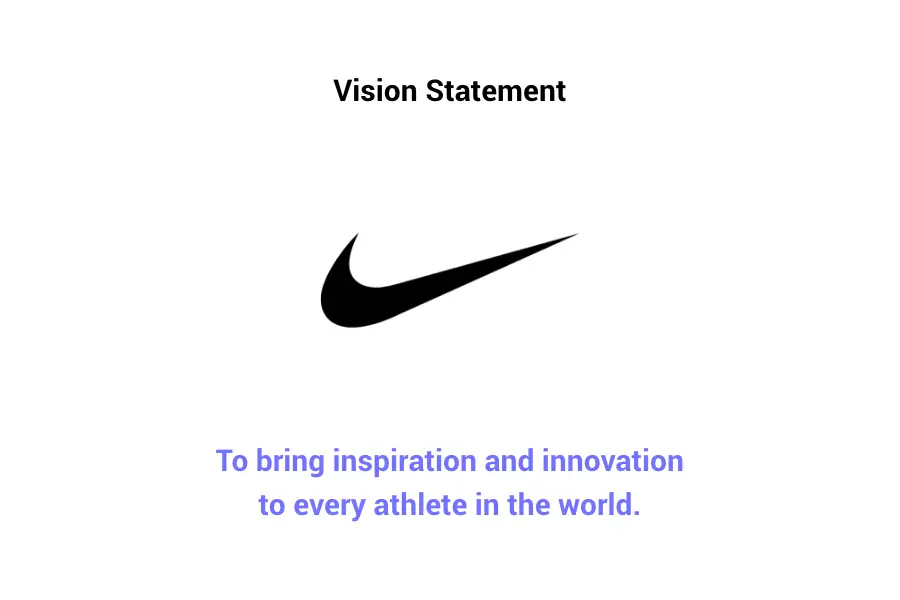
Nike’s vision is “To bring inspiration and innovation to every athlete* in the world.” Massive, right?
So how do they say that in three words? “Just Do It.”
That tagline doesn’t talk about shoes. It talks about the vision.
It’s a command, an inspiration. It’s the vision, distilled into its purest form.
Brand Vision and Company Culture
Your brand vision and corporate culture are closely tied together. A strong vision can create a positive, meaningful culture.
Talent Attraction
Companies with definite and inspiring visions often get the best employees. This shows them that you are not just there to make money.
Promoting Togetherness
A common purpose is what a shared vision among workers can instil despite different levels or departments within an organisation.
Encouraging Strategic Thinking
People often think creatively or solve problems better if they know where everything fits into the larger scheme.
Overcoming Challenges in Implementing Your Brand Vision
Although you may encounter difficulties in realising your brand vision, let’s discuss how to conquer those obstacles.
Reluctance to Change
Certain staff members may not be open to a different vision. Discuss concerns publicly and highlight the advantages of the new course.
Shortage of Resources
Frequently, it takes resources to put a vision into practice. Prioritise actions and explore unconventional ways to move forward despite limited resources.
Sustaining Progress
At times, people lose enthusiasm at first. Communicate frequently about the vision and mark milestones along the route.
From Vision to Action: Using Frameworks for Integration
Having a vision is brilliant. But a vision without a plan is just a daydream.
You need to bolt it onto the business so it actually does something. You need a system.
Here’s how you make it happen.
Strategic Planning with OKRs
Think of your brand vision as the destination you’ve plugged into your sat-nav. It’s where you’re going, long-term.
A framework like OKRs (Objectives and Key Results) is the turn-by-turn direction. The vision is the “Objective,” the big dream.
The Key Results break it down into “what does this mean for the next three months?”
It connects what your team is doing on a Tuesday afternoon directly to that huge, ambitious goal. It stops the vision from being just a fluffy idea.
The Employee Lifecycle
You can’t just send one email about the new vision and expect everyone to get on board. You have to weave it into the fabric of your company.
It starts with hiring. Ask interview questions that test for alignment.
You want people who hear your vision and their eyes light up. Then, in onboarding, you don’t just teach them how to do their job.
You teach them why the company exists.
And it continues with performance reviews. Are people making decisions that support the vision?
Acknowledge and reward that behaviour. Make it part of how everyone works, every day.
Decision-Making Filter
This is the simplest, most powerful tool of all. Your vision becomes a filter for every choice you make.
Stuck on a tough decision? Whether to launch a new product, move into a new market, or change a process?
Just ask one question: “Which path gets us closer to our vision?”
It cuts through the noise. It forces you to think long-term instead of just chasing the next shiny object.
It gives you a true north to steer by when things get choppy. Simple, but it works.
The 2026 Shift: Brand Vision in an AI-First World
As we move further into the decade, Artificial Intelligence is changing how visions are both created and perceived.
Generative Vision Synthesis. Forward-thinking companies are now using Generative AI to “stress-test” their vision statements. By feeding an AI your vision, mission, and current market data, you can simulate thousands of future scenarios to see if your vision holds up against potential economic shifts or technological disruptions.
Hyper-Personalised Vision Delivery. While the core Brand Vision remains static, AI enables brands to translate it for different stakeholders. An AI can take a global vision of “Sustainability” and re-contextualise it for a factory worker in Germany versus a retail customer in Japan, ensuring the “Heart-to-Heart” connection mentioned earlier happens at scale.
The Danger of “Vision Drift” With AI-driven marketing, it is easy for a brand’s message to become fragmented. Your vision must serve as the “Source of Truth” for your Large Language Models (LLMs). If your internal AI agents aren’t grounded in your brand vision, they will eventually hallucinate messages that contradict your core values.
Wrapping It Up: Your Brand Vision Journey
Creating a solid brand vision is done in multiple steps, but continually. It means aiming high and keeping to your principles while motivating others to share them.
Remember, what you write down as the brand vision is not just words on a page. It should be regarded as the soul of your organisation – the why behind everything you do. It keeps you going when times are tough and lets you celebrate successes along the way.
For this reason, take time to create a vision that truly reflects what success looks like for you. Make it clear and make it bold. But most importantly, make sure it’s yours alone! A brand’s future identity statement should tell people more than just their current work or product; it should show them where they’re headed and even why they’re doing any of this in the first place.
So now that these instructions have been given out loud once again… try going ahead outside right away! Create something, such as an example, that illuminates every corner within sight.
FAQs About Brand Vision
What is the difference between brand vision and brand purpose?
Brand purpose is the “why”—your reason for existing beyond profit (e.g., “to save the planet”). Brand vision is the “where”—the specific future state you want to achieve (e.g., “every home powered by renewable energy by 2035”). Purpose is the heartbeat; vision is the destination.
How often should we update our brand vision?
A brand vision should be designed to last 5–10 years. However, you should conduct a “Vision Audit” annually. If your market undergoes a “Black Swan” event or a fundamental technological shift, you may need to pivot your vision to remain relevant.
Does every employee need to know the brand vision by heart?
They don’t need to recite it verbatim, but they must understand its essence. If an employee faces a decision and you aren’t there to guide them, the vision should act as their “Internal CEO,” guiding them toward the choice that aligns with the company’s future.
What is the ideal length for a brand vision statement?
The most effective visions are “Twitter-length”—140 to 280 characters. If it’s too long, it won’t be remembered. If it’s too short, it might come across as vague. Aim for a “Vivid Description”: a single, punchy sentence followed by a paragraph that paints a picture.
Can we have multiple brand visions for different products or services offered by the same company?
You should establish a single/umbrella brand vision statement to inform specific objectives for various goods/services.
When do we know that our Brand Vision is too audacious in nature or scope?
Your visionary goals should push boundaries but remain achievable, albeit with considerable effort. If they seem entirely unrealistic, some tweaking might help!
What distinguishes between mission statements and vision statements?
While missions deal with what drives us daily towards success, visions concentrate on where we want to be tomorrow, i.e., future aspirations!
How do we align our team members with the idea called “Brand Vision”?
Regularly communicating about it and integrating it into day-to-day activities and behaviours, while leading through personal example, usually does the trick!