Integrated Digital Marketing
Stop Chasing Clicks That Don't Convert.
If AI search overviews have fractured your website traffic, traditional SEO won't save you. You don't just need more visitors—you need to become the definitive authority that AI trusts and buyers demand. We turn ambitious brands into undisputed market leaders.

Build Digital Authority
From Marketing Expense to Compounding Business Asset.
At Inkbot Design, we don’t just “run campaigns”; we architect Brand Growth Systems. By fusing elite-level creative direction with Semantic Intelligence, we transform ambitious businesses into undisputed category leaders.
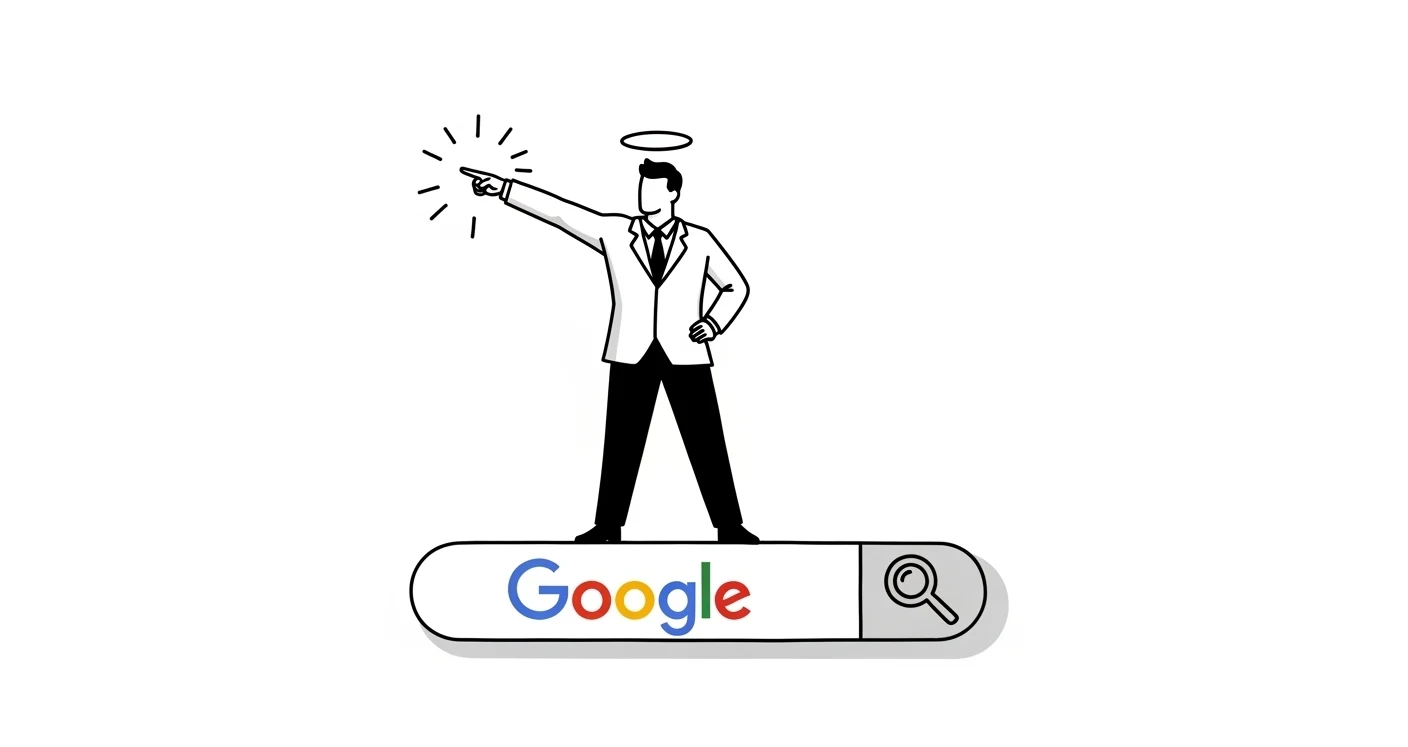
While others chase fleeting trends, we build the visual and verbal engines—from Conversion-Optimised Web Design to Performance Content Marketing—that ensure your brand is the definitive answer in the Google Knowledge Graph. We don't just put you on the map; we make you the landmark.

A logo is just the beginning; a Strategic Framework is the finish line. We fuse world-class creative with integrated digital strategy to turn your brand into a definitive market leader.
Request a Growth Diagnostic →The Strategic Advantage
Why Partner with Inkbot Design for Integrated Growth?
“Stop renting visibility. Start owning your market.” With all the AI noise, being ‘seen' isn't enough—you must be trusted. We don’t just execute tactics; we architect growth as your strategic partner. By fusing elite Brand Identity with Semantic Intelligence, we ensure your digital footprint is impossible to replicate and built to deliver a definitive return on investment.
Intelligence
From “Found” to “First-Choice.”
Keywords are dead; Authority is the new currency. We move beyond high-volume phrases to define your brand’s permanent seat in the Global Entity Graph. By optimising for Brand-Topic Associations, we ensure that AI search agents—from Gemini to ChatGPT—identify you as the definitive authority in your niche. We don't just help you rank; we encode your brand as a Verified Entity that the algorithms trust and the market demands.
Conversion
Subconscious Trust in UX.
We don’t design for engagement; we design for Market Dominance. In a world of infinite digital communication, your platform must trigger immediate, subconscious “Trust Signals” that justify your premium pricing. Every pixel—from frictionless UX to sophisticated Attribution Models—is engineered to remove the friction between a lead’s desire and their final commitment.
Stewardship
E-E-A-T + Immutable Equity.
Stop hiring vendors and start gaining a Strategic Partner. We align your cross-channel digital footprint with your core “Onliness,” ensuring that every marketing penny spent isn't a one-off cost, but a deposit into your Long-Term Brand Equity. Through rigorous E-E-A-T frameworks, we protect your reputation while compounding your topical authority, turning your brand into an unassailable market leader.
Precision-Engineered Growth
Our Integrated Digital Marketing Ecosystem
We have evolved beyond siloed tactics. Our integrated framework synchronises semantic clarity, paid precision, and conversion architecture to turn your digital presence into a dominant market force. Explore our four core pillars of delivery.
Generative & Semantic SEO (GSO)
We have moved beyond “ranking on page one.” In the age of Gemini and SGE, your brand must be the definitive source that the AI cites. We achieve this through Semantic Content Architecture.
- Entity Mapping & Optimisation
- Semantic Content Architecture
- Predictive Intent Research
- Technical Provenance (EEA-T+P)
Performance Marketing (PPC)
Paid media is no longer about just “buying clicks.” It is about generating high-fidelity Intent Signals. We use first-party data to train ad algorithms, ensuring your budget is spent on buyers, not browsers.
- Multi-Channel Attribution
- AI-Optimised Bidding & Creative
- First-Party Data Strategy
- Brand Defence & Awareness
Multimodal Content & Brand Narrative
Distribution is the new differentiator. We create Expert-led Narratives and multimodal assets that command attention across every platform and force AI agents to recognise your unique Human Provenance.
- Authority-Led Content Production
- Multimodal Assets (Video/Visual/Text)
- Social Search Integration
- Entity-First Copywriting
Conversion-Centred Design & UX (CRO)
High traffic is a liability without a Conversion-Centric Architecture. We apply Behavioural Intelligence to every pixel, removing the friction between a user’s initial search intent and their final commercial commitment.
- Behavioural Intelligence
- Landing Page Revenue-Weighting
- Micro-Conversion Optimisation
- Continuous A/B Experimentation
The Visual Engine
Why Creative Direction is Your Secret Performance Lever
Most performance agencies ignore design. We view it as a conversion variable. In a millisecond, a user’s subconscious decides if your brand is “Premium” or “Generic.”
By fusing world-class Creative Direction with Behavioural Intelligence, we ensure that your landing pages do more than just provide information—they trigger Neural Trust. Every colour palette, typeface, and UX interaction is engineered to lower the “perceived risk” of a transaction. When your visual identity aligns perfectly with your marketing message, your Conversion Rate naturally increases, lowering your CPA and boosting your bottom line.
Stop Competing.
Command Your Market Position in the Intelligence Era.
We prioritise strategic depth over high-volume output. To maintain the Human Provenance and surgical precision required for category leadership, we only accept a limited number of Integrated Digital Marketing engagements each month. Secure your place in our development queue.
Let’s architect the future of your brand authority.
We were burning cash on Google Ads with zero visibility on returns. It felt like a black hole.
Most agencies sent us reports full of ‘impressions' and ‘clicks' to hide the fact that they weren't generating sales. Inkbot Design changed the game. They didn't just manage the ads; they overhauled our entire funnel. They cut our Cost Per Lead (CPL) by 35% in the first month and significantly scaled our qualified traffic throughout the quarter. Finally, an agency that cares about my P&L as much as I do.

Sam Al-Saud
Commercial Director
The Inkbot Engine
Our 6-Step Integrated Growth Framework
From fragmented clutter to category dominance. We use a proprietary, entity-first methodology to ensure your brand isn't just seen—it’s recognised as the definitive authority by both AI search agents and your ideal clients.
Entity Mapping & Market Intelligence
We begin by defining your brand’s core “Entity Node.” We map your unique value proposition against the global Knowledge Graph to identify the semantic gaps where your competitors are weak. This stage aligns your business goals with the specific intent signals of the UK and US markets.
The Result: A clear, data-backed blueprint that establishes your brand as a primary authority in your niche from day one.
Semantic Architecture & Hub Design
We don't just build pages; we architect “Topic Hubs.” We map your website’s structure to exactly how modern AI thinks. When ChatGPT or Gemini looks for the best answer in your industry, we make sure they cite you—not your competitors. This creates a “network effect” that boosts the ranking power of your entire domain.
The Result: A high-performance site structure that Google recognises as semantically complete and effortlessly easy for AI to summarise.
Signal-Led Performance Infrastructure
We deploy high-fidelity Paid Media campaigns across Google, Meta, and LinkedIn to generate immediate “Intent Signals.” Without cookies, we focus on first-party data and AI-optimised bidding strategies that find your highest-value customers while insulating your budget from wasteful automated spending.
The Result: Rapid market penetration and a steady stream of high-intent leads that feed your growth data loops.
Multimodal Authority Deployment
Content must be “Search Everywhere” ready. We create a library of multimodal assets—from expert-led long-form guides to vertical video—that AI search engines love to cite. We ensure your brand's “Human Provenance” is undeniable, making your content irreplicable by generic automated tools.
The Result: Your brand becomes the “Cited Source” in AI Overviews, appearing as the definitive answer for industry-defining queries.
Trust-Signal & Conversion Optimisation
We apply “Conversion-Centric Architecture” to your landing pages, using behavioural intelligence and micro-interaction data to remove friction. We engineer every touchpoint to trigger the “Subconscious Trust Signals” that justify premium positioning and maximise your lead-to-close ratio.
The Result: A significant increase in conversion rates, transforming passive traffic into loyal, high-value brand advocates.
Growth Attribution & Entity Scalability
We move beyond vanity metrics to provide “Full-Funnel Attribution.” By tracking the cross-channel journey from the first AI mention to the final sale, we continuously refine your strategy. This ensures your marketing budget functions as a compounding asset that increases your total Brand Equity.
The Result: Absolute clarity on your ROI and a scalable roadmap for long-term market dominance and global expansion.
Our Strategy
We Don’t Sell “Traffic.” We Architect Digital Dominance.
Visibility is a vanity metric; Authority is a market mandate. Using our proprietary Inkbot Protocol™, we bridge the gap between “getting clicks” and becoming the Definitive Answer in the AI search era. We don't just amplify your reach; we ensure your brand is the only logical choice.
Where We Stand
By the Numbers
- 20+ Years of Industry Expertise
A quarter-century of navigating brand evolution, from traditional print to the age of Agentic AI.
- 4.9/5 Aggregated Sentiment Score
Based on 160+ verified reviews, our reputation is built on strategic depth and high-precision delivery.
- 2,500+ Strategic Resources
We don't just practice marketing; we lead the conversation with one of the industry's largest libraries of strategic insights.
- Top-Ranked Strategic Partner
Vetted and ranked as a Top 30 Agency in the UK and the top branding firm in Belfast, Northern Ireland.

Insight
We Are Not an “Order-Taker” Agency.
We don’t just execute requests; we protect your Brand Equity.
We protect your budget as if it were our own. That means we aren't afraid to challenge you. If you ask for a trendy TikTok campaign but the data shows your highest-value buyers are on LinkedIn, we will respectfully guide you back to the strategy that actually drives revenue. We measure our success by your market share, not by simply fulfilling requests.
- Conversion Governance: Driving traffic is only half the battle. We architect the Full-Funnel Experience, optimising your site’s conversion logic to ensure every visitor encounters a “Trust Signal” that moves them toward a transaction.
- Semantic Integrity: We ensure your marketing spend isn't just buying clicks, but is building your long-term Authority in the global Knowledge Graph.
- Fiscal Stewardship: We measure success in Market Share and £, not “likes” or “impressions.” If it doesn't positively impact your balance sheet, it's noise.
Surgical Diagnostic: Identifying the Authority Gap
You know your business should be performing at a higher level, but where is the friction? Is it a Semantic Gap in your SEO? A Trust Gap on your landing page? Or a Positioning Gap in your offer?
Stop Guessing. Start Architecting.
Request a Strategic Growth Intelligence Audit. We will perform a “Surgical Diagnostic” of your current digital ecosystem and provide you with three proprietary, actionable steps to recover lost revenue and immediately sharpen your market authority.
Frequently Asked Questions (FAQ)
Let’s Clear the Air.
Great partnerships start with great questions. Whether you’re curious about the technicalities of “Neural Trust” or just want to know when we can start, we’ve laid it all out for you here. If your question isn't on the list, consider it an invitation to jump on a discovery call with us.
How does your “Integrated” approach differ from standard digital marketing?
Most agencies operate in silos, where SEO, PPC, and Content teams rarely speak. We use the Inkbot Protocol™ to synchronise these channels into a single “Brand Growth System”. This ensures your messaging is consistent throughout the customer journey, preventing fragmented experiences that typically kill conversions.
How do you optimise for AI search engines and AI Overviews?
Visibility in 2026 is defined by whether AI systems pick your brand as a credible source. We move beyond keywords to build a Brand Knowledge Graph, using structured schema and authoritative citations so that engines like Gemini and SGE recognise you as a primary entity in your market.
What is “Semantic Entity Intelligence” and why is it necessary?
Search has evolved from simple keyword lookups to AI-powered reasoning. Semantic intelligence involves defining your brand's unique “Onliness” and linking it to high-value topics within Google’s Knowledge Graph. This ensures you are found not just for what you sell, but for the specific problems you solve better than anyone else.
How do you measure success in a cookieless, privacy-first world?
With traditional tracking degrading, we prioritise first-party data strategies and multi-channel attribution. We focus on “Leading Indicators” such as search lift and the share of AI-generated answers, alongside “Lagging Indicators” such as revenue and customer lifetime value (LTV).
Do you use AI to generate our marketing content?
We use AI for data analysis and scaling creative production, but never for the final output. In 2026, generic “AI slop” is a ranking liability. We maintain Human Provenance by using expert-led narratives and original research that AI cannot replicate, which is precisely what search engines reward.
How long does it take to see a measurable ROI?
Timelines vary by channel, but we focus on “ROI Defensibility” from day one. Paid media often generates immediate intent signals (1–3 months), while Semantic SEO and Entity Authority build compounding assets that peak between 6 and 12 months. We track deal velocity and pipeline contribution to prove value early.
Why do you limit the number of engagements you accept each month?
Strategic depth requires significant resources and human oversight. To avoid the “content overload” and “blind automation” that cripples larger agencies, we maintain a boutique model. This ensures every client receives surgical precision rather than high-volume, low-impact tactics.
How does my Brand Identity affect my digital marketing results?
In 2026, Brand Voice is recognised as a ranking signal. If your branding is generic, search engines treat your marketing as noise. We align your visual and verbal identity with your marketing strategy to trigger the “subconscious trust signals” necessary for high-value B2B conversions.
Can you help us expand into both the UK and US markets?
Yes. Our framework accounts for the nuances of Geographic Entity Optimisation (GEO). We adjust semantic clusters and local intent signals to ensure your brand resonates with the specific regulatory and cultural requirements of both the UK and US market ecosystems.
What is your process for “Conversion-Centric Architecture”?
We don't just design for aesthetics; we design for Market Dominance. Using behavioural intelligence and real-time data, we identify roadblocks in your user journey and re-engineer touchpoints to align with modern B2B buying cycles, which often involve multiple stakeholders.
Is this strategy suitable for small businesses or just enterprise firms?
Our focus is on Ambitious Growth, regardless of size. We help smaller-category challengers build disproportionate authority by going “deep” into specific, high-fit channels rather than spreading themselves thin across every platform.
How often will we communicate and see reporting?
We believe in Radical Transparency. You receive real-time access to a strategy dashboard that tracks your KPIs against revenue targets. We hold monthly strategic alignment calls to adjust your roadmap in response to real-time market shifts and AI performance data.