How to Use Influencer Marketing to Boost Your Brand
“Renting an audience” is a recipe for a drained bank account.
Most of what passes for influencer marketing is a vanity project that generates zero real return.
This isn’t a guide to finding “famous individuals.” It’s a strategic breakdown of how to build a predictable machine that turns an influencer’s pre-built audience trust into a measurable return on investment (ROI).
Forget the fluff. This is about making more money.
- Prioritise authenticity and trust by partnering with creators whose audiences genuinely align with your brand values.
- Set SMART goals and budgets, then choose platforms and influencer tiers based on your target audience and objectives.
- Use rigorous vetting and measurement: verify audience quality, track multi-touch attribution and promo code redemptions.
- Maximise ROI by repurposing influencer content, securing usage rights and using whitelisting for paid amplification.
Why Should You Be Interested in Influencer Marketing?
Here are some eye-popping figures that should sway you:
- Campaigns based on influencers generate $5.78 per dollar spent (a whopping 5x ROI!).
- 49% of shoppers rely on recommendations from influencers when making buying decisions
- 63% of marketers have intentions to raise their budget allocation for influencer campaigns
This thing is massive, it works, and its popularity can only grow bigger from here onwards; if your aim is staying up-to-date while connecting better with today’s customers, climbing aboard this train would do you good!
Still not convinced? Let us dive into why these high-energy tactics are so strong.
What Makes Influencer Marketing So Darn Effective?
1. They’ve got raving, loyal fanbases.
It’s not just about the number of followers an influencer has. The real power comes from having an army of passionate fans who trust them implicitly.
Think about it: when you love someone, and you trust them, you’re much more likely to take what they say seriously and act on it – especially when it comes to things they know a lot about
Influencer marketing taps into this bedrock of trust and adoration. When an influencer gushes about your brand, they’re effectively opening the floodgates for their devotees to sit up, take notice and potentially follow suit.
2. It hits that sweet spot of authenticity
Breaking through the noise and achieving genuine authenticity with consumers is one of the biggest challenges facing brands today. We’re so bombarded with slick, insincere ads that cynicism is practically hardwired into us.
Influencers are the antidote.
They’re just regular people sharing their honest experiences and opinions. There’s a vulnerability here that traditional adverts lack – a sense that we get to see behind somebody else’s eyes or walk a mile in their shoes (or 500 metres in their trainers).
Whether it’s an Instagram story reviewing your new skincare range or a YouTube video demo-ing your latest tech gadget, influencer endorsements feel real – because they are real. Their followers see them as mates rather than merchants with hidden agendas.
3. Precision targeting like nothing else out there
When you advertise traditionally, you take quite a scattergun approach towards reaching your intended audience – based on educated guesses, which may or may not pay off.
With influencer marketing, though? Forget about it!
You can be laser precise when it comes to zeroing in on who sees what content where & when – thanks largely (but not exclusively) to social media algorithms such as those found on TikTok or YouTube Music (or any other platform where artists give shoutouts to their favourite products whilst listening back through their discography).
By partnering with creators who resonate within a niche, location, age group, or interest bracket, brands can position themselves directly in front of an already engaged community eager for something new.
It’s focused targeting done right; no more spray-and-pray!
4. It’s super scalable and cost-effective
Let’s be honest: traditional marketing isn’t cheap (I’m looking at you, TV ads!). In contrast, working with influencers is an absolute steal.
You can start small by collaborating with micro-influencers before gradually ramping up as the returns begin – i.e., investing more money and time into more extensive campaigns involving more prominent players across broader platforms.
Either way, you’re getting serious bang for your buck here. Instead of wasting funds on interruptive ad slots which viewers skip over without even noticing them halfway through Love Island USA S02E09 (“Too hot to handle? More like too boring to watch!”), You’re leveraging genuine relationships between trusted voices that naturally expose your brand in a positive light.
Now, that’s what I call savvy spending!
5. This form of promotion puts product benefits on full display
Why tell people how great your stuff is when you could show them instead?
Influencer marketing excels at bringing products alive through vivid visuals and compelling narratives. It lets you weave your brand seamlessly into the fabric of somebody else’s highly immersive visual world – whether that happens to be an exquisitely curated Instagram feed or a breathtaking YouTube travel vlog series spanning 12 countries over nine months with one carry-on bag shared between two presenters who haven’t spoken since filming wrapped last summer (true story).
The best content creators are masters at producing drool-worthy material that makes viewers’ mouths water and tugs on their heartstrings until they’re desperate for whatever’s being showcased – often without even realising it! Working alongside these wizards injects new energy into tired campaigns whilst leaving an indelible mark upon audiences’ souls (and wallets, too, if we’re lucky).
How to Create a Killer Influencer Marketing Strategy

Ready to drink the Kool-Aid of influencer marketing and try it yourself? Great idea! Here’s how to ensure your success.
1. Set Goals and Budget
First things first: know what you want to achieve with influencer marketing. Do you want to:
- Increase brand awareness?
- Drive engagement and social chatter?
- Generate sales and conversions for a specific product/service.
- Foster customer loyalty and advocacy?
Your goals will dictate which metrics you track, the type of influencers you partner with, and where you focus your efforts, so don’t rush through this step.
Then, set a budget. Consider your available resources and the scope of the campaign you’re hoping for; we’ll discuss pricing models/tiers in more detail.
Pro Tip: Ensure your goals are S.M.A.R.T. (specific, measurable, achievable, relevant, and time-bound) so that you can accurately evaluate your performance.
2. Identify Your Crowd Through Audience Research
Now that you know what you’re trying to achieve, it’s time to learn everything there is to know about the people who comprise your target market(s). This deep understanding will be invaluable when vetting potential influencers later on.
Ask yourself questions like:
- What are their age ranges/genders?
- Where are they located geographically?
- What industries do they work in — or what hobbies do they have — or what other interests might they hold?
- Which social media platforms do they use most frequently/comfortably?
- What types of content or creators already resonate with them?
- As consumers, what values/challenges/desires do they have?
If possible, conduct customer surveys, review social media insights/analytics, and consult third-party demographic reports. Do whatever it takes to paint a vivid picture of who these folks are!
For additional context on how folks may be talking about brands/products like yours within the digital ecosystem, consider leveraging “social listening” tools such as Awario, Mention, or BuzzSumo.
These platforms allow you to monitor unfiltered discussions around keywords or topics relevant to your business; doing so can help surface the specific forums/sites where your target audience is most active.
3. Research and Identify Suitable Influencer Partners
With your audience intel, you can now start scouting for influencers who are a perfect match. Both their brand and following should align with your target market.
Explore hashtags and accounts relevant to your niche across platforms such as Instagram, YouTube, and TikTok. You can also check influencer marketplaces like:
- Upfluence
- GRIN
- CreatorIQ
- Aspire
- SARAL
As you whittle down potential partners, some critical criteria to consider include:
- Follower size/reach (more on influencer tiers next)
- Audience demographics and interests
- Engagement rates
- Content quality and style
- Brand affinity
- Costs and requirements
Check that their aesthetic, voice and values align with your brand identity. Establishing that natural brand fit is crucial for making it feel like an organic partnership to their followers.
Don’t just judge the book by its cover, though! Watch or read several of their pieces to get a sense of their style and expertise. You want to ensure they have what it takes to give your brand an authentic, enthusiastic shout-out.
Top Tip: Leverage tools like HypeAuditor to analyse an influencer’s audience authenticity and spot any fake followers or engagement. This will help avoid potential influencer fraud.
Picking Your Battleground: Which Platform is Right?
Right, before you go splashing cash, think about where your crowd actually hangs out. Not all social media is created equal.
It’s horses for courses, mate.
Instagram is your go-to for anything visual. We’re talking fashion, fitness, food, travel… You know, the pretty stuff.
It’s perfect for showing off a product in action through slick photos, Stories, and Reels. If your brand looks good, it’ll do well here.
YouTube is the king of long-form content. This is where you go for proper, in-depth reviews, tutorials, and breakdowns.
Think tech gadgets, gaming, or anything that needs a good explanation. The trust here is massive because viewers are investing serious time with the creator.
And then there’s TikTok. It’s a different beast entirely.
It’s all about fast, snappy, trend-driven video. It’s phenomenal for reaching a younger audience (especially Gen Z) with content that feels raw and authentic.
If your brand has a fun side, you can make a killing on TikTok.
Don’t just pick a platform because it’s popular; pick it because your ideal customer is already there, waiting.
The B2B Influencer Revolution (LinkedIn & Thought Leadership)
While most brands think of Instagram or TikTok, the B2B influencer marketing space is where the highest-ticket deals are now being closed. In 2026, professional decision-makers don’t just look at whitepapers; they look at what industry peers and Subject Matter Experts (SMEs) are saying on LinkedIn and X (formerly Twitter).
A B2B influencer isn’t a celebrity; they are often a “Key Opinion Leader” (KOL) like an industry consultant, a software architect, or a respected CEO. Instead of “unboxing” videos, you are looking for:
- Platform-native articles that solve a specific technical pain point.
- Podcast guest appearances where your product is mentioned as a solution.
- Webinar collaborations that provide real value to a professional audience.
For example, a SaaS company selling cybersecurity software might partner with a renowned CISO (Chief Information Security Officer) to co-host a live stream on data privacy trends. The trust transferred in this scenario is far more valuable than a million likes on a dancing video.
Key Framework: When selecting B2B partners, prioritise Relevance and Authority over reach. A partner with 5,000 highly targeted CTO followers is worth ten times more than a general business influencer with 100,000 followers.
What Should You Pay? 2026 Influencer Price Benchmarks (UK/EU)
The following table provides estimated rates based on 2026 market data. Note that engagement rates and niche authority can increase these prices by up to 40%.
| Tier | Typical Following | Est. Price per Reel/TikTok | Est. Price per YouTube Video | Ideal For… |
| Nano | 1k – 10k | £50 – £250 | £150 – £500 | Hyper-local / Product Seeding |
| Micro | 10k – 50k | £250 – £1,000 | £500 – £2,500 | High Conversion / Niche Sales |
| Mid-Tier | 50k – 500k | £1,000 – £5,000 | £2,500 – £10,000 | Brand Consideration / Growth |
| Macro | 500k – 1M | £5,000 – £15,000 | £10,000 – £30,000 | Massive Reach / Awareness |
| Celebrity | 1M+ | £20,000+ | £50,000+ | Mass Market Product Launches |
Influencer Tiers 101: What Size Should You Go For?
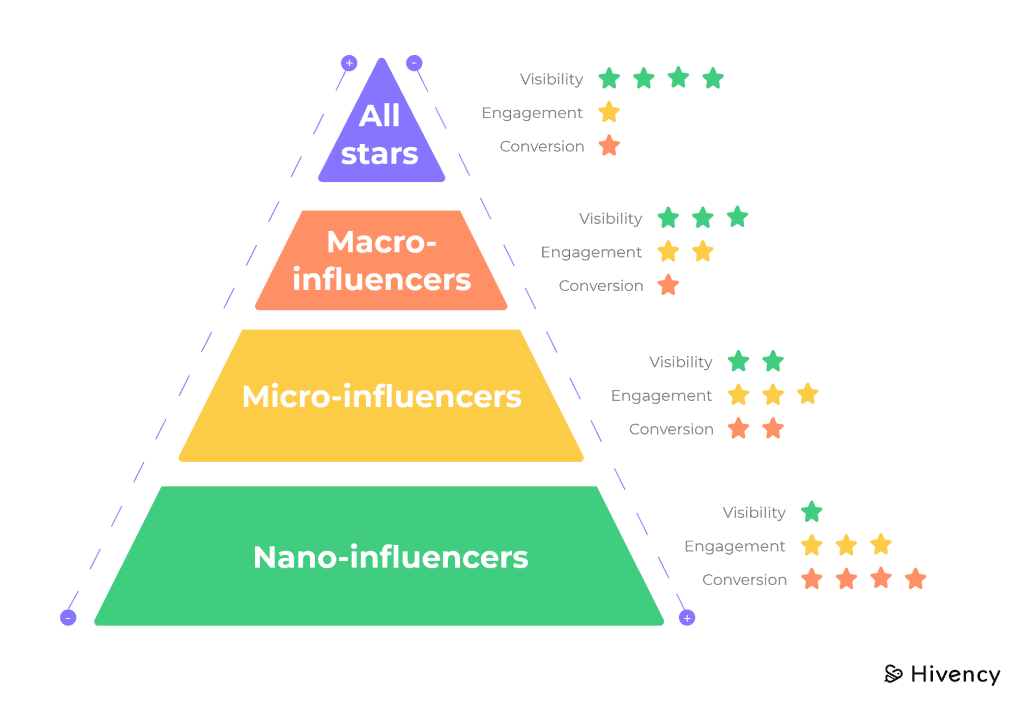
“Influencer” is a comprehensive term that encompasses a range of audience sizes. Here’s a quick guide to the critical tiers:
- Nano-influencers: 1,000 – 10,000 followers
- Micro-influencers: 10,000 – 50,000 followers
- Mid-tier influencers: 50,000 – 500,000 followers
- Macro-influencers: 500,000 – 1,000,000 followers
- Celebrities: 1,000,000+ followers
There are pros and cons to each tier. Nano and micro-influencers tend to have the most engaged, tight-knit communities who deeply trust their opinions. However, their reach is limited.
But here’s the thing: don’t let the smaller numbers fool you. It’s not about the size of the audience; it’s about the connection.
These smaller creators often pack a much bigger punch in terms of engagement.
Why? Because their followers genuinely see them as a mate giving a recommendation, not a celebrity pushing a product. The trust is baked in.
Studies consistently show that micro-influencers can have engagement rates that leave the big names in the dust. Their followers are a proper community, not just a number on a screen.
This also means you get hyper-targeted access to a niche audience that’s actually interested in what you sell. Instead of shouting into a stadium, you’re having a meaningful chat in a living room.
For most businesses, that’s where the real money is made.
Macro influencers and celebrities can expose you to massive audiences. However, their stratospheric numbers often lead to diluted engagement rates and viewers who perceive their content as more ad-like.
The sweet spot for most brands is micro- and mid-tier influencers. However, your brand’s “right” tier depends on your goals and budget.
For example, working with a handful of hyper-engaged nano-influencers may make more sense if you’re a local business or have a niche product. If you want unbeatable reach and visibility, investing in a couple of macro-influencers could be worthwhile.
Many brands opt for an influencer portfolio strategy, partnering with a mix of tiers to reach smaller, more engaged communities and capitalise on opportunities for massive reach.
AI Influencers and Synthetic Media in 2026
The landscape of “who” can be an influencer has shifted. We have seen the rise of Virtual Influencers—AI-generated personas like Lil Miquela or Imma that exist entirely as digital entities.
Why consider AI influencers for your brand?
- Total Brand Control: You don’t have to worry about a “real person” getting into trouble or straying from your brand voice.
- Infinite Scalability: An AI influencer can “be” in ten different locations at once, speaking ten different languages, making them ideal for global product launches.
- Cost Efficiency: While high-end virtual avatars are expensive to build, once they exist, the cost of content production drops significantly.
However, the 2026 consumer is savvy. Under current UK ASA (Advertising Standards Authority) guidelines, any content featuring synthetic media or AI-generated personalities must be clearly labelled. Transparency is the only way to maintain the “authenticity” that makes this marketing channel work. If you use a virtual creator, make it a core part of the narrative—don’t try to “trick” your audience into thinking they are human.
4. Settle the price and partnership with the influencer
Now that you have figured out which influencers suit your brand, it’s time to contact them and make a deal.
Typical models of pricing used by influencers are:
- Pay per post or campaign package
- Commission-based (% of sales they drive)
- Gifting/product seeding
- Long-term affiliate or ambassador relationships
Payment rates vary widely depending on the perceived value of an influencer’s audience and the number of people they can reach. A nano-influencer might charge around $10 per Instagram post, while some celebrities charge over $500,000 for a single endorsement.
I know – my eyes were watering at those top-tier fees, too! For most businesses, working with a mix of micro and mid-tier influencers will give you more bang for your buck. To ensure you’re partnering with authentic influencers, it’s crucial to use a fake follower scanner to verify their audience.
But whatever pricing model or influencer combination you decide on, remember to:
- Agree on what needs to be done, how it should be done and when it should be done by
- Get contracts signed after specifying usage rights
- Talk about FTC disclosure requirements so that everyone stays legal
And look, on that last point about legal stuff… don’t skim past it. This is a biggie.
Regulators like the Advertising Standards Authority (ASA) here in the UK and the Federal Trade Commission (FTC) in the States are not messing about.
Any paid partnership must be clearly disclosed. No excuses.
This means using obvious labels like #ad, #sponsored, or the platform’s own “Paid Partnership” tool right at the beginning of the caption or stamped on the video. Hiding it in a sea of other hashtags at the bottom doesn’t cut it.
This isn’t just about avoiding a slap on the wrist. It’s about being straight with people.
Audiences are smart; they know what’s going on. Being upfront builds trust, whilst being sneaky about it makes both you and the influencer look dodgy.
Just be honest, it works better for everyone.
Coordinate content creation, messaging strategies and amplification plans, among other things necessary for success in this partnership, such as UTM tracking codes or promo links, which will help measure performance later, if applicable.
Typically, brands pay flat rates for different types of posts like Instagram stories/posts or YouTube videos, etc., but some pay commissions only if there are sales directly made through an influenced channel, while others gift products in exchange for reviews/features and then opt to pay additional monies if need be due to success from said initial partnership; finally long term ambassadors could receive monthly retainers as well as commissions too – so get creative!
5. Advanced Attribution and “Whitelisting”
Executing a campaign is no longer just about clicking “post.” To truly scale, modern brands use Influencer Whitelisting (often called Creator Licensing).
This is the process by which an influencer grants your brand permission to run paid ads on their social media accounts. Instead of an ad coming from @YourBrand, it appears in the feed as a “Sponsored” post from @InfluencerName.
- The Benefit: These “dark posts” (ads that don’t appear on the influencer’s main profile grid) often see a 30-50% higher click-through rate because they look like organic recommendations from a friend.
- The Strategy: Take the top-performing 10% of your influencer content and put a paid budget behind it. Target your specific customer demographics using the influencer’s lookalike audience.
Moving Beyond UTMs
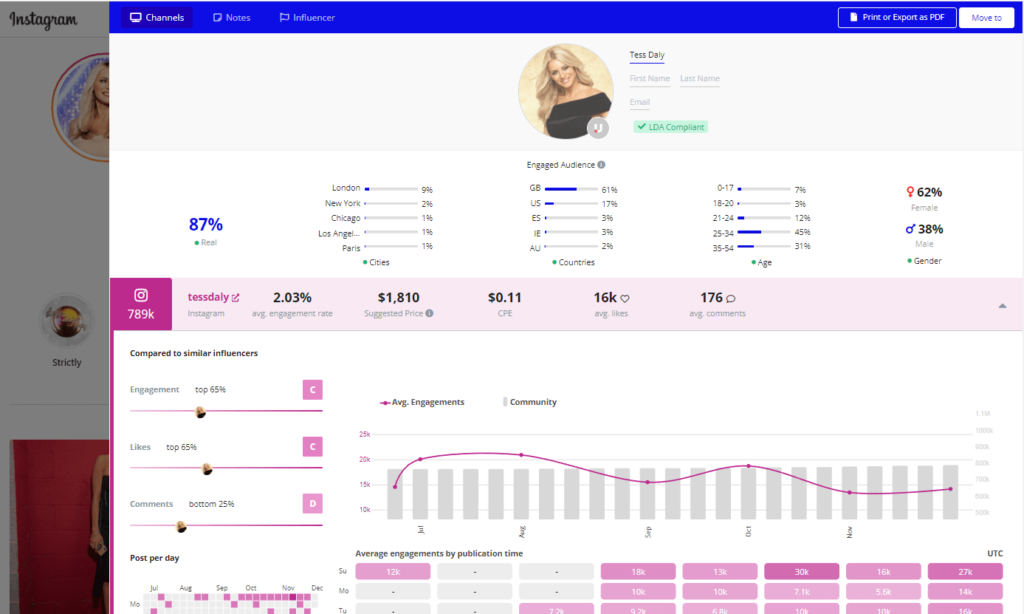
In a privacy-first world, UTM parameters only tell half the story. To see the real impact, you must look at Multi-Touch Attribution. This involves tracking:
- Post-View Conversions: Someone sees an influencer’s Story, doesn’t click, but visits your site and makes a purchase 3 days later.
- Brand Search Lift: Measuring the spike in people searching for your brand name on Google or Amazon during the campaign window.
- Promo Code Redemptions: The most reliable way to track “offline” or cross-device sales.
Maximise Your Spend: Repurpose That Content!
Want a pro move that squeezes every last drop of value out of your influencer budget? Stop thinking of the partnership as just a one-off post.
You’re paying for top-notch content, so use it!
This is what the smart folks call repurposing Influencer-Generated Content (IGC). Once the influencer has posted, you can use those fantastic photos and videos across your own marketing channels.
Think about it, you get a stream of authentic, high-quality material that shows real people loving your stuff.
Here are just a few ideas:
- Plaster their images on your product pages to show social proof.
- Use their videos in your Facebook or Instagram ad campaigns.
- Feature their content in your email newsletters.
- Populate your own social media feeds with it (with credit, of course).
But, and this is the most important bit, you absolutely must get the rights to do this in your initial contract. Don’t just assume you can use their work wherever you want.
Get clear, written permission on usage rights, duration, and where you can post it. Get it in writing, and you’ve just multiplied the ROI of your campaign without spending an extra quid.
6. Analyse Results and Optimise Future Campaigns
Lastly, pore over your campaigns’ performance data to pinpoint what worked, what didn’t, and where you can improve.
Examine quantitative metrics to evaluate each influencer’s direct ROI and conversions. However, qualitative factors like engagement, sentiment, and virality should also be considered.
An influencer who didn’t directly drive massive traffic or sales may have still sparked positive word of mouth for your brand on social media.
Use all those juicy insights to iterate and optimise your influencer marketing strategy. You may choose to:
- Test other influencers or mix up your influencer portfolio
- Tweak your content guidelines or creative direction
- Adjust budgets based on what delivered the best value
- Develop long-term ambassador relationships with your top performers
- Refine your audience targeting and influencer vetting process
The goal? To continually fine-tune things until you have a well-oiled influencer marketing machine that packs an ever-bigger punch for your brand!
Legal Checklist & 2026 Compliance
In 2026, the CMA (Competition and Markets Authority) and ASA significantly increased their monitoring of social platforms. Failure to disclose is not just a PR risk—it’s a legal one.
The 2026 Disclosure Checklist:
- Visibility: The #ad or #sponsored tag must be visible before the user clicks “more.” It cannot be hidden at the bottom of a caption.
- Clarity: Use platform-provided disclosure tools (e.g., “Paid Partnership” label) in addition to manual tags.
- Audio Cues: For video content, the influencer should ideally mention the partnership verbally within the first 30 seconds.
- Usage Rights: Your contract must specify whether you have the right to use their face and content for AI training or for perpetual paid advertising.
- Morality Clauses: Ensure you have a “kill switch” in the contract that allows you to terminate the partnership immediately if the influencer is involved in a scandal that violates your brand values.
Influencer Marketing FAQs
How do I handle a “de-influencing” trend if my product is mentioned?
De-influencing is when creators tell their audience not to buy a product. If your brand is targeted, do not ignore it. Reach out to the creator to understand their genuine critique. If the criticism is valid, use it as a feedback loop to improve. If it’s a misunderstanding, a transparent, humble response video from your founder can often flip the sentiment in your favour.
Is “gifting” still a viable strategy in 2026?
Yes, but it is much harder. Most professional creators no longer accept “surprise” packages. The better approach is Product Seeding: asking if they’d like to try the product with no obligation to post. This builds a genuine relationship. If they love it and post organically, that is the most powerful endorsement you can get.
What is the “Golden Ratio” for influencer engagement rates?
On TikTok and Instagram Reels in 2026, a “good” engagement rate is between 3% and 6%. Anything above 10% for a micro-influencer is exceptional. However, always check the ratio of likes to comments; high likes but zero comments often suggest bot activity.
Can I use influencer marketing for a local service business like a plumber or a gym?
Absolutely. Focus on Nano-influencers within a 10-mile radius. A local fitness enthusiast posting about your gym is far more effective than a national celebrity. Use geo-targeted hashtags and encourage the influencer to tag the specific location.
How has AI changed influencer vetting?
We now use tools like HypeAuditor or Modash to scan for “Audience Quality Scores.” These AI tools can detect if an influencer’s followers were bought or if their engagement comes from “comment pods.” Never sign a deal without seeing a third-party audit of their audience authenticity.
What metrics should I use to track the success of my influencer campaign?
The key performance indicators (KPIs) of an influencer outreach program may include website visits, lead generation rate, sales conversion ratio, follower growth magnitude, and overall return on investment (ROI). However, qualitative parameters, such as reach attained or sentiment expressed around these promotions, also need to be accounted for alongside more traditional quantitative measures, such as traffic generated.
What legal requirements must I comply with when working with influencers?
Typically, most countries have guidelines governing the disclosure of sponsored content by influencers to prevent people from being misled. For instance, in the United States, it is obligatory under FTC endorsement rules that any material connection between an endorser and an advertiser must be made clear during their collaboration, even if they appear together only once.
How can I ensure I am not taken advantage of by fake followers or bots posing as popular accounts?
It is best to use tools like HypeAuditor to verify the authenticity of an audience. Checking engagement rates can also help reveal imposter syndrome, where many followers are uninterested in what one posts, thus signifying inauthenticity. In addition, every potential influencer undergoes a thorough vetting process that ensures brand safety, among other things.
Learn How to Use Influencer Marketing Today
Boom! Now you know how to utilise influential tastemakers and thought leaders for the most effective brand impact.
I get it, I do — at first glance, it can seem like a lot. But don’t worry about it. Take one step at a time, research, and ease into influencer marketing.
It’s remarkable what even reaching out to micro-influencers can do for your brand’s voice; this alone can drive significant engagement, leading to more sales and long-term growth.
Influencer world takeover is imminent, so act now or forever hold your peace! Start planning who you will work with based on the ROI they could deliver today.
So, what’s next for you on this wild journey through influencers? Leave me a comment below!