How to Ethically Use the Power of Suggestion to Boost Sales
The power of suggestion is not some mystical “dark art.” It’s not hypnosis. It’s not about tricking people into buying things they don’t need.
It’s psychology. And you are already using it.
Every colour on your website, every word in your proposal, and every price on your menu is suggesting something to your customer. The only question is whether you’re doing it deliberately and effectively, or by complete accident.
As a consultant, I’ve seen small businesses haemorrhage money because their marketing sends all the wrong signals. Their “professional” website resembles one from 1998, suggesting they’re out of touch. Their “premium” product is presented with blurry photos, suggesting it’s of lower quality.
My job is to fix that.
- Sleazy Scarcity: “Only 2 left!”… on a PDF download. It’s dishonest, your customers aren’t stupid, and it shatters trust. Suggestions work best when they are aligned with the truth.
- Jargon Over Clarity: Using “innovative synergy” when you mean “good teamwork.” This doesn’t suggest intelligence; it suggests you’re hiding something.
- Ignoring the Obvious: Obsessing over complex analytics while the “Buy Now” button is invisible. You’re failing at the most basic suggestion: “Click here.”
- Treating it as a “Trick”: Suggestion isn’t a magic wand you wave to create demand. It’s a tool you use to guide existing demand and build perceived value. It cannot fix a bad product.
This isn’t about manipulation. It’s about clear, intentional communication. It’s the silent partner to your content marketing, setting the stage before your words even have a chance to do their job.
This is your practical guide to understanding suggestion and using it to build a brand that works.
- Use honest, intentional cues (design, copy, pricing) to guide customers — suggestion should illuminate real value, not invent it.
- Rely on core psychological triggers (priming, anchoring, social proof, scarcity, authority) to make "Yes" feel natural and easy.
- Always choose trust over tricks: ethical nudges build long‑term loyalty; fake scarcity or deception destroys it.
What Is the Power of Suggestion (in Marketing)?
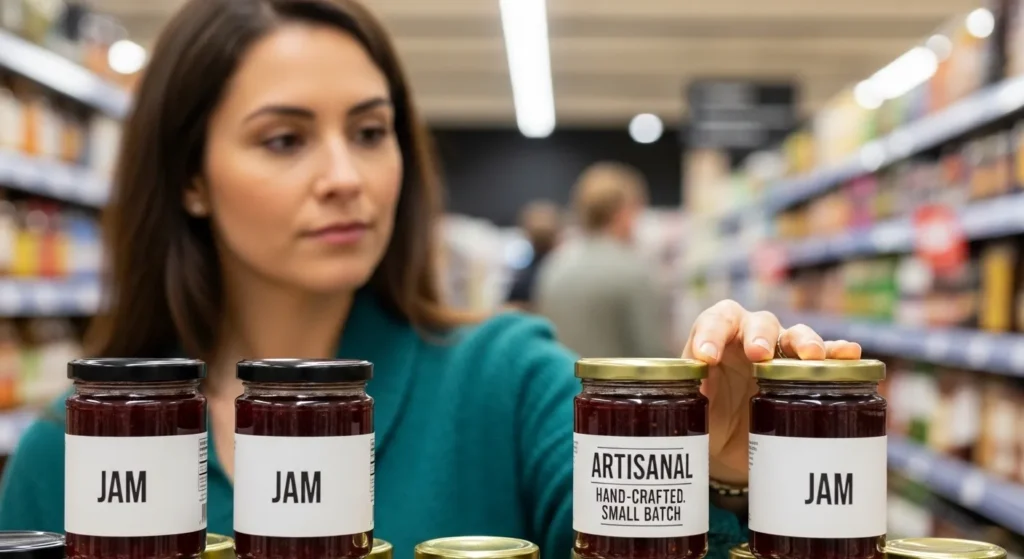
In a marketing context, the power of suggestion refers to the process of using indirect cues—such as images, words, environmental factors, and context—to influence a person’s thoughts, feelings, and ultimately, their actions.
It works because humans are cognitive misers. We don’t have the time or energy to rationally analyse every single one of the thousands of decisions we make each day.
To cope, our brains create mental shortcuts, or heuristics.
- “This website looks professional, so the company is probably legitimate.”
- “This brand is recommended by experts, so it’s probably high quality.”
- “This option is the most expensive, so it’s probably the best.”
These are not conscious, logical deductions. They are fast, automatic assumptions. Suggestion is the art of intentionally influencing those assumptions. It’s about shaping the context so that the customer’s mental shortcut leads them to your desired conclusion.
The goal isn’t to force a “Yes.” The goal is to make “Yes” feel like the most natural, logical, and easy choice.
The “Big 5” Psychological Triggers Behind Suggestion
To use a suggestion, you first need to understand the mechanisms. While there are dozens of cognitive biases, most successful marketing suggestions rely on a handful of core principles.
1. Priming
Priming is about setting the stage. It’s the act of exposing someone to one stimulus (a word, an image, a sound) to influence their response to a subsequent stimulus.
- The Classic Example: If I say the word “EAT,” you might fill in the blank S-O-_-P as “SOUP.” If I say the word “WASH,” you’d probably fill it in as “SOAP.” The first word primed your brain for a specific context.
- The Marketing Application: A law firm’s website uses images of mahogany desks, leather-bound books, and classical columns. This primes you to expect seriousness, tradition, and high fees before you even read their “About Us” page.
- The Digital Application: An e-commerce site selling outdoor gear uses a rugged, textured background and bold, sans-serif fonts. This primes the user to feel adventurous and trust the durability of the products.
2. Anchoring
The anchoring effect is a bias that occurs when we rely too heavily on the first piece of information presented when making decisions. That first piece of information becomes the “anchor” against which all other information is judged.
- The Classic Example: A T-shirt is priced at $100. You think, “That’s too expensive.” The next day, it’s on sale for $75. “Wow, what a great deal!” You perceive $75 as cheap, not because it is cheap, but because it’s being compared to the $100 anchor. If it had been $50 originally, $75 would seem like a price hike.
- The Marketing Application: This is the most common pricing tactic.

Here’s how it breaks down:
| Anchoring Tactic | How It Works | Real-World Example |
| “Was/Now” Pricing | Anchors the “was” price, making the “now” price seem like a significant discount. | “Was $199, Now $99” |
| Tiered Pricing (Decoy) | Uses a very high-priced “Premium” option as an anchor to make the “Standard” option look like the most reasonable choice. | Basic: $10 Pro: $40 Enterprise: $250. (The $250 anchor makes $40 look smart.) |
| “Per Day” Pricing | Anchors a small daily cost instead of the large total cost. | “Join for just $1.60 a day” instead of “Annual membership: $584.” |
| Initial Quote | A service provider (like a builder or agency) gives a high initial estimate. Any reduction from that feels like a win, even if the final price is still high. | “The full project would normally be £10,000, but for you, we can do it for £8,500.” |
3. Social Proof
This is the “herd mentality.” When people are uncertain, they look to the actions and opinions of others to determine their own. If “everyone” is doing it, it must be the right thing to do.
- The Classic Example: You’re in a new city and looking for dinner. You see two restaurants. One is empty. The other has a queue out the door. Which one do you assume has better food? The busy one.
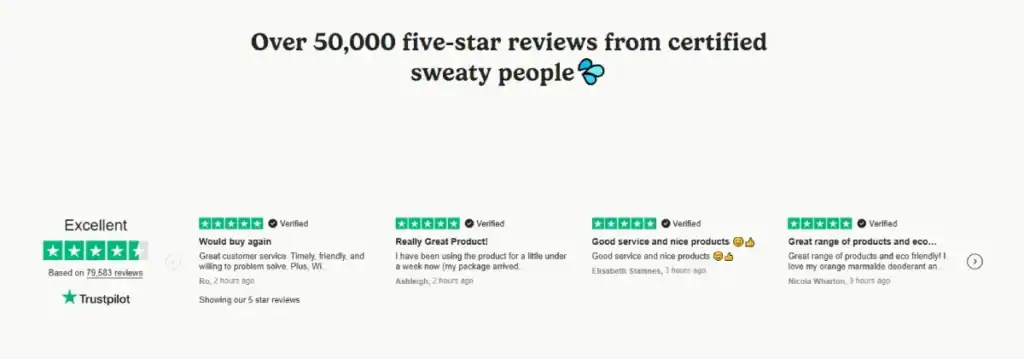
- The Marketing Application: Social proof is the engine of the modern internet. It suggests safety and desirability.
- Types of Social Proof:
- Testimonials & Reviews: “5-Star Rating from 2,000 customers.”
- “As Seen In”: Logos of well-known publications (suggests authority).
- User Counts: “Over 1 million users trust us.”
- Social Media: A high follower count or posts with thousands of “likes.”
- Celebrity/Influencer Endorsement: A trusted figure uses the product.
4. Scarcity
Scarcity is built on the fear of missing out (FOMO). We perceive things as more valuable when their availability is limited. Suggesting that something is rare, exclusive, or in short supply creates a powerful sense of urgency.
- The Classic Example: “Sale ends Friday!” “Only 3 left in stock.” “Limited-time offer.”
- The Marketing Application: This works because it forces a decision. It shortcuts the customer’s natural tendency to procrastinate.
- Types of Scarcity:
- Time-Limited: A deal that expires (e.g., Black Friday sales).
- Quantity-Limited: A product with a limited run (e.g., “Only 100 prints made”).
- Access-Limited: An “invite-only” beta or a “members-only” club.
A quick word of warning: This is the easiest one to get wrong. As mentioned in my pet peeves, fake scarcity is a fast pass to destroying customer trust. Use it honestly. If the sale ends Friday, end it.
5. Authority
We are wired to respect and listen to those in authority. The authority heuristic is a shortcut that says, “If an expert says it, it must be true.” Suggesting that your brand, product, or service is backed by expertise builds immediate trust.
- The Classic Example: “9 out of 10 dentists recommend…”
- The Marketing Application: You don’t need a white lab coat. Authority can be suggested in many ways:
- Credentials: “Certified,” “Accredited,” “Award-Winning.”
- Authoritative Content: Publishing expert blog posts, white papers, or books.
- Professional Design: A clean, professional, and error-free website suggests you are a professional, authoritative business.
- Endorsements: Getting a “stamp of approval” from a respected leader in your industry.
A Practical Audit: Where Suggestion Lives in Your Business
Knowing the theory is fine. Applying it is what matters. Here is a practical audit of where suggestions are working (or failing) in your business right now.

1. In Your Branding & Visual Identity
Your branding is one giant act of priming. It’s the first impression, setting the entire context for the customer relationship.
- Your Logo: Is it a playful, rounded font? It suggests you’re friendly, modern, and perhaps low-cost. Is it a sharp, elegant serif font? It suggests you are premium, traditional, and authoritative.
- Your Colours: A brand using muted, earthy tones (beiges, greens, browns) suggests it is natural, organic, and calm. A tech startup using bright electric blues and sharp gradients suggests it is innovative, fast, and modern.
- Your Photography: Are you using generic, cheesy stock photos? You’re suggesting you’re a generic, unoriginal company. Using high-quality, custom photography of your real team and products? You’re suggesting authenticity and quality.
Here’s a simple “before and after” of how priming works in design.
| Design Element | “Accidental” Suggestion (Bad) | “Intentional” Suggestion (Good) |
| Logo | A complex, busy logo in Comic Sans. | A clean, minimalist logo in a modern font. |
| Suggestion | “This is an amateur, cheap, and dated business.” | “This is a professional, modern, and credible business.” |
| Colour Palette | Clashing, bright primary colours (red, yellow, blue). | A cohesive palette of deep navy, white, and a gold accent. |
| Suggestion | “This is chaotic, loud, and stressful.” | “This is stable, trustworthy, and premium.” |
| Website Fonts | Five different fonts. | Two consistent, legible fonts (one for headlines, one for body). |
| Suggestion | “This is disorganised and hard to read.” | “This is organised, thoughtful, and easy to use.” |
2. In Your Web Design & User Experience (UX)
Beyond just looking good, your website’s functionality suggests how a user should feel and act. This is where suggestion guides the customer journey.
- Visual Hierarchy: What’s the biggest, boldest thing on your homepage? That’s what you are suggesting is the most important action. If your “About Us” button is bigger than your “Shop Now” button, you’re suggesting a different priority.
- Button Copy (Microcopy): This is a classic. I once saw a client double their sign-ups by changing one word.
- Before: Submit (Suggests: “I am giving something up, doing work.”)
- After: Get My Free Guide (Suggests: “I am receiving something of value.”)
- Trust Symbols: Placing “Secure SSL” padlocks, credit card logos (Visa, Mastercard), and “Money-Back Guarantee” badges right at the checkout page. You don’t even need to read them. Their mere presence suggests “This is safe. You can trust us.”
- Social Proof Placement: Sprinkling testimonials throughout your site, not just on a “Testimonials” page. Placing a key testimonial right next to a “Buy Now” button suggests a direct link: “This person did this, and they were happy. You will be, too.”
3. In Your Copywriting & Framing
Framing is the art of presenting the same information in different ways to evoke different responses. The words you choose are powerful anchors for perception.
- “90% Fat-Free” vs. “10% Fat”: Which one sounds healthier? They are identical. “90% Fat-Free” suggests health by framing the positive.
- “Cost/Price” vs. “Investment”: “Cost” is money lost. “Investment” is money spent to gain a future return. A business consultant sells an “investment in your growth,” not a “price for their time.”
- “Problem-Solving” vs. “Benefit-Driven”:
- Problem Frame: “Tired of wasting time on invoicing?” (Suggests: “You have a problem, and it’s annoying.”)
- Benefit Frame: “Save 10 hours a month on invoicing.” (Suggests: “You will gain a positive, tangible outcome.”)
4. In Your Pricing & Perceived Value
We’ve covered anchoring, but suggestion goes deeper. Your pricing itself is a suggestion of your brand’s position in the market.
- The 3-Tier Model: This is a masterclass in suggestion.
- Tier 1 (Basic): A low price to attract customers.
- Tier 2 (Pro/Standard): The one you actually want them to buy. It’s priced to look like the “best value.”
- Tier 3 (Enterprise/Premium): A very high price. This does two jobs. 1) It anchors the “Pro” plan, making it look cheap. 2) It suggests you are a serious company capable of handling huge clients, which builds authority.
- Charm Pricing ($9.99): The old classic. It works because we read left to right. We anchor on the “9,” and it feels significantly cheaper than $10.00. This suggests “value” and “a good deal.”
- Prestige Pricing ($100.00): The opposite. A round number suggests quality, elegance, and simplicity. You’ll never see a luxury watch priced at $4,999.99. It’s $5,000. It suggests “we are confident in our quality and don’t need to play pricing games.”
This strategic framing of price and value is a key part of our digital marketing services. It’s not just about running ads; it’s about ensuring the entire customer journey, from the first click to the final sale, sends the right signals.
The Ethics of Suggestion: The Line Between Nudging and Shoving

This is where many businesses get it wrong and veer into “sleazy” territory. The power of suggestion should be used to illuminate value, not to invent it.
- Nudging (Good): Using social proof to help an uncertain customer feel confident in a purchase they were already considering.
- Shoving (Bad): Using a fake countdown timer to pressure someone into an impulse buy they will later regret.
The difference is trust. A nudge builds trust by making the customer’s choice feel easy and smart. A shove destroys trust by making them feel tricked.
Here’s my simple test.
| Suggestion vs. Manipulation |
| ✅ Good Suggestion (A Nudge) |
| Using “Was/Now” pricing for a genuine sale. |
| Showing “Only 5 left in stock” for a physical item with real-time inventory. |
| Adding a “Most Popular” tag to your best-value pricing tier. |
| Using testimonials from real, happy clients. |
| The Test: Does this help my customer make a confident choice? |
| The Result: Long-term loyalty and trust. |
Always use your powers for good. Trust is infinitely more valuable than one quick, deceptive sale.
Case Study: Putting It All Together
Let’s make this real. Imagine a small business: “Dave’s Artisan Coffee.”
- The Business: Dave serves fantastic, locally roasted coffee. He’s passionate, and his product is excellent.
- The Problem: His website was built by his nephew. It uses a generic template, clip-art images, and the copy says, “Our coffee is really good.” He charges premium prices, but his site suggests “hobbyist.” Sales are flat.
- The Solution (A Suggestion Audit): We didn’t change his coffee. We changed the suggestions surrounding it.
1. Branding (Priming & Authority)
- Before: A cartoon logo of a coffee bean.
- After: A simple, elegant wordmark in a serif font. We added the tagline, “Master Roaster | Est. 2019.”
- The Suggestion: Changed from “cheap, playful” to “premium, experienced, authoritative.”
2. Web Design (Priming & Social Proof)
- Before: White background, blurry photos of coffee bags.
- After: A new colour palette of deep browns, creams, and black. Professional macro photography of the beans and the brewing process.
- The suggestion has been changed from “basic” to “sensory, rich, high-quality.” We also added a banner: “As featured in the Local Foodie Chronicle” (Social Proof).
3. Copywriting (Framing)
- Before: “Buy our coffee. It’s $15.”
- After: “Experience the ‘Founder’s Roast.’ Our richest, small-batch blend. $15.”
- The Suggestion: Changed from a “cost” to an “experience.” It reframes the $15 as a price tag for a premium product.
4. Pricing (Anchoring)
- Before: A simple list of three coffee bags, all $15.
- After: We created a “Taster’s Selection Bundle” for $50. This expensive bundle acted as an anchor.
- The Suggestion: Suddenly, the $15 bag didn’t seem expensive. It seemed like a reasonable entry point compared to the $50 anchor.
The Result: Dave’s sales tripled in six months. The coffee didn’t change. The perception of the coffee did. We simply aligned the signals (his marketing) with the truth (his quality).
Using Behavioural Science in Marketing
You’re spending a fortune on marketing, but your engagement remains flat and your ROI is disappointing. Why? Because you’re guessing. This book stops the guesswork. It’s the playbook for applying proven behavioural science to your ads, emails, and funnels to get an unfair advantage. Stop hoping for results and start engineering them.
As an Amazon Partner, when you buy through our links, we may earn a commission.
Your Marketing Is Already Talking. Are You Controlling the Conversation?
The power of suggestion isn’t a “nice to have.” It’s the fundamental, unspoken language of marketing. Your customers are already being influenced by the cues you send.
They are being primed by your logo, anchored by your prices, and guided by the layout of your website.
The only choice you have is whether to let those suggestions happen by accident or to orchestrate them with a clear, honest, and deliberate strategy. Stop sending mixed signals with your marketing. Start guiding your customers with confidence.
If you look at your own brand and realise it’s suggesting “cheap” when you’re “premium,” or “confusing” when you want to be “simple,” it might be time to take control of the conversation.
At Inkbot Design, we build brands and websites that send the right signals. We don’t just make things look good; we make them work by aligning design, copy, and strategy.
If you’re ready to build a brand that clearly speaks to your customers, check out our digital marketing services or request a quote to speak with us directly.
❓ Frequently Asked Questions (FAQs)
What is the power of suggestion in marketing?
It’s the use of indirect cues (like design, wording, and social proof) to influence a customer’s perception, feelings, and actions towards a product or brand, often by tapping into mental shortcuts (heuristics).
Is the power of suggestion the same as manipulation?
No. Suggestion (when used ethically) guides customers by highlighting true value and making choices easier. Manipulation aims to deceive or pressure a customer into an action they’ll likely regret, often using false information (like fake scarcity).
What is ‘priming’ in advertising?
Priming is exposing a customer to a stimulus (like a specific colour, word, or image) to influence how they respond to a later stimulus. For example, using “green” and “natural” imagery primes a customer to see your product as eco-friendly.
How does ‘anchoring’ affect sales?
Anchoring uses the first piece of information (like a high “was” price) as a reference point. A “Now $99” price feels like a great deal only because it’s anchored to the “Was $199” price. It’s all about context.
Can you give a simple example of ‘social proof’?
Displaying customer testimonials, “As seen in” media logos, or showing “Over 10,000 satisfied customers” are all forms of social proof. They suggest that “other people like this, so you will too.”
How does scarcity work in marketing?
Scarcity (e.g., “limited time offer” or “only 3 left”) creates a fear of missing out (FOMO). This sense of urgency suggests the item is valuable and in high demand, prompting a faster purchase decision.
How can I incorporate design suggestions into my website?
Your design primes users. A professional, clean, fast-loading site suggests a trustworthy and competent company. Using trust symbols (such as a padlock icon) at checkout suggests that the transaction is secure.
What’s the difference between “charm pricing” and “prestige pricing”?
Charm pricing (e.g., $9.99) suggests a bargain. Prestige pricing (e.g., $100) suggests high quality and confidence, appealing to luxury buyers.
How can a small business use the power of authority?
Displaying any certifications or awards.
Having a highly professional logo and website.
Publishing expert, helpful blog content.
Showing testimonials from respected clients.
What is “framing” in copywriting?
Framing is presenting the same information in a different light. “90% fat-free” (a positive frame) is more appealing than “10% fat” (a negative frame), even though they mean the same thing.
Is the power of suggestion a “dark pattern”?
It can be. A “dark pattern” is a manipulative design that tricks a user (e.g., a hidden “unsubscribe” button). Ethical suggestions, by contrast, are transparent and aim to help the user, not trap them.
What’s the single most important suggestion my brand can make?
Trust. Every other suggestion—quality, value, authority—is built on a foundation of trust. If your marketing suggests you are dishonest (e.g., fake scarcity), you’ve lost before you’ve even begun.