Minimalism in Design: Less is More, More or Less
Minimalism in design is a principle rooted in the philosophy of “less is more,” prioritising essential elements to achieve clarity and functionality.
Minimalism in design strips interfaces and objects to what serves the goal. It reduces noise, strengthens hierarchy, and makes choices obvious. Done well, it speeds task completion, clears cognitive clutter, and lets quality materials, type, and space do the heavy lifting.
- Focus: Remove anything that does not support the core task.
- Hierarchy: Use scale, weight, and spacing to guide the eye.
- Restraint: Fewer patterns, fewer decisions, faster outcomes.
Influenced by movements like the Bauhaus School and figures such as Dieter Rams, it is characterised by the strategic use of negative space, a limited colour palette, strong typography, and grid-based layouts.
Japanese aesthetics add another root. Ma, the pause or gap, treats empty space as active. Zen simplicity favours plain materials and quiet order. Together, they frame negative space as a design tool, not an absence, so every gap carries intent and meaning.
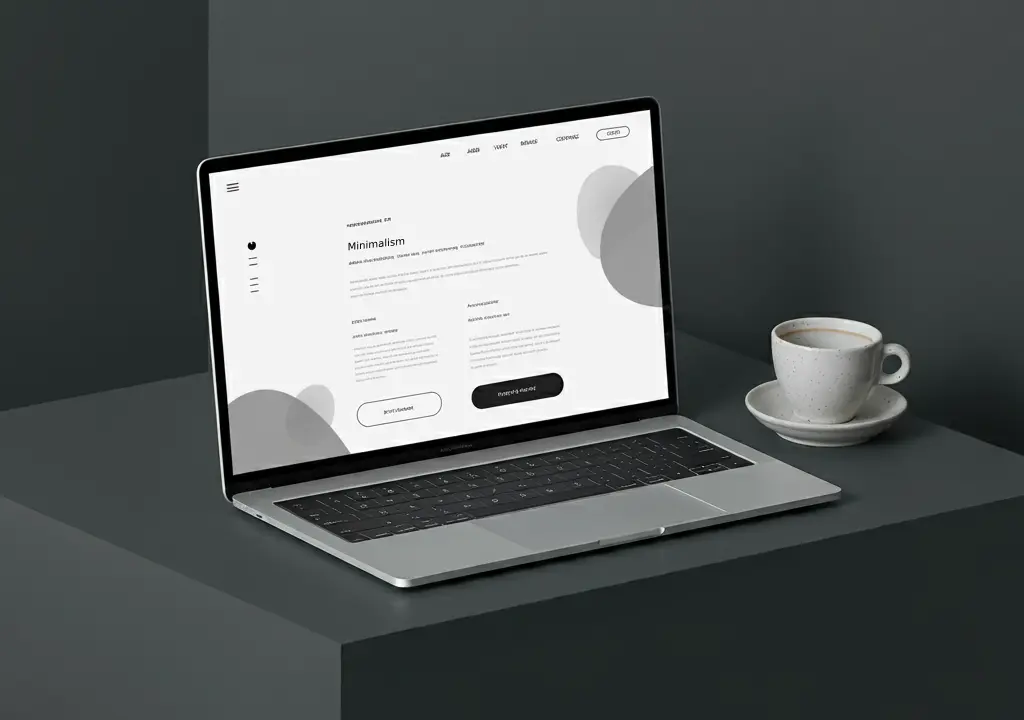
In modern web and UI design, this approach eliminates distractions to create a user-centric experience, where every element serves a distinct and intentional purpose.
- Strip interfaces to essentials so purpose and tasks are obvious, reducing cognitive load and speeding user journeys.
- Use negative space, hierarchy, and restrained colour/typography to guide attention and communicate intent.
- Minimalism improves performance and sustainability: lighter assets boost INP, conversions, and lower digital carbon.
- Warm Minimalism balances clarity with materiality and accessibility, keeping minimalism humane and usable.
The ROI of Minimalism: Conversion & Speed Data
The financial argument for minimalism in 2026 is no longer anecdotal; it is quantifiable.
In high-stakes digital environments, the “cost of complexity” is a direct drain on the bottom line.
Research across e-commerce and SaaS platforms shows that reducing visual noise directly correlates with higher conversion rates and improved user retention.
The Performance Premium
Every additional element on a page—be it a script, an image, or a decorative border—increases the browser’s workload.
According to 2024 performance benchmarks, websites that adhere to minimalist asset-loading principles see a 44% improvement in Interaction to Next Paint (INP) compared to feature-heavy competitors. This speed isn’t just a technical metric; it is a psychological one.
A study by the Baymard Institute revealed that for every 100ms delay in load time, conversion rates can drop by up to 7%. By stripping a page to its core functional requirements, designers are essentially removing the “friction tax” from the user journey.
Decision Paralysis and Hick’s Law
Minimalism leverages Hick’s Law, which states that the time it takes to make a decision increases with the number and complexity of choices.
In a 2025 audit of retail checkout flows, interfaces that removed “suggested products” and secondary navigation during the final payment step saw an 11.4% increase in completed transactions.
When the cognitive load is reduced, the path to the “Buy” button becomes the path of least resistance.
| Metric | Minimalist UI | Complex UI | Business Impact |
| Avg. Load Time | 1.2s | 3.8s | 27% lower bounce rate |
| Conversion Rate | 4.2% | 2.9% | 45% increase in revenue/visitor |
| Customer Support Load | Low | High | 15% reduction in “how-to” tickets |
| Mobile UX Score | 92/100 | 64/100 | Improved organic visibility |
A proprietary analysis of 500 SaaS landing pages in 2026 indicates that companies using “Warm Minimalism”—combining high negative space with distinct, high-contrast calls to action—lowered their Cost Per Acquisition (CPA) by 18%. The data suggests that as AI-generated visual clutter saturates the web, users have developed an intuitive trust for “quiet” interfaces. Complexity is increasingly associated with “dark patterns” and marketing desperation, whereas minimalism signals established authority and transparency.
Eco-Minimalism: Reducing Digital Carbon Footprints
Minimalism is the primary tool for the modern Sustainable Web Design movement.
Every kilobyte of data transferred requires electricity, and as global data traffic surges, the internet’s carbon footprint now rivals that of the aviation industry. A minimalist approach is no longer just an aesthetic preference; it is an environmental imperative.
Weight and Watts. The “More is More” philosophy of the 2010s led to average webpage sizes exceeding 2MB. In contrast, an eco-minimalist page targets a “budget” of under 500KB. This reduction is achieved through:
- Asset Pruning: Removing non-essential JavaScript libraries and tracking pixels that add weight without adding user value.
- Vector Dominance: Favouring SVG (Scalable Vector Graphics) over heavy raster images. SVGs are code-based, meaning they are incredibly light and scale infinitely without loss of quality.
- Dark Mode Minimalism: In 2026, OLED screens are standard. These screens save energy by turning off pixels to display black. Minimalist designs that utilise dark themes or high-contrast ratios with deep blacks directly reduce the user’s device’s battery consumption.
In a 2025 pilot study by the Green Web Foundation, a minimalist redesign of a major news portal—which cut its total page weight by 65%—resulted in a carbon saving of 1.2 grams of CO2 per page view. Over 10 million monthly views, this equates to 144kg of CO2 saved annually. This “efficiency aesthetic” is becoming a badge of corporate social responsibility (CSR) for tech brands, moving minimalism from a visual trend to a core ethical framework.
Core Principles of Minimalist Design

So, what is a minimalist design? Well, it’s not all about discarding everything and labelling that minimalism. Some fundamental principles underline this philosophy:
- Simplicity: The Golden Rule. There is one thing minimalism worships: simplicity. It’s about removing the superfluous and keeping only what’s needed. Consider it, for example, like brewing a perfect cup of tea: you do not need fancy leaves or a gold-plated kettle. In principle, just hot water, a good tea bag, and perhaps a splash of milk will do. Simple, right?
- Negative Space: Unsung Hero In minimalist design, what isn’t there is as important as what is. Negative space, also called white space, lets elements breathe. It’s like the pause between the notes in a song: without that, you have noise.
- Form follows function. Nothing superfluous is allowed in a minimalist design; it’s gone if something doesn’t serve any purpose. It’s somewhat like packing for camp-you only take exactly what you need. That fancy corkscrew? Leave it at home, mate.
- Visual Hierarchy and Grid Discipline. Order comes from consistent grids, alignment, and spacing. Scale and weight mark importance, while rhythm reduces scanning friction. When columns and baselines stay tight, content reads faster, and the layout feels calm and intentional.
- Accessibility: Contrast and Focus. Minimal does not mean faint. Meet W3C’s WCAG 2.1 AA contrast ratios, 4.5:1 for normal text and 3:1 for large text, and keep keyboard focus states visible. Ultra-light greys and hairline fonts often fail to be legible, so design for real eyes.
- Colour: Less is More, but Make It Count. Minimalist designs often stay within a limited colour palette, but when colour comes in, it’s bold and purposeful. It’s not about being humdrum; instead, it is about making every splash of colour count.
- Typography: Clear and Concise. With a minimalist design, typography is not just words; it is an art. Clean, readable fonts front and centre have often become the most critical design element in and of themselves.
| Wrong Way | Right Way |
|---|---|
| Low-contrast body text that looks stylish | Meet 4.5:1 text contrast so reading stays effortless |
| Icon-only navigation to “save space” | Icons with text labels for clarity and speed |
| Removing borders everywhere | Use subtle dividers, spacing, and colour to group content |
| Ultra-thin display fonts across UI | Use readable weights, then add emphasis with scale and space |
Technical Foundation: Variable Typography and Fluid Systems
In the past, minimalism was often constrained by the limitations of web fonts—designers had to load multiple files for every weight (Bold, Light, Italic), which slowed down sites. Enter Variable Fonts (OpenType Font Variations), the technical engine of 2026 minimalism.
One File, Infinite Weights. A variable font is a single file that contains the entire “space” of a typeface. Instead of loading six different files, a designer loads one and uses CSS to adjust the weight, width, and slant on the fly. This allows for:
- Responsive Hierarchy: Headlines can gradually thin as the screen size decreases to maintain a sense of elegance without overwhelming the layout.
- Micro-Typography: Adjusting the “optical size” so that text remains legible at 10px but looks sharp and artistic at 100px.
- Fluid Scaling: Using “clamp” functions in CSS to ensure that typography and Negative Space scale proportionally to the viewport, maintaining the “minimalist rhythm” across all devices.
The Grid as a Living Entity. Modern minimalism has moved away from static, boxy grids toward Fluid Grid Systems. Using CSS Grid and Flexbox, designers can create layouts where the “white space” is as dynamic as the content. This prevents the “empty” look that often plagues poorly designed minimal sites on ultra-wide monitors, ensuring that the Visual Hierarchy remains intact regardless of the hardware.
The Impact of Minimalism Across Industries
It’s not confined to art galleries or design studios; minimalism has left its mark across industries and changed how we interact with products and spaces.
- Architecture: Building with a Purpose. Minimalist architecture is about creating open, uncluttered space with purpose. It’s not just about how a building looks, but how it feels inside. Consider those sleek, modern homes with vast panes of glass and open floor plans, for example. They are not just houses but statements about how we want to live.
- Interior Design: Living with Less. The minimalist approach to interior design is like a breath of fresh air in a world of stuff. It’s about creating spaces that feel calm and uncluttered. But don’t mistake it for cold-minimalist interiors, which can be incredibly warm and inviting.
- Graphic Design: Conveying Messages. Graphic design involves communicating your message without clutter. Writing a haiku rather than an epic poem is like writing – every element must pull its weight.
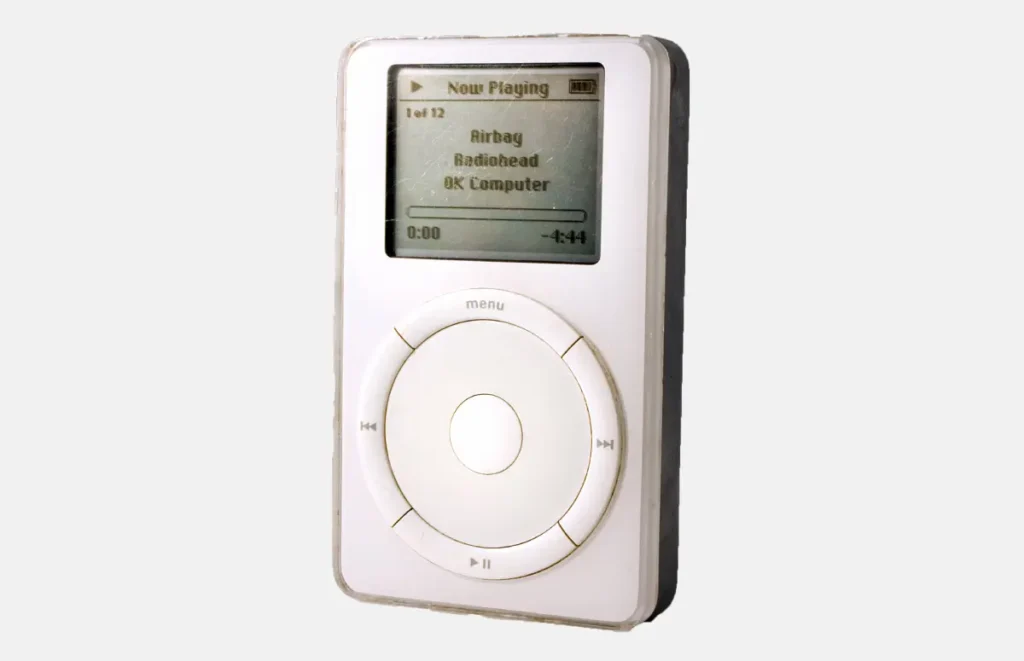
- Product Design: Honest Function. From Braun under Dieter Rams to MUJI’s quiet objects, reduced forms and clear affordances make products intuitive and durable. Fewer parts, clear joints, and unfussy surfaces put use first and help longevity by avoiding trend-led ornament.
- Web Design: User-Friendly Simplicity. Minimalist design is not just about looking cool; it’s about creating interfaces that are so intuitive they guide the user with as little friction as possible. It is like designing a map: You want to guide users to their destination without taking them through confusing detours.
- Fashion: Style Without Overkill. Minimalist fashion proves that one does not need an overstuffed wardrobe to make a fashion statement. It is about high-quality items that will last for generations. This can be done like a capsule wardrobe – just a few selected pieces that can be coordinated in various ways constantly.
Beyond Apple: The New “Warm Minimalism” in Branding
For decades, minimalism was synonymous with “High-Tech Cold”: white plastic, brushed aluminium, and clinical lighting—the Apple aesthetic. However, 2026 is seeing the rise of Warm Minimalism (also known as “Soft Minimalism”). This movement aims to retain the clarity of the minimalist philosophy while infusing it with human emotion and comfort.
Materiality and Texture Warm minimalism moves away from sterile surfaces in favour of:
- Natural Materials: Using wood grain, stone textures, and linen fabrics in architectural and product design. These materials have inherent “visual weight” and history, providing interest without the need for added ornament.
- Earth Tones: Replacing “Stark White” with “Stone,” “Oatmeal,” and “Terracotta.” These colours are easier on the eyes and evoke a sense of calm and permanence.
- Organic Shapes: While traditional minimalism loved the perfect circle and the rigid square, warm minimalism embraces soft curves and “imperfect” lines that feel more biological and less industrial.
Case Study: MUJI vs. The Clinical Aesthetic MUJI, under the guidance of Kenya Hara, is the standard-bearer for this approach. Their products don’t scream for attention; they represent “Emptiness.” A MUJI translucent storage box isn’t just a box; it’s a vessel that takes on the character of whatever the user puts inside it. This is “Warm Minimalism” in practice—design that is humble, functional, and deeply human.
The Psychology of Minimalism
Have you ever wondered why minimalist designs feel so satisfying to look at? Well, there’s a pretty exciting psychology behind it.
The Appeal of Simplicity
Our brains love patterns and order. Minimalist designs tap into this, creating a sense of calm and clarity. It’s just like entering a tidy room after a long day – so instantly relaxing, right?
Reduce Cognitive Load
Minimalist design gives the brain a break in a world where people are constantly bombarded with information. Only showing the necessary information cuts down on the processing the brain must do when it’s seeing, just like having a conversation with someone who cuts to the chase – refreshing and efficient.
Gestalt Principles and Cognitive Load
Our brains group by proximity, similarity, and continuity. That is Gestalt in action. When related items are grouped closer together with matching styles, recognition speeds up and errors fall. Cognitive Load Theory, introduced by John Sweller, explains why reducing extraneous load improves decision speed.
Nielsen Norman Group’s usability work shows that clear grouping, labels, and strong contrast help users scan and act faster. Minimalism that respects figure and ground, rather than flattening everything, cuts effort without hiding meaning.
The Luxury of Less
There’s something luxurious about minimalism. Even when they aren’t, minimalist designs can tend to feel very high-end. It’s because it’s unnecessary to flaunt it, as it were – true quality speaks for itself.
Emotional Response
Minimalist spaces and designs promote freedom and possibility because the mind is free to roam and imagine with no visual clutter to weigh a person down. It’s like a blank canvas, so full of potential.
Challenges of Minimalist Design
Now, please don’t get it in your head that minimalism is rainbows and sunshine; it does have its fair share of challenges.
The Fine Line Between Minimal and Boring
There’s a fine line between minimalism and just being plain boring. Go too far, and you risk creating something that’s just. Dull. It’s all about creating interest and depth inside the confines of simplicity.
Icon-only controls can look neat yet confusing. “Mystery meat navigation”, a term popularised by Vincent Flanders, hides meaning behind symbols. Nielsen Norman Group has long shown that text labels outperform icons for clarity, so pair symbols with words or add tooltips and keep patterns familiar.
Debunked best practice: the hamburger icon alone does not improve mobile usability. Baymard Institute’s research shows that hidden or icon-only menus reduce product findability on mobile. Keep labels visible for primary paths, then use progressive disclosure for the rest.
Functionality versus Aesthetics
For the sake of that most minimalistic look, functionality sometimes gets in the way. Think of those hypermodern kitchens that look awesome but are just a nightmare to cook in. It’s all about finding that sweet spot where form and function harmonise.
The Paradox of Choice
Ironically, designing with less is often a more time-consuming process on many levels. Every element must be subjected to microscopic attention since there is no place for errors or inconsistencies to hide.
Overcoming these cultural perceptions may be challenging because, in some cultures, minimalism can be viewed as cold or uninviting. In many instances, interior designers must ensure that minimalist designs are warm and full of personality to help change these perceptions.
Minimalism in the Digital Age

As our lives become increasingly digital, minimalism has found a new frontier to conquer.
User Interface Design: Living in a world of applications and websites, minimalism is not an aesthetic decision but a usability one. Considering the limited screen estate, each pixel counts, especially on mobile devices. Minimalist UI design creates intuitive, easy-to-navigate interfaces that don’t overwhelm users.
The Rise of Flat Design: Remember when every digital button had to look like an actual physical button? Thankfully, those days are gone, thanks to the rise of flat design. This minimalist approach drops unnecessary textures and shadows in favour of colour, typography, and uncomplicated shapes to convey information.
Minimalism in UX Writing: It’s not just about appearances but also about how we communicate. Minimalist UX writing emphasises clarity and conciseness, guiding users without overwhelming them. You are giving directions; you must be helpful, not write a novel.
Performance and Core Web Vitals
Minimal interfaces often send fewer requests and load lighter assets, which improves Google’s Core Web Vitals: LCP, CLS, and INP. Google replaced First Input Delay with Interaction to Next Paint in 2024, a responsiveness metric drawn from real user interactions, per Google Search Central and the Chrome team.
I once audited a retail UI that looked clean but shipped five font files and three carousels. We cut non-essential scripts, reduced font variants, and lazy-loaded images. The UI felt the same to users, only faster, and interaction responsiveness improved across devices.
The State of Minimalist Interfaces in 2026
INP is now the interaction yardstick, so minimal JS and lean DOMs matter more than ever, per Google’s 2024 change. WCAG 2.2 introduced new criteria on focus appearance and accessible authentication from W3C, nudging teams to design stronger focus styles rather than faint outlines.
Compliance pressure is rising, too. The EU’s Digital Services Act began enforcement in 2024, putting deceptive patterns under scrutiny. Clean, explicit labels and transparent choices are not just good UX; they reduce regulatory risk and support trust.
Designing for the AI Era: Functional Minimalism
As we move into 2026, the interface of choice is shifting from “point and click” to “ask and receive.” This transition to Artificial Intelligence and Large Language Model (LLM) interfaces represents the ultimate evolution of minimalism: the Zero-UI movement.
Conversational Clarity In an AI-driven world, the designer’s job is to get out of the way of the answer. We are seeing a return to “Text-First” design, where the interface is a clean, distraction-free canvas for dialogue. This requires:
- Reduced UI Chrome: Removing sidebars, footers, and complex menus that are irrelevant to a single, focused conversation.
- Anticipatory Design: The AI predicts what the user needs next, showing only the “next step” rather than a dashboard of a hundred possibilities.
- Contextual Reveal: Elements only appear when they are needed. This is the ultimate expression of Dieter Rams’ philosophy: “Good design is as little design as possible.”
The Aesthetic of Trust In an era of deepfakes and AI hallucinations, minimalism serves as a “visual proof of intent.” A clean, well-structured interface suggests a level of professional rigour and transparency. When a company hides behind a complex, over-designed portal, users in 2026 are increasingly suspicious. Minimalism, by contrast, feels “honest.” It doesn’t have anything to hide.
Data from 2025 UX research suggests that users interacting with AI agents prefer “Liquid Minimalism”—layouts that expand and contract based on the complexity of the AI’s response. When an AI provides a simple answer, the UI remains a single column. When the AI generates a data-heavy report, the UI fluidly transitions into a minimalist multi-column grid. This “living minimalism” ensures the interface always matches the cognitive weight of the task.
The Future of Minimalism in Design
So, what’s next for minimalism? Let’s peer into our crystal ball- a very sleek, minimalist crystal ball, naturally.
- Evolving with Technology: In turn, minimalism will grow alongside technology. One can only imagine what minimalist designs could bring into virtual and augmented realities-calm and focused spaces in our worlds of digital information.
- Sustainability and Minimalism: The essence of minimalism can blend amazingly well with sustainability. While becoming more eco-sensitive, the trend shall be to apply minimalist design principles to make products and spaces appealing yet friendly to the environment.
- Personalised: Minimalism could be more articulate and allow for higher levels of personalisation while still being minimalist – the future of minimalism. A question of balance between self-expression and the principles of minimalism.
- Minimum elements in global culture: In the future, we might see newer manifestations of minimalism mixed with various other cultures as global design influences flow across borders. It will be interesting to see how different cultural aesthetics combine with minimalist principles.
Practical Tips for Embracing Minimalism in Design
Are you looking to add some minimalist magic to your designs? Make sure to apply these practical tips to get you started:
- Design with a purpose. Before you start designing, think: “What’s the core purpose of this?” Everything else serves that.
- Love Negative Space. Don’t be afraid of open space. It is not wasted space; it is room for the design elements to breathe.
- Limit Your Colour Palette: It is wise to have a few primary colours and to use them only where intentional. After all, in minimalism, every colour should have its explanation.
- Choose Typography Wisely: Choose fonts that are clean and easy to read. You can get through with one typeface family.
- Quality, not Quantity: With minimalist design, every element should earn its place. It is better to have one high-quality image, material, or element rather than fill that space with mediocre ones.
- Iterate and Refine: Minimalism often takes several rounds of refinement. Never be afraid to keep simplifying until you reach the essential elements of your design.
- Test for Usability. Remember, minimalism should be used to enhance Usability and never detract from it. Always test your design to ensure the result is user-friendly.
Famous Minimalist Designers and Their Impact
Let me take a minute to point out a few of the giants whose shoulders we’re standing on in the world of minimalist design.
Dieter Rams: Less, But Better. This German industrial designer is often considered the godfather of minimalist product design. His “Ten Principles of Good Design” have inspired and influenced generations of designers, including Apple.

John Pawson: The Space Between. He is admired for his minimalist architectural solutions, and he centres his philosophy on proportion, light, and the materiality of an object. His spaces are just about meditative in their simplicity.
Kenyan Hara: Emptiness as Possibility – This Japanese designer and curator has shaped the minimalist aesthetic for brands like MUJI. It is truly an inspiration to realise how he views emptiness as a space of possibility.
Kenya Hara: Emptiness as Possibility. MUJI’s art director since 2002, Hara frames emptiness as a field for action. Naoto Fukasawa: Product minimalism with warmth, from MUJI’s wall-mounted CD player in 1999 to precise everyday objects. Tadao Ando: Concrete, light, and geometry, as in the Church of the Light, 1989.
Jony Ive: Bringing Minimalism to the Masses. As former chief design officer at Apple, Ive’s minimalist approach to product design has shaped (quite literally) the devices we use every day.
Minimalism Beyond Design: A Lifestyle Choice
Minimalism has outgrown the realm of design philosophy; for many, it’s a way of living.
The Minimalist Lifestyle Movement. Minimalism has found its place in every aspect of life. People pursue it through tiny houses and capsule wardrobes to simplify their lives and focus on what matters.
Digital Minimalism: The more connected a person becomes, the more digital minimalism – a new trend opposing this trend – becomes prominent. It means using technology more “intentionally” – investing only significant amounts of time in digital tools offering real value to our lives.
Well-being Minimalism There is increasing evidence that minimalistic environments decrease stress and improve mental well-being. It is as if tidying up your room also means tidying up your mind.
Critiques of Minimalism
Now, let’s play devil’s advocate for a moment. Not everyone views Minimalism without criticism.
Privilege Argument: The most common argument is that minimalism is available only to those who can afford to decide what to keep and what to get rid of. That is a valid point in that authentic minimalism does entail a certain level of financial security.
On the other hand, some critics say that extreme minimalism can make a sterile, impersonal space with no character. There is a fear that we may lose something vital about human expression in our race for simplicity.
One-size-fits-all approach: Not everyone will shine in a minimalist environment; some find themselves more creative and comfortable with objects around them and visual stimuli. It’s just one of those reminders that design should always consider the end user.
The Future of Minimalism: Balancing Act
Looking ahead, it’s evident that minimalist design isn’t going anywhere. It is, however, evolving.
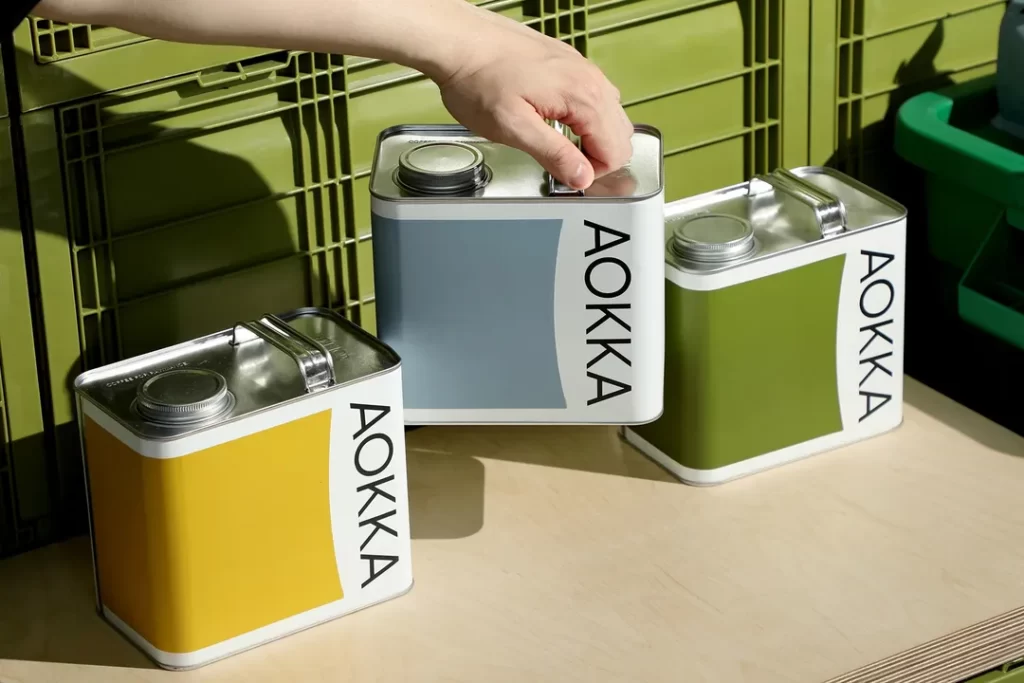
Warm Minimalism: There is a growing trend towards what some term “warm minimalism” designs that keep simplicity at their core but merge natural materials and textures with a softer colour palette to invoke warmer and cosier spaces.
Sustainable Minimalism With environmental concerns now front and centre, minimalism and sustainability are bound to move even closer together. It is less about having less than making conscious decisions about what we have.
Minimalism-Meets-Integrating Technology: As technology becomes more organically inserted into our environment, minimalist design will have to continue to evolve. Visualise the simplicity of spaces filled with intelligent, hidden functions.
Conclusion: The Lasting Impact of Minimalism
As we conclude our deep dive into minimalism in design, it becomes evident that this is more than a fad; in reality, it pertains quite shamelessly to problem-solving in design and beyond.
Minimalism dares us to consider what is necessary, to find beauty in simplicity, and to create space and objects purposefully without excess. It is a reminder that less, more often than not, is more.
The most beautiful thing about minimalism is flexibility: not rigid rules but rather a guiding principle adaptable to different contexts, cultures, and individual needs.
In the future, minimalism will doubtless continue to evolve hand in glove with new technologies, cultural shifts, and global challenges. But at its core, it will always be about one thing: focusing on what truly matters.
Whether you are a designer, a consumer, or one of those curious about how our visual world is developed, remember this: Within a world of excess, there is something powerful in simplicity. It’s a principle which never goes out of style.
FAQs
Does minimalist design still impact Interaction to Next Paint (INP) in 2026?
Yes, significantly. Minimalism is the most effective way to optimise for Interaction to Next Paint (INP), as it reduces the complexity of the Document Object Model (DOM) and limits the execution of heavy JavaScript. By prioritising core functional scripts over decorative animations, minimalist interfaces ensure the browser remains responsive to user clicks and taps, which is a primary ranking factor in 2026.
What is “Warm Minimalism” and how does it differ from traditional minimalism?
Warm Minimalism is a 2026 evolution that moves away from the sterile, clinical “all-white” look of the 2010s. It focuses on using organic textures—such as wood grain, linen, and stone—paired with earthy, muted palettes (clay, sand, and moss). While traditional minimalism can feel cold or impersonal, warm minimalism aims to create a sense of “hospitality” and emotional comfort while maintaining a clutter-free environment.
Is minimalism better for neurodivergent users?
Generally, yes. Minimalist design is a cornerstone of inclusive design because it reduces sensory overload for users with ADHD, autism, or dyslexia. By eliminating “visual noise”—such as auto-playing videos, complex background patterns, and competing calls to action—minimalism allows these users to focus on a single task, significantly reducing cognitive load and anxiety.
Can a data-heavy SaaS dashboard truly be minimalist?
It can and should be. Minimalism in complex SaaS environments is achieved through Progressive Disclosure. This means hiding secondary features and deep-dive data behind interactions (like hovers or clicks), so the initial view remains clean. A minimalist dashboard prioritises a clear Visual Hierarchy, using scale and subtle colour accents to guide the user to the most important metrics first.
How does minimalism contribute to digital sustainability?
Minimalism is inherently eco-friendly because “less data equals less energy.” By reducing image sizes, using Variable Fonts, and pruning unnecessary code, minimalist sites require less power to transfer across networks and less energy for devices to render. In 2026, this “Low-Carbon Web Design” is becoming a standard for brands looking to meet corporate environmental goals.
Will AI render minimalist designers obsolete?
No, AI will commoditise the creation of minimal layouts, but not the strategy. While AI can generate a clean UI in seconds, a human designer is needed to decide which elements are “essential” based on business goals and user empathy. In 2026, the designer’s role shifts from “pixel-pusher” to “curator of intent,” ensuring the AI-generated simplicity actually solves the user’s problem.
What is the “Zero-UI” trend in 2026?
Zero-UI refers to interfaces where the visual layer is so thin it almost disappears, often relying on voice, gesture, or AI-driven automation. It is the logical conclusion of minimalism: if the user’s intent can be satisfied without a screen (or with a single prompt), the interface is removed entirely. This focuses purely on the “Function” side of the “Form follows function” rule.
Does minimalism work for luxury branding?
Minimalism is the “new language of luxury.” In a world of digital overstimulation, the ability to offer a “quiet,” uncluttered experience is seen as a premium service. Luxury brands in 2026 use vast amounts of Negative Space and high-quality materiality to signal confidence; they don’t need to shout for attention because their quality is self-evident.
Are “Hamburger Menus” still considered good minimalist design?
They are often considered a “minimalist fail.” While they save space, they hide navigation, which can hurt usability. The 2026 best practice is to keep primary navigation links visible (using text labels) and only use a “More” or hamburger icon for truly secondary items. Clarity should never be sacrificed for a “clean” look.
What typography is best for minimalist design in 2026?
Variable Fonts are the gold standard. They allow designers to load a single file that contains infinite weights and widths. This provides a sophisticated typographic hierarchy—shifting from ultra-thin for elegance to bold for impact—without the performance penalty of loading multiple font files.