How to Write a Project Proposal that Wins High-Ticket Clients
In the high-ticket world—where deals start at £50,000 and climb into the millions—clients don’t buy “services.” They buy the removal of a problem or the acquisition of a future state.
They are also incredibly risk-averse. If your proposal looks like a template you downloaded from a CRM blog, you have already lost. You’ve signalled that you’re a commodity.
To start an online business that actually scales, you must move away from “answering a brief” and toward “solving a business objective.”
- Lead with a Business Impact Summary quantifying current cost of inaction, target KPI, and conservative projected ROI.
- Design proposals to reduce perceived risk with clear Risk Mitigation, Technical Audit, and Definition of Done per milestone.
- Use value-based pricing and present three investment tiers so clients choose outcome over hourly rates.
- Optimise structure and headers for human and AI vetting, include ESG, accessibility, tools used, and a Discovery Phase option.
What is a Project Proposal?
A project proposal is a high-stakes decision document that outlines a specific solution to a client’s business problem, defining the scope, cost, and expected impact.
It acts as a bridge between a strategic conversation and a legally binding contract, mitigating risk for the buyer.
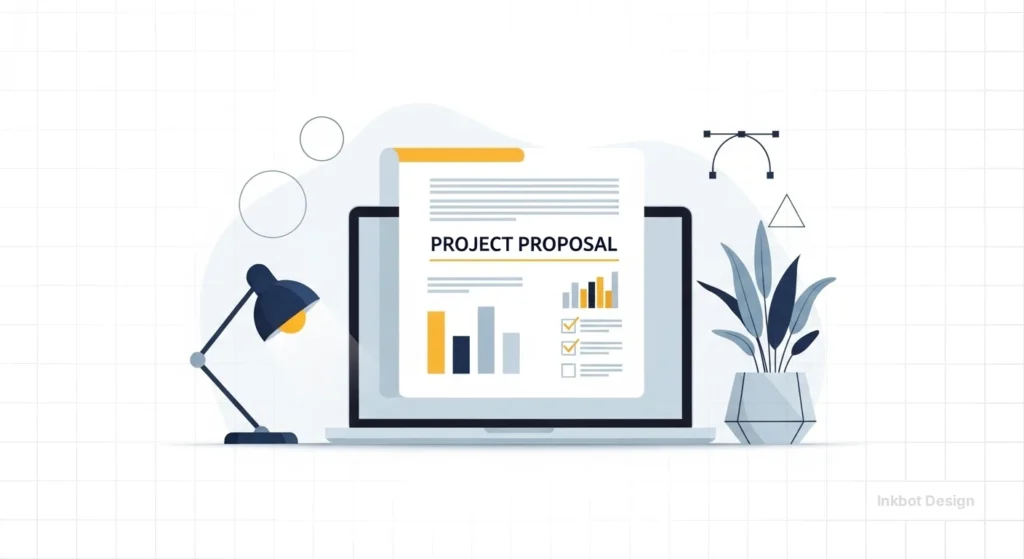
The three core elements of a winning proposal are:
- The Transformation: A clear definition of the “Before” and “After” states.
- Risk Mitigation: Technical proof that the project will not fail.
- The Investment: A value-based pricing structure that justifies the cost through ROI.
The Psychology of the High-Ticket Client
High-ticket clients in 2026 operate differently from the small-business owners of a decade ago.
According to Gartner’s latest research on B2B buying, the average B2B purchase involves 6 to 10 decision-makers. Each of these people has a different motive for saying “no.”
The CEO cares about the bottom line and market share. The CTO cares about technical debt and integration. The Legal team cares about liability.
Your proposal must address all of them without boring any of them.
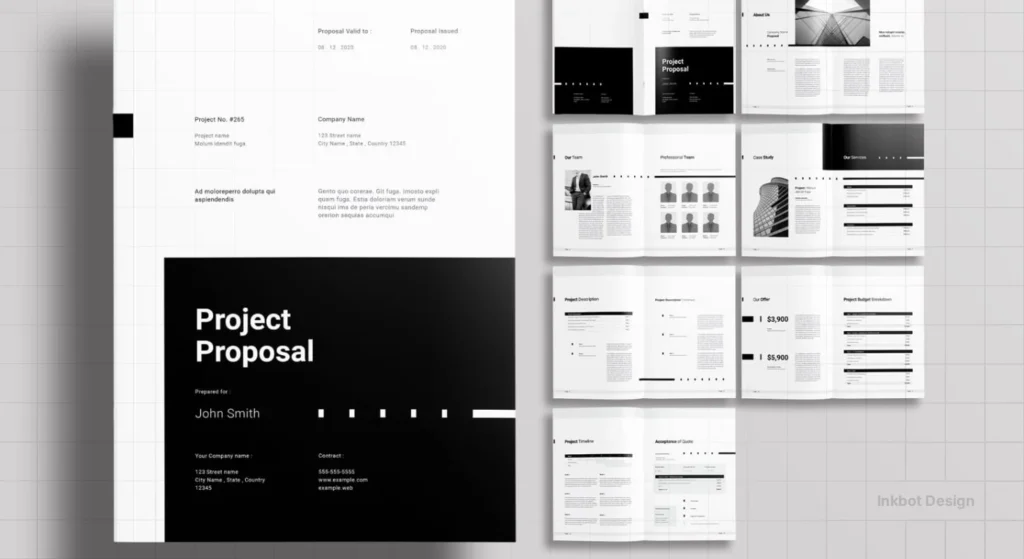
The Death of the Executive Summary
We often see consultants spend hours polishing an “Executive Summary” that describes their “passion for design.” This is a waste of digital ink.
A study by Nielsen Norman Group found that business users scan for numbers, bolded headers, and specific facts.
Instead of an Executive Summary, use a Business Impact Summary.
- Current Cost of Inaction: What is the client losing by not doing this? (£/time).
- Target Objective: The specific KPI this project will move.
- Projected ROI: A conservative estimate of the financial upside.
The Cost of Inaction (CoI) Framework
High-ticket clients are often paralysed by the fear of making the wrong choice. Your job is to make the status quo feel more dangerous than the investment. This is the Cost of Inaction (CoI).
To write a compelling CoI section, you must quantify the “Before” state using real data.
If a client is losing 5% of their traffic due to poor mobile UX, and their average customer value is £1,000, you can demonstrate a literal loss of revenue every month the project is delayed.
Scenario: A Series-A fintech startup is using an outdated brand identity. Their current Customer Acquisition Cost (CAC) is £200. Competitors with modern, trust-focused branding have a CAC of £140.
The CoI: By not updating their brand, the client is “overpaying” £60 per customer. Over 1,000 customers, that is a £60,000 “hidden tax” on their growth. Suddenly, your £50,000 branding proposal isn’t an expense—it’s a way to stop a £60,000 leak.
| Metric | Current State (Baseline) | Future State (Projected) | Financial Impact (Monthly) |
| Conversion Rate | 1.2% | 1.8% | +£12,000 revenue |
| Site Speed (LCP) | 4.2s | 1.5s | Lowered Bounce Rate |
| Lead Quality | Low (MQLs) | High (SQLs) | £4,500 saved in Sales time |
Designing for the ‘Hidden Stakeholder’
While you may be communicating with a Head of Marketing or a Founder, the ultimate “Yes” often comes from a CFO or a procurement algorithm.
These stakeholders do not care about the “soul of the brand.” They care about Capital Expenditure (CapEx), risk mitigation, and operational efficiency.
To satisfy the CFO, your proposal must include a clear Financial Impact Model. This is not just a price list; it is a projection of how the creative work will pay for itself.
For example, if you are proposing a website redesign using Framer or Webflow, do not focus on the “modern aesthetic.” Focus on reducing Technical Debt and the projected increase in conversion rate, which lowers the cost per lead.
The AI Vetting Layer
In 2026, many enterprise organisations use AI tools like Seal Software or internal LLMs to scan incoming bids for compliance. To ensure your proposal isn’t auto-rejected:
- Standardise Your Headers: Use “Risk Mitigation” instead of “How we keep things safe.”
- Entity Association: Explicitly mention the tools you use, such as Figma for prototyping or Asana for project management. AI scanners look for these entities to verify your professional maturity.
- ESG and Accessibility: Ensure you have a section dedicated to WCAG 2.2 compliance and your agency’s ESG (Environmental, Social, and Governance) policy. Procurement bots are often programmed to filter for these “Social Responsibility” markers.
Case Study: The £100,000 “Safety” Bet
Consider the legacy of IBM.
For decades, the phrase “No one ever got fired for buying IBM” dominated the tech industry. It wasn’t because IBM had the cheapest or even the best software; it was because they had the best risk management.
Their proposals didn’t just sell code; they sold the security of a global infrastructure. To win high-ticket deals, your proposal must make you the “safest” choice, not the “coolest” one.
From Proposal to Statement of Work (SoW)
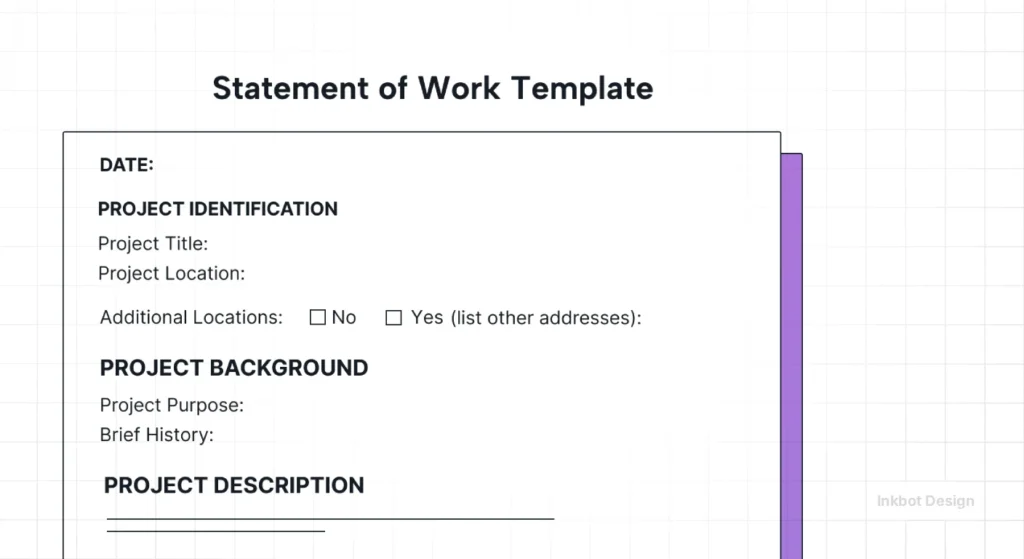
A project proposal is the “Why” and the “What.” The Statement of Work (SoW) is the “How” and the “When.” In high-ticket creative work, these are often bundled into a single document to reduce friction.
A winning SoW must define the Definition of Done (DoD) for every milestone. If you are delivering a brand strategy, the DoD isn’t “we send a PDF.”
The DoD is “A presentation of three strategic directions, followed by one consolidated brand book approved by the steering committee.”
Using the “Discovery Phase” to De-Risk
For projects with high technical complexity—such as custom API integrations or large-scale Shopify Plus migrations—never provide a final price in the initial proposal.
Instead, sell a Discovery Phase. This is a paid, 2-week engagement in which you use tools like Miro or FigJam to map the technical architecture.
At the end of the Discovery Phase, you provide the final proposal. This protects you from “Scope Creep” and signals to the client that you are a rigorous professional, not a “best-guesser.”
Technical Scoping: Where Amateur Proposals Die
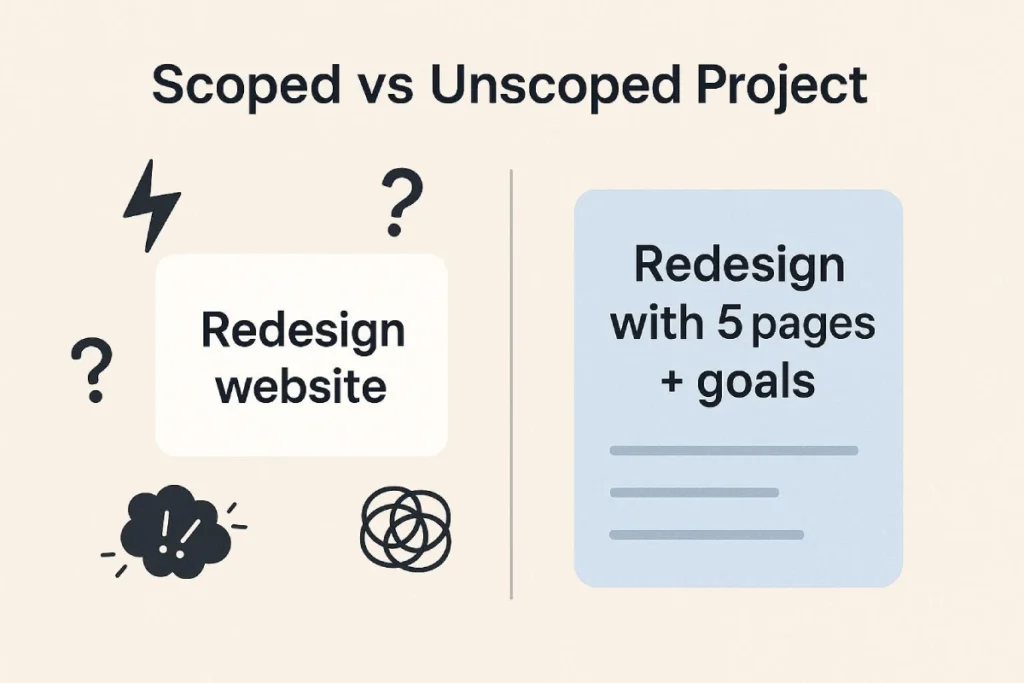
If you want to request a quote from a serious agency, you expect them to know their numbers. Yet, most proposals fail because the “Scope of Work” is vague.
“Phase 1: Design” is not a scope. It’s a suggestion.
A professional scope defines the Technical Requirements and Constraints.
| Feature | The Amateur Way | The Inkbot (Pro) Way |
| Project Timeline | “Approx 4-6 weeks.” | “22 Working Days, pending feedback within 48h.” |
| Deliverables | “A new website.” | “Fully responsive WordPress build on GeneratePress.” |
| Communication | “We’ll have weekly meetings.” | “Fortnightly async Loom updates + Slack access.” |
| Revisions | “Unlimited revisions.” | “2 Rounds of Refinement per milestone.” |
| Technology | “Modern tech stack.” | “PHP 8.2+, Litespeed, MariaDB 10.6+.” |
Handling Technical Debt
For high-ticket digital marketing services, you must account for what already exists. If you are proposing a new SEO strategy, you cannot ignore the mess left behind by the previous agency.
A winning proposal includes a “Technical Audit” section that acknowledges existing hurdles. This builds trust because it shows you aren’t just selling a dream; you’re looking at the plumbing.
The State of Project Proposals in 2026
The landscape has shifted. Procurement teams now use Large Language Models (LLMs) to scan and score proposals before a human ever sees them.
If your proposal is a “flat” PDF with no semantic structure, the AI might miss your key selling points.
AI-Optimised Procurement Vetting
In early 2026, many UK-based organisations began using proprietary AI tools to “de-fluff” incoming bids. These tools look for specific entities:
- Fixed Costs vs. Variable Costs.
- Liability Limits.
- Case Study Relevance.
- Sustainability (ESG) scores.
To win, you need to structure your document with clear H2 and H3 headers that match these entities. Use direct language.
Instead of saying “We pride ourselves on our ability to create startup branding,” say “Inkbot Design provides branding for Series-A startups with a 14-day turnaround.”
Value-Based Pricing: The Only Way to Pitch
Hourly rates are for labourers. Value-based pricing is for consultants.
If you tell a client your rate is £150 per hour, they will immediately try to figure out how to make you work fewer hours. You have incentivised them to devalue your time.
Instead, anchor your price to the value of the outcome. If your project will generate £1,000,000 in new revenue for the client, a £100,000 fee is a bargain. If you frame it as “700 hours of work,” it sounds like an ordeal.
For more on this, read our deep dive on value-based pricing.
When you stop selling time, you start selling results. This shift is essential for small-business marketing, where budgets are tight but expectations are high.
The “Three-Option” Strategy
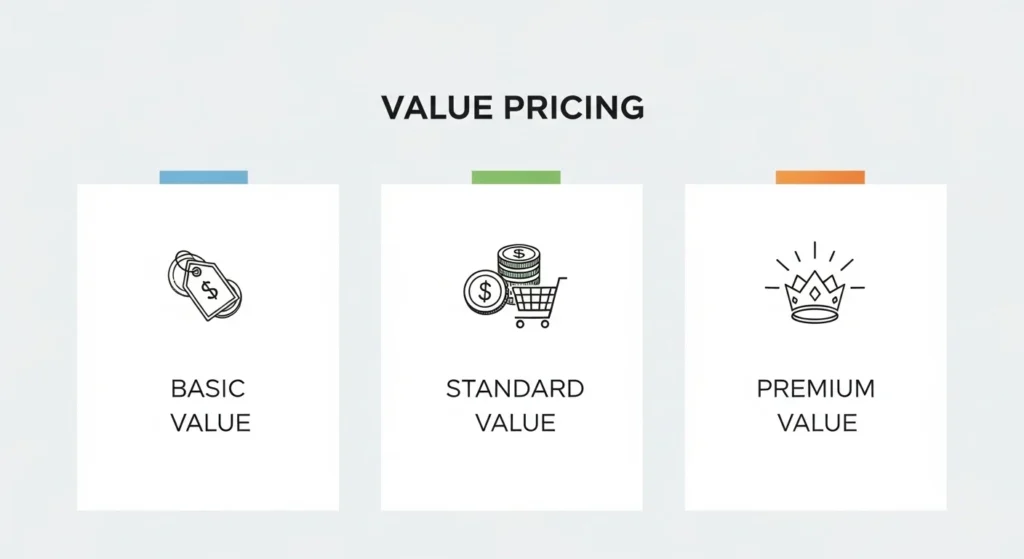
Never present a single price. A single price is an ultimatum: “Take it or leave it.”
Present three tiers of investment:
- The Essential Solution: Solves the core problem, no extras.
- The Growth Solution (The Target): Includes the necessary strategy for long-term success.
- The Accelerated Solution: For clients who want everything done yesterday with maximum support.
This shifts the client’s internal dialogue from “Should we hire them?” to “Which version of them should we hire?”
Presenting Your Proposal in a Hybrid World
In 2026, sending a static PDF via email is an amateur move. High-ticket deals are won through interactive storytelling and asynchronous walkthroughs.
The Async Walkthrough (Loom)
Before you ask for a follow-up meeting, send a 5-minute Loom video. In this video, do not read the proposal. Instead, walk the client through the Business Impact Summary and the Three-Option Strategy.
This allows the various decision-makers (including that “hidden” CFO) to hear your rationale in your own voice, even if they can’t attend the live pitch.
The Interactive Proposal (Figma/Framer)
For design-heavy projects, consider hosting your proposal in a password-protected Figma prototype or a Framer microsite. This allows you to:
- Show, Don’t Tell: Embed live prototypes of your previous work directly into the proposal.
- Track Engagement: Use the “Last Viewed” feature to see which sections the client spends the most time in.
- Real-Time Collaboration: Allow stakeholders to leave comments directly on the scope of work, turning the proposal into a living document.
Debunking the “Customer-Centric” Myth
Industry “experts” always say your proposal should be 100% about the client. This is bad advice. A proposal is a document for mutual vetting.
If you don’t include your “Hard No’s” and “Working Requirements,” you are setting yourself up for a nightmare engagement.
A high-ticket client wants a partner, not a servant. If your proposal doesn’t include a section on “What We Expect from You,” you look like an amateur.
A Field Note
In our work at Inkbot Design, we often see proposals that fail because they ignore the “Post-Purchase Dissonance.” The moment a client signs a large contract, they feel a pang of regret. “Did I just waste £80k?”
A professional proposal includes a “First 100 Days” Roadmap.
This isn’t a vague timeline; it’s a specific list of what happens in the first 24 hours, the first week, and the first month.
This eliminates the “black hole” of silence that often follows a signed contract. Effective client management starts before the project does.
IR35 and the ‘Statement of Work’ Model
Since the 2021 reforms and subsequent 2025 updates, IR35 remains the biggest hurdle for UK-based consultants. If you are seen as an “interpolated employee,” the client faces significant tax liability.
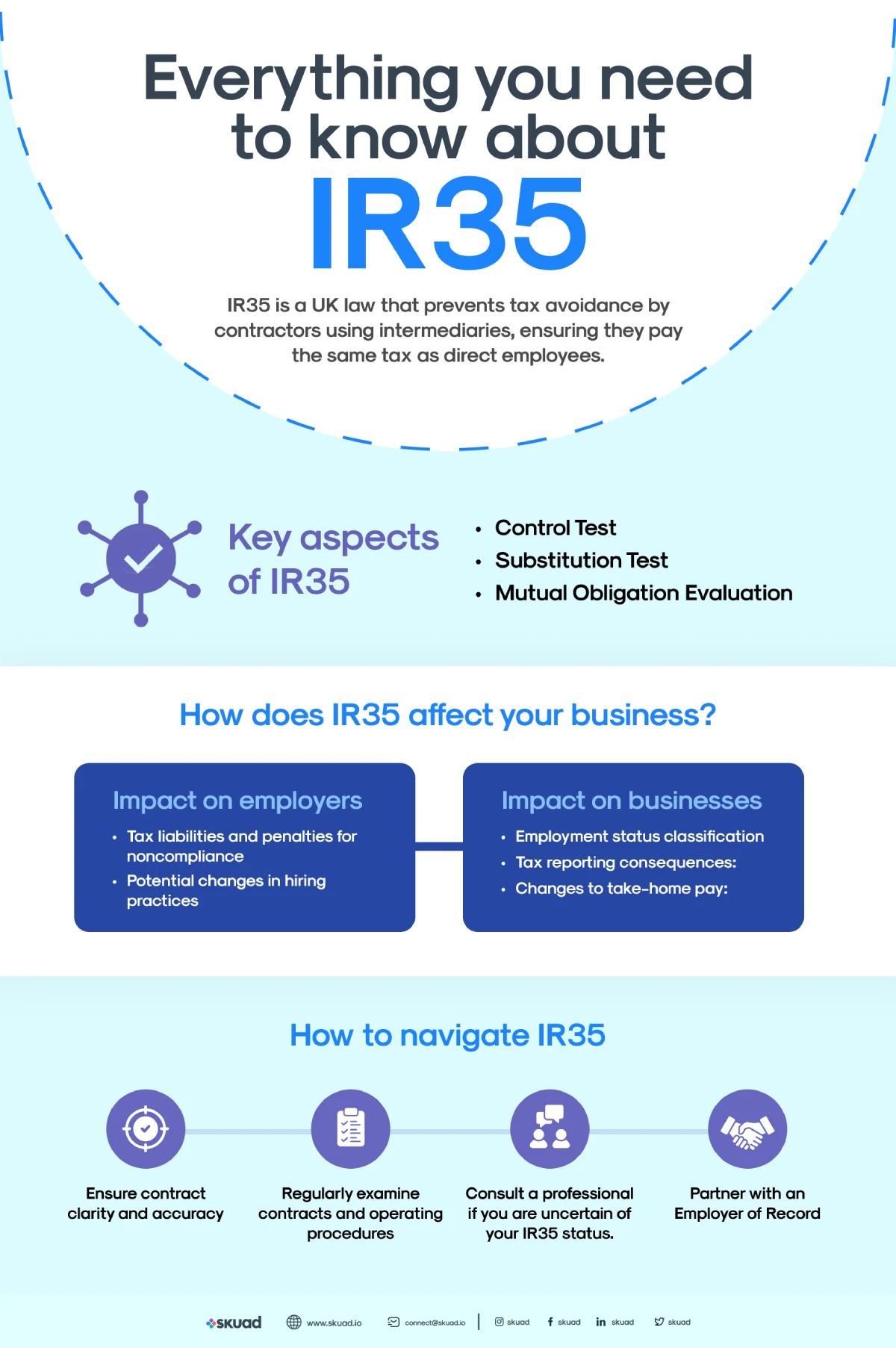
To move your proposal “Outside IR35,” you must structure it as a Deliverable-Based Engagement.
- The Right of Substitution: Explicitly state that your agency can send any qualified team member to perform the work. It is not tied to you as an individual.
- Mutuality of Obligation (MOO): Ensure the proposal clearly states that once the project is finished, there is no ongoing obligation for them to provide work or for you to accept it.
- Control: Specify that while the client defines the outcome, you define the methodology.
Including a “Compliance Statement” in your proposal doesn’t just protect you; it makes the client’s Legal and HR teams feel safe. In the high-ticket world, safety is the ultimate currency.
Negotiating Without Discounting
When a client says, “We love the proposal, but the budget is only £40,000,” most creatives make the mistake of offering a 20% discount.
This immediately destroys your credibility. It suggests your original price was “made up.”
Instead, use a Trade-off Matrix. If the price goes down, the Scope or Speed must also change.
| Client Request | Your Response (The Trade-off) | Outcome |
| “Can we do this for £10k less?” | “Yes, but we will remove the Technical Audit and the 24h Support Window.” | Maintains your profit margin. |
| “We need it in half the time.” | “We can prioritise this, but it requires a 25% ‘Rush Fee’ to reallocate resources.” | Compensates for the stress. |
| “We want unlimited revisions.” | “We operate on a ‘Two-Round’ refinement system to ensure we hit the deadline.” | Protects your time. |
By using this matrix, you position yourself as a business partner who understands the relationship between resources and results.
If they want to pay less, they get less. It’s a logical business decision, not an emotional negotiation.
The Verdict
Writing a project proposal that wins high-ticket clients requires a total rejection of the “template” mindset. You are writing a business case, not a brochure.
- Stop using fluff words. If a sentence doesn’t contain a fact or a specific benefit, delete it.
- Focus on risk. High-ticket deals are won by the person who makes the client feel the safest.
- Anchor to value. Never defend an hourly rate; defend an ROI.
- Optimise for AI. Structure your document so procurement bots can easily summarise it.
If you are ready to stop sending “hopeful” emails and start closing serious contracts, it’s time to audit your process.
Frequently Asked Questions (FAQ)
What is the best length for a project proposal?
Length is secondary to density. For high-ticket deals, 10-15 pages is standard, but every page must serve a purpose. If you can prove a £100k ROI in 5 pages, do it. Avoid filler content, such as “Our Philosophy” pages, that don’t relate to the client’s specific problem.
How do I handle a client asking for a quote before a proposal?
Never give a quote without a discovery call. A quote is a commodity; a proposal is a solution. If a client insists on a “ballpark figure,” provide a wide range (e.g., £20k to £60k) and explain that the final investment depends on the technical scope and desired ROI.
Should I include case studies in the proposal?
Yes, but they must be relevant. Don’t include a logo design case study for a digital marketing pitch. Use “Social Proof” that mirrors the client’s industry or the specific technical challenge they face. Focus on the result, not the process.
How do I follow up on a sent proposal?
Set the follow-up date before you send it. “I’ll send this on Tuesday, and we’ll have a 10-minute call on Friday at 2 PM to discuss any technical questions.” This prevents you from “chasing” the client and maintains your position as a consultant.
What software should I use to write a project proposal?
Tools like Better Proposals or PandaDoc are excellent for tracking when a client opens the document. However, for ultra-high-ticket deals, a bespoke, perfectly formatted PDF often feels more exclusive. The content will always matter more than the software.
Is value-based pricing better than fixed-fee pricing?
Value-based pricing is a form of fixed-fee pricing, but the fee is determined by the outcome’s value rather than the effort’s cost. It is superior for high-ticket work because it allows for higher margins and aligns your interests with the client’s success.
How do I deal with a client who says, “Your price is too high”?
Shift the conversation back to the cost of inaction. “I understand the investment is significant. However, based on our audit, the current system is costing you £10k a month in lost leads. This project pays for itself in six months. Does that change how you view the cost?”
Should I include a contract within the proposal?
In 2026, it is common practice to include “Terms and Conditions” as an appendix or a link. This allows the client to sign the proposal and the contract simultaneously, reducing the “friction to close.” Ensure your IR35 and liability clauses are clear.
What is a “Statement of Work” (SoW)?
A Statement of Work is a technical document that defines exactly what will be done, how, and when. It is the core of the proposal. It protects you from “scope creep” by determining what is not included as much as what is.
How do I write a proposal for a “Discovery Phase”?
If a project is too complex to quote accurately, sell a “Discovery Phase” first. This is a paid engagement (e.g., £5k) to perform the audit and write the full proposal. This positions you as an expert and filters out “tyre-kickers.”
What are the most common mistakes in a project proposal?
The top mistakes are: talking too much about yourself, having a vague scope of work, offering only one price option, and failing to mention specific technical risks. In 2026, failing to format for AI scanners is also a significant error.
How do I win a project against a cheaper competitor?
Don’t compete on price; compete on risk. Show the client the hidden costs of a “cheap” solution—technical debt, poor communication, and missed deadlines. Position your higher price as “insurance” against a failed project.