Brand Publishing: Turn Your Brand into a Media Company
By 2026, if you’re still burning your budget renting readers from Google or Meta, you aren’t really a business owner. You’re a squatter.
And the landlord? He’s not just raising the rent anymore; he’s tearing down the whole building to put up an AI search overview.
Brand Publishing is the only way actually to take the keys back. It’s about security, plain and simple.
- Own the pipes: Build proprietary distribution (Email, SMS, app) to bypass platforms and control audience access.
- Editorial guts: Prioritise reader-first journalism and Information Gain over constant pitching or transactional content.
- ContentOps engine: Create a repeatable, multi-format production workflow to scale quality without chaos.
- Technical AI-readiness: Use headless CMS, linked data, and schema (Organization/Person/Article) to be discoverable by generative engines.
So, what is Brand Publishing, really?
Forget the textbook definitions for a second.
It’s a pivot. You stop acting like an advertiser and start moving like a proper media house.
And please—don’t call it “blogging.” I genuinely can’t stand that word. Blogging is for 2012. This is the disciplined, high-speed production of things people actually want to read, delivered straight to their pockets via SMS or Email.
No middlemen. No “algorithm tax.” Just you and your audience.
The three things that actually matter (and most brands miss these):
- Editorial Guts. We call it independence, but it’s really about having the backbone to put the reader first. Most companies are too terrified to stop pitching for five seconds. But to lead the conversation? You have to stop “selling” and start being useful.
- Owning the Pipes. Stop building your house on Mark Zuckerberg’s lawn. You need “Proprietary Distribution.” It’s just a fancy way of saying you need a direct line—Email, SMS, your own app—where nobody can charge you a fee to talk to your own customers.
- The “Engine Room” (ContentOps). Everyone wants the results, but nobody wants to build the machine. You need a system—the human “grease”—that lets you produce high-quality media without your team losing their minds. It’s moving from “what do we post today?” panic to a repeatable media infrastructure that actually scales.
The Economics of Attention: Why 2026 is Different
For years, the “Content Marketing” playbook was simple: write a 1,000-word post, sprinkle some keywords, and wait for the traffic. That model is dead.
Gartner predicted a 25% drop in search engine traffic by 2026 because of AI-driven search results. If your strategy relies on someone clicking a link to find an answer, you’ve already lost.
Brand publishing solves this by shifting the goal from “clicks” to “consumption.”
When you act as a media company, you aren’t just trying to drive sales with content marketing; you are building an entity that people seek out by name.
This is the ultimate form of digital marketing services—becoming the destination rather than the signpost.
The Content Supply Chain Problem
I once audited a client—a mid-sized B2B tech firm—that was spending £15,000 a month on content. When we looked at their “Content Supply Chain,” it was a disaster.
They had three different agencies, no central asset library, and no clear editorial guidelines.
They weren’t publishing; they were just “making stuff.”
According to McKinsey & Company, companies that modernise their content supply chain can see a 20% increase in marketing efficiency. Without a system, you aren’t a media company; you’re just a disorganised hobbyist.
Building the 2026 Media Machine: From Strategy to Execution
While the theory of brand publishing is seductive, the execution is where most firms bleed budget.
Moving from a marketing department that “does content” to a media arm requires a fundamental restructuring of your human and technical assets.
The 2026 Brand Media Team: Roles and Hierarchy
In 2026, the traditional “Marketing Manager” is often ill-equipped to run a media house. Their instinct is campaign-based; a publisher’s instinct is audience-based.
To compete with established media entities, you must hire for these three critical roles:
- The Managing Editor (The Pilot): Usually a former journalist or editor from a major publication. Their KPI isn’t leads; it’s Audience Retention and Information Gain. They ensure every piece of content adds unique value that an AI cannot synthesise.
- The Content Architect (The Engineer): This is a technical role focused on ContentOps. They manage the Headless CMS (such as Contentful or Strapi), the Digital Asset Management (DAM) system, and the distribution automation via tools like n8n or Zapier.
- The Creator-in-Residence (The Face): As trust shifts from logos to people, brands now hire dedicated personalities to lead their video and podcast efforts. Think of them as the “Anchor” of your brand’s newsroom.
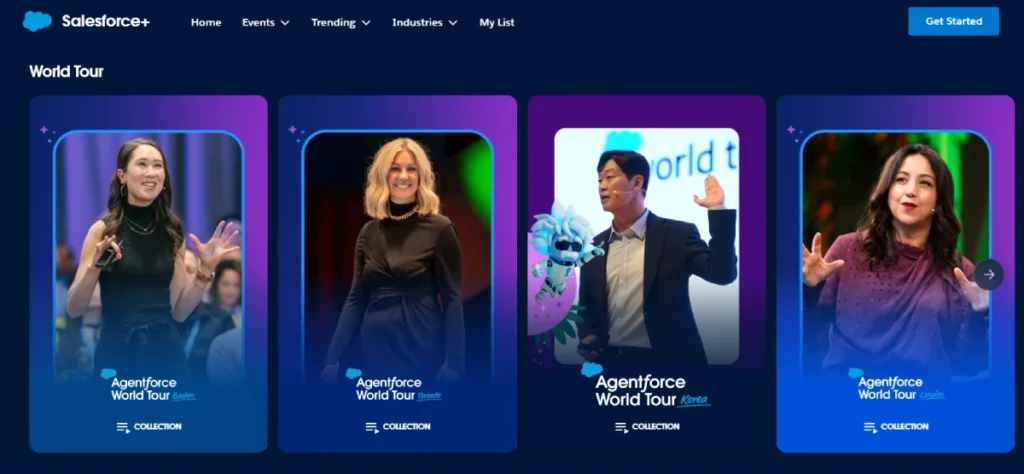
Example Scenario: Salesforce didn’t just add a blog; they built Salesforce+, a full-scale streaming service. They hired television producers and broadcast engineers to ensure their content met Netflix-level production standards. This shift turned their brand from a software vendor into a daily habit for enterprise leaders.
The Content Supply Chain: A Step-by-Step Workflow
A disorganised supply chain is the primary cause of “Content Slop.” To maintain the high velocity required in 2026, your Content Operations must follow a documented flow:
- Ideation (The Insight Layer): Use first-party data, customer support tickets, and original surveys. Avoid “Keyword Research” as the sole source of ideas—if everyone else is writing about it, your Information Gain is zero.
- Production (The Multi-format Factory): Every core asset must be “born multi-format.” A single deep-dive interview should be simultaneously edited into a 2,000-word feature, a 10-minute YouTube video, and five TikTok snippets.
- Validation (The E-E-A-T Check): Before publication, every piece is vetted by a Subject Matter Expert (SME). In 2026, AI discovery engines look for “signals of experience”—specific anecdotes, data points, and contrarian views that indicate a human expert was involved.
- Distribution (The Owned Loop): Use Headless CMS technology to push content to your website, mobile app, and email newsletters simultaneously.
The 2026 Media House Blueprint
Select a pillar to view the infrastructure required for Brand Publishing.
Stop hiring “Marketing Managers” and start hiring a newsroom. These three roles are non-negotiable for 2026.
The “All-in-One” website is dead. You need a decoupled architecture for AI readiness.
| Component | The Old Way | The 2026 Way |
|---|---|---|
| CMS | Standard WordPress Blob | Headless (Contentful/Sanity) |
| Data Structure | Basic Meta Tags | Linked Data & Knowledge Graph |
| Discovery | Keyword Stuffing | Entity Density & Schema |
*Tip: Ensure your Schema includes “Organization” and “Person” to establish authority.
Avoid “Content Slop” by adhering to this strict production protocol:
- Ideation (Insight Layer): Source ideas from customer tickets and first-party data, not generic keyword tools.
- Production (Multi-Format): Assets must be “born multi-format.” One interview = Article + Video + Social Clips.
- Validation (E-E-A-T): SME review is mandatory before publishing to prove “Human Experience.”
- Distribution (Owned Loop): Push simultaneously to Web, App, and Email via API.
Why invest? Because “Renting” audiences from Google/Meta is becoming unsustainable.
• Editorial Salaries: 50-60%
• Distribution (Paid Boosts): 20-30%
• Tech Stack (SaaS): 15-20%
Need help building this machine?
Request a Brand Publishing QuoteThe 2026 Publishing Stack: Orchestrating for AI and Human Reach
The era of the “all-in-one” slow-loading website is over. Modern brand publishers use a decoupled architecture to ensure maximum performance and “AI-readiness.”
Choosing Your Engine: Headless vs Traditional
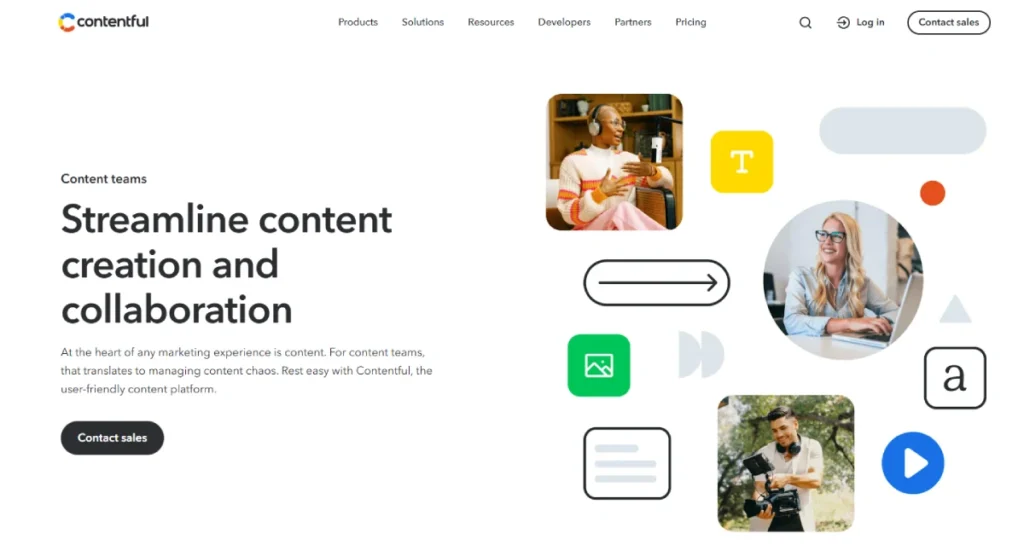
A Headless CMS separates the back-end (where content is stored) from the front-end (where it is displayed).
This is essential for 2026 because your content needs to live in many places: on your site, in AI chat interfaces, and inside private apps.
| Feature | Traditional CMS (e.g., standard WordPress) | Headless CMS (e.g., Contentful, Sanity) | Best For… |
| Speed | Often bloated with plugins. | Lightning fast; API-driven. | High-performance media sites. |
| Flexibility | Limited to predefined themes. | Complete design freedom. | Brands with unique UX needs. |
| Omnichannel | Hard to push to apps/IoT. | Built for multi-platform delivery. | Enterprise Brand Publishing. |
| SEO Control | Dependent on SEO plugins. | Total control over Schema and Meta. | GEO and AI-discovery. |
Technical Standards for 2026
To be cited as a “Source of Truth” by generative engines, your site must adhere to strict technical standards:
- Linked Data Integration: Beyond basic Schema.org, your site should map relationships among authors, topics, and external authority sites such as Wikipedia or Crunchbase.
- JSON-LD Depth: Use mentions and about properties to define exactly which entities your content is discussing. This helps AI systems “understand” your topical authority without needing to guess.
- Content Authenticity: Implement Content Credentials (C2PA) or similar standards to prove that your high-value investigative pieces are human-authored.
Debunking the “Quality over Quantity” Myth
Here is the uncomfortable truth: In 2026, you need both.
The old advice was “just write one great post a month.” That is rubbish. The algorithms of 2026—whether they are Google’s SGE or social discovery feeds—require a high “Entity Density” and “Topical Authority.”
You cannot establish authority by being silent 29 days of the month.
However, “Quantity” doesn’t mean more fluff. It means content repurposing.
A media company takes one core interview and turns it into a long-form article, six short-form videos, a newsletter segment, and a dozen social posts.
The Right Way vs. The Wrong Way
| Feature | The Amateur Brand (Marketing) | The Pro Brand (Publishing) |
| Primary Goal | Direct Lead Generation | Audience Retention & Authority |
| KPIs | CTR, Clicks, Conversion Rate | Time on Page, Return Rate, Subs |
| Technical Focus | Keyword Stuffing | Entity Relationship & Schema |
| Distribution | “Post and Pray” | Multi-channel Syndication |
| Budgeting | Campaign-based | Always-on Editorial P&L |
| Success Metric | Number of Leads | Cost of Customer Acquisition (CAC) |
The Red Bull Blueprint: A Case Study in Dominance
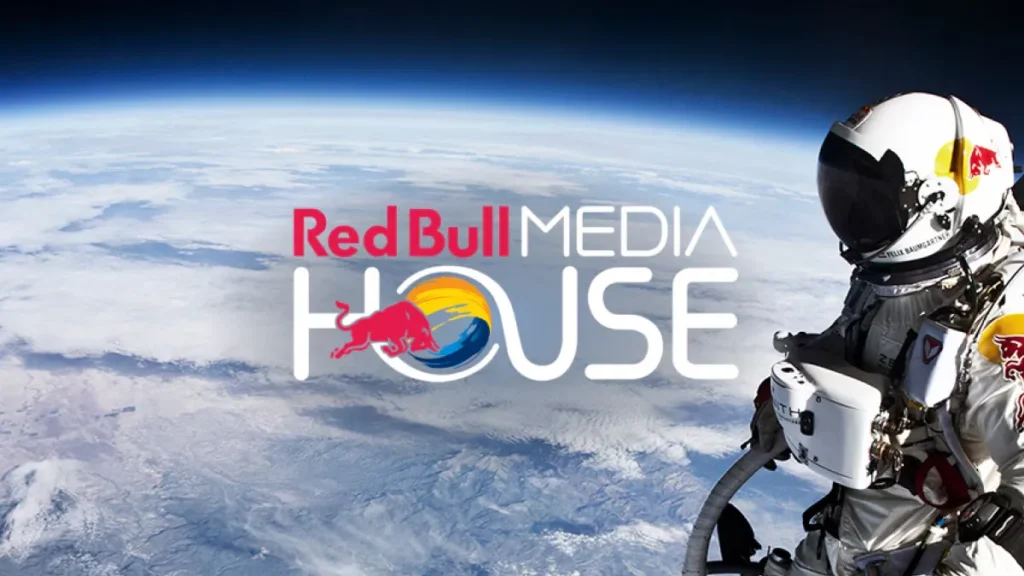
If you want to see brand publishing at its purest, look no further than Red Bull. They don’t talk about their drink. In fact, you can spend hours on the Red Bull Media House site without seeing a single “Buy Now” button for a can of soda.
They understood early on that their target audience—extreme sports fans—valued high-octane storytelling more than a 30-second ad.
By investing in visual content and high-end video content marketing, they became the primary source of news for their niche.
The Result: They don’t have to compete for “energy drink” keywords as much because they own the product’s culture. They are the entity.
The Economics of Ownership: ROI and Budgeting for Brand Media
One of the most frequent objections to brand publishing is the cost. It is an “Always-On” investment, whereas advertising is a “Pay-to-Play” tactic. However, the 2026 math favours the publisher.
Reducing CAC through “Audience Compounding”
In traditional marketing, your CAC is tied to the current ad auction. If Meta or Google raises prices, your margins shrink. In brand publishing, your audience is a compounding asset.
- Year 1: High investment in ContentOps and team building. CAC may be higher than paid search.
- Year 3: Your owned audience (email, SMS, app users) drives 40% of your revenue for near-zero distribution cost. Your blended CAC drops significantly compared to competitors who are still trapped in the ad auction.
Benchmarking Your Budget
For a mid-sized B2B firm in 2026, a brand publishing budget typically breaks down as follows:
- Editorial Team (Salaries): 50–60% of spend.
- Technology & SaaS (CMS, DAM, Analytics): 15–20% of spend.
- Distribution (Paid amplification of high-performing assets): 20–30% of spend.
The State of Brand Publishing in 2026
The last 18 months have seen a massive shift toward Generative Engine Optimisation (GEO). We are no longer just optimising for humans; we are optimising for LLMs to cite us as a source.
1. The Death of Generic Advice
AI can write a “Top 10 Tips for Branding” article in four seconds. It cannot, however, provide the “Synthetic Knowledge” that comes from actual fieldwork.
To rank in 2026, your brand publishing must include original data, contrarian viewpoints, or “First-person Narrative” signals that AI cannot replicate.
2. Vertical Integration of Media
We are seeing a trend where brands are simply buying existing media companies rather than building them.
When HubSpot bought The Hustle, they didn’t just buy a newsletter; they bought a direct line to millions of entrepreneurs.
This is the fastest way to acquire content pillars that already have “Trust” in the algorithm’s eyes.
3. Personal Branding at Scale
In 2026, people trust people more than logos. Effective brand publishing now requires “Face-forward” content.
Whether it is your CEO or a dedicated “Creator-in-Residence,” your blogging and how-to write blog posts strategy must include human-centric storytelling in marketing.
Structuring for AI Discovery
In 2026, AI discovery engines do not just “read” your text; they map your site’s Knowledge Graph. If your site structure is flat, you are invisible to agentic search.
Mandatory Schema Types for Brand Publishers:
- Organization Schema: Establishes your brand as the primary entity. Use the sameAs property to link to your Wikipedia entry or Crunchbase profile.
- Person Schema: Essential for every author. Link to their LinkedIn and professional portfolios to establish real-world authority.
- Article Schema with about and mentions: Don’t just list a title. Use the about property to define the core entity (e.g., “Brand Publishing”) and the mentions property for secondary entities.
Example JSON-LD Snippet for Brand Publishing Guide:
JSON

{

  "@context": "https://schema.org",

  "@type": "TechArticle",

  "headline": "The Ultimate Guide to Brand Publishing 2026",

  "author": {

    "@type": "Person",

    "name": "Expert Author",

    "url": "https://inkbotdesign.com/author/expert"

  },

  "publisher": {

    "@type": "Organization",

    "name": "Inkbot Design",

    "logo": "https://inkbotdesign.com/logo.png"

  },

  "about": [

    {

      "@type": "Thing",

      "name": "Brand Publishing",

      "sameAs": "https://en.wikipedia.org/wiki/Brand_publishing"

    }

  ]

}
The Verdict
Brand publishing is not a “marketing tactic.” It is a survival strategy for the post-AI web.
If you continue to rent your audience from tech giants, you are building your house on shifting sand.
A true media company owns its distribution, masters its content supply chain, and provides “Information Gain” that cannot be synthesised by a machine. It is expensive, difficult, and requires a level of honesty that most brands are too cowardly to embrace.
But the alternative? Becoming invisible.
Stop “marketing” and start publishing. If you don’t know where to start, you probably need a consultant who is allergic to the fluff you’ve been fed for the last decade.
Ready to stop renting and start owning? Explore Inkbot Design’s services or get a direct quote for your project today.
Frequently Asked Questions (FAQ)
What is the difference between content marketing and brand publishing?
Content marketing is often a campaign-based tactic used to drive specific leads. Brand publishing is a holistic business model where a brand operates a media arm to build long-term authority and direct audience ownership. One is transactional; the other is foundational.
How much does it cost to start brand publishing?
It varies, but you should budget for “Editorial Operations” rather than just “Writing.” This includes editors, technical SEO support, and distribution tools. For an SMB, this might mean £2,000 to £10,000 per month, depending on velocity.
Do I need a separate website for my media arm?
Generally, no. Keeping your publishing on your main domain (e.g., inkbotdesign.com/blog) helps build the “Topical Authority” of your primary entity. However, if the media arm has a vastly different audience, a sub-domain or separate site might be warranted.
How do I measure the ROI of brand publishing?
Look beyond clicks. Measure “Audience Growth” (email subs), “Content Attribution” (how many touches before a sale), and “Cost of Customer Acquisition” (CAC) over time. If your CAC is dropping while your audience grows, it’s working.
What is the ideal “Content Velocity” for a B2B brand?
Aim for at least 2–3 “Cornerstone” pieces per week, which are then repurposed into 10–15 “Spoke” assets for social and newsletters. Consistency matters more than raw volume.
Can I use AI to write my brand’s content?
You can use AI for ContentOps—outlining, research, and formatting—but the final “Thought Leadership” must come from a human. AI-generated “slop” is actively penalised in 2026 discovery feeds.
What is “Information Gain” and why does it matter for my rankings?
Information Gain is a metric used to determine if your content adds new value to the web. If you simply rewrite existing top-ranking articles, AI systems will ignore you. You must provide original data, unique case studies, or contrarian expert opinions.
Why is “Owned Distribution” so important in 2026?
Because third-party platforms (Google, X, LinkedIn) are increasingly “walled gardens.” They want to keep users on their site. By owning your email list or community, you bypass their algorithms and talk directly to your audience.
How does Brand Publishing impact Customer Acquisition Cost (CAC)?
By building an owned audience, you bypass the “ad auction” for every lead. Over 18–24 months, brands that publish consistently see a 30–50% reduction in CAC compared to those relying solely on paid search.
Is brand publishing suitable for B2B companies?
Absolutely. In fact, it is often more effective in B2B. Since B2B sales cycles are longer, becoming a trusted media source for your prospects helps you stay “Top of Mind” throughout their journey.
What is the best team structure for a media-first brand?
At a minimum, you need a Managing Editor, a Technical SEO Strategist, and a Multi-media Creator. For larger firms, adding a Data Analyst to mine proprietary insights is a competitive “moat.”
Should I host my media on a separate domain?
No. In 2026, building “Entity Authority” on your primary domain is more valuable. A subdirectory (e.g., /magazine or /news) keeps all the link equity and topical relevance tied to your brand.
