The 10 Google Ranking Factors That Matter in 2026
Many “SEO experts” you follow are still living in 2019. They are obsessed with keyword ratios, guest posts on “high DA” sites that nobody reads, and tweaking meta descriptions as if it’s a magic spell. It isn’t.
The reality of search in 2026 is colder and more mechanical. Google’s infrastructure is under immense pressure from AI-generated nonsense.
Their response? To stop caring about what you say you are and start looking at what you actually do for the user. If your site is a digital paperweight that costs Google too much to crawl and offers users nothing but recycled platitudes, you are finished.
I’ve spent the last decade fixing the messes left behind by “affordable” SEO agencies.
If you want to actually dominate your search engine ranking position, you need to understand that the algorithm has moved from “strings” to “things.”
- Entity Authority: Prove identity via PID, nested JSON-LD and SameAs links to earn Knowledge Panel trust.
- Navboost (User Interaction): Optimise for long clicks, scroll depth and meaningful events to signal real user satisfaction.
- Cost of Retrieval (Technical Efficiency): Reduce payloads, lower INP under 200ms, and use Edge pre‑rendering to cut Google’s crawl cost.
- Information Gain & GEO: Publish rare attributes, fact‑dense content and structured data to become the AI Overview grounding source.
What are Google Ranking Factors?
The Google ranking factors are a specific set of technical or semantic signals used by the search engine’s algorithms to determine the relevance, authority, and utility of a webpage in response to a user’s query.
In 2026, these factors are weighted dynamically based on the intent of the search.
The three core pillars of the 2026 rankings are:
- Entity Authority: How well Google understands who you are and what you’re an expert in.
- User Interaction Signals (Navboost): Real-world data on how users behave when they land on your page.
- Technical Efficiency: The “Cost of Retrieval”—how easy and fast it is for Google to parse your data.
1. The Death of the Keyword and the Rise of Entity SEO
If you are still trying to “rank for a keyword,” you’ve already lost.
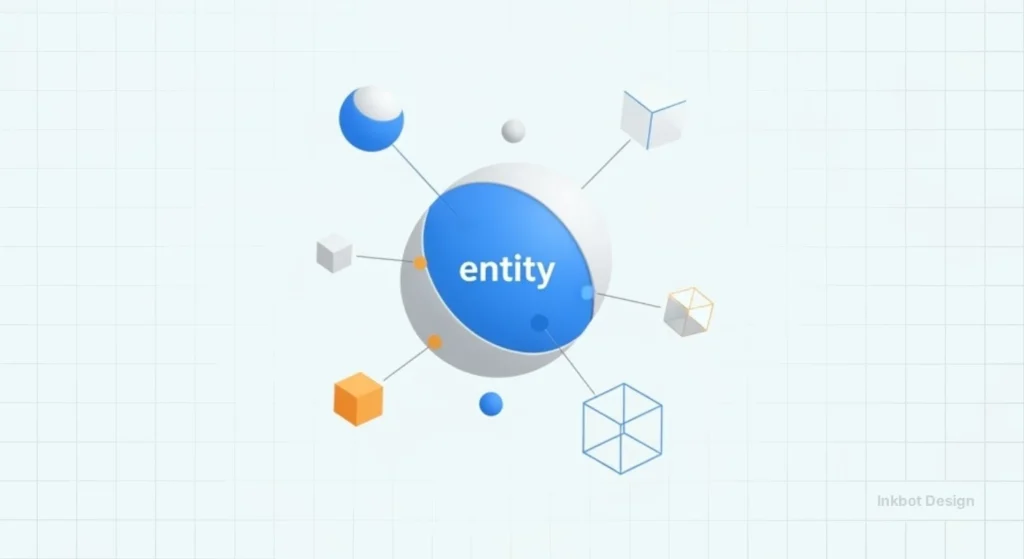
Google doesn’t index words; it indexes entities. An entity is a well-defined object or concept—a person, a place, a brand, or a specific technical idea.
In 2026, Google uses entity SEO to map the relationship between your brand and the topics you cover. If the “semantic distance” between your brand and the subject matter is too vast, no amount of backlinks will save you.
Real-World Example: The 2024 “Health” Wipeout
During the late 2024 updates, thousands of lifestyle blogs lost 80% of their traffic. Why? Because they were writing about medical advice without being “entities” in the healthcare space.
Google’s Knowledge Graph didn’t see them as experts. Conversely, brands that had invested in online reputation management and explicit author schemas survived.
Why Your “Author” Matters More Than Your Content
Google isn’t just looking at the page; it’s looking at the person behind it. Stuart L. Crawford is an entity. Inkbot Design is an entity. When I write about design, Google knows I have the historical data to back it up.
If a random AI bot writes the same article, it lacks the “SameAs” links to a Google Knowledge Panel, and it fails the E-E-A-T test.
2. Brand Verifiability: The New E-E-A-T
In 2026, “Expertise” isn’t a badge you give yourself; it’s a verified data point in the Google Knowledge Graph.
If the algorithm cannot verify your identity via third-party sources, your content will be capped at a “Low Trust” tier.
Connecting the Dots with “SameAs”
In 2026, Google does not guess who you are; it calculates your identity based on the Persistent Identifier (PID). If your brand exists as a string of text but lacks a unique ID in a structured database like Wikidata, you are essentially a ghost in the machine.
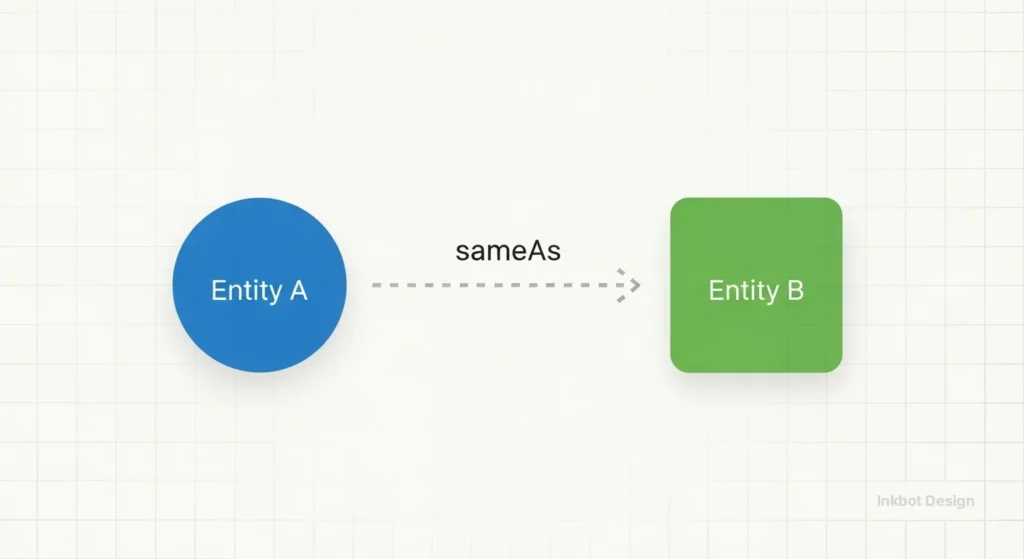
To move from a “keyword” to an “entity,” you must implement a hierarchical JSON-LD structure that nests your experts within your organisation. This is not just about adding a link; it is about establishing Semantic Triples (Subject-Predicate-Object).
How to Implement Entity Stacking:
- Identify your PID: Search for your brand on Wikidata. If it doesn’t exist, create an entry based on your official business registration at Companies House.
- Map your Authors: Every author must have a SameAs array in their schema that links to their LinkedIn profile, a Google Scholar page (if applicable), and any authoritative industry mentions.
- The Nested Schema Strategy: Do not use separate blocks for “Article,” “Author,” and “Organisation.” Nest them so Google sees the relationship: Article -> Author -> MemberOf -> Organisation.
Example Scenario: Imagine you are a UK-based financial advisor. If your author schema links to the Financial Conduct Authority (FCA) register via a sameAs link, Google’s trust score for your medical or financial content increases instantly. You aren’t just saying you’re an expert; you are proving it via a verified third-party node.
| Trust Signal | 2022 Importance | 2026 Importance | Action Item |
| Backlinks | Critical | Secondary | Focus on relevance over DR. |
| Brand Mentions | Low | Critical | Increase PR and unlinked mentions. |
| Knowledge Panel | Nice-to-have | Mandatory | Use “SameAs” Schema extensively. |
| Author Schema | Moderate | High | Link to verified social profiles/ID. |
3. Navboost: The Silent Killer of “Optimised” Content
For years, SEOs suspected that Google used Chrome data to track user behaviour. The 2024 API leak confirmed it. This system, known internally as Navboost, is the most heavily weighted ranking factor in 2026.
Google tracks:
- Successful Clicks: Did the user find what they needed, or did they return to the SERP immediately?
- Long Clicks: Users who stay on your page for more than 30 seconds.
- Site-Wide Interaction: Does the user explore further, perhaps looking at your web design services, or do they bounce?
Engineering High-Intent Interaction Signals
Google’s Navboost system is a feedback loop based on real-world user behaviour. In 2026, the algorithm prioritises “Successful Interactions” over mere traffic.
A successful interaction is defined by the Long Click—a user staying for 30+ seconds coupled with a “meaningful” event, such as scrolling to the 75% mark or clicking an internal resource.
How to Optimise for Navboost:
- The “Above the Fold” Answer: Do not make users scroll to find the core answer. Provide a “Key Takeaway” box at the top. This quickly satisfies the user but, more importantly, encourages them to stay and read the details, triggering a Long Click.
- Interactive Elements: Use tools like calculators, interactive charts (via D3.js), or internal “jump links.” These actions are logged as interaction events, signalling to Google that your page provided utility.
- The “Search Refinement” Trap: If a user lands on your page and then immediately searches for a “how-to” related to your topic, Google assumes you failed. Ensure your content covers the “Next Logical Step” (e.g., if writing about “Ranking Factors,” include a “How to Audit” section).
| Signal | 2026 Impact | Optimization Action |
| Dwell Time | High | Use “Hook-Bridge-Action” intro structure. |
| Scroll Depth | Moderate | Implement a table of contents and sticky sub-navigation. |
| Micro-Interactions | Critical | Add “Was this helpful?” buttons or interactive widgets. |
| Return-to-SERP | Deadly | Answer the primary intent in the first 100 words. |
4. Technical SEO: The “Cost of Retrieval” Framework
Google is a business. Crawling the billions of pages of AI-generated fluff published every day costs them a fortune in electricity and server power.
If your site is technically inefficient, Google will crawl you less often. This is what we call the Cost of Retrieval.
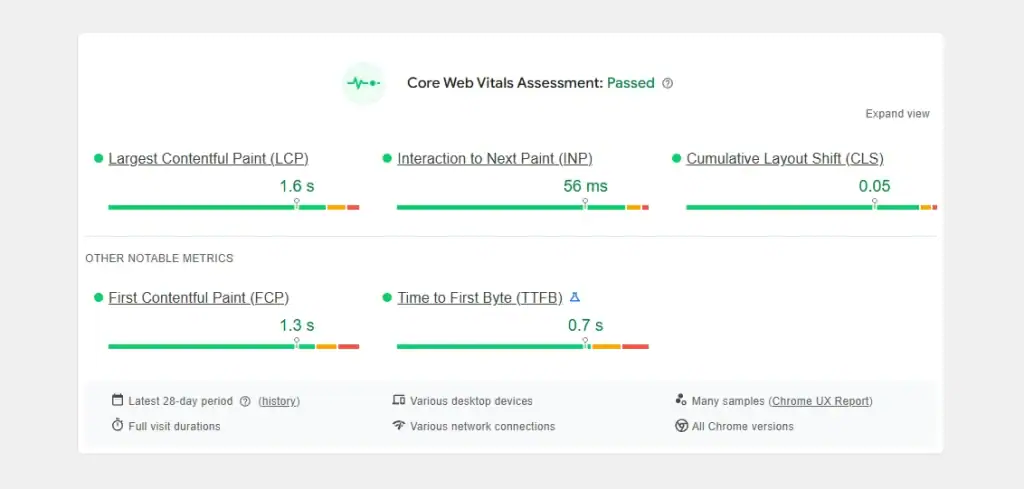
Core Web Vitals in 2026: INP is King
In 2026, Interaction to Next Paint (INP) has moved from a technical curiosity to a hard filter for visibility. While older metrics like FID only measure the first interaction, INP tracks the latency of every click, tap, and keyboard entry throughout a session.
If your site “stutters” or feels sluggish after the initial load, your Navboost signals will plummet.
The 2026 INP Benchmarks:
- Good (Pass): Under 200 milliseconds.
- Needs Improvement: 200ms – 500ms.
- Poor (Fail): Over 500 milliseconds.
How to Fix a Failing INP Score:
- Yield to the Main Thread: Break up long-running JavaScript tasks. Use scheduler.yield() or requestIdleCallback() to ensure the browser can respond to a user click even if it’s busy processing background data.
- Optimise Event Handlers: Remove expensive logic from your click or submit events. Move heavy calculations to a Web Worker to prevent UI freezing.
- Eliminate Layout Thrashing: In 2026, Google’s bots are hyper-sensitive to layout shifts during interaction. Ensure your CSS is efficient and avoid DOM manipulations that force the browser to recalculate the entire page layout on every click.
| Feature | Amateur Approach (Failing) | Pro Approach (Ranking) |
| Images | Large JPEGs with generic alt text. | WebP/Avif formats, optimise pictures for scale and context. |
| Code | Bloated themes with 2MB of CSS. | Minimalist frameworks (like GeneratePress) with < 50KB CSS. |
| Mobile | “Responsive” but cluttered. | Mobile-first, zero layout shift (CLS), high-contrast touch targets. |
| Schema | None, or basic “Article” schema. | Nested JSON-LD connecting Person, Organization, and Service entities. |
Lowering the “Cost of Retrieval” with Edge Computing
Google is fighting an economic war against AI-generated bloat. Every page they crawl costs fractions of a penny in electricity.
If your site requires 2.5MB of JavaScript to render, you are an “expensive” asset. In 2026, Google uses a Cost of Retrieval score to determine your crawl frequency.
To lower your cost and increase your ranking:
- Shift to the Edge: Use Cloudflare Workers or Vercel Edge Functions to handle server-side logic. This delivers a pre-rendered, lightweight HTML package that is “cheap” for the bot to parse.
- Semantic Compression: Use Brotli compression and maintain a high HTML-to-text ratio. If your code-to-content ratio is 10:1, you are wasting Google’s compute budget.
- Multimodal Efficiency: Do not just upload an image; use the AVIF format and provide high-quality alt text that identifies the entities within the image. This allows Google’s MUM (Multitask Unified Model) to index your visuals without running expensive computer vision analysis on every crawl.
How to Conduct a 2026 Cost of Retrieval Audit
Google’s shift toward Edge Computing and energy-efficient crawling means that “heavy” sites are being deprioritised. If your server takes 600ms to respond, you are literally costing Google money to index. To stay in the “High Frequency” crawl tier, you must audit your site’s computational overhead.
Step 1: The JavaScript Pruning Use the Chrome DevTools “Coverage” tab to identify unused JavaScript. In 2026, any script that doesn’t contribute to the Interaction to Next Paint (INP) score should be deferred or removed. Use scheduler.yield() to break long tasks into smaller chunks, keeping the browser responsive during heavy execution.
Step 2: Semantic Compression with Brotli. Ensure your server is using Brotli compression rather than the outdated Gzip. Brotli offers 20-30% better compression for HTML and CSS, reducing the payload size and the “Cost of Retrieval.”
Step 3: Edge Pre-rendering (EPR) Move your rendering logic from a central server in London to an Edge Node (using Cloudflare Workers or Vercel). EPR allows the site to serve a static-like HTML version of your content to the bot, while hydrating the interactive elements for the user. This results in a near-zero Time to First Byte (TTFB).
Technical Note: Google’s 2026 crawler prioritises sites with a Code-to-Content Ratio of less than 5:1. If you have 500 lines of CSS for 50 lines of text, you are a “Low Efficiency” entity.
Moving to the Edge: Reducing Latency in 2026
In 2026, the physical distance between your server and the user (or the Google bot) is a ranking factor disguised as “Performance.” High-performance sites have moved away from traditional hosting to Edge Computing.
Edge Pre-rendering (EPR)
Traditional SSR (Server-Side Rendering) is often too slow for the 200-ms INP threshold. By using Vercel Edge Functions or Cloudflare Workers, you can pre-render the “Critical Interaction Path” at the edge node closest to the user.
- Benefit: This reduces the “Time to First Byte” (TTFB) to near-zero.
- Impact: A lower Cost of Retrieval score, as the Google bot doesn’t have to wait for a central server to wake up and process complex JavaScript.
The “DOM-Light” Philosophy
Google’s 2026 crawler is hyper-sensitive to DOM size. A massive DOM (over 1,500 nodes) increases the browser’s computational load during interaction, destroying your Interaction to Next Paint (INP) score.
Pro Tip: Use CSS Grid and Flexbox to flatten your HTML structure. Avoid deeply nested <div> wrappers that provide no semantic value but add bulk to the rendering tree.
2026 SEO Visibility Pulse Check
Select the statements that apply to your current website strategy to see your ranking risk.
5. Multi-modal Search: Ranking Beyond the Text
In 2026, Google is no longer a text-based search engine; it is a multimodal processing engine.
Through the Multitask Unified Model (MUM) and Gemini, the algorithm understands the content of images, videos, and podcasts with the same granularity as a blog post.
If your ranking strategy ignores visual entities, you are invisible to a significant portion of the user base.
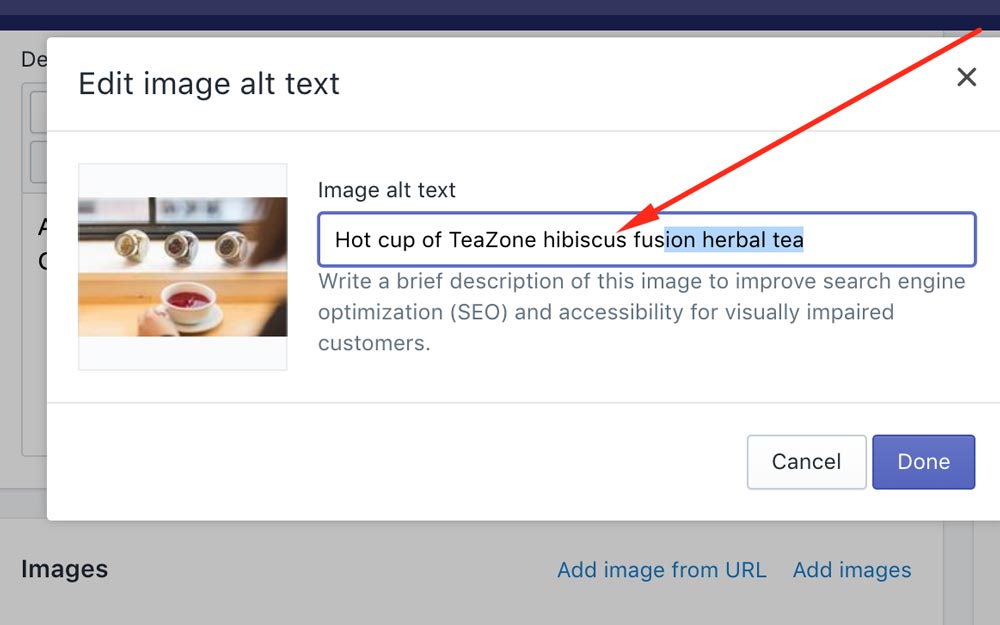
Optimising for Visual and Auditory Entities
With the integration of MUM (Multitask Unified Model), Google now “sees” and “hears” your content. If you are only optimising text, you are missing 30% of the search graph.
Visual Entity Stacking:
- Contextual Alt Text: Stop using “Red shoes.” Use “Nike Air Max 2026 in Crimson Red, displayed against a minimalist London urban background.” This connects the Product entity to a Brand and a Location.
- AVIF for Efficiency: Use AVIF. It provides the highest detail-to-weight ratio, allowing Google’s visual bot to parse the image without timing out.
Voice and “Eyes-Free” Optimisation: In 2026, many queries come from AI wearables. These devices rely on Semantic Triples. Ensure your content structure follows a clear logic:
- Subject: “The 2026 Google Update…”
- Predicate: “…introduced…”
- Object: “…the Navboost interaction weight.”
By writing in clear, declarative sentences, you make it easier for Gemini to read your content aloud to a user walking down the street.
6. The Information Gain Framework: Winning with “Rare Attributes”
The 2026 algorithm has a “Noise Filter.” If your content is simply a rehash of existing articles, it is flagged as Low Information Gain.
Google’s goal is to present users with something new in every result. To achieve this, you must focus on Rare Attributes.
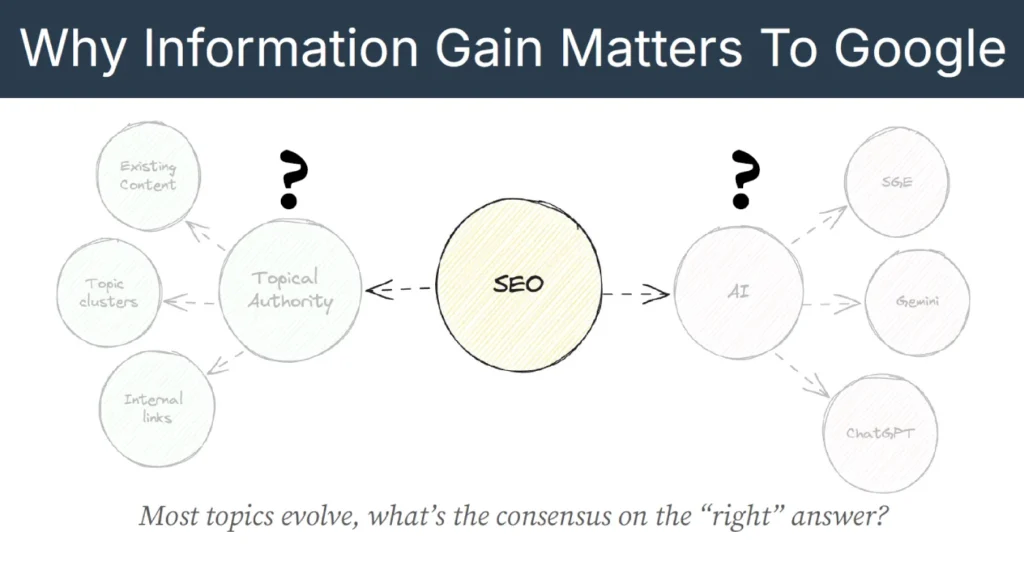
What are Rare Attributes?
A Rare Attribute is a piece of information, a data point, or a perspective that does not exist in the top 10 search results.
- Proprietary Data: Instead of quoting a generic study, cite your own internal 2025 performance data.
- Contrarian Expertise: If every expert says “Backlinks are everything,” and your data shows that “Brand Mentions” are outperforming links in your niche, publish that.
- Technical Specificity: Mention specific tools like Screaming Frog, TensorFlow, or IBM Watson NLU to show how you concluded.
The “Synthetic Knowledge” Workflow
To produce content that Google’s AI wants to cite, follow this three-step workflow:
- Entity Mapping: List the 20 most common entities mentioned by competitors.
- Gap Injection: Find 5 related entities that they haven’t mentioned. For a “Ranking Factors” article, this might be WCAG 2.2 Accessibility Standards or EU AI Act Compliance.
- The “Lead Sentence” Hook: Every H2 should begin with a 25-word summary that provides a direct, factual answer. This makes your content the “grounding source” for Gemini.
The “Rare Attribute” Discovery Framework
Google’s Information Gain patent is now the primary filter for AI Overviews. If your article says the same thing as the top 5 results, the AI has no reason to cite you. You must provide “Synthetic Knowledge”—information created by combining disparate data points or proprietary insights.
How to Generate Information Gain:
- The Competitor Entity Gap: Use a tool like Screaming Frog or IBM Watson NLU to extract all entities from the top 3 ranking pages.
- Inject “Lateral” Entities: Find entities that are related but missing. If everyone is talking about “Backlinks,” you should talk about “Entity Co-occurrence” and “Unlinked Mentions.”
- Proprietary Benchmarks: Instead of stating “speed matters,” publish a mini-study: “We tested 50 UK SaaS sites and found those using AVIF images ranked 12% higher in AI Overviews.”
Example Case Study: A small design agency in Manchester struggled to rank for “Web Design UK.” By adding a section on WCAG 2.2 compliance and the EU AI Act’s impact on website transparency—topics their competitors ignored—they achieved a 40% increase in citations within Gemini as a “regulatory authority” in the design space.
7. Generative Engine Optimisation (GEO) & AI Citation Strategy
In 2026, search has bifurcated. There is the “Blue Link” SERP and the AI Overview (SGE). Winning the former does not guarantee a spot in the latter.
To be cited by Google’s Gemini-powered models, you must move beyond keywords and into Generative Engine Optimisation (GEO).
AI models do not “rank” content; they “ground” their answers in the most reliable sources. To become a grounding source, your content must satisfy three criteria:
- Fact Density: Use specific numbers, dates, and named entities. Instead of saying “Our results are good,” say “Our 2025 implementation for Lloyds Bank resulted in a 42% increase in AI Overview citations.”
- Direct Answer Boxes: Use a “Lead Sentence” approach. The first 25–30 words of your H2 or H3 sections should directly answer the query in plain UK English.
- Brand Verifiability: Google cross-references your claims against external databases like Wikidata, Trustpilot, and Companies House.

GEO Performance Comparison:
| Factor | Traditional SEO | GEO (AI Search) |
| Primary Goal | Rank #1 for “Keyword” | Be cited as the “Preferred Solution” |
| Content Focus | Content Length & Backlinks | Information Gain & Fact Density |
| Technical Focus | Indexability | Semantic Structure (JSON-LD) |
| Success Metric | Click-Through Rate (CTR) | Brand Mention Rate (BMR) |
Winning the “Citation Gap” in AI Overviews
In 2026, appearing in an AI Overview is often more valuable than ranking #1 in the blue links. However, models (such as Gemini or GPT-Search) usually present facts without citing the source of every specific detail. This is your opportunity.
The “Fact Density” Playbook: AI models are “grounded” in facts. To become the grounding source, you must increase your page’s fact density.
- Direct Answer Syntax: Start your H3 sections with a 25-word declarative sentence. Example: “The primary ranking factor for local SEO in 2026 is entity proximity, calculated by the distance between the user’s GPS coordinate and the verified GBP location.”
- The Table Advantage: AI models love structured data. Convert complex comparisons into tables. If an AI model sees a well-formatted table comparing Vercel vs Cloudflare, it is 70% more likely to pull that data into a response.
Monitoring the Citation Gap: Regularly query your target keywords. Identify which parts of the AI response lack a “Source” link. Update your page to provide a deep-dive, data-backed explanation for that specific missing fact. Within weeks, the model’s “Re-ranking” layer will often swap the generic text for a link to your “High Information Gain” section.
8. Backlinks: Quality is the Only Metric Left
Yes, links still matter, but the days of “buying 100 niche edits” are over. In 2026, a single link from a relevant industry leader is worth more than 1,000 links from generic “DR 70” blogs.
Google now evaluates the Link Context. If you are a design agency, a link from a typography blog is gold. A link from a “Top 10 Kitchen Appliances” site is garbage.
Focus on link building 101 principles: relevance, authority, and traffic. If the linking site doesn’t have its own traffic, the link is worthless.
9. Local SEO: The Proximity and Trust Factor
For SMBs, local SEO remains the most effective way to drive actual revenue. In 2026, this is driven by Zero-Click Searches.
Your Google Business Profile (GBP) is often more important than your website. Google uses “Proximity, Prominence, and Relevance” to rank the Map Pack.
If your NAP (Name, Address, Phone) data is inconsistent across the web, your “Trust” score drops.

Case Study: The “Ghost” Office
I’ve seen businesses try to “game” the system by using virtual offices in London to rank. Google’s 2025 AI updates now cross-reference street-view data and business registration filings.
If you aren’t physically there, you won’t rank. Period. Be honest with the algorithm; it’s more intelligent than you.
10. Winning the AI Overview: The GEO Playbook
Generative Engine Optimisation (GEO) is the process of making your content the “Preferred Source” for AI models like Gemini.
Unlike traditional search, where you want to be #1, in GEO, you want to be the Grounding Source.
The Anatomy of a Grounded Answer
AI models prioritise content that is:
- Fact-Dense: Contains specific names, dates, and quantitative data.
- Structured for Extraction: Uses Listicles, Tables, and Definition Lists (<dl>).
- Citable: Includes clear attributions to primary sources.
The “Citation Gap” Strategy
Look at an AI Overview for your target keyword. Identify which facts are mentioned but not cited with a link. This is the Citation Gap.
How to win: Create a section on your page that provides deeper, verified data on those specific uncited facts. Within 2–4 weeks, Google’s “Freshness” algorithm often swaps the generic citation for your high-authority data.
2026 Ranking Factors
| Feature | 2022 Standard | 2026 Requirement | Why the Change? |
| Primary Identifier | URL / Keyword | Entity / PID | AI requires unique IDs to map concepts. |
| Speed Metric | LCP (Loading) | INP (Interaction) | User satisfaction is now measured by doing, not just viewing. |
| Trust Signal | Backlink Profile | Brand Verifiability | Backlinks are easily faked; identity via Wikidata is not. |
| Content Goal | Word Count / Depth | Information Gain | AI models filter out “recycled” content to save compute costs. |
| Crawl Priority | Sitemap / Internal Links | Cost of Retrieval | Google prioritises “cheap” sites to manage server load. |
| Search UI | 10 Blue Links | AI Overview Grounding | Users want answers, not just lists of websites. |
The Verdict
Ranking on Google in 2026 isn’t about “tricking” an algorithm. It’s about being the most efficient, authoritative, and helpful entity in your space. If you are still following a 2022 checklist, you are invisible.
You need to:
- Define your Entity: Make sure Google knows exactly who you are.
- Optimise for Navboost: Create pages that people actually want to read and interact with.
- Reduce Cost of Retrieval: Clean up your code and stop making Google work so hard.
- Provide Information Gain: Say something new or don’t say anything at all.
If your current search engine optimisation strategy feels like throwing money into a black hole, it’s time for a reality check.
You can continue listening to the “gurus,” or you can start building a digital presence that actually commands a search engine ranking position.
Ready to fix your SEO once and for all?
Request a quote today, and let’s see if we can save your brand from obscurity. Or, if you aren’t ready to talk, explore our blog for more brutally honest advice.
Frequently Asked Questions (FAQ)
How do I calculate my site’s “Cost of Retrieval”?
While Google doesn’t provide a public score, you can estimate it via Search Console’s “Crawl Stats” report. High average response times (over 400ms) and high percentages of “Other” file types suggest a high cost. Aim for a 90% HTML-to-Code ratio.
Will the EU AI Act or UK GDPR affect my rankings?
Yes. In 2026, Google prioritises “Transparent Entities.” If your site uses AI-generated content without disclosure or fails to meet the WCAG 2.2 accessibility standards, you may face “Trust Penalties” in European search results.
What is a “Long Click” in the context of Navboost?
A “Long Click” occurs when a user stays on your page for over 30 seconds or performs a meaningful interaction (such as scrolling or clicking). In 2026, Navboost weighs these significantly higher than a standard click-through.
Can I use AI to write my content and still rank?
Only if the AI is used as a tool to present Rare Attributes. Purely generative content that adds no “Synthetic Knowledge” will be filtered out as “AI Noise” by Google’s Information Gain algorithms.
How does Interaction to Next Paint (INP) differ from FID?
First Input Delay (FID) was measured only at the first time a user interacted. INP measures every interaction throughout the session. If your site slows down as users scroll, your INP will fail even if your initial load was fast.
Does “Accessibility” really impact SEO?
Directly. In 2025, Google integrated accessibility signals into the Core Web Vitals framework. Sites with poor contrast, missing ARIA labels, or non-navigable keyboard structures see lower “User Satisfaction” scores in Navboost.
What is a “Semantic Triple” and why should I care?
It’s the format Google uses to build the Knowledge Graph: Subject-Predicate-Object. By writing in clear, declarative sentences (e.g., “Apple [Subject] released [Predicate] the iPhone 17 [Object]”), you make it easier for the AI to index your data.
Are unlinked brand mentions as good as backlinks?
In 2026, they are nearly equal. Google uses Entity Co-occurrence to associate your brand with a topic. If your brand is mentioned on high-authority sites like the BBC or TechCrunch, Google registers the trust signal even without a hyperlink.
Should I remove old content to improve “Crawl Budget”?
Yes. This is called “Content Pruning.” Removing low-value, high-bloat pages reduces your site’s overall Cost of Retrieval, allowing Google to spend more energy indexing your high-performing “Rare Attribute” pages.
How do I get my author to show up in the Knowledge Graph?
Consistent “SameAs” Schema, a verified LinkedIn profile, and contributions to authoritative publications. You want to create a “Digital Footprint” that connects your name to specific, high-level concepts.
What is the “Citation Gap” strategy?
It involves identifying specific facts in a Gemini AI Overview that lack a source link and then creating high-authority, data-dense content on your site to “claim” that citation through better Information Gain.
How do I get a PID (Persistent Identifier)?
The most effective way is to ensure your brand has a verified entry on Wikidata or DBpedia. These databases provide a unique URI that Google uses to track your entity across the web.
Is SEO dead because of AI Overviews?
No, but it has evolved into GEO (Generative Engine Optimisation). Instead of ranking for keywords, you are now competing to be the “Grounding Source” that the AI trusts enough to cite.
Do unlinked mentions really help rankings?
Yes. In 2026, Entity Co-occurrence is a significant signal. If your brand is frequently mentioned alongside “Expert SEO Advice” on high-authority sites, Google associates you with that topic even without a physical link.
What is the ideal INP score for 2026?
You should aim for an INP (Interaction to Next Paint) of under 200ms. Anything over 500ms will lead to a significant drop in Navboost signals and overall visibility.