Customer Segmentation: Unlocking Better Marketing
Let us start with a simple example that we can all relate to. Think about the last time you went shopping for clothes. Did you go into every single store looking for new outfits? I’m guessing not! You probably had certain retailers in mind that fit your style, budget, and preferences.
That thought process of which stores to visit is customer segmentation at work.
Subconsciously, you categorise stores as “affordable,” “trendy,” “outdoorsy,” etc., based on how you perceive each brand. Then, you concentrate your shopping efforts on the establishments that fall within the segment(s) you identify with.
But businesses do this on purpose — and they use data. Companies can better understand what drives each set’s unique wants and actions by dividing their audience into clearly defined groupings. Armed with such insights, firms can adjust their marketing approaches to more effectively resonate with different segments.
- Customer segmentation improves marketing efficiency by targeting specific audience groups based on their unique preferences and behaviours.
- Effective segmentation leads to higher returns, lower costs, and increased customer satisfaction through tailored messaging.
- Data-driven insights are essential for building meaningful segments that resonate with customers' needs and desires.
Why Is Segmentation Such a Big Deal?

Think about it this way. Trying to sell sandals to snowboarders in the dead of winter would be an epic waste of marketing spend, right? Nobody wants junk mail or emails for stuff they’ll never buy.
Effective segmentation helps businesses avoid scenarios like that. Blasting the same generic messages to every potential customer prevents them from spreading their marketing efforts too thin. Instead, they can concentrate resources on the highest-value segments most likely to engage with their products or services.
The results? Higher returns, lower costs, and happier customers who feel like the brand really “gets” them. It’s a win-win!
Building Segments: Where to Start
Customer segmentation is crucial for focused, cost-efficient marketing. How do you go about building out your segments? It all starts with data.
At the most basic level, you’ll likely have access to simple demographic data like:
- Gender
- Age
- Location
- Income Level
- Education
This demographic information provides a decent foundation, allowing you to construct broad segments like “Millennial Urbanites” or “Affluent Suburbs.” But to drill down and pinpoint your highest-value audiences, you’ll need to layer on more contextual and behavioural data.
Sources like website analytics, CRM records, transactional data, and social media can shed light on crucial factors such as:
- Purchase Histories
- Browsing & Content Consumption Patterns
- Engagement Levels (Email Open Rates, Social Follows, etc.)
- Brand Affinity & Sentiment
- Motivations & Pain Points
Compiling a complete multi-dimensional view of your customers using all these rich data sources allows you to build out meaningful segments with shared traits, needs, and behaviours.
Types of Segmentation Variables
With all your data, many ways exist to define and combine variables to create customer segments. Here are some of the most common variables used by marketers:
Geographical
- Country or region
- City or metro area
- Neighbourhood
- Population density (urban, suburban, rural)
- Climate
Demographic
- Age
- Gender
- Ethnicity
- Relationship status
- Household size
- Family life cycle
- Income level
- Education level
Psychographic
- Values and beliefs
- Interests and hobbies
- Personality traits (e.g. introverted/extroverted)
- Lifestyle (eg. healthy/unhealthy)
You can get as granular as you want by layering multiple variables together. For example, you could define a segment like:
“Millennial Pet Parents in Urban Centers Seeking Natural Dog Food Products”
The more specifically you can outline a segment’s shared attributes and behaviours, the better you can customise your marketing messaging and product offerings to their precise needs.
Demographic vs. Psychographic Segmentation

Although the previous variables give an idea of the leading segmentation dimensions, two factors should be examined more closely. These are demographic and psychographic segmentation.
Demographic Segmentation
In this type of categorisation, customers are grouped using measurable statistics such as age, gender, income level, education level and location.
The good thing about demographic data is that it is usually easy to get hold of (either directly from customers or through third parties). For example, it is easy to segment using age or gender.
However, one limitation of only considering demographics when doing market research is that more delicate motives and settings may be disregarded. For instance, two people of similar ages and incomes might have utterly different buying habits or attitudes, which cannot be captured by demographic information alone.
Psychographic Segmentation
Psychographics involves attitudinal, values-based, interest-driven, and lifestyle traits-focused variables if deeper insights into consumer behaviour are to be gained. It helps to know why people behave as they do towards a product or service offering
This form of dividing markets is named so because it gets more personal and psychological than any other method. Some less concrete examples used here include:
- Personality (Are you introverted or extroverted?)
- Values (Do you value sustainability? Adventure? Status?)
- Interests & Hobbies (Are you a fan of outdoor activities? Gaming?)
- Lifestyles (Are you vegan? Do you travel internationally?)
Although these unquantifiable psychographic findings can significantly help create genuine messages that make an impact, they take more extended periods and require greater involvement for collection purposes, too. More often than not, these details must come from various places like surveys done on social media platforms among members belonging to specific organisations, etcetera
Don’t Overthink It: Prioritise Your Most Valuable Segments
The whole segmenting business can be daunting when starting, mainly because of many variables to consider. How many segments should one aim for? What level of detail should one go into?
But here’s the mindset shift: You don’t need to boil the ocean! Not every possible customer segment will be worth prioritising.
To make it effective, the segmentation strategy must prioritise the most viable and high-value audiences first and then keep iterating over time. Begin by defining those “bull’s-eye” segments with high revenue potential and strategic significance to your business. Once you have these core segments, feel free to extend them as much as you want based on available resources and desired outcomes.
Putting Segmentation into Action: Real-World Examples

Okay, enough talking about segmentation in the abstract. Let’s look at some actual examples of how real businesses are using customer segmentation effectively:
Tailored Travels by Airbnb
Everyone is familiar with Airbnb. As a wildly popular platform for booking vacation home rentals and travel experiences, their business hinges on personalisation and curating stays customised to each guest’s needs and preferences.
So, it’s no surprise that Airbnb’s business is built on sophisticated customer segmentation. Using various factors like geographic locations, demographics, browsing and search behaviour, loyalty status, and previous booking patterns, Airbnb constructs detailed psychographic profiles or “personas.”
For example, some key Airbnb segments include:
- Budget Backpackers
- Families with Young Kids
- Luxury Vacationers
- Remote Workers & Digital Nomads
Each of these personas is then targeted with tailored property listings, travel recommendations, and messaging that resonates specifically with their travel motivations, budget constraints, and other contextual needs. Airbnb’s comprehensive segmentation strategy allows them to deliver uniquely relevant experiences at a vast scale.
Gaming the Market with Xbox
The video game industry lives and dies by deep customer segmentation. Game publishers rely heavily on building individual games and content for specific slices of the gamer audience.
Microsoft’s Xbox team takes an immensely segmented approach to cater to varied gaming audiences with diverse motivations and playing styles, such as:
Achievement Hunters This segment comprises ultra-competitive gamers driven by goals like gaining levels and collecting trophies and achievements. They thrive on complex challenges that put their skills to the ultimate test.
Lore Lovers These narrative-focused gamers are drawn to immersive storytelling and fleshed-out fictional worlds with deep histories. Compelling plots and character development are a must for this segment.
Social Connectors The Social Connector segment values gaming experiences with vital multiplayer and community elements. Online matchmaking, integrated voice chat, clan systems, and social streaming capabilities are huge draws.
Casual Gamers At the opposite end of the spectrum, you have the Casual Gamers who view games as a fun diversion rather than a hardcore pursuit. Simple, pick-up-and-play mechanics and mobile accessibility cater well to this audience’s lighter gaming habits.
With such diverse gamer personas, Xbox can take a variety of approaches. Their strategy involves developing and marketing different games, services, and even hardware SKUs tailored to the specific needs of each key segment.
For example, elite gamers get premium subscription services like Xbox Game Pass Ultimate, packed with intense RPGs and competitive shooters. Free mobile titles and family-friendly party games are perfect for social couch play and better serve casual audiences.
Always On: Roku’s Living Room Segmentation
Roku has become a dominant force in the smart TV and streaming player market by profoundly understanding how and why people consume different types of content. Their segmentation strategy revolves around carefully mapping out distinct “living room personas” based on factors like:
- Household Demographics (Single, Families with Kids, etc.)
- Interests & Content Preferences (Movies, TV Shows, News, YouTube, etc.)
- Viewing Habits (Primetime, Binge-Watching Sessions, Background Viewing, etc.)
With this nuanced audience intelligence, Roku can promote and surface hyper-relevant content channels, apps, and video ads based on each household’s unique situation and mindset. So cord-cutters primarily interested in live sports and news get a tailored experience compared to anime fans who love to binge-watch subtitled series.
Even better, Roku’s ACR (Automatic Content Recognition) technology can track what’s being watched and optimise the living room experience by switching channels, inserting relevant ads, etc. Talk about personalised viewing!
Segmentation Brings the Personal Touch
See, customer segmentation isn’t just a bunch of abstract marketing theory. When leveraged thoughtfully using robust data, it allows brands to forge deep, meaningful connections with their customers through experiences that feel custom-tailored.
Sure, building out those segment profiles takes time and effort. However, the payoff regarding customer loyalty, conversions, and ROI is enormous. We all crave a more personalised “gets me” feeling from the brands we buy from.
Potential Pitfalls of Segmentation
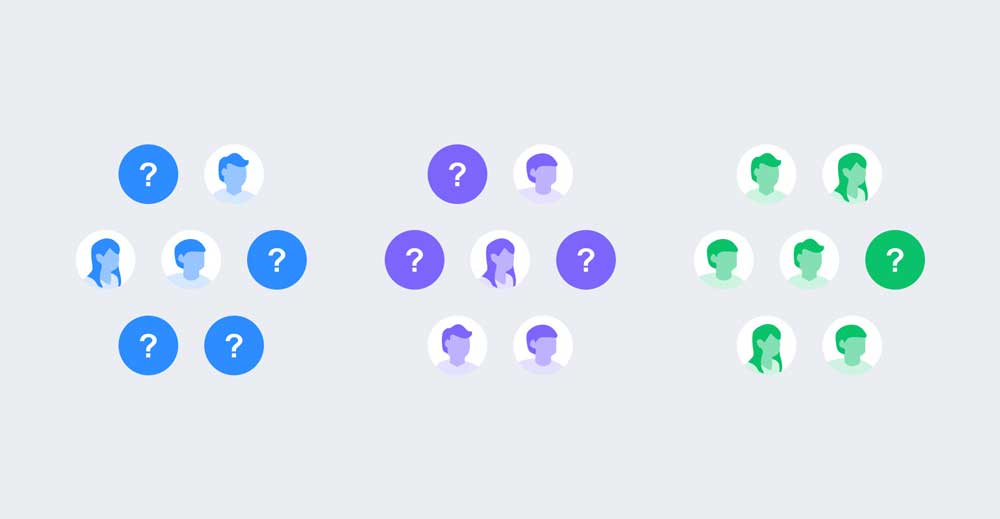
Of course, no strategic process is perfect, and customer segmentation certainly has its pitfalls to be aware of:
Segment Shifting: Your defined segments aren’t static — customer needs and behaviours constantly evolve. What defined a segment today could be irrelevant in a few years. Continuously revisiting and updating your segmentation approach is crucial.
Siloing Customers
There’s always a risk of siloing or “boxing in” customers too narrowly when you get overzealous with segmentation. People don’t necessarily fit into rigid buckets. Maintaining some flexibility is essential.
Data Limitations At the end of the day, customer segmentation is only as robust as the data fueling it. Limited or inaccurate data inputs can easily undermine your segment profiles and strategic decisions. Prioritising rich, permissible data sources is critical.
Ethical Considerations There’s a fine line between delivering personalised experiences and being creepy or too invasive. Respecting privacy, being transparent about data usage, and avoiding excessive monitoring can help stay ethical.
Navigating these potential pitfalls is simply part of the strategic governance required for sustainable segmentation. Consistent evaluation and refinement are musts.
FAQs on Customer Segmentation
What number of customer segments should a business have?
There is no singular answer, as the number of ideal segments varies by industry, resources, and strategic goals. Generally speaking, most companies should define three to seven key segments. If there are too few, marketing becomes generic and undifferentiated. However, hundreds of hyper-niche segments need to be more scalable and efficient.
What are the four main types of market segmentation?
Geographic (location, region, density, climate)
Demographic (age, gender, income, family)
Psychographic (values, interests, personalities)
Behavioral (purchase history engagement brand loyalty)
Is it more important to segment by demographic or psychographic?
The most helpful segmentation models blend demographic and psychographic data set elements. Demographics provide structural traits, while psychographics explain the “whys” behind attitudes and behaviours among customers.
What are some benefits of customer segmentation?
More targeted & relevant marketing
Higher ROI on marketing spend
Better customer satisfaction/loyalty
Optimised product/service offerings
Enables identification of new growth opportunities
Competitive advantage over non-segmented approach
How should you build customer segments?
Collect rich data (demographics, psychographics behaviours, firmographics etc.)
Figure out which variables matter most for your business/goals
Review data to find shared characteristics that make each segment meaningful
Prioritise the highest-value segments first and create profiles for them
Apply segment intelligence throughout your marketing/service efforts
Which segmentation variables matter most for B2B companies?
Effective B2B segmentation often centres around critical firmographic attributes like:
Company size/revenue
Industry/sector
Number of employees
Geographic location(s) served
Technology stack used
Buying behaviours (purchase cycles, decision makers etc.)
When should you revisit and update your defined segments?
Customer segments are not set in stone—they change with the market, behaviour changes, and data updates. Most businesses should re-evaluate their segmentation models at least once every year or two based on new customer needs and preferences information. More agile enterprises might choose more frequent re-evaluations.