Brand Strategy Examples: What 10 B2B Firms Chose, Proved and Gave Up
Most brand strategy examples admire logos. This one dissects ten B2B firms, including IBM, McKinsey, PwC, Salesforce and 37signals, through four questions: what each chose to stand for, how it proves it, what the choice cost, and what a 50–200 person professional services firm can realistically borrow from each one.
 By Stuart Crawford
 Reviewed by Tabitha Ayers
13 min read

On this page13 min left
- What Do Good B2B Brand Strategy Examples Have in Common?
- Firms That Sell Their Thinking: McKinsey, PwC and HubSpot
- Firms That Changed Without Starting Again: IBM, Microsoft, Salesforce and A&O Shearman
- Firms That Chose Who Not to Serve: 37signals, Atlassian and Stripe
- What Can a 50–200 Person Firm Actually Borrow?
- How to Tell a Strategy From a Deliverables List
- Copy the Decision, Not the Look
- Brand Strategy Examples FAQs
According to 6sense's 2025 Buyer Experience Report, a study of more than 4,000 B2B buyers across North America, EMEA and APAC, 94% of buying groups had ranked their preferred vendors before their first contact with a seller.
The report does not claim branding caused that preference.
Existing relationships and product fit play their part. What it does show is where the decision now gets made: before your partners are in the room.
For a 120-person consultancy heading into a rebrand, that changes which examples are worth studying. The useful ones are the firms where you can trace a line from a decision, to proof a buyer can check, to a reason that the buyer can defend in front of finance, procurement and the board. That chain is what brand strategy means in B2B.
The logo is the least interesting part of it.
Each of the ten firms below is dissected with the same four questions.
- What did the firm choose to stand for?
- How does it substantiate that?
- What did the choice cost?
- And what can a firm of 50 to 200 people realistically borrow, without a Fortune 500 budget?
(If you want the engagement process behind those questions, it is set out in Inkbot Design's brand strategy service for professional services firms.)
What Do Good B2B Brand Strategy Examples Have in Common?
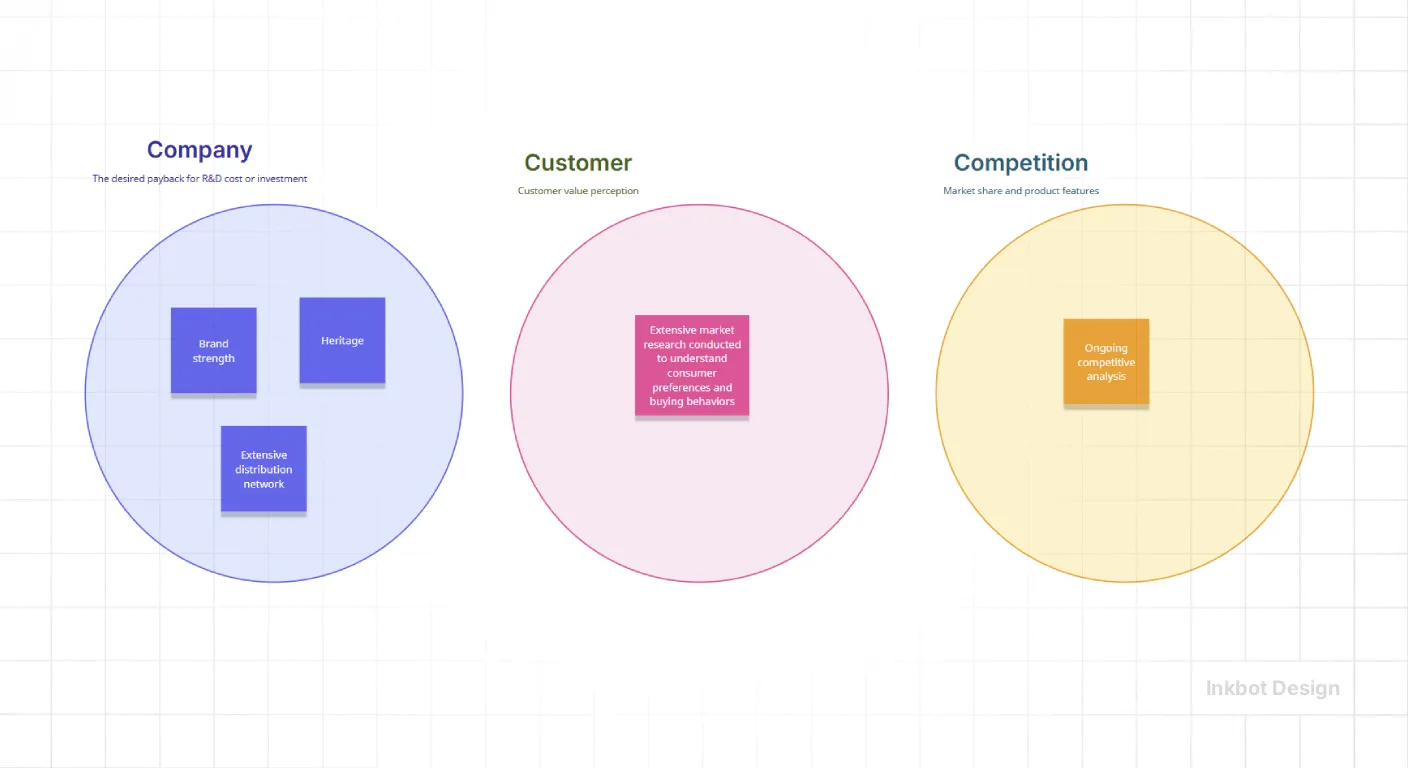
Good B2B brand strategy examples share three things: a deliberate choice about what the firm stands for, proof that a buyer can verify without taking the firm's word for it, and a trade-off the firm openly accepts. Visual identity expresses those decisions. It cannot stand in for them.
- Choice: a position worth holding rules out some clients, services or price points.
- Proof: published thinking, product behaviour, investment or client outcomes that a sceptical buyer can check independently.
- Trade-off: every credible position costs the firm something, and the visible cost is a major reason buyers believe it.
B2B brand strategy examples worth studying share three elements: a deliberate choice of position, verifiable evidence to back it, and an accepted trade-off.
Firms That Sell Their Thinking: McKinsey, PwC and HubSpot
For an expertise-led firm, published thinking works as a free sample of the product.
The Edelman–LinkedIn 2025 B2B Thought Leadership Impact Report found that 73% of surveyed US hidden decision-makers agreed that a supplier's thought leadership is one of the best ways to judge the calibre of thinking it would bring to clients.
In both respondent groups, 53% agreed that brand recognition matters much less when a vendor produces high-quality thought leadership. These are stated attitudes from US respondents, not proof that content drives revenue.
The second figure still matters a great deal to a mid-sized firm, because it means fame is not the entry ticket.
McKinsey & Company: the thinking is the sample
Choice. McKinsey & Company, the management consultancy, positions itself as the adviser to senior leadership on their hardest problems.
Proof. McKinsey & Company has published McKinsey Quarterly since 1964, alongside research from the McKinsey Global Institute. A prospective client reads the firm's reasoning long before it pays for any.
Trade-off. Standing for top-management advice makes McKinsey & Company answerable for how clients use that advice. In February 2021, McKinsey & Company agreed to pay roughly $573m to settle claims from US states over its work for opioid manufacturers, without admitting wrongdoing. The position that commands the fees also concentrates the reputational risk.
Borrow. One sharp, recurring point of view on one problem your best clients actually have. Not a monthly newsletter about everything.
PwC: a strategy with a budget attached

Choice. In June 2021, PwC, the professional services network, announced The New Equation, a global strategy built around building trust and delivering sustained outcomes.
Proof. PwC attached a reported $12bn investment and 100,000 net new jobs over five years to the announcement. Buyers dismiss slogans. A capital commitment is harder to wave away.
Trade-off. “Trust and outcomes” is broad enough for any Big Four firm to claim. The PwC line does very little differentiating; the commitment behind it does nearly all of it.
Borrow. When a positioning statement sounds generic, the fix is rarely better wording. Attach something visible to it: a senior hire, a published method, a service guarantee.
HubSpot: teach first, sell second
Choice. HubSpot, the CRM software company, built its brand around “inbound marketing”, the approach its co-founders Brian Halligan and Dharmesh Shah set out in their 2009 book Inbound Marketing.
Proof. Free education at scale through HubSpot Academy courses and certifications, plus free tools that let a buyer use the product before speaking to sales.
Trade-off. Education attracts large audiences, and many of those audiences will never buy at the price HubSpot needs to charge, since it sells to larger companies. Content popularity and commercial fit drift apart.
Borrow. Teach the problem your buyer has, not your discipline in general. Take a hypothetical 12-partner employment law practice: one clear, early explainer on a regulatory change its clients' HR directors are dreading will do more commercial work than fifty generic HR posts.
Firms That Changed Without Starting Again: IBM, Microsoft, Salesforce and A&O Shearman
One software founder put the problem plainly in a public agency enquiry in August 2026: the existing branding “served us well during our growth phase, but it no longer aligns with our current identity.”
All four firms here faced a version of that gap. None of them threw away what buyers already recognised.
IBM: a new problem, the same blue bars

Choice. On 03/09/2025, IBM launched “Let's create smarter business”, a refresh of the “Let's create” platform it introduced in 2022. IBM aimed the refresh at enterprises stuck between experimental AI pilots and organisation-wide value.
Proof. IBM tied the message to capabilities it already sells (AI, hybrid cloud and consulting) and brought back familiar brand assets, including the IBM blue bars.
Trade-off. Relevance borrowed from the problem of the moment dates quickly. IBM's announcement establishes intent; it does not show that the campaign changed sales, perception or AI adoption.
Borrow. When your market shifts, rearticulate your existing capabilities in light of the new problem before redesigning anything. For many firms, the identity is fine. The story is stale.
“A mature B2B firm facing a new market problem rarely needs a new identity first. It needs a sharper account of what it can already do, aimed at the problem buyers now have, and expressed through the assets those buyers already recognise. Redesigning before re-explaining spends the recognition budget on the wrong job.”
Microsoft: the mission rewritten from the inside
Choice. After Satya Nadella became CEO in 2014, Microsoft reset its mission to “empower every person and every organisation on the planet to achieve more”, a shift Nadella documents in his 2017 book Hit Refresh.
Proof. The mission arrived alongside decisions that cost Microsoft something, such as releasing Office for Apple's iPad in 2014 rather than reserving it for Windows. The decisions made the words believable.
Trade-off. A mission that broad tells a buyer almost nothing on its own. Read in isolation, it could belong to any software company. All of the substantiating work is done by behaviour.
Borrow. If the real problem is that partners and staff no longer agree on what the firm is for, start the strategy from within the firm. A new website will not settle an argument that the partnership has not had.
Salesforce: changing the story versus changing the vocabulary
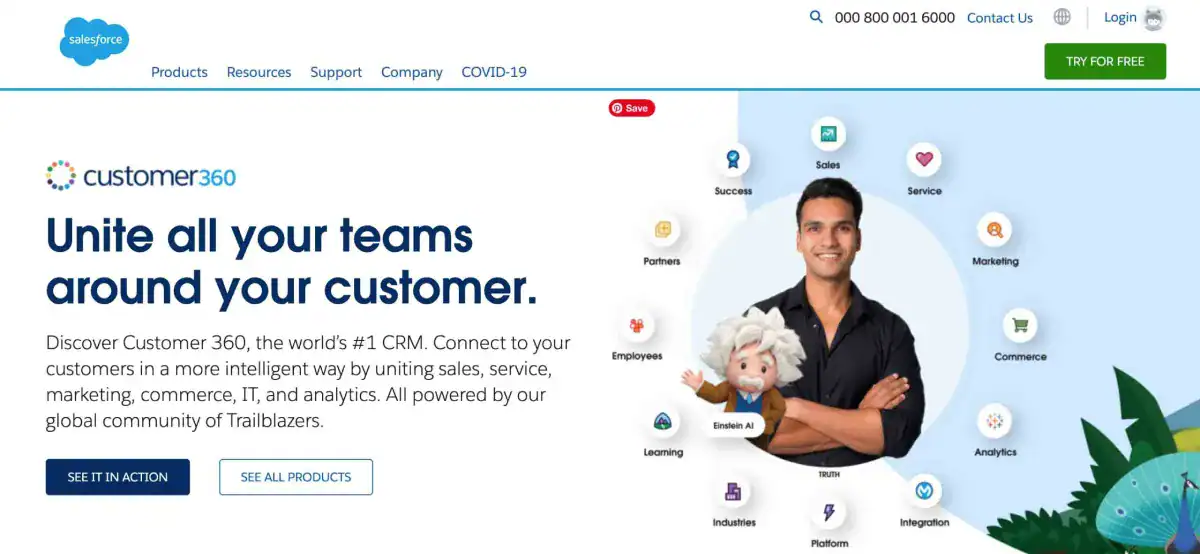
Choice. Salesforce, the CRM company, launched in 1999 with a “No Software” stance against installed enterprise software. In 2025, it moved to Agentforce-led naming across its products.
Proof and revision. On 14/09/2026, The Next Web reported that Salesforce had restored established names on some product pages, presenting the sales product as Sales Cloud and the platform page as Salesforce Platform, while keeping Agentforce in its AI proposition. Salesforce had not publicly explained the change in the reporting reviewed, so any claim about its cause would be speculation.
Trade-off. Changing a company's strategic story and changing its customers' product vocabulary are two separate decisions, each with its own cost. Customers have budget lines, contracts and internal documents built around the old names.
Borrow. Rename services only when the old names actively mislead buyers. A new proposition can sit above existing names without replacing them.
A&O Shearman: architecture after a merger
Choice. Allen & Overy and Shearman & Sterling combined on 01/05/2024 as A&O Shearman, keeping both heritage names rather than inventing a new one.
Proof. Existing clients on both sides of the Atlantic could still find the firm they had instructed.
Trade-off. A combined name signals continuity. It also postpones the harder question: what does the merged firm stand for that neither firm stood for alone?
Borrow. Another public enquiry from January 2026 described “a mishmash of logos” across regions. That is an architecture and governance problem before it is a design problem. Decide the structure first: one master brand, endorsed brands, or retained names. Then brief the designers.
Firms That Chose Who Not to Serve: 37signals, Atlassian and Stripe
Exclusion is the part of positioning that most professional services firms avoid because every partner can name a client that exclusion would have lost. These three firms accepted the loss.
37signals: opinion as positioning
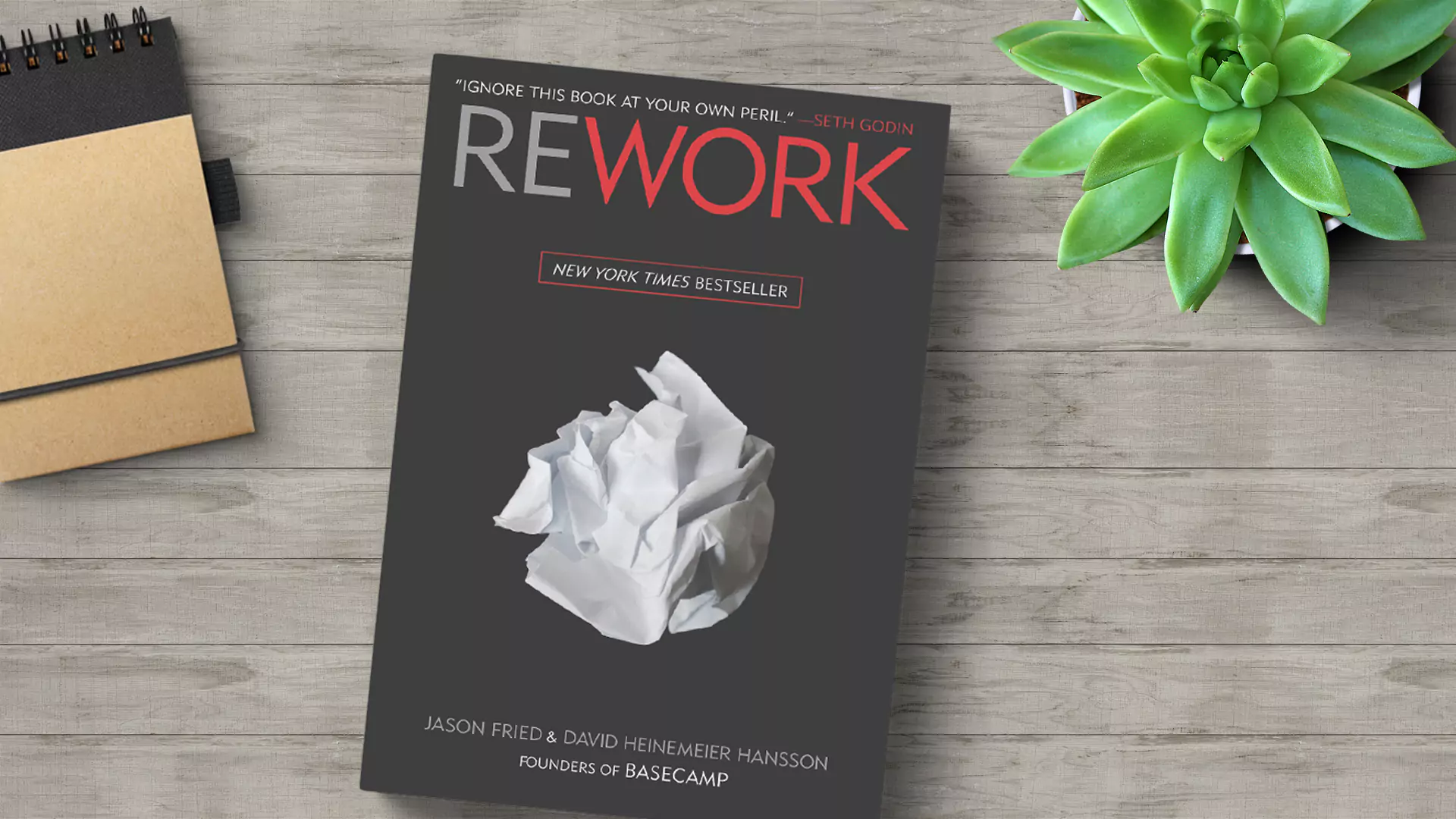
Choice. 37signals, the company behind Basecamp, positions itself on calm, simple software and on published opinions about how work should run, set out in books such as Rework (2010).
Proof. The founders publish their views and policies openly, so a buyer knows what they are signing up to.
Trade-off. In April 2021, after 37signals banned societal and political discussion on company channels, about a third of the staff accepted buyouts and left. An opinion strong enough to attract the right buyers also repels people, including people already inside the firm.
Borrow. 37signals is closer in headcount to a mid-sized professional services firm than anything else on this list. A firm of that size can hold a sharper opinion than a multinational can. Decide in advance whose departure you are prepared to accept.
Atlassian: values that rule something out
Choice. Atlassian, the collaboration software company, lists “Open company, no bullshit” among its company values.
Proof. Atlassian for years sold largely without a traditional field sales force, relying on published pricing and free trials, a model described in its 2015 IPO filing. Transparent pricing is what openness looks like when a buyer can test it.
Trade-off. A low-touch, self-serve model suits teams buying bottom-up. It does less for an enterprise procurement team that expects a named account manager, which is where the model meets its limits.
Borrow. Test every value statement by asking what it rules out. “Integrity” rules out nothing. Publishing your fee bands rules out a lot.
Stripe: talking to the builder, reassuring the approver
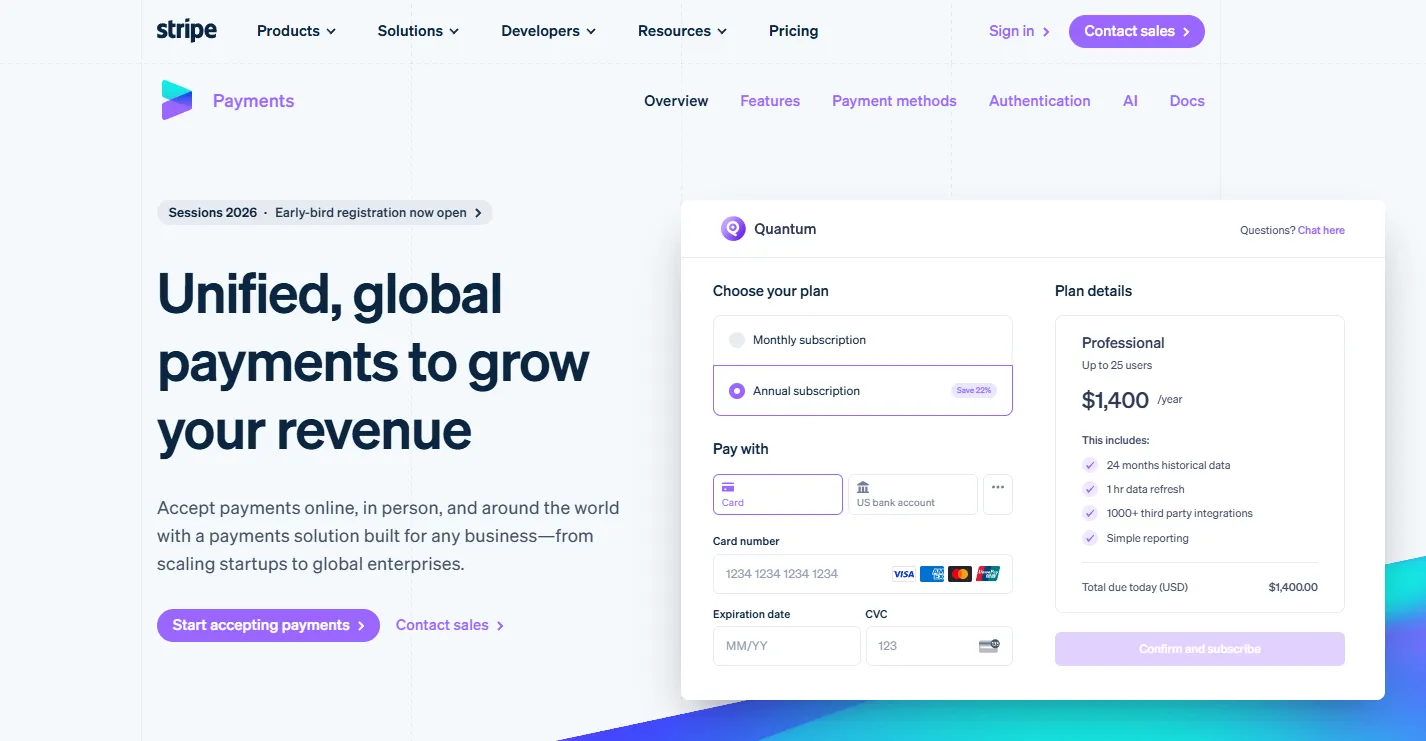
Choice. Stripe, the payments company, describes itself as the financial infrastructure for the internet and first courted developers.
Proof. Stripe's documentation and API design serve as the brand's primary evidence: a developer can evaluate the product before any sales conversation.
Trade-off. Developer-first appeal does not automatically reassure the CFO, legal team or procurement. Research from LinkedIn's B2B Institute, co-authored with Bain & Company, argues that these “hidden buyers” judge vendors on risk mitigation and trust rather than technical performance, and that they rejected roughly half of the shortlisted vendors in the research sample. That finding is about enterprise buying groups. It does not say half of the vendors are rejected because of their branding.
Borrow. List every role in your client's buying group. Then write down the specific proof each one needs before approving you.
What Can a 50–200 Person Firm Actually Borrow?
The obvious objection from a mid-sized firm is that none of this transfers: “We're not Salesforce.” Fair. You cannot borrow the scale.
You can borrow the decisions, and the Edelman–LinkedIn finding above suggests recognition matters less than demonstrated thinking anyway.
Your situation | Examples to study | Borrow this | Do not copy this |
|---|---|---|---|
Moving upmarket to larger clients | Stripe, PwC | Proof aimed at approvers: governance, named senior team, security, insurance | Tone that only excites the end user |
Positioning has fallen behind the firm after a growth phase | IBM, Microsoft | Re-explain existing capability against the problem buyers now have | A full identity redesign by default |
Post-merger, or different logos in different regions | A&O Shearman, Salesforce | An architecture decision before any design brief | A newly invented name chosen to avoid partner politics |
Small marketing team, need credibility fast | McKinsey & Company, HubSpot | One recurring point of view on a client's problem | Publishing volume |
Positioning statement could belong to any competitor | PwC | A visible commitment is attached to the claim | Rewording the tagline |
The conservative sector needs to stand out | 37signals, Atlassian | A stated opinion that excludes someone | Provocation with no proof behind it |
The second objection is internal: a client-side lead in a January 2026 enquiry wrote that they would “need to advocate for funding internally.”
The 6sense figure is the cleanest starting point for that case, because it moves the conversation from “do we need a new look?” to “what do buyers find about us before they call?”
If you are still testing whether the timing is right, the signals are covered in terms of when you need a brand strategy, and realistic budgets are broken down by what the brand strategy costs.
How to Tell a Strategy From a Deliverables List
The trap most firms fall into at the proposal stage is comparing agencies on outputs: logo concepts, guidelines, templates, and a messaging house.
Those are all legitimate deliverables. None of them tells you whether a strategy will be decided along the way.
Run each proposal through the four questions used throughout this article:
- Choice: What will this process force us to decide, and what will we be asked to stop doing?
- Proof: What evidence will the strategy require us to produce or publish?
- Trade-off: Which clients, services or partners is the agency prepared to tell us the position will cost us?
- Borrowing: What, specifically, from comparable firms does the agency think applies to us, and what does not?
An agency that answers with a schedule of deliverables has described production. An agency that answers with the decisions it will push you towards has described a strategy.
A structured brand discovery workshop is usually where those decisions surface, and a clear B2B brand strategy framework is what keeps them from drifting once the designers start work.
Copy the Decision, Not the Look
Every firm above is worth studying for the same reason: you can trace its brand back to a decision, the proof behind it and the cost it accepted.
IBM kept its blue bars and changed the problem it addressed. PwC put money behind a generic line. 37signals lost staff over an opinion and kept it anyway.
None of that is visible in a logo, which is why copying logos teaches nothing.
The useful exercise for your own firm is short. Write down what you have chosen to stand for, what a sceptical CFO could check to believe it, and who it costs you. If any of the three is blank, that is where the work starts.
If you want an outside view of where those gaps are, request a free Brand Equity Audit™. It is a structured diagnostic of where your brand is losing commercial ground and what to fix first.
If the gaps are small, a well-run internal workshop may be all you need, and the audit will say so.
Brand Strategy Examples FAQs
Why are most published brand strategy examples for consumer brands?
Consumer brands such as Nike, Apple and Coca-Cola dominate examples of brand strategy because their campaigns are public and widely recognised. B2B strategy is harder to see from the outside, since much of the proof sits in sales conversations, published expertise and client outcomes. That makes B2B examples harder to write about. They are no less instructive for a firm planning its own strategy.
What should change in a brand strategy when a B2B firm targets larger clients?
The proof should change most. Larger clients bring finance, procurement and legal into the decision, and LinkedIn's B2B Institute research with Bain & Company argues that those buyers judge vendors on risk and trust. A firm moving upmarket needs evidence aimed at those approvers, not just a sharper message for the person championing the purchase.
How can you tell your positioning has become outdated?
Positioning has usually become outdated when the firm's own people describe it differently from the website, when proposals rely on caveats (“we also do…”), or when the clients you now want would not recognise themselves in your materials. Each sign means the business has moved, and the explanation of it has not.
Is a full rebrand necessary to change a brand strategy?
No, a strategy can change while the visual identity stays. IBM's September 2025 refresh shifted its messaging toward the challenges of enterprise AI adoption while bringing back familiar assets such as its blue bars. A full rebrand is warranted when the existing identity actively misleads buyers, not simply because the strategy has moved on.
What is the difference between a brand strategy and a visual identity?
A brand strategy is the set of decisions about what a firm stands for, how it proves it and what it gives up. A visual identity is how those decisions are expressed: logo, colour, typography and layout. Identity without strategy looks finished, but cannot guide a single commercial decision. The difference is explored further in the context of brand strategy vs marketing strategy.