Brand Loyalty: What It Is and How to Build It
Most businesses misunderstand loyalty. They confuse a customer who buys from them because they are the cheapest option with a customer who buys from them because they actually care.
The former is a mercenary. As soon as a competitor drops their price by 5%, that customer is gone. The latter is a loyalist. They will tolerate a price hike, a minor service hiccup, or a slightly longer shipping time because switching feels like a betrayal of their own identity.
If you are building a business based on mercenaries, you are in a race to the bottom. If you are building for loyalists, you are building an asset.
In the current economic climate, where customer acquisition costs (CAC) are skyrocketing, you cannot afford to “rent” traffic from Google or Meta indefinitely. You need to own the relationship.
This article dissects the mechanics of brand loyalty, stripping away the marketing fluff, and provides a forensic guide to retaining the customers you’ve worked so hard to acquire.
- Build trust through consistent delivery, clear visual identity, and reliable experiences that reduce customer decision friction.
- Foster emotional connection and shared values so customers identify with your brand and forgive occasional mistakes.
- Prioritise retention metrics over vanity acquisition: measure NPS, churn, and repurchase frequency to increase profitable lifetime value.
What is Brand Loyalty?
Brand loyalty refers to the tendency of consumers to consistently purchase a particular brand’s products over those of its competitors, regardless of price changes or actions by other brands.
It is not simply “repeat purchasing.” A customer might buy the same toothpaste for 10 years out of habit or because there are no other options. That is inertia, not loyalty. True loyalty involves an emotional component—a positive association that makes the customer resistant to competitors.
To effectively foster true loyalty, businesses should evaluate their engagement strategies across leading loyalty platforms to ensure they meet customer expectations and encourage ongoing participation.
The Three Core Components:
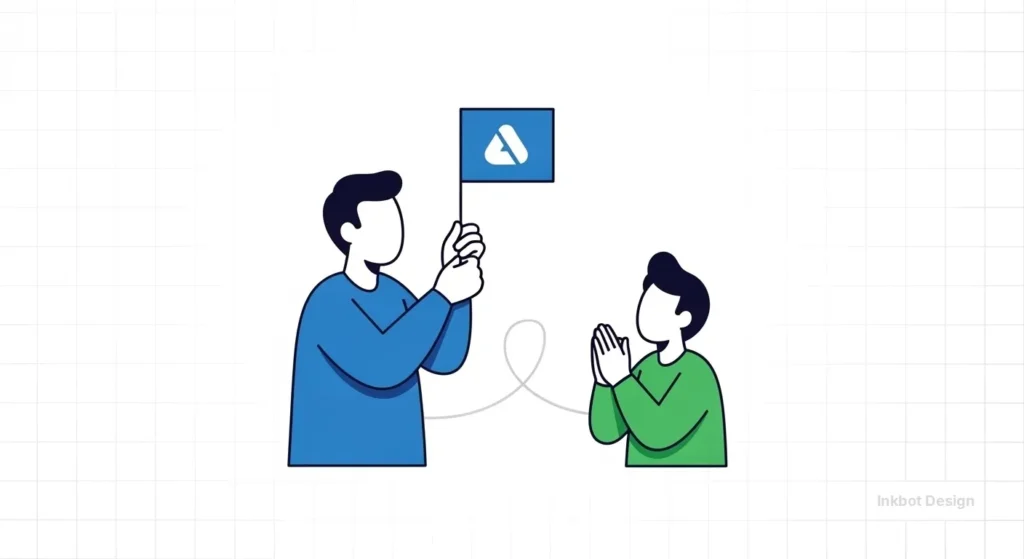
- Trust: The confidence that the brand will consistently deliver on its promises.
- Emotional Connection: The customer sees the brand as an extension of their values or identity.
- Perceived Value: The belief that the brand offers superior benefit, which may not necessarily be financial (e.g., status, convenience, reliability).
The Economics of Loyalty: Why It Is Pure Profit
Before we discuss “how” to build it, we must understand the financial imperative. Ignoring retention is mathematically unsound.
The “5% to 95%” Rule
The most cited statistic in customer retention comes from Frederick Reichheld of Bain & Company: increasing customer retention rates by just 5% increases profits by 25% to 95%.
Why is this margin so massive?
- Zero Acquisition Cost: You incur no costs to acquire a repeat customer. The marketing spend is zero.
- Wallet Share: Loyal customers spend more. According to research by Rosetta Consulting, highly engaged customers buy 90% more frequently and spend 60% more per transaction.
- The Referral Engine: Loyalists Become Unpaid Sales Reps. They generate word-of-mouth marketing, which carries a higher trust factor than any ad you could run.
If you are pouring your budget into top-of-funnel ads while your retention bucket has a hole in it, you are burning cash. You need a solid customer experience strategy to plug that hole.
The Psychology of Retention: Why We Stick
Humans are cognitive misers. We do not want to make new decisions every day. Brand loyalty is, fundamentally, a way for the brain to conserve energy.
1. The Reduction of Cognitive Load
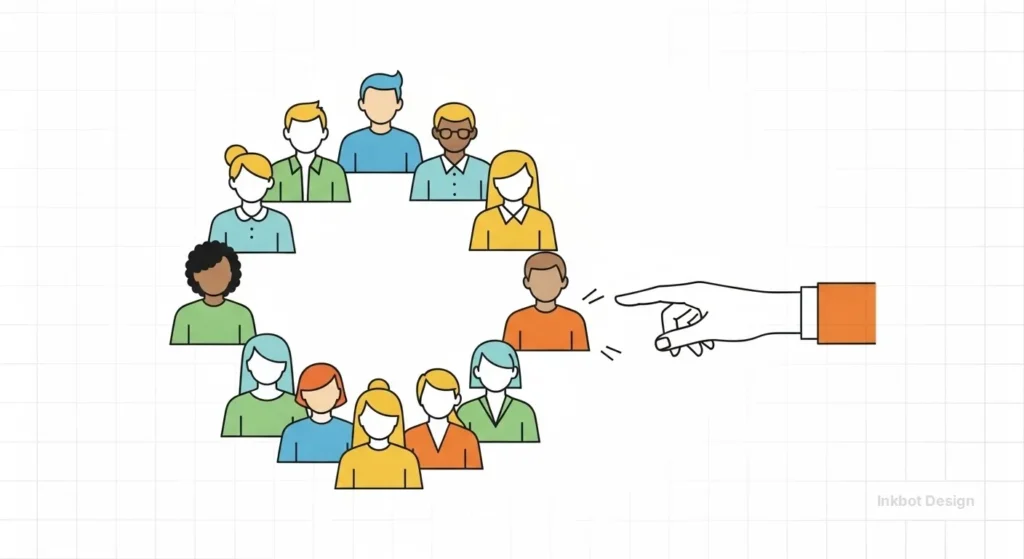
Every time a consumer has to choose between Brand A and Brand B, it costs mental energy. Once a brand proves it is “safe” and “good enough,” the brain automates the choice. This is why disruption is so hard. To steal a loyal customer, you don’t just have to be better; you have to be significantly better to justify the mental effort of switching.
2. Identity Signalling and Tribalism
We buy things to tell the world who we are. Apple users are “creative,” Nike users are “athletes,” Patagonia users are “eco-conscious.” When a brand successfully attaches itself to an aspirational identity, it feels like losing a part of oneself when the brand is left behind. This is the strongest form of loyalty—often called “Cult Loyalty.”
3. The Sunk Cost Fallacy (The Ecosystem Lock-in)
Sometimes, loyalty is engineered through friction. If you have spent £2,000 on iTunes movies and apps, switching to Android means losing that investment. This is functional loyalty. It isn’t romantic, but it is effective.
The Strategy: How to Engineer Loyalty (Beyond Points)
Most SMBs think a “Loyalty Program” means a punch card where the 10th coffee is free. That is a transaction, not a relationship. To build genuine authority and loyalty, you must operate on three levels: Visual, Operational, and Emotional.

1. Visual Consistency: The “Mere Exposure” Effect
Trust is visual. If your brand appears differently on Instagram than it does on your website, or if your packaging uses a different font from your invoices, you create subconscious dissonance.
The “Mere Exposure Effect” states that we prefer things simply because they are familiar. Inconsistent branding resets the familiarity clock. Every touchpoint must scream you. This is why investing in professional brand identity services is not an aesthetic choice; it is a trust-building exercise. If you appear amateurish, customers assume your product is amateurish.
2. The Service Recovery Paradox
Here is a counterintuitive truth: A customer whose problem is successfully resolved is often more loyal than one who never had a problem at all. This is known as the Service Recovery Paradox.
Mistakes are opportunities. If you ship the wrong item but then rectify the mistake immediately, refund the shipping cost, and send a handwritten note, you have demonstrated competence and care. You have moved the relationship from transactional to human.
Consultant’s Note: Do not hide from bad feedback. Speed is the variable that matters here. A 24-hour delay in resolving an issue can turn a potential advocate into a permanent detractor.
3. Shared Values (The Patagonia Model)
Modern consumers, particularly Millennials and Gen Z, vote with their wallets. According to the 2024 Edelman Trust Barometer, 60% of consumers purchase brands that align with their values and beliefs.
You cannot fake this. If you claim to be sustainable but wrap your product in three layers of non-recyclable plastic, you will be found out. Authenticity breeds loyalty. Hypocrisy breeds churn.
Mercenaries vs. Missionaries
Let’s look at the difference in behaviour between a standard customer and a loyal one.
| Feature | The Mercenary (Transactional) | The Missionary (Loyal) |
| Primary Motivator | Price / Convenience | Trust / Identity |
| Sensitivity to Price | High (Leaves for <10% savings) | Low (Stays despite increases) |
| Reaction to Errors | Complaint / Chargeback / Leave | Seeks resolution / Forgives |
| Referral Behaviour | Passive | Active Advocate |
| Cost to Serve | High (Needs constant re-selling) | Low (Self-serving) |
Myth-Busting: The “Satisfaction Trap”
The Myth: If my Customer Satisfaction (CSAT) score is high, my customers are loyal.
The Reality: Satisfaction is the baseline. It is the minimum requirement to stay in business.
Xerox conducted a famous study that found “totally satisfied” customers were six times more likely to repurchase than merely “satisfied” customers. The gap between a 4-star rating and a 5-star rating is not a step; it is a chasm.
A 4-star customer is satisfied but lacks an emotional connection. If a competitor offers a shiny new alternative, they will leave. You need to move beyond satisfaction to delight.
How to measure real loyalty?
Forget vanity metrics. Look at:
- Net Promoter Score (NPS): specifically, the number of Promoters (9s and 10s).
- Churn Rate: The percentage of customers who stop buying over a given period.
- Purchase Frequency: Are the gaps between orders shrinking or growing?
Real-World Examples of Loyalty Done Right
1. Sephora: The Omnichannel Masterclass
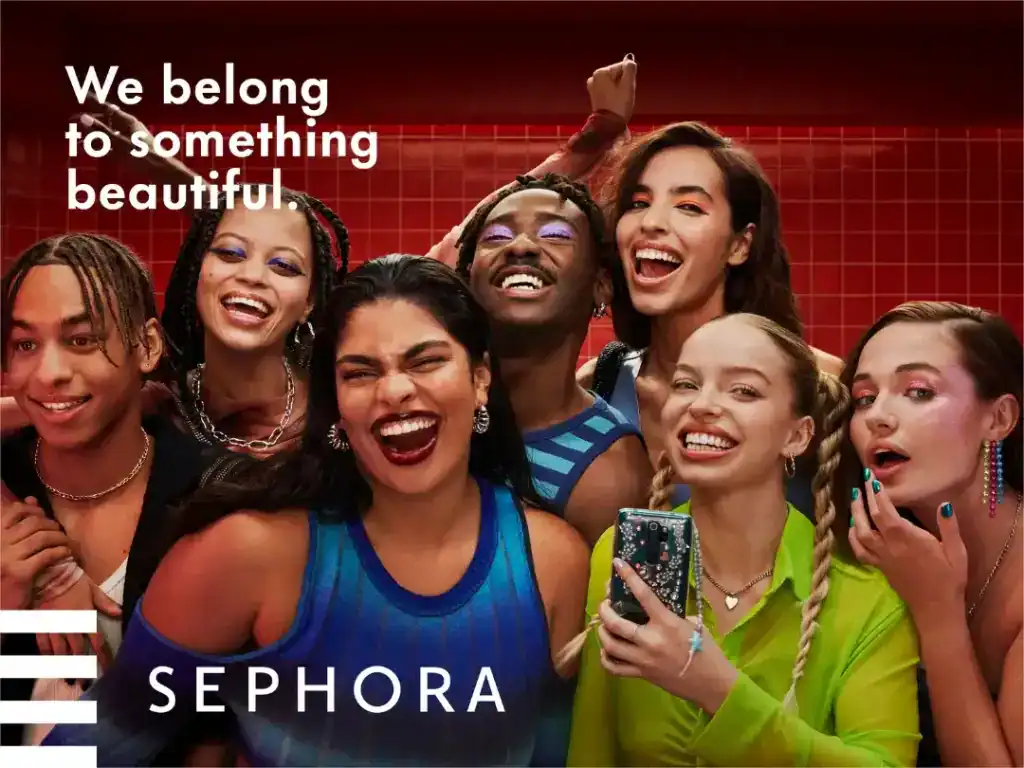
Sephora’s Beauty Insider program is the gold standard because it seamlessly integrates digital and physical elements. It isn’t just about discounts; it’s about exclusive access to products and classes. They use data to personalise recommendations so effectively that the marketing feels like a service, not an intrusion. This is a prime example of a robust omnichannel experience.
2. Harley-Davidson: The Ultimate Cult Brand
Harley-Davidson does not sell motorcycles; they sell freedom. The loyalty is so intense that customers tattoo the logo on their bodies. That is the pinnacle of brand integration. It proves that if your narrative is strong enough, the product specs become secondary.
3. Amazon Prime: Friction Removal
Amazon Prime is a loyalty program disguised as a shipping service. By paying upfront, customers feel compelled to “get their money’s worth.” It eliminates the decision-making process. “Just buy it on Amazon” is the default setting for millions because Amazon removed the friction of shipping costs and wait times.
The State of Brand Loyalty in 2026
The landscape has shifted. We are seeing the death of “points for pennies.”
In late 2024 and throughout 2025, we saw a massive devaluation of airline miles and coffee points. Consumers are now cynical about traditional loyalty schemes. They know their data is being harvested.
The shift for 2026 is towards:
- Hyper-Personalisation: AI-driven suggestions that actually make sense.
- Community Access: “Gatekeeping” access to Discord servers, events, or beta products for top-tier customers.
- Ethical Alignment: Brands taking a stand on supply chain transparency.
If you are planning to launch a generic points card in 2026, don’t bother. Focus on improving your customer journey instead.
The Consultant’s Reality Check
I once audited a client in the B2B tech space. They were losing clients despite having a technically superior product. Their software was faster and cheaper than the competition.
The problem? Their user interface (UI) appeared outdated, resembling a 1998 design, and their support team took 48 hours to respond via email.
Their competitors had a slicker brand, a modern UI, and live chat. The competitors’ product was actually slower, but the experience felt faster and more professional. Customers were loyal to the competitor because they felt “safe” and “modern” there.
The lesson? You cannot engineer loyalty with code alone. Perception is reality. If your first impressions are weak, you never get the chance to prove your loyalty.
Also, refrain from asking about marriage on the first date. You build loyalty by consistently delivering value over time, not by bombarding a new newsletter subscriber with “BUY NOW” emails for three weeks straight.
The Verdict
Brand loyalty is not an accident. It is an engineered outcome of consistent reliability, emotional resonance, and visual authority.
It is the only defence against a market that is constantly racing to the bottom on price. If you want to stop competing on margins, you must start competing on identity.
Next Steps:
- Audit your retention: Check your churn rate. If the churn rate exceeds 5% per month, stop acquiring new customers until the issue is addressed.
- Check your consistency: Does your brand maintain a consistent look across all platforms?
- Engage: Talk to your top 10 customers. Ask them why they stay. The answer will be your new marketing strategy.
Do you need help refining your visual identity to establish trust and credibility? We can help you look the part. Request a quote today.
Frequently Asked Questions (FAQ)
What is the difference between brand loyalty and customer retention?
Customer retention is a metric—the percentage of customers who stay. Brand loyalty is the emotional or psychological reason why they stay. Retention is the result; loyalty is the cause.
How do I build brand loyalty for a small business?
Focus on personalisation and community. As a small business, you have a speed advantage. Use personal names, remember preferences, and fix issues instantly. Ensure your visual branding is professional to avoid appearing risky.
Why is brand loyalty important during a recession?
During economic downturns, consumers tend to cut back on discretionary spending. They stick to safe brands they trust. Loyal customers provide a stable revenue floor when new acquisitions dry up.
Can a loyalty program actually hurt my brand?
Yes. If the program is too complex, devalues points unexpectedly, or feels like a data grab, it creates resentment. A bad loyalty program is worse than no loyalty program.
What is the best metric to measure brand loyalty?
Net Promoter Score (NPS) combined with Repurchase Rate is the best combination. NPS measures sentiment (would they recommend you?), while Repurchase Rate measures actual behaviour (did they buy again?).
How does design impact brand loyalty?
Design builds trust. High-quality, consistent design signals competence and stability. Poor design signals risk. Customers are less likely to be loyal to a brand that looks inconsistent or amateurish.
What is Cult Loyalty?
Cult loyalty occurs when customers identify so strongly with a brand that they reject competitors entirely, often defending it against criticism. Examples include Tesla, Apple, and Supreme.
Is it better to focus on acquisition or loyalty?
For long-term growth, loyalty (retention) is more profitable. Acquiring a new customer costs 5 to 25 times as much as retaining an existing one. Prioritise retention once you have a viable customer base.
What is the Service Recovery Paradox?
It is a phenomenon where a customer whose problem is resolved quickly and effectively becomes more loyal to the company than if they had never had a problem in the first place.
How does user experience (UX) affect loyalty?
UX is the foundation of digital loyalty. If your site is hard to use, slow, or confusing, users will leave. A seamless user experience reduces friction, making it easier to stay than to switch.
