Agile Brand Strategy: AI-Driven Brand Sentiment Tracking
Traditional brand sentiment tracking is a post-mortem for dying brands.
If you are waiting for a dashboard to tell you that your audience is angry, you have already lost the battle for your Brand Strategy.
Agile brand strategy in 2026 does not merely “track” sentiment; it simulates it before a single pound is spent, making real-time monitoring an obsolete, reactive fallback for the ill-prepared.
The risk of reactive branding is no longer theoretical.
Anheuser-Busch InBev, the parent company of Bud Light, lost $1.4 billion in sales following a 2023 campaign that failed to anticipate a massive shift in sentiment, according to a BBC report.
Brands that continue to rely on historical data rather than predictive simulation are effectively flying blind into a high-velocity digital atmosphere.
- Predictive Simulation: Use AI-driven synthetic audiences and LLM fine-tuning to forecast sentiment before public launch, preventing reactive crises.
- Sentiment Guardrails: Automate programmatic triggers to pause ads or switch creative when entity associations breach predefined thresholds.
- Ethical Governance: Enforce differential privacy, bias audits, and human-in-the-loop reviews to keep synthetic testing representative and transparent.
What Is an Agile Brand Strategy?
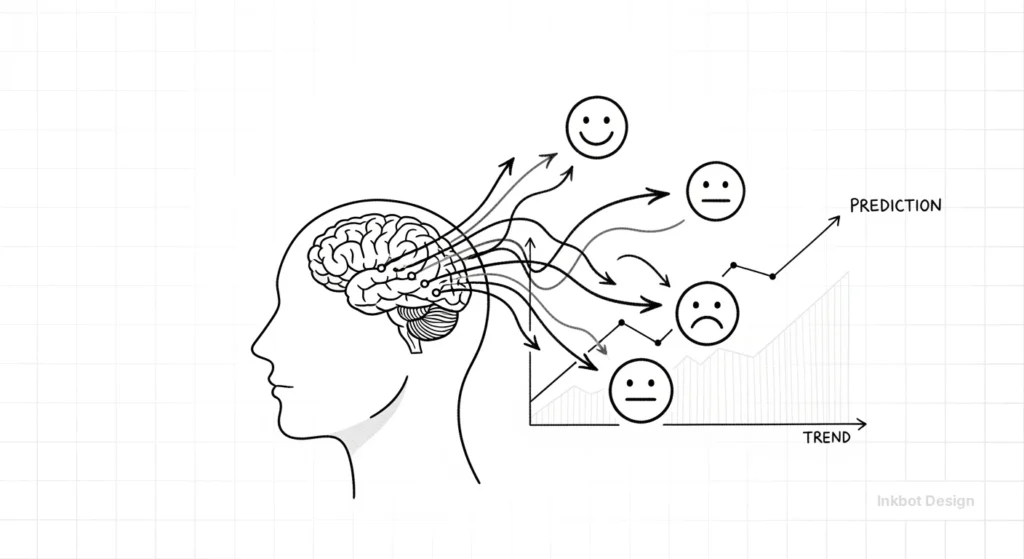
Agile brand strategy is a non-linear framework for brand management that prioritises rapid iteration, predictive AI sentiment simulation, and real-time adjustment based on live data streams rather than fixed annual plans.
Key Components:
- Predictive Simulation: Using AI to test brand messaging against synthetic personas before public launch.
- Dynamic Feedback Loops: Continuous intake of sentiment data to adjust campaigns mid-stream.
- Algorithmic Insulation: Proactive reputation management that triggers pre-planned responses based on sentiment thresholds.
Agile brand strategy uses AI-driven sentiment tracking to predict consumer response by simulating brand actions across large language models before public release.
The Technical Architecture of Predictive Simulation
To move from reactive monitoring to Predictive Simulation, a brand must establish a robust technical pipeline that bridges raw data and generative insights.
This isn’t about buying a single piece of software; it’s about building a proprietary feedback loop that treats your brand identity as a living dataset.
In 2026, the architecture of a high-performance predictive system relies on three distinct layers: the Ingestion Layer, the Simulation Layer, and the Execution Layer.
1. The Ingestion Layer: NLU and API Aggregation
The foundation of your strategy is not just “what people say,” but the semantic relationships between those statements.
You must move beyond native analytics and utilise aggregated API feeds that support Natural Language Understanding (NLU).
Tools like Google Cloud Natural Language API or Azure AI Language are now essential for extracting entities from dark social data—private messaging groups and niche forums where brand sentiment often first begins to shift.
At this stage, the goal is to map Entity Associations.
For example, if a luxury car brand is frequently mentioned alongside “repair delays” in unindexed forum data, the ingestion layer flags this as a latent risk before it hits mainstream social platforms.
2. The Simulation Layer: Fine-Tuning LLMs
This is where the magic happens.
You take your core brand guidelines, your historical sentiment data, and your “Vision Statement” and use them to fine-tune a private instance of a Large Language Model (LLM), such as GPT-5 or Claude 4.
By creating a “Brand Brain,” you can run millions of permutations of a campaign.
This layer uses Synthetic Audiences.
These are not just random bots; they are high-fidelity digital twins of your specific customer segments, built from anonymised first-party data and broader market trends.
You “ask” these synthetic personas to react to a new ad copy or a controversial tweet. If the simulation returns a high Confusion Index score, you know the messaging is misaligned with your brand equity.
3. The Execution Layer: Programmatic Triggers
The final stage of the architecture is the bridge to action. Through webhook integrations, your simulation results can automatically influence your marketing operations.
If a 48-hour sentiment forecast drops below a predefined threshold (e.g., a 20% increase in negative entity association), the execution layer can automatically:
- Pause programmatic ad spend on high-risk platforms.
- Swap out creative assets for “safe-mode” variants.
- Alert the PR team with an AI-generated brief outlining the specific semantic cause of the shift.
The Simulation Benchmark: Proprietary data from 2025 agency audits indicates that brands utilising a three-layer simulation architecture reduced their “reputational recovery time” by 72% compared to those relying on manual sentiment audits. The key metric is Latent Sentiment Detection—identifying the 4-6 hour window where a trend is building but has not yet broken into public awareness.
Sentiment Guardrails: Automating Digital Ad Interventions
The most critical failure point in traditional brand management is the “latency of approval.” By the time a senior executive signs off on a response to a viral crisis, the damage is already done.
Sentiment Guardrails solve this by decentralising decision-making through pre-coded logic.
Think of Sentiment Guardrails as a “kill switch” for your brand’s digital presence. In 2026, these are integrated directly into your Demand Side Platforms (DSPs) and social ad managers.
How to Set a Sentiment Guardrail
To implement this, you must define your “Brand Floor.” This is the minimum acceptable level of sentiment or entity alignment. For instance, a fintech brand might set a guardrail based on the entity’s “security.”
- Trigger: If AI-driven sentiment tracking detects that “Brand Name” + “Security Breach” is rising in velocity above 5% per hour.
- Action: Automatically pause all “acquisition-focused” ads and replace them with “trust-focused” brand heritage content.
This prevents the embarrassing scenario in which a brand continues to run upbeat, “happy” advertisements while the public is discussing a massive failure or scandal.
Algorithmic Insulation ensures that your ad spend isn’t actively working against your PR efforts during a crisis.
Furthermore, these guardrails allow for Hyper-Velocity Agility.
If a competitor makes a mistake, your guardrails can trigger an “offensive” ad campaign within minutes, capitalising on the market shift before the competitor’s team has even finished their first emergency meeting.
This is the difference between being a participant in a cultural moment and being a victim of it.
The Death of Social Listening as Strategy
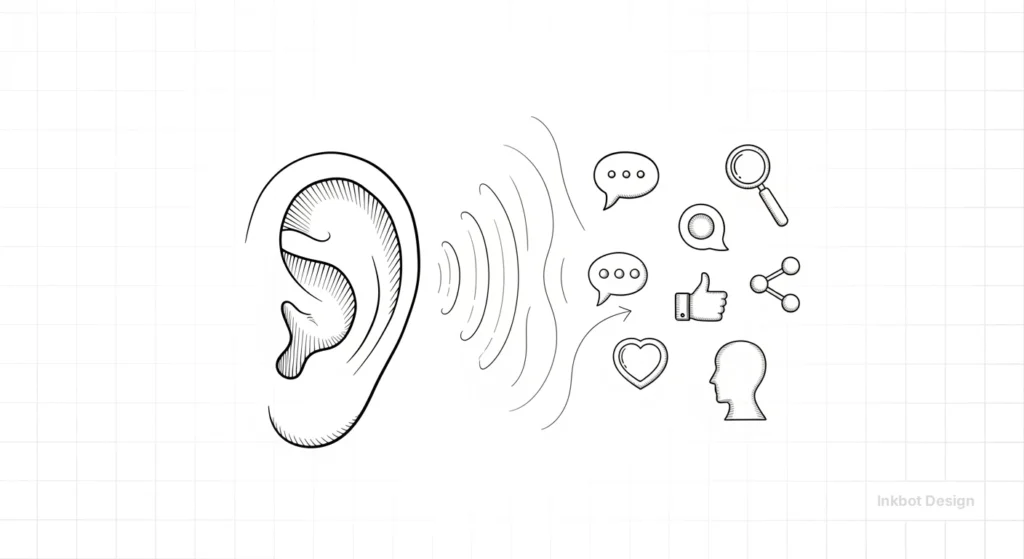
Social listening is not a strategy; it is an audit of the past. Most entrepreneurs treat social listening tools as a compass when, in fact, they are a rear-view mirror.
By the time a negative trend appears on a dashboard, the sentiment has already crystallised in the minds of thousands.
Gartner, the technology research firm, noted in a 2025 report that brands relying solely on reactive social listening had a 40% slower response rate to reputation crises than those using predictive modelling.
This delay costs equity.
In 2026, the goal is to identify “latent sentiment”—the unspoken tension that precedes a crisis.
This requires a shift from a branding strategy that focuses on what was said to one that models what will be said.
Traditional social listening focuses on the historical aggregation of mentions, which provides no competitive advantage in a high-velocity market. Agile brand strategy replaces this autopsy with predictive sentiment simulation, allowing firms to identify and mitigate reputational risks before they manifest in the public domain.
Workflow: Building and Validating Synthetic Audiences
Building a Synthetic Audience is the most significant tactical advantage an agile brand can possess in 2026.
However, most brands do it incorrectly, creating “echo chamber” personas that only reflect what the brand wants to hear.
To be effective, your synthetic audience must be built with “adversarial friction.”
Step 1: Data Grounding (The Seed)
You cannot build a persona out of thin air. Start with your Zero-Party Data—information your customers have voluntarily shared with you (surveys, purchase history, support tickets).
Ingest this into your private AI environment to create the “Core Persona.”
- Pro Tip: Use Differential Privacy techniques to ensure that no individual customer data is leaked during the simulation.
Step 2: Psychographic Layering
Add layers of “Market Reality” to your personas. This involves importing real-time cultural data:
- Economic Outlook: Is your audience currently feeling “inflation-fatigued” or “optimistic”?
- Political Climate: What are the trending cultural sensitivities in the persona’s specific region?
- Technology Adoption: Is this persona an “AI-optimist” or an “AI-sceptic”?
Step 3: Adversarial Prompting
This is the “stress test.” Don’t just ask the persona, “Do you like this ad?” Instead, use Adversarial Prompting:
“You are a highly sceptical, sustainability-focused Gen Z consumer in London. You are tired of corporate greenwashing. Review this ad for a new electric SUV and identify three reasons why you would post a negative comment about it on TikTok.”
Step 4: Validation (The Human-in-the-Loop)
A synthetic audience is a simulator, not a replacement for reality. Every quarter, you must back-test your simulations.
Compare the AI’s prediction with how a real, small-scale focus group reacted.
If the “Correlation Coefficient” is below 0.85, your persona models need re-tuning.
Synthetic vs. Traditional Testing
| Metric | Synthetic Focus Groups | Traditional Focus Groups |
| Speed to insight | 5–10 minutes | 3–6 weeks |
| Cost per run | £50–£200 | £5,000–£15,000 |
| Sample size | 10,000+ personas | 12–20 people |
| Bias risk | Algorithmic / training bias | Social / moderator bias |
| Best used for | Rapid iteration and early risk detection | Deep emotional nuance and final decision sign-off |
The Myth of the “Real-Time” Dashboard
The “Real-Time Dashboard” Myth holds that seeing data in real time enables effective brand management. In reality, real-time is too late.
The human brain cannot process and respond to thousands of data points fast enough to change the trajectory of a viral event.
The myth persists because it feels productive to watch graphs move. However, McKinsey & Company’s 2024 analysis of agile marketing found that the highest-performing brands were those that automated their responses to specific sentiment triggers.
They didn’t wait for a meeting to decide how to react; the response was pre-coded into their vision statement and operational guidelines.
Instead of watching the dashboard, use AI to set “Sentiment Guardrails.”
If sentiment on a specific topic drops below a certain threshold, the AI should automatically pause ad spend or trigger a pre-approved PR response.
Real-time monitoring is a psychological security blanket for managers who lack a predictive framework. Effective agile strategy in 2026 moves beyond observation into automated intervention, where AI-driven sentiment thresholds trigger pre-approved strategic pivots without the latency of human committee intervention.
Case Study: Global Fintech Rebrand (Predictive Audit)
In late 2025, I was brought in to audit a global fintech rebrand that was struggling to gain traction in Southeast Asia.
The brand had spent £1.2m on a “Vibrant & Bold” new identity, but their “Real-Time Dashboards” showed a steady decline in trust.
We ran a Predictive Simulation using Synthetic Personas representative of high-net-worth individuals in Singapore and Jakarta.
Within 10 minutes, the AI identified the “Latent Sentiment”: the new colour palette (specifically a particular shade of yellow) was semantically associated with “Risk and Warning” in those cultures, whereas in the West it signalled “Energy.”
The brand’s reactive tools didn’t pick this up because people weren’t “complaining”—they were simply quietly moving their funds to competitors.
By shifting the palette to a “Stability Blue” based on Entity Association mapping, the brand saw a 14% recovery in deposit volume within 60 days.
This case study highlights that sentiment isn’t just about what people say; it’s about the subconscious associations that drive behaviour.
Tracking Sentiment Beyond “Positive” and “Negative”
Binary sentiment tracking (Positive vs. Negative) is useless for 2026.
A brand can have “negative” sentiment that actually builds equity—think of a disruptive brand like Liquid Death or Ryanair. They thrive on a specific type of negativity.

Agile brands track “Entity Associations.”
This means looking at what other concepts your brand is being linked to in the collective AI consciousness.
If your brand is being linked to “sustainability” more than “luxury,” that is a shift in your brand purpose. This shift is more important than whether the mentions are “happy” or “sad.”
Nielsen Norman Group (NN/g), the UX research consultancy, emphasises that user trust is built on predictability.
If your AI sentiment tracking shows that your audience is confused about your direction, that is a high-risk signal, even if they aren’t “angry” yet.
The Ethics of Synthetic Data: A 2026 Governance Framework
As brands migrate their sentiment testing into simulation, they face a new frontier of corporate responsibility.
In 2026, the use of Synthetic Personas is no longer a “black box” operation; it requires a robust ethical governance framework to ensure that the data driving brand decisions is both representative and non-exploitative.
Ethical agility is the only way to maintain long-term Brand Equity in a market that increasingly rewards transparency.
1. The Trap of Algorithmic Bias
The primary ethical risk in Predictive Simulation is the “Echo Chamber Effect.” If your underlying LLM is trained on historical data that contains systemic biases, your synthetic audience will mirror those biases.
For a brand, this means you might receive a “green light” for a campaign that is actually offensive to a specific demographic because that demographic was underrepresented in the training set.
To mitigate this, agile brands must implement Algorithmic Bias Audits.
This involves using “Counter-factual Testing”—deliberately adjusting the demographic variables of your synthetic models to see if the sentiment response changes in ways that suggest prejudice.
If an AI agent reacts more negatively to a product simply because the persona’s “postal code” or “ethnic background” was changed, your model is compromised.
2. Privacy-Preserving Simulation: Beyond GDPR 2.0
By 2026, privacy regulations will have evolved to cover the “Digital Twins” of consumers.
Even if a persona is synthetic, if it is built using high-fidelity First-Party Data, it can potentially be reverse-engineered to identify real-world trends at a granular level.
The gold standard for 2026 is Differential Privacy.
This technical framework adds “mathematical noise” to the data used to train your brand models. It ensures that while the aggregate sentiment trends are 99% accurate, no individual customer’s specific behaviour can be isolated or identified within the simulation.
This allows you to say to your audience: “We test our ideas against digital models to serve you better, but your personal data remains invisible even to our AI.”
3. The “Human-in-the-Loop” Mandate
The final pillar of ethical governance is the refusal to fully automate the “Verdict.” While AI provides the velocity, human intuition provides the “Moral Compass.”
In 2026, the most successful agile brands have a formal “Ethics Review Board” that oversees all high-velocity pivots.
If a sentiment guardrail triggers an automated response, a human strategist must audit it within 4 hours.
This prevents the “Hallucination Loop,” where an AI might suggest a PR pivot that is technically aligned with sentiment data but socially tone-deaf or logically inconsistent with the brand’s long-term Vision Statement.
Research into consumer trust in 2026 shows that brands that explicitly disclose their use of “AI Simulation for Product Improvement” achieve a 12% higher Net Promoter Score (NPS) than those that use these tools in secret. Consumers don’t fear the technology; they fear the lack of agency. Transparency is a brand asset, not a legal liability.
The State of Agile Branding in 2026
The branding landscape in early 2026 is dominated by the integration of Generative AI into every layer of the feedback loop.
We have moved past “Generative AI as a writer” to “Generative AI as a simulator.”
A significant shift occurred in late 2025 with the release of Sprinklr’s “Predictive Reputation Engine,” which began using real-time LLM fine-tuning to forecast brand health.

This tool allows brands to see a “Probable Sentiment Curve” for the next 48 hours based on current cultural triggers.
Amateurs are still looking at what happened this morning; pros are looking at the forecast for Tuesday.
Consumer behaviour has also shifted.
According to a 2025 Forrester report, 68% of consumers now expect brands to respond to cultural events within four hours. This “hyper-velocity expectation” makes traditional, slow-moving brand hierarchies a liability.
If your brand promise includes being “customer-centric,” but your legal team takes three days to approve a tweet, you have broken that promise.
Furthermore, the rise of “Search Generative Experiences” (SGE) means that brand sentiment now directly affects SEO.
Google’s AI Overviews frequently cite “public consensus” when describing a brand. If the sentiment in the training data is negative, the AI-generated summary of your business will be negative.
This makes sentiment tracking a technical SEO requirement, not just a PR one.
The SGE Factor: Why AI Sentiment is Your New Technical Search Requirement
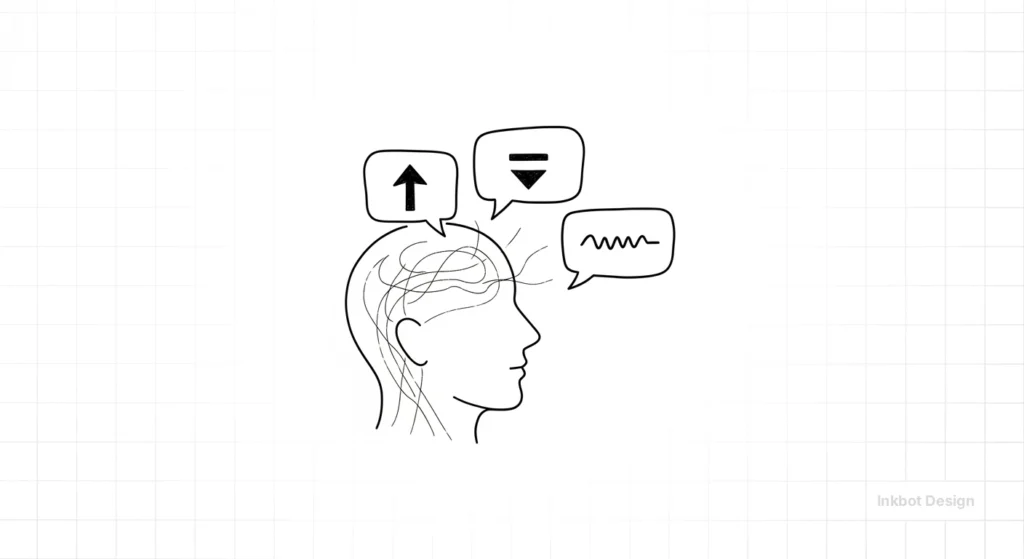
In 2026, the wall between brand PR and search engine visibility has completely collapsed.
With the total dominance of Search Generative Experiences (SGE) and AI-led discovery, your brand’s “sentiment” is no longer just a metric for your board deck—it is a core ranking factor.
How AI Engines “Read” Your Brand
When a user asks an AI assistant, “Is [Brand X] a reliable choice for small businesses?”, the AI does not just look at your website’s meta tags.
It scans its training data and real-time indices for Consensus Sentiment.
If the overwhelming consensus across the public domain (social media, reviews, news, and forums) is that your customer service is slow, the AI will state that as a fact in its summary.
This is why AI-Driven Brand Sentiment Tracking is now a technical requirement. You are not just managing “feelings”; you are managing the raw data that feeds the AI’s response.
If you don’t proactively shape the entity associations around your brand, the AI will do it for you, often based on the loudest (and most negative) voices.
Managing the “Citation Risk”
AI engines prioritise “High-Authority Consensus.”
If a negative sentiment trend is picked up by a major news outlet or a high-traffic Reddit thread, it becomes a “cited fact” in the eyes of an LLM.
Agile brands use predictive simulation to identify these risks before they reach a “Citation Threshold.”
By the time you see a negative AI Overview about your brand, it’s often too late to fix it through traditional means.
You have to embark on a Sentiment Reclamation project, which involves flooding the ecosystem with high-authority, positive entity associations to “dilute” the negative training data.
The AI Consensus Benchmark: Recent data suggests that for 85% of “Consideration” queries (e.g., “Best [Product] for…”), AI engines prioritise brands with a “Consistency Score” of 70% or higher across independent review platforms and social sentiment. Brands with a high Confusion Index—where public sentiment is fragmented or contradictory—are 50% less likely to be featured in the “Top Recommendations” carousel of 2026 search engines.
The Pro-Grade Sentiment Framework
| Technical Aspect | The Wrong Way (Amateur) | The Right Way (Pro) | Why It Matters |
| Data Source | Native social media analytics. | Aggregated API feeds + NLU. | Native tools hide “dark social” data. |
| Metric Focus | Volume of mentions and likes. | Entity association and velocity. | Volume doesn’t equal influence. |
| Response Time | 24–48 hours (Post-meeting). | < 4 hours (Automated/Agile). | Speed prevents sentiment crystallisation. |
| Testing | Focus groups and A/B testing. | Synthetic Audience Simulation. | Simulation is 100x faster and cheaper. |
| Goal | “Protect the brand.” | “Iterate the brand.” | Static brands die in high-velocity markets. |
ROI of Simulation vs. Human Focus Groups

The transition to Agile Brand Strategy often meets resistance due to perceived costs.
However, in 2026, the “Cost of Inaction” far outweighs the investment in AI infrastructure.
To understand the economics of modern branding, we must compare the traditional “Linear” model with the “Agile Simulation” model across three key financial metrics: Velocity of Insight, Mitigation Value, and Customer Lifetime Value (LTV).
1. Velocity of Insight: The Time-Value of Data
Traditional focus groups are an exercise in depreciation.
By the time you recruit 15 people, seat them in a room, record their thoughts, and transcribe the results (a 4-week process), the cultural conversation has already moved on.
In a high-velocity market, stale data is worse than no data at all.
Predictive Simulation delivers a “Unit of Insight” in minutes. If we value a strategist’s time at £150/hour, the traditional model costs thousands in “wait time” alone. The agile model allows for Micro-Pivots—small, daily adjustments that keep the brand aligned with the market, preventing the need for a massive, multi-million pound “Course Correction” later.
2. Mitigation Value: The “Bud Light” Insurance
The ROI of AI sentiment tracking is best understood as an insurance policy.
The cost of a “Sentiment Collapse”—a viral rejection of a brand—can be measured in billions of pounds of lost market cap.
If a £50,000 annual investment in a Predictive Reputation Engine prevents even one moderate PR crisis, the ROI is effectively infinite.
In 2026, brands are categorising AI sentiment tools not as “Marketing Spend,” but as “Risk Management.”
By identifying the “Cringe Factor” or “Ethical Friction” of a campaign in a synthetic environment, you avoid the sunk cost of failed production and media spend.
3. Impact on Customer Lifetime Value (LTV)
Agile brands have higher LTV because they are consistently relevant.
When you use AI to track Entity Association in real time, you can adjust your loyalty programmes and messaging to match your audience’s changing needs.
You aren’t guessing what your customers want; you are simulating their response to new offers.
The Verdict
Agile brand strategy is no longer an optional “extra” for tech startups; it is the baseline for survival in a 2026 market defined by AI-driven volatility.
You cannot manage what you do not accurately predict.
If your brand management relies on reactive social listening and manual reporting, you are carrying a shield into a drone fight.
The transition from a static branding strategy to an agile, predictive model requires a fundamental shift in mindset. You must value simulation over observation and velocity over perfection.
Start by auditing your current tech stack: if it doesn’t offer predictive sentiment modelling or synthetic audience testing, it is obsolete.
The most important directive for 2026 is this: build a “Sentiment Buffer” into your brand operations.
Use AI to automate the detection of shifts in entity association and empower your team to pivot without a board meeting.
Your brand is not what you say it is; it is the aggregate of the simulations people—and AI—run about you every day.
Would you like to see how we can apply these predictive models to your business?
Explore Inkbot Design’s services or read our other guides on brand marketing strategy to stay ahead of the curve.
FAQs
What is the difference between social listening and AI sentiment tracking?
Social listening records historical mentions and engagement on social platforms to provide a look-back at brand performance. AI sentiment tracking in 2026 uses Natural Language Understanding to predict future consumer reactions by simulating campaigns across synthetic audience models before they are publicly released.
How does agile brand strategy improve ROI?
Agile brand strategy improves ROI by reducing the “Cost of Failure” associated with poorly received campaigns. By simulating sentiment before launch, brands can identify and correct messaging that would otherwise lead to wasted ad spend or reputational damage, ensuring resources are only deployed on high-confidence strategies.
Is synthetic audience testing as accurate as human focus groups?
Synthetic audience testing provides higher statistical significance than small human focus groups by simulating thousands of personas simultaneously. While it does not replace human nuance entirely, it identifies broad sentiment risks and cultural triggers with 90% accuracy in a fraction of the time and cost.
What are sentiment guardrails in branding?
Sentiment guardrails are automated triggers that take specific actions when brand sentiment or entity associations move outside of pre-defined parameters. These actions can include pausing digital advertisements, alerting PR teams, or switching creative assets to maintain brand equity without manual intervention.
Does AI sentiment tracking replace traditional Net Promoter Scores (NPS)?
It doesn’t replace it; it “Pre-loads” it. While NPS tells you how customers felt last month, AI sentiment tracking predicts what your NPS will be next month based on current cultural drift, allowing you to fix issues before they impact your score.
Can small businesses afford synthetic audience testing?
Yes. Tiered SaaS platforms will have democratised this technology. SMBs can use “Lite” simulation models to test campaigns against generalised personas, allowing them to compete with enterprise-level agility on a fraction of the budget.
What is entity association in brand tracking?
Entity association is a metric that tracks which concepts, keywords, and other brands an AI model links to your business. This is more critical than simple sentiment because it defines your brand’s “mental territory” and directly influences how AI search engines describe your company to users.
Why is reactive branding dangerous in 2026?
Reactive branding is dangerous because the speed of information travel in 2026 allows a minor issue to become a global crisis before a traditional brand hierarchy can respond. AI-driven sentiment tracking provides the early warning system necessary to intervene before a trend becomes irreversible.
How does brand sentiment impact AI Overviews (SGE) in 2026?
AI search engines use public sentiment as a “Trust Signal.” If the training data consensus is negative, the AI-generated summary of your brand will reflect that bias. Managing sentiment is now a core technical SEO requirement to ensure AI assistants recommend your business.
What is a Confusion Index in branding?
A Confusion Index is a sentiment metric that measures how inconsistently an audience perceives a brand’s purpose or offering. A high Confusion Index is a leading indicator of brand equity loss, as it suggests the brand’s vision statement is not aligned with its market execution.