
The Brand Naming Process: 7 Stages Firms Get Wrong
A 40-partner accountancy firm buys a smaller advisory practice with a respected regional name. Within a fortnight, the deal team is no longer arguing about integration or client retention.
They are arguing about whether the acquired name survives, gets absorbed, or becomes a sub-brand — and nobody in the room has the authority to decide.
The name that took the acquired founders fifteen years to build is now hostage to a Tuesday-afternoon debate about taste.
That is what a broken brand naming process looks like in practice. Not a bad name. The absence of rules for the next one.
Most guides to the brand naming process describe how to generate and choose a single name. That is the easy part.
For a UK professional services firm employing 50 to 200 people, names arrive constantly — a new service line, a lateral hire’s practice group, a regional office, an acquisition, a productised offer that needs its own identity. Each one triggers the same argument because the firm has no naming system, only naming opinions.
The World Intellectual Property Organization (WIPO) recorded 11.7 million trademark applications worldwide in 2024, roughly 29,000 more than in 2023.
The commercial territory being claimed is expanding, which means the cost of generating a name that is distinctive, ownable and workable has risen — but the cost of governing naming across a growing firm has risen faster, and almost nobody prices it in.
If you are approaching a rebrand and want a diagnostic view of where your current identity is losing commercial ground, a specialist brand naming agency frames these decisions as governance problems, not creative ones. That distinction is the whole article.
- Governance first: set decision rights, naming territories and a one-page naming policy to stop recurring partner disputes over names.
- Strategic Brief: define the offer, target, positioning and portfolio slot so names are judged against purpose, not taste.
- Clearance early: involve a qualified trademark attorney at shortlist stage; use legal screening as a live filter to avoid lost launch windows per USPTO timings.
- Evaluation: score cleared names against the brief with a rubric; replace partner taste with objective criteria, gut feel only as tiebreaker.
- Decision and Activation: the named owner applies the rubric, records the audit trail, registers, monitors and defends the name.
How a Reliable Brand Naming Process Actually Works
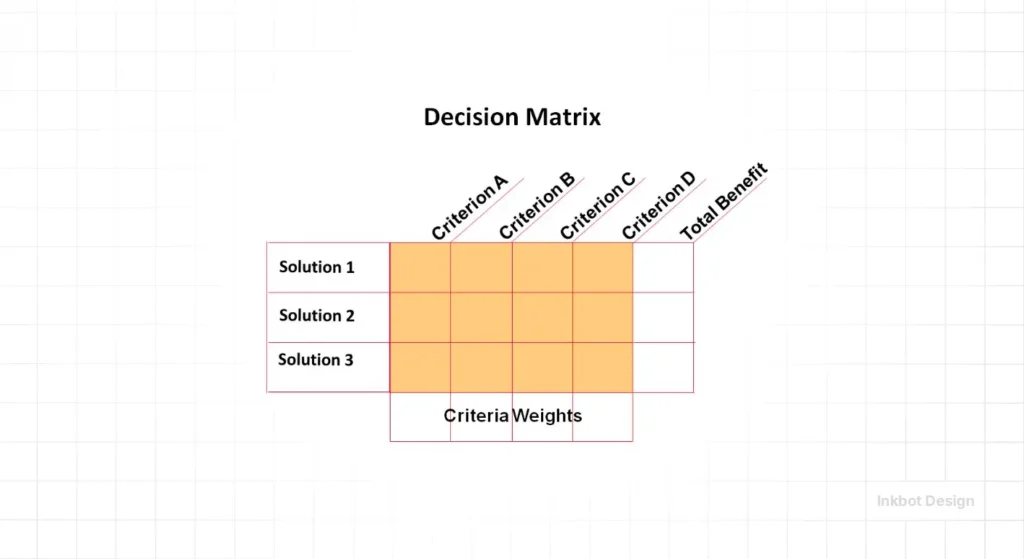
A reliable brand naming process comprises seven stages:
- governance,
- strategic brief,
- ideation,
- clearance,
- evaluation,
- decision,
- and activation.
The decisive difference between firms that name well repeatedly and firms that argue every time is that the first group runs governance first — before a single name is generated — and the last group never runs it.
- Governance sets decision rights and naming territories before ideation, so later stages have constraints to work within.
- Clearance is not a final checkbox; it is a live filter applied from the moment a shortlist exists.
- The name is never evaluated in isolation from the offer, market and portfolio it has to sit within.
The brand naming process is a seven-stage sequence that begins with governance — decision rights and naming rules — set before any names are generated.
Stage 1: Governance — Set the Rules Before Anyone Suggests a Name
Naming governance is the set of decision rights, constraints and precedents that determine what can be named, who owns the decision, which naming territories are available, and what requires escalation.
It comes first because its purpose is not to approve a single name — it is to make the next 10 naming decisions faster and less political. A firm that defines this once stops relitigating it every time a partner has an idea.
The failure mode here is to skip the stage entirely and discover its absence only under pressure. When a UK IPO opposition lands — the UK Intellectual Property Office recorded 6,695 trademark oppositions in 2024 — the question of who authorised the name and on what basis suddenly matters, and a firm with no governance record has no answer.
Governance is also where you decide naming architecture: whether new offers sit under the master brand, become endorsed sub-brands, or stand alone. Get this right once, and an acquisition becomes an application of existing rules rather than a fresh war.
Done right, this stage produces a one-page naming policy: the owner of final sign-off, the two or three permitted naming territories, the threshold that triggers legal escalation, and the criteria by which a name is judged. If your firm cannot name who owns the final naming decision today, that is the gap — and it is the most common one.
“Naming governance is not bureaucracy. It is the mechanism that stops every product launch, acquisition and regional office from becoming a subjective debate about taste, decided by whoever in the room has the strongest opinion and the most seniority. A firm without it lacks a naming process. It has a series of naming arguments.”
Stage 2: The Strategic Brief — Define the Offer Before the Name
The strategic brief defines what the name must carry: the offer, the target market, the positioning, and the portfolio slot it will occupy. It exists because a name cannot be judged against nothing — “is this a good name?” is unanswerable until “good for what, aimed at whom, sitting where?” is settled.
Firms that skip this stage confuse taste for judgment, because they have given themselves no standard to judge against.
This stage matters more now for a concrete legal reason. The United States Patent and Trademark Office (USPTO) fee system, which took effect on 18 January 2025, replaced the old application tiers with a $350-per-class base fee and added surcharges — including $200 per class for free-form goods-and-services descriptions.
An imprecise definition of what you actually offer now carries a direct cost at the time of filing. The brief is where that precision starts. A name for “advisory services” is vague; a name for “post-acquisition finance integration for mid-market manufacturers” has a defined territory, a clear class, and a reason to exist.
The test of a finished brief is simple: could a person who has never met your firm generate a sensible shortlist from it alone? If not, the brief is a mood board, and the ideation stage will produce mood-board names.
Stage 3: Ideation — Generate Options Inside the Constraints
Ideation generates candidate names within the territories the governance stage defined — not a blank-page brainstorm, but a bounded search.
The constraint is the point. When anyone can generate 500 plausible names in an afternoon using generative AI, volume stops being the bottleneck and judgment becomes it. The value shifts from producing options to choosing and defending the right one.
AI has genuinely lowered the cost of long candidate lists, which changes what this stage is for. It is no longer about quantity.
WIPO has reported that more than 56,000 new generative-AI patent families were published across 2024 and 2025 — more than the cumulative total from 2014 to 2023 — a signal of how quickly generative tooling is entering every professional workflow, including naming.
The firms that benefit are not the ones generating more names. They are the ones whose governance and brief allow them to reject 490 of 500 in an hour, with a defensible reason for each cut.
The failure mode at this stage is falling in love with an early favourite before clearance. A name you are emotionally committed to before it has cleared legal is a liability, because you will fight the evidence when it arrives.
Generate against the brief, hold every option loosely, and keep the shortlist wider than feels comfortable until Stage 4 forces the cut.
Stage 4: Clearance — Treat Legal Screening as a Filter, Not a Final Gate
Clearance is the process of checking candidate names against existing trademarks, domains and linguistic risks — and it belongs throughout the shortlist stage, not bolted on at the end.
Most brand naming guides place trademark checks last, which is precisely why firms fall for names they cannot own. Clearance applied early kills doomed names before anyone gets attached.
The timing has real cost consequences. The USPTO reports an average of 4.3 months from a new application to the first examining action, and 9.9 months to registration or abandonment, on figures updated in May 2026. A naming decision can therefore introduce a launch-timing dependency measured in quarters rather than weeks.
If you discover a fatal conflict at final sign-off rather than at shortlist, you have not lost a name — you have lost a launch window. This is why firms selling across borders should widen clearance early: the European Union Intellectual Property Office (EUIPO) received 180,443 EU trademark filings in 2024, and each new market a name enters is another register it has to survive.
A critical distinction: AI-assisted searching is not clearance. WIPO’s own survey of IP offices shows they are deploying AI-assisted trademark tools, including image search, but a tool’s output is a signal, not legal advice. A qualified trademark attorney owns this stage. AI narrows the field; it does not clear the name.
Stage 5: Evaluation — Judge Names Against the Brief, Not the Boardroom
Evaluation scores the cleared shortlist against the strategic brief’s criteria — distinctiveness, fit to positioning, pronounceability, portfolio coherence — rather than against whoever speaks last in the meeting.
This is the stage where governance earns its keep, because a defined rubric replaces the partner-seniority contest that otherwise decides names by default.
The mechanism matters here. A name does not “sound better” in the abstract; it reduces or increases the cognitive effort a prospect spends understanding what you do.
For professional services buyers choosing among firms that all look similar, a name that instantly signals the specific practice reduces perceived risk, and that reduced risk is what lets a firm hold its fees.
That is the causal chain a good evaluation rubric protects — and it is invisible to a “which one do we like?” conversation. Whether a name should be descriptive or abstract is a rubric decision tied to the brief, not a matter of partner preference.
The failure mode is the reintroduction of taste under the banner of “gut feel”. Gut feel is fine as a tiebreaker between two names that both pass the rubric. It is not fine as the rubric.
Stage 6: Decision — Apply the Decision Rights You Already Set

The decision stage is where the person in the governance stage, the owner, makes the final call using the evaluation within the escalation rules already agreed upon.
If Stage 1 was done properly, this stage is short — the rights, criteria and escalation thresholds already exist, so the decision is an application of the system, not a fresh negotiation.
Firms that skip governance discover that they are inventing the decision-making process at the moment of maximum pressure and maximum ego.
This is also where you record the audit trail. The European Union’s AI Act is not a brand-naming law and does not require you to disclose that a name was AI-generated.
But it reflects a broader regulatory norm toward traceability and accountable human oversight when AI materially informs a business decision — and that norm is worth adopting internally.
Record whether generative AI was used in ideation, retain the brief, shortlist criteria and clearance results, and document the rationale for the final choice. When an opposition or an internal challenge arrives later, that record is the difference between a defensible decision and a shrug.
“A name is not governed when the trademark is filed. It is governed when your firm can say, in one page, who chose it, what it was judged against, which options were rejected and why, and what would have to change for the decision to be revisited. Everything short of that is a name you happen to be using, not a name you own.”
Stage 7: Activation — Register, Monitor, and Defend
Activation is the stage where the chosen name is registered as a trademark, secured across the necessary domains, and placed under ongoing monitoring.
Naming does not end at filing, because the register keeps moving, and so do the people trying to trade near your name. Governance defines the rules; activation puts them into live operation.
Domain and monitoring risk are real and current. WIPO handled more than 6,200 domain-name disputes in 2025, its highest annual caseload on record.
This does not mean a firm must defensively buy every domain variant — that is a governance decision about proportionate risk, made against the naming policy, not a reflex.
It means the naming process must include a domain strategy and a monitoring plan, with clear rules for when a lookalike registration warrants action.
A premium domain decision belongs inside this framework, judged against the policy, not bought in a panic.
The failure mode is treating registration as completion. A registered name with no monitoring is a name you will defend reactively, expensively, and late. Activation closes the loop on governance: the monitoring rules you operate here are the ones Stage 1 should have written.
The Stage Most Firms Run Too Late — and Why It Ruins the Result
Here is the sequence correction that the whole article has been building toward.
Intelligent practitioners run governance last — as the administrative sign-off after a name is chosen — for an understandable reason: governance feels like paperwork, and paperwork feels like something you do once the real creative work is finished.
Every instinct says generate the exciting thing first and formalise it after. That instinct is why firms with genuinely good names still descend into naming chaos.
The evidence contradicts the instinct. Consider the pattern the trademark data reveals: the UK IPO received 173,180 applications in 2024, up 5.8% on 2023, and recorded 6,695 oppositions — meaning names are being challenged after filing at a meaningful volume.
A firm that runs governance last has no framework for handling an opposition, an acquisition, or a sub-brand request, because the framework was supposed to be the first thing built, not a document written after the fact.
Governance run last is governance that documents a decision. Governance comes first; it shapes every decision that follows.
In 17 years of brand work, the pattern I see most often is a firm that names its flagship service beautifully and then cannot name anything else without a fight.
The replacement directive is exact: before your rebrand generates its first name, write the one-page naming policy.
Decision owner, naming territories, escalation threshold, and evaluation rubric. Do that, and the seven stages run in order. Skip it, and you will run them backwards under pressure, every time.
The Verdict
Naming chaos is not a symptom of bad names. It is a symptom of good names produced without a system to govern the next one.
A UK professional services firm can commission a memorable, distinctive, legally clear and strategically appropriate name — and still find itself, two years later, locked in a partner-room argument about what to call the practice it just acquired, because nothing in the original process set the rules for what came after.
The correction is one of sequence, and it is the argument this article has substantiated stage by stage: governance belongs first, before ideation, not last, after approval. Its job is not to make naming bureaucratic.
Its job is to convert naming from a recurring subjective debate into the disciplined application of decision rights, constraints and precedents your firm agreed on and reuses every time.
The trademark data — WIPO’s 11.7 million global applications, the UK IPO’s rising filings and 6,695 oppositions, WIPO’s record 6,200-plus domain disputes in 2025 — all point the same way: the environment a name has to survive is getting more crowded and more contested, and firms that govern naming as a system will navigate it while firms that improvise will keep fighting.
Do one thing today. Write the single page that names who owns your firm’s next naming decision and what it will be judged against. You will know it is working the first time an acquisition or a new service line gets named in an hour instead of a fortnight.
If you want an outside diagnostic of where your current brand is losing commercial ground before you rebrand, request a free Brand Equity Audit™ — a structured, written assessment delivered without a sales call.
FAQs
What is the brand naming process?
The brand naming process is a seven-stage sequence: governance, strategic brief, ideation, clearance, evaluation, decision, and activation. It begins by setting decision rights and naming rules, then generates and clears options against a defined brief, and ends with registration and monitoring rather than name approval alone.
Why should naming governance come before ideation?
Governance sets the decision rights, naming territories and escalation rules that later stages work within. Run first; it shapes every naming decision and makes each faster. Run last, it merely documents a choice already made and offers no framework for the next acquisition or sub-brand.
How early should a trademark lawyer be involved in naming?
A qualified trademark attorney should be involved from the shortlist stage, not at final sign-off. The USPTO reports 4.3 months to a first examining action and 9.9 months to disposition, so a conflict discovered late can cost a launch window rather than just a name.
What is the difference between naming and naming governance?
Naming produces a single name. Naming governance produces the system — who decides, which territories are permitted, what triggers escalation, and how names are judged — that ensures consistency in future naming decisions. A firm can name well once without governance, but cannot name well repeatedly.
Is it true that AI can replace naming strategists?
No — AI lowers the cost of generating candidate names but shifts value toward brief quality, judgement, clearance and governance. When anyone can produce 500 names in an afternoon, the constraint becomes choosing and defending the right one, which AI cannot do on your firm’s behalf.
Who should own the final naming decision in a firm?
The governance stage should name a single decision owner before ideation begins, with defined escalation thresholds. Without a named owner, naming defaults to whoever holds the most seniority in the room, which turns every decision into a contest of ego rather than judgment.
When should a professional services firm rethink its naming process?
Before a growth phase, acquisition, or new service line — any moment that will generate names the firm has no precedent for. Rethinking naming during the pressure of an acquisition, rather than before it, is why deal teams end up arguing about brand names instead of integration.
How does naming affect trademark filing costs?
A vague offer definition raises filing costs and risk. The USPTO’s fee system, effective 18 January 2025, charges $350 per class plus a $200-per-class surcharge for free-form goods-and-services descriptions, so an imprecise definition of what you offer carries a direct, avoidable cost.
What is a naming territory?
A naming territory is a bounded creative space that the governance stage permits — a defined direction, such as descriptive, founder-led, or abstract — that ideation must work within. Territories replace blank-page brainstorming with a constrained search, which produces more defensible options and far shorter arguments.
Does every business need to own every domain variation?
No — defensive domain registration is a governance decision about proportionate risk, not an automatic requirement. WIPO handled over 6,200 domain disputes in 2025, so a monitoring plan and clear rules for action matter more than owning every variant of your name.
How is a brand name evaluated objectively?
A name is scored against the strategic brief’s criteria — distinctiveness, positioning fit, pronounceability and portfolio coherence — rather than boardroom preference. A defined rubric replaces taste with judgment; gut feel is legitimate only as a tiebreaker between two names that both already pass the rubric.
What happens after a brand name is registered?
Registration begins activation, not completion. The name must be secured across necessary domains and placed under ongoing monitoring, with defined rules for when a lookalike registration warrants action. A registered name without monitoring is one you will defend reactively, late, and at greater cost.
