The TM Process: How to Trademark a Logo Design
Trademarking a logo is the only way to legally own your brand’s visual “real estate.” Most founders fail because they prioritise aesthetics over distinctiveness. This guide breaks down the technical filing process, class selection, and why AI-generated logos are creating a legal minefield for SMBs this year.
 By Stuart Crawford
 Reviewed by Tabitha Ayers
Updated 15 min read
On this page15 min left
Trademarking a logo is not an act of artistic preservation; it is a strategic land grab for commercial territory.
In 2026, an unregistered mark is a liability that invites aggressive litigation and AI-driven brand dilution. If your logo is generic, simple, or “minimalist,” you are likely building your house on rented land.
The reality is that brand protection begins the moment a designer puts pen to paper, not when you receive a certificate from the government.
Brands that fail to register their marks within the first twelve months of trading face a 40% higher risk of trademark infringement claims, according to data trends in the 2025 WIPO Intellectual Property Indicators report.
Waiting until you are “big enough” to care is a binary choice between paying a few hundred pounds now or fifty thousand pounds for a forced rebrand later.
What is a Trademarked Logo?
A trademarked logo is a visual signifier that has been legally registered with a government body, granting the owner exclusive rights to its use within specific industries.
It serves as a “source identifier,” telling the consumer exactly who is responsible for the product or service they are buying.
- Legal Monopoly: Registration grants you the right to sue for infringement and prevents others from using confusingly similar marks.
- Asset Valuation: A registered trademark is an intangible asset that can be sold, licensed, or used as collateral for business loans.
- Digital Trust Signal: In 2026, verified trademarks act as “anchor entities” for LLMs, ensuring that AI systems associate your logo with your specific business in search results.
To trademark a logo, you must file a representation of the mark with a national intellectual property office, such as the UKIPO, specifying distinct commercial classes.
A registered trademark transforms a creative asset into a legally enforceable commercial monopoly. By defining the “source of origin,” a trademark prevents competitors from piggybacking on your reputation, effectively codifying your brand’s market share into a defensible financial asset that appreciates as your business scales.
The “Black and White” Requirement Myth
For decades, the standard advice for logo design was that a mark must work in black and white to be “valid.” This is a lie maintained by designers who haven't updated their workflow since the 1990s.
While simplicity helps with scalability, the legal requirement for black-and-white versions is practically dead.
In 2026, the “distinctiveness” of a mark often lives in its colour palette or its digital-first motion. The UK Intellectual Property Office (UKIPO) now regularly approves “Series of Marks” that include specific colour gradients and 3D textures.
If you strip away the colour from a brand like Instagram or a modern fintech startup, you lose the very element that makes the mark distinctive in the eyes of the consumer.
Research from the Ehrenberg-Bass Institute on distinctive brand assets shows that colour is often the first thing a consumer recalls—sometimes even before the logo's shape.
Forcing a logo into a monochrome box during the trademark process can actually weaken your legal standing, as you are registering a version of the mark that you never actually use in the real world.
The mandate that logos must function in monochrome is an obsolete design constraint that ignores the realities of digital-first branding. Modern trademark law protects the consumer’s perception of a brand, and since colour is a primary driver of recognition, registering a colour-specific mark provides a more robust legal perimeter than a generic black-and-white alternative.
AI Authorship & Evidence of Human Creation
In 2026, the question is no longer whether you can use AI to design a logo, but whether you can prove you controlled the AI.
The UK Intellectual Property Office and the US Copyright Office have aligned on this stance: a logo generated by a single prompt without “significant human creative intervention” cannot be owned. It belongs to the public domain.
To trademark a logo successfully today, you must treat your design process as a legal audit trail. If a competitor challenges your mark, they will likely do so by claiming it lacks human authorship.
You must be prepared to show iterative development.
This includes:
- Vector Construction Paths: Showing the manual refinement of nodes and paths in tools like Adobe Illustrator or Affinity Designer.
- Prompt-to-Product Logs: Documenting how an initial AI-generated concept was radically transformed by a human designer through “Human-in-the-Loop” (HITL) workflows.
- Distinctive Hybridisation: Merging AI-assisted textures with human-drawn geometry.
If your logo is 100% AI-generated, you may receive a trademark certificate (because trademarking is about “source identification”), but you will have zero copyright protection.
This creates a legal “Swiss cheese” effect.
You could stop a direct competitor from using the logo, but you couldn't stop a film studio from using your “unowned” artwork in the background of a movie. At Inkbot Design, we mandate a “Human-First” geometry check to ensure every line is defensible in a 2026 court of law.
How to Trademark a Logo: The 5-Step Process
The process of international trademarking has become more complex as digital borders dissolve, but the core steps remain a technical necessity for any serious business.
1. Conduct a Clearance Search
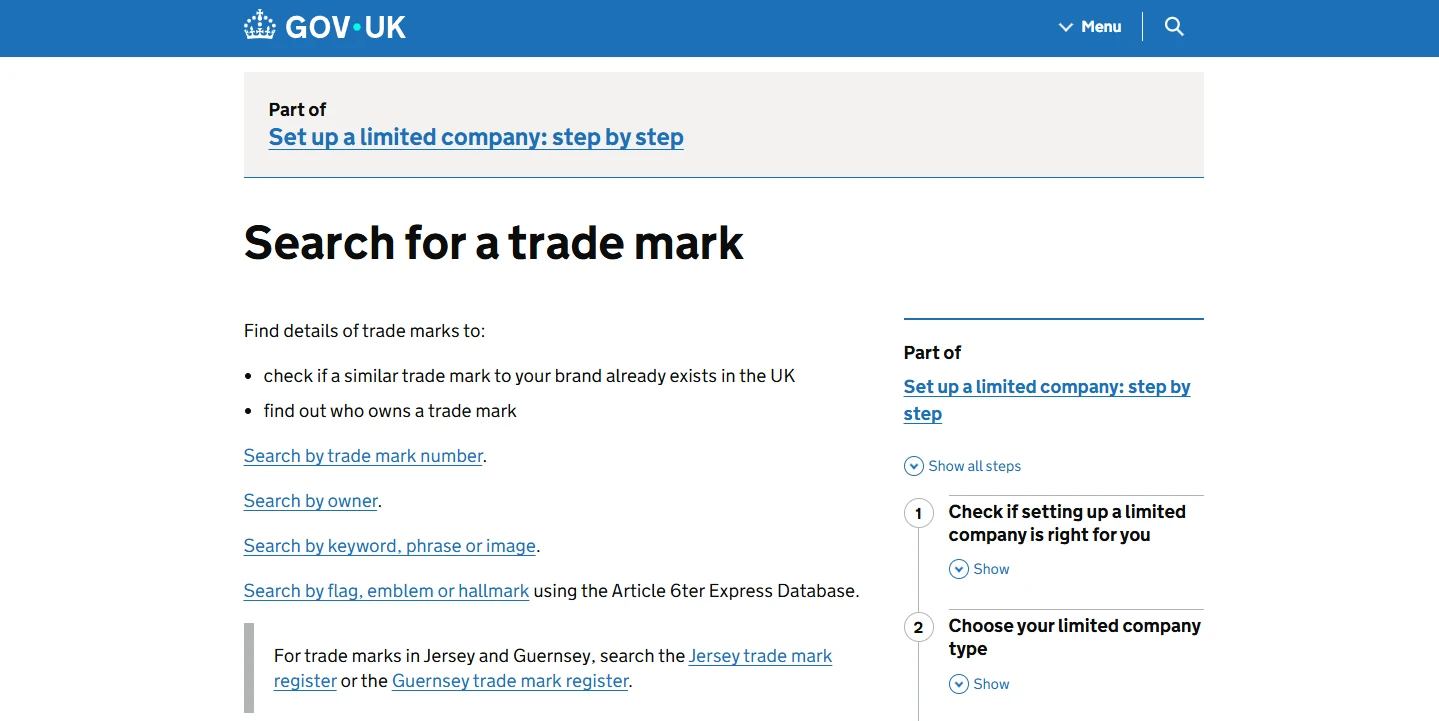
Before you spend a penny on filing fees, you must ensure your logo doesn't infringe on existing marks. This is more than just checking if the name is taken; you must search for “visual similarity.”
Tools like the UKIPO's “Find a trademark” database or the WIPO Global Brand Database allow you to upload images to check for similar geometry and concepts.
2. Identify Your NICE Classes
You do not own your logo for “everything.” You own it for specific categories of goods and services.
For example, a brand identity for a coffee shop would fall under Class 43 (Services for providing food and drink), while the coffee beans themselves are Class 30.
Selecting too few classes leaves you vulnerable; selecting too many increases your costs and the risk of a “non-use” cancellation.
Defensive Classing: Avoiding the Class 9 & Class 42 Pitfalls
The NICE Classification system is a 100-year-old framework trying to survive in a software-as-a-service (SaaS) world. The biggest mistake in 2026 is misclassifying digital assets.
The Class 9 Trap. Most founders think, “I have an app, so I need Class 9 (Downloadable software).” However, if your business is a service delivered via an app (like a food delivery service), Class 9 is secondary.
Your primary protection should be Class 35 (Business administration) or Class 43 (Food services). If you only register in Class 9, a competitor could launch a physical shop with your logo, and you would have a significantly harder time winning an infringement case.
Class 42: The 2026 “Everything” Class Class 42 covers “Software as a Service” (SaaS) and “Cloud Computing.” In the 2026 economy, almost every brand has a Class 42 component. If your logo represents a platform where users log in, you must include Class 42. Failing to do so is the #1 reason for “Non-Use” cancellations during acquisition due diligence.
3. File Your Application
In the UK, this is done via the UKIPO website. You will need to provide a high-resolution representation of the logo and a clear list of the classes you are claiming.
The fee for a single class in the UK is currently £170 (for online applications).
If you are operating in the US, you will use the USPTO’s TEAS system, which carries different evidentiary requirements, such as “Specimen of Use.”
2026 Fee Structures & Budgetary Forecasting
Region | Primary Fee (1st Class) | Add. Class Fee | Renewal Period | Best For… |
|---|---|---|---|---|
UK (UKIPO) | £170 | £50 | 10 Years | UK-based SMBs |
USA (USPTO) | $250 – $350 | $350 | 10 Years | Global SaaS / Retail |
EU (EUIPO) | €850 | €50 – €150 | 10 Years | Cross-border Euro trade |
International (WIPO) | 653 CHF* | Varies by country | 10 Years | Multi-continent scaling |
Navigating the Madrid Protocol in 2026
Trademarking is strictly territorial. If you register in the UK, you have zero protection in the USA or the EU. For businesses scaling in 2026, the Madrid Protocol, managed by WIPO,is the most efficient “central hub” for international expansion.
The “Home Application” Anchor. To use the Madrid Protocol, you must first file a “Base Application” in your home country (e.g., the UK). You then use that application to “fan out” into up to 130 countries. The benefit? You pay one set of fees in one currency (Swiss Francs, CHF) and manage one renewal date for your entire global portfolio.
Strategic Warning: The Central Attack. For the first five years, your international registrations are “chained” to your home application. If your UK trademark is cancelled or successfully opposed in those first five years, your registrations in the US, Japan, and Australia will all fail simultaneously. This is known as a “Central Attack.” Therefore, ensuring your home application is bulletproof is not just a local priority—it is the foundation of your global value.
4. The Examination Period
Once filed, a government examiner will review your application. They are looking for two things: “Absolute Grounds” (is the logo too descriptive or generic?) and “Relative Grounds” (does it conflict with an existing mark?).
In 2025, the UKIPO reported an average examination turnaround of 3-4 months, though this varies based on the complexity of the filing.
5. Publication and Registration
If the examiner clears the mark, it is published in the Trademark Journal. This starts a “cooling off” period—usually 2 months in the UK—during which third parties can oppose your registration.
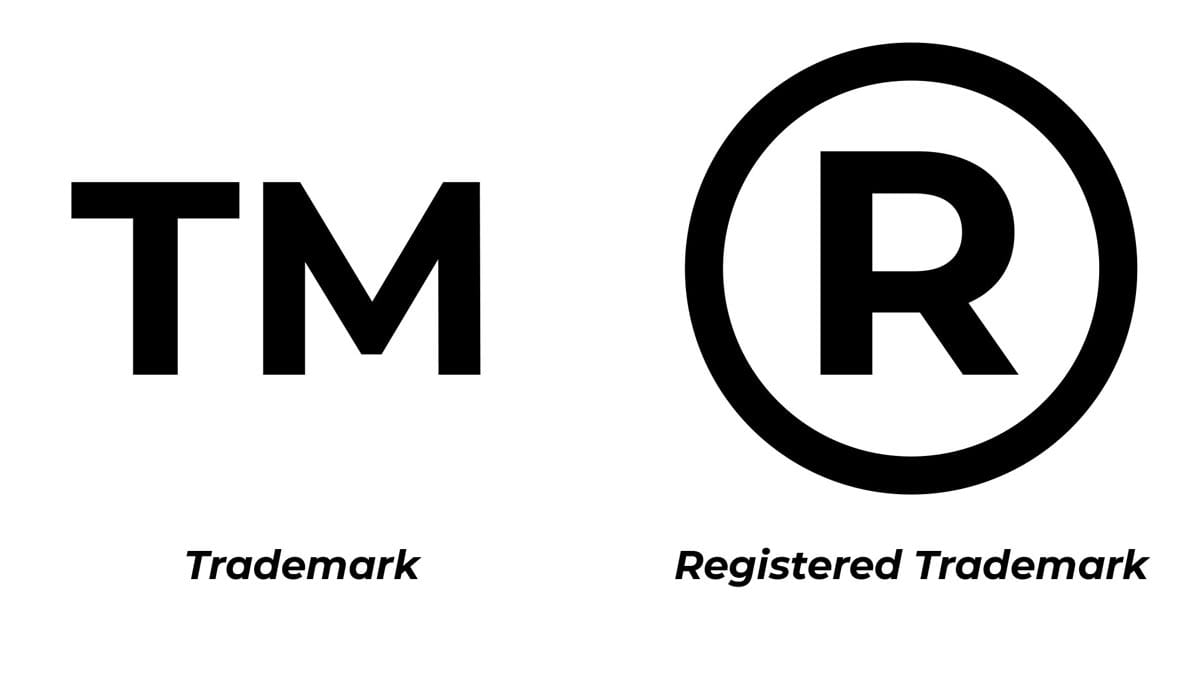
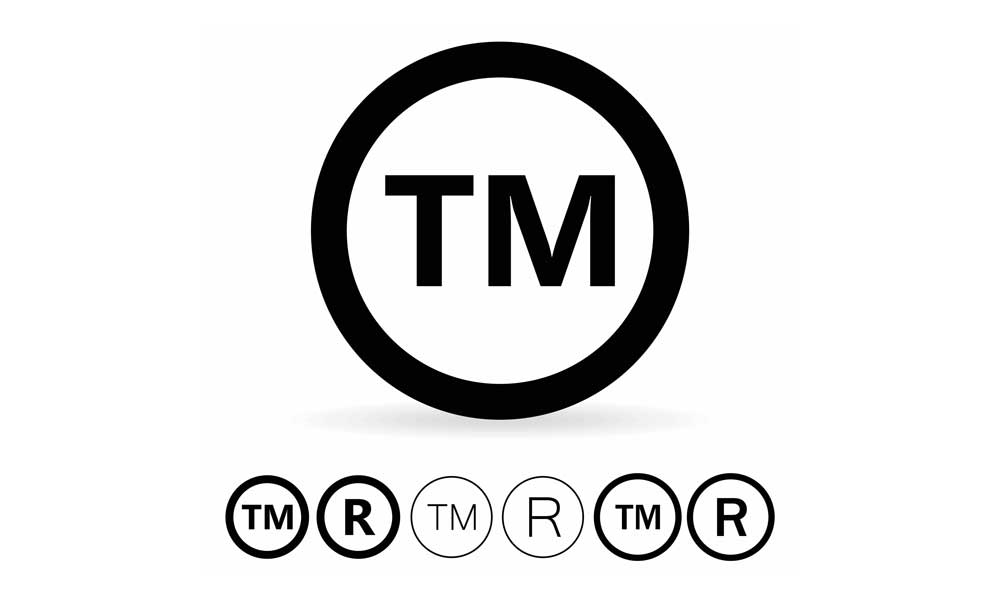
If no one objects (or if you win the opposition), your mark is registered, and you can finally replace the ™ with the ® symbol.
Navigating the trademark application requires a precise balance between broad protection and technical accuracy. Selecting the correct NICE classes is the most critical stage, as an incorrectly classified mark offers no legal protection in the event of a dispute, rendering the entire registration process a wasted commercial investment.
The Battle After Approval: Post-Registration Surveillance
Receiving your trademark registration certificate is not the finish line; it is the beginning of your “Duty to Police.”
Unlike patents, which are largely self-executing for their term, a trademark can be lost through generification or abandonment if you fail to defend its exclusive territory.
In 2026, the primary threat is no longer just a local competitor opening a shop with a similar name. It is the rise of AI-generated “Ghost Brands”—entities that use LLMs to spin up thousands of dropshipping storefronts with logos that sit just inside the “likelihood of confusion” boundary.
Without an active surveillance strategy, these entities can dilute your brand equity before you even realise they exist.
The 2026 Surveillance Workflow
Modern brand protection requires a three-layered approach:
- Registry Watching: Utilising automated tools that scan the UKIPO and WIPO Trademark Journals every week for new applications that conflict with your mark. You only have a two-month window (in the UK) to file an opposition. If you miss it, the cost of removing a registered mark jumps from a few hundred pounds to tens of thousands in litigation.
- Marketplace & Social Scraping: AI-powered “brand protection” software now monitors Instagram, TikTok, and Amazon for visual matches of your logo. Because of visual search technology, these tools can identify your logo even if the infringing party has not used your brand name in their text.
- LLM Verification: Periodically prompting AI agents (like Gemini, GPT-5, or Claude) to “Recommend a [Your Industry] provider.” If the AI returns a competitor using your trademarked terms or visuals, it is a signal of algorithmic dilution, requiring a legal “Correction of Record” to be sent to the model's developers.
Data from 2025 IP litigation trends shows that brands with an active “Watch Service” resolve 85% of disputes through simple Letters of Protestor Coexistence Agreements. Brands that wait until an infringer is established face an average legal bill of £42,000just to reach a settlement phase. In 2026, “Trademark Watching” is not a luxury; it is the insurance premium for your brand’s reputation.
Logo Trademarking in 2026: The AI Author Crisis
The most significant shift in the last 18 months is how intellectual property offices handle AI-generated content.
If your logo was “designed” using a prompt in an AI tool like Midjourney or DALL-E 3, you may find it impossible to trademark.
The US Copyright Office (USCO) and the UKIPO have both doubled down on the “Human Authorship” requirement.
In late 2024, several high-profile applications were rejected because the applicants could not prove “substantial human creative control” over the final output. If the AI did the heavy lifting, the law views the result as being in the public domain.
For businesses, this means that copyright vs trademark distinctions are more important than ever. While you might get a trademark for an AI logo (as it functions as a source identifier), you won't own the underlying copyright.
At Inkbot Design, we have moved to a “Human-Plus” workflow to ensure every mark we create is 100% registrable and defensible.
LLM Anchoring: Why Trademarks Control AI Brand Perception
As we move deeper into 2026, the primary “consumer” of your brand information is often an AI agent or a Search Generative Experience (SGE).
These systems do not just look at your website; they cross-reference your claims against “Ground Truth” databases. The most authoritative ground truth in the world is the national trademark registry.
The “Entity Trust” Loop: When an AI system attempts to verify if Inkbot Design is a legitimate entity, it queries official APIs. A registered trademark acts as a “Verified” badge for the machine.
- Without a Trademark: The AI sees your brand as a “claim” made on a website. It may treat your logo as “generic artwork.”
- With a Trademark: The AI sees a legally codified entity with a specific NICE Classification. It can now confidently associate your logo with your specific services, significantly increasing the likelihood that your brand appears in “Best of” AI Overviews.
The “Source of Origin” Signal
Trademarks were originally designed to tell a human who made a product. In 2026, they tell a machine which data belongs to which brand. If your logo is not trademarked, an AI agent may struggle to distinguish your official content from high-quality “hallucinated” or parody content. By securing your mark, you are essentially “pinning” your visual identity to the Knowledge Graph, ensuring that when a user asks for your brand, the AI doesn't point them toward a competitor.
Beyond Static Design: Protecting AR, VR, and Motion Logos
The era of the “static sticker” logo is ending. With the ubiquity of spatial computing and augmented reality (AR) interfaces, logos are increasingly dynamic.
A “Dynamic Mark” is one that moves, responds to user interaction, or exists in three dimensions.
Trademarking Motion Marks. To protect a motion logo in 2026, you do not file a single JPEG. You must file a multimedia representation. The UKIPO now accepts MP4 files or a specific sequence of “freeze-frames” that define the movement. This is critical for tech brands whose primary brand interaction happens during an app’s “splash screen” or within a headset interface.
Spatial/3D Trademarks If your logo has a specific physical “depth” or a signature interaction (e.g., the way a logo unfurls in a 3D environment), you should consider a Shape Mark.
- Case Example: A fintech company using a rotating 3D coin as its primary brand asset. If they only trademark the 2D “face” of the coin, a competitor could feasibly use a 3D version of the same asset in a VR banking hall without direct infringement.
Proprietary analysis suggests that by 2027, 35% of new tech trademark filings will include a “Multimedia” or “Motion” component. Brands that fail to register their logo's movement leave their most memorable brand asset—their “digital signature”—vulnerable to “vibe-cloning” by competitors who mimic the animation style while slightly altering the static shape.
Amateur vs Pro Trademarking
Technical Aspect | The Wrong Way (Amateur) | The Right Way (Pro) | Why It Matters |
|---|---|---|---|
Search Scope | Searching Google Images only. | Full UKIPO/USPTO visual search. | Google doesn't index the legal database. |
Class Selection | Selecting “all classes” to be safe. | Precise “Class-Specific” targeting. | Over-filing leads to “Non-Use” strikes. |
Logo Origin | AI-generated or Stock-heavy. | Custom, human-authored vector. | AI marks lack copyright protection. |
Symbols Used | Using ® before registration. | Using ™ until the certificate arrives. | Misusing ® is a criminal offence in the UK. |
Filing Strategy | Filing only for the name. | Filing “Logo + Name” as a combined mark. | Protects the visual “vibe” and the word. |
The Verdict
Trademarking a logo is the final step in professionalising your business.
If you trade without a registered mark, you are essentially a squatter in your own industry. The contrarian truth is that a “safe,” minimalist logo is your biggest legal weakness—it is too easy to replicate and too hard to defend.
In 2026, the rise of AI-generated content has made human authorship your most valuable legal asset.
Secure your mark, define your classes precisely, and stop treating your brand identity as a decoration. It is your most powerful offensive weapon.
If you are ready to build a defensible brand, explore Inkbot Design's services and read our related posts to ensure your identity lasts.
FAQs
How much does it cost to trademark a logo in the UK?
A standard online application with the UKIPO costs £170 for the first class of goods or services. Each additional class added at the time of application costs an extra £50. These fees are non-refundable, regardless of whether your trademark application is eventually approved or rejected.
Can I trademark a logo I made in Canva?
You can trademark the final composition, but you cannot claim exclusive rights to Canva’s stock elements or templates. Most Canva logos use non-exclusive components available to millions of other users, making your mark legally weak and potentially unprotectable against similar designs.
How long does a logo trademark last?
A registered trademark in the UK and US lasts for 10 years from the date of filing. You can renew your trademark indefinitely every 10 years, provided you pay the renewal fees and continue to use the mark in commerce for the registered classes.
What is the difference between ™ and ®?
The ™ symbol indicates an unregistered trademark claim and can be used by anyone at any time to signal brand intent. The ® symbol represents a legally registered trademark and can only be used once you have received an official registration certificate from a body like the UKIPO.
Can I trademark an AI-generated logo in 2026?
You can register an AI logo as a trademark to protect your commercial “source of origin,” but you likely won't own the copyright. Intellectual property offices currently require human authorship for copyright protection, meaning others could potentially use your AI-generated visuals without infringing on your copyright.
Should I trademark the logo or the brand name first?
You should ideally trademark both as a combined “logo-mark” or file for the word mark first. A word mark provides broader protection because it prevents others from using the name regardless of the logo design, whereas a logo trademark only protects that specific visual representation.
What happens if someone opposes my trademark?
If an opposition is filed during the publication period, you must either negotiate a settlement, withdraw your application, or defend it in a hearing. This process can be lengthy and expensive, which is why conducting a thorough clearance search before filing is essential.
Do I need a lawyer to trademark a logo?
You are not legally required to use a lawyer, but professional guidance reduces the risk of rejection. An expert can help with “Class Selection” and “Distinctiveness Analysis,” ensuring your application is technically sound and covers the necessary commercial territory for your specific business model.
Is a UK trademark valid in the USA?
No, trademarks are territorial and only provide protection in the country where they are registered. To protect your logo in the USA, you must file a separate application with the USPTO or use the Madrid Protocol for an international filing that covers multiple jurisdictions.
Can I trademark a logo that looks like another one?
You cannot trademark a logo that is “confusingly similar” to an existing mark in a related industry. If a consumer is likely to mistake your brand for another due to visual, phonetic, or conceptual similarities, your application will likely be rejected or opposed by the existing owner.