Social Listening for Brand Health: Guide to Not Flying Blind
Most businesses operate with a dangerous blind spot.
You spend thousands on ad spend, obsess over logo kerning, and refine your copy, but you have no idea what is actually happening in the wild.
You might think you do. You check your notifications. You reply to DMs. That is not listening; that is waiting for someone to shout at you.
Social listening is the difference between diagnosing a terminal illness early and waiting for the autopsy. It is the active, forensic process of tracking conversations around your industry, your competitors, and your brand—specifically the conversations that don’t tag you.
If you are not actively listening, you are not managing your brand; you are guessing. And in my experience, guessing is an expensive hobby.
This guide isn’t about “engaging with your community” or other fluffy marketing platitudes. It is about data. It is about using social listening as a diagnostic tool for brand health, protecting your revenue, and spotting the smoke before the fire burns your house down.
- Use social listening, not just monitoring, to proactively track untagged conversations across the whole internet for strategic brand insights.
- Build boolean, pillar-based queries (brand, competitors, industry, buying signals) to capture misspellings, intent and crisis indicators.
- Measure Net Sentiment Score, Share of Voice and Sentiment Volatility — these predict revenue shifts and reveal true brand health.
- Combine AI bulk analysis with human review; set velocity alerts for crises and turn insights into product, PR and content actions.
The Difference Between Monitoring and Listening
Before we delve into the mechanics, we must address a fundamental misunderstanding. Most SMB owners confuse Social Monitoring with Social Listening. They are not the same beast.
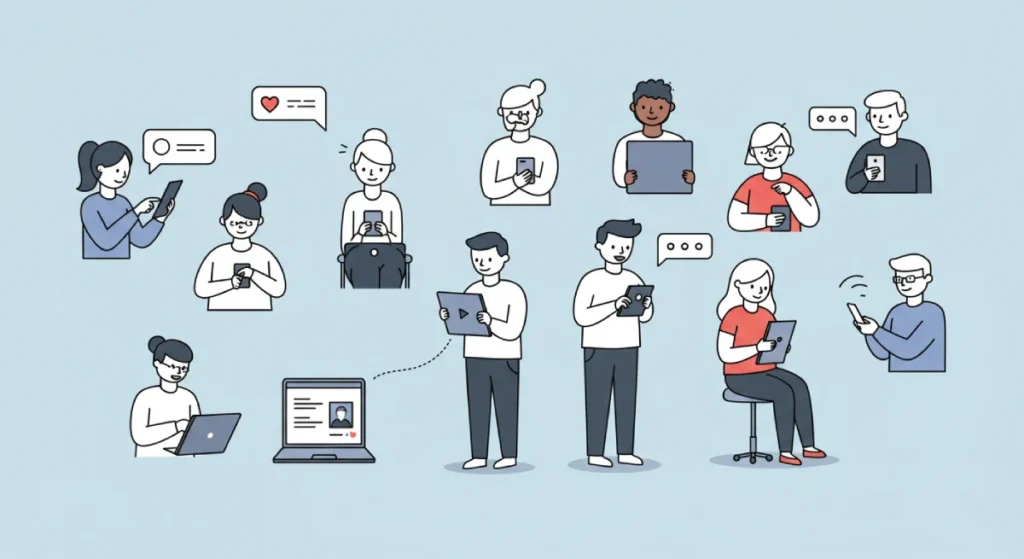
Social Monitoring (The Micro)
Monitoring is reactive. It focuses on the individual.
- Trigger: A customer tweets a complaint @ your handle.
- Action: Respond to resolve the issue.
- Goal: Customer support and reputation damage control on a case-by-case basis.
- Scope: Notifications and direct mentions.
Social Listening (The Macro)
Listening is proactive. It focuses on the aggregate.
- Trigger: 500 people suddenly use the word “expensive” in relation to your product category, without tagging you.
- Action: Adjust your pricing strategy or launch a campaign that highlights value.
- Goal: Strategic decision-making and brand health analysis.
- Scope: The entire internet (Blogs, Reddit, X/Twitter, Instagram, TikTok, Forums).
The Consultant’s Take: Monitoring handles the symptoms. Listening diagnoses the disease. You cannot fix a systemic brand issue by replying to tweets one at a time.
What is Social Listening?
Social listening is the process of tracking conversations on digital channels to extract insights regarding brand sentiment, competitor presence, and industry trends. It involves two distinct steps:
- Monitoring: collecting data based on specific keywords and phrases.
- Analysis: interpreting that data to inform strategic business changes.
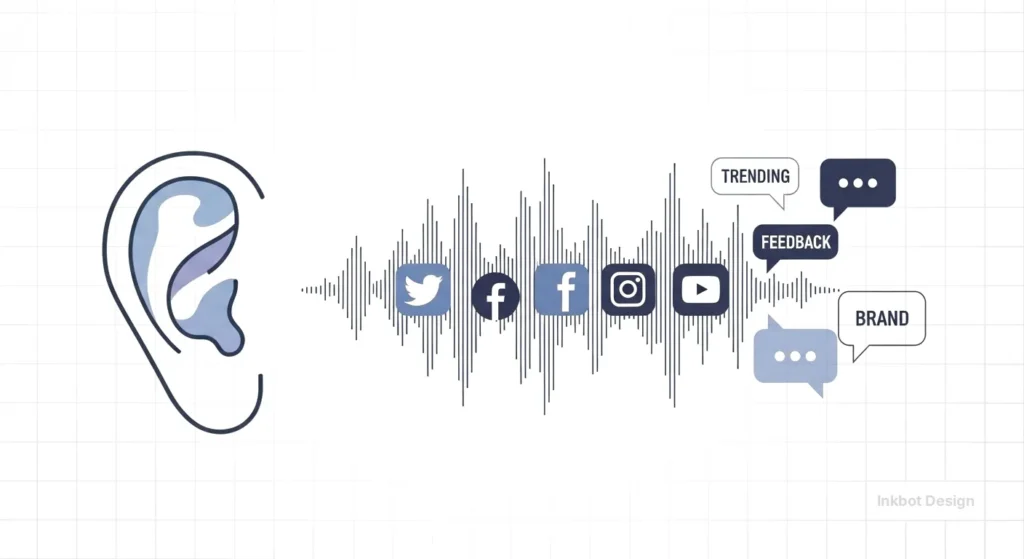
Key Components:
- Keywords & Topics: The specific phrases (brand name, misspellings, product names) you track.
- Sentiment Analysis: Categorising data as Positive, Neutral, or Negative.
- Share of Voice (SOV): Your brand’s visibility compared to competitors.
If you are preparing for a comprehensive brand audit, social listening provides the qualitative data that spreadsheets can’t. It tells you why the numbers are down.
The Brand “Blind-Spot” Test
Are you seeing the full picture? Most brands are “flying blind” without realizing it. Rate your current listening habits to test your vision.
1. Building the Listening Stack: How to Actually Listen
You cannot simply type your brand name into a search bar and expect it to be enough. That is amateur hour. To get actionable data, you need to structure your listening queries using Boolean logic. This filters out the noise and zooms in on the signal.
The Boolean Framework
Effective listening relies on “Operators”. If you aren’t using these, your data is polluted.
| Operator | Function | Example | Why Use It? |
| AND | Includes results containing both terms. | Nike AND “running shoes” | narrows focus to specific products. |
| OR | Includes results with either term. | Nike OR Adidas | Casts a wider net for competitor analysis. |
| NOT | Excludes terms to remove noise. | Apple NOT fruit | Essential for brands with common words as names. |
| NEAR/x | Finds words within X words of each other. | Service NEAR/5 terrible | Finds complaints that don’t follow strict grammar. |
| ( ) | Group terms for complex logic. | (Nike OR Adidas) AND (scam OR broken) | The holy grail of crisis detection. |
What You Must Track (The Protocol)
When we consult for clients, we set up four distinct “Listening Pillars”. If you miss one, your data is incomplete.
1. The Brand Health Pillar
This is the baseline. Track your brand name, your handle, and your key products.
- Crucial Detail: You must track misspellings. If your brand is “Inkbot Design”, you should also be listening for “Ink bot Design”, “InkbotDesign”, and “Inkbot Agency”. People make typos when they are angry. You need to see those tweets.
2. The Competitor Intelligence Pillar
You should know more about your competitors’ failures than they do. Track their brand names combined with negative sentiment keywords.
- The Query: [Competitor Name] AND (fail OR slow OR broken OR expensive OR “customer service”).
- The Win: When their service goes down, you will know instantly. That is your cue to run a targeted ad campaign offering a “reliable alternative.” This is aggressive, but this is business. For a deeper look at this strategy, read our guide on competitor analysis.
3. The Industry Pillar
This tracks the category, not the brands.
- Example: If you sell coffee machines, listen for “espresso machine” AND “complicated”.
- The Insight: If everyone is complaining that machines are too hard to clean, you’ve just found your unique selling proposition (USP): “The Easiest to Clean Espresso Machine.”
4. The “Buying Signal” Pillar
This is where listening prints money. Look for phrases that indicate intent.
- The Query: (recommend OR suggest OR help) AND “graphic designer” AND “UK”.
- The Action: Engage these users immediately. They are waving cash in the air.
2. Metrics That Matter: Moving Beyond Vanity
“Likes” are not a business metric. They are a dopamine hit. For brand health, we focus on three metrics derived from listening.
Net Sentiment Score (NSS)
This is the pulse of your brand. It ranges from -100 to +100.
NSS = ((Positive Mentions – Negative Mentions) / Total Mentions) x 100
- Why it matters: A sudden drop in NSS is the leading indicator of a crisis. Sales usually lag behind sentiment by 3-6 weeks. If NSS drops today, revenue is expected to drop next month.
Share of Voice (SOV)
This measures how much of the conversation you own compared to the market.
SOV = (Your Brand Mentions / Total Market Mentions) x 100
- The Reality Check: If you think you are the market leader but your SOV is 12%, you are hallucinating. You are a niche player. Accept it and adjust your strategy, or allocate the budget to make the necessary changes.
Sentiment Volatility
This measures how quickly sentiment changes. High volatility suggests your brand is unstable or polarising. Low volatility suggests a strong, consistent brand presence—a core goal of brand consistency.
3. The “Automated Sentiment” Myth (Debunking the Industry)
Here is where I disagree with 90% of the software vendors out there. They will sell you expensive dashboards that claim to categorise sentiment automatically with AI.
Do not trust them blindly.
AI struggles with the British nuances of sarcasm.
- The Tweet: “Oh, brilliant. Another train delay. Just what I wanted.”
- The AIClassifies this as “Positive” due to the words “brilliant” and “wanted.”
- The Reality: It is scathing sarcasm.
The Fix: You need a human layer. Use the AI to sort the bulk data, but for critical reporting, you must spot-check the sentiment, especially during a crisis. We often see data skewed by 20-30% because the tool didn’t understand irony.
4. Strategic Application: From Data to Defence
Collecting data is useless if you don’t act on it. Here is how to operationalise social listening.
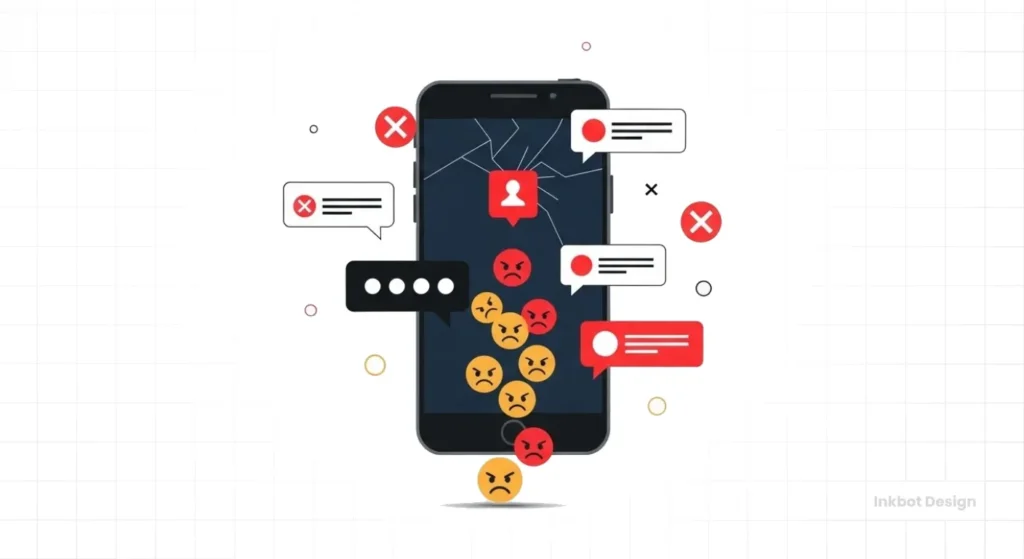
Crisis Management: The “Smoke Detector”
Most PR disasters start small. A single Reddit thread. A tweet from an influencer with 5k followers.
Social listening allows you to set up alerts based on “Velocity”.
- The Trigger: If mentions of “Brand Name + Scam/Racist/Broken” increase by 200% in one hour, send an SMS to the CMO.
- The Result: You can issue a statement or fix the bug before the TechCrunch article is written.
Product Development: The Silent Focus Group
People share their raw, unfiltered frustrations online. They won’t tell you in a survey because they want to be polite. They will tell Reddit.
- Case Study (Anonymous): We collaborated with a skincare brand experiencing declining sales. Surveys said customers loved the product. Social listening revealed the truth: people hated the pump dispenser. It broke after two weeks. The product was great; the packaging was failing.
- The Fix: They changed the bottle. Sales recovered. No amount of ad spend would have fixed a broken bottle.
Content Strategy: Answering the Real Questions
Look at the “Questions” people ask about your industry on Quora and Reddit.
- If people are asking, “Is [Product X] worth the money?” write a blog post that breaks down the ROI.
- If people are asking “How to fix [Problem Y]”, create a video tutorial.
This aligns perfectly with our approach to digital marketing services—content should address existing demand, not just shout at an empty audience.
5. The State of Social Listening in 2026
The landscape has shifted. If you are still relying on text-based listening, you are missing half the picture.
Visual Listening
In 2026, text is secondary. Video and Image are primary.
Users post photos of themselves drinking your coffee or wearing your shoes without writing your brand name.
Modern listening tools now utilise computer vision to scan images and videos (such as TikTok/Reels) for your Logo.
- The Opportunity: You can find user-generated content (UGC) to repost, or spot negative associations (e.g., your logo appearing in a controversial viral video) that text search would miss entirely.
The “Dark Funnel” and Private Communities
More conversations are shifting to private channels—such as Discord servers, WhatsApp groups, and Slack communities. Traditional “scraping” tools cannot legally access these.
- The Strategy: You cannot automate this. You need to embed real human community managers into these spaces (respectfully) or use “Zero-Party Data“—incentivising customers to tell you where they heard about you.
The “Ostrich” Effect
I once audited a mid-sized B2B logistics firm. The CEO was convinced their reputation was sterling because their Net Promoter Score (NPS) from email surveys was high.
I ran a simple social listening query on X (formerly Twitter) and Reddit.
The result? A bloodbath. Drivers were discussing how the company consistently paid late. Warehouse staff were warning potential hires to stay away. Clients were complaining about “hidden fees” in industry forums.
The CEO was an Ostrich. He had his head in the sand (his email surveys), ignoring the predator behind him (public sentiment).
The Lesson: Your brand is not what you say it is. It is what they say it is when you are not in the room. Social listening is about putting your ear to the door.
The Verdict
Social listening is not an optional extra for the marketing intern. It is a critical business intelligence function. It protects your brand health, informs your product roadmap, and alerts you to issues before they impact your revenue streams.
If you are not listening, you are flying blind. And in the current economic climate, you cannot afford to crash.
Here is your next step: Stop guessing. If you suspect your brand reputation may not align with your internal perception, or if you simply want to know where you stand in relation to the competition, we can help.
Request a Quote for a Brand Audit today. Let’s find out what the market is really saying about you.
Frequently Asked Questions (FAQ)
What is the difference between social listening and social monitoring?
Social monitoring is reactive, focusing on responding to individual messages and notifications directed at your brand. Social listening is proactive, analysing macro trends, industry conversations, and sentiment data to inform long-term strategy and brand health.
What are the top tools for social listening in 2026?
For enterprise-level depth, tools like Brandwatch and Sprinklr remain industry leaders. For SMBs, Sprout Social and Mention provide excellent value. For specific visual listening capabilities, look for platforms integrating advanced computer vision AI.
How often should I check social listening reports?
You should have real-time alerts set up for crisis keywords (velocity spikes). For strategic insights, a weekly review of sentiment and share of voice is sufficient. A deep-dive audit should be performed quarterly to align with business goals.
Can social listening help with SEO?
Yes. By identifying the exact questions and phrases your audience uses in forums and social discussions, you can develop content strategies that target high-intent, long-tail keywords, thereby improving your topical authority and search rankings.
Is sentiment analysis 100% accurate?
No. Automated sentiment analysis often struggles with sarcasm, irony, and slang. It is useful for processing large datasets, but critical decisions should always involve human verification of the data to ensure accuracy and reliability.
What is Visual Listening?
Visual listening uses image recognition technology to identify your brand’s logo or products within images and videos, even if the brand name is not mentioned in the text. This is crucial for tracking brand presence on platforms like Instagram and TikTok.
How do I calculate Share of Voice (SOV)?
Divide your brand’s total mentions by the total mentions of all brands in your market (including yours) for a specific period, then multiply by 100. This percentage represents your “share” of the industry conversation.
Is social listening legal?
Yes, as long as you are analysing publicly available data. Social listening tools scrape data from public profiles and forums. Accessing private messages, closed groups, or non-public data without consent breaches privacy laws (like GDPR).
Can social listening generate sales leads?
Absolutely. By tracking “intent keywords” (e.g., “looking for,” “recommend,” “alternative to”), you can identify potential customers who are actively searching for a solution you offer and engage them directly.
How does social listening improve customer service?
It allows you to spot complaints that don’t tag your brand handle. By proactively finding and resolving these “untagged” issues, you can turn a frustrated user into a brand advocate and prevent negative sentiment from spreading.