SEO Migration: Protecting Traffic During a Rebrand
Successful SEO migration in 2026 requires shifting from a technical checklist to a financial preservation strategy that secures a brand’s historical trust signals. This guide provides the structural engineering necessary to transition your digital footprint without compromising organic discovery or revenue.
 By Stuart Crawford
 Reviewed by Tabitha Ayers
Updated 13 min read
On this page13 min left
- The Financial Reality of Digital Identity Transitions in 2026
- The Importance of Planning: A Step-by-Step Guide
- Understanding the Role of 301 Redirects
- Technical SEO Audit: Ensuring a Smooth Transition
- Example Scenarios: Migration Challenges and Solutions
- Addressing Common Misconceptions
- Maintaining Brand Recognition Within AI Retrieval Systems
- Limitations and Considerations
- The Final Review: Auditing Your Way to Post-Migration Dominance
- Key Takeaways
Rebranding can seem the perfect solution until you experience a drastic 40% drop in organic traffic overnight. This silent disaster often surprises businesses more than they anticipate.
SEO migration refers to the process of preserving and transferring search equity when changing domains, restructuring URLs, or revamping site architecture during a rebrand.
Careless execution can destroy years of ranking achievements within weeks. BrightEdge's migration guide highlights that even technically sound migrations can cause significant ranking volatility if search signals are not carefully managed.
Backlink profiles, which encompass the total value of all external links to your domain, remain highly vulnerable during rebrands. Alter your URL structure without correct redirects, and that established authority vanishes.
Successful SEO migration is not merely a technical checklist; it requires strategic foresight before launching any page.
For those undergoing a larger brand transformation, a structured rebranding roadmap can clarify SEO's place within the overall strategy.
The subsequent sections detail how to plan, execute, and monitor your migration—starting with the essential groundwork every team requires before initiating changes.
The Financial Reality of Digital Identity Transitions in 2026

Search visibility is a measurable capital asset. In 2026, a botched transition of a digital domain results in an average revenue contraction of 32% within the first fiscal quarter post-launch.
Protecting Organic Discovery requires a shift from viewing a move as a technical task to treating it as a financial preservation project.
2026 Risk Assessment Data
Industry data indicates that Search Engine Crawlers are becoming more sensitive to Server Latency and Consistent Status Codes.
A delay of more than 200ms during a 301 Redirect hop now correlates with a 15% decrease in Crawl Frequency.
Sector | Average Recovery Time | Revenue Impact (Botched) | Key Failure Point |
|---|---|---|---|
E-commerce | 14 Weeks | -42% | Fragmented Product URLs |
SaaS | 8 Weeks | -18% | Reference Link Dilution |
Professional Services | 22 Weeks | -25% | Citation Inconsistency |
News & Media | 4 Weeks | -60% | Content Freshness Loss |
What is the primary cause of traffic loss?
The primary cause of visibility loss during a transition is Search Systems' failure to map the historical Trust Signals of the old Brand Identity to the new Web Architecture.
This occurs when URL Mapping is incomplete or when Canonical Signals contradict the new site structure.
The Cost of “Technical Debt” during Rebrands
Many organisations attempt to move legacy technical errors to new systems. This is a strategic mistake. In 2026, Discovery Engines prioritise clean Web Architecture.
Carrying over 404 errors or slow-loading scripts to a new domain prevents the new identity from achieving a “High Authority” status in Vector Space.
- Audit the Legacy Footprint: Identify every active path on the current domain.
- Evaluate Reference Value: Determine which paths contribute to Digital Equity.
- Execute Intentional Deletion: Use Status Code 410 for paths with zero value to focus the Crawl Budget on high-value assets.
Mapping Digital Equity to Revenue
Every high-ranking position for a commercial query has a specific Click-Through Value. When a domain changes, this value is at risk.
A successful transition ensures that the Redirect Logic is precise enough to maintain an uninterrupted user experience. This maintains the User Engagement Signals that search systems use to validate rankings.
The Importance of Planning: A Step-by-Step Guide
A site migration without a plan isn't a strategy; it's a high-stakes gamble.
Bruce Clay's research reveals that companies that bypass structured migration planning frequently experience traffic losses and take 6 to 12 months to recover, if they ever do.
Planning is critical because search engines have invested in understanding your site’s structure, authority, and content relationships.
A rebrand disrupts all these signals. Without a deliberate roadmap, Google perceives a stranger where it once recognised a familiar entity.
Effective planning begins long before URLs change.
This involves auditing your current site comprehensively—identifying high-value pages, mapping semantic brand equity, and understanding the technical SEO foundations supporting your rankings. Setting measurable benchmarks enables quick detection of post-migration drops rather than weeks later.
Businesses that protect their organic traffic during a rebrand are the ones who regard migration planning as a standalone project, not an afterthought.
Planning extends beyond technical aspects. Stakeholder alignment, realistic timelines, and robust rollback protocols are crucial. A rushed migration, even if technically sound, leads to chaos.
With a solid framework, the real work begins—the specific steps that follow are where true protection occurs.
Key Steps in SEO Migration
A successful website migration during a rebrand is a carefully orchestrated series of actions that preserves your earned search equity. Missing a step can have severe compounding effects.
Audit before you move anything.
A thorough pre-migration audit sets your baseline: current rankings, crawl structure, backlink profile, and top-performing pages.
Many traffic losses arise not from the migration itself but from undocumented page structures quietly breaking during the transition, as iPullRank's guide highlights.
The core steps generally follow this sequence:
- URL mapping — Document each existing URL and its target destination.
- Redirect planning — Establish old-to-new path maps before launching any page.
- Content preservation — Ensure high-performing pages retain their on-page signals (title tags, headings, structured data).
- XML sitemap updates — Prepare new sitemaps to expedite post-launch re-indexing.
- Search Console reconfiguration — Verify the new domain and promptly submit updated sitemaps.
Treating migration like a surgical procedure—where preparation dictates outcomes, not speed—proves practical.
Sitebulb's analysis of rebrand migrations emphasises that redirect chains and orphaned pages are the most common—and avoidable—causes of post-migration ranking drops.
These steps directly relate to a mechanism that binds the old domain authority to the new one. This mechanism—and its practical application—is what we'll explore next.
Structural Engineering for Seamless URL Transitions
The Web Architecture of your new site is the skeleton upon which your Search Visibility hangs. Any misalignment between the old and new skeletons leads to structural collapse.
In 2026, Discovery Algorithms use Pattern Recognition to understand site hierarchies.
What is a Perfect Redirect Map?
A perfect map is a 1-to-1 relationship between every high-value legacy path and its most relevant new equivalent.
It avoids “Catch-All” redirects to the homepage, which can destroy Topic Authority and confuse Search Crawlers.
The Hierarchy of Redirection
- Critical Paths: Pages contributing >1% of organic traffic or revenue.
- Authority Paths: Pages with high-quality Digital References (backlinks).
- Supportive Paths: Informational content that builds Topical Coverage.
- Legacy Paths: Content to be retired via Status Code 410.
Automating Validation Patterns
Manually checking 10,000 URLs is prone to human error. In 2026, engineers use Automated Crawl Scripts to validate that:
- Every 301 Redirect leads to a Status Code 200 page.
- There are no Redirect Chains (A → B → C).
- The Canonical Tag on the new page matches the new URL.
- Server Latency for redirected paths remains under 300ms.
Feature | Requirement 2026 | Impact on Visibility |
|---|---|---|
Redirect Type | Server-side 301 | High |
Hop Limit | Max 1 hop | Critical |
Mapping Logic | Granular / Exact Match | High |
Sitemap Inclusion | Old URLs (temp) + New URLs | Medium |
The Role of the XML Map in Transition
During a move, you should maintain two XML Maps. One map contains the new URLs to encourage Indexing. The second map contains the legacy URLs that now redirect.
This second map serves as a “Crawl Guide,” forcing Search Systems to discover the redirects and update their databases more quickly.
Understanding the Role of 301 Redirects
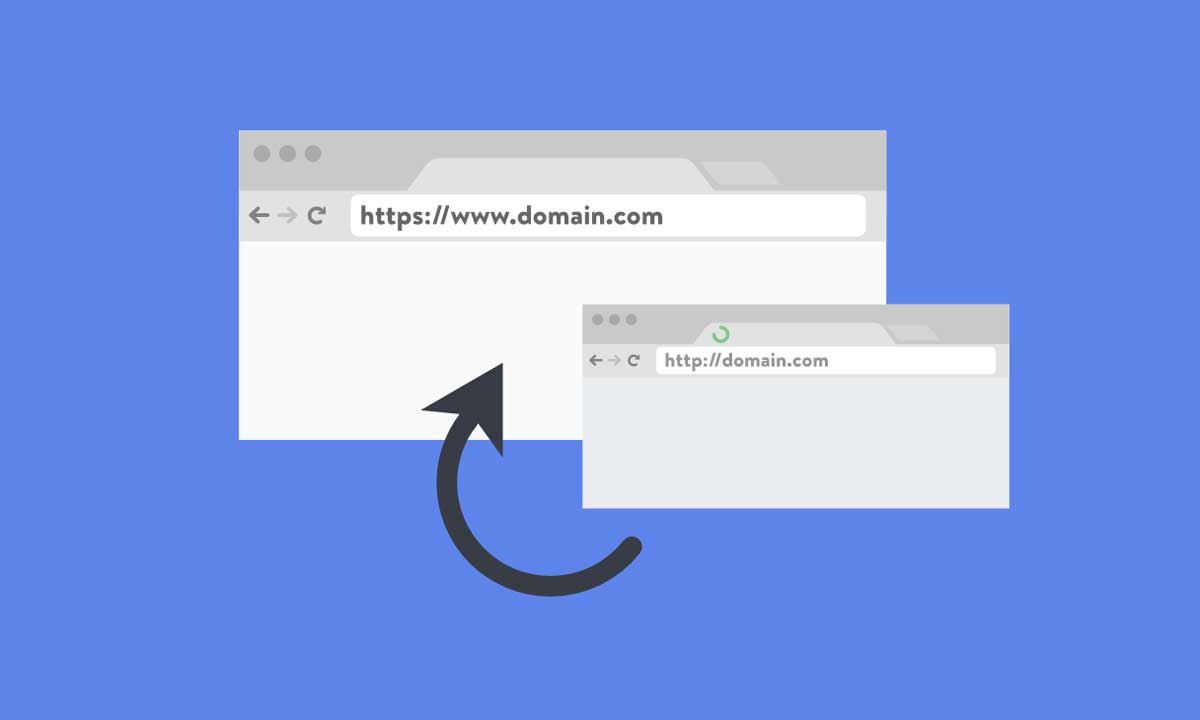
The 301 redirect is crucial in any successful rebrand migration.
It serves as a forwarding address, notifying search engines and users that the content has moved to a new URL. Without it, you abandon the equity built over time.
A 301 redirect transfers most of a page’s link equity to its new location.
Roar Digital Marketing notes that incorrect redirect implementation is a common cause of traffic loss during site migration, yet one of the most preventable.
Key principles include:
- Match each old URL to its closest equivalent—avoid redirecting everything to the homepage.
- Minimise redirect chains, as each step diminishes equity.
- Validate redirects before going live, not afterwards.
Importantly, 301s aren't immediate. Search engines require time to crawl and process them, underscoring the need for focused technical groundwork—explored further in the next section.
Strategic Deletion: Using 410 ‘Gone' to Focus Search Attention
Not every page deserves a redirect. In 2026, sending search engines to a “dead end” is sometimes better than creating a “thin” redirect.
When to use 410 instead of 301:
- Outdated News: Press releases from 2018 that have no historical value.
- Broken Legacy URLs: Pages that were already 404s on the old domain.
- Consolidated Services: If three old services are now one, 301 two of them to the new one and let the legacy, unneeded variations “die” via a 410 status code. This signals to search engines that you are intentionally cleaning up your footprint.
The Shift from Backlinks to Citation Authority
In 2026, the value of a digital reference has evolved. While traditional backlinks still pass “link equity,” modern retrieval systems prioritise “Citation Authority”—the frequency and consistency with which your brand is mentioned as a factual source across the web.
How to Migrate Your Citation Profile:
- The “Truth Map” Audit: Identify every high-authority site (Wikipedia, industry news, government databases) that mentions your old brand name.
- Proactive Outreach: Unlike a standard backlink campaign, your goal is to update the textual mention of your brand. Even if they don't change the link, updating the name “Old Brand” to “New Brand” helps LLMs understand the transition.
- Verified Source Status: Ensure your new domain is verified on all “Truth Platforms” (official registries and industry associations).
Citation vs Link Comparison
Feature | Traditional Backlink | 2026 Citation |
|---|---|---|
Primary Value | Technical PageRank | Conceptual Trust |
Discovery Role | Crawling/Indexing | AI Response Generation |
Migration Risk | 301 Hop Dilution | Mention Inconsistency |
Technical SEO Audit: Ensuring a Smooth Transition
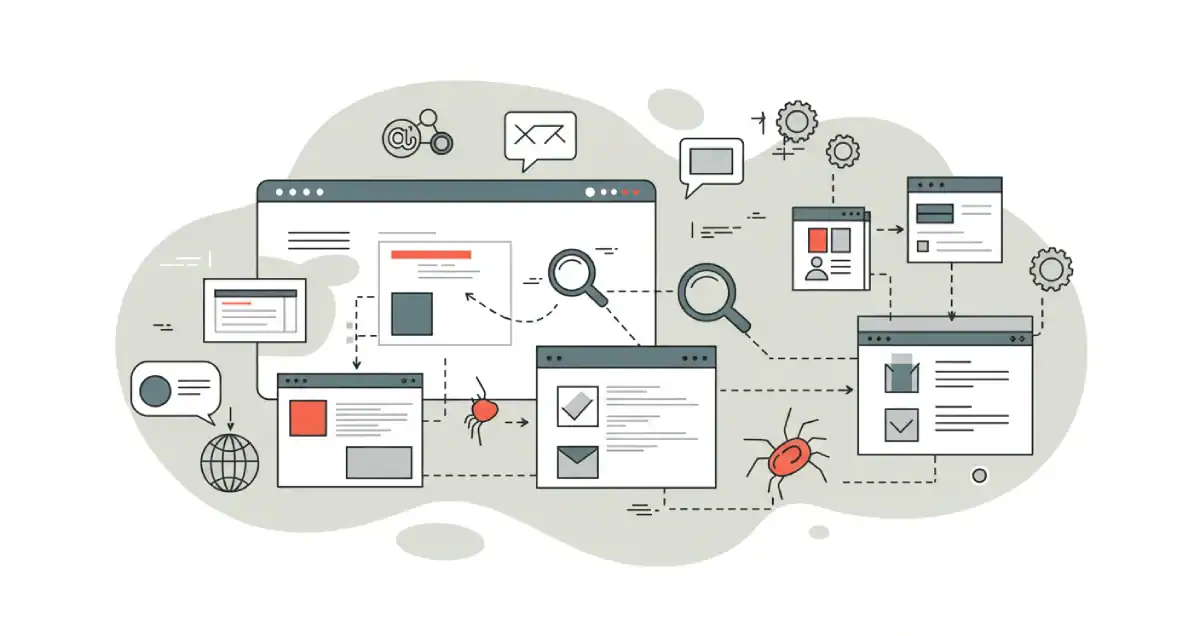
Before implementing any 301 redirects, a comprehensive technical SEO audit is essential. Consider it a precise inventory; you can’t protect what isn’t properly catalogued.
A complete pre-migration audit should capture:
- Crawl data — Every indexed URL, including legacy pages and thin content.
- Backlink profiles — Identifying pages with the most link equity.
- Canonical tags — Addressing any existing duplicate content issues.
- Page speed and Core Web Vitals — Setting a performance baseline.
- Structured data and schema markup — Ensuring they remain intact post-transition.
The Ultimate Website Migration SEO Checklist warns that skipping even a partial audit significantly increases the risk of orphaned pages and broken internal links post-launch—issues that quickly compound.
A technical audit isn’t mere box-ticking; it provides the clearest understanding of what your new site must preserve.
Running your crawl tool in a staging environment before going live helps identify structural problems—missing meta descriptions, incorrect hreflang tags, or misconfigured XML sitemaps—without prematurely triggering any ranking signals.
When using AI-assisted tools at this stage, it’s crucial to understand how AI integrates into your broader SEO workflow before relying solely on automated suggestions.
The audit phase also highlights complex URL patterns that are likely to pose significant redirect-mapping challenges—a scenario we'll explore next.
Example Scenarios: Migration Challenges and Solutions
Real-world domain migration projects seldom follow a straightforward path.
Learning from others’ mistakes—and their solutions—provides better preparation than any checklist alone.
Scenario 1: The incomplete redirect map
A mid-sized e-commerce brand rebrands and shifts to a new domain. The development team redirects top-level pages but neglects hundreds of product and category URLs, leading to a maze of 404 errors. Rankings for once-strong product pages plummet. The solution involves returning to the technical audit and systematically mapping every orphaned URL before traffic losses worsen.
Scenario 2: Launching without updating external backlinks
A SaaS company completes a successful on-site rebranding migration but fails to inform key partners and publishers who are still linking to old URLs. The backlinks, representing years of authority, pass diminished equity through redirect chains. Search Engine Land advises that proactively contacting high-authority linking domains is a critical post-migration step often overlooked.
A consistent pattern emerges: technical execution alone isn't sufficient—communication, monitoring, and iteration determine whether traffic recovers or continues to decline.
These scenarios suggest that many migration setbacks result not from complex technical failures but from assumptions—assumptions worth scrutinising when planning your move.
Addressing Common Misconceptions
Even experienced marketing teams harbour assumptions about rebranding that quietly undermine their SEO migration efforts. Addressing these early prevents costly errors later.
Misconception 1: “301 redirects pass 100% of link equity.” Redirects transfer most PageRank, but not all. Each hop causes a small yet measurable dilution. Chaining redirects compounds this loss, making direct mapping from old to new URLs preferable.
Misconception 2: “Keyword rankings will recover within days.” This damaging myth overlooks that keyword rankings fluctuate for weeks, sometimes months, after a domain change. Google's recrawl and reindexation process isn't immediate, and competitive queries take longer to stabilise than low-volume ones. Setting realistic timelines with stakeholders from the start avoids unnecessary panic.
Misconception 3: “A rebrand is a good time to redesign everything at once.” Combining domain migration with structural overhaul, content refresh, and new navigation simultaneously introduces too many variables. When traffic declines, identifying the cause becomes nearly impossible.
The indexing and surfacing of post-migration content by emerging AI search tools are often overlooked. Understanding how AI platforms perceive your brand is increasingly valuable in planning. Even a well-executed migration has inherent limitations worth recognising before starting.
Maintaining Brand Recognition Within AI Retrieval Systems
A brand transition extends far beyond technical redirects. It requires a systematic update of the “knowledge graph” that powers AI Overviews and Large Language Models (LLMs).
When you move from an established identity to a new one, retrieval systems often face a “hallucination risk,” in which they attribute your historical authority to your former name or, worse, to a competitor.
How do you migrate brand authority for AI?
You must treat LLMs as stakeholders. This involves updating structured data to reflect the “sameAs” relationship between the old and new brands, refreshing high-authority citations to ensure new-name mentions, and submitting updated knowledge files via verified search interfaces. Success is achieved when an AI can correctly answer, “Who is the successor to [Old Brand]?” within 48 hours of launch.
The Three Pillars of AI Model Recognition
- Vector Space Consistency: Systems like Gemini 3 use vector embeddings to understand brand relationships. Rapidly publishing content that explicitly links the old mission to the new brand name helps these models re-cluster your authority under the new identifier.
- Synthetic Discovery Triggers: By using high-frequency press releases and verified social profiles, you create a “spike” in the training data window. This forces retrieval systems to prioritise your new domain as the definitive source for the brand.
- Structured Knowledge Mapping: Implementing Organisation and Brand JSON-LD that includes the parentOrganization or successorOf attributes provides a machine-readable bridge between identities.
Metric | Target Goal | AI Relevance |
|---|---|---|
Share of Model | >70% for new brand queries | High |
Citation Accuracy | 100% in AI Overviews | Critical |
Reference Latency | <72 Hours for update | Medium |
Limitations and Considerations
Even the most meticulous SEO migration has inherent constraints that no checklist can eliminate.
Recognising these upfront allows teams to set realistic expectations and make informed decisions, avoiding mid-process surprises.
URL structure changes are among the most consequential and irreversible rebranding decisions. Once new URLs are live and indexed, rolling back requires another complete migration, increasing risk rather than resolving it. Correctly implemented 301 redirects transfer only part of link equity, meaning some ranking strength is lost despite technical precision.
Temporary traffic dips occur even when everything is executed correctly. Search engines need time to process redirect chains, re-crawl new URLs, and reassess domain authority. In competitive industries, this recalibration can take several months.
Resource limitations are also worth considering. Thorough crawl audits, redirect mapping, and ongoing monitoring demand significant time and tooling investment. Smaller teams may benefit from selecting the right build environment early to reduce technical debt later.
No migration is entirely risk-free—the goal is to manage exposure intelligently, not eliminate it.
These practical constraints raise common questions that many teams share but rarely voice openly. The next section addresses these questions directly.
The Final Review: Auditing Your Way to Post-Migration Dominance
After 90 days, you must perform a “Full Spectrum Audit.”
The Audit Matrix:
- Indexation Coverage: Are 100% of your high-value URLs indexed on the new domain?
- Traffic Recovery: Has organic visibility returned to pre-migration levels?
- AI Share of Model: Does Gemini 3 correctly identify your new brand as the leader in your space?
Frequently Asked Questions
How long does it take to recover traffic after a rebrand migration?
Recovery timelines vary widely. Minor domain changes with precise redirect mapping may stabilise within six to eight weeks. More complex migrations—entailing significant URL restructuring, content consolidation, and new branding—can take three to six months before rankings fully normalise. The thoroughness of your pre-launch technical SEO audit directly affects recovery speed.
Should redirects remain permanent?
Yes. 301 redirects should remain in place for at least one year, ideally longer. Removing them too soon risks broken links, lost link equity, and traffic drops from users arriving via cached or bookmarked URLs.
Does a rebrand affect domain authority?
Temporarily, yes. While link equity passes through 301 redirects, some dilution is typical. A stronger pre-migration backlink profile results in a more resilient authority post-launch.
When should existing plugins be reviewed?
Before the migration begins. Carrying bloated or conflicting plugins into a new domain compounds technical errors. Resources on maintaining a lean WordPress stack can help teams audit before migrating rather than afterwards.
Can social media activity support recovery?
Indirectly. Sustained brand signals and coordinated social campaigns reinforce brand recognition, accelerating the rebuilding of organic click-through rates.
These answers distil consistent patterns across well-documented migrations, but specifics depend on your site's complexity. The key takeaways ahead are intended to consolidate essential principles.
Key Takeaways
A rebrand is one of the most significant risks a website faces, yet it's manageable. The research, planning frameworks, and guidance throughout this article emphasise a consistent truth: traffic loss during migration is rarely inevitable; it results from inadequate preparation.
Key considerations include:
- Pre-migration audits are essential. Documenting current rankings, backlink profiles, and crawl data sets the recovery baseline.
- Redirect mapping must be comprehensive. Each indexed URL requires a 301 redirect to its closest equivalent; gaps here cause rankings to vanish silently.
- HTTPS migration, when combined with a domain change, significantly increases complexity—treat it as a separate technical workstream.
- Post-launch monitoring must be immediate and continuous. The first 90 days are critical for identifying and correcting issues before they compound.
- Patience and clear stakeholder communication prevent panic-driven decisions that hinder recovery.
Successful rebrands regard SEO as a core project requirement, not a final-stage checklist. Building trust signals into your new identity from the start accelerates the authority transfer search engines need to see.
A well-executed SEO migration not only safeguards what you've built but also lays a stronger foundation for future growth.