Rebranding vs Brand Refresh: The 2026 Strategic Guide
A CEO told me he wanted a full rebrand because his primary brand colour felt “dated.” His company was thriving, yet he was ready to discard a decade of market authority for a cosmetic whim.
I gave him the only honest advice a consultant could: “Go on holiday; your brand is fine.”
In an age where your identity is processed by Search Generative Experience (SGE) and Large Language Models as much as by human eyes, “tinkering” is a dangerous game.
Most businesses today are one bad design decision away from becoming invisible to the algorithms that drive their growth.
This guide breaks down the clinical difference between a Brand Refresh—a surgical update to remain relevant in a mobile-first, AI-driven world—and a Full Rebrand, which is a “nuclear option” for businesses undergoing a total structural pivot.
If you’re at a crossroads, understanding this distinction is the difference between a strategic win and a digital disappearance.
- Distinguish depth and intent: Refresh preserves DNA; rebrand replaces name, positioning, and core values for a strategic pivot.
- Refresh is surgical: modernise visuals, reduce visual debt, retain trust and improve mobile/AI legibility without renaming.
- Rebrand is nuclear: use for mergers, reputation resets, market pivots or legal necessity; expect high cost and complexity.
- Technical parity matters: implement 301 maps, sameAs schema, and entity mapping to preserve SEO and AI visibility.
- Change management is crucial: involve employees and advocates, provide a Brand Bible and plan a coordinated kill-the-old-brand day.
Rebranding vs Brand Refresh?
The fundamental distinction lies in the Depth of Change and the Intent of the Shift.

Rebranding Defined
A Rebrand is the process of fundamentally changing an organisation’s corporate image. It involves a total shift in the brand’s identity, including its name, logo, visual assets, and, most importantly, its core values or market positioning. It is a strategic pivot designed to distance the company from its past or to enter an entirely new market.
Brand Refresh Defined
A Brand Refresh is a tactical update to a brand’s existing identity. It maintains the brand’s core DNA—the name and primary values remain—while modernising visual elements (colour palettes, typography, UI/UX) to ensure it remains relevant in a changing market.
The 3 Core Elements of the Choice:
- DNA Integrity: Does the name and mission stay? (Yes = Refresh | No = Rebrand).
- Market Position: Are you talking to the same people? (Yes = Refresh | No = Rebrand).
- Capital Risk: Is the primary goal “Modernisation” or “Transformation”?
Strategy Diagnostic
Refresh or Rebrand? Find your 2026 strategic path in 30 seconds.
Path: Brand Refresh
Your brand equity is valuable. You don’t need a pivot; you need a “surgical update” to remove visual debt and align with 2026 digital standards.
Request a Refresh QuotePath: Full Rebrand
The “Nuclear Option” is your best bet. A fundamental shift in identity is required to survive a market pivot or reputation reset.
Start Your RebrandThe Strategic Depth of a Brand Refresh
A refresh is not “just a logo tweak.” It is a surgical procedure designed to remove the “Visual Debt” your company has accumulated over the years.
Why Refresh in 2026?
In the current digital climate, visual trends expire faster than ever. What looked “modern” and “minimalist” in 2022 now looks like a generic SaaS template.
A refresh allows you to maintain the trust you’ve built over a decade while shedding the aesthetic baggage that makes you look dated to new prospects.
Nielsen data indicates that 60% of consumers prefer to buy new products from brands they are familiar with. A refresh leverages this familiarity. You aren’t asking the customer to learn a new name; you are simply showing them that you are still the leader in your space.
Real-World Example: Mastercard
Mastercard’s evolution is the perfect study of a high-stakes refresh. They didn’t change their name. They didn’t change their red and yellow circles.
Instead, they removed the interlocking stripes, cleaned up the typography, and eventually removed the word “Mastercard” from the logo entirely.
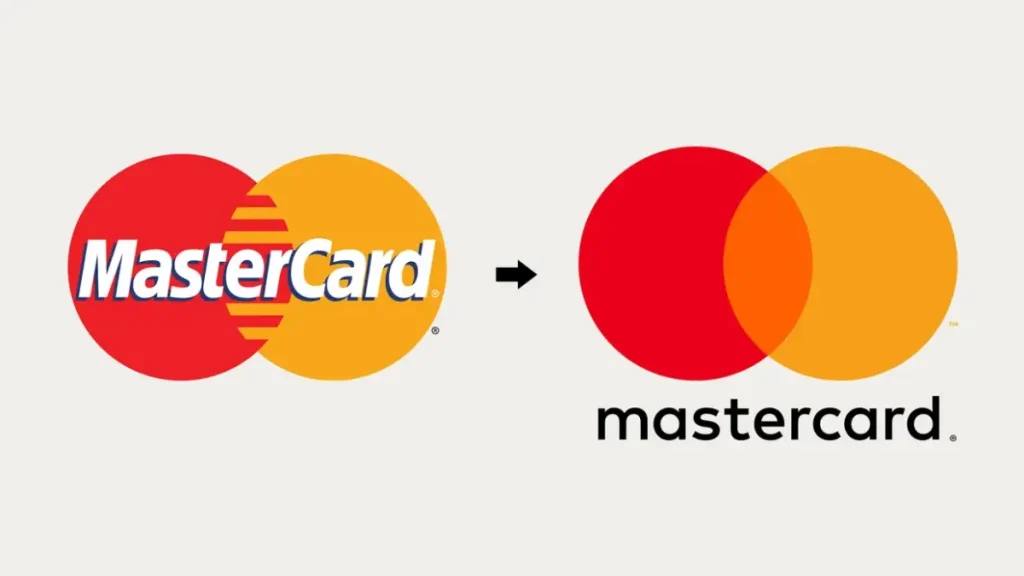
They recognised that in a mobile-first world, their brand needed to work as a tiny icon on a smartphone. By simplifying, they increased legibility without losing 50 years of brand equity.
This is a brand refresh executed with clinical precision.
When Rebranding is Mandatory
Rebranding is a high-risk, high-reward manoeuvre. You are essentially telling the market, “Forget everything you knew about us.”
The Catalyst for a Full Rebrand
- Mergers and Acquisitions: Two entities becoming one often requires a “Neutral Third” identity to prevent internal culture wars.
- Negative Reputation: If your brand is synonymous with a scandal or a failed product line, no amount of “refreshing” will help. You need a clean break.
- Market Pivot: If you were a “Recruitment Firm” and you are now an “AI Software Company,” your old brand is a lead weight.
- Legal Necessity: Trademark disputes often force a rebrand.
The Naming Architecture: Moving Beyond the “Brainstorm”
When a full rebrand necessitates a name change, you are not just choosing a word; you are selecting a future-proof vessel for your reputation.
In 2026, a name must survive three distinct filters: Linguistic Resonance, Digital Availability, and Algorithmic Clarity.
The Four Naming Archetypes for 2026:
- Descriptive: (e.g., “The London Coffee Co.”) – High immediate clarity, but difficult to trademark and scale globally.
- Abstract/Invented: (e.g., Zalando, Exxon) – High trademarkability, but requires massive marketing spend to imbue the name with meaning.
- Metaphorical: (e.g., Amazon, Apple) – High emotional resonance, but risks “Entity Confusion” in AI search if not mapped correctly via schema.
- Acronymic/Alphanumeric: Generally discouraged in 2026 due to poor “Search Memorability” and high competition for short domains.
The “Global-Ready” Test. Before committing to a name, brands must conduct a Linguistic Audit. A name that sounds premium in the UK may have unintended negative connotations in emerging markets like Brazil or Indonesia. In 2026, brands use AI-driven sentiment analysis to detect slang, phonetic errors, and cultural insensitivity across 50+ languages simultaneously.
Legal and Trademark Clearance: Don’t fall in love with a name until you have run a “Level 1” search via the UK Intellectual Property Office (IPO) and the WIPO Global Brand Database. Professional rebranding requires a Knockout Search to ensure you aren’t infringing on existing trademarks in related “NICE Classes.”
Real-World Example: Meta (formerly Facebook)
When Facebook rebranded to Meta, it wasn’t because they liked the infinity symbol. It was a strategic move to distance the parent company from the “Social Media” baggage of the Facebook platform and to signal a total pivot toward the Metaverse.

They needed to signal to investors and the public that they were no longer just an app company, but an infrastructure company.
If you are at a crossroads, you should consult an expert on when and how to rebrand before making a move that could alienate your legacy user base.
Why Customers Resist Change: The Science of Loss Aversion
Human beings are neurologically wired to prefer the familiar. This is known as Status Quo Bias.
When you refresh a brand, you are asking consumers to update their “Mental Map” of your company. If you rebrand entirely, you are forcing them to build a new one from scratch.
The “Mercy” vs. “Shock” Approach
- The Mercy Approach (Refresh): Small, incremental updates (like the Google Workspace icons) that evolve over the years. This minimises the risk of alienating long-term users.
- The Shock Approach (Rebrand): A sudden, total shift (like Twitter to X). This is only recommended when the legacy brand is so toxic or outdated that the risk of staying is higher than the risk of leaving.
To mitigate consumer backlash, brands in 2026 employ Co-Creation Strategies.
By involving your most loyal customers (your “Brand Advocates”) in the testing phase of a new visual identity, you convert potential critics into vocal supporters on day one of the launch.
Sector-Specific Rebranding: Navigating Unique Compliance Landscapes
The stakes for a brand shift are not uniform across industries.
In 2026, the regulatory and “Trust Signals” required for a FinTech firm are radically different from those of a luxury retail brand.

Healthcare & Life Sciences: The Trust Pivot
In healthcare, a brand refresh is often driven by patient-centricity. In 2026, medical brands are moving away from “Sterile Blue” and clinical imagery toward warmer, more accessible aesthetics that comply with WCAG 3.0 accessibility standards. A rebrand in this space often occurs during a shift from “Service Provider” to “Health-Tech Platform.”
FinTech & Professional Services: The Security Refresh
For financial institutions, a brand refresh must signal Stability and Innovation. In 2026, this involves integrating “Trust Badges” and “On-Chain Verification” links directly into the digital brand assets. If a bank rebrands, it must manage the “Technical Debt” of updating thousands of secure portals without triggering security warnings for users.
Manufacturing & Industrial: The Sustainability Overhaul
UK manufacturers are currently undergoing the “Green Refresh.” This isn’t just a new logo; it’s a transparency initiative. Brand guidelines now include Environmental, Social, and Governance (ESG) reporting templates as a core component of the identity.
| Technical Aspect | The Amateur Way (The “Facelift”) | The Pro Way (The “Strategic Shift”) |
| Typography | Choosing a “trendy” font from Google Fonts. | Customised kerning and licensing for high-DPI 2026 displays. |
| Colour Palette | Picking colours the CEO likes. | Semantic colour theory analysed for accessibility (WCAG 3.0). |
| SEO Strategy | Changing URLs without a 301 redirect map. | Comprehensive rebranding checklist with SEO parity audit. |
| Brand Voice | Writing “friendly” copy. | Developing a House of Brands architecture. |
| Digital Assets | Re-uploading a new logo to the website. | Full SVG optimisation and CSS variable injection for site-wide consistency. |
The State of Brand Identity in 2026
We are currently seeing a massive shift in how brands are perceived by Large Language Models (LLMs) and Search Generative Experiences (SGEs).
In 2026, your brand identity is no longer just for humans; it’s for algorithms. If your company rebranding doesn’t include Semantic Entity Mapping, you are invisible.
When a user asks an AI, “What is the most reliable branding agency in the UK?”, the AI doesn’t look at your logo. It looks at the “Entity Relationship” your brand has established across the web.
Key 2026 Shift:
- Minimalism is Dead: The “Blanding” trend of the 2010s is being replaced by “Expressive Utility.” Brands are becoming more maximalist to stand out in an AI-generated sea of sameness.
- Audio Branding: With the rise of voice search, your “Visual Identity” is only half the battle. What does your brand sound like?
- Sustainable Verification: Brands are now expected to provide “On-Chain” proof of their values, especially in the UK and EU markets, where greenwashing regulations are at their peak.
The Regulatory Lens: Sustainability & Greenwashing in 2026
In the UK and EU, rebranding is no longer just about aesthetics; it is about Legal Compliance.
With the full enforcement of the UK Green Claims Code and the EU Green Claims Directive, businesses must be cautious when refreshing their brand to include “eco-friendly” or “sustainable” imagery.
Avoid the “Greenwashing” Rebrand
If your brand refresh involves shifting your colour palette to greens and earth tones to imply sustainability, you must have the data to back it up.
The Competition and Markets Authority (CMA) has begun fining firms that use visual cues to mislead consumers about their environmental impact.
- The Transparency Rule: If your rebrand claims you are “on a journey to Net Zero,” your brand guidelines must include a link to your verified carbon reduction plan.
- On-Chain Verification: Forward-thinking brands are now using Blockchain-based verification (e.g., Provenance) to provide a “Digital Product Passport” that consumers can scan to verify brand claims.
The Inside-Out Rebrand: Why Your Staff are the First Audience
The biggest failure point of a full rebrand is not the customer’s reaction, but Employee Alienation.
If your team doesn’t understand the “Why” behind the change, they will continue to speak in the old brand voice, creating a disjointed customer experience.
Change Management Steps:
- The Pre-Reveal: Share the new identity with your “Brand Champions” (long-term staff) 30 days before the public launch. Gather feedback to ensure the new values resonate with the actual office culture.
- The Brand Bible: Provide every employee with a digital Brand Portal (using tools like Frontify or Lingo) that includes updated templates for everything from Slack avatars to PowerPoint decks.
- The “Kill the Old Brand” Day: Set a specific date to retire all old physical assets (letterhead, mugs, business cards). This creates a psychological “Clean Break,” helping the team adopt the new identity.
Quantifying the Intangible: ROI Metrics for 2026
How do you measure if a £100,000 rebrand was “worth it”? In 2026, we look beyond “do people like the logo?” to hard data.
- Direct Traffic Growth: A successful rebrand or refresh should see an increase in “Navigational Search” (people typing your name directly into the bar).
- Customer Acquisition Cost (CAC) Reduction: Modernised brands typically see a 10-15% reduction in social media ad spend due to higher Click-Through Rates (CTR) on refreshed creative assets.
- Employee Retention: Internal surveys post-rebrand should show a measurable uptick in “Brand Pride” and recruitment referral rates.
- Brand Premium: Can you now charge more? A strategic rebrand allows a company to move from “Commodity” pricing to “Premium” positioning.
Budgeting for Rebranding vs Brand Refresh
Choosing between an update and an overhaul is not just a creative decision; it is a Capital Allocation strategy.
In 2026, the cost of “getting it wrong” has spiked due to the complexity of digital ecosystems.
Estimating Your Investment
While a brand refresh is generally more cost-effective, it is a mistake to view it as “cheap.”
A professional refresh for a UK-based SME typically requires a budget of £15,000 to £35,000, whereas a full strategic rebrand—including market research, name testing, and full asset migration—starts at £50,000 and can easily exceed £150,000 for mid-market firms.
| Expense Category | Brand Refresh (Tactical) | Full Rebrand (Strategic) |
| Strategy & Discovery | 20% – Audit of existing assets. | 40% – Deep market & competitor research. |
| Visual Identity | 50% – Logo cleanup, new typography. | 30% – New logo, custom typeface, full UI kit. |
| Technical Migration | 10% – Minor CSS updates. | 20% – Domain change, 301 maps, API updates. |
| Internal Launch | 5% – Email announcement. | 10% – Staff training, culture workshops. |
| Legal/IP | Minimal. | High – Global trademarking & registration. |
The ROI of Doing Nothing
The hidden cost many CEOs ignore is the Visual Debt Interest. When your brand looks dated compared to a leaner, more modern competitor, your Customer Acquisition Cost (CAC) rises.
Users subconsciously associate outdated design with outdated technology or poor service quality.
A 2025 study by Forrester found that companies that refresh their visual identity every 4 years achieve a 14% higher retention rate among younger demographics than those that wait 10 years.
Navigating the Technical Debt of a Brand Shift
A rebrand is the single most dangerous moment for your digital visibility. In 2026, search systems no longer just look for keywords; they look for Entity Continuity.
If you change your name or domain without a “Semantic Bridge,” you effectively delete your company’s history in the eyes of the digital landscape.
The 301 Redirect Architecture
When moving from OldBrand.com to https://www.google.com/search?q=NewBrand.com, you must implement a 1-to-1 Mapping Strategy. Amateur agencies often redirect all old pages to the new homepage. This is a catastrophic error that results in a “Soft 404” state, stripping your authority.
- Step 1: Audit every live URL using tools like Screaming Frog or Ahrefs.
- Step 2: Map each URL to its most relevant successor on the new site.
- Step 3: Use Schema.org “sameAs” properties to tell search engines that the new entity is the same as the old one.
Semantic Entity Mapping
Your brand identity in 2026 is a node in a Knowledge Graph. When you perform a brand refresh, you must update your digital footprints across:
- Google Business Profile: Ensure the name, logo, and “opening date” (if applicable) are synced.
- LinkedIn Company Pages: Use the “Notify Employees” feature to ensure your staff’s profiles reflect the new identity and maintain E-E-A-T (Experience, Expertise, Authoritativeness, and Trust).
- Citations & Directories: Use automated tools like Yext or BrightLocal to clear up legacy “NAP” (Name, Address, Phone) data.
Beyond the Visual: The Technical Parity Audit
A visual identity is only as strong as its digital discoverability.
In 2026, a brand launch that ignores Semantic Entity Mapping is a failure. Use this checklist to ensure your “Digital Authority” survives the transition.
| Task Category | Action Item | Tool/Entity |
| Entity Mapping | Update SameAs schema to link old brand social profiles to new ones. | Schema.org |
| Local Parity | Bulk update Google Business Profile (GBP) and Apple Maps. | Yext / BrightLocal |
| Asset Migration | Convert all legacy .PNG logos to responsive .SVG files. | Adobe Creative Cloud |
| Link Integrity | Reach out to the top 10 referring domains to update “Anchor Text” to the new name. | Ahrefs / Semrush |
| SGE Optimisation | Submit a new sitemap and use the “URL Inspection Tool” for key pages. | Google Search Console |
The “SameAs” Schema Strategy
To maintain your Knowledge Graph position, your technical team must use the sameAs property within your JSON-LD markup. This tells AI models like Gemini and GPT-5 that “Old Brand Ltd” and “New Brand Plc” are the same legal entity, preventing a drop in “Authority Scores.”
The Verdict: Rebranding vs Brand Refresh
The choice is simple, but the execution is complex.
- Choose a Brand Refresh if your business is healthy, but your look is tired. If you want to stay relevant to your existing audience while lowering the barrier for new customers, update your “Visual Skin.”
- Choose a Rebrand if your business model has changed, you are merging, or your current identity is an active barrier to growth.
If you aren’t sure which path to take, you can look at these rebranding examples to see where other industry leaders landed.
Final Advice: Don’t let an agency sell you a Rebrand when you only need a Refresh. A true consultant will tell you the uncomfortable truth about your brand, even if it means a smaller project for them.
Ready to stop the guesswork? Contact Inkbot Design today or request a bespoke quote to see how we can fix your identity without the fluff.
FAQ: Rebranding vs Brand Refresh
Is a brand refresh cheaper than a full rebrand?
Usually, yes. A refresh focuses on visual evolution rather than a total strategic pivot. However, the implementation costs (updating all assets) can still be significant depending on the size of your organisation.
How often should a business perform a brand refresh?
Every 3 to 5 years is the industry standard. This ensures your typography, UI/UX, and imagery don’t look like relics of a previous design era.
How does a brand refresh affect my AI visibility in 2026?
A refresh is the perfect time to update your technical “schema” markup. By providing clear, structured data during your refresh, you help AI systems like Google’s Gemini or Search Generative Experience correctly categorise your services and entity relationships, ensuring you appear in “AI Overviews.”
Can I keep my old domain if I change my business name?
Technically, yes, but it creates a “Brand-Domain Mismatch” that confuses users and search engines. If you rebrand, you should ideally move to a domain that matches the new name, using a meticulous 301 redirect map to preserve your authority.
How do I measure the success of a brand refresh?
Track Brand Sentiment (via social listening), Direct Traffic (indicating brand recall), and Conversion Rate (indicating trust). If your refresh was successful, you should see a decrease in bounce rates on key landing pages within 90 days.
Does a brand refresh include a name change?
No. If you are changing the name, you are in “Rebranding” territory. A refresh assumes the brand’s name and equity remain intact.
Is audio branding necessary for SMEs?
As voice search and smart speakers become primary interfaces, having a “Sonic Logo” or a defined Brand Voice for AI assistants is becoming a competitive advantage. Even a small firm can benefit from a consistent audio signature in its video content and podcasts.
Should I announce a brand refresh?
Yes, but don’t over-hype it. Frame it as an evolution of your commitment to the customer. A full rebrand, however, requires a major “Launch” event to explain the “Why” behind the change.
What is “Visual Debt”?
Visual Debt is the accumulation of outdated design choices, inconsistent social media graphics, and “quick fix” assets that make a brand look unprofessional over time.
What is ‘Expressive Utility’ in 2026 branding?
It is the design trend replacing “Blanding.” It focuses on making brands highly functional (accessible, fast-loading) while using bold, maximalist visual elements to stand out in a digital world crowded with AI-generated content.
Will a brand refresh help me show up in Google’s AI Overviews?
Yes. By updating your site’s technical structure and Schema.org data during a refresh, you make it easier for AI models to parse your services. Specifically, adding clear, structured “Service” and “Product” entities helps AI systems cite you as a primary source for your niche.
Can I change my brand colours without a full rebrand?
Absolutely. This is a classic “Brand Refresh” move. However, ensure your new palette meets WCAG 3.0 accessibility requirements to avoid being penalised by search engines that prioritise inclusive design.
What is the biggest mistake SMEs make when rebranding?
“Digital Disconnect.” They spend their entire budget on a beautiful new logo and name but forget to map their SEO 301 redirects or update their Google Business Profiles, leading to a 40-60% drop in traffic overnight.
Is it okay to keep the same logo but change the brand name?
Rarely. A name change is so fundamental that it usually requires a visual adjustment to reflect the “Phonetic Vibe” of the new name. Keeping an old logo with a new name often creates a “Cognitive Dissonance” that confuses customers.