The Ultimate Rebranding Checklist And Success Roadmap
You are likely here because something is not working as expected.
Perhaps your revenue has plateaued, a competitor has taken your market share, or your business has simply outgrown the suit it wore five years ago.
Rebranding is not a vanity project. It is open-heart surgery for your business.
I have seen companies burn through £50,000 on a “rebrand” only to launch a new logo that alienates their loyal customers while attracting absolutely nobody new. I have also seen businesses rebrand and double their market share within 12 months. The difference is never just “better design.” The difference is process.
This is not a list of suggestions. This is a forensic rebranding checklist designed to prevent you from becoming a cautionary tale. We will cover the strategy, creative execution, technical SEO migration (which most agencies conveniently overlook), and rollout.
If you are looking for a quick logo swap, you are in the wrong place. If you are ready to build a brand that creates wealth, read on.
- Start with a rigorous Strategy Phase: diagnose the business problem, audience, and brand architecture before any design work.
- Build a complete Visual and Verbal System tied to strategy: logos, colours, typography, tone, and archetype must align with position.
- Execute a technical SEO migration: map 301 redirects, notify Google, and update backlinks to preserve search rankings.
- Plan operational rollout and internal launch: update legal, finance, email senders, signage, and train employees for consistent delivery.
What Is A Rebranding Checklist?
A rebranding checklist is a comprehensive operational roadmap that details every asset, strategy, and touchpoint requiring modification during a brand transformation. It bridges the gap between high-level strategy and granular execution.

A functional checklist must cover three core phases:
- Strategic Audit: Defining why you are changing and who you are becoming.
- Visual & Verbal System: Creating the assets (Logo, Web, Copy).
- Deployment & Migration: The technical rollout (SEO, Legal, Physical assets).
The “Lipstick on a Pig” Warning
Before we proceed, we must distinguish between a Rebrand and a Brand Refresh. Mixing these up is the first step towards failure.
| Feature | Brand Refresh (Evolution) | Rebrand (Revolution) |
| Goal | Modernise and clean up. | Total repositioning or a new audience. |
| Core Values | Remain the same. | Fundamentally shift. |
| Name/Logo | Tweaked (e.g., cleaner font). | Changed completely. |
| Risk Level | Low. | High (High risk, high reward). |
| Example | Google (Icon flattening). | Facebook > Meta. |
If you are fundamentally changing your market position, you need the full rebranding protocol below.
Launch Readiness Tracker
Phase 1: The Strategic Audit (Pre-Work)
You cannot design a solution until you have diagnosed the problem. Most entrepreneurs skip this phase because it is difficult and involves spreadsheets rather than colour swatches. Do not skip it.
1. The “Why” Interrogation
Write down the specific business reason for this rebrand. “We look old” is not a reason; it is a symptom.
- Merger/Acquisition: Are two cultures colliding?
- Negative Reputation: Do you need to distance yourself from a scandal (e.g., Lance Armstrong’s Livestrong)?
- Market Shift: Has your product moved from B2C to B2B?
- International Expansion: Does your current name have an offensive meaning in German?
2. The Audience Audit
Your brand is not what you say it is; it is what they say it is. You need empirical data on your current perception.
- Conduct Stakeholder Interviews: Talk to your top 10 clients. Ask them, “If we ceased to exist tomorrow, what would you miss?” The answer is your brand equity.
- Analyse Competitor Positioning: Map your top 3 competitors. Where is the “white space”? If everyone is using blue sans-serif logos and talking about “trust,” you need to be red and talk about “speed.”
3. The Brand Architecture Review
If you have multiple sub-brands or products, decide how they fit together.
- Branded House: (FedEx Express, FedEx Ground). Everything leverages the master brand.
- House of Brands: (P&G owns Gillette and Pampers). The brands are distinct.
- Hybrid: A mix of both.
- Action: Clean up the hierarchy. A rebrand is the perfect time to kill underperforming sub-brands.
Consultant’s Note: In my years at Inkbot Design, I have rarely seen a client regret killing a zombie product line during a rebrand. I have frequently seen them regret keeping it “just in case.” Simplicity sells.
Phase 2: The Core Identity (The Foundation)
Once the strategy is set, you build the skeleton. This is not the logo yet; this is the DNA.
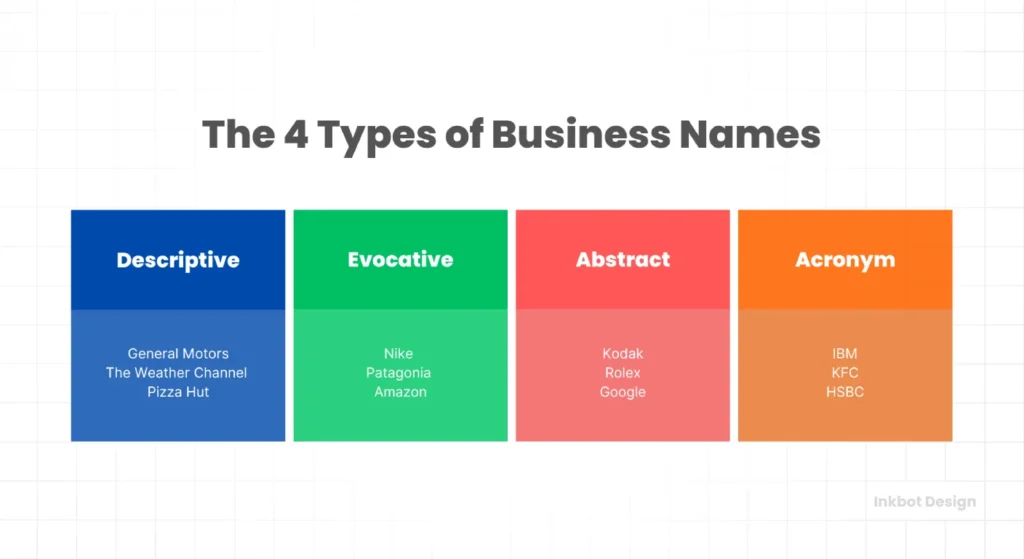
1. Naming Protocol (If changing name)
Renaming is legally treacherous.
- Brainstorming: Generate 50+ names.
- The “Bar Test”: Can you say the name to someone in a noisy bar and have them understand it without spelling it?
- Legal Screening: Check the UK Intellectual Property Office (IPO) and USPTO databases immediately. Do not fall in love with a name you cannot own.
- Domain Availability: Can you obtain the .com or .co.uk domain? If not, is there a viable alternative (e.g., get[name].com)?
2. Value Proposition & Mission
- Mission Statement: What do you do every day?
- Vision Statement: What does the world look like if you succeed?
- Unique Value Proposition (UVP): Why should I buy from you instead of Amazon?
3. Brand Archetype Definition
Human beings connect with personalities, not corporations. Carl Jung’s 12 archetypes are standard for a reason—they work.
- Are you the Outlaw (Harley Davidson, Virgin)?
- Are you the Sage (BBC, Harvard)?
- Are you the Creator (Lego, Apple)?
- Action: Pick one. If you try to be the Jester and the Ruler, you look like a schizophrenic king.
Phase 3: The Visual & Verbal System (Creation)
Now, we apply the paint. This is where most people start, but without Phases 1 and 2, this is just decoration.
1. The Visual Identity Checklist
- Primary Logo: The main mark. Ensure it scales down to 16×16 pixels (favicon size).
- Secondary Marks: Stacked versions, horizontal versions, and icons.
- Colour Palette:
- Primary colours (Dominant).
- Secondary colours (Accents).
- Technical Check: Define CMYK (print) and RGB (screen) colour models, as well as HEX codes. Ensure your colours are ADA/WCAG compliant for contrast.
- Typography:
- Primary Typeface (Headings).
- Secondary Typeface (Body copy).
- Licensing: Do you actually own the web font license for 50,000 page views a month? Check this.
- Photography Style: creating a mood board that defines “our look.” No generic stock photos of people shaking hands.
2. The Verbal Identity
- Tone of Voice Guidelines: Are we using a formal or casual tone? Witty or serious?
- Vocabulary: Words we use vs. words we never use.
- Slogans/Taglines: A short, punchy summation of the UVP.
Real-World Example:
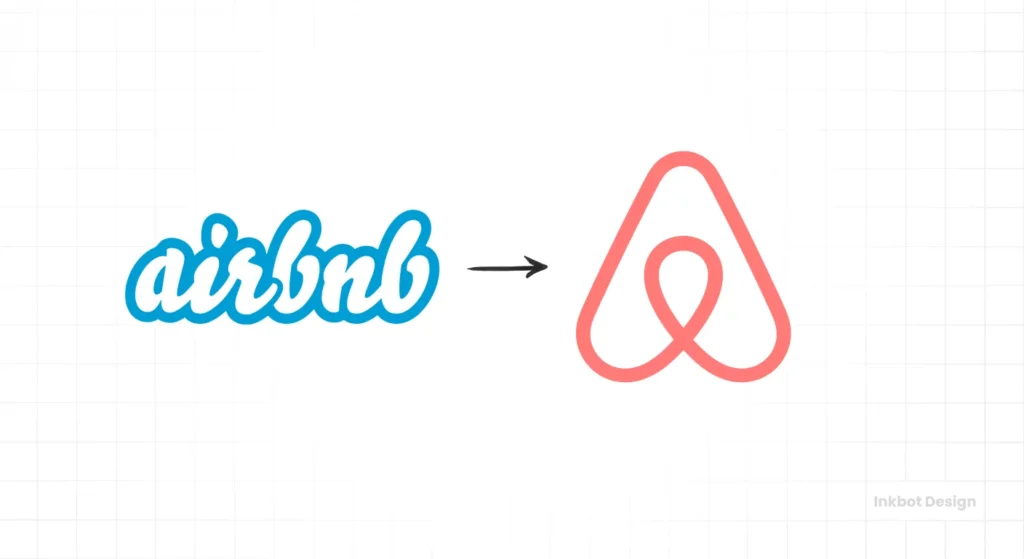
Consider Airbnb. Their rebrand to the “Bélo” symbol wasn’t just a logo change; it was a shift from “renting a room” to “belonging anywhere.” The visual system facilitated a significant strategic shift.
Conversely, Gap’s 2010 rebrand failed because they changed the logo (visual) without changing the clothing or the price point (strategy). The disconnect led to a public revolt, forcing them to reverse their decision within six days.
Phase 4: The Digital Migration (The Danger Zone)
This section is where businesses lose money. If you launch a new brand on a new domain without a technical SEO migration plan, you will vanish from Google.
1. The SEO Preservation Protocol
If moving domains (e.g., oldbrand.com to newbrand.com):
- 301 Redirect Mapping: Map every single URL from the old site to the most relevant page on the new site. Do not redirect everything to the Homepage; Google treats this as a “soft 404” and will deindex you.
- Change of Address Tool: Use Google Search Console to notify Google officially about the move.
- Update Backlinks: Contact your top 50 referring domains (partners, PR) and request that they update the link.
2. Website Assets
- Favicon: That little icon in the browser tab.
- Open Graph (OG) Tags: The image that appears when you share a link on LinkedIn or Twitter.
- Legal Pages: Update Privacy Policy, Terms of Service, and Cookie Banners with the new entity name.
- 404 Page: Customise this with the new brand voice.
3. Social Media
- Handle Squatting: Secure your new name on all platforms (Twitter, LinkedIn, Instagram, TikTok, Facebook), even ones you don’t use yet.
- Bio Updates: Consistency is key.
- Header Images: Roll out the new visual identity simultaneously.
Phase 5: The Operational Rollout
You have the strategy, the look, and the website. Now you need to update the physical and legal reality of your business.
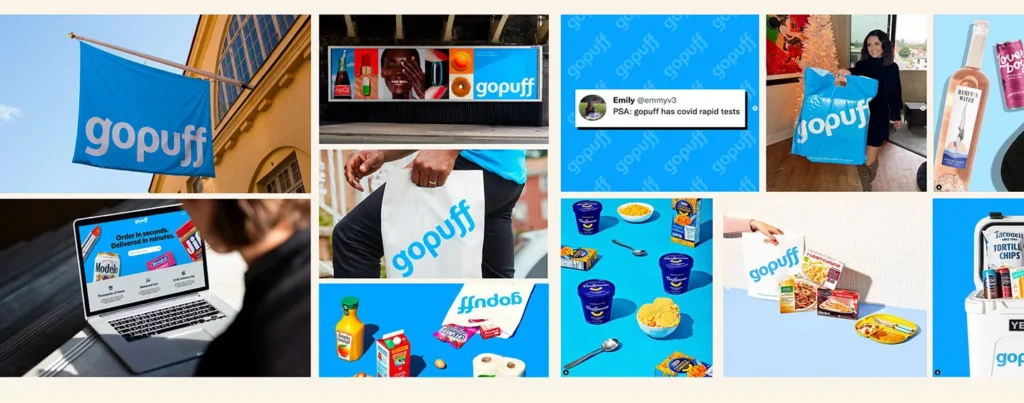
1. Internal Launch (Employees First)
Your team are your brand ambassadors. If they hate the new brand, the market will sense it.
- Town Hall: Present the rebrand to the company before the public. Explain the “Why.”
- Swag: Give them the new t-shirts, mugs, and business cards immediately.
- Email Signatures: Roll out a centralised script or tool to update everyone’s signature at once.
2. Legal & Financial
- Trademark Filing: File for the new name/logo immediately.
- Bank Accounts: Update the “Doing Business As” (DBA) name if necessary.
- Invoicing Templates: Ensure your QuickBooks/Xero templates reflect the new branding so clients don’t think they are being billed by a stranger.
3. Marketing Collateral
- Business Cards: Recycle the old ones.
- Sales Decks: Update the PowerPoint/Keynote master slides.
- Signage: Office front, vehicle wraps, trade show booths.
- Packaging: This is expensive and requires lead time. Plan this 6 months out.
The State of Rebranding in 2026: What Has Changed?
The landscape of branding is shifting rapidly. In late 2024 and throughout 2025, we saw a massive rebellion against “Blanding”—the trend where every tech company adopted the same geometric sans-serif font.
In 2026, differentiation is the primary metric. Algorithms (AI search) are beginning to prioritise brands with high “Entity Authority” and distinctiveness.
- Sonic Branding: With the rise of voice search and audio content, having a distinct “audio logo” (like Netflix’s “Ta-dum”) is becoming a standard requirement for SMBs, not just enterprises.
- Motion Identity: Static Logos Are Dead? Your brand needs to move. How does your logo animate when a page loads? This is now a core deliverable in our brand identity services.
Consultant’s Reality Check
I once audited a B2B logistics firm that spent £80,000 on a rebrand. They had a beautiful logo, a stunning website, and new uniforms.
Two weeks after launch, their sales plummeted.
Why? They forgot to update their “Sender Name” in their automated email marketing software. Their clients were receiving invoices and shipping updates from “LogisticsCorp” (the old name) while the website said “SwiftMove” (the new name). Clients thought they were being phished.
The lesson: Branding is consistency. A million-pound logo is worthless if your invoice template looks like a ransom note. The devil is in the details.
If you are overwhelmed by the scope of this checklist, that is normal. It is a massive undertaking. If you need a partner to navigate the minefield, you can request a quote from us. We handle the mess so you can handle the business.
The Verdict
Rebranding is not about fixing a boredom problem; it is about solving a business problem. It requires a blend of creative bravery and military-grade organisation.
Use this checklist. Print it out. Tick off every item. If you cut corners on the Strategy Phase, your Visuals will fail. If you cut corners on the Migration Phase, your revenue will fail.
However, if you execute this roadmap with precision, you won’t just look better—you will operate more effectively. And that is the only metric that counts.
Your Next Step
Do you know if you need a Rebrand or just a Refresh? Read our guide on Rebranding Strategy to diagnose your business before you spend a penny.
Frequently Asked Questions (FAQ)
How long does a typical rebrand take?
For a small to medium-sized business, a full rebrand typically takes 3 to 6 months. This includes the audit, strategy, design, and implementation phases. Rushing this process often leads to mistakes in trademarking or SEO migration.
How much should I budget for a rebrand?
A professional rebrand usually costs between 10% and 20% of your marketing budget. For SMBs, this can range from £10,000 to £100,000 depending on complexity. Viewing this as an investment (CAPEX) rather than an expense helps align expectations with ROI.
Will I lose traffic if I change my domain name?
You will lose traffic if you fail to implement 301 redirects correctly. However, with a proper SEO migration plan—mapping every old URL to a relevant new one—you can preserve 90-95% of your ranking power and recover fully within a few months.
What is the difference between a logo redesign and a rebrand?
A logo redesign is cosmetic; it changes the visual representation of the symbol. A rebrand is structural; it changes the message, strategy, voice, and visual identity. A logo is just one artefact of a rebrand.
Should I inform my customers before rebranding?
Yes. “Teasing” the rebrand builds anticipation and reduces shock. However, do not reveal the new look until launch day. Communicate why you are changing (e.g., “We are evolving to serve you better”) to reassure them.
Can I keep my old social media followers?
Yes. Most platforms (Twitter/X, Instagram, LinkedIn, Facebook) allow you to change your handle (username) without creating a new account. This preserves your follower count. You should secure the new handle on a dummy account first to ensure it is available.
How do I know if my rebrand was successful?
Success metrics include measuring Brand Sentiment (are people positive about the change?), Share of Voice (are people talking about you?), and conversion rates. A successful rebrand should eventually lower your Customer Acquisition Cost (CAC) because your message is clearer.
What happens to my old trademark?
You can choose to maintain it or let it lapse. If you still sell products under the old name during a transition period, you must maintain the trademark. Consult an IP solicitor to ensure you don’t accidentally abandon rights you still need.
Why do rebrands fail?
Rebrands fail mostly due to a lack of research (solving the wrong problem), poor internal communication (employees don’t buy in), or confusing the customer (change for the sake of change).
Do I need to update my legal entity name?
Not necessarily. You can rebrand your “trading name” while keeping your registered company name the same. However, you must update your “Trading As” (T/A) declarations on invoices and your website footer to comply with UK trading standards.