Pay-Per-Click Advertising: Your Gateway to Digital Marketing
In the immense digital world, attention is everything. However, there are so many people to reach and so little money to spend…
That’s where pay-per-click advertising comes in — like a sniper rifle for scattergun marketing.
It’s not about shouting louder. It’s about whispering in the ear of someone who wants to listen. PPC doesn’t interrupt; it anticipates. It doesn’t guess; it knows.
In a world of noise, PPC is your opportunity to be the signal. It is to be the answer to a question someone is already asking. To show up just when you’re needed most.
But this makes this different: You only have to pay when it works.
This is more than just advertising — it’s precision. It’s relevant. It’s a connection.
Are you ready to walk through?
- PPC targets specific audiences, allowing for efficient marketing without wasteful spending.
- Immediate results from PPC are faster than traditional SEO methods.
- Extensive data tracking offers insights into ad performance and audience behaviour.
- Bidding strategies and budget control enable effective management of advertising costs.
- PPC allows small businesses to compete with larger corporations on a level playing field.
What’s All the Fuss About PPC?
Let’s do the fork in the garbage disposal…wait, no.
PPC is more than just a strategy businesses use to connect with customers. It’s also one of those things that are like search engines or social media platforms but different somehow.
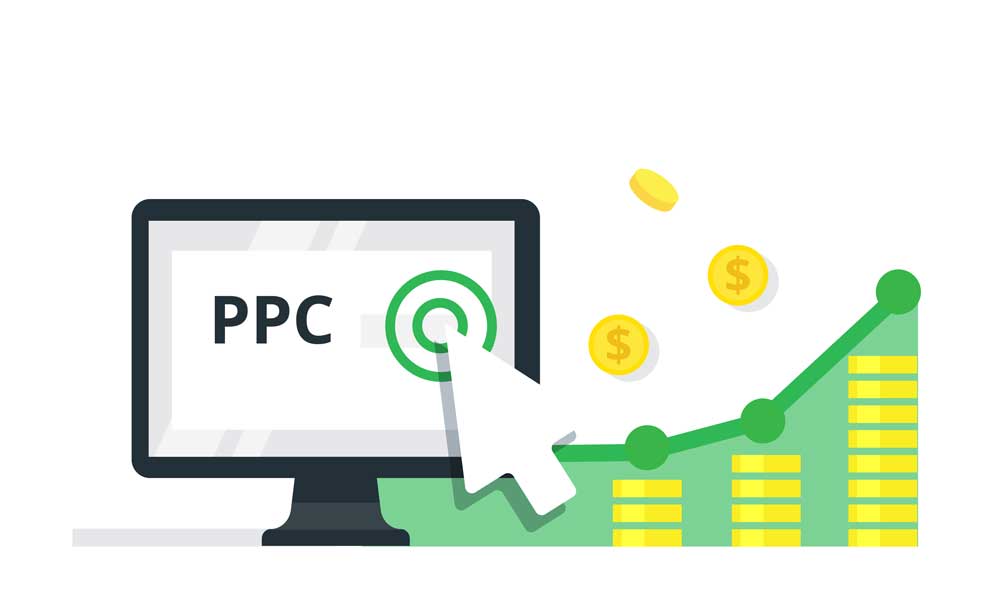
Pay-per-click advertising is simple at its core. You create an ad and decide where it should appear.
Then you pay only when someone clicks on your advertisement, like hiring a salesperson who gets paid based on how many people they bring into your store. But wait, there’s more!
The PPC Playground: Where Your Ads Can Play
PPC has many different forms; it can be used on several platforms, including:
- Search engines like Google Ads or Bing Ads
- Social media networks such as Facebook, Instagram, and LinkedIn are also available.
- Display networks, aka those banner ads all over websites
- Video platforms like YouTube ads, for example
Each platform provides opportunities to reach out to people where they already are but don’t know about you yet–it’s kind of setting up shop at a crowded market instead of an empty street corner!
Why PPC Should Be Your New Best Friend
Still trying to figure out PPC? Let me give you a gentle push with some reasons why you should adopt this digital dynamo:
1 – Immediate Satisfaction in a Level World
SEO is great, but it takes long. It’s like the slow cooker of marketing. On the other hand, PPC is easy to put together and quick to make; it’s like instant noodles, which are served in hours instead of months. Need a rush of traffic to your site? Use PPC.
2 – Targeting with a Sniper Rifle
Imagine if you could pick out your audience based on their interests, what they do online or even which sites they visit.
Well, that’s precisely how Pay Per Click works – You don’t cast a net hoping for someone interesting to walk by…you get out there with your precision-guided fishing rod and hook them yourself!
3 – Budget Control that Would Make Ebenezer Scrooge Smile
With traditional advertising, you pay one big lump sum and hope for the best; Not so with Pay Per Click! Instead, set daily budgets and adjust them as often or as little as you need – once the funding has been spent, your Ads will pause until you splash more cash!
4 – Data, Delicious Data
PPC platforms are an absolute treasure trove of data! They let you know how many people saw your ad (and who they were), clicked on it (and again…who they were) and then took action on your website! It’s like having a crystal ball that tells you what does and doesn’t work…
5 – A Fair Game
PPC is the only advertising channel that allows any business in any industry at any stage to compete head-to-head with major corporations – even whilst appearing bigger than them online sometimes, too! Whether David likes it or not…he can win in a paid search against Goliath if he strategises correctly.
The Nuts and Bolts of PPC Success

Since I (hopefully) made you more curious, let’s start working and understand how PPC works for you.
Keywords: The Foundation of Your PPC Empire
Pay-per-click advertising depends on keywords. These are the words and phrases that trigger your ads to show up when someone searches for them. However, selecting the right keyword is more art than science.
The Keyword Problem
Consider what your customers would type into Google if they were looking for your product or service. This is where you need to be creative:
- Mix up general and specific keywords
- Unearth hidden treasures with keyword research tools
- Include long-tail keywords that usually have less competition but are highly targeted
Remember, the aim isn’t to cast the widest net; it’s about finding fishing spots where your ideal customers like to swim.
Creating Ads That Make Fingers Twitch With Desire To Click
Your ad serves as your digital storefront. It should catch the eye, meet search intent and convince someone to stop what they’re doing mid-scroll.
The Anatomy of a Killer Ad
- Headline: Keep it snappy and relevant to the search query
- Description: Highlight unique selling proposition (USP)
- Call-to-Action (CTA): Tell users what you want them to do next, e.g. “Buy now” or “Get started.”
- Extensions: Use all available extensions for extra exposure, e.g. phone number, address, etc.
Pro Tip: Always include keywords in your ad copy – this shows searchers that your ad is relevant to what they’re looking for!
Landing Pages: Where The Magic Happens
You got the click – great! But there’s still work to do, namely, ensuring that your landing page lives up to its promise.
Landing Page Best Practices:
- Keep it relevant — Ensure that your landing page matches the intent of your ad
- Make it scannable — Use headers, bullet points & short paragraphs so visitors can quickly grasp the main points
- Clear CTA — Make it obvious what you want visitors to do next, e.g. “Sign Up Now!”, or “Get Quote.”
- Mobile friendly — Let’s face it: we’re all glued to our phones today!
- Fast loading — Every second counts when it comes to keeping users engaged & satisfied
Remember: Your landing page is where clicks turn into customers; make every word count!
The PPC Platforms: Choosing Your Battleground
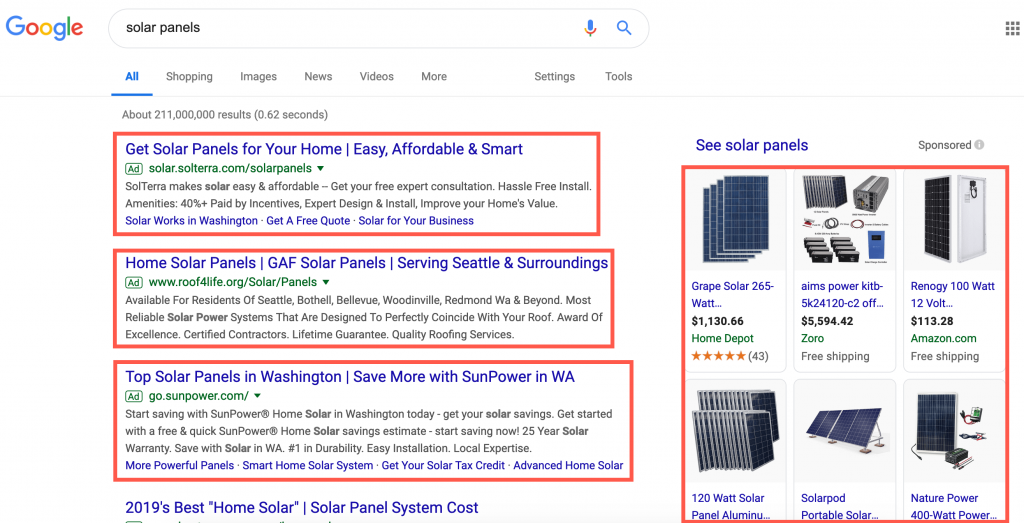
Not all pay-per-click advertising platforms are the same; each has strengths and weaknesses. Let’s go through a brief overview of the major players:
Google Ads: The 800-Pound Gorilla
Undoubtedly, Google is the king of search, with over 8.5 billion daily searches. Google Ads provides:
- Vast reach
- Advanced targeting options
- Integration with other Google products such as YouTube, Gmail, etc.
But be warned! With great power comes unimaginable competition, so you must bring your A-game to make your mark in this crowded ad space.
Bing Ads: The Underdog with Bite
Don’t dismiss Bing out of hand; although it may not have the sheer volume of Google, there are still certain benefits to using it – these include:
- Less saturated market (which often equates to lower cost per click)
- An older, more affluent demographic on average than other platforms
- Integration with LinkedIn for B2B targeting
Social Media Advertising: Where the People Are
Social media platforms offer unparalleled access to your target audience from Facebook to Instagram and beyond:
- Facebook/Instagram – interest & behaviour based targeting like nowhere else
- LinkedIn is the best for B2B advertising, hands down!
- X (Twitter) – real-time engagement around trending topics galore!
- TikTok – the new kid on the block, perfect for reaching younger audiences at scale.
Each platform has its ad formats and best practices; don’t try to be everything to everyone – focus on where your people are most likely found!
The PPC Balancing Act: Bidding and Budgeting
PPC resembles an auction, but the highest bidder doesn’t always win. The line between bidding strategy, ad quality, and budget management is essential.
Strategies for Bidding: Getting into the PPC Game
There are various strategies for bidding:
- Manual CPC – You set the maximum amount you want to pay per click
- Automated bidding – Let the platform optimise your bids based on your goals
- Enhanced CPC – A mix of both where some control is given while leveraging automation
It depends on what you’re trying to achieve, how much you have to spend and what level of expertise you’re at. So don’t be afraid to try things out!
Managing Your Budget: How To Make Every Penny Count
Setting a PPC budget is like choosing how much money to take into a casino. If you want enough so that if luck goes your way, then it’s excellent, but only a little where all could be lost.
Tips For Smart Budgeting:
- Start small and scale up as you learn what works best for your business or organisation.
- Give more of your budget to campaigns which are performing above-average
- Use day parting (show ads most likely to convert during peak times)
- Don’t forget about seasonality – adjust budgets for holidays, etc.
It’s not only about how much is spent but also how wisely it’s spent.
Measuring Success: The Metrics That Matter

The critical player in PPC is data. However, tracking them can be confusing because there are so many indicators. Here are some key performance indicators (KPIs):
1 – Click-through Rates (CTR)
CTR shows the percentage of individuals who clicked on an ad after seeing it. A high CTR indicates that the advertisement is relevant and exciting.
2 – Conversion Rate
This refers to the number of people who clicked on your ad and accomplished a desired action, such as buying something or filling out a form.
3 – Cost per Click (CPC)
What is your expense for each click? Sometimes, it’s not better to decrease this – you should pay more for higher-quality traffic.
4 – Cost Per Acquisition (CPA)
This lets you know how much money is being spent per customer gained; it helps you understand the return on investment (ROI).
5 – Quality Score
Google rates keywords and PPC ads according to their relevancy and quality; thus, having a good QS can lead to lower costs and improved positions for advertisements online.
Common PPC Pitfalls (and How to Avoid Them)
The PPC area can trip up even the smartest marketers. Here are a few common mistakes:
Not Using Negative Keywords
Think of negative keywords like shutting your front door to everyone besides those you invited; if you don’t use them, you’ll get unwanted clicks. So, make sure to filter out irrelevant traffic with negative keywords.
Mobile Users Are Ignored
More than half of web traffic comes from mobile devices now. That means your PPC strategy needs to be mobile-friendly, too — ad and landing pages should be optimised for phones and tablets.
“Set It and Forget It” -ness.
PPC is not a slow cooker recipe! You can’t just set it up, put the lid on, plug it in somewhere out of sight… You need to monitor regularly and optimise continually for success.
Ad Extensions Are Overlooked
Ad extensions give you extra real estate in search results without costing more per click – it’s free advertising space! If you’re not using ad extensions already, start doing so ASAP!
Clicks Over Conversions
Ultimately, we want sales or leads from our paid search campaigns. Don’t focus solely on driving clicks because those people may never become customers — they might just bounce back after hitting your landing page again… Keep thinking about what happens after that first interaction with someone new online!
Advanced PPC Tactics for the Ambitious Marketer
Want to up your PPC game? Here are a few advanced tactics:
Second chance strategy
Remarketing allows you to show ads to people who’ve already visited your site. Consider it as if you were giving a shy customer a little push to come back and finalise the purchase.
Let Google do the heavy lifting.
Dynamic search ads utilise the content on your website to target your ads and even generate headlines. This is an excellent way of capturing long-tail keywords that might have slipped through the cracks.
Personalisation at scale
Thanks to ad customisers, you can adjust your ad text based on location, device or even time of day. It’s almost like having a personal shopper for every potential client.
Beyond Keywords
With audience targeting, you can reach individuals according to their interests, behaviours or even life events; imagine having a crystal ball that tells you precisely who is ready to buy!
The Future of PPC: What’s on the Horizon?
PPC is constantly changing, but what about now?
Artificial Intelligence (AI) and Machine Learning
AI is used for many things in PPC, such as predictions and automated bidding. This isn’t going anywhere soon.
Optimising for Voice Search
Voice search might become more critical if virtual assistants become big. So think conversationally with your keywords and try to get featured snippets!
Visual search
Google Lens has made visual searching more popular, so watch out! There could be potential benefits here for product-based businesses.
Privacy-First Advertising
People are more concerned about their privacy than ever, so advertisers need to find ways around this without invading anyone’s personal space or information.
Wrapping Up: Your PPC Journey Starts Here
PPC advertising is a marketing strategy and a great tool that could change your business. Whether you are a small start-up or a multinational corporation, Pay Per Click levels the playing field for creativity, strategy and data-driven decision-making against big budgets.
Remember, success in PPC doesn’t mean outspending your competitors; it means outsmarting them. It’s about knowing your audience, creating compelling messages and continuously optimising based on real-world insights.
So, are you ready to jump into the world of PPC? I know it can seem overwhelming initially, but trust me – once you get going (and have some patience), navigating these waters will become second nature!
Now it’s your turn…what will be step one on your PPC journey?
Frequently Asked Questions
How expensive are Pay-per-click ads?
It depends. The price varies according to factors such as industry, competition and keywords. You can start with £5 daily and increase gradually based on performance.
How soon can I get the results from PPC efforts?
Almost immediately, that is how fast you can get clicks and traffic. However, collecting sufficient data to optimise campaigns usually takes a few weeks.
What should I use to compare PPC and SEO?
Those two strategies are not mutually exclusive; they should be used together. While PPC offers instant outcomes but stops when payments stop, SEO consumes much time, although it can yield long-term organic traffic.
Do I need an agency to do my PPC, or can I do it myself?
Although possible, especially with small-scale ones, managing PPC alone may not deliver the same result or ROI as involving an experienced company where bigger budgets or complex setups are concerned.
What is a good CTR (Click Through Rate) for my PPC ads?
A typical CTR for search ads lies at 2%, although this percentage will differ across various industries. The average display ad rate has been recorded as 0.35%.
Should I frequently check my PPC campaigns?
Yes, especially within the first days after launching them, hence daily checks; once stability is achieved, weekly reviews should suffice. However, more frequent checks might be necessary during the highest peak seasons.
Can I do B2B marketing using PPCs?
Yes indeed! Platforms like LinkedIn provide great targeting options for B2Bs; even Google Ads could work well with the right keyword and audience targeting.
Help me differentiate between CPC & CPM.
In CPC (Cost Per Click), advertisers only pay when their ads are clicked, whereas CPM (Cost Per Mille) pays for every 1000 impressions made, irrespective of any clicks.
What’s involved in picking appropriate keywords for my PPC campaign(s)?
Begin with brainstorming, then make use of keyword research tools. Also, analyse what your competitors are doing and consider what your customers might be searching for. And don’t forget to include a mix of more general/broad terms and longer tail ones.
Can PPC help create brand awareness, or is it just for direct response?
While primarily used concerning immediate actions (direct responses), pay-per-click can also be valuable for building brands since display ads and videos boost visibility.