A Guide to The Human Side Of Business
As someone who has been in the business world for over two decades, I’ve seen the highs, lows, triumphs, and challenges.
One thing I’ve come to realise is that the most successful businesses are those that don’t just focus on the bottom line but also on the human side.
You see, it’s easy to get caught up in the numbers, the strategies, and the corporate jargon. But at the end of the day, business is all about people.
It’s about connecting with your customers, your employees, and your community in a meaningful way.
In this comprehensive guide, I will share the secrets to unlocking your business’s true potential by embracing your human side.
Whether you’re a seasoned entrepreneur or just starting, these strategies will help you build a thriving, sustainable business that makes a difference.
- Build psychological safety so employees feel safe to speak up, experiment, and learn without fear of punishment.
- Develop emotional intelligence in leaders to foster empathy, conflict resolution, and stronger team engagement.
- Lead with authenticity in branding to create genuine connections and stand out in a crowded market.
- Use AI to automate tasks while preserving human roles for ethical oversight, empathy, and creative synthesis.
- Prioritise inclusion, work-life balance, and mental health to boost retention, productivity, and long-term resilience.
The Bedrock of the Human Side: Psychological Safety
To truly embrace the human side of business, one must look beyond individual emotions and examine the group dynamic.
This brings us to Psychological Safety, a term coined by Harvard Professor Amy Edmondson. It is the shared belief that a team is safe for interpersonal risk-taking—that no one will be punished or humiliated for speaking up with ideas, questions, concerns, or mistakes.
In 2026, where AI excels in technical precision, the human competitive advantage lies in creative risk-taking. If your employees are afraid to fail, they are afraid to innovate.
How to implement psychological safety in your team:
- Frame the work as a learning problem: Acknowledge that the future is uncertain and we need everyone’s brains in the game.
- Acknowledge your own fallibility: Use phrases like, “I may miss something—I need you to speak up.”
- Model curiosity: Ask more questions than you give answers.
Consider a scenario in a high-growth tech firm. A junior developer notices a flaw in the code but stays silent because the lead developer has a “no-nonsense” reputation. The product launches, fails, and costs the company millions.
In a psychologically safe environment, that junior developer feels empowered to “stop the line,” saving the company and reinforcing a culture of trust.
The Importance of Emotional Intelligence in Business

Let’s start with something often overlooked in business: emotional intelligence. This is the ability to understand and manage your own emotions, and well as those of those around you.
Now, I know what you’re thinking – “Emotions? In business? That’s just not practical.” But hear me out.
Studies have shown that leaders with high emotional intelligence are more effective at motivating their teams, resolving conflicts, and making strategic decisions. They can empathise with their employees, understand their needs, and create a work environment that fosters creativity, collaboration, and engagement.
Take my experience with Inkbot Design, the digital agency I founded. When I started the business, I was so focused on the numbers and the metrics that I overlooked the human element. I treated my employees like cogs in a machine and dismissed their concerns or personal struggles quickly.
But then, something changed. I had a chance encounter with a client going through a difficult time in her personal life. She came to me seeking a new website and a listening ear. As I sat there, genuinely listening to her, I realised that my business was about more than just delivering a product or service – it was about building meaningful relationships.
From that day on, I made it a priority to cultivate emotional intelligence within my team. We started regular check-ins, where we would share our highs and lows, both in and out of work. We implemented a more flexible work-from-home policy and invested in team-building activities that helped us connect more deeply.
The result? A more engaged, motivated, and productive team. Employees who felt valued and supported were more committed to the business’s success—and, of course, happier clients who felt a genuine connection with our brand.
So, focus on emotional intelligence to take your business to the next level.
Encourage your team to be more self-aware, empathetic, and adaptable. Make it a priority to build solid and meaningful relationships with your customers, suppliers, and community. With an emotional intelligence test, a recruiter can easily assess this.
The Power of Authenticity in Branding

But it’s not just about your internal team – it’s also about how you present your business to the world. And that’s where authenticity comes in.
In today’s crowded market, consumers are craving brands that are genuine, transparent, and true to their values. They don’t want to be bombarded with flashy marketing campaigns or empty promises – they want to connect with brands that speak to their hearts and minds.
That’s why it’s so important to cultivate an authentic brand identity. And I’m not just talking about a fancy logo or a catchy slogan – I’m talking about the very essence of your business, the values and beliefs that drive everything you do.
The Human Premium: Why Customers Pay More for “Soul”
In 2026, when every basic customer query is answered by an AI agent in milliseconds, the “Human Premium” becomes your greatest competitive advantage. This is the extra value customers place on interactions that feel personal, empathetic, and unscripted.
Consider the Zappos model. They became a multi-billion pound company not because they sold shoes better, but because they empowered their call centre staff to stay on the phone for hours if a customer just needed to talk. They prioritised the human connection over the “Average Handle Time” metric.
How to inject humanity into your CX:
- Unscripted Empowerment: Give your frontline staff a “surprise and delight” budget. Allow them to send a handwritten thank-you note or a small gift to a customer going through a hard time without seeking managerial approval.
- The “Anti-Bot” Protocol: If a customer is frustrated, escalate them to a human immediately. In 2026, forcing an angry human to talk to a “helpful” bot is the fastest way to destroy brand equity.
The “Human-in-the-Loop” (HITL) Requirement
As we integrate more Generative AI into our workflows, we must establish a “Human-in-the-Loop” (HITL) protocol. This isn’t just about checking for typos; it’s about moral and contextual oversight.
The HITL Framework for 2026:
The “Vibe Check”: Before any AI-generated content goes live, it should pass a “vibe check” by an Authenticity Officer (a rising role in 2026). Does this sound like us, or does it sound like a machine trying to sound like us?
Contextual Intelligence: AI can write a brilliant email, but it doesn’t know that the recipient’s father just passed away. Only a human has the Contextual Intelligence to know when to hit “send” and when to pick up the phone.
Bias Detection: AI algorithms often reflect the biases of their training data. A human-centric business must have a diverse committee to audit AI-driven hiring or lending decisions to ensure they aren’t inadvertently discriminating against specific groups.
Fostering a Culture of Empowerment and Inclusion
But it’s not just about branding; it’s also about how you treat the people who make your business thrive.
I’ve seen too many businesses treat their employees like cogs in a machine, where the only thing that matters is the bottom line. But the truth is, your employees are the lifeblood of your business. They’re the ones who bring your vision to life, who interact with your customers, and who ultimately determine the success or failure of your enterprise.
That’s why fostering a culture of empowerment and inclusion is so important. Employees who feel valued, respected, and empowered to make decisions will likely be engaged, motivated, and committed to the business’s success.
At Inkbot Design, we’ve prioritised creating a work environment that celebrates diversity, encourages creativity, and gives our team a voice. We have regular team meetings where everyone is encouraged to share their ideas and concerns.
Our robust professional development program helps our employees grow and develop their skills. And we’ve implemented policies and practices that prioritise work-life balance, mental health, and overall well-being.
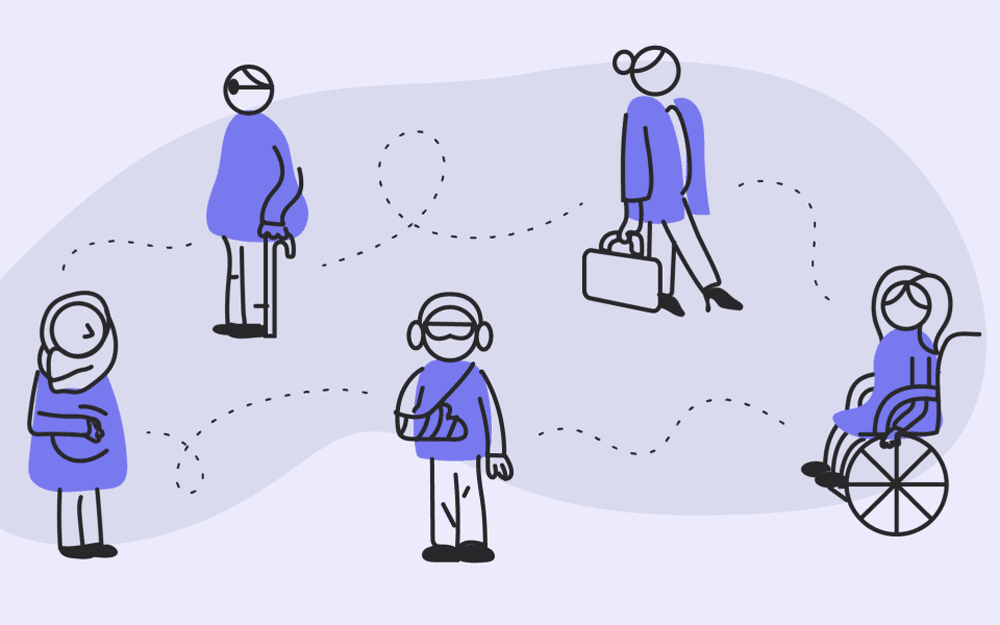
Embracing Neurodiversity and Cognitive Inclusion
To lead with humanity in 2026, we must move beyond the “one-size-fits-all” approach to management.
The human side of business now requires a deep understanding of Neurodiversity—recognising that neurological differences like Autism, ADHD, and Dyslexia are natural variations in the human genome rather than deficits to be cured.
When you design a workplace that works for neurodivergent minds, you design a workplace that works better for everyone. For instance, Microsoft and SAP have pioneered neurodiversity hiring programmes not out of charity, but because these individuals often possess “superpowers” in pattern recognition, deep focus, and creative problem-solving.
How to support cognitive diversity:
- Flexible Communication: Some team members thrive in live brainstorming; others require “asynchronous” communication to process thoughts. Use tools like Loom for video updates or Notion for deep-dive documentation.
- Sensory Awareness: Recognise that the “open-plan office” can be a sensory nightmare. Provide quiet zones and “noise-cancelling” options to respect individual sensory needs.
Scenario: A project manager at a London-based fintech firm stopped insisting on “eye contact” during feedback sessions with an autistic developer. By shifting to written feedback and allowing the developer to respond in their own time, the firm saw a 40% increase in that developer’s output and a total elimination of previous “communication friction”.
Conflict Resolution Through Non-Violent Communication
Even the most human-centric businesses face conflict. In fact, a “safe” culture usually has more healthy conflict because people feel safe to disagree. The key is how you navigate it. We recommend using the Non-Violent Communication (NVC) framework developed by Marshall Rosenberg.
The 4-Step NVC Process for Managers:
- Observations: State the concrete facts without judgment. “I noticed the report was submitted two days after the deadline.” (Not: “You’re always late.”)
- Feelings: Express your emotion. “I feel anxious because our client was expecting it on Tuesday.”
- Needs: Identify the value behind the feeling. “I need reliability to maintain our professional reputation.”
- Requests: Ask for a specific action. “Would you be willing to give me a status update 24 hours before the next deadline?”
By using this framework, you remove the “threat” from the conversation. You aren’t attacking the person; you are addressing a shared problem. This preserves the Psychological Safety you have worked so hard to build.
The Economics of Empathy: Measuring the ROI
Sceptics often view the “human side” as a “soft” cost. However, data from Gallup and Deloitte suggest that human-centric businesses significantly outperform their peers.
High levels of Employee Engagement are linked to a 21% increase in profitability and a 59% decrease in turnover.
| Metric | Traditional Command & Control | Human-Centric (People-First) |
| Staff Turnover | High (25%+) | Low (<10%) |
| Innovation Rate | Incremental / Stagnant | Exponential / Disruptive |
| Customer Advocacy | Transactional (Net Promoter Score: 30) | Relational (Net Promoter Score: 70+) |
| Crisis Resilience | Low (Teams fracture under pressure) | High (Teams rally together) |
By prioritising the human element, you are essentially investing in “organisational insurance.” When the market shifts—as it inevitably does—a team that feels valued will pivot with you, whereas a team that feels like “cogs” will look for the nearest exit.
But it’s not just about the bottom line – it’s about creating a work environment that truly makes a difference in the lives of our employees. Because at the end of the day, business is not just about making money – it’s about positively impacting the world.
From Profit to Purpose: Stakeholder Capitalism

The old business model, known as Shareholder Primacy (the idea that a company exists solely to enrich its owners), is being replaced by Stakeholder Capitalism.
This framework, championed by the World Economic Forum, posits that a company must create value for all its stakeholders: employees, customers, suppliers, the community, and the environment.
A powerful way to codify this is through B Corp Certification, managed by B Lab. Becoming a “B Corp” means your business is legally required to consider the impact of its decisions on all stakeholders.
How to transition to a purpose-driven model:
- Transparent Reporting: Use standards like the Global Reporting Initiative (GRI) to show the world your progress—and your gaps.
- Conduct a Materiality Assessment: Identify which social and environmental issues are most relevant to your specific business.
- Align Executive Pay to Impact: Don’t just reward revenue; reward improvements in employee retention and carbon reduction.
The Importance of Work-Life Balance and Mental Health

But it’s not just about giving back to your community – it’s also about taking care of yourself and your team. Because a healthy, balanced workforce is the foundation for a successful, sustainable business.
I’ll never forget when one of my employees, Sarah, came to me in tears. She was overwhelmed, exhausted, and on the verge of burnout. And it was all because she was trying to juggle her demanding job with her young family’s needs.
As a business owner, I could have easily dismissed her concerns or told her to just “suck it up.” But instead, I took a step back and listened to what she was going through. I heard the pain in her voice and the desperation in her eyes, and I knew that I had to do something.
So, we worked together to develop a more flexible work schedule that allowed her to prioritise her family while still meeting her professional obligations. We implemented regular check-ins and mental health support to help her manage her stress and anxiety. And we made it a priority to foster a work environment that prioritised work-life balance and overall well-being.
The result? Sarah stayed with the company and became one of our most productive and engaged employees. She brought her entire, authentic self to work and was more committed than ever to the business’s success.
And you know what? This approach has paid dividends for Inkbot Design as a whole. Our team is more motivated, innovative, and loyal than ever. They know we care about their well-being and are more willing to go the extra mile because they feel valued and supported.
So, to build a thriving, sustainable business, start by prioritising your team’s mental health and work-life balance. Offer flexible scheduling through a leave management app, mental health support, and other benefits that show your employees that you genuinely care about their well-being.
Because a happy, healthy workforce is the foundation for a successful, profitable business. And that’s a lesson that every entrepreneur should take to heart.
Building Your Human-Centric Tech Stack
Technology should never be a barrier between people; it should be the bridge. In the 2026 landscape, the most successful leaders use a specific “stack” to maintain the human pulse of their organisation, especially in remote or hybrid environments.
| Category | Tool Example | Human Benefit |
| Sentiment Analysis | Culture Amp | Real-time “heartbeat” checks on employee morale and engagement levels. |
| Peer Recognition | Bonusly | Empowers “horizontal” gratitude, allowing peers to reward each other for small wins. |
| Performance Growth | Lattice | Moves away from “scary” annual reviews toward continuous, human-led coaching. |
| Deep Listening | Otter.ai | Handles the “robotic” note-taking so you can maintain 100% eye contact and presence. |
| Well-being | Headspace for Work | Normalises the conversation around mental health and stress management. |
When should you introduce these tools?
Don’t wait for a crisis. Introduce sentiment tools like Peakon when your team exceeds 10 people. At this scale, “gut feeling” is no longer a reliable indicator of a leader’s empathy.
Rethinking Recruitment: The “Culture Add” Philosophy
For years, businesses looked for “Culture Fit”—people who would “blend in.” In 2026, we realise that “Culture Fit” is often code for “hiring people exactly like us,” which leads to groupthink and stagnation.
The human side of business thrives on Culture Add. This means looking for individuals who share your core values but bring a different perspective, background, or cognitive style that your team currently lacks.
Steps to Human-Centric Hiring:
- Blind CVs: Use tools like Applied to remove names and photos from applications, reducing unconscious bias and focusing on human potential.
- Values-Based Interviewing: Instead of just testing technical skills, ask questions that reveal a candidate’s empathy and resilience. “Tell me about a time you failed and how you supported your team through it.”
- The “Airport Test” is Dead: Stop asking if you’d like to be stuck in an airport with a candidate. Instead, ask: “Will this person challenge our thinking and make our ‘human’ collective stronger?”
Conclusion: Embracing Your Human Side for Lasting Success
So there you have it – the secrets to unlocking your business’s true potential by embracing your human side.
From cultivating emotional intelligence and authenticity to fostering a culture of empowerment and giving back, these strategies are the key to building a thriving, sustainable business that truly makes a difference.
So what are you waiting for? 🤔 Start embracing your human side today, and watch your business reach new heights of success and fulfilment.
FAQs
How can I prove the ROI of the “human side” to a sceptical board of directors?
Refer to Deloitte’s 2025 Human Capital Trends, which shows that “High-Trust” companies outperform their competitors by 2.5x in stock market returns. Use metrics like “Employee Lifetime Value” (ELV) and “Cost of Turnover” to show that empathy isn’t a soft cost—it’s a profit protector.
Is it possible to be a human-centric leader in a high-pressure, transactional industry like finance?
Yes. In fact, it is often more necessary. High-pressure environments are prone to “moral injury” and burnout. Leaders in these sectors who implement Psychological Safety and clear boundaries actually see fewer errors and higher compliance, as employees feel safe to flag risks before they become catastrophes.
What is the “Human Promotion Score” (HPS)?
Moving beyond the Net Promoter Score (NPS), the HPS measures how likely an employee or customer is to recommend your business based specifically on how you treat people. It weighs “humanity” and “ethics” as heavily as “product quality.”
Can I be a human-centric leader if I’m naturally an introvert?
Yes. Introverted leaders often excel at the human side because they tend to be better listeners and more observant. Leadership isn’t about being the loudest person in the room; it’s about making others feel heard and valued.
How do I handle a “toxic” high performer who generates high revenue but harms the culture?
In a human-centric business, you must have a “No Jerks” policy. No amount of revenue justifies the destruction of your team’s psychological safety. Coach them first, but if the behaviour doesn’t change, you must let them go. The message you send to the rest of your team by keeping them is that “money matters more than you.”
Can AI actually help me be more empathetic?
Surprisingly, yes. Some leaders use an “Empathy Coaching” AI that analyses their speech patterns in meetings to flag when they interrupt or use non-inclusive language. However, the AI is only the “mirror”—the actual change must come from your human intention.