Growth Marketing Strategies to Skyrocket Your Business
Businesses always seek ways to grow. One such way is through growth marketing. Growth marketing has been called the secret sauce that turns start-ups into unicorns and helps established brands rebrand themselves.
So what is it, and how can it help your business succeed?
Let’s look at growth marketing strategies to make your metrics shoot up faster than a SpaceX rocket! But first…
- Growth marketing focuses on data-driven strategies to achieve scalable business growth beyond traditional marketing tactics.
- The AARRR framework (Acquisition, Activation, Retention, Referral, Revenue) guides marketers in creating effective growth funnels.
- Retention strategies, such as personalised communication and community building, are essential for turning customers into loyal advocates.
- Emphasising human connection and emotional intelligence is vital in an increasingly automated marketing landscape.
Growth Marketing 101: Not Just Another Buzzword
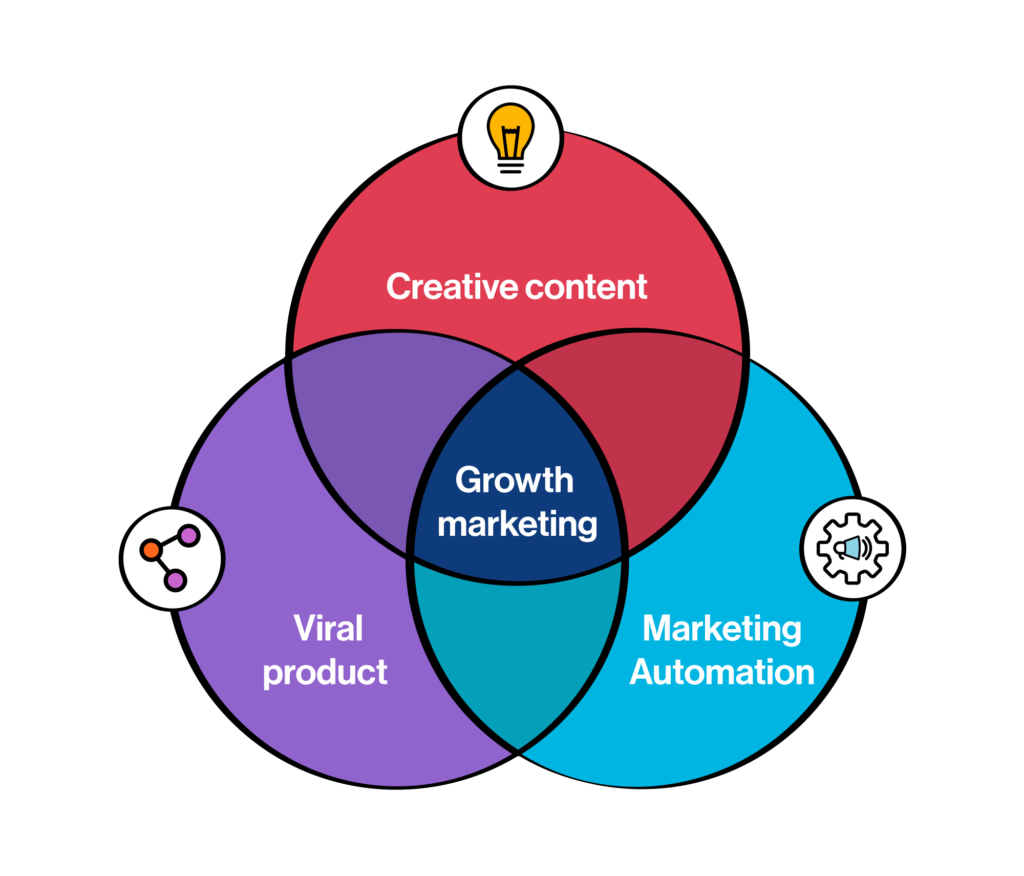
By now, you’ve probably heard someone mention “growth marketing” in passing or watched as they threw the term around like confetti at a tech conference. But is there anything behind this Silicon Valley buzzword?
Imagine your friend is obsessed with working out and trying new fitness trends every week – that’s growth marketing. It involves continuously testing different approaches while measuring outcomes on a larger scale within shorter timeframes than you could imagine (think: A/B testing on steroids).
Traditionally, marketers followed specific steps or used predefined templates to reach their target audience; however, growth marketers are more flexible, as they base their decisions on data collected during various stages of customer engagement.
This means they focus on what drives scalable business growth rather than just increasing visibility among people who may not care about what you’re selling in the first place – but will anyone become loyal enough to shout from digital rooftops about it?
The Growth Marketing Funnel: AARRR, Matey!
Remember the good ol’ marketing funnel? Well, growth marketers have their twist on it, lovingly called the “Pirate Metrics” or AARRR framework:
- Acquisition: How do you get people to your digital doorstep?
- Activation: How do you give them a “wow” first experience?
- Retention: How do you keep them coming back for more?
- Referral: How Do You Turn Customers into Your Hype Squad?
- Revenue: How do you turn all this into cold, hard cash?
It’s like a treasure map; X is where your business hits the growth jackpot!
Acquisition Strategies: Charting a Course for New Horizons
You have likely heard this expression countless times before: “Content is king.” Nevertheless, here’s the curveball – Without a solid distribution strategy, your Highness will be a remote ruler on a deserted island.
Half of the battle growth marketers know how to fight is creating killer content because what matters is when you catch those right eyeballs on it. It’s like having the world’s best pizza and no way to deliver it. What a waste of cheese!
The Content Buffet: Serve Up a Variety
- Blog Posts: Not just any blog posts, but the kind that answer burning questions your audience didn’t even know they had.
- Videos: Sometimes, a 2-minute video explains what a 2,000-word article can’t.
- Podcasts: For the multi-taskers who want to learn while crushing it at the gym or battling rush-hour traffic.
- Infographics: When you need to make complex data as easy to digest as a smoothie.
SEO: The Gift That Keeps on Giving
Search Engine Optimisation isn’t just for tech geeks anymore – it’s your 24/7 salesperson who never asks for commission.
Did you know? 75% of people NEVER scroll past the first page of search results. That’s like setting up shop on a busy high street vs a back alley. Growth marketers will rank your content and uncover keywords that will rank your content higher than a hipster’s artisanal coffee shop.
Paid Social: More Bang for Your Buck
These days, organic reach on social media is about as rare as seeing unicorns, which brings us to paid social. But it’s not just about throwing money at Facebook or Instagram.
Growth marketers use laser-focused targeting to ensure their ads are seen by people more likely to convert than a choir at a gospel convention. They A/B test everything from ad copy to images, optimising for Cost Per Click (CPC) and Cost Per Acquisition (CPA) faster than you can say “ROI.”
Influencer Marketing: Your Niche’s Megaphone
Right, so you’re throwing a bit of cash at ads. But what if you could get someone your customers already trust to sing your praises? That’s influencer marketing in a nutshell.
And look, it’s not just about paying a Love Island contestant to hold your product awkwardly.
The real magic happens with micro-influencers. These aren’t celebs with millions of followers; they’re the authorities in a tiny niche. The person who live-streams their Warhammer painting, the food blogger who knows every back-alley ramen joint in Manchester… Their audience might be smaller, but they hang on every word.
A growth marketer’s job is to turn this into a science. Forget “brand awareness,” we want trackable sales. We achieve this by providing each influencer with a unique discount code or affiliate link.
Now you’re not just hoping for the best; you’re seeing exactly who is driving real, paying customers to your door.
Think about the platforms:
- Instagram: Still the king for anything visual. Fashion, fitness, home decor… if it looks good in a photo, it’s a great fit here.
- TikTok: The wild west. It’s chaotic, meme-driven, and if you get it right, you can go viral overnight for pennies. Perfect for reaching a younger crowd who can smell a corporate ad a mile off.
- YouTube: The home of the proper breakdown. Want someone to do a 20-minute, detailed review of your software or unbox your gadget? This is the place.
The key thing is authenticity. Don’t just find someone with a big following; find someone who would genuinely use and love your stuff. People can spot a forced partnership from orbit.
Get that right, and you’ve basically got the most powerful form of word-of-mouth on tap.
Activation: Rolling Out the Digital Red Carpet
You’ve piqued their curiosity. So, what’s next? Think of it as scoring a date with your favourite celebrity – it has to be unforgettable!
The Welcome Wagon: Onboarding That Wows
- Personalised Emails: Skip “Dear User,” say “Hey Sarah! Ready to rock your marketing world?”
- In-App Tutorials: Serve them with GPS-like guidance on how to use the product rather than boring manuals.
- Gamification: Make learning about your product fun by turning it into a game. Who doesn’t like levelling up?
Landing Pages That Convert
Your landing page is the first handshake. So make sure it’s firm, friendly and unforgettable. Growth marketers never take anything for granted:
- Headlines: Nothing captures attention faster than a cat video.
- CTAs: Nobody uses “Submit” anymore. Try “Start My Epic Journey” or “Unlock Marketing Superpowers.”
- Social Proof: Sprinkle testimonials all over that thing, like parmesan on pasta. People trust peers more than ads.
Interactive Content: The ‘Lean-In’ Activation
Your landing page is a handshake, right? Fine. But what if it could be a proper conversation?
That’s what interactive content does. It stops people from passively scrolling and gets them to lean in and actually do something. It’s engagement on another level.
Instead of just telling them how great you are, you make them part of the experience. It’s powerful stuff. Here are a few solid gold examples:
- Quizzes & Assessments: Forget those daft “Which slice of toast are you?” quizzes. Think smarter. Use a tool like Typeform to build something genuinely useful, like “Find Your Perfect Skincare Routine” or “What’s Your Company’s Biggest Bottleneck?” The user receives a personalised result, and you gain incredibly valuable data on their needs. Win-win.
- Calculators: This is a B2B favourite for a reason. An “ROI Calculator” or a “How Much Could You Save?” tool gives your prospect immediate, tangible value. They punch in their numbers and see a real-world result. It’s not a sales pitch; it’s a utility. And it’s a brilliant lead magnet.
- Polls & Surveys: Sometimes the simplest things work best. Embedding a quick one-question poll on your site can be surprisingly effective. It breaks up the page, gets a click, and makes visitors feel like their opinion matters. That little interaction can be the difference between a bounce and a conversion.
The thing is, every click, every answer, is a little breadcrumb of data. It helps you segment your audience and personalise their experience with you from the get-go. It’s a killer first impression.
The Need for Speed
Did you know that a 1-second delay in page load can cause a 7% reduction in conversions? In the digital space, patience isn’t just a virtue; it’s extinct.
Growth marketers team up with developers to optimise everything from image sizes to server response times, because every millisecond counts in the race for conversions.
Retention: Turning Flings into Long-Term Relationships

Getting customers is excellent, but useless if they go away like water through your hands. This is where retention strategies come in handy – the customer bucket patch.
Email Marketing: Not Just Spam
Forget about those “BUY NOW!!!” emails that make you want to unsubscribe before you even pronounce “inbox zero.” Growth marketers write letters that feel more like they were penned by a buddy who knows you inside out.
- Segmentation: Workout freaks may not be interested in the same things as computer geeks.
- Drip Campaigns: Nurture leads like a gardener would tend to plants – with just the right amount of water and sunshine.
- Personalisation: Use data to customise products and services. “We thought you might like this AI tool based on your love for sci-fi movies!”
The Power of Push
Push notifications are those friends who always know where all the coolest events are happening in town. They can be a powerful retention tool when used correctly. But misuse them, and you’ll end up being that person who gets muted in every group chat.
Braze or OneSignal are tools used by growth marketers for sending super-relevant notifications:
- Location-Based: “You’re near our store! Come get an exclusive discount.”
- Behavioural: “Seems like you forgot something in your cart. Your dream gadget is still waiting!”
Community: Build Your Tribe
Humans are naturally social beings; we crave belonging even more than the latest iPhone (which says a lot!). Creating a community around one’s brand isn’t just some charity work; it’s a growth hack.
- Facebook Groups: Set up a space where your clients can obsess over everything related to their favourite product of yours.
- User-Generated Content: Encourage customers to share their experiences; word-of-mouth on steroids.
- Events: Webinars, AMAs, or even physical meetups. It’s not just about selling; it’s about building a bond.
Customer Loyalty Programmes: Making Retention Rewarding
Building a community is one thing. But keeping them coming back when your competitors are screaming for their attention? That’s a whole other kettle of fish.
This is where a proper loyalty programme comes in. It’s about systemising rewards and making your customers feel like insiders.
It’s more than just a 10% off voucher. A good programme makes sticking with you a no-brainer. There are a few tried-and-tested models:
- Points-Based Systems: The classic. You buy stuff, you get points. You save up points, you get free stuff. Think of it like a Tesco Clubcard on steroids. Starbucks Rewards is the master of this, turning a simple coffee purchase into a step towards a freebie, making you think twice about going anywhere else.
- Tiered Systems: This is basically gamification for grown-ups. The more you spend, the higher you climb. British Airways’ Executive Club is a perfect example. You start at Blue, then climb to Bronze, Silver, and Gold, unlocking better perks like lounge access at each level. It taps into our desire for status and motivates people to strive for the next tier. Sephora’s Beauty Insider program does the same for makeup fanatics.
- Value-Based Programmes: This one hits different. It’s less about transactional rewards and more about connecting on shared values. Maybe you donate to a charity for every purchase a customer makes, or you offer rewards that are sustainable and eco-friendly. It shows you’re not just about the money, which, ironically, makes people want to give you more of their money.
A good loyalty programme makes your customers feel seen and appreciated. It turns a simple transaction into a relationship, and that’s how you stop your customer bucket from leaking.
Referral: Your Customers, Your Salesforce
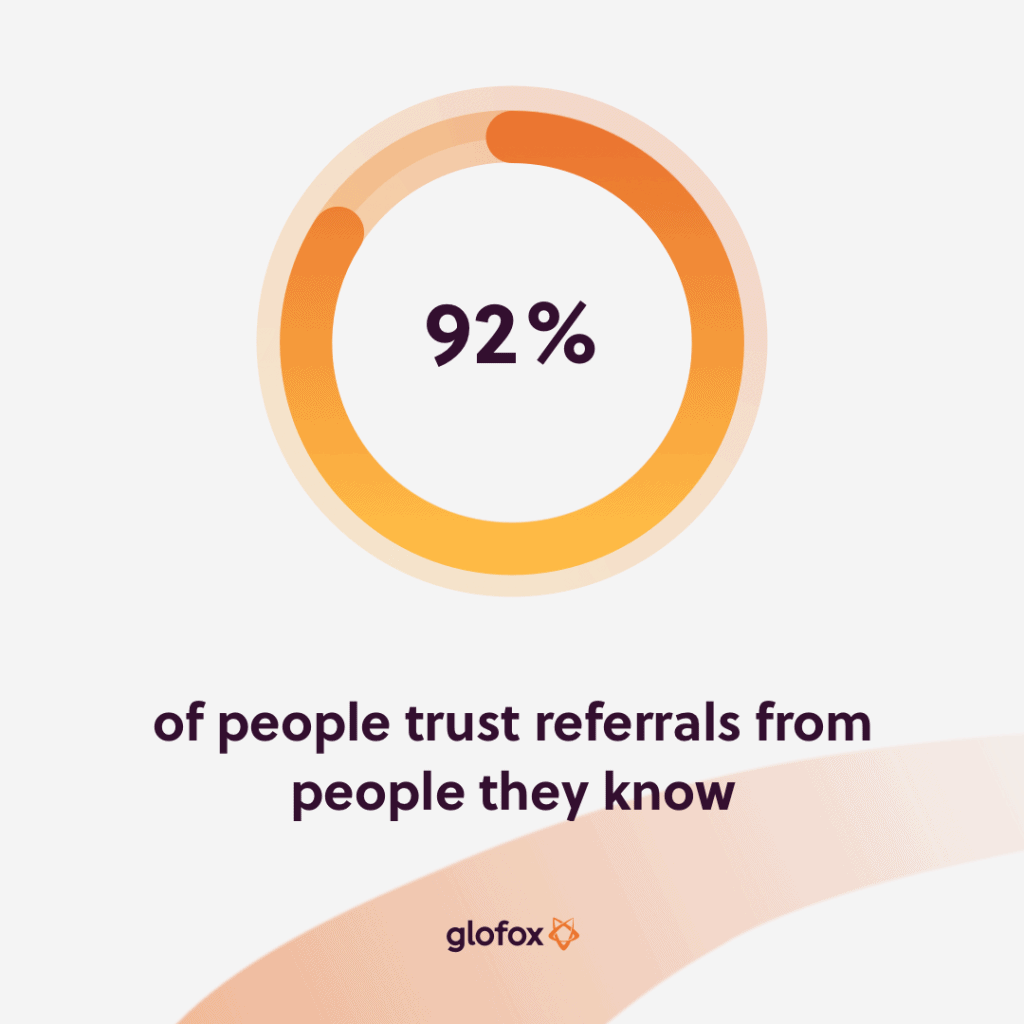
How did Dropbox expand its user base from 100,000 to 4 million people in only 15 months? The answer is simple: referral program. They leveraged the strongest marketing tool – people’s wish to assist their friends (and get something free).
Creating a Viral Referral Program
- Make It a Win-Win: Give the referrer and the referee something juicy. Dropbox gave extra storage space.
- Keep It Simple: “Share this link, get rewarded.” There is no rocket science here.
- Track & Optimise: Use tools like ReferralCandy to see what’s working and double down.
The Dark Side of Referrals: Beware the Spam!
But hold your horses! Make sure your referral program doesn’t turn customers into spammers. Nobody wants to be that guy who fills his friends’ inboxes with junk mail. Keep it classy, and make sharing feel natural, not forced.
Revenue: Show Me the Money!
Customers have come in. What can you do? As much as possible without being selfish. For instance, consider Amazon’s “Frequently Bought Together” feature – it is not just a trick to increase sales, but a helpful recommendation.
Upselling: “Do you love your basic plan? Invest only £5 more and receive premium features!”
Cross-selling: “Those sneakers would look sick with this jacket, just saying.”
Pricing Psychology: A Mind Game
Isn’t it curious that almost all prices end at .99? This happens for a reason. Such pricing makes £9.99 appear way cheaper than £10. People who work on growth understand perfectly well how to apply these hints:
Anchoring: Display a higher price first, so people find your price reasonable.
Decoy Pricing: Offer three plans, with the middle plan representing the best value. Most people choose it.
The LTV to CAC Ratio: The Target Metric
Right, let’s get a bit nerdy for a second, but stick with me. This is probably the most important metric you’ve never heard of. It’s the LTV to CAC ratio, and it tells you if your business is actually a business or just a hobby that’s burning cash.
Here’s the simple breakdown:
CAC is your Customer Acquisition Cost. How much money does it take you to get one new person to buy from you? Add up all your sales and marketing spend in a month, and divide it by the number of new customers you got. That’s your CAC.
LTV is your Lifetime Value. How much profit, on average, does a customer bring you over their entire relationship with you? This one’s a bit trickier to figure out, but it’s basically the total amount they spend, minus your costs.
Now, here’s the magic. You compare them. The golden ratio everyone shoots for is 3:1.
For every quid you spend to get a customer, you should be making at least three quid back in profit over their lifetime. If your ratio is 1:1, you’re losing money on every sale once you factor in other costs.
And if it’s 5:1 or higher, you’re likely not investing enough in marketing and are missing out on growth opportunities.
Growth marketers are obsessed with this ratio because it puts everything into perspective. It forces you to think not just about acquiring new customers, but also about retaining them and increasing their value.
This is why retention and upselling are so bloody important. They directly boost your LTV, which makes every pound you spend on acquisition more profitable. It’s the ultimate health check for your growth engine.
Subscription Models: The Holy Grail
Netflix, Spotify or any other local gym – they know what subscriptions may do for them. It resembles a stable income from an old car, which always starts when needed most.
What growth marketers are really after is Monthly Recurring Revenue (MRR). They will try various models:
- Freemium: The idea is simple – some functions should be paid for while others must remain accessible for free.
- Tiered Pricing: Create different packages ranging from ‘Hobbyist’ to ‘Enterprise’.
- Usage-Based: The more usage, the more outstanding payments. That seems fair enough!
Tools of the Trade: A Growth Marketer’s Arsenal

Info is the new petroleum, and analytics tools are the drills. Google Analytics serves as a versatile tool, offering multiple uses. Nonetheless, other than this, favourites for growth marketers include:
- Mixpanel: To investigate user behaviour.
- Hotjar: Hotjar is a way of being UI detectives; you get to watch how users navigate your site.
- Segment: The data hub that connects all your tools. No more data silos!
- Automation: Work Smarter, not Harder
25/8 is not how hard a growth marketer should work. They should work smartly by using tools like:
- Zapier: Connect apps and automate workflows. Is there a new lead in Salesforce? You can zap them into your email tool!
- HubSpot: This is an all-in-one CRM which will make you wonder how you ever lived without it.
- Buffer: Schedule social posts and watch the engagement roll in while you’re sipping margaritas.
Testing & Optimisation: Always Be Tweaking
The mantra of any good growth marketer should be ‘Always Be Testing’. A/B testing isn’t just for big brands – it’s for anyone who wants to squeeze every last drop of conversion out of their efforts.
- Optimizely: Test everything from button colours to headline copy.
- Unbounce: Build, test and optimise landing pages without bugging your dev team!
- VWO: Not just A/B testing, but multivariate testing for the data-hungry
Case Studies: Growth Marketing in the Wild
Airbnb: From Folding Beds to Billions
The expansion of Airbnb is a story that goes beyond all expectations. However, did you know that they used Craigslist as a growth hack? They created an application for Airbnb hosts to cross-post on Craigslist and tap into a massive audience. It was bold, intelligent, and remarkably successful. The main idea is this: sometimes, you must build strange bridges towards your users to grow.
Dropbox: The Power of Simplicity
We’ve spoken about Dropbox’s referral magic before, but their onboarding process is equally impressive. Instead of having a long, boring tutorial, they made it into a game. Do actions get to space? Simple, addictive and makes every user feel like they are getting something out of it from day one.
Slack: Making Work Fun (and Viral)
Slack didn’t just make work communication better–they made it fun. So, how did they accomplish such rapid growth? With a completely free plan for teams to collaborate on projects! Once a select few team members fell in love with the platform, the rest quickly followed suit. If you’re looking for B2B “the first ones free” examples, Slack fits perfectly here!
Duolingo: Turning Language Learning into an Addiction
Let’s talk about the green owl that haunts our nightmares. Duolingo didn’t just build a language app; they built a habit-forming machine. They are absolute masters of the Activation and Retention loops, primarily through relentless gamification.
Streaks, leaderboards, experience points (XP), achievement badges… they turned what is usually a chore into a daily game.
Their push notifications are legendary. That passive-aggressive reminder that “Your Japanese lesson is ready” or the guilt-trip when you’re about to lose your 100-day streak is genius. It creates a powerful retention hook that keeps millions of users coming back every single day.
However, the real madness, the true growth hack, lies in their TikTok strategy. They took their mascot, Duo the Owl, and turned him into an unhinged, meme-literate celebrity who thirsts over pop stars and makes fun of his own app.
It’s chaotic, hilarious, and it made a language app a genuine pop culture icon, especially with younger audiences. It cost them next to nothing and generated more brand awareness than a multi-million-pound ad campaign ever could.
The lesson? Blend a genuinely sticky product with brave, low-cost marketing that doesn’t take itself seriously. It’s a masterclass.
The Human Touch: Don’t Forget the ‘H’ in H2H
Chatbots: Brilliant, But Not Too Clever
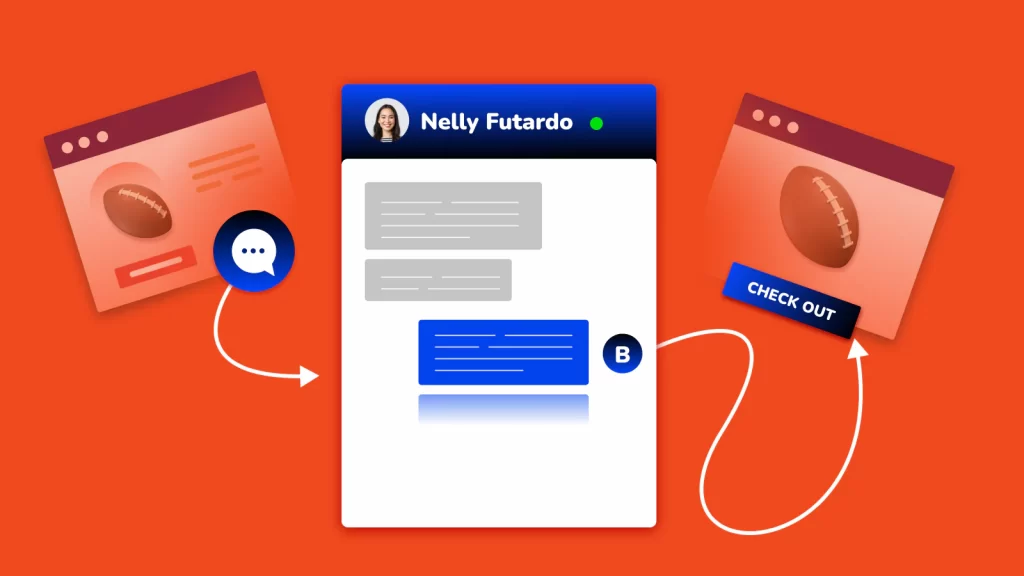
Due to our impatience in automating things, we must remember that we are still dealing with people, not machines. Chatbots are particularly useful when there’s a need for quick answers to frequently asked questions, but they should be supplemented with a human touch when things become more complicated.
Intercom and Drift are revolutionising conversational marketing. These two leaders in the industry allow you to automate certain aspects of your conversation while seamlessly handing over control back to humans where necessary. Think of it as having a digital assistant who can always alert you when to call for the manager.
Social Listening: Spying With Good Intentions
With tools such as Brandwatch or Mention, one can monitor what others are saying about their brand, competitors’ products or services, and general industry trends, among other topics related to business operations. The idea isn’t just about trying not to sound creepy; instead, try to understand pain points better so that you can participate more actively in relevant discussions.
For example, imagine jumping into a conversation where someone expresses frustration about another company’s offering, particularly regarding quality or pricing. “Hey, sorry about that! Mind if we show how ours solves this issue?” Timely intervention, coupled with genuine concern, goes a long way toward increasing customer loyalty while still maintaining a personal touch.
The Thank-You Economy
Gary Vaynerchuk advocates for what he calls the “Thank You Economy” – and I couldn’t agree more! In an era where everything is automated from start to finish, personalised thank-you notes are complex miss signals amidst grey tones.
- Write hand-written notes for each new client up to number 100.
- Record custom videos thanking clients who’ve stayed loyal over the years (or months).
- Why stop there, though? Go ahead and send them some pizza, too! (Who doesn’t love pizza?)
These little things transform ordinary buyers into raving fans who will scream your name louder than any teenager at a K-pop concert.
The Dark Side: Growth Marketing Gone Wrong
- Black Hat Tactics: You know the old saying — “With great power comes great responsibility.” Some growth tactics are just not allowed:
- Spamming: No one ever says, “Gee, I wish I had more spam!”
- Buying Followers: They might boost your numbers, but they won’t buy your stuff.
- Clickbaiting: “You won’t BELIEVE what happens next!” Yes, we will. We’ll leave.
These methods may yield short-term wins, but they’re empty calories. Your brand will crash and burn in terms of marketing.
The Future of Growth Marketing: What’s Next?

AI and Machine Learning: The New Frontier
Just when you felt like a boss at this game called growth marketing, thinking you’ve finally mastered all the tips and tricks to drive organic traffic to your site, AI and machine learning came crashing in like a bartender who just invented a new cocktail recipe.
But don’t worry, they’re not here to replace us. They’re here to give us superpowers!
Predictive Analytics: Your Data’s Crystal Ball
What if I told you there was a way to determine which leads are most likely to convert before you even speak with them? Enter predictive analytics. RapidMiner and DataRobot use your historical data to forecast future behaviour.
It’s like having a cheat sheet for your sales team. “Focus on Sarah; she’s 80% likely to upgrade this month!” No more cold-calling lukewarm leads.
Personalisation at Scale: One-to-One Marketing on Steroids
Do you know how Amazon somehow knows exactly what products to recommend that you never knew existed but couldn’t live without? That’s AI-driven personalisation that is no longer reserved for tech giants.
With machine learning tools like Dynamic Yield or Evergage, not only can you serve up personalised content and product recommendations, but the actual layout of your website can adapt based on user behaviour. It’s like having a personal shopper for every visitor on your site.
Chatbots 2.0: More Jarvis, Less Robocop
So, by now, we’re all familiar with chatbots – those little pop-up boxes that ask if there’s anything they can help us with…but often end up driving us insane instead.
These are different.
These bots understand context and sentiment thanks to natural language processing (NLP) — they can even detect your customer’s “sass” level.
Platforms like MobileMonkey or ManyChat aren’t just creating bots that answer FAQs; these bots can guide users through complex processes, troubleshoot issues, and even CLOSE SALES for you. It’s like having your best salesperson clone themselves and teach themselves how to type 120 words per minute.
Voice Search: “Hey Alexa, How Do I Optimise for Voice?”
By 2025, it’s estimated that 75% of households will own a smart speaker. And voice search isn’t just changing how we find recipes or check the weather — it’s also changing how we SEARCH for products and services.
Growth marketers are already optimising their content for the questions people ask out loud. Think about it: “Where’s the best pizza near me?” sounds much different from “Best Pizza London” when typed into Google.
It’s all about understanding natural language — and becoming the go-to answer when Alexa or Siri chimes in with an opinion.
Augmented and Virtual Reality: Try Before You Buy
Do you know those apps that allow you to point your phone in your living room and then drag a virtual couch into the frame to see if it clashes with your curtains? (Looking at you, IKEA.)
Well, as cool as that is…that’s only scratching the surface of what AR can do.
Imagine:
- Visually try on any shade of lipstick from home before buying.
- Take a VR tour of different hotel rooms before booking your next vacation.
- Have a B2B software product demo projected onto your retinas while sitting at your desk.
AR & VR are more than party tricks – they remove friction from the buyer’s journey. Less uncertainty for the customer equals less friction, resulting in more conversions. It’s like having a magic mirror that can show you the future — except with this mirror, you actually WILL be able to pull off those “distressed” jeans.
The Human Element: Don’t Get Lost in the Tech

Emotional Intelligence: The Best Growth Hack
We have so much technology that sometimes it’s easy to forget that every click and every conversion starts with someone wanting something and understanding those wants and needs. That’s the most potent growth hack there is.
Tools like Affectiva analyse facial expressions and tone of voice to measure emotional responses to your content. It’s like having a psychic who can tell if your ad made someone smile or cringe.
But you don’t need fancy tech to play on emotions. Tell stories, be vulnerable, and show them you feel their pain. In a world of algorithms, ga enuine human connection is your secret weapon.
Community-Led Growth: Power to the People
The next big wave in growth? It’s not coming from Silicon Valley but from your backyard. Community-led growth means putting your users in the driver’s seat.
Look at Notion — the all-in-one workspace tool. They’ve built an army of “Notion Pros” who create templates, share tips, and do a lot of marketing for free. Why? Because they genuinely love the product.
Here’s how you can tap into it:
- Build in public. Share your journey, wins, and fails.
- Create user groups, forums, or knowledge bases where users can assist one another.
- Celebrate user success stories — make them the heroes.
It’s like starting a fan club, except instead of screaming for an encore, they’re bringing more people to the show!
Sustainability: The New Growth Currency
As climate change shifts from textbooks to headlines (and our front yards), consumers are voting with their dollars for brands that give a damn about this planet, too. Sustainability isn’t just good for Earth — it’s good for business.
Patagonia’s “Don’t Buy This Jacket” campaign boosted sales. Why? Because it showed people they cared more about the planet than profits.
Unilever found that its sustainable living brands grew 69% faster than the rest of its business in 2018.
Here’s how to get on board:
- Be transparent about your carbon footprint and the efforts you are making to reduce it.
- Partner with environmental nonprofits — it’s good karma and good PR.
- Create products or features that encourage sustainable behaviour change.
This isn’t greenwashing; it’s realising that in the future, the fastest-growing companies will be the ones helping to ensure we have a future.
Conclusion: Growth is a Journey, Not a Destination
Whew! We covered a lot, from AARRR basics to the future of AI-powered personalisation. But if you should remember anything, it’s this: growth marketing isn’t a one-off campaign or silver bullet. It’s not even a mindset so much as it is an all-encompassing approach to business that keeps one eye on scalable, sustainable growth at all times.
Tools will change – what worked yesterday may not work tomorrow. But the principles? Those are timeless: test, learn, iterate, and above all else, always keep humans first.
So adopt the growth mindset, whether you’re just starting on your solopreneur journey or you’re the marketing manager for a Fortune 500 company. Stay curious, stay agile and – most importantly – stay human. In a world of algorithms and automation, your ability to connect with people, understand them, genuinely help them… This will be your most fantastic growth hack.
Now go and grow! Not just metrics but impact, community, and legacy. The world is waiting for what you have to offer it… So make sure it counts!
FAQs: Your Growth Marketing Cheat Sheet
Do I need a big budget to implement growth marketing strategies?
Not at all! Many growth tactics, such as building communities or implementing referral programs, can be initiated with minimal to no investment. It’s about testing things out and getting creative rather than having deep pockets.
How do I measure the success of my growth marketing efforts?
Key metrics change depending on what stage someone is in through the AARRR funnel. For example, you may examine the CAC (Customer Acquisition Cost) during the acquisition process. During retention, it could be the churn rate. The most important thing is to choose your target Metric based on what aligns best with your goals.
Is using some black-hat tactics okay to gain initial traction?
In short, no. Black hat tactics can give a temporary boost but will hurt your brand reputation, SEO rankings and customer trust in the long run — so don’t do it!
How often should I be running A/B tests?
You should always have one test running at any given time. However, each test must run for a sufficient amount of time to collect statistically significant data; rushing will lead to false conclusions.
Can growth marketing be effective for B2B companies, or is it primarily suited for consumer brands?
Definitely! The principles remain the same — while B2B growth might involve content marketing, LinkedIn strategy, and account-based marketing (ABM), the test-and-learn approach is universal.
How do I build a growth team? What roles do I need?
Start with a Growth Lead (strategist), Data Analyst and Creative (designer or copywriter). Add specialists, such as a CRO expert or a Marketing Automation guru, as you scale.
Will AI replace growth marketers?
No more than spellcheck replaced writers. AI will automate tasks and provide insight, but human creativity, empathy, and strategic thinking will be more critical in this space than ever.
How do I convince my boss or client to invest in growth marketing?
Start small. Run a low-cost experiment that shows tangible results — maybe it’s an A/B test that boosts conversions by 20%. Data talks; in growth marketing, it sings!
I’m overwhelmed by all the tools. Where do I start?
Begin with the basics – Google Analytics for web analytics, HubSpot’s free tier, or another simple CRM; Google Optimise for easy A/B testing. Add tools as you identify specific needs.
How do growth marketing and product development intersect?
Two sides of the same coin. Growth insights (like user behaviour data) should inform product decisions; product features (like easy sharing) can supercharge growth. It’s a beautiful dance.
Is there a growth marketing tactic that’s universally effective?
If there were, we’d all be billionaires! But if I had to pick one — talk to your customers. Surveys, interviews, and support tickets are goldmines of growth insights because who better to tell you how to grow than the people you’re growing for?